
Politics
The Democratic establishment begrudgingly moves to embrace Graham Platner

Graham Platner was far from establishment Democrats’ first choice to take on GOP Sen. Susan Collins. But they’re lining up behind him now — even if some are doing so begrudgingly.
With votes still being counted in Maine on early Wednesday morning, Platner looked to be winning just shy of three-quarters of the Democratic primary ballots. The strong showing marks a stunning political journey for the oysterman despite his many scandals — and it’s likely to quell murmurs from national Democrats that he could be pushed to withdraw from the race and replaced by another candidate.
Senate Minority Leader Chuck Schumer, who had recruited Gov. Janet Mills for the must-win Senate race — only to watch her drop out in April after trailing Platner in polls and fundraising — expressed confidence in the oysterman’s candidacy Tuesday.
Still, he wasn’t exactly effusive and focused most of his attention on defeating Collins.
“Susan Collins has never been more vulnerable after she voted with Trump 96 percent of the time, confirmed his far-right judicial nominees, and took millions from special interests while voting to rip health care away from Mainers,” Schumer and Democratic Senatorial Campaign Committee Chair Kirsten Gillibrand said in a statement. “In November, Maine voters will elect Graham Platner, and we will win a Senate majority.”
Senate Majority PAC, the super PAC aligned with Democratic leadership, similarly sought to draw contrast between Platner and Collins.
“The difference between the two couldn’t be plainer: Platner’s agenda supports working people and families, while Collins upholds Washington’s status quo,” spokesperson Lauren French said in a statement.
Even avowedly centrist Democrats focused on the importance of defeating Collins and winning back Senate control — though they continued to hint their concerns that Platner could blow it for them.
“This is a must-win seat,” said Lanae Erickson, senior vice president at Third Way. “Susan Collins has done nothing more than carry water for Trump. If we fail to beat her this year, that’s an own goal.”
Platner’s resounding win might quiet some of his Democratic dissenters, but he’ll still have to hold together a broad coalition to defeat Collins and shore up Democratic and independent voters — a group the Republican senator has long overperformed with — who may remain skeptical of his candidacy in light of his many controversies. And the same Democrats who have been worried about his candidacy remain concerned that more hits might be coming about his past.
Republicans didn’t waste time unloading on Platner and his long list of scandals in a preview of what’s to come for the next five months.
“Platner is easily the most toxic candidate of the cycle and the fact that Democrats have embraced him in service of a radical socialist agenda has placed the final nail in the coffin of their chances to win Maine in November,” Republican National Chair Joe Gruters said in a statement.
The National Republican Senatorial Committee released a new digital ad contrasting Collins and Platner that highlights his tattoo and profile on the messaging app Kik, while the Senate Leadership Fund launched a website running through much of the opposition research about him.
Republican groups, led by the SLF and the pro-Collins Pine Tree Results PAC, have already booked nearly $70 million in TV ad time in Maine from now through the general election, according to data from AdImpact, which tracks political advertising. Democrat groups have $26 million booked so far.
Platner, in a victory speech in Blue Hill, Maine, on Tuesday night, argued that the focus on his past had proven to be the wrong strategy.
“The national pundits, the political establishment, they keep looking for that one story, that one headline, that one moment in my life that they can define the campaign by,” he told a crowd of cheering supporters. “But in trying so hard to understand me, they failed to understand that this is not about me at all. This is a movement about us.”
Progressives bet big on Platner, arguing establishment candidates were part of Democrats’ failed strategy against Collins in previous elections and that Platner’s insurgent candidacy was worth the risk. His campaign drew unprecedented grassroots attention in Maine, with large crowds attending his events across the state.
Progressives who had long backed Platner’s candidacy were taking a victory lap Tuesday night.
“Tonight should be a wake-up call for a Democratic establishment that has spent too long underestimating the appeal of economic populism and outsider politics,” said Adam Green, co-founder of the Progressive Change Campaign Committee, which was an early endorser of Platner. “Platner’s November victory will set the Democratic Party on a bolder economic-populist course.”
Platner’s Tuesday primary win followed a tumultuous week for his candidacy. He enters the general election for one of the nation’s most closely watched Senate races still shaking off the latest scandal: a New York Times report featuring accounts from several of his ex-girlfriends alleging disturbing past behavior. One woman also claimed Platner had known one of his tattoos resembled a Nazi symbol when he got it.
Platner denied ever being physically violent but admitted to being a “bad boyfriend” in past relationships. He has also denied knowing the tattoo, which had covered up last fall, was related to the Nazis.
The story, which came on the heels of reporting that Platner had exchanged sexual messages with women while married, ignited another firestorm surrounding his candidacy just days before the primary. Some Democrats immediately came to his defense — including fellow progressive California Rep. Ro Khanna, who appeared alongside Platner at a campaign event in Maine in the days following the allegations.
“We reject, unequivocally, misogyny. But you know who else rejects it? Graham Platner,” Khanna said at the rally. “He understood that those years that he came back were not the best years of his life.”
Khanna also told NBC News that Platner should apologize to the women.
Platner drew some more big-name support in the immediate lead up to the primary: Sen. Brian Schatz, likely to be the next Democratic Whip, held a virtual fundraiser for Platner over the weekend, his first public indication of support. Left-leaning Sen. Tina Smith of Minnesota gave Platner a major boost on Monday amid the controversy, writing in a post that he would win “because he has connected with Mainers on what they really care about” and “because he’s not part of the Washington establishment.”
Still, others like Sen. Elissa Slotkin, a potential 2028 presidential candidate, deflected on answering questions about the allegations and expressed deep frustration: “I look forward to the day where I am not answering every single week a question about bad behavior by another dude,” she told MS NOW this past weekend.
Not every Democrat was quick to line up behind Platner on Tuesday night. Mills, in a lengthy statement, did not mention the oysterman. Despite having suspended her campaign, she had reminded voters up until Election Day that she remained on the ballot.
“I am grateful to Maine people and incredibly proud of what we have accomplished together. I will continue to fight with everything I have to improve the lives and livelihoods of Maine people,” the two-term governor said.
Liz Crampton contributed to this report.


ANCHORAGE — Alaska Republicans have railed for years against ranked-choice voting. Now some worry it could cost them in a critical Senate race.
GOP Sen. Dan S. Sullivan is facing not only well-known former Democratic Rep. Mary Peltola in the four-way general-election field, but a same-name challenger who Republicans think could siphon votes from him in the close contest.
Some GOP operatives fear the senator will lose first-choice votes to retired teacher Dan J. Sullivan Jr. — and that supporters of his longshot rival might not rank the incumbent at all in the state’s unusual election system where voters can pick backup options that get counted if no candidate clears 50% of the initial vote. Two recent polls that simulated ranked-choice tabulations showed Peltola as the victor.
Art Hackney, a Sullivan ally who runs a super PAC boosting the senator, said Dan J. Sullivan is “going to get a percent of the vote” and warned it could be “potentially” be “significant in terms of impacting” the result of the race.
“Sullivan can win … but it makes it a heck of a lot harder,” added a Republican operative working on other Alaska races. “It’s what the race is going to come down to: If he loses, it’ll for sure be because of that. And if he wins, it’ll be in spite of that.”
Republicans have for years bemoaned the system that allows voters to rank their preference and eliminates candidates until one reaches a majority as “costly” and “confusing,” and argue it has undercut their party. Top Republicans like outgoing GOP Gov. Mike Dunleavy and President Donald Trump have urged voters to repeal the system via a ballot measure this fall after a previous effort failed two years ago.
“Even if he gets a percent or 2% or 3% percent with the phony ranked choice stuff, you never know what they’re going to do with it,” Trump said of Dan J. Sullivan in a rally in Wasilla last week, adding that it “could be the difference.”
It’s happened before: Peltola benefitted in her House win from a split GOP field, while Sen. Lisa Murkowski (R-Alaska) warded off a Trump-backed challenger in 2022 partly because of ranked-choice voting. Alaska Republicans are also fretting about the governor’s race this year, where three GOP candidates are competing, urging voters to “rank the red.”
Dan J. Sullivan, Heikes and Peltola’s campaign did not respond to requests for comment.
The similarly named Sullivans are separated on the ballot by their middle initials and party affiliation (the incumbent is listed as a Republican, the challenger without a party).
But the senator and his allies aren’t taking any chances.
They’re employing several of the tactics Murkowski used during her successful 2010 write-in campaign, including giving out rubber wristbands branded with the senator’s name and party affiliation, and airing a radio jingle with the NRSC.
“Dan S. is your No. 1,” the jingle goes. “If he’s not, rank him second, don’t throw your vote away. Dan S., Daniel, Gerry — just don’t rank Mary.”
“Dan S. Sullivan has two opponents in this race: Democrat Mary Peltola, and the ranked choice system she and her allies have deceptively manipulated to her advantage,” said Nate Adams, a spokesperson for the senator. “But our campaign is confident that Alaskans aren’t confused. They know the real Dan, and we’re making sure every voter can find him: ballot facsimiles on every mailer, voters reached at the door and on the phone, and even a jingle.”
Those pushing to keep ranked-choice voting in Alaska argue the system helps mitigate the so-called spoiler effect. The group behind this year’s repeal measure said in an email that it’s a nonpartisan effort focused solely on eliminating the system.
Outside GOP groups boosting Sullivan like Americans for Prosperity Action and Club for Growth Action have been urging voters at doors and via mailers to rank the incumbent first, a slightly different approach than Sullivan’s campaign. “Make Republican Incumbent DAN S. SULLIVAN your 1ST CHOICE and ONLY CHOICE,” read one Club for Growth Action mailer seen by Blue Light News, a slightly different approach than Sullivan’s campaign.
“In a tight election, it doesn’t take a ton of people to get confused to possibly change the trajectory and the outcome,” said Kevin Greene, senior adviser for AFP Action in Alaska.
A version of this article first appeared in Blue Light News Pro’s Morning Score. Want to receive the newsletter every weekday? Subscribe to Blue Light News Pro.
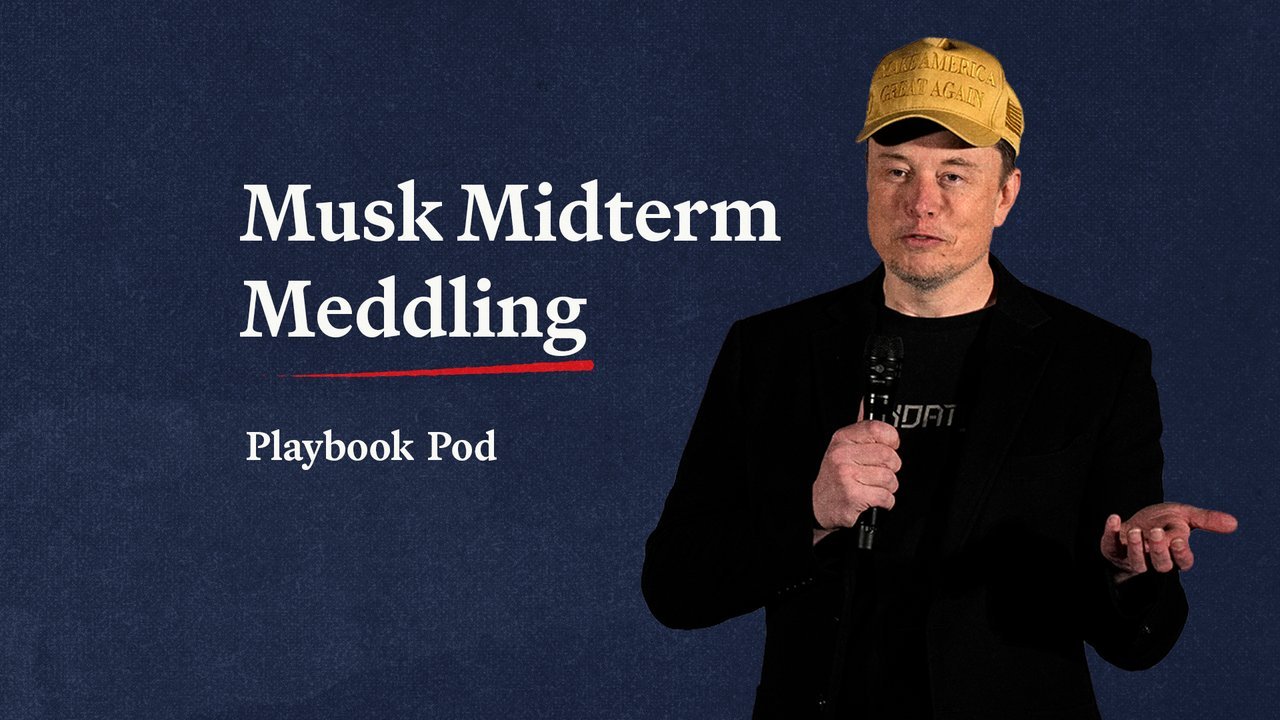
Democrats’ Musk-ask questions
lead image
CHICAGO — JB Pritzker is pouring tens of millions of dollars of his own money into boosting Black and Hispanic candidates this cycle. That could help him win over critical voters in 2028.
The billionaire Illinois governor — who’s also considered a potential presidential contender — is investing at least $38 million in battleground races, according to a person familiar with the governor’s political strategy granted anonymity to discuss details.
Much of that spending has gone to candidates of color, some of whom haven’t drawn much other investment from national Democrats. Pritzker is also investing in races in all six early states on the Democratic presidential nominating calendar, which was rearranged earlier this year to give prize spots to five states with significant Black or Hispanic communities: South Carolina, Nevada, New Mexico, Virginia and Michigan.
Asked by Blue Light News about how his midterms spending could lay the groundwork for a presidential campaign, Pritzker said he’s “focused on winning in 2026.”
But some of those receiving major infusions from Pritzker say it should earn him a serious look in 2028.
“Governor Pritzker is playing a very important role” in the party, said Rep. Shomari Figures, a Black Democrat facing an uphill fight in Alabama who has gotten an assist from Pritzker’s newly-formed super PAC, Ready for the Fight. “He actually cares and is… willing to invest in districts where minority candidates have a good shot if they have the right type of support. I think that’s an important element of any leadership.”
Pritzker said Ready for the Fight’s strategy focuses on GOP-leaning districts that would normally be “out of sight for Democrats” but have become competitive in a favorable midterm environment.
Figures is fighting for reelection in a district Republicans redrew to make it harder for a Democrat to win by decreasing the Black population, after the Supreme Court gutted the Voting Rights Act this past spring.
When that court decision came down, Figures said Pritzker was one of the first people to call him to offer help.
“The fact that he reached out and engaged us through that lens with that level of knowledge about what was happening in Alabama meant a lot to us,” Figures said.
Pritzker is spending $1.6 million for Figures, $1.9 million to boost Tennessee state Rep. Justin Pearson, another Black candidate running in a newly gerrymandered district that includes part of Memphis, and has put $1.3 million behind Arkansas Democrat Chris Jones in his race against Rep. French Hill (R-Ark.) in Little Rock, making him the largest Democratic spender besides the Democratic Congressional Campaign Committee in all three districts.
Pritzker is also the largest individual donor to Texas Democrat Gina Hinojosa’s gubernatorial campaign, personally contributing $200,000 before committing another $1 million earlier this month. The latter donation came with a matching contribution from the Democratic Governors Association. Hispanic officials and lawmakers have been ramping up the pressure on the group’s chair, fellow 2028 hopeful Kentucky Gov. Andy Beshear, to invest more in Texas.
Pritzker called Hinojosa an “outstanding person.”
“The opportunity for her to win and for Democrats to win as a result of her winning is tremendous,” Pritzker told Blue Light News at a Thursday press conference. “From my perspective, we all ought to be helping somebody like that to overcome the odds.”
And while he declined to criticize national Democrats’ strategic decisions not to spend for some candidates in tough races facing a deluge of GOP outside money, he made clear he was looking to make up for that lack of funding.
“If I were running in one of those districts, and I’m not getting dollars that I see going to other districts, I would feel frustrated,” Pritzker said. “There’s only so much you can do when you’re being outspent three to one or four to one nationally, and so I’m trying to do my best to fill in some of that wherever I can.”
Pritzker is not the only potential 2028er looking to woo politically powerful Black and Hispanic communities, and his day job and his own reelection bid keeps him away from the national trail — unlike some of the other senators and governors who’ve been criss-crossing the country for months. But what he lacks in time, he makes up for in money.
His spending strategy is catching the attention of senior Black Democratic leaders.
“People tend to take notice of the people who take notice of them,” said South Carolina Rep. Jim Clyburn.
Clyburn said he takes Pritzker “seriously” as a potential presidential candidate, but cautioned that Black voters and organizers in his home state, where Pritzker recently addressed the state NAACP’s annual convention, likely won’t be swayed by campaign contributions alone.
“We are going to take measure of candidates, not based upon how deep their pockets are, but we’re going to take measure of how deep their commitments are to those things deemed important in the African American community,” he said.
Still, the donations are helping the billionaire longtime Democratic donor and two-term governor forge new allies in key communities that could provide a boost come primary season.
“I appreciate Governor Pritzker’s willingness to invest in places others have written off,” said Jones, who also thanked the DCCC for recently adding him to their list of targeted races. “Convincing people a race is worth investing in has often been an insurmountable barrier for Black candidates.”
Pritzker’s PAC spent $2.8 million for New Mexico Democratic Rep. Gabe Vasquez and the governor made a $400,000 personal contribution into a super PAC backing Nevada gubernatorial candidate Aaron Ford, a Black candidate running in a heavily Hispanic early-voting state.
But his biggest investment of the cycle was to boost Illinois Lieutenant Governor Julianna Stratton, who he picked as his 2018 running mate when she was a little-known state representative, then invested $10 million to help her win her U.S. Senate primary this spring.
The move created some tensions: Pritzker’s endorsement of Stratton helped lift her 2026 Senate campaign significantly over two other candidates — including Rep. Robin Kelly (D-Ill.), another Black woman who has had a strained relationship with Pritzker over the years. That frustrated several members of the Congressional Black Caucus, though he’s sought to mend fences since. Clyburn, who endorsed and campaigned for Kelly, said that race won’t “dictate future relationships when it comes to putting our party in the best position to win the elections in 2028.”
And ultimately, Stratton’s ascendance is a significant step in his outreach to Black voters nationally. He will be credited with helping send just the sixth Black woman ever to the U.S. Senate after her likely victory in November. She could be a key 2028 surrogate should he run for president.
“He really does have a platform to raise awareness of critical races that people might not otherwise pay attention to,” Stratton said. “I’m really grateful for that.”
- Two Dans, four choices, one big headache for GOP in Alaska Senate race
- Democrats’ Musk-ask questions
- DCCC launches ads against Mike Turner in red Ohio district
- Capitol agenda: Dem gavels are coming for Elon Musk
- Pritzker’s big spending for Black and Hispanic candidates is drawing notice
- The ‘Congress addict’ serving as Trump’s fixer on Capitol Hill
- Elon Musk is in Democrats’ oversight crosshairs
- GOP lawmakers scramble to spare Ukraine from Trump
- Medicaid cuts haunt Republicans in battleground states
- GOP-linked PAC spends over $1M to boost third-party socialist in Ohio Senate race
-

 Politics2 years ago
Former ‘Squad’ members launching ‘Bowman and Bush’ YouTube show
-
Uncategorized2 years ago
Bob Good to step down as Freedom Caucus chair this week
-

 The Josh Fourrier Show2 years ago
DOOMSDAY: Trump won, now what?
-

 The Dictatorship2 years ago
Pete Hegseth’s tenure at the Pentagon goes from bad to worse
-

 Politics2 years ago
Former Kentucky AG Daniel Cameron launches Senate bid
-

 The Dictatorship2 years ago
Luigi Mangione acknowledges public support in first official statement since arrest
-

 Politics2 years ago
Blue Light News’s Editorial Director Ryan Hutchins speaks at Blue Light News’s 2025 Governors Summit
-
 Politics1 year ago
John Legend advises Trump to drop the ‘dictator s‑‑‑’ if he wants Nobel Peace Prize