
The Dictatorship
Some National Guard troops from Trump’s illiberal publicity stunt in L.A. are being reassigned

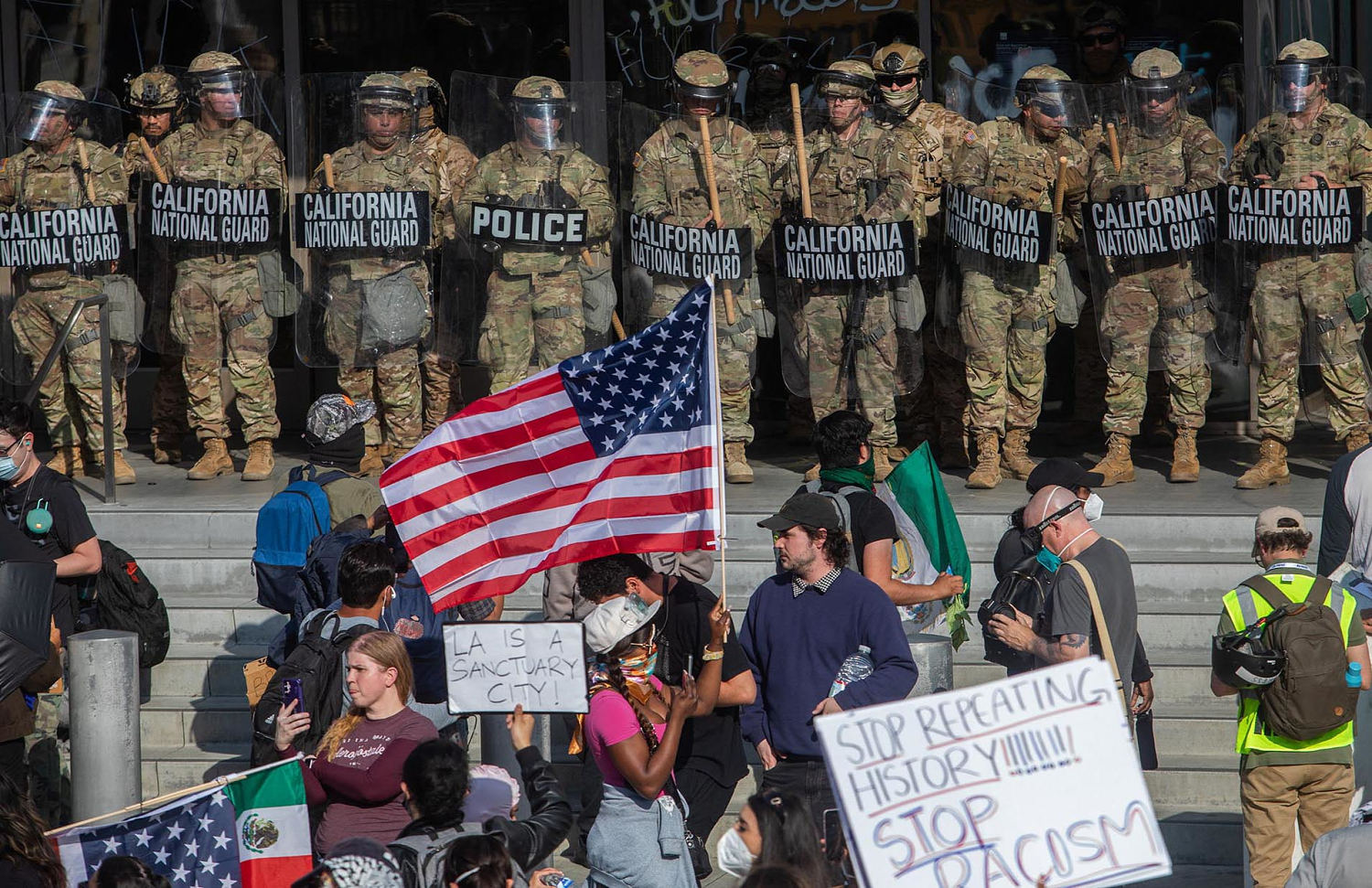

At the National Guard’s request, the Trump administration is reassigning some of the troops deployed to Los Angeles as part of Donald Trump’s authoritarian publicity stunt so they can instead address a real crisis — rather than the fake crisis of unrest that Trump has tried to fabricate.
The president deployed thousands of guard members to California last month in an illiberal show of force against demonstrators opposed to his administration’s disturbing immigration raids. In dictatorial fashion, Trump said the deployment was intended to “liberate” Los Angeles.
The deployment was against the wishes of California’s Democratic governor, Gavin Newsom, and the chief of the Los Angeles Police Department framed it as unnecessary, saying his officers were fully equipped to handle any issues.
In other words, top officials in California correctly portrayed this deployment as a waste of resources.
In other words, top officials in California correctly portrayed this deployment as a waste of resources. And there’s been mounting criticism of the troops being pulled from other duties, such as firefighting and drug enforcement workas well as the expensive deployment of thousands of guard members — when only a fraction of them have actually been on the ground in L.A.
With wildfire season in full swing, The Associated Press reported Monday that the Guard had requested that 200 of the troops be allowed to return to their firefighting work — essentially, that some of the troops be relieved from acting as Trump’s toy soldiers. And it appears the administration is partially fulfilling that request.
According to a news release sent out Tuesday:
At the recommendation of Gen. Gregory M. Guillot, Commander, U.S. Northern Command, and approved by the Secretary of Defense, Task Force 51 will release approximately 150 members of the California National Guard from the Federal Protection mission today.
The press release added that there will still be enough troops to “conduct our Federal Protection Mission” in California, meaning there will still be a large contingency of National Guard troops and Marines basically occupying Los Angeles at the Trump administration’s direction.
But the fact that this request was made at all, and that the administration acknowledged these troops aren’t essential to their so-called mission, adds to the heap of evidence that this entire undertaking has been a massive waste of resources.


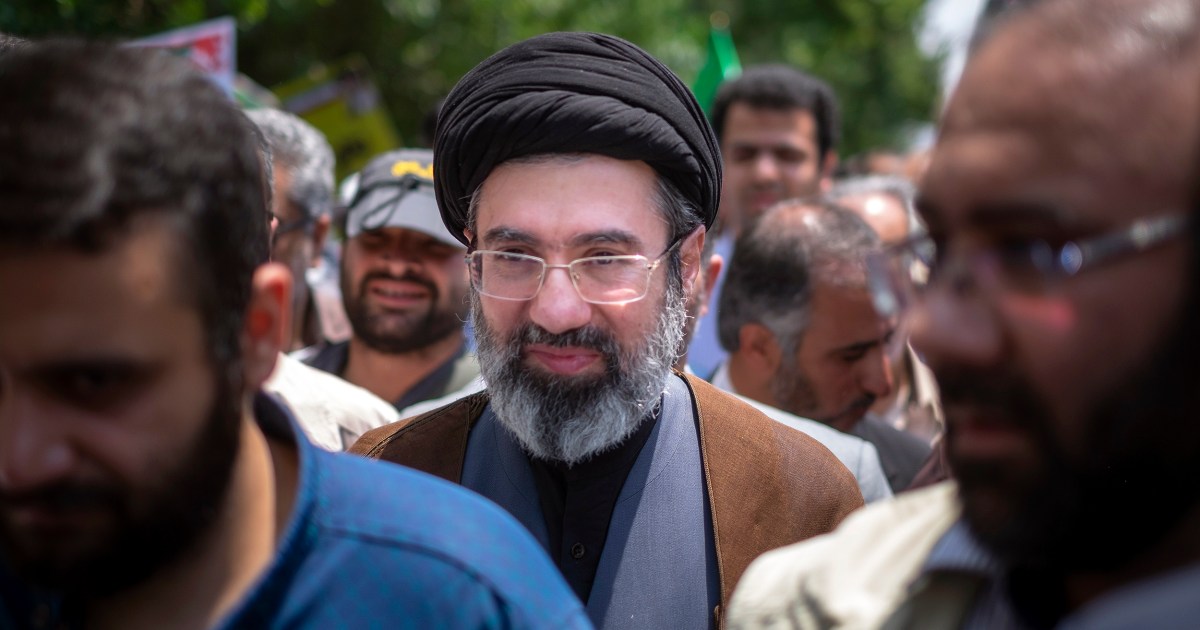
Iran’s regime has named Mojtaba Khamenei the Islamic Republic’s supreme leader, succeeding his father, Ayatollah Ali Khamenei, who was killed in an airstrike at the start of the ongoing Middle East war.
Several of Mojtaba Khamenei’s other family members were also killed in the initial strikes, including his wife, Zahra Adel, his mother, Mansoureh Khojasteh Bagherzadeh, and his son, according to Iranian state media.
The ascension of Khamenei to his father’s seat of nearly absolute power suggests a determination by regime hard-liners to dig in against internal and external pressure for reform, even as U.S. and Israeli bombs continue to fall.
It also creates the awkward appearance of a ruling family leading an Islamic Republic that supplanted the monarchy of the shahs after the Iranian Revolution of 1979.
In an interview with ABC News on SundayPresident Donald Trump reiterated that any new Iranian leader will “have to get approval from us.”
“If he doesn’t get approval from us he’s not going to last long. We want to make sure that we don’t have to go back every 10 years, when you don’t have a president like me that’s not going to do it,” Trump said.
But Trump did not rule out accepting a new Iranian leader with ties to the old regime.
Khamenei, the late ayatollah’s second son, becomes just the third person to hold the title of supreme leader, after his father and Ayatollah Ruhollah Khomeini, the founder of the republic.
Like his father when he took power in 1989, Khamenei, 56, is not an ayatollah but a mid-level Shia cleric. The elder Khamenei had the law changed to make himself an ayatollah essentially overnight – a source of tension that never quite went away during his brutal reign of nearly 37 years.
Until now, Khamenei has been considered a quietly powerful figure who has played a behind-the-scenes role in the regime. He has reportedly amassed a vast real estate portfolio through shell companies with several properties in Dubai, Frankfurt, Mallorca and on London’s “Billionaire’s Row” worth more than $100 million combined, according to a Bloomberg investigation.
In addition to Iran’s Islamic Revolutionary Guard, his new role also means he is the de-facto leader of the so-called Axis of Resistance, a collection of paramilitary groups within the region united against the U.S., Israel and Saudi Arabia, including Hezbollah in Lebanon, the Houthis in Yemen and Hamas in Gaza, as well as smaller groups in Iraq.
Regardless of who the leader would have been, they have a target on their back as U.S. and Israeli officials have vowed to assassinate them. Several high-ranking Iranian officialsincluding Defense Minister Amir Nasirzadeh and Revolutionary Guards commander Mohammad Pakpour, have already been killed.
Israeli Defense Minister Israel Katz said on X on Wednesday that “every leader appointed by the Iranian terror regime to continue and lead the plan to destroy Israel, to threaten the United States and the free world and the countries of the region, and to suppress the Iranian people—will be an unequivocal target for elimination.”
President Donald Trump has said that “someone from within” the Iranian regime may be the best choice to assume power after the U.S.-Iraeli military campaign, but added that “most of the people we had in mind are dead.”
The new leader was chosen by Iran’s Assembly of Experts, the governmental body comprised of 88 clerics established at the beginning of the revolution. The group’s building in Qom, a city south of capital Tehran, was hit in an airstrike on March 3.
In an interview with MS NOW on March 4, Iran’s Deputy Foreign Minister Majid Takht-Ravanchi did not confirm if Mojtaba would succeed his father, but said that “a new body has been established, comprised of three people, so they will be in charge until the new leader is elected,” adding that the group was “working to prepare the ground for the election of the new leader.”
Cabrera questioned Takht-Ravanchi’s definition of an “election,” asking, “Will the people of Iran have any say on who leads this country next? Or is that predetermined?”
“The people have already chosen that body who is going to elect the supreme leader,” Takht-Ravanchi said, calling the process “very transparent” and “democratic.”
Trump had repeatedly and publicly urged Iran to accept his terms for a nuclear weapons agreementamid fragile negotiations mediated by Omani diplomats, and threatened an attack if it did not. More than 1,000 people have been killed in Iran since the war began, according to U.S.-based Human Rights Activists News Agency (HRANA). Iran has struck several U.S. military bases and civilian sites throughout the Middle East in retaliation, with at least six U.S. service members killed and numerous other deaths around the region from Iran’s retaliatory drone and missile strikes.
Erum Salam is a breaking news reporter for MS NOW, with a focus on how global events and foreign policy shape U.S. politics. She previously was a breaking news reporter for The Guardian.
Press freedom organizations are celebrating the court decision invalidating Kari Lake’s tenure at Voice of America and nullifying the mass layoffs she ordered last year.
Reporters without Borders’ Executive Director Clayton Weimers, said the Saturday evening ruling “confirms what we knew when we first filed this lawsuit almost one year ago: that Kari Lake and the Trump administration acted unlawfully in gutting Voice of America (VOA). There is still more to unpack in this decision and work to be done to ensure VOA’s journalists get back to work. Beyond the immediate implications of the decision, this case is proof that fighting for press freedom matters.”
Lake, a former local news anchor and failed gubernatorial and Senate candidate, had tried to dismantle Voice of America, the U.S. government-funded international broadcaster created during World War II to provide news to a global audience, particularly to countries with little to no press freedom. Lake left her position as CEO on Nov. 19.
U.S. District Judge Royce Lamberth found that Lake was ineligible to serve as acting CEO of the United States Agency for Global Media, Voice of America’s parent company, when she was appointed to the position in July without Senate approval.
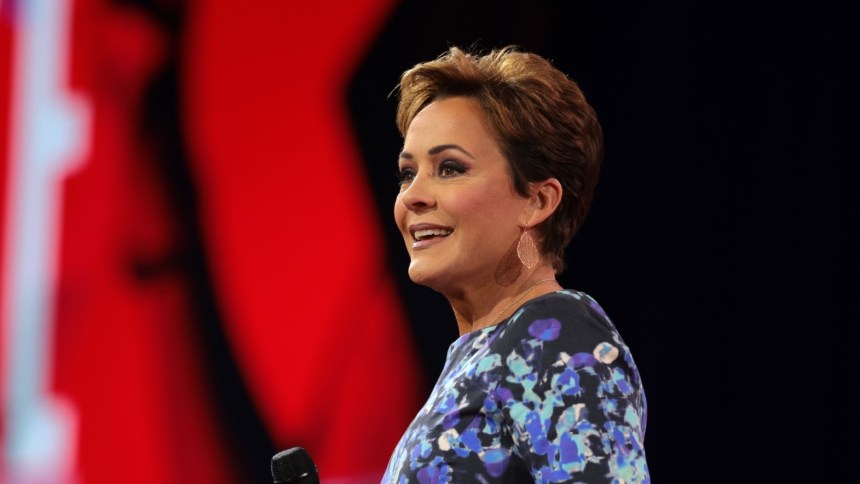
“The Court finds that these expansive delegations were an unlawful effort to transform Lake into the CEO of U.S. Agency for Global Media in all but name,” Lamberth wrote, adding that “Lake satisfies the requirements of neither the statute nor the Constitution.”
Lake called the decision “bogus” and vowed to appeal it.
Lee Saunders, president of the American Federation of State, County and Municipal Employees, the country’s largest trade union for public sector employees, called the ruling “a major victory for the federal workers who Kari Lake and this administration have been attempting to illegally fire for the last year.”
“Voice of America employees are dedicated public servants who provide hope for freedom to those living under oppressive governments around the world,” Saunders said. “Yet time and again, this administration has attempted to strip these proud AFSCME members of their collective bargaining freedoms and their jobs.”
Erum Salam is a breaking news reporter for MS NOW, with a focus on how global events and foreign policy shape U.S. politics. She previously was a breaking news reporter for The Guardian.
After the 2024 election, Republicans exulted over Donald Trump’s surprisingly strong performance among Latino voters. This was a “historic realignment” of the electoratethe National Republican Campaign Committee said, one that would produce GOP victories for years to come.
So when Trump ordered Texas Republicans last summer to redraw the state’s congressional districts in the hopes of putting as many as five more seats in GOP hands, they thought one way to do it was to increase the number of Latinos in key districts. But that strategy — in fact, the GOP’s entire mid-decade redistricting plan — may be unravelling.
The “realignment” Republicans were hoping for was almost certainly a phantom; meanwhile, their redistricting move isn’t going much better.
Texas’ primary elections on Tuesday drew a remarkable turnout, especially on the Democratic side. As Politico noted“In five different rural majority-Latino counties, more votes were cast in Tuesday’s Democratic primary than for Kamala Harris in the 2024 presidential election.” Turnout in majority-Latino counties was almost twice as high for Democrats as for Republicans, though both parties had hotly contested Senate primaries. State Rep. James Talaricowho won the Democratic nominationran up strong numbers among Latino votersovercoming Rep. Jasmine Crockett’s advantage among Black voters.
The “realignment” Republicans were hoping for was almost certainly a phantom; meanwhile, their redistricting move isn’t going much better. When Trump started this fight last July — first in Texas, then moving to other red states — he may have figured that Democrats, whether out of weakness or indecision, would simply fold. But Democrats fought back, first and most significantly in California, and then in Virginia.

While the redistricting battles are still playing out, it’s looking far from the Republican triumph Trump might have initially expected. The parties may fight to a draw; at most, Republicans might net a couple of seats. In a year that increasingly looks like we’re headed for a blue wave, that wouldn’t be nearly enough to save the House GOP majority.
Two things are notable in the face of this likely GOP own goal.
First, all this district rejiggering is possible because in recent years, the Supreme Court has given parties almost unlimited power to redraw lines for partisan advantage. While the court’s decisions over the past decade have left it up to states to be as fair or unfair as they want, Democrats have been more likely to promote independent commissions to draw district lines. These commissions are in use in 11 mostly Democratic stateswhile all but a few Republican states have stuck with partisan redistricting. But redistricting in the middle of the decade — not after a nationwide census delivers new data on the distribution of the population but just whenever a state legislature feels like it — is highly unusual, an assertion of raw political power upending an established norm.

Mid-decade redistricting has happened before, most notably in 2003, when Tom DeLay, then one of the most powerful Republicans in Congress, engineered a redrawing of the Texas map that swung multiple seats to the GOP. It has been rare ever since — but there’s no law against it. And that’s the kind of thing Trump loves: a tool of power that others hesitate to use, until he picks it up and starts smashing.
After Trump got Texas to begin its redrawing, he told other red states to follow suit. Missouri and North Carolina complied, adding one likely Republican seat each. Other states, including Florida and Georgia, are tryingthough court challenges leave those efforts in doubt. Trump did suffer a setback in Indianawhere the GOP-dominated legislature resisted his pleas and threatsultimately voting to keep their existing map.
But the real key moment happened within days of Trump’s first announcement. Gavin Newsomthe governor of California — which uses an independent commission — proposed a ballot measure to draw a Democrat-friendly map for the next three elections. The map would likely produce five more Democratic seats, nullifying what the Republicans had done in Texas. In November, California voters approved the measure by a nearly 30-point margin. The fact that it restores the independent commission after the 2030 Census allowed Democrats to say that they haven’t given up their opposition to gerrymandering but are responding to an emergency Trump created.

That set the tone for other blue states, putting pressure on them to squeeze out every possible seat. In Virginia, Gov. Abigail Spanberger signed a bill creating a district map that could give Democrats a 10-1 advantage in the state’s congressional delegation, a dramatic shift from today’s 6-5 split. A judge has temporarily halted that redistricting (the state is appealing), and Maryland Gov. Wes Moore’s plan for another seat was thwarted when the president of the Senate refused to hold a vote. But for the most part, Democrats around the country and across the ideological spectrum — including progressives and ostensible moderates like Spanberger — decided to fight back when Trump and fellow Republicans sought to play hardball.
Democrats should pay attention to what happened here. For a long time, Republicans have been the ones more likely to engage in procedural hardball. While Democrats worried about norms and propriety, Republicans took unorthodox steps such as refusing to hold hearings on a Supreme Court nomination for almost a year so the seat could be held open for Trump to fill, and destroying agencies such as the United States Agency for International Development whether or not they had the legal right to do so. Republicans understood that ruffling feathers doesn’t carry much of a political cost; what matters in the end is whether you seize power and what you do with it.
It’s a lesson Democrats should carry with them, especially if they win majorities in November and the White House in 2028. Trump’s evisceration of the federal government won’t just take years to repair; it will also take the same kind of creative aggressiveness his administration has shown. That doesn’t have to mean breaking the law, but it is likely to entail doing things that haven’t been done before. In Congress, that could mean expanding the Supreme Court and getting rid of the filibuster. In the executive branch, it may require reconfiguring systems and structures that have stood for decades.
When Trump sparked the redistricting push, Democrats decided they didn’t care if they’d be called hypocrites for doing today what yesterday they called problematic. Instead, they dug in and fought. It’s something they should keep doing.
Paul Waldman is a journalist and author focused on politics and culture.
- House Republicans face internal and external headwinds as they gather to map out 2026
- Bobby Rush’s voice gets AI boost in Jesse Jackson Jr. campaign ad
- ‘We’re in it’: Democrats won’t rule out giving Trump more money for Middle East war
- Utah Republican Burgess Owens announces he’ll retire at the end of this term
- Mojtaba Khamenei set to succeed his father as Iran’s supreme leader

- Judge voids Kari Lake’s mass layoffs at Voice of America
- What Democrats should learn from the GOP’s own goal on redistricting
- Iran’s political prisoners are in extreme danger. Here’s why that matters.
- Kristi Noem was everything a Cabinet member is not supposed to be
- Former Proud Boys leader Enrique Tarrio posts photo with Rubio at ‘Shield of the Americas’ summit

-

 The Dictatorship1 year ago
Luigi Mangione acknowledges public support in first official statement since arrest
-

 Politics1 year ago
Former ‘Squad’ members launching ‘Bowman and Bush’ YouTube show
-

 Politics1 year ago
Blue Light News’s Editorial Director Ryan Hutchins speaks at Blue Light News’s 2025 Governors Summit
-

 The Dictatorship6 months ago
Mike Johnson sums up the GOP’s arrogant position on military occupation with two words
-

 Politics1 year ago
Former Kentucky AG Daniel Cameron launches Senate bid
-

 The Dictatorship1 year ago
Pete Hegseth’s tenure at the Pentagon goes from bad to worse
-
Uncategorized1 year ago
Bob Good to step down as Freedom Caucus chair this week
-

 Politics11 months ago
Democrat challenging Joni Ernst: I want to ‘tear down’ party, ‘build it back up’