
Politics
Sen. Brian Schatz to fundraise for Graham Platner amid scandals

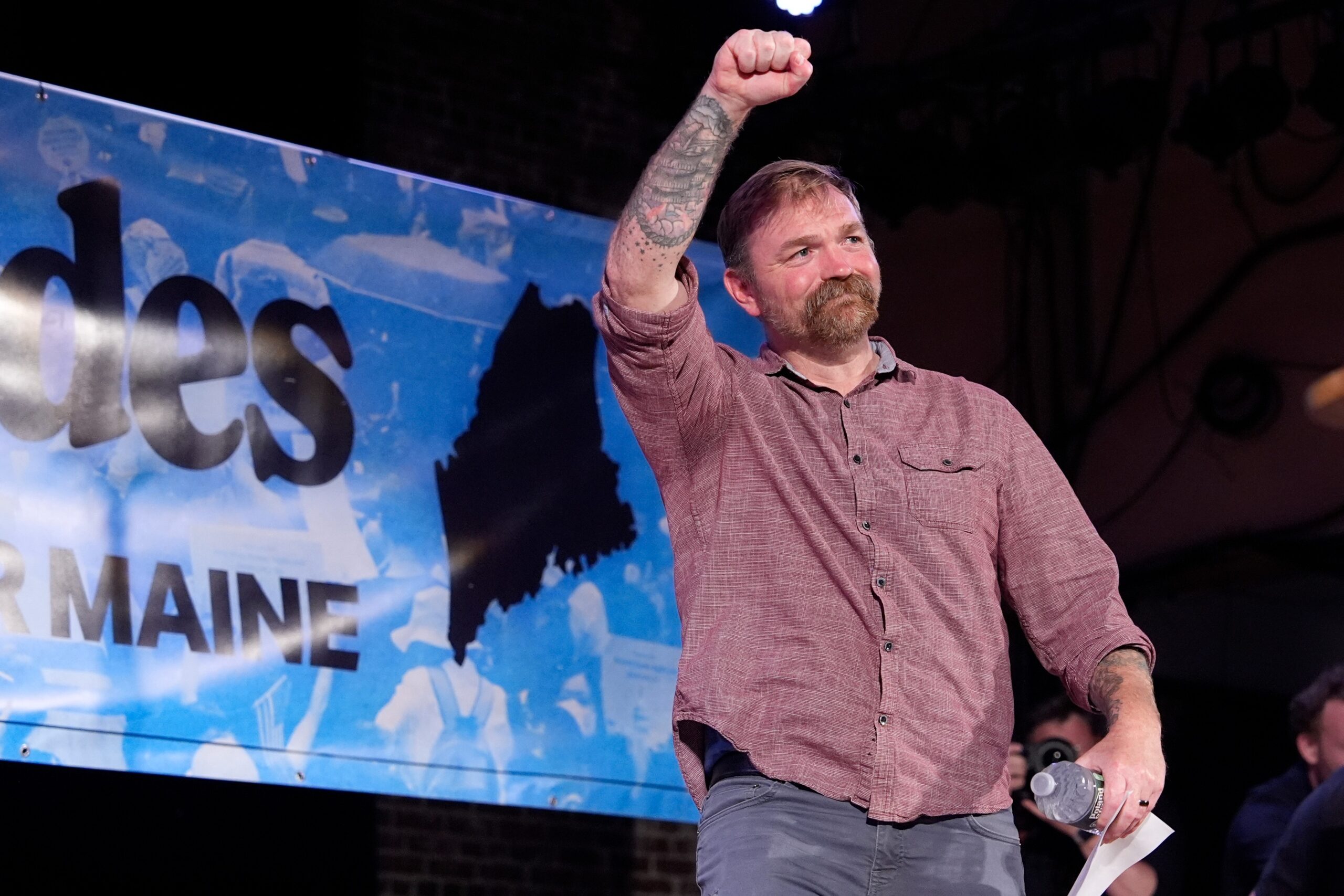
Sen. Brian Schatz (D-Hawaii) is set to help rally donors for Graham Platner on Sunday — a major show of support from a top establishment figure for the embattled Maine Senate candidate.
Schatz is listed as the special guest at a “virtual pre-primary event in support of Graham Platner,” according to two donors familiar with the event and an invitation obtained by Blue Light News. Tickets range from $100 to $7,000, the maximum allowed contribution, for the Sunday evening event, per the invite.
It’s not clear when the event was organized, but the invitation was circulated to donors on Friday afternoon — as the campaign continued to face an onslaught of criticism from fellow Democrats over a series of scandals.
The event is the first public stamp of approval from Schatz, who has not endorsed Platner previously. Making it even more notable is Schatz’s status as a rising leader in the party: He is currently deputy conference secretary and chief deputy whip for the Senate Democratic Caucus, and he has secured the votes — and Chuck Schumer’s endorsement — to take over the No. 2 role next year.
One person from Schatz’s campaign, granted anonymity to discuss a not-yet-public donation, said the senator had given money to Platner’s campaign in May after he became the presumptive nominee, part of a practice of donating to battleground Democrats who clear their fields. (Donations from that time have not yet been disclosed in campaign finance reports.)
One person close to Platner’s campaign, granted anonymity to share private details, confirmed the event and that the senator had not formally backed Platner yet.
Schatz’s presence is the latest signal that Senate Democrats are standing by Platner as he weathers a series of scandals.
Last week, news broke that Platner had sent sexually explicit texts to other women while married. Then, on Thursday, the New York Times reported new allegations of violent and disturbing behavior toward ex-girlfriends. One of them said the Democrat knew about his tattoo resembling a Nazi symbol when he got it done, despite his saying otherwise.
Platner has denied the claims. He is poised to lock up the Democratic nomination against GOP Sen. Susan Collins in Maine in Tuesday’s primary as the sole major candidate remaining and said he has “not once” considered dropping out.
His campaign on Friday announced that it had raised more than $200,000 since the Times story was published, calling it the best day of fundraising since Democratic Gov. Janet Mills suspended her campaign.
Democrats have been torn over how to respond to the escalating controversy surrounding Platner, with some arguing he is undermining the party’s values and should drop out of the race and others maintaining that he’s their best option to beat Collins. Maine, which former Vice President Kamala Harris won in 2024, is the party’s crown jewel of Senate pickup opportunities this cycle and effectively a must-win if they are to take back control of the chamber.
But Democrats and allied groups that have backed Platner have reiterated their support, including Sen. Martin Heinrich (D-N.M.); Rep. Ro Khanna (D-Calif.); VoteVets, a group that has historically been aligned with Schumer; the Working Families Party and Showing Up for Racial Justice.
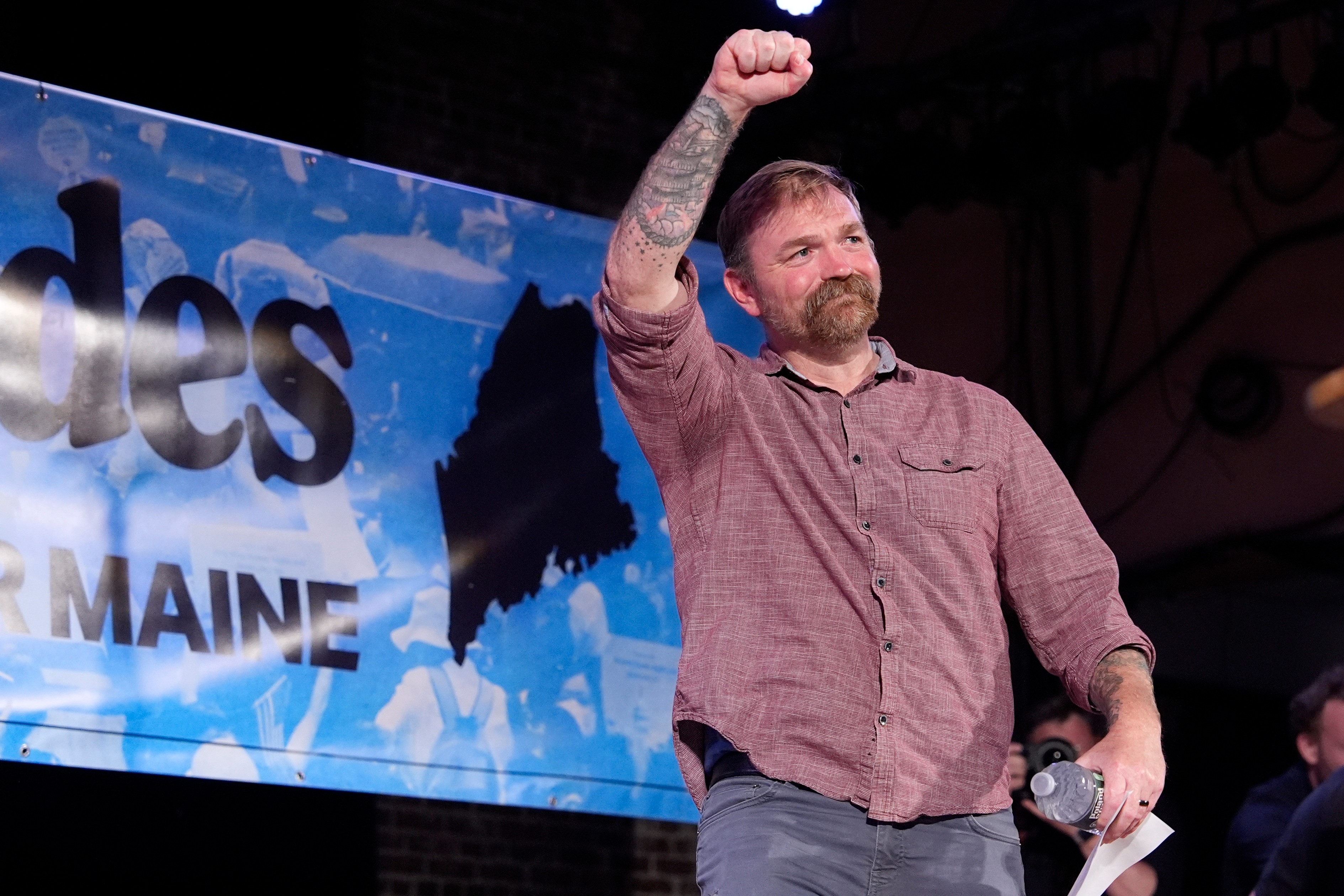
At a pre-planned Friday rally alongside Khanna, Maine 2nd District candidate Matt Dunlap and gubernatorial candidate Troy Jackson, a defiant Platner thanked the crowd for having his back.
“As every single piece of that past and journey gets dug up, litigated and weaponized, you have my back,” he said to loud applause. “And when politically motivated, serious and false accusations are made against me, Maine, you have my back.”
The presence of Dunlap and Jackson — who are both in contested down-ballot races in Tuesday’s primary — suggests they see associating with Platner as a net positive with Maine voters, despite the controversies.
Khanna, speaking after Platner, said “no one should make excuses” for the candidate’s past relationships, but urged rallygoers to give him room for redemption — and focus on the upcoming battle in November.
“The Democratic Party, from Schumer to Sanders, is united with a single goal: we will defeat Susan Collins in November,” he said.
Still, some Democrats are closely watching what happens Tuesday — and whether a protest vote for Mills emerges — before renewing their calls for Platner to drop out.
Aaron Pellish contributed to this report.


Americans are fed up with data centers and Big Tech, and Republicans are poised to take more of the political blame in the Nov. 3 midterms.
The Blue Light News Poll found last week that Americans were far more likely to associate the GOP with giving tax incentives to tech companies at a time when the public’s concerns about artificial intelligence and data center sprawl are only deepening.
Nearly half of respondents — 47% — called Republicans the party of tech tax breaks, more than double the 21% who said the same for Democrats.
Voters are also far more likely to want candidates who propose stripping away tax incentives for the data centers needed to fuel the AI boom, according to the new poll, conducted by PF Global.
About a fifth of respondents said that ending those tax breaks would be among their most important tax issues in the midterms, while only 1 in 10 wanted to offer new preferences for data centers.
The top tax priorities for voters, according to the poll, are hiking taxes on billionaires and curbing breaks for big companies.
The findings come as lawmakers in both parties have scrambled to respond to the growing voter concerns over AI and data centers — and as Americans increasingly associate Silicon Valley titans with the Republican Party.
But in both Democratic and Republican-led states alike, governors have sought to put new limits on tax incentives that were already approved for data centers.
Sen. Bernie Moreno (R-Ohio) rolled out a proposal last week that would take that a step further by imposing a 100% tax on any state or local incentive offered to AI data centers.
But it’s Democrats who have gone more on the offensive about the issue.
Former Sen. Sherrod Brown, for instance, has made data center incentives a key issue as he tries to unseat Sen. Jon Husted (R-Ohio), a former state lawmaker and lieutenant governor.
“Jon Husted’s ‘deals’ gave wealthy tech companies a windfall and left Ohioans footing the bill,” Brown recently posted on social media.
Democrats have specifically homed in on Meta, which has cut its tax liability in recent years by billions of dollars as it builds out its AI products. And they have sought to tie expanded tax breaks approved by Republicans in last year’s megabill to the increase in data center construction.
The GOP enacted incentives for companies in a broad array of industries as part of the 2025 tax cuts. But Big Tech has found those tax breaks particularly useful, helping to drive a big decrease in corporate tax payments as AI spending keeps trending upward.
Meanwhile, Democrats with 2028 ambitions have floated new taxes on AI companies, while Democratic lawmakers have teed up legislation that would keep data centers from taking advantage of incentives like Opportunity Zones and bonus depreciation, both of which Republicans expanded in 2025.
In fact, Sen. Jon Ossoff (D-Ga.) recently gave last year’s megabill another new name in a recent debate with his opponent, Rep. Mike Collins (R-Ga.).
“I want to know if you will commit to voting to repeal that data center tax scam that you voted for,” Ossoff said.
It’s not clear how much the current anti-AI energy will lead to new legislative limits in the coming months. But the new poll found Americans have a real fear of the unknown with artificial intelligence.
A majority of respondents said that tech chief executives had been secretive about the potential risks of AI, while a plurality of Americans believe both that the risks of artificial intelligence development outweigh the benefits and that the government should strictly regulate the emerging technology.
ANCHORAGE — Alaska Republicans have railed for years against ranked-choice voting. Now some worry it could cost them in a critical Senate race.
GOP Sen. Dan S. Sullivan is facing not only well-known former Democratic Rep. Mary Peltola in the four-way general-election field, but a same-name challenger who Republicans think could siphon votes from him in the close contest.
Some GOP operatives fear the senator will lose first-choice votes to retired teacher Dan J. Sullivan Jr. — and that supporters of his longshot rival might not rank the incumbent at all in the state’s unusual election system where voters can pick backup options that get counted if no candidate clears 50% of the initial vote. Two recent polls that simulated ranked-choice tabulations showed Peltola as the victor.
Art Hackney, a Sullivan ally who runs a super PAC boosting the senator, said Dan J. Sullivan is “going to get a percent of the vote” and warned it could be “potentially” be “significant in terms of impacting” the result of the race.
“Sullivan can win … but it makes it a heck of a lot harder,” added a Republican operative working on other Alaska races. “It’s what the race is going to come down to: If he loses, it’ll for sure be because of that. And if he wins, it’ll be in spite of that.”
Republicans have for years bemoaned the system that allows voters to rank their preference and eliminates candidates until one reaches a majority as “costly” and “confusing,” and argue it has undercut their party. Top Republicans like outgoing GOP Gov. Mike Dunleavy and President Donald Trump have urged voters to repeal the system via a ballot measure this fall after a previous effort failed two years ago.
“Even if he gets a percent or 2% or 3% percent with the phony ranked choice stuff, you never know what they’re going to do with it,” Trump said of Dan J. Sullivan in a rally in Wasilla last week, adding that it “could be the difference.”
It’s happened before: Peltola benefitted in her House win from a split GOP field, while Sen. Lisa Murkowski (R-Alaska) warded off a Trump-backed challenger in 2022 partly because of ranked-choice voting. Alaska Republicans are also fretting about the governor’s race this year, where three GOP candidates are competing, urging voters to “rank the red.”
Dan J. Sullivan, Heikes and Peltola’s campaign did not respond to requests for comment.
The similarly named Sullivans are separated on the ballot by their middle initials and party affiliation (the incumbent is listed as a Republican, the challenger without a party).
But the senator and his allies aren’t taking any chances.
They’re employing several of the tactics Murkowski used during her successful 2010 write-in campaign, including giving out rubber wristbands branded with the senator’s name and party affiliation, and airing a radio jingle with the NRSC.
“Dan S. is your No. 1,” the jingle goes. “If he’s not, rank him second, don’t throw your vote away. Dan S., Daniel, Gerry — just don’t rank Mary.”
“Dan S. Sullivan has two opponents in this race: Democrat Mary Peltola, and the ranked choice system she and her allies have deceptively manipulated to her advantage,” said Nate Adams, a spokesperson for the senator. “But our campaign is confident that Alaskans aren’t confused. They know the real Dan, and we’re making sure every voter can find him: ballot facsimiles on every mailer, voters reached at the door and on the phone, and even a jingle.”
Those pushing to keep ranked-choice voting in Alaska argue the system helps mitigate the so-called spoiler effect. The group behind this year’s repeal measure said in an email that it’s a nonpartisan effort focused solely on eliminating the system.
Outside GOP groups boosting Sullivan like Americans for Prosperity Action and Club for Growth Action have been urging voters at doors and via mailers to rank the incumbent first, a slightly different approach than Sullivan’s campaign. “Make Republican Incumbent DAN S. SULLIVAN your 1ST CHOICE and ONLY CHOICE,” read one Club for Growth Action mailer seen by Blue Light News, a slightly different approach than Sullivan’s campaign.
“In a tight election, it doesn’t take a ton of people to get confused to possibly change the trajectory and the outcome,” said Kevin Greene, senior adviser for AFP Action in Alaska.
A version of this article first appeared in Blue Light News Pro’s Morning Score. Want to receive the newsletter every weekday? Subscribe to Blue Light News Pro.
Democrats’ Musk-ask questions
lead image
- Senate Democrats start spending in Mississippi
- Poll: Voters see Republicans as the party of Big Tech tax breaks
- Two Dans, four choices, one big headache for GOP in Alaska Senate race
- Democrats’ Musk-ask questions

- DCCC launches ads against Mike Turner in red Ohio district
- Capitol agenda: Dem gavels are coming for Elon Musk
- Pritzker’s big spending for Black and Hispanic candidates is drawing notice
- The ‘Congress addict’ serving as Trump’s fixer on Capitol Hill
- Elon Musk is in Democrats’ oversight crosshairs
- GOP lawmakers scramble to spare Ukraine from Trump
-

 Politics2 years ago
Former ‘Squad’ members launching ‘Bowman and Bush’ YouTube show
-
Uncategorized2 years ago
Bob Good to step down as Freedom Caucus chair this week
-

 The Josh Fourrier Show2 years ago
DOOMSDAY: Trump won, now what?
-

 The Dictatorship2 years ago
Pete Hegseth’s tenure at the Pentagon goes from bad to worse
-

 Politics2 years ago
Former Kentucky AG Daniel Cameron launches Senate bid
-

 The Dictatorship2 years ago
Luigi Mangione acknowledges public support in first official statement since arrest
-

 Politics2 years ago
Blue Light News’s Editorial Director Ryan Hutchins speaks at Blue Light News’s 2025 Governors Summit
-

 Politics1 year ago
John Legend advises Trump to drop the ‘dictator s‑‑‑’ if he wants Nobel Peace Prize