
Politics
Read Kamala Harris’ full concession address

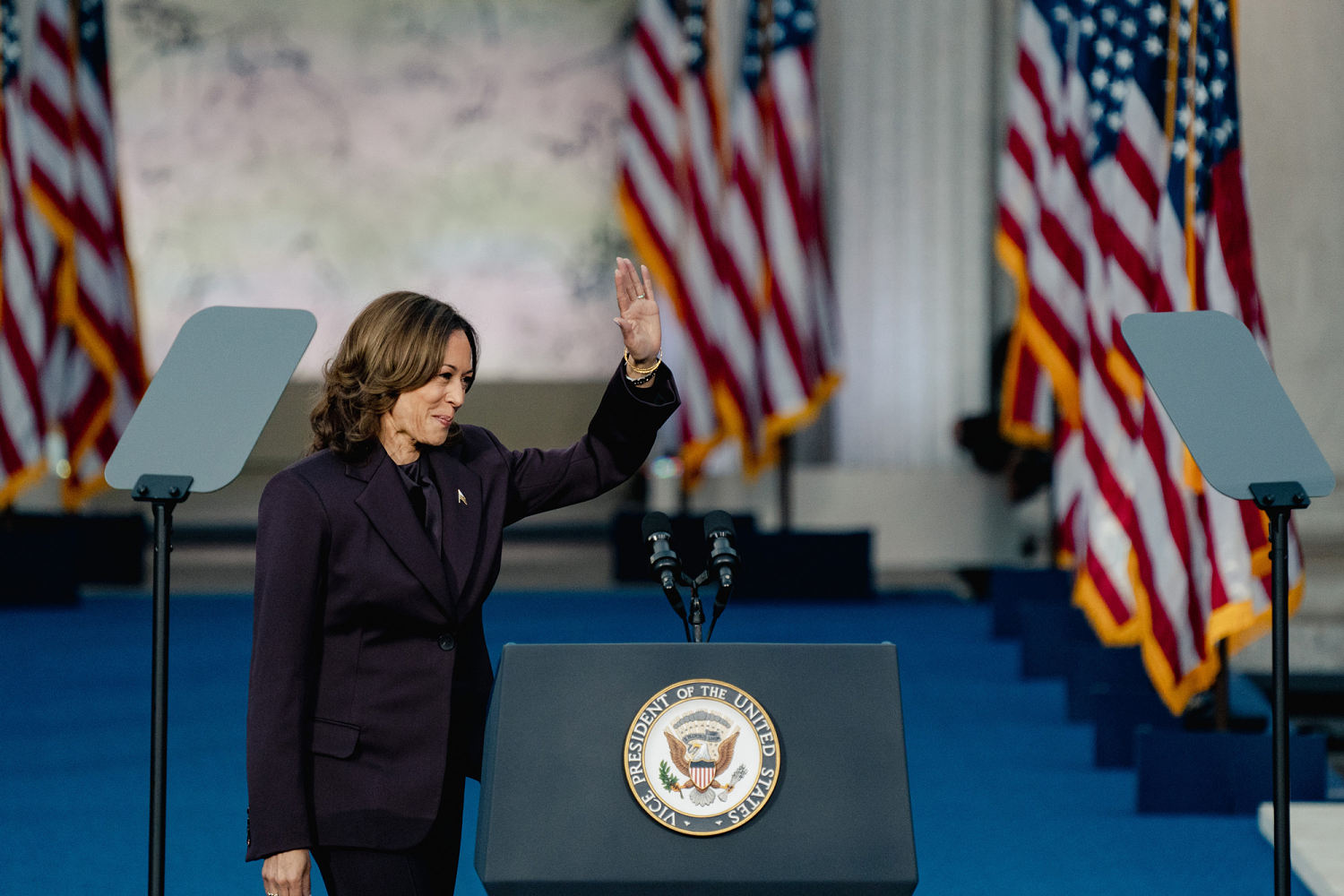
This is a lightly edited version of Vice President Kamala Harris’ remarks at Howard University, delivered on Nov. 6.
Let me say, my heart is full today: Full of gratitude for the trust you have placed in me, full of love for our country and full of resolve.
The outcome of this election is not what we wanted, not what we fought for, not what we voted for but hear me when I say: The light of America’s promise will always burn bright as long as we never give up and as long as we keep fighting.
To my beloved Doug and our family, I love you so very much. To President Biden and Dr. Biden, thank you for your faith and support. To Gov. Walz and the Walz family, I know your service to our nation will continue. And to my extraordinary team, to the volunteers who gave so much of themselves, to the poll workers and the local election officials, I thank you, I thank you all.
While I concede this election, I do not concede the fight that fueled this campaign.
Look, I am so proud of the race we ran and the way we ran it. Over the 107 days of this campaign, we have been intentional about building community and building coalitions – bringing people together from every walk of life and background – united by love of country, with enthusiasm and joy in our fight for America’s future. And we did it with the knowledge that we all have so much more in common than what separates us.
Now, I know folks are feeling and experiencing a range of emotions right now. I get it. But we must accept the results of this election.
Earlier today, I spoke with President-elect Trump and congratulated him on his victory. I also told him that we will help him and his team with their transition and that we will engage in a peaceful transfer of power. A fundamental principle of American democracy is that when we lose an election, we accept the results. That principle, as much as any other, distinguishes democracy from monarchy or tyranny,
And anyone who seeks the public trust must honor it at the same time. In our nation, we owe loyalty not to a president or a party, but to the Constitution of the United States and loyalty to our conscience and to our God.
My allegiance to all three is why I am here to say: While I concede this election, I do not concede the fight that fueled this campaign. The fight for freedom, for opportunity, for fairness and the dignity of all people. A fight for the ideals at the heart of our nation, the ideals that reflect America at our best – that is a fight I will never give up.
I will never give up the fight for a future where Americans can pursue their dreams, ambitions and aspirations, where the women of America have the freedom to make decisions about their own body and not have their government telling them what to do. We will never give up the fight to protect our schools and our streets from gun violence.
And America, we will never give up the fight for our democracy, for the rule of law, for equal justice and for the sacred idea that every one of us, no matter who we are or where we start out, has certain fundamental rights and freedoms that must be respected and upheld.
And we will continue to wage this fight in the voting booth, in the courts and in the public square. And we will also wage it in quieter ways, in how we live our lives, by treating one another with kindness and respect, by looking in the face of a stranger and seeing a neighbor, by always using our strength to lift people up to fight for the dignity that all people deserve.
The fight for our freedom will take hard work but like I always say, we like hard work. Hard work is good work. Hard work can be joyful work. And the fight for our country is always worth it. It is always worth it.
To the young people who are watching, it is okay to feel sad and disappointed, but please know it’s going to be OK. On the campaign, I would often say, when we fight, we win. But here’s the thing, sometimes the fight takes a while. That doesn’t mean we won’t win.
This is not a time to throw up our hands. This is a time to roll up our sleeves.
The important thing is don’t ever give up. Don’t ever give up. Don’t ever stop trying to make the world a better place. You have power. You have power and don’t you ever listen when anyone tells you something is impossible because it has never been done before. You have the capacity to do extraordinary good in the world.
And so to everyone who is watching, do not despair. This is not a time to throw up our hands. This is a time to roll up our sleeves. This is a time to organize, to mobilize and to stay engaged for the sake of freedom and justice and the future that we all know we can build together.
Look, many of you know, I started out as a prosecutor and throughout my career, I saw people at some of the worst times in their lives, people who had suffered great harm and great pain and yet found within themselves the strength and the courage and the resolve to take the stand, to fight for justice, to fight for themselves, to fight for others. So let their courage be our inspiration. Let their determination be our charge.
And I’ll close with this: There’s an adage a historian once called a law of history, true of every society across the ages. The adage is, “Only when it is dark enough, can you see the stars.”
I know many people feel like we are entering a dark time but for the benefit of us all, I hope that is not the case. But here’s the thing, America, if it is, let us fill the sky with the light of a brilliant billion of stars. The light of optimism, of faith, of truth and service. And may that work guide us even in the face of setbacks, toward the extraordinary promise of the United States of America.
I thank you all. May God bless you and may God bless the United States of America.



When President Donald Trump endorsed Rep. Julia Letlow against Sen. Bill Cassidy, many thought she had a clear path to the upper chamber.
But three months after Trump pushed Letlow into the field, the race stands as a tight three-way contest between her, Cassidy and State Treasurer John Fleming, with all of them appearing to have a real chance to make the mid-May runoff.
That has some Louisiana Republicans reconsidering whether Cassidy could survive in spite of his breaks with the president, including his 2021 vote to convict Trump in his second impeachment trial, and his low polling numbers compared to Letlow and Fleming. Others are wondering if Letlow might end up locked in a runoff with Fleming that could prove much more challenging to her chances.
She has been massively outspent by Cassidy on the airwaves, still has low name ID compared to her opponents, and faces in Fleming another candidate with MAGA appeal and his own network of support. That’s making it harder for her to capitalize on Trump’s endorsement and rally the base behind her as she runs her first statewide campaign under a compressed timeline.
The outcome will be a test for Trump, whose meddling in the Louisiana Senate race may reveal the power of his endorsement at a time when his approval is at an all time low — as well as the viability of his efforts to seek vengeance against Republicans who cross him.
“The Trump endorsement has not had a close-out move. Cassidy was ready for her,” said GOP state Rep. Mike Bayham, who has not publicly supported any candidate yet. “They defined her before she introduced herself.”
Public polling gives a muddied picture of the primary, with polls from late March showing Letlow holding a narrow lead. A recent memo from Letlow’s campaign highlights an internal poll showing her leading with 29 percent, followed by Fleming at nearly 24 percent and Cassidy at nearly 20 percent. It also includes potential runoff scenarios showing her leading Cassidy 50 percent to 24 percent and in a statistical dead heat with Fleming in a head-to-head matchup.
“We’re in the middle of a dogfight,” said Mark Harris, a Cassidy aide. “Everyone’s expectation is that she would shoot to a large lead and that we’d all be running from behind. But frankly I think they just weren’t ready for this race.”
Letlow’s campaign claims that she has the most momentum in the race. She’s been endorsed by the Jefferson Parish Republican Executive Committee, one of the largest GOP groups in the state, and has the backing of Louisiana Gov. Jeff Landry, who has clashed with Cassidy and made the unusual move of selecting her over a Republican incumbent.
“We are talking about an incumbent who is underwater,” said a Letlow campaign aide. “Julia is surging. Her lead continues to grow the more the people learn that she’s endorsed by the President.”
Trump and his allies haven’t stepped in much for Letlow beyond his initial endorsement — at least not yet. The Robert F. Kennedy Jr.-aligned Make America Healthy Again PAC has pledged to spend $1 million to boost Letlow and oust Cassidy, who has been openly skeptical of the Health secretary. But Louisiana Republicans are still waiting to see if the president’s super PAC, MAGA Inc., will spend any of the $300 million cash it has on hand.
MAGA Inc. has been tightlipped about its midterm spending plans so far and whether it will toss money to Letlow for the primary or runoff.
A MAGA Inc. PAC spokesperson and the White House did not respond to requests for comment.
Cassidy, boosted by a massive war chest, has been outspending Letlow for weeks. His campaign has combined with the Louisiana Freedom Fund, an outside group backing the senator, to pour more than $14 million into the race on ads, most of them attacks against Letlow. Letlow’s campaign and outside groups have combined to spend just $4.6 million, according to the tracking service AdImpact. Federal Election Commission fundraising reports next week will reveal her fundraising capabilities and if she’ll be able to keep pace with Cassidy’s haul.
Letlow’s ads have almost exclusively focused on her endorsement from Trump, rather than attacks on Cassidy. But he’s gone hard after her.
In recent days, Cassidy’s campaign has highlighted a video of Letlow praising diversity, equity and inclusion initiatives while interviewing for a job as president of the University of Louisiana at Monroe in 2020. They’re also hammering her for trading stocks of defense contractors amid the war in Iran.
In response to Cassidy’s DEI attacks, Letlow has pointed to his support for Biden’s economic stimulus package that included equity provisions to help underserved schools and businesses impacted by the pandemic.
Letlow told a local news outlet in March that DEI initiatives at the university had been “presented to us as something that would help students achieve the American dream,” but that she realized that the diversity push was “hijacked by the radical left and turned into indoctrination.”
“Cassidy’s problem in this race is that he’s trying to make it an ideological race. The problem with that framing is that he has spent the past four years trying to undermine the president,” the Letlow aide said, referencing Cassidy’s initial refusal to support Trump’s third presidential bid and call for Trump to drop out after the FBI raided Mar-A-Lago in an investigation of his handling of classified documents.
Part of Letlow’s challenge is that she hails from a rural district in north Louisiana far from the population hubs of New Orleans and Baton Rouge. Her district is more culturally aligned with the deep South and starkly different from the Catholic, Cajun and Creole influence throughout the southern half of the state.
“People haven’t met her. She’s almost invisible as a candidate,” said East Baton Rouge Parish Chair Woody Jenkins, who has not decided who he supports.
“When you’re just meeting someone new in politics, and you hear all these bad things, you might have a first impression, but you tend to start having second thoughts,” he added. “And he’s just relentless in it.”
And then there’s the Fleming factor.
“The two runoff spots are wide open,” said Matt Kay, Caddo Parish GOP chair, who described himself as an “anybody but Cassidy voter.” Kay said he was initially leaning toward Letlow, but after he saw her comments in support of DEI, he became interested in Fleming, who he sees as “more in touch with conservative voters.”
Fleming has largely self-funded his campaign, which launched last year. One of the founding members of the House Freedom Caucus, he’s made inroads with Republican voters, especially in rural communities, with his stark opposition to carbon capture, which he says is a dangerous process that risks water contamination, costs taxpayers and violates property rights.
Both Fleming and Letlow have been aggressively attacking Cassidy for his impeachment vote, calling it a deep betrayal of MAGA and disqualification for the Senate. Louisiana is conducting closed primaries for the first time this year, a change that Fleming thinks will benefit conservatives like him.
“Number one, you have a mistrust of Senator Cassidy amongst Republican based voters,” said John Couvillon, a pollster who works on behalf of Fleming. “Number two, since he does have a relatively Republican voting record, that doesn’t get him any great affections from Democrats either. So he’s kind of the proverbial man without a political country.”
But some Republicans no longer feel that Cassidy’s vote in 2021 to convict Trump should be disqualifying, and they’re reluctant to relinquish his leadership positions to a freshman senator. They also point out that Cassidy, despite expressing concerns about Kennedy’s rejection of some vaccines, ultimately voted for his confirmation, along with the rest of the Trump Cabinet.
“I don’t believe his vote to convict President Trump should be the reason we ought to oust him,” said Kelby Daigle, chair of the St. Martin Parish GOP. “I think it’s silly. We should move on. It’s old news.”
Andrew Howard contributed to this report.
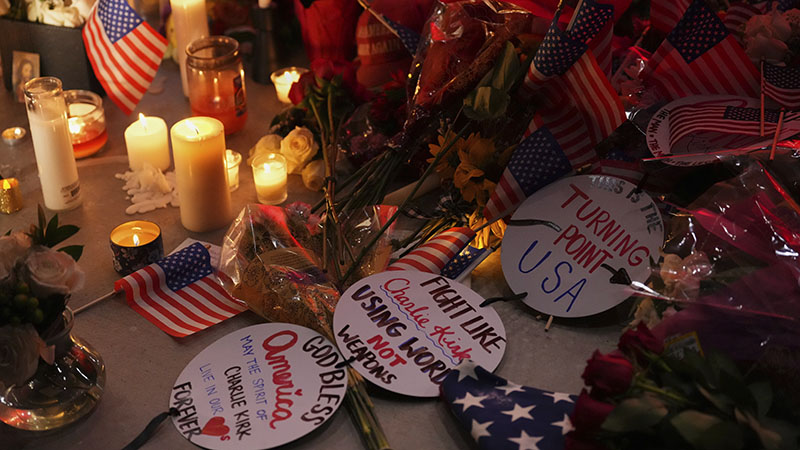
Federal campaigns and committees have spent more than $100 million on security measures over the past decade amid an uptick in threats of political violence, including bomb threats and doxxing, according to a new report. The report, released Thursday by the Public Service Alliance, found that security spending during the 2023-2024 campaign cycle was more…
Read More
The Centers for Disease Control and Prevention (CDC) reportedly delayed the publication of its report detailing the benefits of the COVID-19 vaccine at the behest of its acting director. Acting CDC Director Jay Bhattacharya delayed the report due to concerns over its methodology, The Washington Post reported Thursday…
Read More
- Newly created Polymarket accounts bet big on US-Iran ceasefire in hours before Trump’s announcement

- These Republican-on-Republican disputes are keeping Congress frozen
- Why Trump’s endorsement hasn’t been a ‘close out move’ for Louisiana Senate
- Candidate security costs up in era of political violence: Research

- CDC delays COVID vaccine benefits report
- EPA proposes flexibilities for toxic coal waste

- Pentagon denies threatening Vatican during January meeting with Holy See’s diplomat

- Trump says Iran is not living up to ceasefire agreement in Strait of Hormuz
- This is Rand Paul’s next potential clash with Donald Trump
- Marjorie Taylor Greene unloads on Trump, Netanyahu and the future of MAGA

-

 Politics1 year ago
Former ‘Squad’ members launching ‘Bowman and Bush’ YouTube show
-

 The Dictatorship1 year ago
Luigi Mangione acknowledges public support in first official statement since arrest
-

 Politics1 year ago
Former Kentucky AG Daniel Cameron launches Senate bid
-

 The Dictatorship1 year ago
Pete Hegseth’s tenure at the Pentagon goes from bad to worse
-

 The Dictatorship7 months ago
Mike Johnson sums up the GOP’s arrogant position on military occupation with two words
-

 Politics1 year ago
Blue Light News’s Editorial Director Ryan Hutchins speaks at Blue Light News’s 2025 Governors Summit
-
Uncategorized1 year ago
Bob Good to step down as Freedom Caucus chair this week
-

 Politics12 months ago
Democrat challenging Joni Ernst: I want to ‘tear down’ party, ‘build it back up’