
Politics
Dealing with post-election stress? Now’s the time to breathe.

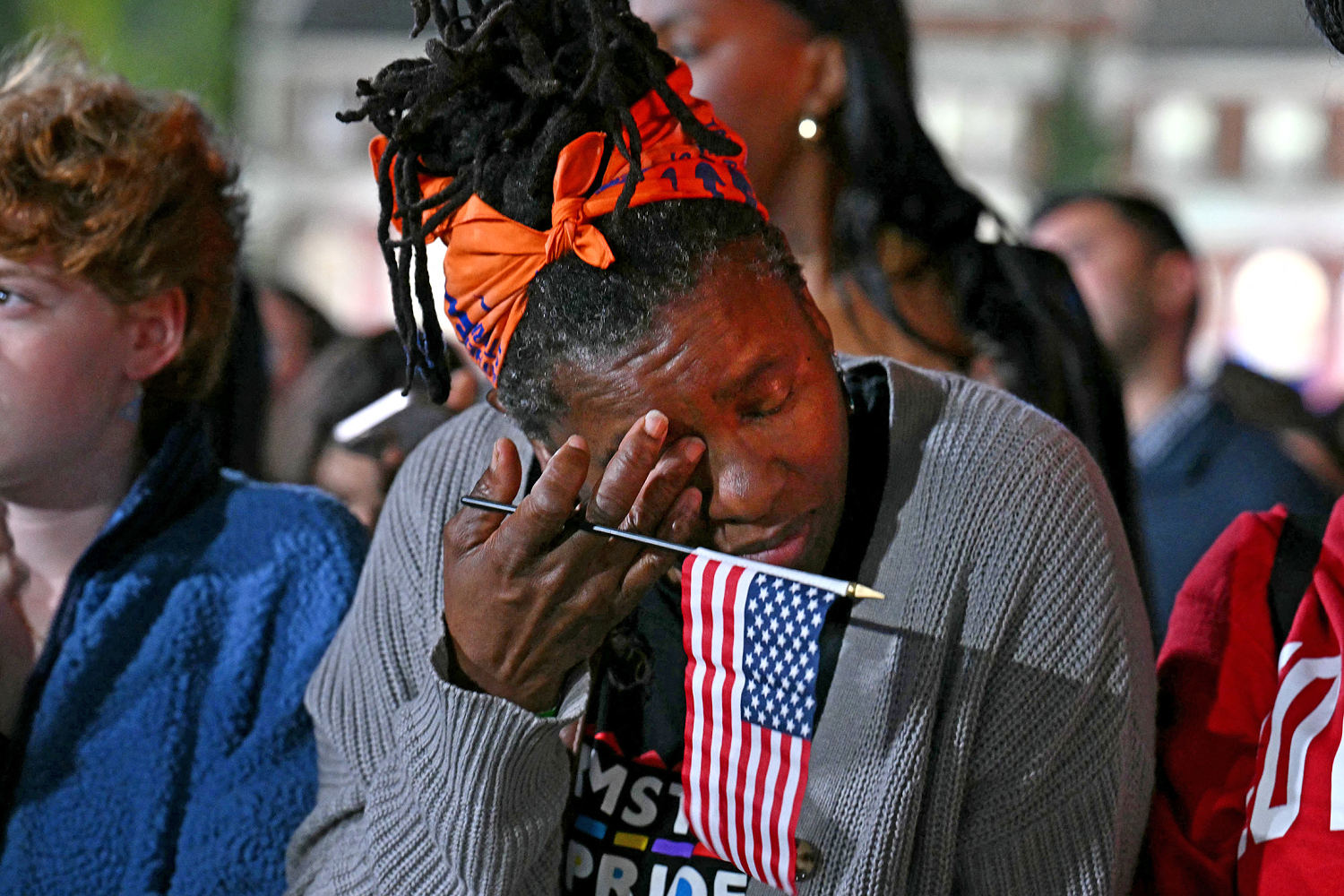
Many of us woke up Wednesday morning — if we slept at all — anxious about how to speak to our children, loved ones and how to feel ourselves.
The 2024 presidential election has left our country more polarized than ever. With now President-elect Donald Trump returning to the White House, many Americans are feeling angry, fearful and deeply concerned about the future. As a physician who has worked in health policy at the highest levels of government, I’ve seen firsthand how political divisions can impact people’s well-being.
We need to recognize that the deep partisan polarization in our country didn’t start with Trump, and it won’t end with his re-election.
I’ve also witnessed the resilience of the American people and our ability to come together in times of crisis. As we look ahead to the next four years, there are some key steps we can take to begin healing our national wounds and bridging the divides that threaten to tear us apart.
First, we need to recognize that the deep partisan polarization in our country didn’t start with Trump, and it won’t end with his re-election. The roots of our current divisions go back decades, fueled by economic inequality, cultural changes and an increasingly siloed media landscape. Trump’s inflammatory rhetoric and norm-breaking behavior have certainly exacerbated these divisions. But simply removing him from office was never going to be a panacea. We must address the underlying factors that have led so many Americans to feel angry, disenfranchised and disconnected from their fellow citizens.
That starts with rebuilding trust, in our institutions, in our democracy, and in each other. Trust in government and the media is at historic lows, with many Americans retreating into partisan echo chambers that reinforce their existing beliefs. We need to create more opportunities for genuine dialogue and understanding across political and cultural lines. This means getting out of our comfort zones and engaging respectfully with those who hold different views. It also requires a shared commitment to facts and truth, even when they challenge our preconceptions.
At the same time, we can’t ignore the very real policy differences and values that divide us as a nation. On issues from health care to immigration to climate change, there are fundamental disagreements about the role of government and the direction our country should take. These debates are a healthy and necessary part of democracy. But we must find ways to disagree without demonizing those on the other side or questioning their basic humanity and patriotism.
As a doctor, I know that healing starts with treating the symptoms of here and now. When patients are presenting with symptoms that are consistent with grief reactions, post-traumatic stress and affective disorders, there are some simple practices I often suggest:
1. Take a news break: Allow yourself 1-2 hours away from all news and social media by putting the phone down and walking outside, rain or shine. This can help lower your stress levels and provide mental space.
2. Practice deep breathing: Try the 4-7-8 technique: Inhale for four counts, hold for seven, exhale for eight. Repeat 4 times.
3. Use grounding exercises: Focus on your five senses to anchor yourself in the present moment. Name five things you can see, four you can touch, three you can hear, two you can smell, and one you can taste.
4. Engage in physical activity: Even a short walk or some stretching can help reduce anxiety and improve mood.
5. Connect with supportive people: Reach out to friends or family who can offer comfort and understanding.
6. Practice self-compassion: Acknowledge your feelings without judgment. It’s OK to feel upset or anxious.
7. Focus on what you can control: Make a list of small, positive actions you can take in your community or personal life.
Remember, it’s normal to feel strong emotions during this time.
Remember, it’s normal to feel strong emotions during this time. If your distress persists or interferes with daily functioning, don’t hesitate to seek professional help.
Ultimately, healing our national divisions will require sustained effort from leaders and citizens alike. We need a renewed commitment to civic education, community building and the shared values that have long united Americans across partisan lines. We must resist the forces seeking to pull us apart and remember that what we have in common as Americans is far greater than our differences.
The road ahead won’t be easy. But I remain optimistic about our ability to overcome this difficult moment and emerge as a stronger, more united nation. Time and again throughout our history, Americans have risen to meet grave challenges. By recommitting ourselves to our highest ideals and to each other, we can do so once again.

Dr. Kavita Patel is a teaching professor of medicine, Division of Hospital Medicine at Stanford University and a board certified internal medicine physician. She served in the Obama administration as director of policy for the Office of Intergovernmental Affairs and Public Engagement in the White House. Her area of expertise is around the intersection of health policy, clinical medicine and innovation. She also spends time advising venture capital and is a medical contributor for NBC news.



Leading Republicans are pulling back from the North Carolina Senate race, sending a clear message: What was a top-tier battleground at the start of the cycle is no longer worth the money.
The foremost Senate GOP super PAC, Senate Leadership Fund, is pausing its future spending in North Carolina and instead launching a seven-figure ad buy in deep-red Kansas, according to one person familiar with the move. The news was first reported by Semafor.
The dramatic change in strategy — less than four weeks before the midterms — comes after SLF previously spent more than $30 million to boost GOP nominee Michael Whatley. It also comes as public polling has continued to show Whatley unable to close the gap against popular former Gov. Roy Cooper, the Democratic candidate.
Republicans are now deprioritizing a state that President Donald Trump carried in all three presidential runs, and that Democrats haven’t won in the Senate since 2008.
“We are all clear-eyed about where North Carolina stands,” said one national GOP operative working on Senate races, who like others in this article was granted anonymity to speak candidly.
SLF isn’t the only major GOP group shifting away from North Carolina as Republicans focus on other must-win seats and deep-red states, amid the Iran war, high fuel prices and other economic fallout of the war in Iran.
Earlier Friday, the Koch-aligned Americans for Prosperity Action left North Carolina off its $22 million list of future spending across key Senate contests, as POLITICO reported. Another major Republican group focused specifically on boosting Whatley — Old North Action — removed $6.5 million in ad reservations from North Carolina’s Senate race last month.
“Michael Whatley is a good man who took one for the team — but with states like Alaska, Kansas, and Texas requiring continued resource commitments, there is only so much,” said another national GOP operative working on midterm races. “Especially against a very popular former Governor in Roy Cooper.”
The National Republican Senatorial Committee is currently running coordinated ad reservations with six of its battleground candidates. Whatley in North Carolina is not one of them, according to data from advertising tracking service AdImpact.
NRSC regional press secretary Nick Puglia said in a statement that “Whatley will put North Carolina families first by cutting taxes and keeping criminals locked up.”
Whatley for months has struggled to boost his name ID against the much better-known Cooper. Some recent public polls show Cooper leading Whatley by double-digit margins. Private polling has also hardly budged, despite the recent influx of spending, according to a person working on the race.
In a statement, Whatley spokesperson DJ Griffin said the team feels “confident we have the resources” to win in November.
“Roy Cooper recently said about federal elections in North Carolina, ‘Democrats are often ahead until they are not,’” Griffin said. “Undecided Voters who break late decide the election in North Carolina and the majority of those Late-Breakers typically go Republican.”
AFP Action and Old North Action did not immediately respond to a request for comment about North Carolina. SLF declined to comment.
SLF’s decision came as a shock to some, but not all, North Carolina Republicans — mostly because Senate Majority Leader John Thune has been scheduled to be in North Carolina for an event with Whatley on Thursday night. Thune ended up joining the event virtually, according to two people with direct knowledge of the matter.
For weeks, top Republicans acknowledged North Carolina may be slipping away. One Republican who attended a donor meeting with Senate Majority Leader John Thune and SLF during the Dallas convention told POLITICO that holding the state would be “tough.”
“The map has shifted a little bit, and to be fair, we knew that was going to be a tough one from the beginning,” said one GOP operative working on Senate races, granted anonymity to speak candidly about the landscape.
Democrats are not letting up, recognizing that the contest in the purple state could still be close.
“A Democrat has not won statewide federal office here in nearly two decades, and North Carolina is a 50-50 state,” Cooper campaign manager Jeff Allen said in a statement.
“We’re building a campaign to earn every vote and make sure North Carolinians know that Roy Cooper will fight for them, while Michael Whatley will continue to enrich himself at their expense,” Allen said.
One North Carolina GOP strategist said that while Whatley has been a “fine” candidate, the current political climate coupled with Cooper’s long record in the state may be too much to overcome. And while Republicans have repeatedly hammered Cooper on crime, he still has strong favorability ratings from his time as governor.
“He’s really kind of hard to paint as a radical, ’cause, you know, he’s like Aunt Martha. She’s just been there forever. And so it’s just very difficult to get any traction on that, because, you know, people say, ‘well, Roy’s okay,’” they said.
When told that SLF was moving money from North Carolina to Kansas, the strategist responded: “$6.50 diesel fuel will kick your ass.”
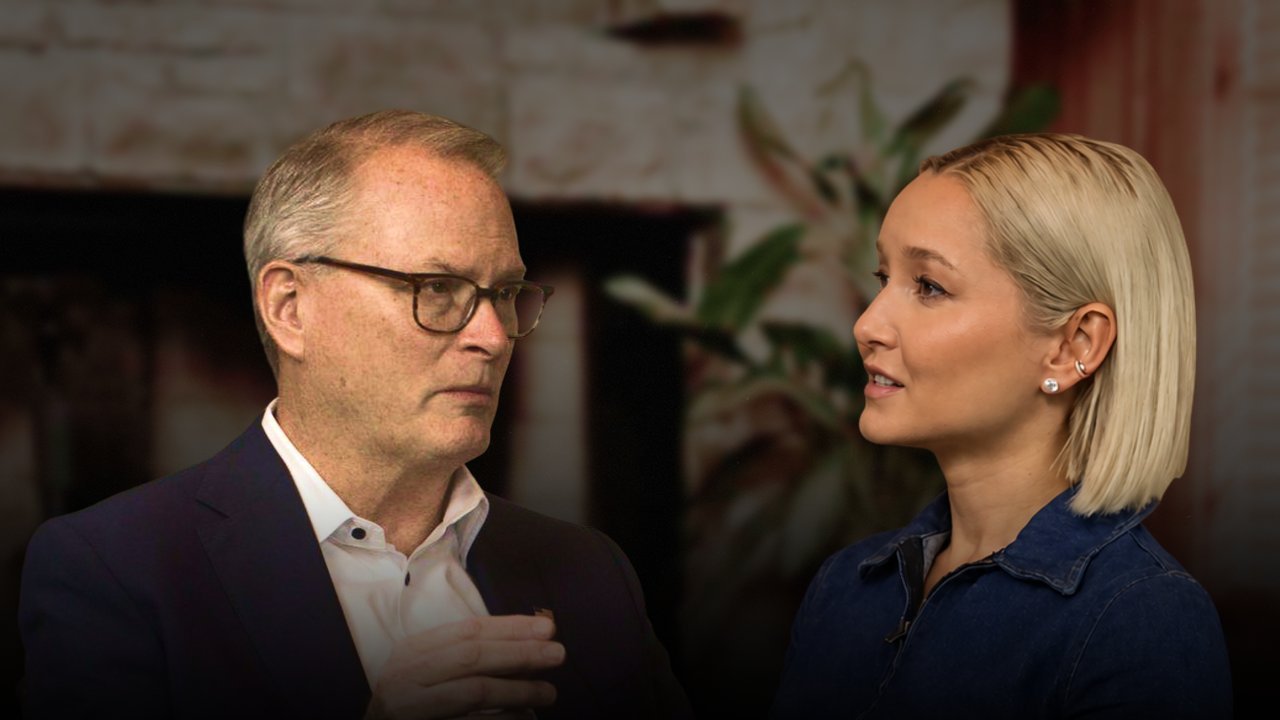
Adam Hamilton on faith, Trump and the fight for Kansas
lead image
- Top GOP groups scale back North Carolina spending
- October
- Sanders, AOC, Merkley propose bill to ban Flock cameras
- Capitol agenda: Dems spend big to help Hakeem’s dream
- The low-profile Democrat helping shape her party’s AI agenda
- ‘A game-changer’: House Dems aim for a big majority that could ease Hakeem Jeffries’ headaches
- Adam Hamilton on faith, Trump and the fight for Kansas

- New York grapples with kinks in $1B Medicaid system
- Top Democratic appropriator wants White House to pay for airing ‘propaganda’
- Barrage of lawsuits targets Trump’s funding cancellation
-

 Politics2 years ago
Former ‘Squad’ members launching ‘Bowman and Bush’ YouTube show
-
Uncategorized2 years ago
Bob Good to step down as Freedom Caucus chair this week
-

 The Josh Fourrier Show2 years ago
DOOMSDAY: Trump won, now what?
-

 Politics2 years ago
Former Kentucky AG Daniel Cameron launches Senate bid
-

 The Dictatorship2 years ago
Pete Hegseth’s tenure at the Pentagon goes from bad to worse
-

 The Dictatorship2 years ago
Luigi Mangione acknowledges public support in first official statement since arrest
-

 Politics2 years ago
Blue Light News’s Editorial Director Ryan Hutchins speaks at Blue Light News’s 2025 Governors Summit
-

 The Dictatorship1 year ago
Mike Johnson sums up the GOP’s arrogant position on military occupation with two words