
The Dictatorship
PILOT RESCUED

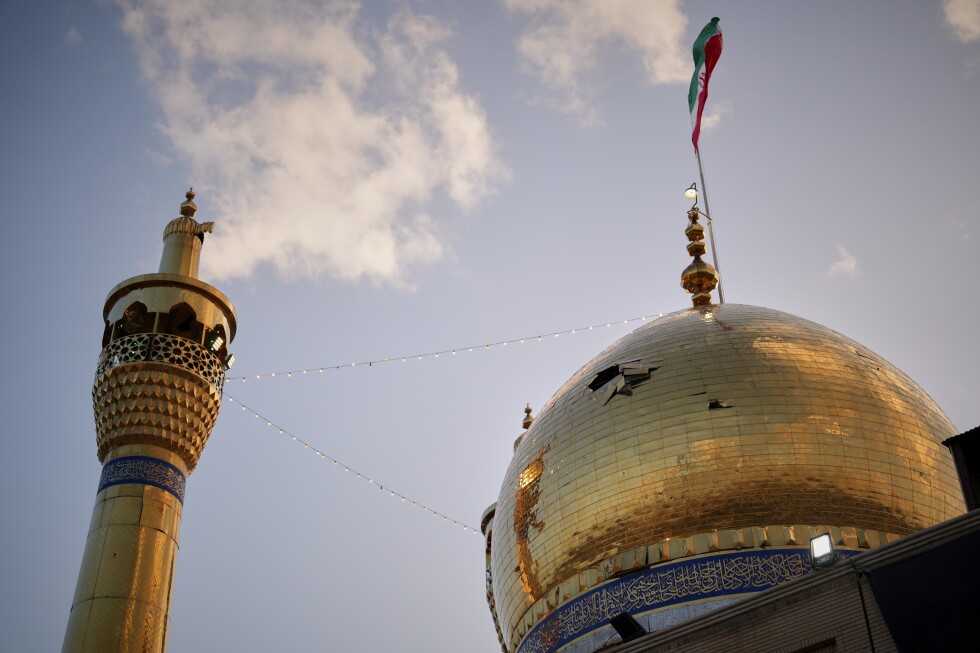
Today’s live updates have ended. Follow more live coverage on the Iran war.
A U.S. service member who has been missing since Iran shot down a fighter jet has been rescued, President Donald Trump wrote in a social media post early Sunday.
A frantic U.S. search-and-rescue operation unfolded after the crash of the F-15E Strike Eaglejet on Friday, as Iran also promised a reward for anyone who turned in the “enemy pilot.”
A second crew member was rescued earlier.
Trump wrote that the aviator is injured but “will be just fine,” adding that he took refuge “in the treacherous mountains of Iran.”
Trump added that the rescue involved “dozens of aircraft” and that U.S. had been monitoring his location “24 hours a day, and diligently planning for his rescue.”
The fighter jet was the first U.S. aircraft to have crashed in Iranian territory since the conflict in late February.
Israel’s military warns the public of another missile barrage coming from Iran, the third-such alert of the day
Another airstrike in southeastern Tehran hits a home, killing at least three people, Iranian state TV reports
Strikes in southern Iran kill 6 people
From Sunday into Monday across Iran, local media and activists reported strikes on Ahvaz, Bandar Lengeh, Karaj and Shiraz as well.
The strikes in Bandar Lengeh and Kong killed at least six people and wounded 17 others, the state-run IRAN newspaper said.
Iranian strikes hit Haifa
Israel’s Magen David Adom and Fire and Rescue services said early Monday that there are two reported sites of Iranian missile hits in the northern city of Haifa.
Video footage provided by Magen David Adom of the affected sites show active fire and bombed cars in what appears to be a residential area.
It is still unclear whether those were direct hits or damage from falling shrapnel from interceptions.
The missile strikes comes a day after another attack from Iran also hit a Haifa residential area, killing two people and injuring others.
Two people were still trapped in the rubble caused by the Sunday attack and their fate is unknown.
Latest reports of live fire in the war
- Israel’s military warned the public Monday morning of another missile barrage coming from Iran, the third-such alert of the day.
- Kuwait again Monday morning said it was firing air defenses over an incoming Iranian missile and drone barrage.
- The United Arab Emirates again said its air defenses also were firing over incoming Iranian fire on Monday morning.
-
Israel claimed a wave of airstrikes early Monday targeting Iran, without offering any immediate information about its targets.
Israel claims a wave of airstrikes targeting Iran early Monday without offering information about its targets
Iranian strike in Haifa kills 2 people
Israel’s Fire and Rescue Authority said early Monday two people were found dead under rubble due to an Iranian missile strike on a residential building in Israel northern city of Haifa.
The rescue mission, which started Sunday evening, is still ongoing as two other people remain under the rubble.
Their fate is still unknown.
Paramedics said Sunday they rushed to the scene and searched through the rubble to dig out the injured, finding an older man in serious condition.
They added that three other people, including a baby, were slightly injured.
Airstrike on Iranian city of Eslamshar kills at least 13
An airstrike early Monday struck a residential building in a city southwest of Iran’s capital, Tehran, killing at least 13 people, Iranian media reported.
The semiofficial Fars news agency and Nour News reported the strike near Eslamshar.
It wasn’t clear why the building had been struck.
Neither Israel nor the United States claimed the strikes early Monday, but they came after Trump issued a profanity-laced threat to Iran that it must reopen the Strait of Hormuz.
JUST IN: At least 13 killed in an airstrike that hit a building in a city southwest of Tehran, Iranian media report
Airstrikes hit Tehran university linked to weapons work
Airstrikes early Monday morning on Iran’s capital, Tehran, targeted the Sharif University of Technology.
Iranian media reported the strikes and damage to buildings there, as well as a natural gas distribution site next to the campus.
It wasn’t immediately clear what had been targeted on the grounds of the university, which is empty of students as the war has forced all schools in the country into online classes.
However, multiple countries over the years have sanctioned the university for its work with the military, particularly on Iran’s ballistic missile program, which is controlled by the country’s paramilitary Revolutionary Guard.
Meanwhile, the Guard and other security forces have been using secondary sites as rally points as their bases have come under repeated attack during the war.
Airstrike in the Irani city of Qom kills at least 5, state-run media reports
The state-run IRAN daily newspaper said in an online message that an airstrike in a residential area of Qom killed at least five people. Qom is a holy Shiite seminary city just south of Tehran.
It wasn’t unclear what the target of the strike was.
Iran has not provided overall casualty figures from the war in days. It also hasn’t discussed its materiel losses.
Airstrikes hit Iran’s capital
Before dawn Monday, a series of airstrikes hit Iran’s capital, Tehran. Explosions rang out into the night, though it wasn’t immediately clear what had been struck.
The sound of low-flying fighter jets could be heard off and on for hours.
In Israel, authorities sounded one missile alert. In Dubai in the United Arab Emirates, two such alerts went off with air defenses firing, but it wasn’t immediately clear what had been targeted by Iran. Kuwait also said its air defenses worked multiple times overnight to intercept incoming
The sound of a low-flying fighter jet is heard over northern Tehran
The sound was followed by at least three massive explosions.
Crude oil prices jump in early trading after Trump threats
Crude oil prices jumped sharply in early trading Sunday after President Trump issued fresh, heightened threats against Iran and its infrastructure.
The price of Brent crude, the international standard, rose more than 2% to $111.25. U.S. crude oil prices were up nearly 3% to $114.54 a barrel.
The last time front-month prices for U.S. crude oil prices were above $115 a barrel was the summer of 2022, in the aftermath of Russia’s invasion of Ukraine and during a period of high inflation across the globe.
Trump on social media vowed to hit Iran’s power plants and bridges and said the country would be “living in Hell” if the Strait of Hormuz, crucial for global trade, isn’t opened by Tuesday.
Official with Lebanese Christian party killed in Israeli strike
Pierre Mouawad, an official with the Lebanese Forces party, was killed along with his wife in an Israeli strike Sunday on an apartment building in the village of Ain Saadeh in the mountains east of Beirut, the state-run National News Agency reported.
Another woman was killed and three women were wounded, Lebanon’s health ministry said.
The Israeli military has made no statement about the strike, and its intended target remains unclear.
The Lebanese Forces party is opposed to Hezbollah and has blamed the Shiite militant group for dragging Lebanon into a new war with Israel.
Israeli strikes in Christian-majority areas have led to sectarian tensions, with local residents fearing that Hezbollah members may be hiding among displaced Shiite civilians taking refuge there.
Doctors Without Borders condemns Israeli strike in Beirut neighborhood
The international aid group, known by its French acronym MSF, said the strike in Beirut’s Jnah neighborhood on Sunday hit “a densely populated residential area … only meters from Rafik Hariri Public Hospital.”
Lebanon’s Health Ministry said the strike, which came without a warning, killed five people, including a 15-year-old girl, and 52 wounded, including eight children.
“We are seeing elderly people and adolescents arriving with critical injuries to the head, chest, and abdomen, including shrapnel wounds,” Luna Hammad, MSF medical coordinator working in the hospital, said in a statement. “When strikes hit crowded residential areas without warning, the consequences are severe, both in human casualties and in hospitals’ capacity to respond.”
MSF said that “strikes this close to a hospital spread fear and can stop people from seeking lifesaving care.”
The Israeli military has not named the intended target of the strike, which comes five weeks into the renewed Israel-Hezbollah war in Lebanon.
Iran says US bombarded its own aircraft, personnel
Iran’s joint military command spokesperson said Sunday that the U.S. had to bombard its own military aircraft and personnel that were struck and downed by Iranian fighters to “prevent embarrassment for President Trump and the hollow image of its military.”
Ebrahim Zolfaghari added that several U.S. military aircraft entered Iranian airspace to carry out a rescue operation for the pilot of a downed U.S. fighter jet, but said Iranian fighters and air defense systems struck the aircraft and forced them to make an emergency landing in an area south of Isfahan.
A regional intelligence official, who was briefed on the covert mission and who spoke on condition of anonymity to discuss it, said the U.S. military blew up two transport planes due to a technical malfunction that forced them to bring in additional aircraft to complete the rescue.
Over the weekend, the United States pulled off a daring rescue of two aviators whose fighter jet was shot down by Iran, plucking the pilot from behind enemy lines before setting off a complicated extraction of the second service member who hid deep in the mountains as Tehran called for Iranians to help capture him.
Bahrain’s foreign minister urges action on Strait of Hormuz
Abdullatif bin Rashid al-Zayani wrote in a statement Sunday that Iran’s weekslong chokehold on the critical waterway has created an “escalating crisis that threatens global stability, food security, and the foundational principles of international law.”
He urged action by the United Nations Security Council on a Bahrain draft proposal, which has faced crucial opposition from Russia, China and France over several issues, including language authorizing the use of force to open the strait. All three countries wield veto power over any resolution in the 15-member council.
The vote on the heavily revised and watered-down draft was scheduled to take place last week, but has been postponed due to lack of consensus.
Al-Zayani noted that the “window of opportunity is narrowing day by day” and failure by the international community to act “sends a dangerous message that vital arteries of the global economy can be threatened without consequence.”
Iranian negotiators have ‘immunity from death,’ Trump says
The U.S. president made the comments during an off-camera interview with Fox News.
“We’ve given them immunity from death. And we’ve told the people that we’re dealing with, who are the top people,” the president said.
Trump contended that the Iranians had already conceded on having a nuclear weapon.
“They’re not even negotiating that point, it’s so easy,” Trump told Fox News. “That’s already been conceded. Most of the points are conceded.”
Four people were injured in a fire at the UAE’s Khor Fakkan port
The United Arab Emirates’ Sharjah government said that one Nepali and three Pakistani nationals were wounded Sunday in a fire caused by falling debris from an intercepted Iranian projectile at Khor Fakkan port, according to a statement posted on the social platform X.
One individual was severely wounded and had to be hospitalized, while the others suffered mild and moderate injuries, the statement said.
The statement did not specify whether the intercepted projectile was a missile or a drone.
4 missing in Haifa apartment building strike
Israel’s Fire and Rescue Authority said Sunday they were searching for four people in the northern Israeli city of Haifa after an Iranian missile strike.
Paramedics said they rushed to the scene and searched through the rubble to dig out the injured, finding an older man in serious condition. They added that three other people were mildly injured, including a baby.
Associated Press video filmed at the scene showed much of the multistory building reduced to rubble.
The rescuers described the damage as resulting from a direct hit, but it was not immediately clear if the building had been struck by a missile or shrapnel from an interception.

Israeli security forces and rescue teams work amid the rubble of a residential building struck by an Iranian missile in Haifa, Israel, Sunday, April 5, 2026. (AP Photo/Ariel Schalit)
Israeli security forces and rescue teams work amid the rubble of a residential building struck by an Iranian missile in Haifa, Israel, Sunday, April 5, 2026. (AP Photo/Ariel Schalit)
Israeli fire kills 1 Palestinian in Gaza City, health officials say
The strike on a group of people also wounded others, according to health officials at the Shifa hospital, where the casualties arrived.
The Israeli military did not immediately respond to a request for comment.
The Gaza Strip has seen near-daily Israeli fire and strikes since a fragile ceasefire was reached in October, and more than 700 Palestinians have been killed since then, according to figures from the Gaza Health Ministry.
The ministry, which is part of the Hamas-led government, maintains detailed casualty records that are seen as generally reliable by U.N. agencies and independent experts. But it does not give a breakdown of civilians and militants.
Since the Iran war began over a month ago, Gaza militants have sat out the conflict and haven’t claimed any attacks against Israel.
Iran’s head of parliament lashes back at Trump
In a social media post on Sunday, Iran’s parliamentary Speaker Mohammad Bagher Qalibaf dismissed Trump’s recent threats of targeting Iran’s infrastructure as “reckless.”
“You won’t gain anything through war crimes,” Qalibaf wrote on X. “The only real solution is respecting the rights of the Iranian people and ending this dangerous game.”
Top Iranian official threatens closure of the Bab al-Mandeb Strait
A former foreign minister and adviser to the supreme leader warned Sunday that “the resistance front” could target the Bab el-Mandeb Strait off the Red Sea, through which about 12% of the world’s trade typically passes.
“If the White House thinks of repeating its stupid mistakes, it will quickly realize that the flow of global energy and trade can be disrupted with a single signal,” Ali Akbar Velayati said on social media, signaling possible closure of the vital waterway if the U.S. escalates attacks.
Iran leads the so-called “Axis of Resistance,” which includes armed groups in Lebanon, Iraq and Yemen, where Houthi rebels had in the past cut off transit through Bab el-Mandeb with attacks on vessels.
Iran has effectively stopped cargo traffic through the Strait of Hormuz during the conflict, leading to higher oil and gas prices globally.
Iran floats a new condition for Strait of Hormuz reopening
Seyyed Mohammad Mehdi Tabatabaei, a presidential spokesperson, wrote Sunday on the social platform X that the reopening of the vital waterway can only happen if transit revenues are partially earmarked to compensate Iran for war damages.
There has been growing alarm over Iran’s grip on the Strait of Hormuz, critical for shipments of oil and gas from the Persian Gulf to Europe and Asia. Trump has threatened to attack Iran’s infrastructure if it fails to reopen the strait by Monday.
Oil-producing countries decide on symbolic output increase
Eight countries from the OPEC+ oil cartel say they will increase production again in May to ensure stability on the oil market — a decision overshadowed by the effective closure of the Strait of Hormuz to tanker traffic due to the Iran war.
The countries said in a statement carried Sunday on the Organization of the Petroleum Exporting Countries website that production would be increased by 206,000 barrels per day.
That, however, remains largely on paper due to the loss of an estimated 12 million barrels a day from Persian Gulf producers due to the Hormuz closure.
The countries — Saudi Arabia, Russia, Iraq, the United Arab Emirates, Kuwait, Kazakhstan, Algeria and Oman — warned that damage from attacks on oil infrastructure will take “a long time” to repair and return supply to previous levels.
Such attacks, as well as disruption of navigation, undermine efforts to support stable prices “for the benefit of producers, consumers and the global economy,” they said.
Iranian government minister dismisses Trump threat in AP interview
Iran’s culture minister has dismissed President Donald Trump’s latest threats, calling the U.S. leader an “unstable, delusional figure.”
“Iranian society generally does not pay attention to his statements, as it believes he lacks personal, behavioral and verbal balance, and constantly shifts between contradictory positions,” Sayed Reza Salihi-Amiri told The Associated Press in an interview Sunday.
Trump on Sunday said he would strike Iran’s power plants and bridges this Tuesday if the Strait of Hormuz remains closed to marine traffic. In an expletive-laden post, Trump promised the Iranians would be “living in Hell” if the waterway isn’t opened.
“It seems Trump has become a phenomenon that neither Iranians nor Americans are able to fully analyze,” said Salihi-Amiri.
He said the Strait of Hormuz is “open to the world but closed to Iran’s enemies.”
Latest attack from Iran hits Haifa apartment building, Israel’s rescue services say
Paramedics say they rushed to the scene and searched through the rubble to dig out the injured, finding an older man in serious condition. They say three other people were mildly injured, including a baby.
Photos and video showed much of the multistory building reduced to rubble.
The rescuers described the damage as resulting from a direct hit. It was not immediately clear if the building had been struck by an Iranian missile or shrapnel from a missile interception.
2 Black Hawk helicopters were hit during the rescue, but got to safety
The two helicopters were able to navigate to safe airspace, according to a person familiar with the situation who spoke on condition of anonymity to discuss the sensitive information.
It was not clear where the Black Hawks landed or if their crew members were injured.
Iran’s joint military command has claimed it struck two U.S. Black Hawk helicopters.
Kuwait and Qatar report further aerial attacks
The Kuwaiti army said Sunday that Iran had fired a total of nine ballistic missiles, four cruise missiles and 31 drones at Kuwaiti territory over the past 24 hours.
That brings the total number of projectiles that have targeted Kuwait since the war erupted to 740 drones, 336 ballistic missiles and 13 cruise missiles, according to an official statement posted on the social platform X.
Also, the Qatari army reported that it had on Sunday intercepted several drones and two cruise missiles fired by Iran, according to another statement on X.
Muslim civil rights group accuses Trump of mocking Islam
The Council on American-Islamic Relations, a nationwide advocacy group, assailed Trump for invoking Allah in his Truth Social post threatening Iran.
“President Trump’s deranged mocking of Islam and his threats to attack civilian infrastructure in Iran are reckless, dangerous, and indicative of a mindset that shows indifference to human life and contempt for religious beliefs,” CAIR said in a statement.
Trump, in his post on Easter Sunday, demanded that Iran open the Strait of Hormuz by Tuesday, “or you’ll be living in Hell – JUST WATCH! Praise be to Allah.”
“The casual use of ‘Praise be to Allah’ in the context of violent threats reflects a disturbing willingness to weaponize religious language while simultaneously denigrating Islam and its followers,” CAIR said.
Iranians say Trump’s threats to strike infrastructure is ‘intent to commit war crime’
Hours after Trump’s expletive-laden post promising Iran will be “living in Hell” over the Strait of Hormuz closure, Tehran’s mission to the U.N. called the open threats to target civilian infrastructure “a direct and public incitement to terrorise civilians and clear evidence of intent to commit war crime.”
“The international community and all States have legal obligations to prevent such atrocious acts of war crimes,” the mission said in a post on the social platform X. “They must act now. Tomorrow is too late.”
Iran says Ahvaz Shahid Soleimani airport hit
Iran state-run television IRIB quoted a security official as saying that so far, no casualties were reported in the aftermath of a US-Israeli strike on Sunday.
Also on Sunday, the United Arab Emirates’ Sharjah government said that Khor Fakkan port was targeted and that no casualties were reported so far, according to a post on the social platform X by the government’s media office.
Earlier, UKMTO said that a captain had witnessed multiple splashes from unknown projectiles near his vessel while conducting loading operations at the same port.
Border crossing between Lebanon and Syria awaits threatened Israeli strikes
The main border crossing between Lebanon and Syria was closed Sunday after the Israeli military warned of plans to strike it the night before, alleging that Hezbollah was using it to smuggle military equipment.
Samir Abdelkhaleq from the Lebanese border town of Majdal Anjar said the closure is an economic blow to many.
“These are real losses for people and for business owners,” he said. “Everyone is just waiting for the strike to be over.”
Syrian authorities, who have a hostile relationship with Hezbollah, have denied that the crossing is being used for smuggling. In recent days, Syria announced the discovery and closure of several tunnels they said were being used by Hezbollah for smuggling.
More than 200,000 people have crossed from Lebanon into Syria in the five weeks since the outbreak of renewed war between Israel and Hezbollah.
US official says CIA launched ‘deception campaign’ to find second crew member
Details about the rescue of a second U.S. crew member in Iran, who was a weapons systems officer, are trickling out hours after Trump’s announcement.
A senior U.S. administration official said Sunday that prior to locating the crew member, the CIA spread word inside Iran that U.S. forces had already found him and were moving him on the ground for exfiltration.
The official, who spoke on the condition of anonymity to discuss details not yet made public, said the campaign managed to confuse Iranian officials while the agency conducted its search-and-rescue operations.
Over 1,400 people in Lebanon have been killed in war between Israel and Hezbollah militant group
Among the 1,461 killed are 97 women, 129 children, and 54 paramedics, according to Lebanon’s Health Ministry.
4,430 people have been wounded since the latest fighting began on March 2.
After Hezbollah fired rockets toward northern Israel, the Israeli military launched an intense military operation with daily strikes across the country and a ground invasion into southern Lebanon.
Top satellite imagery provider says US asked it to suspend access to Mideast imagery
The U.S. government has asked top providers of satellite imagery to stop publishing p hotos from parts of the Middle East because of the Iran war, says the company Planet Labs.
Planet Labs and companies like it provide near-daily imagery crucial to reporting on regions where on-the-ground access for journalists is impossible, limited or unsafe. That has made it an especially key tool for reporting on the Iran war, which has impacted nearly all Middle Eastern countries.
In a Saturday email to users, including the AP, Planet Labs said it was complying with the U.S. government’s requests and would indefinitely delay publication of imagery taken after March 9, 2026. It said it would release new imagery on a “case-by-case basis and for urgent, mission-critical requirements or in the public interest.”
The company said the new measures would be in place until the end of the conflict.
Democratic US Sen. Kaine warns Trump administration on war rhetoric
As he expressed “overwhelming relief” at the rescue of the military personnel in a downed U.S fighter jet in Iran, Virginia Sen. Tim Kaine called on the president and his top officials to dial down their rhetoric amid the war in the Middle East.
Kaine referenced remarks from Defense Secretary Pete Hegseth last month when the latter declared “no quarter, no mercy for our enemies” at a news conference.
“This kind of rhetoric is really dangerous,” Kaine said Sunday in an interview with NBC’s “Meet the Press.
He added: “That really encourages them to mistreat our folks.”
Turkish foreign minister to meet with Syrian and Ukrainian presidents
Turkish Foreign Minister Hakan Fidan arrived in Damascus Sunday, with Turkish media reporting that he will hold a trilateral meeting with Ukrainian President Volodymyr Zelenskyy and Syrian President Ahmad al-Sharaa.
According to state-run Anadolu Agency, topics of discussion will include joint projects for the rebuilding of Syria as well as regional developments, such as the integration of northeast Syria into the central government and the impact of nearby conflicts in Iran and Lebanon.
Fidan’s last visit to Syria was on Dec. 22, 2025, alongside Defense Minister Yasar Guler and National Intelligence Chief Ibrahim Kalin.
Christians celebrate Easter in wartime Tehran
Armenian Christians celebrated Easter at a church in Iran’s capital on Sunday, striving to maintain a sense of normalcy five weeks into the war.
Families embraced and children exchanged painted eggs at the St. Sarkis Cathedral in central Tehran. Iran’s capital has been targeted by daily airstrikes since the United States and Israel launched the war on Feb. 28.
“Whether we like it or not, we have young children who do not understand what’s going on,” said Juanita Arakel, 40, an English language teacher. “They just need to feel normal.”
The Islamic Republic, with a population of around 90 million, is home to some 300,000 Christians, mostly Armenians, and three seats in parliament are reserved for Christians.
“My appeal first is to those who started the war to look up to the sky where love and mutual respect was given to us, whether through the birth of Jesus or his rising from the dead,” said Sepuh Sargsyan, the archbishop of the Armenian Diocese of Tehran.
“Our calls and prayers are that we will be able to end this war.”
Across the Middle East, Christians have departed in large numbers in recent decades, fleeing war, persecution and upheaval, and seeking economic opportunities in the West.
Trump offers details of ‘seriously wounded’ pilot’s rescue
U.S. President Donald Trump said the effort to rescue the second pilot was a rarely attempted type of operation because of the potential dangers.
He said in a social media post on Sunday that the pilot was “seriously wounded and really brave” and rescued from “deep inside the mountains” in Iran.
Trump said the pilot is a “highly respected Colonel” and that Iranian forces were “looking hard, in big numbers” and “getting close” to him.
He also gave details of the rescue of the first pilot, who Trump said was rescued in “broad daylight” after seven hours over Iran.
Trump repeats threat to strike Iran’s infrastructure if Strait of Hormuz isn’t reopened
U.S. President Donald Trump said on Sunday he would strike Iran’s power plants and bridges this Tuesday if the Strait of Hormuz remains closed to marine traffic.
In an expletive-laden post, Trump promised they would be “living in Hell” if the waterway isn’t opened.
JUST IN: Trump promises to strike Iran’s power plants and bridges on Tuesday if Strait of Hormuz isn’t reopened.
Iran threatens more forceful attacks if its civilian installations are targeted
Iran’s joint command threatened on Sunday to step up its attacks on oil and other civilian infrastructure facilities if the U.S. and Israel attack Iranian civilian facilities.
Iran’s state-run news agency quoted the Khatam al-Anbiya Headquarters as saying that it it had attacked a number of oil other infrastructure facilities in Israel and in the Gulf Arab countries after an Israeli airstrike struck Iran’s largest petrochemical complex.
President Donald Trump has threatened to unleash “all Hell” on Iran if the Strait of Hormuz isn’t reopened.
Iran says it has destroyed four US aircraft
Iran’s joint command claimed on Sunday that the aircraft were destroyed during a complex rescue of a crew member whose fighter jet was shot down on Friday.
Iran’s state TV quoted the Khatam al-Anbiya Headquarters as saying that the aircraft, which included two C-130 military transport planes and two Black Hawk helicopters, were destroyed in the province of Isfahan, where the rescue took place.
Earlier Sunday, Iran’s state TV aired a video showing what it claimed were parts of U.S. aircraft that they had shot down and a photo of thick black smoke rising into the air.
The claims could not be independently verified.
Israeli strike causes severe damage to three-story building south of central Beirut
Lebanon’s state-run National News Agency said the building in the Jnah neighborhood was filled with residents and was located across the street from the government-run Rafic Hariri University Hospital.
The strike came without warning soon after a previous one in the area that came with advance notice.
There was no immediate word on the number of casualties.
UAE reports attacks with dozens of missiles and drones
The United Arab Emirates’ Defense Ministry said on Sunday that among the 60 projectiles fired at the country were nine ballistic missiles, 50 drones and one cruise missile.
This brings the total number of projectiles that have targeted the UAE during the war to 507 ballistic missiles, 24 cruise missiles, and 2,191 drones.
Iran’s internet blackout becomes the world’s longest
An internet monitoring group said on Sunday that Iran’s internet blackout is now the world’s longest nation-scale internet shutdown on record.
NetBlocks said the internet blackout in Iran has lasted for 37 consecutive days, exceeding all other comparable incidents the group has recorded.
Drone attacks ignite fires, cause serious damage at oil and petrochemical facilities in Kuwait
The Kuwait Petroleum Corporation said on Sunday fires ignited at several of the company’s operational facilities as well as to facilities at the Petrochemical Industries Company, causing “significant” damage.
It said firefighters were working to control the fires.
No casualties were reported.
Israel says Iran has launched new missile barrage
The Israeli military said on Sunday that its air defenses are being activated.


The Senate Judiciary Committee postponed a vote on acting Attorney General Todd Blanche’s nomination, a spokesperson said late Wednesday, as two retiring Republicans on the panel dug in over President Donald Trump’s personal “anti-weaponization” deal with the government he runs.
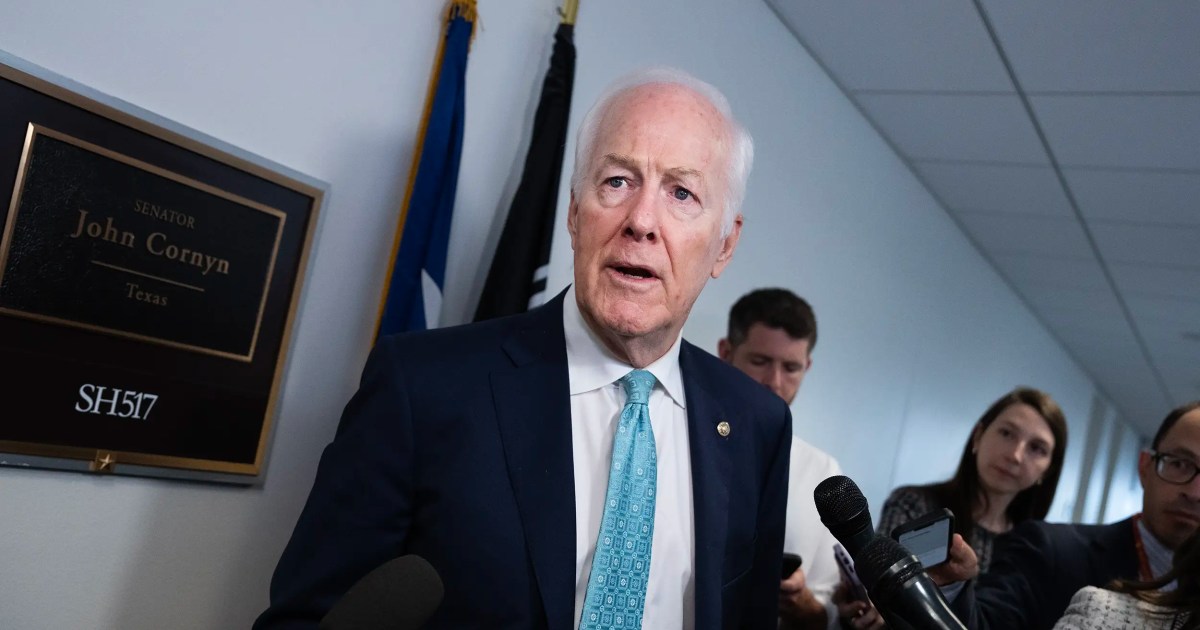
Sen. Chuck Grassley’s decision to delay the committee vote that had been set for Thursday marks a setback for one of Trump’s highest-profile Cabinet nominees, at the hands of Texas Sen. John Cornyn and Sen. Thom Tillis of North Carolina, a pair of Republicans set to leave the chamber next year.
“Chairman Grassley works to set President Trump’s nominees up for success in committee, not failure. Senators Cornyn and Tillis want written assurances from the Department of Justice regarding the Trump-IRS settlement,” the committee spokesperson said.
Blanche’s nomination to permanently head the Department of Justice needs the support of either Cornyn or Tillis to make it out of the committee to a vote by the full Senate, assuming all Democrats remain opposed.
“Why don’t you call over the Department of Justice and tell them they have one hour and 50 minutes to get me what I asked for,” Cornyn told reporters Wednesday afternoon amid the hardening standoff over his demand that Blanche and the DOJ put in writing a commitment never to pursue the president’s prized “anti-weaponization” fund, and to clarify the terms of Trump’s personal deal with the Internal Revenue Service.
Tillis told MS NOW that the conversations were complicated by the need for the Justice Department to get “several parties” to agree on the language of the statement Cornyn and Tillis are seeking.
“What I’ve advised the chair, and I would assume Senator Cornyn said something similar, is that we’re not prepared to vote yes yet,” he added.
“The Department has been in regular communication with Committee members for weeks, and we look forward to continuing to work productively with Senators to address any concerns,” a Justice Department spokesperson said in response to the decision to postpone the committee vote.
Cornyn was set to meet with Blanche on Wednesday morning, but the meeting was called off after Blanche failed to meet the senator’s demand for written proposals to modify the controversial settlement agreement he brokered between Trump and the IRS. The Republican senator is set to leave Congress when his term ends in January after a bruising May primary loss to Texas Attorney General Ken Paxton, Trump’s chosen candidate.
“Maybe John Cornyn’s upset with me because I didn’t endorse him,” Trump told reporters Wednesday afternoon in the Oval Office. “I don’t know what it is, but I haven’t heard that there’s a problem. I heard (Blanche) is going through quite nicely.”
Cornyn made clear to Blanche during his confirmation hearing that he will not get his support until he agrees to reopen and modify the settlement. Due to the committee’s narrow Republican majority, one GOP “no” vote is enough to sink Blanche’s nomination.
The senator has asked Blanche to provide proof that the proposed nearly $1.8 billion “anti-weaponization” fund established as part of the deal between Trump and the IRS is formally dead, and he has also demanded Blanche narrow the tax audit immunity provisions the settlement afforded to Trump and his family.
Blanche has publicly stated that his department has dropped the fund, but he and the DOJ have dodged requests from Cornyn and a federal judge to put that in writing.
After announcing his meeting with Blanche would not take place Wednesday morning, Cornyn told reporters that changes from Blanche “in a modified release form” would be acceptable, but that “for some reason … they simply refuse to do it,” referring to the DOJ.
Shortly after the meeting was called off, a Justice Department official told MS NOW that the department “provided a written proposal to Senator Cornyn’s staff yesterday following ongoing discussion with both the Committee and the Senator’s office.”
Cornyn said that proposal was “not responsive” to his demands because it did not address the tax audit immunity provisions in the settlement, one of his key demands.
In May, Blanche signed an addendum as part of the deal that granted Trump, his family and his businesses immunity from pending IRS tax audits. That agreement, which has been decried by former IRS officials and legal experts as unlawful self-dealing, is being contested in federal court.
Cornyn noted that Blanche testified under oath that he could meet the request during his confirmation hearing.
“Maybe they think I’m just going to give up or you know, go along, but they’re mistaken,” Cornyn said when asked why he thinks the DOJ could be slow-walking his request.
Kevin Frey contributed to this report.
Sydney Carruth is a breaking news reporter covering national politics and policy for MS NOW. You can send her tips from a non-work device on Signal at SydneyCarruth.46 or follow her work on X and Bluesky.
Mychael Schnell is a reporter for MS NOW.
Ebony Davis is a breaking news reporter for MS NOW based in Washington, D.C. She previously worked at BLN as a campaign reporter covering elections and politics.
When Israeli Prime Minister Benjamin Netanyahu arrived this week for his tour of Washington, he may have had a mission in mind.
Netanyahu needed to overcome his newly diminished stature and waning influence over his once close friend President Donald Trump as both leaders grapple with the unpopularity of a war they started together and is escaping their control.
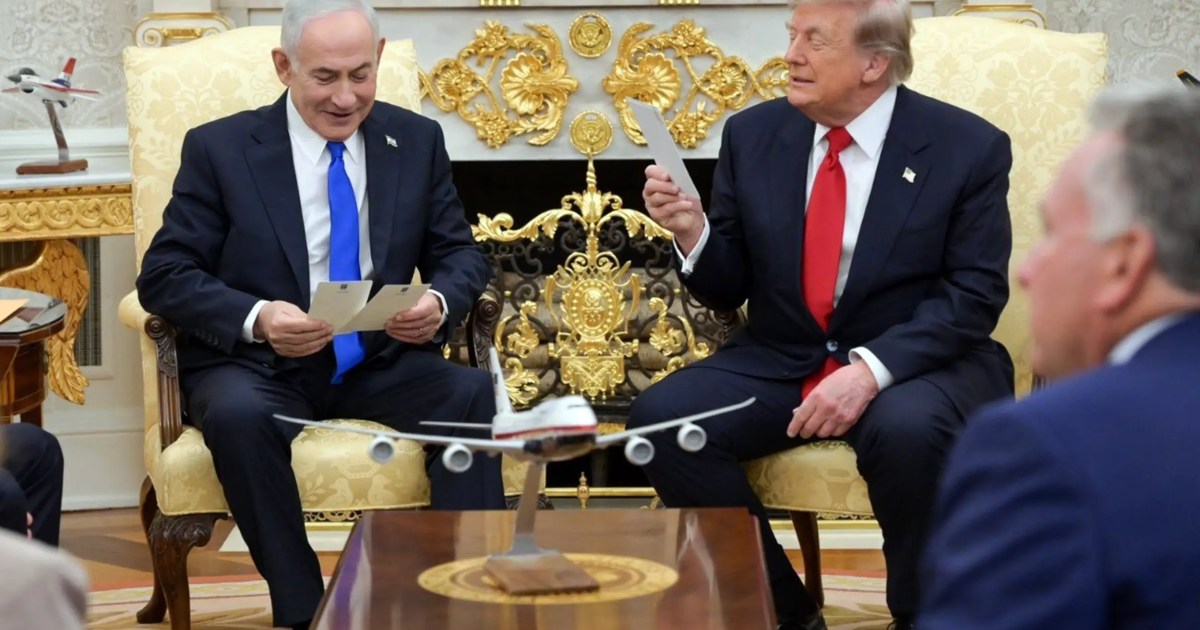
His meeting at the White House with Trump on Tuesday, which was closed to the press, was the first face-to-face encounter between the two allies since the U.S. and Israel launched a joint attack against Iran on Feb. 28.
Trump gave him a muted welcome and afterwards simply described the meeting as “very good.” “Obviously, many important subjects were discussed,” the president wrote on Truth Social.
Rather than an intimate one-on-one setting, the Oval Office was full of top U.S. officials — Vice President JD Vance, Secretary of State Marco Rubio, Treasury Secretary Scott Bessent, Secretary of Defense Pete Hegseth, Chairman of the Joint Chiefs of Staff Gen. Dan Caine, and special envoy Steve Witkoff.
But Netanyahu continued the full court press on the Trump administration.
Over the course of two days, in addition to seeing Trump and attending Sen. Lindsey Graham’s funeral at the Capitol, Netanyahu also met separately with Vance, Hegseth, and Rubio, White House and Israeli officials confirmed to MS NOW.
The Israeli prime minister’s slate of meetings with key U.S. national security officials comes at a pivotal moment in the Iran conflict as tensions escalate in the region and Americans increasingly sour on the war. A recent Quinnipiac poll shows 60% of American voters opposing U.S. military action against Iran and 74% against sending U.S. ground troops into Iran.
Not only does Trump face pressure as Republicans face an uphill battle to retain congressional control in this fall’s midterms, Netanyahu’s fate as prime minister is at stake in Israel’s upcoming September elections – and he can’t afford to lose Trump’s favor.
The talks largely focused on what to do next as Iran continues to menace shipping in the Strait of Hormuz and retaliate against American bases in the region and launch attacks on Gulf allies.
According to a senior Israeli official who was granted anonymity to describe the closed-door meeting, President Trump and Israeli Prime Minister Netanyahu did not come to a final decision after discussing three paths forward: get a “good deal” focused on Iran’s nuclear program and enriched material, have no deal and instead continue the blockade and economic pressure, or take escalated military action.
But Netanyahu did not tell Trump what he should do – nor did he express a preference.
The senior Israeli official noted Netanyahu has not ruled out diplomacy – as long as it is coupled with “very strong pressures,” calling the push to dismantle Iran’s nuclear program “a contest of will and a contest of force.”
“There are ways of squeezing them and squeezing them and squeezing them and negotiating at the same time,” the official said.
Netanyahu did not present President Trump with new intelligence regarding the underground Iranian nuclear facility Pickaxe Mountain, per the senior Israeli official, noting the U.S. and Israel already are constantly sharing intelligence – and know where Iran’s highly enriched material is. “We don’t think it’s moved, and I think we have a pretty good grasp on that,” the official said.
During their meeting on Tuesday, Trump and Netanyahu discussed ways Israel and the U.S. can work together to stop Iran’s nuclear program and get the Strait of Hormuz open to maritime trade, the senior Israeli official said.
The two leaders also discussed a third goal: to continue to undermine the Iranian regime and “possibly create future conditions for a change in that area.” U.S. officials have backed away from pursuing paths that would overthrow the current leadership, but Netanyahu still believes that could happen.
“The chasm that has been created between the people and the regime is not about to be closed,” the senior Israeli official said of Netanyahu’s thinking.
Netanyahu advised Trump in February that Israeli intelligence indicated launching strikes against Iran would lead to the toppling of the Islamic Republic’s regime – and five months later, the slain ayatollah’s son retains power with a close circle of hardliners, calling into question the accuracy of Israel’s intelligence apparatus.
But the senior Israeli official said at the time, Netanyahu did not promise the Iranian people would take fate into their own hands following a coordinated attack. Rather, he chose his words carefully and said that an attack could create conditions to “advance the probability or the possibility that that would happen.”
The conditions needed for the Iranian regime to fall, “did not materialize,” the official told MS NOW, adding, “not for lack of insight, but for either operational failure or decisions that were made.”
Despite Netanyahu insisting Israel and the U.S. are on the same page, differences still remain: the sale of F-35 fighter jets to Turkey and the Saudi nuclear arrangement did not come up during Wednesday’s White House meeting, according to a second Israeli official granted anonymity to describe sensitive discussions.
Meanwhile, the conflict continues to spread, with an Iranian drone attacking a U.S. gas storage tanker off the coast of Egypt on Wednesday.
Trump indicated he would not let Iran’s latest action slide, telling reporters on Wednesday that the U.S. would retaliate against Iran even as he leaves room for diplomatic talks to resume.
“It’s our turn, and we’ll see if we get there with an agreement at some point,” Trump said. “But we’re going to hit them very hard.”
As for what it would take for Israel to join the U.S. strikes, the senior Israeli official said that if Israel is attacked by Iran, “We will respond very, very forcefully and very quickly. And I think Iran would make a great mistake.”
Julia Jester covers politics for MS NOW and is based in Washington, D.C.
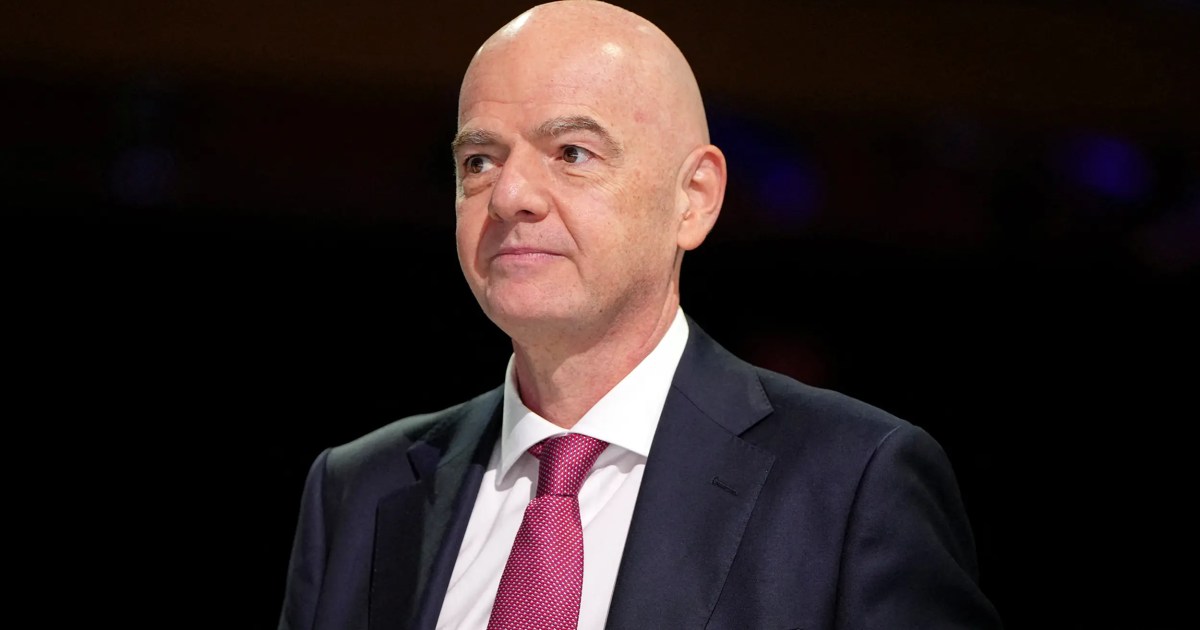
International rage over FIFA’s close ties to President Donald Trump has reached a fever pitch after soccer’s governing body announced a plan to sell a significant stake to an investor group led by Joshua Kushner, the brother of Trump’s son-in-law.
The president and his family have all but turned the White House into their personal piggy bank. And FIFA — which has its own sordid history of corruption — seems to have made itself a party to Trump’s self-enrichment under Gianni Infantino’s leadership, such as by paying for space inside Trump Tower in New York. (The organization has defended the office rental as a World Cup outpost.)
Soccer is seen by many as a unifying game. But Trump’s incorporation of FIFA into his political dynasty is threatening that idea.
FIFA has announced plans to sell a large minority stake in a new company that will run its main events, including the World Cup and Club World Cup, as part of a plan to triple the amount of development money it dishes out to its 211 member associations.
Under the proposals — which are subject to approval by a majority of those national associations and FIFA’s 37-member council — a new entity called FIFA Forward Enterprises (FFE) will take over all commercial operations, while FIFA remains the game’s global governing body and retains a majority stake in FFE.
A press release from FIFA confirmed the plans and said Thrive Eternal, which was launched by Joshua Kushner, is expected to lead the investment group that would control FIFA Forward Enterprise. FIFA did not clarify why Thrive Eternal was selected, and Kushner was already dabbling in sports.
But Trump basically has already given son-in-law Jared Kushner carte blanche to dictate U.S. foreign policy in the Middle East while simultaneously hatching business plans in the region. (Jared Kushner has denied any conflicts of interest.)
Joshua Kushner reportedly has been a major donor to Democrats. But, predictably, the idea of another Kushner becoming financially entwined with the World Cup — the world’s most popular sporting event — and basically being dropped into a position of global significance isn’t going over well. Several other soccer governing bodies have expressed concerns, including Europe’s UEFA.
“This crosses a line that football’s governing institutions should never cross,” UEFA said in a statement about The Athletic’s report, adding: “The soul and governance of football are not assets to trade — especially with zero transparency as to who gains financially. None of us are the owners of football. It is not FIFA’s to sell.”
Democrats on the House Judiciary Committee also rebuked the plan, writing on X: “Apparently the fake Peace Prize and giant lease with Trump Tower weren’t enough — now Infantino performs a kickback hat trick by pursuing a multibillion-dollar deal with Jared Kushner’s brother to sell ownership stakes in the World Cup to private investors.”
FIFA, Donald Trump’s favorite corrupt racketeering enterprise in world sports, is now going directly into business with the Trump family!
Apparently the fake Peace Prize and giant lease with Trump Tower weren’t enough—now Infantino performs a kickback hat trick by pursuing a… https://t.co/knSZibuMea
— House Judiciary Dems (@HouseJudiciary) July 28, 2026
Rep. Jamie Raskin, D-Md., has already launched an investigation into the FIFA leader’s relationship with the Trump administration, while dozens of European lawmakers — citing concerns about “potential breaches of political neutrality” — have called for the FIFA Ethics Committee to investigate Infantino. This new proposal seems unlikely to assuage those concerns.
But what it does seem likely to do is fuel global anger toward the U.S. — the kind that has been growing since Trump retook office.
And when you consider that, it’s truly remarkable how the same MAGA movement whose members whined for years about politics mixing with sports is now in lockstep with a president who seems dead-set on casting his shadow over every sports event he can.
This post on X basically sums up the foul stench around FIFA’s latest proposal.
Sepp Blatter was Infantino’s predecessor as FIFA president and oversaw the organization amid some of its many scandals. When heof all people, is warning about how Trump and Infantino’s relationship is “deeply damaging” soccer, it’s a sign of how far FIFA has descended into the gutter.
Ja’han Jones is an MS NOW opinion blogger. He previously wrote The ReidOut Blog.
- Democrats want Mullin in the hotseat in the next Congress
- John Barrasso to campaign with Ken Paxton
- Capitol agenda: Bennie Thompson warns about Dems’ late bet
- Poll: Trump wants the midterms to be about him. That could backfire.
- Can Angie Nixon prove Democrats can win in Florida?

- Elon Musk pours another $76 million into boosting Republicans
- Senate Democrats’ campaign arm takes out $15M loan
- Democrats’ top Senate super PAC has raised $354M this year
- Biotech investment is the new front in the U.S.-China trade fight
- A final farewell to NYC’s horse carriage industry

-

 Politics2 years ago
Former ‘Squad’ members launching ‘Bowman and Bush’ YouTube show
-
Uncategorized2 years ago
Bob Good to step down as Freedom Caucus chair this week
-

 The Josh Fourrier Show2 years ago
DOOMSDAY: Trump won, now what?
-

 The Dictatorship2 years ago
Pete Hegseth’s tenure at the Pentagon goes from bad to worse
-

 Politics2 years ago
Former Kentucky AG Daniel Cameron launches Senate bid
-

 The Dictatorship2 years ago
Luigi Mangione acknowledges public support in first official statement since arrest
-

 Politics2 years ago
Blue Light News’s Editorial Director Ryan Hutchins speaks at Blue Light News’s 2025 Governors Summit
-

 Politics1 year ago
John Legend advises Trump to drop the ‘dictator s‑‑‑’ if he wants Nobel Peace Prize