
Politics
North Carolina voters have seen it all. There’s still cause for optimism.

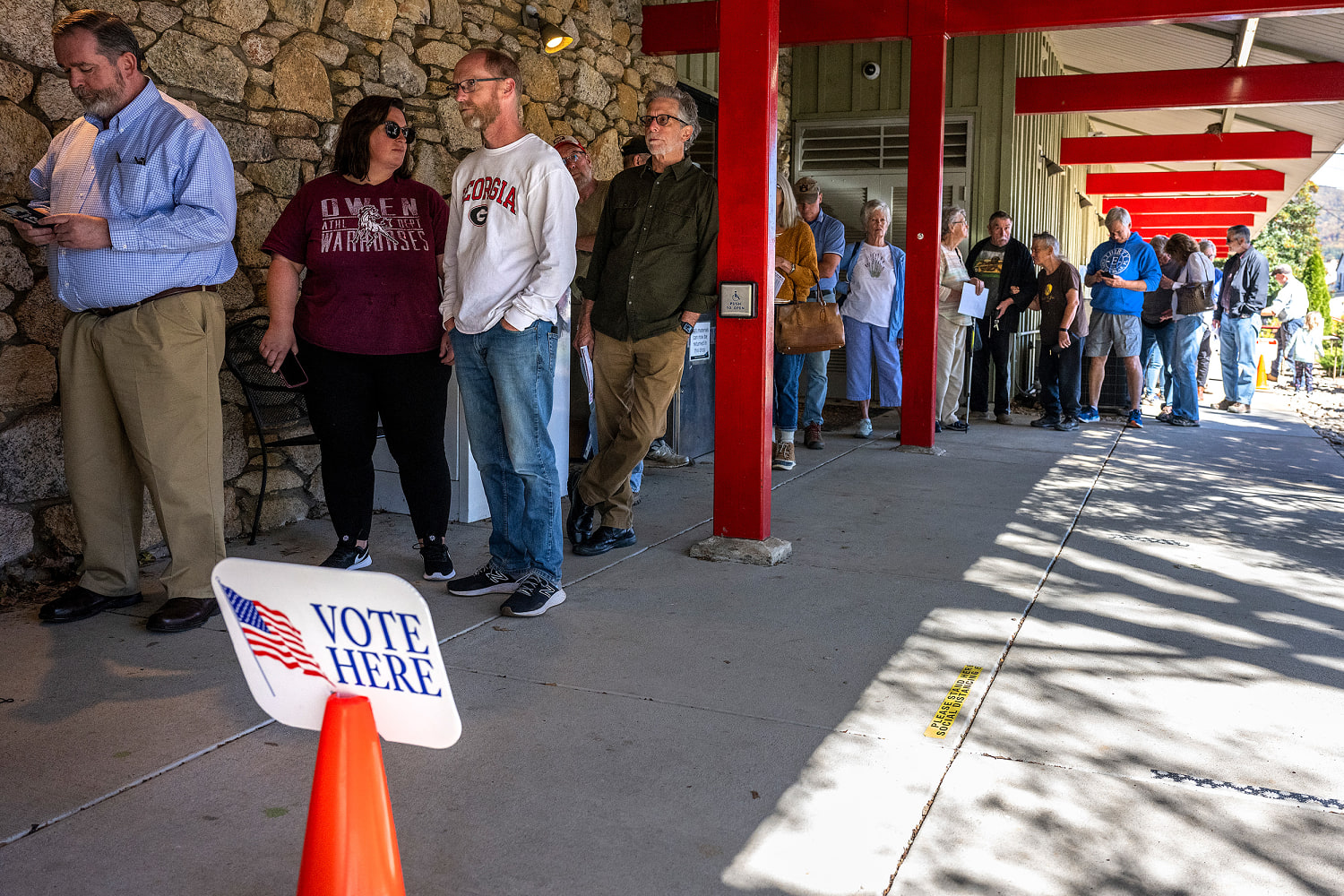
This article is the third in a five-part series called “Protecting the Election.” As former President Donald Trump and many of his allies refuse to concede his defeat in the 2020 election, this BLN Daily series brings election law and policy experts to explore the many threats to certifying election results at both the state and national levels.
The 2024 election will be a wholly different experience for North Carolina’s more than 5.5 million voters.
North Carolina voters — including college students and voters living in storm-affected areas — are voting early in record numbers.
After years of attacks on voting rights by the gerrymandered GOP supermajority in the state Legislature, North Carolina voters will be required to show a photo ID at the polls for the first time in a presidential election. Coupled with new restrictions on vote-by-mail and lawsuits targeting student voters, Republicans are doing everything they can to suppress the vote among core Democratic voting blocs. These human-made barriers to voting have only been exacerbated in western North Carolina by Hurricane Helene and its aftermath.
Despite these new challenges, North Carolina voters — including college students and voters living in storm-affected areas — are voting early in record numbers, and dedicated election officials across the state are doing everything they can to ensure that voting is safe and convenient.
While most North Carolina voters possess photo ID that meets the state’s new voter ID requirements, there has been some confusion among many voters about this new law. Most importantly for voters, if a voter has been unable to obtain an acceptable photo ID because of lack of transportation, lack of knowledge about the ID requirement or any other reasonable impediment, they may still vote provisionally and complete an ID exception form. While questions linger about how county boards of elections will process exception forms, voters without IDs can still confidently vote even if they lack appropriate photo identification.
A flashpoint in North Carolina’s ongoing voter ID fight is the acceptability of photo IDs from North Carolina’s colleges and universities. After rounds of lawsuits, statutory revisions and rulemaking, students and employees at North Carolina’s colleges and universities are now permitted to use their school IDs for voting, but only if the school’s ID has been pre-approved by the state board of elections. While the board of elections has approved the use of over 130 different school IDs for 2024, these approvals have not been without controversy.
In August, the board of elections approved the use of UNC-Chapel Hill’s digital student ID, the primary form of campus ID for students, which is accessible using a mobile device. The Republican National Committee and state GOP soon filed suit, arguing that, under North Carolina’s voter ID law, only physical ID cards are permitted. While a trial court judge initially ruled that the digital IDs met voter ID requirements, the state court of appeals overruled the trial courts’ decision. The higher courts’ ruling has led to a scramble by UNC-Chapel Hill administrators and student advocacy groups to ensure that students who do not have another acceptable form of voter ID are able to obtain a physical student ID card free of charge.
In the westernmost third of North Carolina, the devastation caused by Hurricane Helene has created significant hurdles to voting.
In addition to implementing voter ID, North Carolina’s Republican Legislature has also further restricted vote-by-mail options. In keeping with the new voter ID requirement, vote-by-mail voters must now submit a photocopy of their ID or a form claiming a voter ID exception along with their ballot. These additional steps make it incrementally more difficult for voters to successfully submit their mail ballot.
Another wrinkle is that previously a voter could mail a ballot by Election Day and have it counted as long as it was received at the county board elections within three days after Election Day. Now, however, mail ballots must be received by the close of voting on Election Day in order to be counted.
In the westernmost third of North Carolina, the devastation caused by Hurricane Helene has created significant hurdles to voting. Helene’s winds and floods destroyed hundreds of homes, displaced thousands and left tens of thousands more still without electricity or running water.
However, in the storm’s wake, the Republican-led Legislature, Democratic majority state board of elections and election administrators across the affected region have come together to provide voters and local election administrators the resources and flexibility to conveniently cast their ballots this fall. Because of this rapid response, 76 of the originally planned 80 early voting sites across the region opened at the start of early voting last week. Additionally, voters in the affected counties have been given the option to return vote-by-mail ballots at any board of elections office or early voting site in the state. Under an existing carveout in North Carolina’s voter ID law, voters who are unable to provide a photo ID because of the natural disaster are excused from presenting photo ID provided they complete the simple exception form.
Despite yearslong Republican voter suppression efforts and the worst natural disaster in state history, there is also cause for optimism. Early voting totals are far outpacing 2020 numbers — and the vast majority of voters across the state are voting without issue.
In the aftermath of Helene, Republicans and Democrats have come together to make sure voters across the state are able to safely and conveniently cast a ballot. Perhaps most importantly, the professional election administrators in North Carolina’s state and county board of elections are uniformly committed to ensuring that every eligible voter is able to cast a ballot and that every ballot is counted in a fair and secure process.
Seth Morris
Seth Morris is an attorney in Raleigh, North Carolina with experience in voting rights and election law.


CHICAGO — The American Israel Public Affairs Committee is making a nearly $22 million bet in Illinois that its money, if not its policy views, can still hold sway in Democratic politics.
In three of the four Illinois House races it’s targeting, AIPAC appears to be using shell PACs to largely conceal where that money is coming from rather than spend from its main super PAC vehicle, United Democracy Project. Like in other recent contests, their ads focus on anything but Israel.
But AIPAC appears at risk of inadvertently helping the candidate most hostile to its views in the race to replace retiring Rep. Jan Schakowsky — just as it did in New Jersey last month. The group has taken a sharp tactical shift in recent days, pivoting from attacking a Jewish candidate who has criticized Israel and focusing instead on a Palestinian-American candidate who has been more outspoken.
Interviews with a dozen Democratic elected officials, candidates and strategists — including both supporters and critics of Israel — revealed growing concerns about AIPAC’s interventions. Strategists warn that AIPAC’s attacks on Evanston Mayor Daniel Biss, the grandson of a Holocaust survivor, created an opening for progressive social media influencer Kat Abughazaleh, a Palestinian-American who is a vocal critic of Israel and appears to have late momentum in the race, over AIPAC’s preferred candidate, more moderate state Sen. Laura Fine. In the past week, the group has pulled down all of its anti-Biss messaging, but it could prove too late.
“There’s been a strategy shift,” said a person directly familiar with AIPAC’s thinking, granted anonymity to discuss private conversations. “Our primary goal in Illinois is to prevent potential ‘Squad’ members from being elected to Congress.”
Tuesday’s primary will be the first test of AIPAC’s political muscle in the 2026 primary season after amassing nearly $100 million in its warchest, even as polls show more and more Democrats have negative views of Israel — and of the group itself.
“AIPAC may deliver another candidate who is plainly not on their agenda and … the concerns about their interventions within the primary electorate are only going to intensify,” said David Axelrod, a longtime Chicagoan and former senior adviser in President Barack Obama’s administration. “These ads are not branded as AIPAC for a reason, so there’s a recognition that they are a controversial presence in Democratic primaries.”
AIPAC recently spent $2 million to sink former Rep. Tom Malinowski (D-N.J.) in a special election primary. Malinowski, a pro-Israel moderate who would not support unconditional aid to Israel, lost to Analilia Mejia, a progressive organizer who has said Israel committed genocide in Gaza. The move infuriated centrist Democrats, who saw it as a spectacular self-induced fumble — and are worried it may be happening again.
“No one wants to see another New Jersey 11 … and everyone should be concerned about it happening,” said one Democratic donor adviser close to AIPAC who was granted anonymity to speak candidly about the dynamics.
The organization has become increasingly controversial on the left for its full-throated support of Israel’s war in Gaza and is facing a new layer of hostility in the wake of Israel’s joint attack with the U.S. in Iran. Among Democrats, 62 percent think America is too supportive of Israel, compared with just 22 percent who think the support is about right and 8 percent who think it’s not supportive enough, according to a Quinnipiac University poll released last week.
Democratic candidates and strategists expect AIPAC to intervene in a range of House primaries in the coming months, as well as the Senate primaries in Michigan and Minnesota. They’re watching to see how the group’s interference plays with voters amid the backdrop of the war.
“You’re going to see more of this unfortunately” across the country, said former Chicago Mayor Rahm Emanuel, a noted Democratic strategist now weighing a run for president, of the influx of outside spending — from AIPAC to crypto groups. “Illinois is literally the first stop on the way to an ugly future, where billionaires will be the dominant players and candidates will be pawns in their world.”
In Illinois, an AIPAC-aligned super PAC called Elect Chicago Women, had spent heavily against Biss on TV and digital ads, while also spending more than $4 million on TV ads and mailers boosting Fine. In recent days, another AIPAC-aligned group, Chicago Progressive Partnership, put out ads attacking Abughazaleh and propping up another progressive in the race, Bushra Amiwala, in an apparent effort to split the vote.
Local strategists noted the abrupt shift when the Biss attacks stopped earlier this month.
“It looks like they’re changing their tactics” after the New Jersey backfire, said an Illinois Democratic lawmaker, granted anonymity to discuss the issue candidly. “Is there evidence that [AIPAC] is adapting and taking lessons from the last election? Yes.”
Biss, for his part, predicted there would be “backlash” to AIPAC’s moves in Illinois in future primaries.
“They’ve chosen to make clear that it’s unacceptable to them to have members of Congress who don’t believe in a no strings attached blank check of military aid to the current Israeli government, no matter what they do in Gaza,” Biss said “So that’s what people in the district and around the country will be interested to see what the outcome is.”
Abughazaleh sees the shift to attack her as a sign that AIPAC is “panicking” to control the race. “They’re realizing that they didn’t take us seriously, and that people aren’t looking for the status quo. So they are panicking,” she said in an interview.
Fine has opposed adding conditions to U.S. aid to Israel, though she has expressed general frustration at the role of “dark money” and the lack of transparency from political action committees, saying it’s “a big problem in our political system.”
AIPAC’s super PAC declined to comment on its involvement in Illinois, including its use of pop-up super PACs to filter funds to candidates. AIPAC spokesperson Deryn Sousa said in a statement, “Our members are focused on building strong bipartisan support for the U.S.-Israel partnership in the 120th Congress.”
The group is also spending heavily for its preferred candidates in the races to fill seats left open by Reps. Robin Kelly and Raja Krishnamoorthi, who are running for the Senate, and Danny Davis, who is retiring.
AIPAC’s allies are not confident about their chances in Kelly’s district. The group is backing Cook County Commissioner Donna Miller, but former Rep. Jesse Jackson Jr. (D-Ill.) has been bolstered by more than $1 million in spending from a pro-cryptocurrency super PAC. Plus, he has sky-high name recognition, especially in the wake of the recent death of his father, the Rev. Jesse Jackson Sr.
Pro-Israel Democrats feel more confident their preferred candidates can win in two other races.
Chicago City Treasurer Melissa Conyears-Ervin has benefited from nearly $5 million in positive ads from AIPAC’s main super PAC, United Democracy Project, in a crowded 13-candidate primary for Davis’ seat. State Rep. La Shawn Ford has strong name recognition in the district and Davis’ endorsement, but he has struggled to keep up with fundraising.
In Krishnamoorthi’s district, moderate former Rep. Melissa Bean has benefited from nearly $4 million in supportive messaging from the “Elect Chicago Women” group that’s also supporting Fine in the 9th.
AIPAC’s critics argue that the group’s moves in Illinois, particularly concealing the funding sources of its super PACs, demonstrate that “they themselves understand how toxic they are,” said Jeremy Ben-Ami, president of the progressive J Street group, which bills itself as “pro-Israel, pro-peace.”
“In every part of their political work, they’re doing this surreptitiously,” he added.
Jessica Piper and Andrew Howard contributed reporting.
President Donald Trump’s so-called Religious Liberty Commission, which is filled with right-wing zealotsappears to be coming apart at the seams.
Last week’s resignation of Sameerah Munshi, formerly the only Muslim woman selected as one of the commission’s advisers, underscores the religious divisions that are causing disarray for the panel and the conservative movement more broadly.
Munshi is a conservative activist who has advocated for allowing parents to opt out of lesson plans related to LGBTQ+ issues, a stance the White House has praised for its rejection of “radical gender ideology.” She said her resignation was due to two things: the commission’s expulsion of conservative activist Carrie Prejean Boller and the Trump administration’s war with Iran.
I recently wrote about how Boller’s removal, which followed a heated argument at a commission hearing over antisemitism, has fueled allegations of anti-Catholicism within the MAGA movement. Boller recently appeared on an episode of Tucker Carlson’s podcast for a chummy chat about her removal. And Rep. Thomas Massie, R-Ky., requested last week that the House Oversight and Judiciary committees review her ouster.
In addition to that, Trump’s Religious Liberty Commission is being sued over its lack of diversity. (The White House has said the panel is intended to reflect a “diversity of faith traditions, professional backgrounds and viewpoints.”)
So Munshi’s resignation is just the latest negative publicity for the commission.
“I resign in protest of two deeply troubling developments: the official removal of Carrie Prejean Boller for her deeply held beliefs about Palestine and the federal government’s illegal war against Iran, undertaken without clear constitutional or congressional authorization,” Munshi wrote on Substack.
“Ultimately, I will have to stand before God and answer to Him for my role in this commission,” she added. “I ask His forgiveness if I have legitimized their evil or the evil of this administration in any way. I ask Him to keep my intentions pure and to guide me toward paths that bring true benefit to my community.”
Boller’s removal has also helped fuel right-wing antipathy toward the Rev. Paula White, who Boller has said was behind a “witch hunt” that led to her ouster. During their conversation, Boller and Carlson took turns bashing White, a controversial preacher of the prosperity gospel who has served as religious adviser to Trump.
Some evangelicals in the MAGA movement were apoplectic when White was chosen to lead the White House Faith Office. And now it appears the chickens have come home to roost as her involvement with Trump’s White House threatens the MAGA movement’s religious coalition.
Ja’han Jones is an MS NOW opinion blogger. He previously wrote The ReidOut Blog.
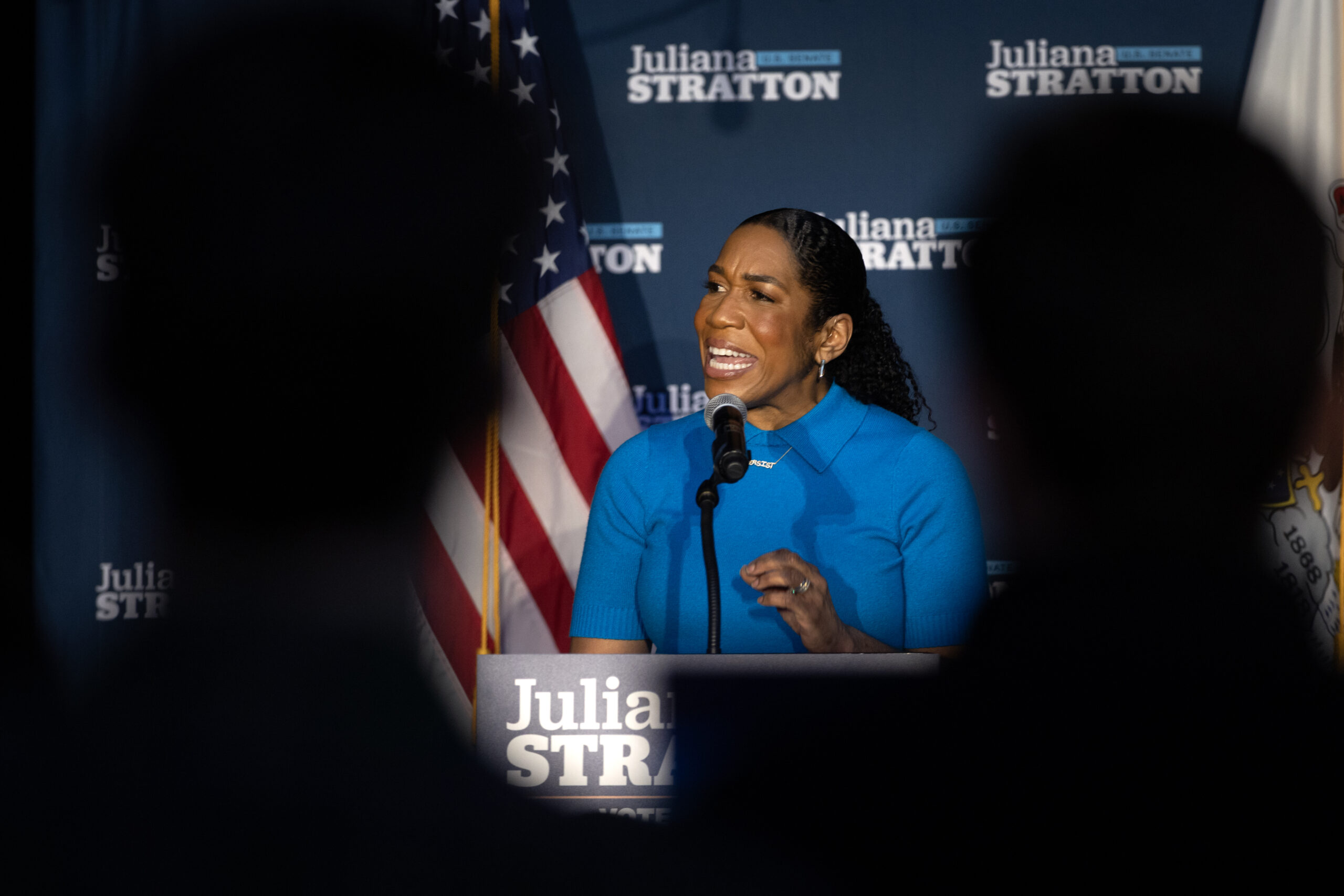
Lt. Gov. Juliana Stratton had touted an endorsement from Jackson, who died in February…
Read More
- AIPAC faces its biggest test this year in Illinois
- Right-wing Muslim activist resigns from Trump’s Religious Liberty Commission

- Monday’s Mini-Report, 3.16.26

- Right-wing Muslim activist resigns from Trump’s Religious Liberty Commission
- Jesse Jackson’s family grapples with Illinois Senate endorsement controversy
- Johnson on Trump’s Hormuz plan
- House Budget chair eyes more safety-net cuts for second megabill
- Capitol agenda: Trump’s Doral demands ripple through GOP
- Trump is failing at the business of war
- Federal judge temporarily blocks RFK Jr.’s changes to vaccine policy

-

 The Dictatorship1 year ago
Luigi Mangione acknowledges public support in first official statement since arrest
-

 Politics1 year ago
Former ‘Squad’ members launching ‘Bowman and Bush’ YouTube show
-

 Politics1 year ago
Blue Light News’s Editorial Director Ryan Hutchins speaks at Blue Light News’s 2025 Governors Summit
-

 Politics1 year ago
Former Kentucky AG Daniel Cameron launches Senate bid
-

 The Dictatorship6 months ago
Mike Johnson sums up the GOP’s arrogant position on military occupation with two words
-

 The Dictatorship1 year ago
Pete Hegseth’s tenure at the Pentagon goes from bad to worse
-

 Politics11 months ago
Democrat challenging Joni Ernst: I want to ‘tear down’ party, ‘build it back up’
-
Uncategorized1 year ago
Bob Good to step down as Freedom Caucus chair this week