
The Dictatorship
What Brendan Carr’s media threats are really about

Brendan Carr, the Federal Communications Commission chair appointed by President Donald Trump, has threatened to take away TV licenses over news coverage he doesn’t like. Legally, he can’t do that.
But in the age of Trump, a threat can sometimes be as effective as the law — which is probably why Carr keeps jawboning media owners and reporters with statements unlikely to hold up under legal challenge.
In a presidency known for flouting norms, this is yet another way the Trump administration exercises power.

The most recent incident occurred on Saturday. Reacting to Iran conflict coverage, Carr warned broadcasters that airing “hoaxes and news distortions” could lead to the loss of their federally granted licenses. Broadcasters are at risk, Carr posted on X, if they don’t “correct course before their license renewals come up.”
Carr wasn’t overly specific, but he didn’t have to be. As FCC chair, Carr has issued several warnings that echo his patron’s complaints about the three legacy broadcast TV networks: ABC, CBS and NBC. (The FCC grants licenses to individual broadcast stations, not national broadcast networks; cable networks such as MS NOW or BLN and streaming services including Netflix aren’t licensed at all.)
Indeed, Carr’s Saturday post quoted Trump’s own social media complaint that some news reports about the military action he initiated against Iran were “intentionally misleading.” Trump endorsed Carr’s threats Sunday in another Truth Social rantthis one suggesting that media outlets that report inaccurately during wartime should be tried for treason — a crime punishable by death.

Carr’s fist-shaking at broadcasters generates headlines and alarm, but it’s notable that his threats have resulted in exactly zero license-revocation hearings to date. Carr, an experienced telecommunications lawyer, surely knows that taking away any station’s license would involve a yearslong legal battle — one that he’d be highly likely to lose once the FCC’s decision were subject to independent judicial review.
That’s because broadcasters have broad free-speech protections that prohibit the government from penalizing them for what they put on the air. “The FCC can issue threats all day long, but it is powerless to carry them out,” Anna Gomezthe FCC’s lone Democratic commissioner, posted Sunday on X. “Such threats violate the First Amendment and will go nowhere.”
The FCC can issue threats all day long, but it is powerless to carry them out. Such threats violate the First Amendment and will go nowhere.
Broadcasters should continue covering the news, fiercely and independently, without fear of government pressure.
— Anna M. Gomez (@AGomezFCC)”https://twitter.com/AGomezFCC/status/2033216662498103531?ref_src=twsrc%5Etfw”>March 15, 2026
In its nearly 100-year history, the FCC has rarely gone after a license. Typically, the commission acts only in instances in which a station owner has been convicted of a felony or has repeatedly lied to the agency, according to Andrew Jay Schwartzman, a veteran media attorney. Not once has the FCC sought its highest penalty for a station that, as Carr put it, “distorts” the news.
Contrary to what Trump and Carr suggest, the agency can’t penalize a broadcaster for merely reporting inaccurately or holding an opinion the president and FCC chair dislike. To meet the FCC’s own standard of distortion, the agency must find that a station deliberately tried to trick viewers or listeners by, say, re-enacting a drug bust and presenting it as the real thing or using “file” footage as if it were part of a breaking news story. The FCC has cited stations only eight times over the past 50 years, mostly in the 1970s and 1980s.
Still, Carr’s devotion to Trump’s media bashing produces results. After late-night host Jimmy Kimmel commented on the assassination of conservative activist Charlie Kirk in September, enraging conservatives, Carr threatened ABC’s station licenses. Here, too, the threat was legally dubious, but ABC’s parent, The Walt Disney Company, took Kimmel’s show off the air for a few days after local affiliates said they would preempt the show themselves.
The backdrop to all this is another action Carr took shortly after taking office. In January 2025, Carr revived a previously dismissed complaint alleging news distortion by CBS News over a “60 Minutes” interview with Kamala Harris in 2024 — one that was already the subject of a lawsuit filed by Trump. The investigation effectively tied up the FCC’s approval of an $8 billion proposed merger between Skydance Media and CBS’ parent company, Paramount. To remove the regulatory roadblock, Paramount settled Trump’s lawsuit by paying him $16 million and making other commitments, such as installing an ombudsman to review CBS News’ reporting. Once the suit was settled, the FCC approved the Skydance-Paramount merger.
If Carr thought he had the law on his side, presumably he’d initiate proceedings and face whatever challenges arise in court. But he has a short cut to his and the president’s preferred outcome.
Even the prospect of regulatory trouble can lead to preemptive and conciliatory action. In December 2024, Disney agreed to pay $16 million to settle Trump’s lawsuit against Disney-owned ABC News and anchor George Stephanopoulos, a move widely read as a decision not to challenge the power of the incoming president and risk an uncertain fate at an FCC headed by a key Trump ally.
Carr has also publicly accused Comcastthe parent company of NBC News and former parent of MS NOW — both a frequent target of Trump bashing — of news distortion in reporting its outlets did about Kilmar Abrego Garciathe Maryland immigrant wrongfully deported last year by the Trump administration.
Carr’s weaponization of news distortion prompted a bipartisan group of former FCC officials to petition the agency last year to repeal the policy. So far, the agency hasn’t acted on the petition.
The FCC licenses hundreds of radio stations, including those that broadcast conservative talk radio programs, most of them routinely supportive of the Trump administration. There’s no record of Carr second-guessing anything these stations have broadcast. Nor has he questioned the reporting of local TV stations owned by Sinclair Inc. and Nexstar Media Group, the two companies that temporarily declined to air Kimmel’s late-night program after Carr’s criticism. Nexstar is seeking the FCC’s approval to buy a rival station owner, Tegna Inc., for $6.2 billionin a major consolidation of the business.
If Carr thought he had the law on his side, presumably he’d initiate proceedings and face whatever challenges arise in court. But he has a shortcut to his and the president’s preferred outcome: He’s put the bully in the bully pulpit.
Paul Farhi is a former media reporter for The Washington Post, where he was a staff writer for more than 35 years. He writes about the media industry for The Atlantic, The Daily Beast and Columbia Journalism Review, among other outlets.


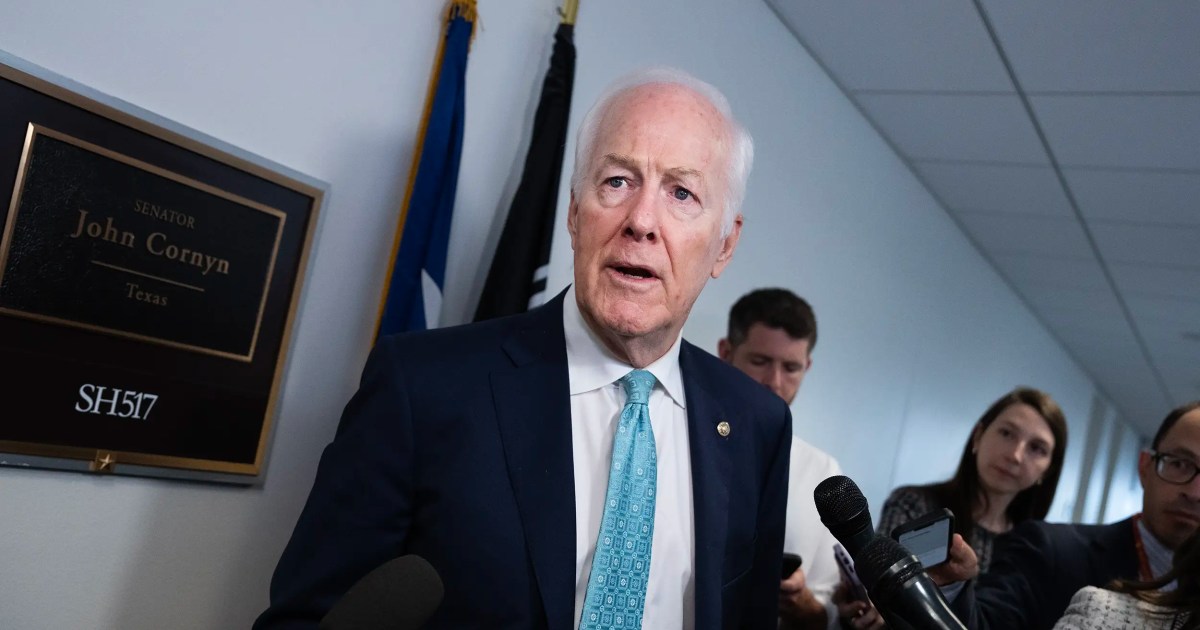
The Senate Judiciary Committee postponed a vote on acting Attorney General Todd Blanche’s nomination, a spokesperson said late Wednesday, as two retiring Republicans on the panel dug in over President Donald Trump’s personal “anti-weaponization” deal with the government he runs.
Sen. Chuck Grassley’s decision to delay the committee vote that had been set for Thursday marks a setback for one of Trump’s highest-profile Cabinet nominees, at the hands of Texas Sen. John Cornyn and Sen. Thom Tillis of North Carolina, a pair of Republicans set to leave the chamber next year.
“Chairman Grassley works to set President Trump’s nominees up for success in committee, not failure. Senators Cornyn and Tillis want written assurances from the Department of Justice regarding the Trump-IRS settlement,” the committee spokesperson said.
Blanche’s nomination to permanently head the Department of Justice needs the support of either Cornyn or Tillis to make it out of the committee to a vote by the full Senate, assuming all Democrats remain opposed.
“Why don’t you call over the Department of Justice and tell them they have one hour and 50 minutes to get me what I asked for,” Cornyn told reporters Wednesday afternoon amid the hardening standoff over his demand that Blanche and the DOJ put in writing a commitment never to pursue the president’s prized “anti-weaponization” fund, and to clarify the terms of Trump’s personal deal with the Internal Revenue Service.
Tillis told MS NOW that the conversations were complicated by the need for the Justice Department to get “several parties” to agree on the language of the statement Cornyn and Tillis are seeking.
“What I’ve advised the chair, and I would assume Senator Cornyn said something similar, is that we’re not prepared to vote yes yet,” he added.
“The Department has been in regular communication with Committee members for weeks, and we look forward to continuing to work productively with Senators to address any concerns,” a Justice Department spokesperson said in response to the decision to postpone the committee vote.
Cornyn was set to meet with Blanche on Wednesday morning, but the meeting was called off after Blanche failed to meet the senator’s demand for written proposals to modify the controversial settlement agreement he brokered between Trump and the IRS. The Republican senator is set to leave Congress when his term ends in January after a bruising May primary loss to Texas Attorney General Ken Paxton, Trump’s chosen candidate.
“Maybe John Cornyn’s upset with me because I didn’t endorse him,” Trump told reporters Wednesday afternoon in the Oval Office. “I don’t know what it is, but I haven’t heard that there’s a problem. I heard (Blanche) is going through quite nicely.”
Cornyn made clear to Blanche during his confirmation hearing that he will not get his support until he agrees to reopen and modify the settlement. Due to the committee’s narrow Republican majority, one GOP “no” vote is enough to sink Blanche’s nomination.
The senator has asked Blanche to provide proof that the proposed nearly $1.8 billion “anti-weaponization” fund established as part of the deal between Trump and the IRS is formally dead, and he has also demanded Blanche narrow the tax audit immunity provisions the settlement afforded to Trump and his family.
Blanche has publicly stated that his department has dropped the fund, but he and the DOJ have dodged requests from Cornyn and a federal judge to put that in writing.
After announcing his meeting with Blanche would not take place Wednesday morning, Cornyn told reporters that changes from Blanche “in a modified release form” would be acceptable, but that “for some reason … they simply refuse to do it,” referring to the DOJ.
Shortly after the meeting was called off, a Justice Department official told MS NOW that the department “provided a written proposal to Senator Cornyn’s staff yesterday following ongoing discussion with both the Committee and the Senator’s office.”
Cornyn said that proposal was “not responsive” to his demands because it did not address the tax audit immunity provisions in the settlement, one of his key demands.
In May, Blanche signed an addendum as part of the deal that granted Trump, his family and his businesses immunity from pending IRS tax audits. That agreement, which has been decried by former IRS officials and legal experts as unlawful self-dealing, is being contested in federal court.
Cornyn noted that Blanche testified under oath that he could meet the request during his confirmation hearing.
“Maybe they think I’m just going to give up or you know, go along, but they’re mistaken,” Cornyn said when asked why he thinks the DOJ could be slow-walking his request.
Kevin Frey contributed to this report.
Sydney Carruth is a breaking news reporter covering national politics and policy for MS NOW. You can send her tips from a non-work device on Signal at SydneyCarruth.46 or follow her work on X and Bluesky.
Mychael Schnell is a reporter for MS NOW.
Ebony Davis is a breaking news reporter for MS NOW based in Washington, D.C. She previously worked at BLN as a campaign reporter covering elections and politics.
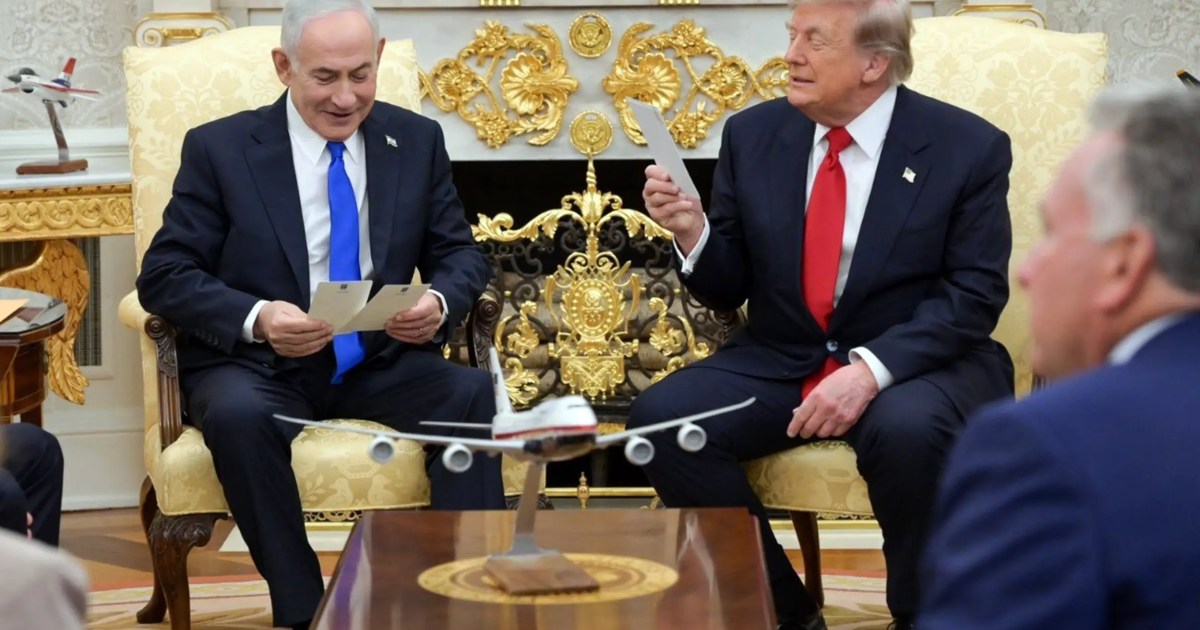
When Israeli Prime Minister Benjamin Netanyahu arrived this week for his tour of Washington, he may have had a mission in mind.
Netanyahu needed to overcome his newly diminished stature and waning influence over his once close friend President Donald Trump as both leaders grapple with the unpopularity of a war they started together and is escaping their control.
His meeting at the White House with Trump on Tuesday, which was closed to the press, was the first face-to-face encounter between the two allies since the U.S. and Israel launched a joint attack against Iran on Feb. 28.
Trump gave him a muted welcome and afterwards simply described the meeting as “very good.” “Obviously, many important subjects were discussed,” the president wrote on Truth Social.
Rather than an intimate one-on-one setting, the Oval Office was full of top U.S. officials — Vice President JD Vance, Secretary of State Marco Rubio, Treasury Secretary Scott Bessent, Secretary of Defense Pete Hegseth, Chairman of the Joint Chiefs of Staff Gen. Dan Caine, and special envoy Steve Witkoff.
But Netanyahu continued the full court press on the Trump administration.
Over the course of two days, in addition to seeing Trump and attending Sen. Lindsey Graham’s funeral at the Capitol, Netanyahu also met separately with Vance, Hegseth, and Rubio, White House and Israeli officials confirmed to MS NOW.
The Israeli prime minister’s slate of meetings with key U.S. national security officials comes at a pivotal moment in the Iran conflict as tensions escalate in the region and Americans increasingly sour on the war. A recent Quinnipiac poll shows 60% of American voters opposing U.S. military action against Iran and 74% against sending U.S. ground troops into Iran.
Not only does Trump face pressure as Republicans face an uphill battle to retain congressional control in this fall’s midterms, Netanyahu’s fate as prime minister is at stake in Israel’s upcoming September elections – and he can’t afford to lose Trump’s favor.
The talks largely focused on what to do next as Iran continues to menace shipping in the Strait of Hormuz and retaliate against American bases in the region and launch attacks on Gulf allies.
According to a senior Israeli official who was granted anonymity to describe the closed-door meeting, President Trump and Israeli Prime Minister Netanyahu did not come to a final decision after discussing three paths forward: get a “good deal” focused on Iran’s nuclear program and enriched material, have no deal and instead continue the blockade and economic pressure, or take escalated military action.
But Netanyahu did not tell Trump what he should do – nor did he express a preference.
The senior Israeli official noted Netanyahu has not ruled out diplomacy – as long as it is coupled with “very strong pressures,” calling the push to dismantle Iran’s nuclear program “a contest of will and a contest of force.”
“There are ways of squeezing them and squeezing them and squeezing them and negotiating at the same time,” the official said.
Netanyahu did not present President Trump with new intelligence regarding the underground Iranian nuclear facility Pickaxe Mountain, per the senior Israeli official, noting the U.S. and Israel already are constantly sharing intelligence – and know where Iran’s highly enriched material is. “We don’t think it’s moved, and I think we have a pretty good grasp on that,” the official said.
During their meeting on Tuesday, Trump and Netanyahu discussed ways Israel and the U.S. can work together to stop Iran’s nuclear program and get the Strait of Hormuz open to maritime trade, the senior Israeli official said.
The two leaders also discussed a third goal: to continue to undermine the Iranian regime and “possibly create future conditions for a change in that area.” U.S. officials have backed away from pursuing paths that would overthrow the current leadership, but Netanyahu still believes that could happen.
“The chasm that has been created between the people and the regime is not about to be closed,” the senior Israeli official said of Netanyahu’s thinking.
Netanyahu advised Trump in February that Israeli intelligence indicated launching strikes against Iran would lead to the toppling of the Islamic Republic’s regime – and five months later, the slain ayatollah’s son retains power with a close circle of hardliners, calling into question the accuracy of Israel’s intelligence apparatus.
But the senior Israeli official said at the time, Netanyahu did not promise the Iranian people would take fate into their own hands following a coordinated attack. Rather, he chose his words carefully and said that an attack could create conditions to “advance the probability or the possibility that that would happen.”
The conditions needed for the Iranian regime to fall, “did not materialize,” the official told MS NOW, adding, “not for lack of insight, but for either operational failure or decisions that were made.”
Despite Netanyahu insisting Israel and the U.S. are on the same page, differences still remain: the sale of F-35 fighter jets to Turkey and the Saudi nuclear arrangement did not come up during Wednesday’s White House meeting, according to a second Israeli official granted anonymity to describe sensitive discussions.
Meanwhile, the conflict continues to spread, with an Iranian drone attacking a U.S. gas storage tanker off the coast of Egypt on Wednesday.
Trump indicated he would not let Iran’s latest action slide, telling reporters on Wednesday that the U.S. would retaliate against Iran even as he leaves room for diplomatic talks to resume.
“It’s our turn, and we’ll see if we get there with an agreement at some point,” Trump said. “But we’re going to hit them very hard.”
As for what it would take for Israel to join the U.S. strikes, the senior Israeli official said that if Israel is attacked by Iran, “We will respond very, very forcefully and very quickly. And I think Iran would make a great mistake.”
Julia Jester covers politics for MS NOW and is based in Washington, D.C.
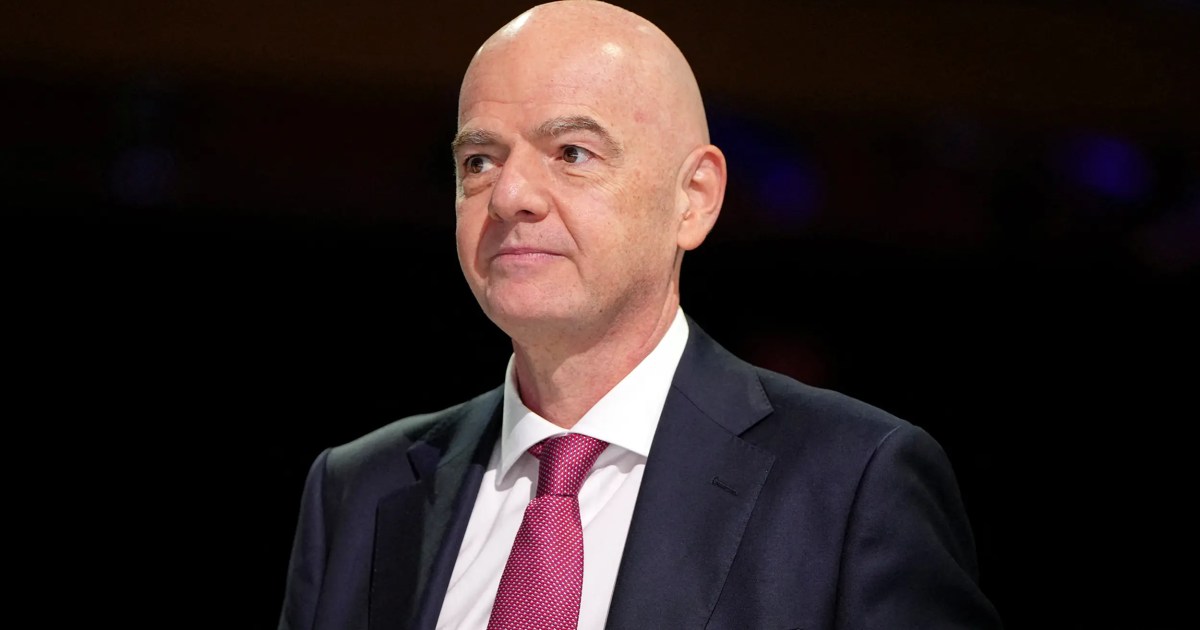
International rage over FIFA’s close ties to President Donald Trump has reached a fever pitch after soccer’s governing body announced a plan to sell a significant stake to an investor group led by Joshua Kushner, the brother of Trump’s son-in-law.
The president and his family have all but turned the White House into their personal piggy bank. And FIFA — which has its own sordid history of corruption — seems to have made itself a party to Trump’s self-enrichment under Gianni Infantino’s leadership, such as by paying for space inside Trump Tower in New York. (The organization has defended the office rental as a World Cup outpost.)
Soccer is seen by many as a unifying game. But Trump’s incorporation of FIFA into his political dynasty is threatening that idea.
FIFA has announced plans to sell a large minority stake in a new company that will run its main events, including the World Cup and Club World Cup, as part of a plan to triple the amount of development money it dishes out to its 211 member associations.
Under the proposals — which are subject to approval by a majority of those national associations and FIFA’s 37-member council — a new entity called FIFA Forward Enterprises (FFE) will take over all commercial operations, while FIFA remains the game’s global governing body and retains a majority stake in FFE.
A press release from FIFA confirmed the plans and said Thrive Eternal, which was launched by Joshua Kushner, is expected to lead the investment group that would control FIFA Forward Enterprise. FIFA did not clarify why Thrive Eternal was selected, and Kushner was already dabbling in sports.
But Trump basically has already given son-in-law Jared Kushner carte blanche to dictate U.S. foreign policy in the Middle East while simultaneously hatching business plans in the region. (Jared Kushner has denied any conflicts of interest.)
Joshua Kushner reportedly has been a major donor to Democrats. But, predictably, the idea of another Kushner becoming financially entwined with the World Cup — the world’s most popular sporting event — and basically being dropped into a position of global significance isn’t going over well. Several other soccer governing bodies have expressed concerns, including Europe’s UEFA.
“This crosses a line that football’s governing institutions should never cross,” UEFA said in a statement about The Athletic’s report, adding: “The soul and governance of football are not assets to trade — especially with zero transparency as to who gains financially. None of us are the owners of football. It is not FIFA’s to sell.”
Democrats on the House Judiciary Committee also rebuked the plan, writing on X: “Apparently the fake Peace Prize and giant lease with Trump Tower weren’t enough — now Infantino performs a kickback hat trick by pursuing a multibillion-dollar deal with Jared Kushner’s brother to sell ownership stakes in the World Cup to private investors.”
FIFA, Donald Trump’s favorite corrupt racketeering enterprise in world sports, is now going directly into business with the Trump family!
Apparently the fake Peace Prize and giant lease with Trump Tower weren’t enough—now Infantino performs a kickback hat trick by pursuing a… https://t.co/knSZibuMea
— House Judiciary Dems (@HouseJudiciary) July 28, 2026
Rep. Jamie Raskin, D-Md., has already launched an investigation into the FIFA leader’s relationship with the Trump administration, while dozens of European lawmakers — citing concerns about “potential breaches of political neutrality” — have called for the FIFA Ethics Committee to investigate Infantino. This new proposal seems unlikely to assuage those concerns.
But what it does seem likely to do is fuel global anger toward the U.S. — the kind that has been growing since Trump retook office.
And when you consider that, it’s truly remarkable how the same MAGA movement whose members whined for years about politics mixing with sports is now in lockstep with a president who seems dead-set on casting his shadow over every sports event he can.
This post on X basically sums up the foul stench around FIFA’s latest proposal.
Sepp Blatter was Infantino’s predecessor as FIFA president and oversaw the organization amid some of its many scandals. When heof all people, is warning about how Trump and Infantino’s relationship is “deeply damaging” soccer, it’s a sign of how far FIFA has descended into the gutter.
Ja’han Jones is an MS NOW opinion blogger. He previously wrote The ReidOut Blog.
- Democrats keep pressure on Hakeem Jeffries to punish rogue members
- House passes GOP-backed bill targeting data center power costs
- House passes Russia sanctions bill, handing Trump more leverage against Moscow
- Rand Paul kills Kennedy’s AI ‘kill switch’ bill
- Jay Jacobs gets his first-ever challenger for state Dem chair
- ‘The US can’t lose’: Pentagon plows ahead on AI despite warnings
- House votes to hold Leon Black in contempt of Congress
- GOP’s gas tax holiday push falters in House
- Bonamici ‘exploring’ bid for Scott’s education leadership
- Ted Cruz: ‘It’s still my hope’ to have an AI markup this month
-

 Politics2 years ago
Former ‘Squad’ members launching ‘Bowman and Bush’ YouTube show
-
Uncategorized2 years ago
Bob Good to step down as Freedom Caucus chair this week
-

 Politics2 years ago
Former Kentucky AG Daniel Cameron launches Senate bid
-

 The Josh Fourrier Show2 years ago
DOOMSDAY: Trump won, now what?
-

 The Dictatorship2 years ago
Luigi Mangione acknowledges public support in first official statement since arrest
-

 The Dictatorship2 years ago
Pete Hegseth’s tenure at the Pentagon goes from bad to worse
-

 Politics2 years ago
Blue Light News’s Editorial Director Ryan Hutchins speaks at Blue Light News’s 2025 Governors Summit
-

 The Dictatorship1 year ago
Mike Johnson sums up the GOP’s arrogant position on military occupation with two words