
Politics
Maine Democratic voters are wary about repeating mistakes of 2024

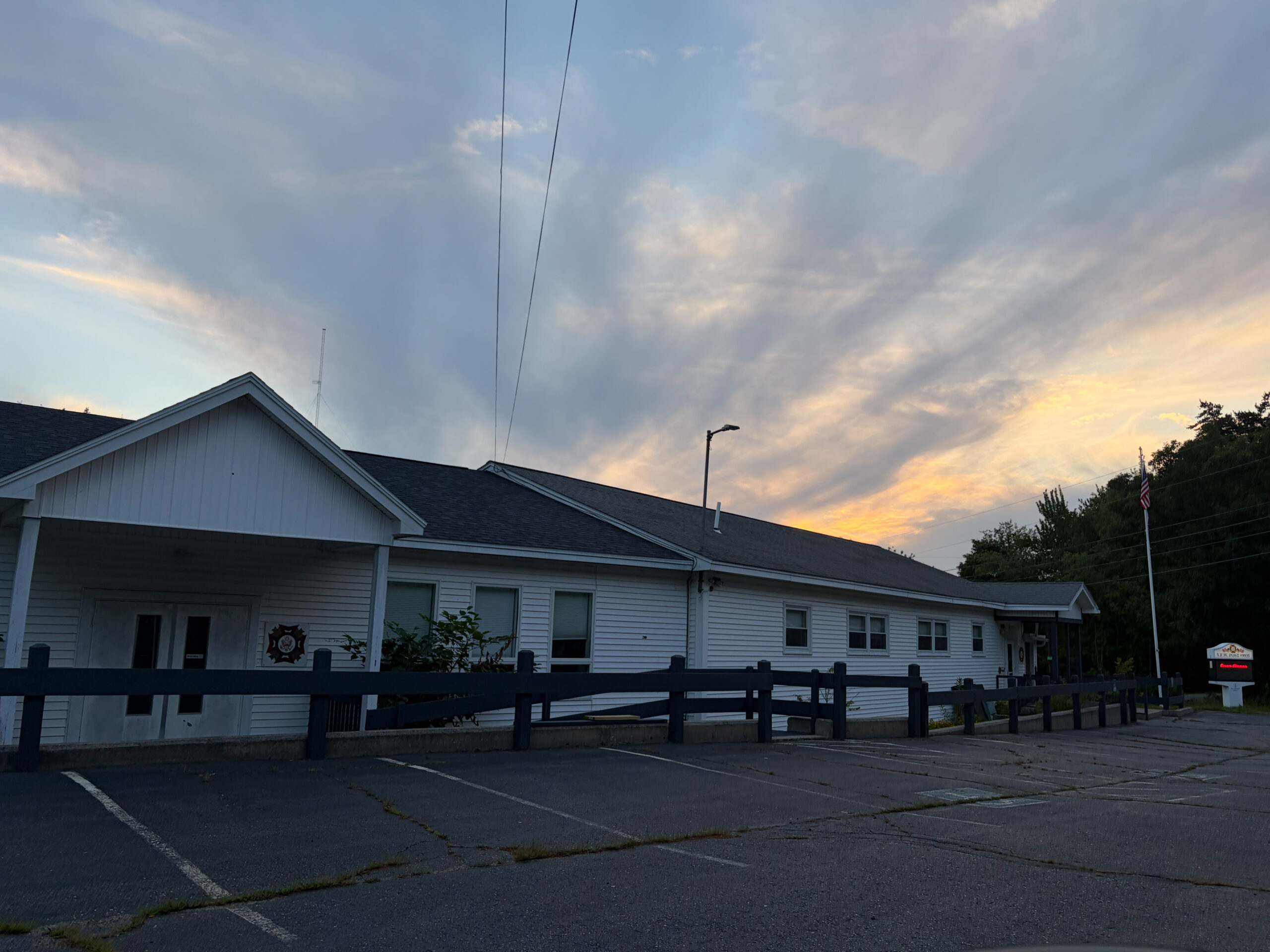
BRUNSWICK, Maine — The effort to push Graham Platner out of the Maine Senate race has some Democrats flashing back to 2024 — and making them worry about abandoning their nominee.
Platner has seen a dramatic drop in support within the party and has lost his biggest financial backers after POLITICO reported that a woman said he forced her to have sex with him, which he denies. Democrats in Maine are already jockeying to replace him on the ballot and take on GOP Sen. Susan Collins — all before Platner has even dropped out of the race.
That series of events, several voters said in interviews, dredged up unwelcome memories of one fateful summer two years ago, when former President Joe Biden ended his reelection bid late, leaving his Vice President Kamala Harris just 107 days to beat Donald Trump. Then, she lost.
Platner should end his bid “only if he does it in time for another good strong candidate to actually hit the ground really running like hell,” Claudia Knox, 85, told Blue Light News.
“I do want a fighter. I do want Collins out. So, the question to me is, if he withdraws, what happens? That’s my question,” she added. “Maybe he should hurry up, because this is feeling parallel to Joe Biden and Kamala Harris.”
Some Maine voters told Blue Light News they’re doubtful that another candidate can replicate Platner’s momentum, even as some of them want him to drop out. They’re skeptical of what the process to replace him would even look like and worried whether Democrats have enough time to both pick a new nominee and unseat Collins.
Linda, a 79-year-old Brunswick resident who declined to share her last name, said that it was time for Platner to end his campaign. But she’s worried Democrats now face potentially insurmountable odds to defeat Collins with just four months left before the general election.
“It’s going to be tough, tough, tough. It’s going to be very tough,” she said. “I think [Democrats] have a reasonable slate of people to work with. … They can’t just go blue sky now. I mean, they’ve got to focus.”
If Platner withdraws by Monday, the Maine Democratic Party has until July 27 to name his replacement. Some officials have already begun maneuvering to identify who can step in and are considering the unsuccessful candidates for governor in this year’s primary — Secretary of State Shenna Bellows, former public health official Nirav Shah and former Maine Senate President Troy Jackson — as well as state Rep. Valli Geiger and brewery owner Dan Kleban, who briefly launched his own Senate campaign last year.
Harris’ experience shows the difficulty for a candidate to step in late in the process and rebuild Democrats’ ticket-topping campaign. Platner’s replacement will have a short runway to reintroduce themself to voters and broadcast their policy priorities — all while continually having to distance their campaign from the oysterman and his string of controversies.
But the two situations are not entirely analogous. None of the candidates have shared a ticket with Platner, and all have forcefully denounced him. Harris, on the other hand, had to contend with the four years she served alongside Biden, as his presidency grew increasingly unpopular.
Biden and Harris spokespeople did not respond to requests for comment.
Those differences haven’t calmed some Maine voters’ early concerns at this nascent stage in the process, though.
“We are just leery about a new kind of Kamala Harris situation, where we don’t get to choose whatever Democratic candidate will be on the ticket,” said Stephanie Gardner, 38, as she removed her Graham Platner campaign sign from her yard in Topsham on Tuesday morning.
Gardner said she believes it’s time for Platner to step aside and wants Jackson to step up in his stead. Jackson, who touted endorsements from Platner and Sen. Bernie Sanders (I-Vt.) in his unsuccessful run for governor, has already filed paperwork exploring a run.
Rose Heithoff, 35, said that she might prefer a process in which party leaders help winnow the field to avoid a full intraparty war, but acknowledged that didn’t solve Democrats’ problems in 2024: “If you look back at the Biden-Harris situation, that was a fumble in some ways because I think people felt like they didn’t necessarily have the choice,” she said.
The Maine Democratic Party has promised an open process and that it will reveal details as soon as Platner withdraws from the race. In a fiery Tuesday evening post on social media, Maine Democratic Party Executive Director Devon Murphy-Anderson also slammed Platner’s team for reaching out to party officials to “put their thumb on the scale of what this process looks like.”
But for now, it’s unclear whether there will be any public debates and campaigning, or how much voters will have a say.
Platner said on social media within minutes of Blue Light News’s report publishing Monday that he was “taking the time to reflect on the best path forward.” By Tuesday, he had cancelled fundraisers, pulled down ads, and lost support from his biggest backers, including Sanders. The powerful national Democratic campaign arm and outside groups who’ve helped fund Platner’s bid said they would focus their resources elsewhere.
Even so, some voters don’t want to see Platner go at all, worried about the consequences for the race.
On Monday, outside the site of a cancelled town hall in Gorham where Platner was scheduled to field questions from voters, Kirk Little, 78, said “the Democratic Party disqualifies people too soon” and he is sticking with Platner — for now.
Blue Light News had published Racicot’s allegations just an hour before the event was supposed to begin, and Little had heard of it from a radio broadcast in his car.
“If it’s true, is it disqualifying historically? Yes. But since Trump, stuff like this that we used to think of as historically disqualifying isn’t,” he said. “I’ll still vote for the guy.”
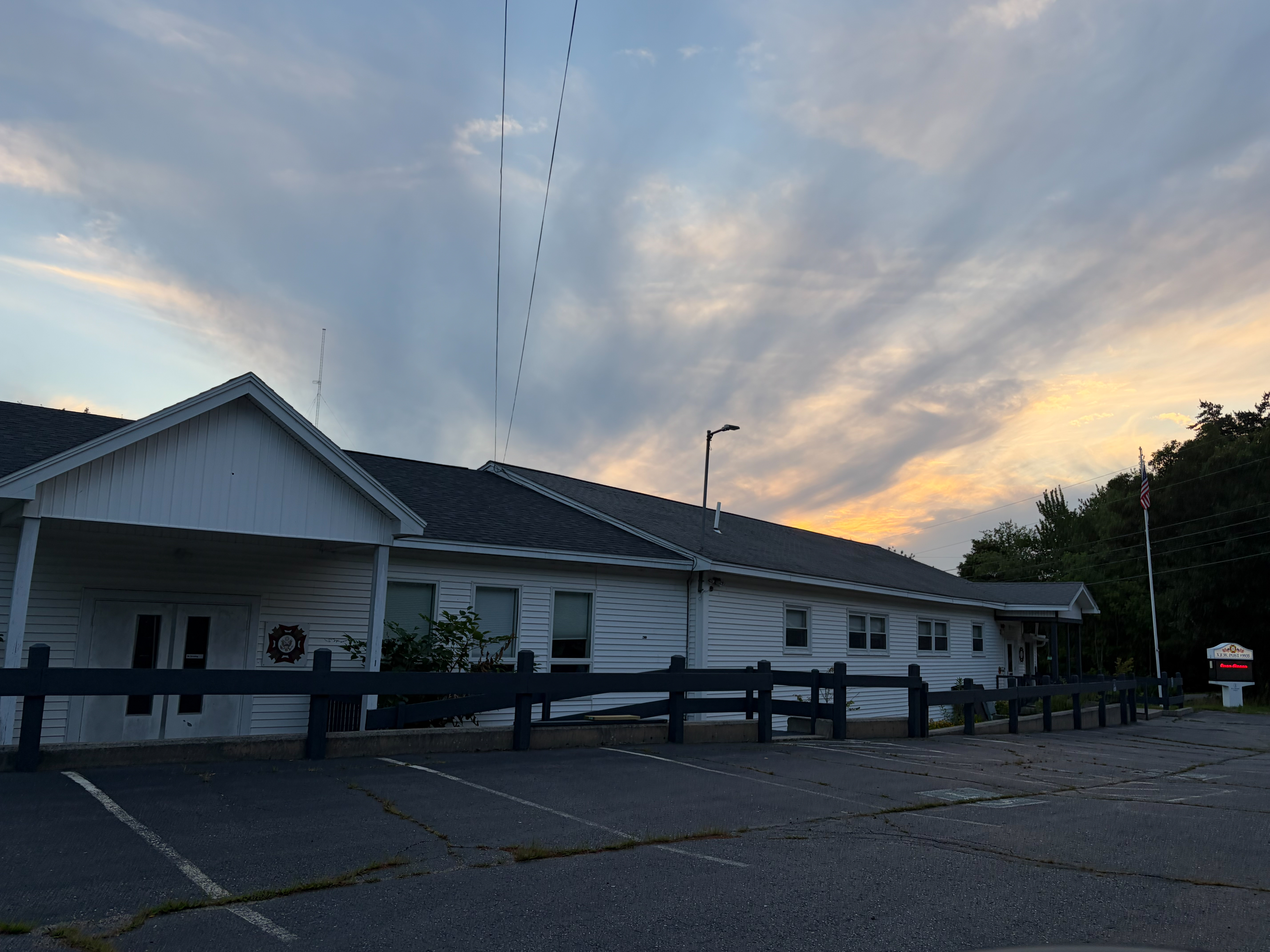
About 30 miles away in Sanford, just north of the Maine-New Hampshire border, a group of about 10 Maine voters gathered in the parking lot of a veterans community center where Platner was set to appear after his town hall in Gorham. Once it became clear that he would not show, the would-be attendees started commiserating over the canceled event and the day’s news.
Rob Brandow, 41, of nearby Waterboro, leaned against the wooden fence surrounding the building and quietly followed the conversation from a few feet away. “It’s a tough one,” he told Blue Light News of the allegations. “The honest answer is, I actually don’t care.”
“I think it’s possible philosophically to walk that line where I say, like, ‘Yes, those things are bad, it shouldn’t happen, and those allegations should be given appropriate due process to see the light of day,’” he said. “And simultaneously Susan Collins should not be re-elected.”
Jessica Piper contributed reporting.


Democrats are salivating over, and Republicans are bracing for, a potentially massive blue wave. One GOP pollster is urging everyone to calm down.
Patrick Ruffini, a founding partner at Echelon Insights, has been loudly throwing cold water on Democrats’ hopes of sweeping the red state Senate seats that have become battlegrounds in a worsening national environment for Republicans.
“The polls are, I think, intentionally inflating the size of the battleground,” Ruffini told Blue Light News.
Democrats are pushing to flip Senate seats in Iowa, Texas, Ohio and Alaska — all states that President Donald Trump won by at least 11 points in 2024 — with dreams of going even deeper into the map Kansas, South Carolina and even Mississippi. Sensing a potential disaster, Republicans have significantly curtailed their investments in North Carolina and Georgia to direct resources elsewhere.
Ruffini, who isn’t polling for candidates or party committees in any federal races, said he’s skeptical of Democrats flipping some of those seats, particularly in the Midwest, and gives the GOP a coin flip’s chance at keeping control of the Senate.
If a blue wave were to come, he said it would defy the ingrained partisanship in deep-red states that has mirrored growing political polarization around the country.
“I think it would be somewhat of a historic shift if that were to happen,” he said.
Here’s more from Blue Light News’s chat with Ruffini, edited for length and clarity. A more condensed version of this interview ran in Blue Light News’s Morning Score campaign newsletter.
You’ve been pretty publicly skeptical of polling that indicates a big tsunami for Democrats in November. Why is that?
I think we can read the environment right, but the map wrong.
The pretty large shift towards Democrats that we’re seeing on the generic ballot and in a lot of individual races, I’m not saying that’s not going to materialize. What I am more skeptical of is… the ability of any major party in this polarized era that we’re in to rack up significant gains in states that went double digits for the other side.
I’m not ruling out — I think there will be some [examples]. I think Alaska is one where it’s both an idiosyncratic state, and [Democratic nominee Mary] Peltola has shown some specific candidate-centered strength. Nor would it shock me if [Democrat] James Talarico wins, despite the history in Texas. That would not surprise me, just given the candidate quality disparity, particularly on the Ken Paxton side.
Where I get more skeptical is when you move into the Midwest, where there has historically been pretty large polling errors [overstating Democrats’ chances] in states like Iowa, Ohio. And I think you can extend that to the Democratic enthusiasm around Kansas.
Is your skepticism coming more from the quality of the individual polls that you’re seeing that are showing massive Democratic surges in the Midwest, or is it the history of these states that you’re betting will ultimately win out?
I think fundamentals are going to play an important role, particularly in states where there was a solid Trump advantage. We’re not talking about a state like North Carolina or Georgia that’s only for Trump narrowly, where Democrats, at least in the Senate races, are clearly favored.
Historically the presumption is that states tend to converge on their base partisanship in the closing days of an election, but especially that’s been the pattern in the Midwest.
Specifically as it relates to the polls this year, I think any pollster you would talk to, including myself, is experiencing significant non-response bias favoring Democrats.
When you’re seeing high-propensity Democrats [responding to polls] at twice the rate of high-propensity Republicans, when we know that the turnout on both sides would be roughly evenly paired, that’s a warning sign for polling in this cycle.
It seems like there’s some GOP internal polling saying that Republicans are worried about these states, because they are moving money around to triage certain races. I’m curious if you feel like they’re wrong to be making those decisions?
Absolutely not. They’re not wrong. You do have to take the polls somewhat seriously in the sense of, if you do get a poll that’s within the margin of error, I think you’re duty-bound to spend money in those places and not to ignore what could be a potential signal.
I think that control of the Senate comes down to Texas, so they’re right to be spending money there. If you just look at the amount of money being spent in Texas versus Kansas, obviously it’s a much, much bigger state, and you need to spend much more money.
But it’s not something along the lines of ‘the battleground has shifted. It’s a foregone conclusion. Democrats are going to win the Senate,’ and then the battleground entirely shifts to a state like Kansas or to Iowa, right? I don’t think we’re seeing that.
It sounds like the issue you have is how the broader public is interpreting these polls rather than the polls themselves?
The polls are, I think, intentionally inflating the size of the battleground. And to some extent it’s happening both ways. The polls showing a margin-of- error race in Minnesota is possible, right? I’m not as concerned about a polling error in Minnesota as I am in Kansas.
But because of the number of Democratic internals and because of the incentive of Democratic internals to show close races across the battleground, what you generally tend to see is more of an inflated sense of how big the battleground actually is. A lot of these races just break a certain way.
We’ve reported that Republicans are privately conceding that the House is lost. Is that your reading of the data too?
That’s the best reading of the data. That said, if there’s a three-point polling error or something, then I think it gets very, very tight and anything can happen. But I think that’s the most likely outcome.
What is your prediction for the number of Senate seats Republicans will have?
My prediction for both the probability and the seat count is 50-50. There’s a 50-50 chance Republicans hold the Senate. I think if they do, it’s with 50 seats, probably. But obviously, that can tilt very easily.
Which of these states do you think are going to flip for Democrats?
Alaska is clearly favored. I mean, I don’t know if it’s clearly favored, but I think it’s at least still Democrat. I think Texas is going to be very, very close. I just think the partisanship of the state is — people forget it’s a little bit more Republican than it was back in 2018. I think Republicans are probably being underestimated in Ohio because of the past Midwestern polling error.
At the same time, I would say it’s still uphill in Maine and Michigan to some degree. I think Susan Collins has really been the lone bright spot, at least in terms of the conventional wisdom, the narrative in the Senate for Republicans. I think she has a fighting chance, but I think Republicans are still probably under a 50% chance in both Michigan and Maine, just due to the nature of their partisan lean.
If at the end of all of this it is a real blue wave in the Senate, what will have happened to have made you wrong?
If that happens, we will have seen a level of depolarization in the electorate that we haven’t seen since around 2012. You really have to go back in history for a state like Kansas to flip.That would be pretty unique historically, where it’s a flip where you have an incumbent losing.
That’s the kind of thing that used to happen in Senate races a lot, and then things, starting with Trump, got a lot more polarized. So what that would mean is, maybe this is the start of a new political era. But I think it would be somewhat of a historic shift if that were to happen.
Ohio returns as a bellwether
lead image
The money spigot is sputtering in Georgia’s Senate race amid growing expectations that Democratic Sen. Jon Ossoff will win reelection.
The Senate Leadership Fund, Republicans’ top Senate super PAC, did not spend on broadcast television in the state last week — the first week they were off air in the race, according to tracking firm AdImpact. Neither did Democrats’ Senate Majority PAC.
Senate Majority PAC will also be dark again this week, the Chuck Schumer-aligned group shared first with Blue Light News. It was not immediately clear whether SLF would follow suit. The group declined to comment on their future spending plans in the state.
The spending slowdown underscores how dramatically Georgia’s place on the Senate map has shifted, as Ossoff maintains wide margins over Republican Rep. Mike Collins in public polling and fundraising. Georgia was expected to be one of the cycle’s most expensive and preeminent battlegrounds — now some of the biggest outside spenders are pulling back and turning their attention to more competitive races in redder territory.
The two major Senate super PACs have closely mirrored each other’s spending decisions in recent weeks, with neither fully retreating from the state. They still both technically have future ad reservations booked past this week, but those are not binding, leaving both sides with the flexibility to redirect money as they assess the Senate map. And with two weeks until Election Day and early voting already underway in Georgia, it’s unclear whether either will spend any more in the state.
“National Republicans are abandoning Mike Collins as he continues to show Georgians why he’s unelectable and unfit for office. We are committed to seeing Jon Ossoff through to victory as we come to the final days of this campaign,” SMP spokesperson Lauren French said in a statement.
Collins’ campaign, in a statement, said they were “grateful to every group that’s standing with Rep. Collins and welcome their continued support.”
“With early voting underway, he’s working every day to earn the vote of every Georgian, because Jon Ossoff is a radical leftist who wants to raise their taxes and make their families less safe. Rep. Collins will keep making that case until Ossoff is held accountable on Election Day,” Collins spokesperson Meyer Siegfried said in a statement.
Ossoff’s campaign didn’t respond to a request for comment.
SMP had pledged in the spring to spend $20 million on television for the race, but as of Friday had only spent or reserved $11.5 million, per AdImpact. SLF had announced an initial $44 million investment, but has so far only spent or reserved roughly $20 million.
No Going Back PAC, which is affiliated with President Donald Trump’s MAGA Inc. super PAC, has also dramatically scaled back its own spending on the race over the last two weeks, according to AdImpact.
Republican operatives are still monitoring Georgia’s governor’s race, where recent public polling shows GOP nominee Rick Jackson slightly ahead of Democratic nominee Keisha Lance Bottoms. Republicans believe Jackson’s strength could keep the Senate race closer than currently expected.
But they have grown increasingly pessimistic about their prospects of flipping Georgia’s Senate seat, as Collins trails Ossoff in the polls and the overall environment for the GOP continues to grow more difficult. SLF’s decision to go dark last week — so close to the election — raises questions about how much more the group will ultimately invest in the state.
“Every dollar Schumer spends in Georgia is one not spent on offense in red states. Republicans’ financial advantage doesn’t just show up in more ads, it keeps Dems on defense,” a person familiar with SLF’s spending plans told Blue Light News.
Ossoff also holds a massive fundraising advantage over Collins, who had just over $1 million cash on hand as of Oct. 1, giving Ossoff a major financial cushion in the final stretch even before the major Senate super PACs pulled back their spending.
The GOP has been triaging races across the map: SLF shifted money out of North Carolina, another perennial battleground, while moving resources toward defending GOP-held seats in states like Kansas and South Carolina, where the Senate contests have become increasingly competitive.
Still, even as the money going into Georgia has continued to slow, Trump appears to be prioritizing the longtime battleground.
At a rally in Dalton on Friday, he urged voters to “pretend” he’s on the ballot, while praising Collins and the state’s GOP governor’s nominee, Rick Jackson.
Meredith Lee Hill and Andrew Howard contributed.
- ‘A warning sign for polling’: Why one GOP pollster thinks a blue wave may fall short
- Capitol agenda: AI experts to school Congress wanted
- Ohio returns as a bellwether
- Inside the quiet money pullback — for both parties — in Georgia’s Senate race
- Wanted: Tech experts to help Congress regulate AI
- Wright defends Trump’s Russian diesel deal as ‘carrot’ for peace
- Democrats’ Tejano star sings to swing South Texas

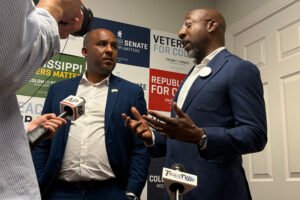
- Warnock wants Democrats to focus on the South. He’s starting in Mississippi.
- Retiring GOP congressmember will ‘absolutely not’ vote for successor in at-risk seat
- Sullivan walks the line with Trump in Alaska Senate race
-

 Politics2 years ago
Former ‘Squad’ members launching ‘Bowman and Bush’ YouTube show
-
Uncategorized2 years ago
Bob Good to step down as Freedom Caucus chair this week
-

 The Josh Fourrier Show2 years ago
DOOMSDAY: Trump won, now what?
-

 The Dictatorship2 years ago
Pete Hegseth’s tenure at the Pentagon goes from bad to worse
-

 Politics2 years ago
Former Kentucky AG Daniel Cameron launches Senate bid
-

 The Dictatorship2 years ago
Luigi Mangione acknowledges public support in first official statement since arrest
-

 Politics2 years ago
Blue Light News’s Editorial Director Ryan Hutchins speaks at Blue Light News’s 2025 Governors Summit
-

 The Dictatorship1 year ago
Mike Johnson sums up the GOP’s arrogant position on military occupation with two words