
The Dictatorship
Justice Ketanji Brown Jackson addresses the ‘elephant in the room’


This is an adapted excerpt from the May 4 episode of “Velshi.”
Chaos and turbulence have been hallmarks of the early days of Donald Trump’s second administration, but it seems the president has landed on his messaging strategy. In a recent interview with NBC News’ Kristen Welker, Trump clarified who he thinks should get the credit for things that are going well and who should get the blame for things that are going poorly.
Mahdawi spoke to the president directly, telling Trump, “I am not afraid of you.”
Following disappointing economic numbers, which Trump tried to pin on his predecessor, Joe Biden, Welker asked the president when would it become the “Trump economy.”
“It partially is right now,” Trump said. “And I really mean this. I think the good parts are the Trump economy and the bad parts are the Biden economy because he’s done a terrible job. He did a terrible job on everything.”
The president is being remarkably transparent there, admitting to a core part of Trumpian dogma: Whatever he does is good and right, and whatever his perceived political enemies do is bad and wrong.
It’s one of the reasons it’s so hard to fight the disinformation that comes from Trump and his acolytes, and why my colleague Rachel Maddow has always urged us all, when it comes to Trump, to watch what he does and not what he says.
One of the most impactful things Trump has done in his first 100 days back in power is to cut a path of retribution designed to scare political opponents, lawyers, former government officials, schools and universities, and even just regular people away from speaking up.
But it’s also important to acknowledge the flip side of Trump’s first 100 days: The first 100 days of a new resistance that’s been building.
The courage to stand up against an emboldened second Trump administration seemed in short supply in the earliest days. But we are seeing it more and more, and, as we know, courage is contagious.
There are people like Mohsen Mahdawi, a Columbia University student and legal permanent resident, whom the federal government is trying to deport on national security grounds due to his participation in protests against Israel’s war in Gaza. Addressing a crowd after a judge ordered his release from a federal immigration detention facility where he was held for weeks, Mahdawi spoke to the president directly, telling Trump, “I am not afraid of you.”
While multiple schools have given in to Trump’s demands, and others appeared to be deer caught in headlights, unsure of what to do, some in higher education are starting to fight back. Harvard University seems poised to be in the most powerful position, with its massive financial resources and backing. The university is suing the government after it froze $2.2 billion in federal funding for failing to meet a list of the administration’s demands. Trump now says he is revoking the school’s tax-exempt status as well because it’s “what they deserve!”
But this newfound fight isn’t just focused on elite East Coast institutions. The Washington Post reports there is a burgeoning movement among the faculty and student senates at more than half a dozen schools that have passed resolutions urging their leaders to join a NATO-like pact, which would allow them to share attorneys and pool financial resources should Trump target one of its members.
Jackson went on to urge her colleagues in the room to show “raw courage” to dispense justice without fear.
There are also judges across the country, and across the ideological spectrum, who continue to do their jobs in the face of Trump and his administration’s unrelenting public attacks.
Those attacks drew a strong and highly unusual public condemnation from a Supreme Court justice on Thursday. Without mentioning Trump by name, but saying she was addressing the “elephant in the room,” Justice Ketanji Brown Jackson told a conference for judges, “The attacks are not random. They seem designed to intimidate those of us who serve in this critical capacity. The threats and harassment are attacks on our democracy, on our system of government. And they ultimately risk undermining our Constitution and the rule of law.”
Jackson went on to urge her colleagues in the room to show “raw courage” to dispense justice without fear, and told them that “history will vindicate your service.”

Ali Velshi is the host of “Velshi,” which airs Saturdays and Sundays on BLN. He has been awarded the National Headliner Award for Business & Consumer Reporting for “How the Wheels Came Off,” a special on the near collapse of the American auto industry. His work on disabled workers and Chicago’s red-light camera scandal in 2016 earned him two News and Documentary Emmy Award nominations, adding to a nomination in 2010 for his terrorism coverage.
Marc Katz
and
Allison Detzel
contributed
.


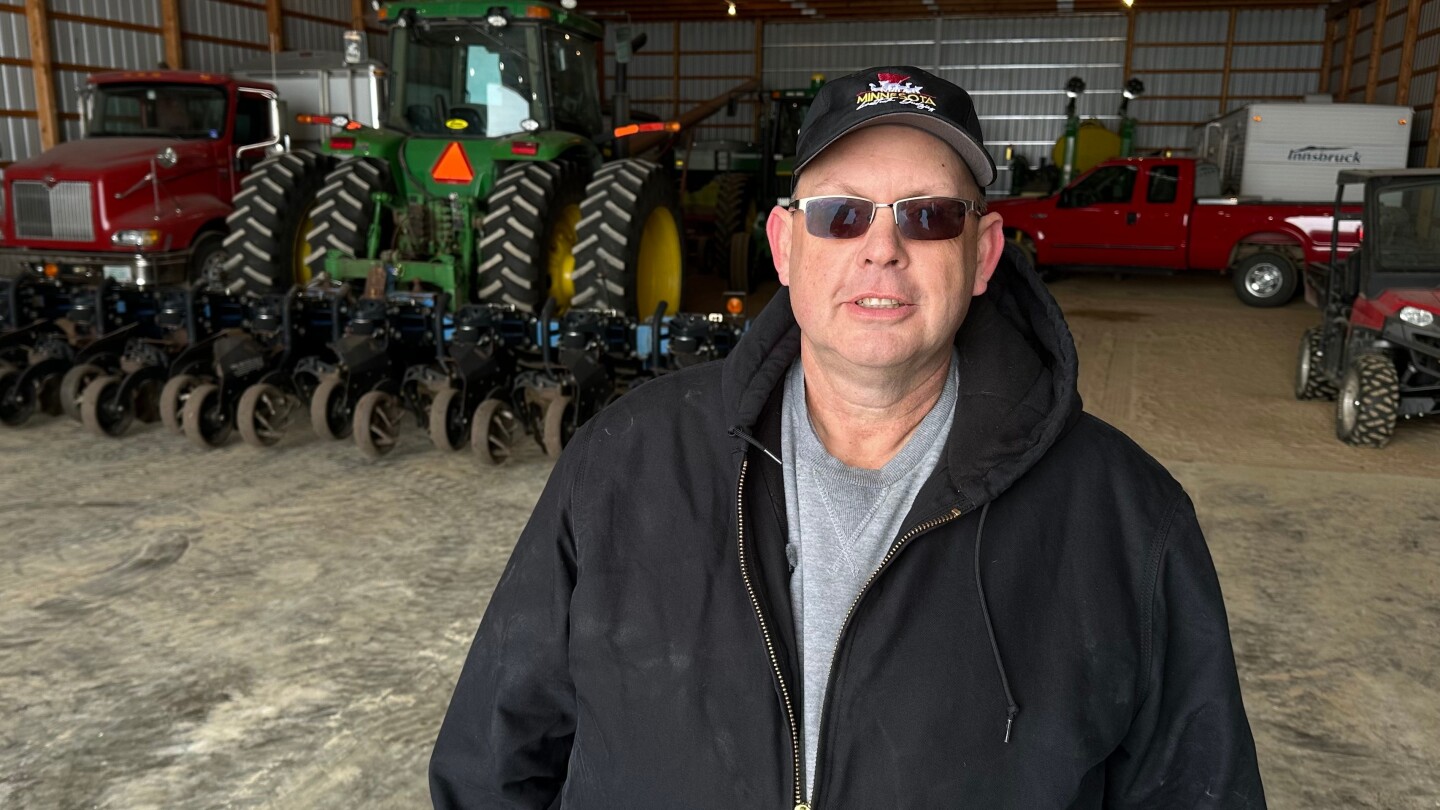
RANDOLPH, Minn. (AP) — When Donald Trump promised new tariffs while running for president, Gene Stehly worried that trade disputes would jeopardize his international sales of corn, soybeans and wheat.
A little more than a year later, Stehly said his fears have become a reality, and Trump’s latest promise of federal assistance is insufficient to cover American farmers’ losses.
“Maybe this will all come out to be better at the end, but I can tell you right now, it certainly isn’t the case at the moment,” Stehly said.
Trump announced Monday that his Republican administration would distribute $12 billion in one-time payments to farmerswho have suffered from persistently low commodity prices, rising costs and declining sales after China cut off all agricultural purchases from America during the trade war.
While rural areas remain conservative bastions, farmers’ patience with Washington is wearing thin. Several of them described the government bailout, an echo of similar policies during Trump’s first term, as a welcome stopgap but one that will not solve the agricultural industry’s problems.
“It’s a bridge. It’s not the ultimate solution we’re looking for,” said Charlie Radman, a fourth-generation farmer who grows corn and soybeans on the land his family has owned near Randolph, Minnesota, since 1899. “What we really want to have is a little more certainty and not have to rely on these ad hoc payments.”
But farmers support for Trump remains steadfast.
Kansas sorghum farmer Garrett Love, who was at the White House when the aid was announced, said farmers know that securing fair trade deals is a “hard process,” and farmers “appreciate lowering tax burdens, lowering regulations, increasing freedom, and Trump has definitely done that.”
Farmers caught up in trade war
American soybean and sorghum farmers typically export at least half their crops. They were hit the hardest by Trump’s trade dispute with China, the world’s largest buyer of soybeans that has increasingly relied on harvests from Brazil and other South American nations.
Trump and his Cabinet have boasted about the deal he struck with Chinese President Xi Jinping in October. But Liu Pengyu, the spokesperson for the Chinese embassy, said this week that “agriculture trade cooperation between China and the United States is proceeding in an orderly manner” without giving specifics.
So far, China has bought only a little more than one-quarter of the 12 million metric tons of soybeans that U.S. officials said would be purchased before the end of February, raising doubts on whether Beijing would follow through on that pledge or commitments to buy 25 million metric tons annually in the next three years. China has not confirmed those numbers.
“In general, I don’t trust their motives and integrity of their promises,” said Bryant Kagay, who farms in northwest Missouri.
Even if China does buy the agreed amount of American soybeans, that would only bring U.S. farmers near to the amount they were selling every year before Trump took office.
That is a big part of why Minnesota farmer Glen Groth said he’d “like to see the administration focus more on opening up markets outside of China.” In addition to finding other international buyers, agriculture groups are pushing to expand domestic uses like biodiesel, ethanol, aviation fuel and animal feed.
Dan Keitzer, a soybean and corn farmer in southeast Iowa, said recent bumper crops and technological advancements that produce bigger harvests means that the industry needs more customers.
“I think most farmers would tell you that they don’t want to go to the mailbox and get a check from the government. That’s not why we farm,” he said. “We need more demand for our product.”
Aid is considered a Band-Aid
Trump has placated farmers with money before. During his first term, he provided $22 billion in 2019 to help cushion them from trade disputes with China. There was $46 billion in 2020, an expanded number that reflected financial challenges from the COVID-19 pandemic.
The $12 billion that he announced this week will not quell farmers’ fears about the future. They already are ordering supplies for next year’s crops and meeting with their bankers to discuss the loans they will need. But they’re trying to stay optimistic that crop prices will improve if they find more buyers. Farmers will find out exactly how much aid they can expect around Christmas.
The aid payments that are due to arrive by the end of February will be capped at $155,000 per farmer or entity, and only farms that make less than $900,000 in adjusted gross income will be eligible. During the first Trump administration, a number of large farms found ways around the payment limits and collected millions.
Farmers would like to see Trump aggressively tackle concerns about higher costs that are eating into their bottom line.
Trump signed an executive order over the weekend directing the Justice Department and Federal Trade Commission to investigate anti-competitive practices anywhere in the food supply chain, starting with the fertilizer, seed and equipment that farmers rely on and continuing to deal with meat packing companies and grocers who help determine what price consumers pay.
Tregg Cronin, who farms and ranches with his family in central South Dakota, said he’s grateful for the president’s acknowledgment that farmers are “caught in the middle” of the trade war.
But he said that any checks that farmers receive from the government will likely “get turned around and sent right out the door.”
___
Funk reported from Omaha, Neb. Associated Press writers Hannah Fingerhut in Des Moines, Iowa, Sarah Raza in Sioux Falls, S.D., and Didi Tang in Washington contributed to this report.
ByAri Bernick
It’s upsetting to have to advocate for respect in the workplace. It’s even more upsetting that the main offender is the president of the United States.
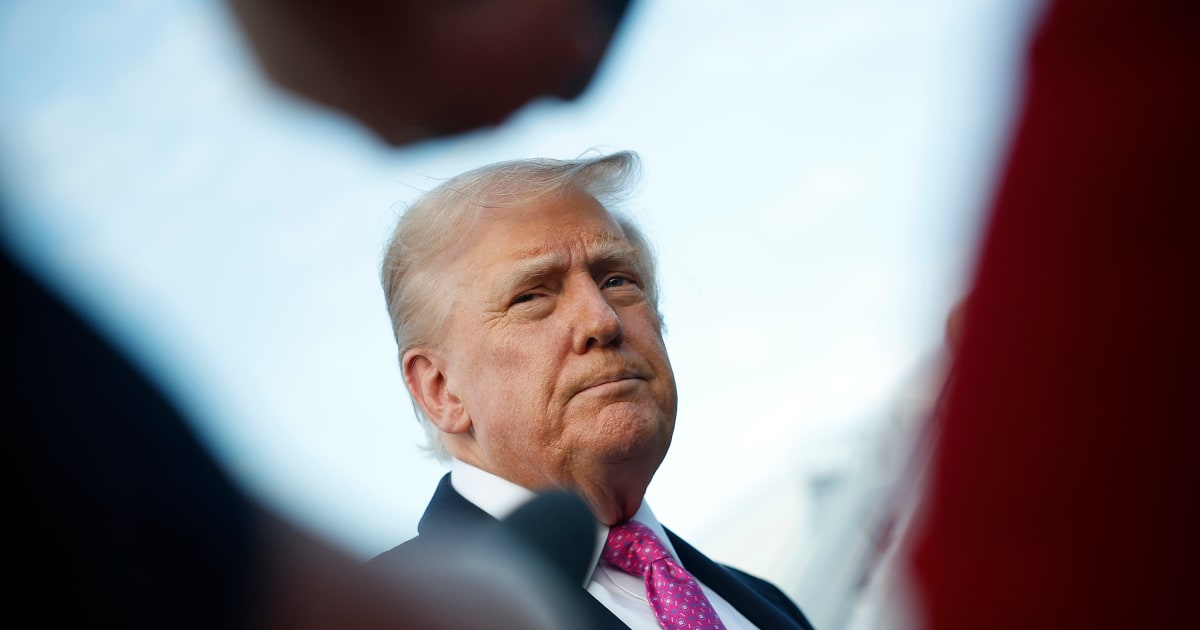
The most recent instance of the president directly attacking women in the media happened at the White House on Monday: “You are the most obnoxious reporter in the whole place,” the president said, berating ABC’s Rachel Scott, after she asked about video of the Sept. 2 strikes on alleged drug boats in the Caribbean. “Let me just tell you, you are an obnoxious, a terrible ― actually a terrible reporter, and it’s always the same thing with you.”
These public humiliations are outrageous.
Last week, the president diminished CNN’s Kaitlan Collins as “always Stupid and Nasty” in a social media post. Some of his other recent lows:
- Pointing at Bloomberg News’s Catherine Lucey and barking, “Quiet. Quiet, piggy.”
- Replying “Are you stupid? Are you a stupid person?” when Nancy Cordes of CBS asked about administration vetting of the National Guard shooting suspect.
- Calling Katie Rogers of The New York Times “a third rate reporter who is ugly, both inside and out.”

Remaining silent does a disservice to the women in the media who have come before me, those who stand alongside me and those who want to join the field in the future.
I might still be new to the industry, but I know female reporters deserve better.
It was not lost on me last month, seeing the attack on Rogers after a Times article about the president agingthat the president’s social media post did not scold or even mention the article’s male co-author.
Going after a female reporter’s looks and intelligence reminds me of things I learned in a media history class at Northwestern University: how women were excluded from newsrooms because people did not believe they had the intellectual capacity to be reporters, and how women used to be told to report on lifestyle and culture instead of “hard news” topics such as the economy. They were paid less, harassed more and were essentially told, “this isn’t for you.”
But journalism is for us.

These public humiliations are outrageous. And it’s frustrating to have spent four years studying how to ethically and accurately report only to see past injustices repeated and for the president to disrespect my chosen profession time and again.
But my larger concern is how this rhetoric could turn into action. In this administration, reporters have been turned away from the White House and Pentagon briefing rooms. What’s to stop the president from going even further?
I’m also worried about how the president’s rhetoric raises risks for me in my own work. For my job on the MS NOW social team, I spend a lot of time approaching people on the street for reactions to news stories. In October, for example, I interviewed several Chicagoans about how they felt about the National Guard deployments in their city. The president’s aggressive behavior gives a green light for people to bash me for simply asking questions.
Asking difficult questions is crucial to journalism. Answering them is a responsibility of holding public office.
Asking difficult questions is crucial to journalism. Answering them is a responsibility of holding public office.
I shouldn’t have to spell this out but: No one should be berated for doing their jobs competently.
I’m standing up for my peers because I’m grateful for the previous generations that made my career path possible; for the journalism professors who encouraged me to speak the truth, boldly; and for female coworkers, producers and managers whose professionalism has mentored me directly and indirectly.
While the number of women going into journalism has increased, a 2024 study from the Reuters Institute for the Study of Journalism found that the share of women in leadership positions in the field is still low. I worry that aspiring young journalists might feel reporting is not for them because of how the president treats women in the industry. I also worry that reporters might refrain from asking tough questions to avoid direct attacks from the commander-in-chief.
In 2015, when the president, then a candidate, made disparaging comments about Megyn Kelly after a Republican primary debate, the criticism that followed was widespread. More recently, some fellow reporters have denounced this disrespect of their colleagues and asked about the president’s behavior. Appallingly, the White House press secretary suggested everyone “should appreciate the frankness and the openness.”
Bullying wasn’t okay in a schoolyard, and it’s not okay coming from the Oval Office.

Ari Bernick
Ari Bernick is a production assistant on the MS NOW social team. She studied history and journalism at Northwestern University.
ByEarle J. Fisher
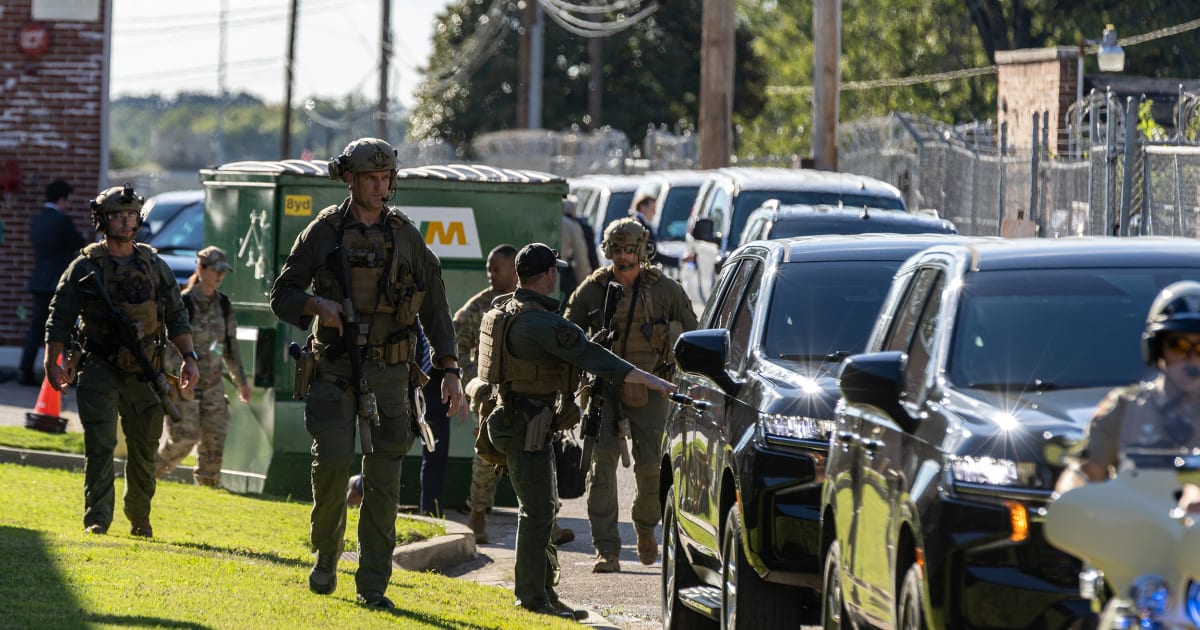
A year ago, the Department of Justice released a pattern and practice findings on the Memphis Police Department that documented systemic abuses and discriminatory enforcement that harmed Black residents. Twelve months later, instead of real reform or positive federal oversight, Memphis has been drawn into a national political performance. At the center is the Memphis Safe Task Forcea political creation of the Trump administration and a clear example of punitive populism, the latest expression of what Alec Karakatsanis names “Copaganda.”
The task force has initiated more than 35,000 traffic stops.
The task force has made more than 3,100 arrests since Oct. 1. Roughly 1,900 of them are for nonviolent offenses. During the same period, the task force has initiated more than 35,000 traffic stops. These numbers appear on a city dashboard that community members have criticized for lacking detail, yet local law enforcement and city/state officials are already being used as evidence of crime reduction. What the numbers actually show is the volume of enforcement, not the presence of genuine reform.
The Trump administration is presenting Memphis to the nation as a model of successful intervention by collapsing traffic stops, misdemeanors and immigration-related encounters into the broad category of crime control.
The Memphis Safe Task Force resembles earlier programs such as stop-and-frisk in New York, Blue CRUSH (Criminal Reduction Utilizing Statistical History) in Memphis and the “broken windows to the next level” policing approach that White House Deputy Chief of Staff for Policy Stephen Miller has celebrated. It creates aggressive encounters with marginalized people to create the illusion that such encounters promote safety.

As was the case in so many cities across the country, violent crime in Memphis was declining before the task force was created, reaching what some described as a 25-year low. Crime was also at or near record lows in Chicago and Washington, two other cities where Trump has sent in troops. Though Attorney General Pam Bondi claims to have “reversed the trend of crime” in Memphis, that reversal was already underway.
The immigration data is even more revealing. Nearly 40% of local arrests tied to the task force involve immigration activity. Nationally, Immigration and Customs Enforcement has arrested almost 75,000 people with no criminal record. It’s unknown what the numbers show in Memphis. As the Tennessee Lookout reported last week, “Task Force officials initially reported immigration arrest numbers but have since stopped providing that data.”
But, in general, the operation has allowed officials to claim a crime crackdown even when people targeted are not linked to violent offenses. Here in Memphis, local and state officials want the public to conflate law enforcement activity with safety and accept an increase in activity as a substitute for accountability. They want to redirect attention away from the deeper rot in the Memphis Police Department that the DOJ report exposed.
The public is repeatedly shown selected numbers by Attorney General Bondi’s office — and echoed by local agencies and officials — to reinforce a predetermined story that the task force has created quick, measurable improvements, that these gains justify the erosion of civil liberties and that Memphis is safer because more people have been stopped or detained.
But public safety cannot be measured by the number of people funneled through the criminal legal system. Arrests and traffic stops are not evidence of transformation. They are only evidence of encounters. They say nothing about community trust or the changes required to prevent violence.
This narrative also obscures what has happened since the DOJ released its findings. Rather than embracing federal oversight, the mayor and city administration dismissed the report as “meaningless” and even asked a federal court to disregard it. They then announced another task force to study MPD oversight. Ten months later, that group has not published a single policy or recommendation. The structural problems identified by the DOJ remain unaddressed. In the vacuum created by this refusal to pursue real reform, political actors have substituted a storyline suggesting the city has already turned a corner.
The danger is not only local. When national leaders hold up Memphis as a model without scrutinizing the data, they normalize a strategy that encourages the public to equate policing with safety. One year after the DOJ confirmed what many residents had been saying for decades, we deserve more than political theater.
Other cities with problematic law enforcement agencies deserve more, too: reforms guided by independent oversight, transparency that distinguishes perception from reality and a public safety strategy rooted in truth. Instead, we’ve been offered a spectacle. And the Trump administration is promoting Memphis as a success story even as the underlying issues that threaten our safety remain unresolved.
Earle J. Fisher
The Rev. Earle J. Fisher, Ph.D. is Senior Pastor of Abyssinian Baptist Church (Memphis), founder of #UPTheVote901 and author of “The Rev. Albert Cleage Jr., and the Black Prophetic Tradition: A Reintroduction of The Black Messiah”published by Lexington Books.
- Indiana GOP’s Trump rebuke could lead to temporary redistricting detente
- House GOP leaders race to release health care package Friday
- GOP health care chaos spills into battleground midterm races
- Bill Gates appears in newly released photos from Epstein estate
- Trump, Clinton, Gates included in Epstein photo trove
- Trump promises White House ballroom completion in ‘about a year and a half’
- Gingrich: ‘Republicans are in real trouble’ if economy doesn’t ‘recover’
- Meet the candidates running to be the next U.S. Senator from Texas: James Talarico

- Trump’s National Guard deployments get Congressional scrutiny

- Trump predicts Indiana Senate GOP leader will lose next primary over redistricting vote
-

 The Dictatorship10 months ago
Pete Hegseth’s tenure at the Pentagon goes from bad to worse
-

 Politics10 months ago
Former ‘Squad’ members launching ‘Bowman and Bush’ YouTube show
-
Uncategorized1 year ago
Bob Good to step down as Freedom Caucus chair this week
-

 Politics10 months ago
Blue Light News’s Editorial Director Ryan Hutchins speaks at Blue Light News’s 2025 Governors Summit
-

 The Dictatorship10 months ago
Luigi Mangione acknowledges public support in first official statement since arrest
-

 The Josh Fourrier Show1 year ago
DOOMSDAY: Trump won, now what?
-
 Politics8 months ago
Democrat challenging Joni Ernst: I want to ‘tear down’ party, ‘build it back up’
-

 Politics10 months ago
Former Kentucky AG Daniel Cameron launches Senate bid