
Congress
Johnson braces for no wiggle room as he works to pass ambitious GOP agenda

House Republicans’ starting majority has now been cemented at 220 votes, with Democratic Rep.-elect Adam Gray formally ousting GOP Rep. John Duarte as of Tuesday night. That’s already an incredibly thin margin, but it’s going to get slimmer.
After some of President-elect Donald Trump’s expected nominees leave the House, Speaker Mike Johnson is expected to have literally no wiggle room, right as Republicans embark on an ambitious agenda to pass a sweeping party-line package on energy, immigration and defense policy within the first 30 days of the Trump administration. And they plan to follow that up with another partisan bill on taxes and other priorities.
If Johnson’s members leave before the votes on those bills, he wouldn’t be able to lose a single vote at full House attendance.
Let’s math: Start with the official 220-seat Republican and 215-seat Democratic majority. It’s already a mirage, because former Rep. Matt Gaetz (R-Fla.) has said he won’t return for the 119th Congress. So that drops to 219 GOP seats.
Then you have more swift exits coming. Rep. Elise Stefanik (R-N.Y.) is expected to be quickly confirmed to be ambassador to the United Nations, dropping that to 218 Republican seats.
Ditto Rep. Michael Waltz (R-Fla.), who’s joining Trump’s Cabinet in a role that does not require Senate confirmation. So make that 217 GOP-held seats.
There’s your actual margin: 217-215, Republicans hold the chamber. And remember, if it’s a tie vote, the legislation doesn’t pass — so Johnson can’t afford to lose a single Republican if Democrats unanimously oppose measures on the floor.
We looked previously at some of the possible blocs of headaches Johnson will face as he gets into the season of nuts and bolts legislating — with his and Trump’s agenda in the balance. Republicans are vowing strong unity this go around, but that’s going to be incredibly tough when just one House member can delay or derail legislation.


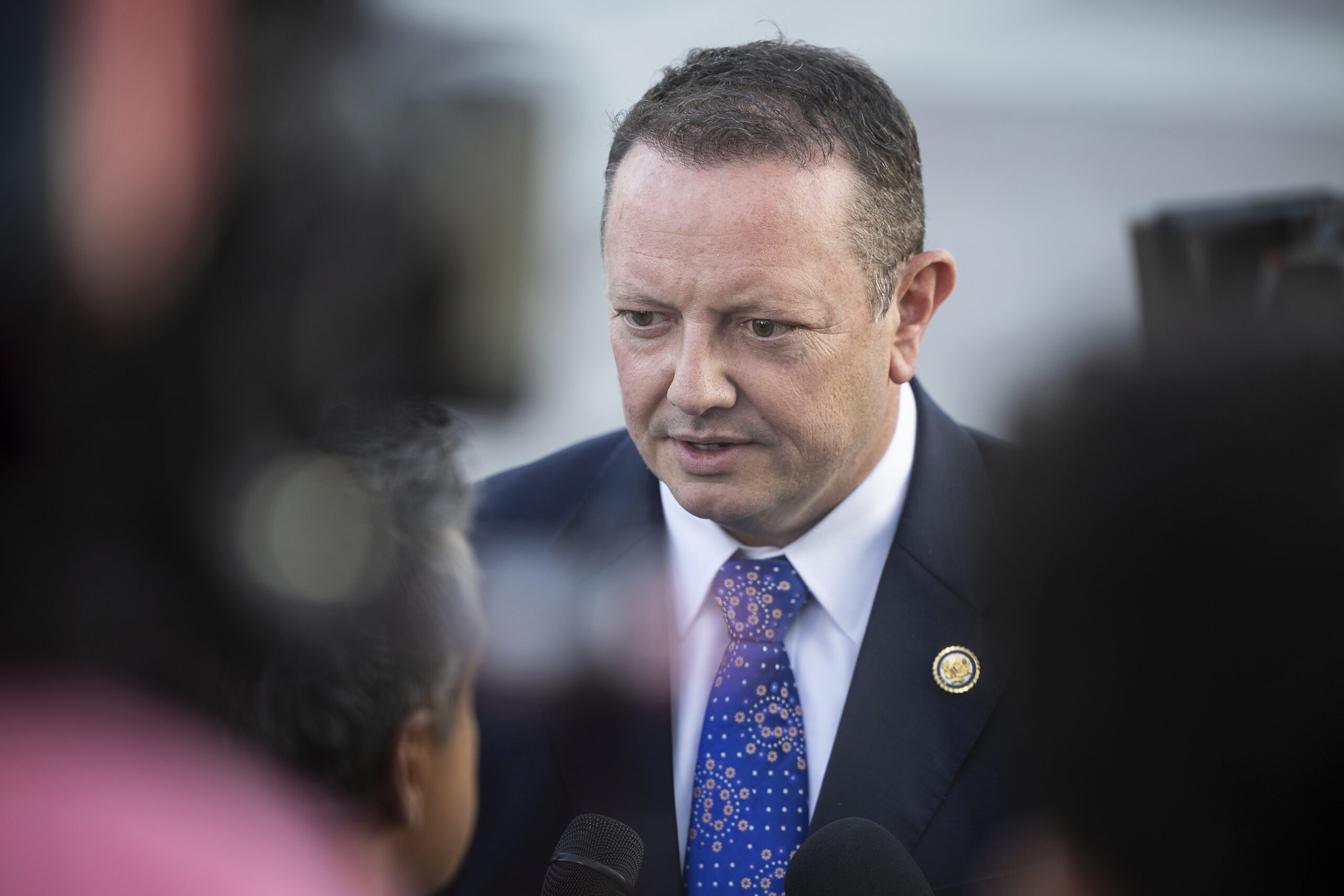
After more than a decade at the center of GOP politics on Capitol Hill, the House Freedom Caucus is suddenly confronting an unsettled future.
Several of the hard-right bloc’s most prominent members are leaving Congress next year after seeking higher office — including a former chair, Rep. Andy Biggs of Arizona, and several media-friendly voices such as Reps. Chip Roy of Texas, Byron Donalds of Florida and Ralph Norman of South Carolina, among others.
“We’re losing a lot of talent — there’s no doubt about it,” Rep. Eli Crane of Arizona said. “So it’s just kind of like a next-man-up mentality.”
But which man is very much in question. The current chair, Rep. Andy Harris of Maryland, is term-limited, and a new generation of combative ultraconservatives is ready to step in just as the caucus comes to terms with a potentially changing role on Capitol Hill.
The group will be facing twin challenges — a potential shift to a Democratic House majority, which has historically made the caucus less pivotal, and the looming transition to a Republican Party without a President Donald Trump, who has been an animating force for most of its members.
“Across the country, people know who the Freedom Caucus is,” said Rep. Clay Higgins of Louisiana. “The next couple of years is going to be important for the caucus.”
The group has reinvented itself in the past, with new leaders emerging as old members move on. Donalds recalled when former chair Mark Meadows of North Carolina departed for the White House in Trump’s first term.
“They’re like, ‘Well, what’s going to be the future of HFC?’ And in came Chip Roy, in came a Byron Donalds,” he said with a grin. “We just kind of kept it going.”
The only founding member still serving in the House is Rep. Jim Jordan of Ohio, who could make a play for minority leader if Republicans lose the majority in November — further scrambling the caucus’ historic role as a hard-right vanguard.
Harris will remain a member, as will fellow former chair Scott Perry of Pennsylvania — if he can win what’s expected to be a competitive general-election race. Veteran members such as Reps. Michael Cloud and Keith Self of Texas will also be influential.
But a number of relatively obscure members are ready to make moves and become the new faces of the hard right in the House.
Eric Burlison
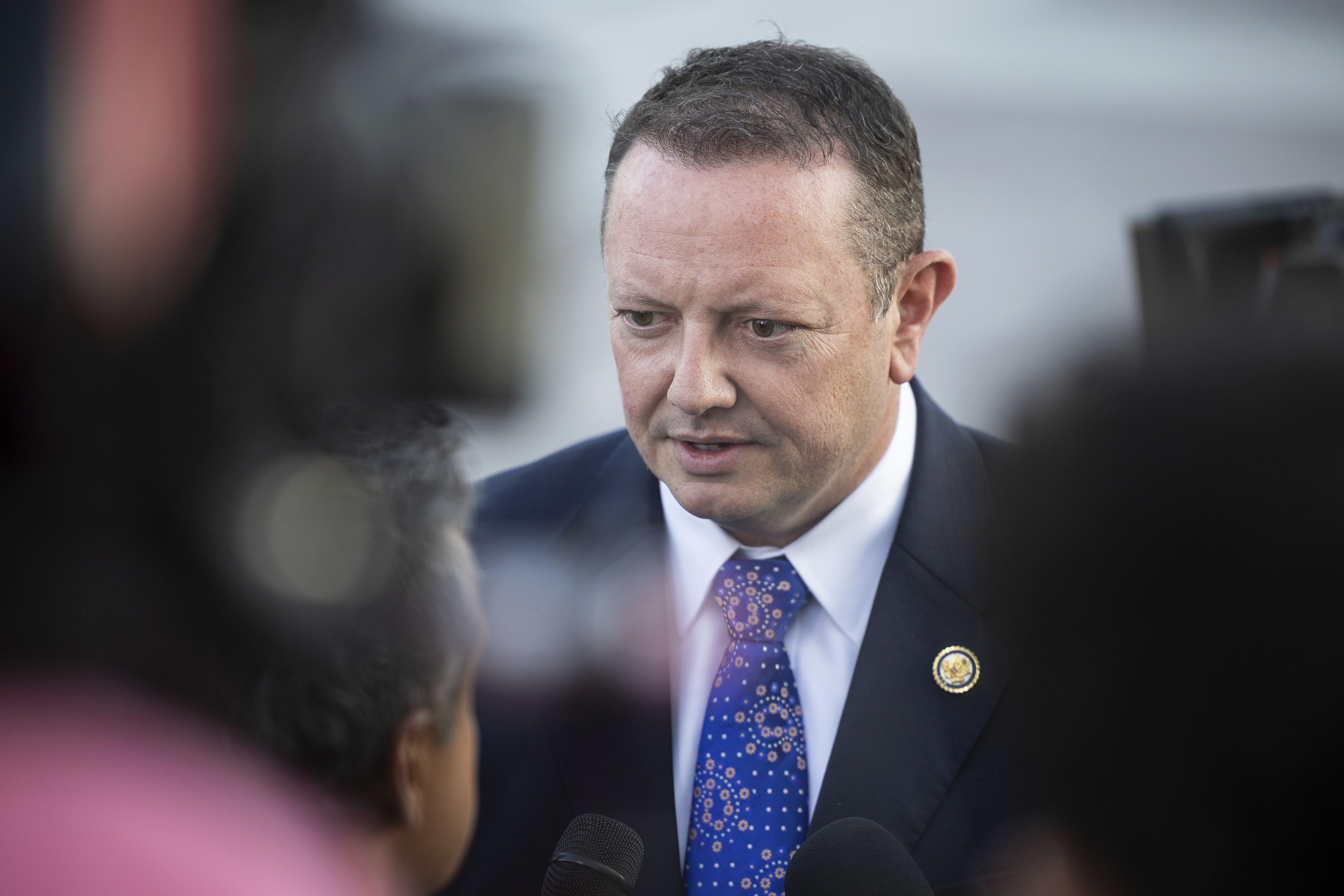
Rep. Eric Burlison of Missouri is in his second term but has shown an unmistakable thirst to be at the center of the action since arriving in the House. Currently an HFC board member, Burlinson said he is considering running to be the next chair.
“You obviously have to be selected by your peers, and that would be the greatest honor,” he said in an interview. “There’s no one I respect more than the people that are members of HFC.”
He spent over a decade in the Missouri statehouse before heading to Congress, after working as a software consultant. Last summer he was a vocal member pushing for the full release of the Epstein files and has become a leading Republican pushing for more information on UFOs.
Burlison noted that a future chair will be inheriting a nationally recognized Freedom Caucus “brand” that includes a plethora of state-level and local groups that have adopted the name. He said the original HFC should look at ways to “leverage” that brand but also protect it from being adopted by groups that aren’t in line with its conservative vision.
“We have to kind of protect our image,” he said. ”So I think we need to get that figured out.”
Andrew Clyde
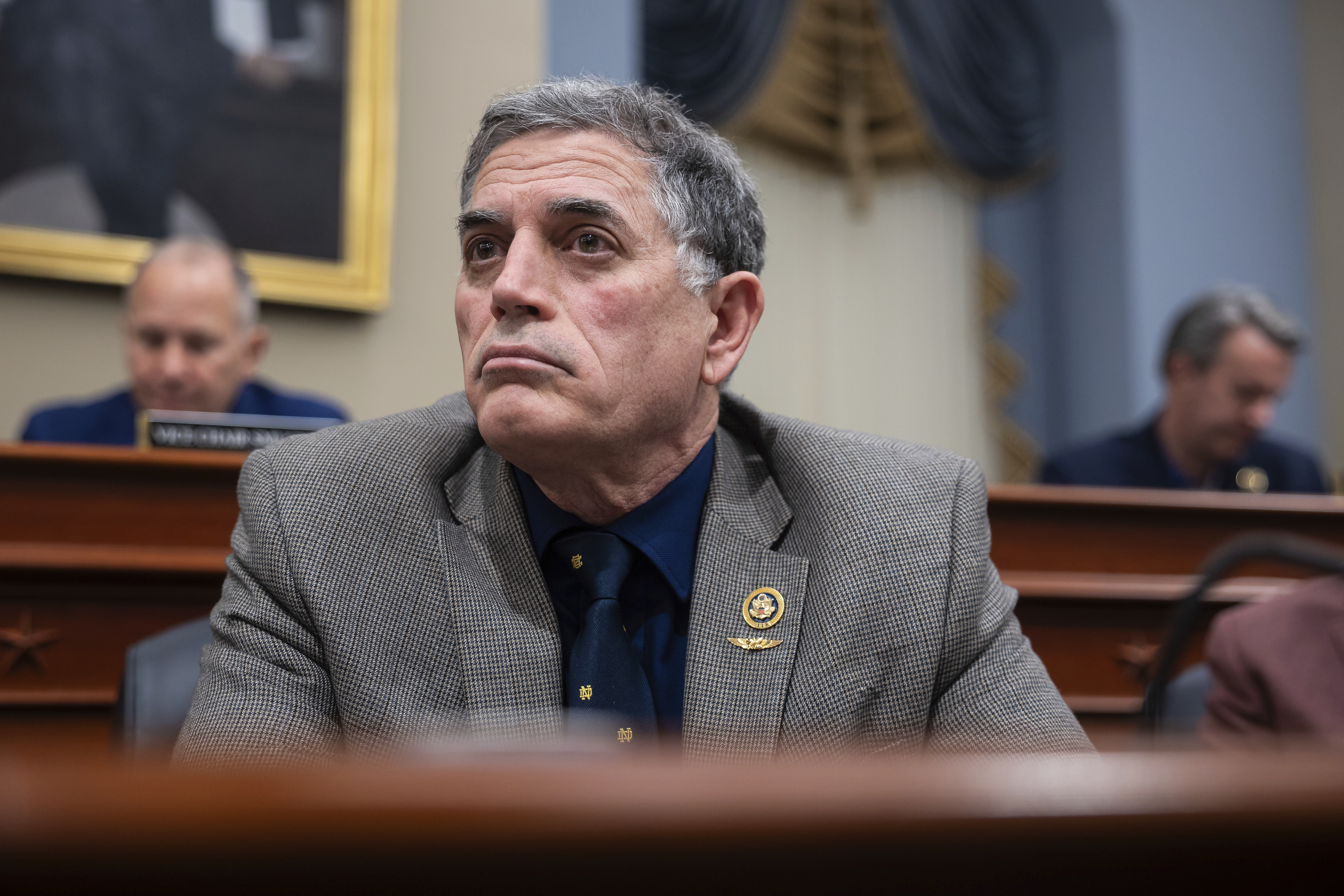
Rep. Andrew Clyde of Georgia has managed to amass significant power by Freedom Caucus standards by winning seats on the Appropriations and Budget committees, which have allowed him to push for conservative positions on those influential panels.
Clyde, another board member, said in an interview he had not yet thought about running for chair but noted that “you don’t have to be the chairman to have outsized influence.”
He added that while the group is losing some high-profile members, the president’s conservative agenda has attracted several likely incoming members to the group.
“We’re seeing some folks that have not supported the Freedom Caucus before that are coming on board to support the House Freedom Caucus,” Clyde said. “So I think you’ll see [an] even greater presence.”
Brandon Gill
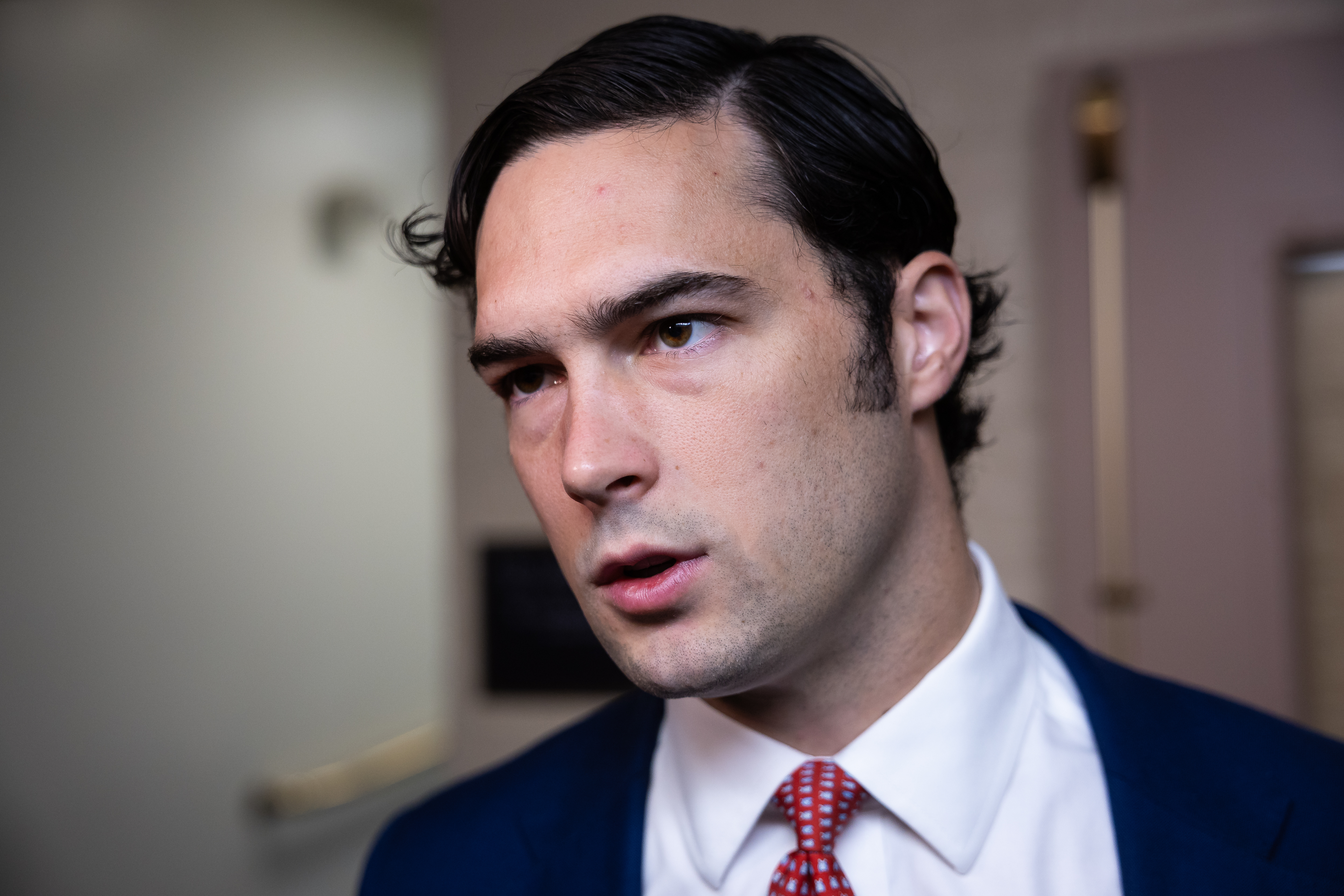
Rep. Brandon Gill of Texas, a freshman and the youngest sitting House Republican, is already seen as a rising star inside the House GOP. He has said he wants to emulate Jordanand has a seat on Judiciary, the committee his governing idol chairs.
Gill has made a name for himself through provocative social media posts, regular appearances on Fox News and splashy legislative moves such as seeking to impeach James Boasberg, the federal judge who ruled against some of Trump’s deportations last year.
He does not, however, break with GOP leaders as often as some other Freedom Caucus members and could encounter internal doubts as to whether he’d be willing to play internal hardball in the same way as prior chairs.
Clay Higgins
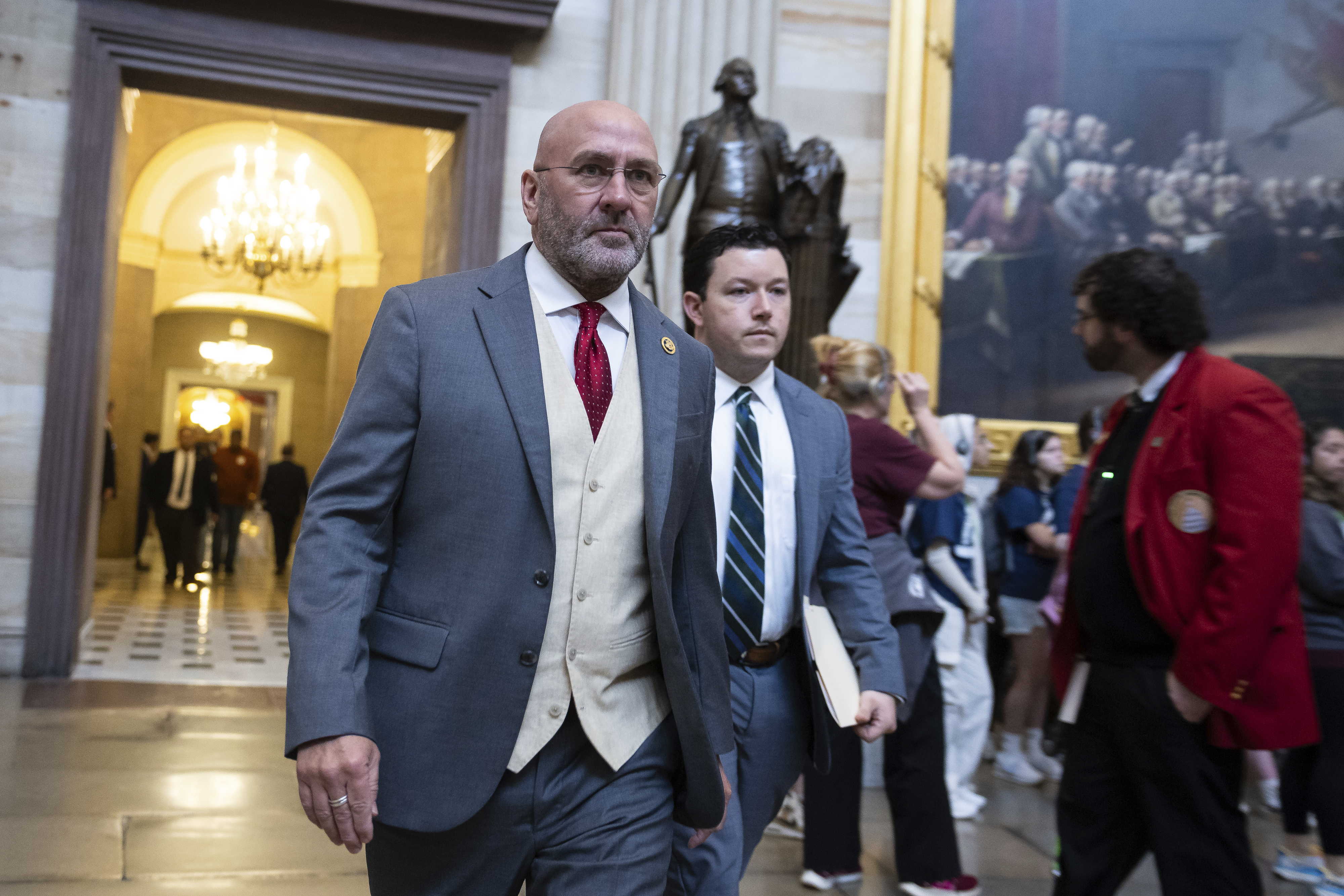
Higgins is one of the more senior Freedom Caucus members — and one of the more controversial. The former sheriff has been a prominent proponent of conspiracy theories around the Jan. 6, 2021, Capitol attack and he was the only lawmaker to oppose the release of the Epstein files.
Also currently a board member, he said in an interview he has not ruled out seeking the caucus chair post. But he also said he was “not interested in campaigning” for the job and would like to see a “peaceful transition.”
Higgins did boast having “a pretty solid reputation within the caucus as a thoughtful conservative” and is hoping the group focuses more on policymaking in its next iteration rather than obstructing leadership prerogatives.
“We’re either going to go deeper into being a meaningful, effective conservative faction for the entire country, or we could bounce in the other direction and be more like protesters in the parking lot,” he said.
Andy Ogles

Rep. Andy Ogles of Tennessee has been a controversy magnet in the wider political sphere — known for a long-running campaign finance investigation that was recently dropped by the Justice Department and a series of offensive public statements on Muslims, immigrants and other groups.
But inside the Freedom Caucus, he has emerged as a serious force over two terms, with his name floated for chair even before the end of his first term. He did not rule out running for chair or another caucus leadership position in a recent interview.
“All I care about is winning,” Ogles said, referring to the caucus agenda. “If I’m better in a second or tertiary role, that’s what I’ll do to make sure we deliver on the president’s agenda. If that means I’m the chairman, then so be it.”
Ogles said the upcoming turnover represents a good opportunity to renew and potentially rethink how the group operates: “We’re going into the presidential. Sometimes you need fresh ideas, fresh faces.”
The House Oversight Committee requested that Alan Dershowitz, the lawyer who once represented Jeffery Epstein, testify as part of its investigation into the federal government’s handling of the Epstein files.
The interview is tentatively slated for 10 a.m. on July 9, with a video and transcript of the testimony being released “as expeditiously as practical,” Chair James Comer (R-Ky.) wrote in a letter to Dershowitz on Friday.
“Due to public reporting, documents released by the Department of Justice, documents obtained by the Committee, and your former role as Mr. Epstein’s attorney, the Committee believes you have information that will assist in its investigation,” Comer wrote.
Comer told reporters on Wednesday that he wanted to hear from Dershowitz, who helped Epstein secure a controversial plea deal in his 2008 sex abuse case.
“I’m looking forward to testifying,” Dershowitz wrote in a text message to Blue Light News on Friday, adding that he is “trying to adjust my schedule” for July 9.
Sen. John Cornyn isn’t a card-carrying member of the Senate GOP’s growing YOLO caucus. But with less than seven months left in office after losing his primary, the Texas Republican appears to be feeling newly free to speak his mind.
The latest clap-back came Thursday night and the early hours of Friday morning, when Cornyn called a conservative influencer a “grifter” and told Sen. Mike Lee (R-Utah) on social media to stop publicly blaming fellow Republicans — including Senate Majority Leader John Thune — for the fact that the GOP elections bill doesn’t have support to pass inside the party.
“You don’t have the votes” for the SAVE America Act, Cornyn posted on X. “@LeaderJohnThune can’t change that. It is math.”
He was directing his comments at Lee, who had just penned a post telling Thune, “let’s do this!”
Cornyn continued, “Try focusing on Democrats instead of Republicans. Republican on Republican attacks are hurting our chances to win the majority in November.”
Lee responded to ask, “on what planet is this an attack on Republicans?” and appeared to suggest a staffer was tweeting on Cornyn’s behalf: “Once my friend John Cornyn realizes that you’re saying this in his name—whoever you are—I don’t think he’ll be happy with you.”
Cornyn, however, is known for posting himself on his social media accounts in a chamber where many Senate accounts are run solely by staff. And he’s been making it clear all week that he will push back on Trump and his party when he thinks it’s needed.
In multiple conversations with reporters in the Capitol, Cornyn said that Republicans need to “stop the circular firing squad.” And he added that he won’t intentionally be “a thorn in [Trump’s] side,” but he’s also “not going to go out of my way to try to appease him.”
“I want him to succeed, I want the Republican Party to succeed, I want the country to succeed,” Cornyn said this week. “But on a case-by-case basis, when I think there’s been overreach or just a bad idea, I’m not going to hesitate to weigh in.”
The four-term senator’s comments come after he lost his primary last month to Texas Attorney General Ken Paxton, who Trump endorsed in the final days of the runoff.
Cornyn said in an interview with The New York Times that he was not a “wounded bear” but that he believed Trump’s insistence on “slavish adherence” was going to backfire for Republicans in the midterms and result in “the most miserable two years of his life” if Democrats flip the House or Senate.
“I think it is going to be a pretty bumpy ride for the next seven months,” Cornyn said.
- The Freedom Caucus is losing its stalwarts. Here’s who to watch next.

- Trump’s North Korea-Iran nuclear paradox could reveal a path to resolution

- 12 dead in Missouri plane crash, authorities say

- Graham ‘concerned’ that Iran views deal with U.S. differently than Trump administration

- Democrats hold 5-point edge over GOP ahead of midterms: Poll

- Pence cast doubt on possibility of US, Iran peace deal before Trump announcement
- U.S. and Iran say they have finally reached a deal, but details are still emerging

- Cage fighting, anyone? Welcome to Trump’s 80th birthday party on the White House lawn.
- Sen. Mitch McConnell hospitalized, his office says

- Trump admonishes Netanyahu for risking Iran deal with more Israeli strikes

-

 Politics1 year ago
Former ‘Squad’ members launching ‘Bowman and Bush’ YouTube show
-

 The Dictatorship1 year ago
Luigi Mangione acknowledges public support in first official statement since arrest
-

 Politics1 year ago
Former Kentucky AG Daniel Cameron launches Senate bid
-
Uncategorized2 years ago
Bob Good to step down as Freedom Caucus chair this week
-

 The Dictatorship1 year ago
Pete Hegseth’s tenure at the Pentagon goes from bad to worse
-

 The Josh Fourrier Show2 years ago
DOOMSDAY: Trump won, now what?
-

 Politics1 year ago
Blue Light News’s Editorial Director Ryan Hutchins speaks at Blue Light News’s 2025 Governors Summit
-

 The Dictatorship9 months ago
Mike Johnson sums up the GOP’s arrogant position on military occupation with two words