
Politics
John Fetterman finds himself increasingly alone

John Fetterman has long been on a political island — and now his tendency to rebuff professional relationships is coming back to bite him.
Few fellow Democrats have rushed to Fetterman’s defense after an explosive article in New York magazine reported that current and former staffers are seriously concerned about his mental and physical health. The Pennsylvania senator, who has strongly denied claims that he is unfit to serve, is not doing traditional damage control, and most top Democrats aren’t going out of their way to do it for him.
Instead, private chatter about primary challenges to Fetterman has ramped up. And in recent days, some Pennsylvania Democrats have begun to quietly review the rules about what would happen if he stepped down and whispered about potential replacements. Fetterman has vowed to serve his full term, which ends in 2029.
Even some top Democrats in his state, who would normally be expected to be in contact with their legislative counterpart, aren’t speaking out in support of their party’s only senator.
“I have had no contact or conversation with him, so I have no way of weighing in on that,” said Rep. Chrissy Houlahan (D-Pa.), when asked to comment on the report. She added that “I couldn’t tell you” when she’d last talked to Fetterman.
Rep. Mary Gay Scanlon (D-Pa.) said she hadn’t spoken to Fetterman “recently” and didn’t know the “underlying facts” about Fetterman’s situation, but that the article “obviously raises questions.”
Rep. Summer Lee (D-Pa.), a progressive whose district includes the town where Fetterman lives, said she hadn‘t talked to him recently. Asked about the story, she responded pointedly that Pennsylvanians’ thoughts matter more than her own: “I hope they read it.”
The episode has illustrated Fetterman’s standing — or lack thereof — in a party where many who once embraced him as a potential model for the future have now ostracized him over his shifting political persona. The public defense of Fetterman has largely come from Senate Minority Leader Chuck Schumer and the few Democrats with whom Fetterman has existing relationships.
In a sign of evolving political allegiances, the home-state elected official offering the strongest defense of Fetterman is actually a Republican.
Sen. Dave McCormick (R-Pa.) told Blue Light News that Fetterman “is authentic and a fighter, and these disgraceful attacks against him are not the John that I know and respect.” McCormick said he and Fetterman have a “great relationship, both professionally and personally.”
Fetterman declined to comment for this story. But in a Tuesday interview with BLN, he said the New York article is “a one-source hit piece, and it involved maybe two or three and anonymous disgruntled staffers saying just absolute false things.” He denied missing medical check-ups or doses of medication.
Fetterman has always had a go-it-alone attitude, and while progressives once adored him, he has never been a favorite of the Democratic establishment. In his 2022 Senate primary, only a handful of elected Democrats endorsed Fetterman. Going as far back as when he was mayor of Braddock, he ruffled feathers among Democrats.
So it’s no surprise to Fetterman’s current and former aides, at least, that he finds himself relatively alone at a perilous moment in his career.
“He’s never been somebody that has all these long-standing relationships with other elected officials,” said a Fetterman adviser who was granted anonymity to speak frankly. “That’s been his whole career. So I don’t think it’s abnormal when it comes to him to not see an outpouring of defense or support for him.”
The adviser argued voters like “that he isn’t seen as his fellow colleagues’ best friend” and “he partly got elected for that reason.”
Recent Morning Consult polls have found Fetterman’s popularity on the rise in Pennsylvania, as Republican voters have increasingly given him a thumbs-up while Democratic voters have stood by him despite criticism from some on the left. Fifty percent of state voters approved of his job performance, while 35 percent disapproved. But a survey of adults across the nation painted a different picture, showing his approval rating underwater among Democrats and independents, but positive among Republicans.
Schumer told reporters that Fetterman is an “all-star” who is “doing a good job.” Peter Welch (D-Vt.), who joined the Senate in the same class as Fetterman, “recently had dinner with Senator Fetterman,” a spokesperson said. “He’s a friend and he’ll continue to support him.” Rep. Chris Deluzio (D-Pa.), a fellow western Pennsylvania Democrat, said Fetterman has been “up front in the past about his mental health treatment,” and “should get a chance to weigh in and address the reports here.”
Rep. Dwight Evans (D-Pa.), who has suffered his own health setbacks since having a stroke in 2024, said that he had “no” concerns about Fetterman’s fitness. But he also acknowledged that he has not talked with him recently, something he didn’t read too much into and said was “par for the course.”
When Fetterman faced medical crises in the past, Democrats united around him in a tight battleground election while Republicans expressed concern.
After Fetterman suffered a stroke in his 2022 campaign, top Democrats, especially then-Sen. Bob Casey (D-Pa.), strongly vouched for him. Democrats also came to his defense when he checked himself into the Walter Reed National Military Medical Center for clinical depression in 2023. They hailed him as courageous for speaking out about his mental health struggles — a marked departure from past elected officials.
But Fetterman’s personal and professional support has dwindled since then. Online progressives, once his social media army, now detest him over his hardline views on Israel and meeting with President Donald Trump. His congressional office has hemorrhaged staff. And Casey, who lost reelection last year, is no longer in the Senate.
The article in New York magazine reported that his former aides claim he has avoided doctor’s appointments, driven away people close to him and potentially not taken his medication.
The fallout has exacerbated existing party tensions. Even before the most recent accusations, Democrats had floated the prospect of primary challenges against Fetterman, including by current and former members of the congressional delegation.
Talk of a contested primary — an attempt to oust the party’s own swing-state incumbent — has also increased, years before the seat is up for election in 2028. Fetterman’s erstwhile primary rival, former Rep. Conor Lamb (D-Pa.), has drawn attention recently by criticizing Trump — and, now, Fetterman.
“I’ve seen politics be hard on people so I’m concerned for the Fettermans,” Lamb said. “I think I share the feeling of many that I don’t know his true condition, but if he is okay, as he says, I don’t understand why he’s rarely seen in our state and he doesn’t answer constituent questions on things like his vote for [Attorney General] Pam Bondi or his advocacy for war with Iran.”
Asked if he is weighing a challenge against Fetterman, Lamb said he is “not considering any campaign right now” and that his recent appearances at public demonstrations against Trump are aimed at “just trying to help others.”


Indiana Republicans’ redistricting rejection marks a rare ceasefire in the gerrymandering wars—and could lead to other state leaders backing off their own plans.
The result gives cover for some Democratic-leaning states to stand down, even as the party’s base is whipped into a frenzy over the issue. Lawmakers in Illinois and Maryland have for months had internal debates about whether to move forward with redrawing their maps, and Indiana’s decision was met with some relief from the mounting pressure they anticipated being under had Republicans in Indiana further gerrymandered their maps.
Illinois Democrats have long said they would only gerrymander if the Indiana GOP bowed to Trump’s demands and redid their own map. In the wake of Hoosier Republicans’ move on Thursday, they don’t seem eager to change their minds.
Maryland has been a mirror image of Indiana: One Democratic leader is rebuffing entreaties from top Democrats to eliminate the state’s lone remaining GOP seat.
Maryland Democratic Senate President Bill Ferguson has exchanged phone calls with Indiana Senate Republican leader Rodric Bray, four people familiar with the two leaders, granted anonymity because they weren’t authorized to speak publicly, tell Blue Light News. Each has resisted pressure from top officials in their party to move on redistricting. Bray’s success could now lessen the pressure on Ferguson. Bray’s spokesperson, Molly Swigart, said no deal was ever made between Bray and Ferguson on redistricting in their respective states.
And in Virginia, where Democrats gained 13 seats in their House of Delegates in November’s statewide elections, they’re poised to make drastic changes to their congressional maps that could net the party upwards of four seats. But that stance seems at odds with the views of Democratic Gov.-elect Abigail Spanberger, who sounded reluctant to the idea of making wholesale changes to congressional lines at a Blue Light News event earlier this week.
There are also headwinds elsewhere for Trump and his allies: Kansas and Kentucky Republicans have so far failed to move forward with their redistricting pushes that are complicated by opposition from Democratic governors; Ohio Republicans struck a compromise with Democrats for a less aggressive gerrymander than what some national leaders wanted; a judge picked a map in Utah that drew a safe Democratic seat; and Republicans are facing a potential setback for Missouri.
That doesn’t mean the redistricting wars are over. Lawmakers in a number of other states are still weighing their own maps, with GOP-led Florida and Democratic-controlled Virginia remaining the biggest question marks on the board. Republicans are still eying Kentucky and Nebraska as well.
“We’ve got a lot more states that we can do work on,” one person close to the White House granted anonymity to speak candidly on a sensitive matter told Blue Light News Friday, while admitting that “Indiana was definitely frustrating.”
And if the U.S. Supreme Court issues a ruling further gutting the Voting Rights Act in the coming months, a number of states are expected to rush to redraw their lines before their states’ filing deadlines, in a move that could give the GOP a huge boost and potentially put the House out of reach for Democrats.
“The truth is, I think we’re still, we’re in the middle of this redistricting war,” said John Bisognano, president of the National Democratic Redistricting Committee. “We’re all waiting to hear back from the Supreme Court as to what they’re going to do and how they’re going to move forward.”
Here’s what to expect in the coming weeks from states including Maryland, Florida, Illinois and a challenge to the already-passed maps passed in Missouri.
Maryland
Perhaps lawmakers breathing the biggest sigh of relief from Indiana bucking Trump’s redistricting push are those in Maryland.
Ferguson has for months been facing pressure from Democratic Maryland Gov. Wes Moore and national Democrats to wade into the redistricting fight. That lobbying campaign to net Maryland Democrats an additional seat would have been kicked into hyperdrive if Indiana had drawn new maps.
Reports of Ferguson possibly losing his grip on leading the Senate Democrats evaporated this week after he was unanimously renominated as Senate leader. Then on Thursday, just hours before the Indiana Senate cast the vote dooming the redistricting effort, Ferguson put out a statement with Democratic House Delegates Speaker Pro Tem Dana Stein declaring that lawmakers in the special session Moore called for next week will definitively not take up any new maps.
While that likely closes the door on the redistricting push for this year, Moore still has an opportunity to reignite a pressure campaign aimed at Ferguson to hold a vote on the issue in January, when the legislature returns for regular session. The governor’s Redistricting Advisory Commission is meeting Friday for its final public hearing to solicit comments from Maryland residents before its members make a recommendation to the governor and the General Assembly on whether to redraw maps.
Illinois
For months, Illinois Democrats have suggested they were unlikely to try to squeeze another seat out of their already-gerrymandered state unless Indiana Republicans redrew their seats.
And while state Democratic leaders didn’t completely rule out redistricting in the wake of the Indiana GOP’s vote, they don’t sound particularly eager for a new map.
“Our neighbors in Indiana have stood up to Trump’s threats and political pressure, instead choosing to do what’s right for their constituents and our democracy,” Gov. JB Pritzker said in a statement after the result, without saying what Illinois might do.
A person in Pritzker’s office, granted anonymity because they weren’t authorized to speak publicly, said the governor was less than equivocal in his statement because no one knows what Trump’s next move might be.
State House and Senate Democratic leaders struck similar tones, praising their Hoosier neighbors while pledging to stay vigilant against similar efforts in other states.
Virginia
Democrats’ best remaining chance for a multi-seat gerrymander is Old Dominion. But while statehouse leaders seem eager to push forward with a complicated plan for a voter referendum to approve a new gerrymander — much like California’s move — the state’s incoming Democratic governor doesn’t seem quite as eager to lend a hand.
The Democratic-dominated Virginia legislature is expected to easily pass a procedural measure before putting the issue of redistricting before voters to approve a constitutional Virginia amendment to redraw the state’s maps ahead of the midterms — a move that legislative leaders have teased could lead to a 10-1 map.
“I feel comfortable that we have an opportunity to do a number of maps here in Virginia to allow for us to level the playing field,” Virginia House Speaker Don Scott said at a Blue Light News event this week.
But at the same event, Spanberger hedged when asked if she supported redrawing maps to achieve the feat.
“The calendar is tight, and for me, I want to win,” Spanberger said, pointing to Virginia’s first and second congressional districts that are currently held by Republicans. “I want to flip seats in the House of Representatives and I know that we can because I just won those districts.”
But when asked directly if redistricting is the way to go, Spanberger said Virginia should “leave open the option” of new maps, but ultimately voters will decide if the legislature should move forward.
Florida
Florida Republicans could deliver their party three to five more seats if they press ahead with mid-decade redistricting. But two factors complicate that effort.
First, GOP leaders aren’t on the same page. GOP Gov. Ron DeSantis has been touting the need to draw new maps since last summer, has suggested waiting until the spring of next year in case the U.S. Supreme Court weakens the VRA and bars the consideration of race when drawing lines, a position backed by the state’s GOP Senate president, Ben Albritton.
But state GOP House Speaker Daniel Perez said this week it is “irresponsible” to wait and that the House is prepared to send a map to the Senate during its regular session that starts next month.
Second, GOP leaders may be constrained by Florida’s voter-approved constitutional ban on redistricting for partisan gain. Democrats have already asserted that drawing up any new map is “illegal’ and would violate these standards signaling that litigation is likely if state legislators pass a new map. But Florida’s conservative-dominated state Supreme Court already ruled in 2022 that legislators can sidestep minority protections when it allowed a previous GOP-drawn map that was muscled into law by DeSantis, weakening its impact.Perez insisted that he has not been under pressure from Trump or the White House to move ahead on redistricting. When asked on Friday if there was added pressure on the House to act due to the outcome in Indiana he said: “No sir.”
Missouri
Missouri Republicans already passed a map to flip Rep. Emanuel Cleaver’s (D-Mo.) district red, but Democrats are hoping to undo the GOP-passed map in Missouri via ballot measure. Earlier this week, they submitted more than double the 107,000 signatures required to force a statewide vote for the secretary of state.
If the signatures are validated, the map may not cannot go into effect in time for the midterms, and if voters approve the ballot measure, the map gets tossed. Republicans still have a bit of time, since GOP Secretary of State Denny Hoskins doesn’t have to approve the signatures until July. Plus, it’s unclear when the Republican-controlled Legislature will actually put those signatures up for a vote.
The timing is causing a bit of chaos. Since candidates need to file by the end of March, prospective members of Congress may have to file in districts that aren’t set for the midterms.
Adam Wren, Andrew Howard, Shia Kapos, Alex Gangitano and Gary Fineout contributed to this story.
Republicans’ failure to get on the same page on expiring Obamacare subsidies is creating significant rifts between GOP primary contenders and causing heartburn for some of the party’s most vulnerable incumbents heading into November’s midterms.
With just weeks left before Covid-era subsidies lapse, causing steep health insurance rate spikes for millions of people, Republicans are all over the spectrum about what to do — with many of the party’s top candidates ducking when asked about the thorny issue.
In Michigan, the subsidies have emerged as an early policy difference between President Donald Trump-backed Senate candidate Mike Rogers and his new challenger, former state GOP co-chair Bernadette Smith. Sen. Bill Cassidy’s (R-La.) proposal to replace the subsidies with federally funded health savings accounts is facing pushback from his primary opponents. In Georgia, a state with an especially high reliance on the Affordable Care Act, all three Republicans vying to take on Democratic Sen. Jon Ossoff have refused to commit to any specific health care proposal — a sign of just how reluctant Republicans are to take a firm position.
Out of the 24 candidates Blue Light News surveyed across key GOP Senate primaries and general election battlegrounds, 10 did not respond to repeated requests for comment on their health care policy preferences, while others gave vague answers.
But as some Republicans dodge, other lawmakers in tough races are practically begging their leadership to fix the issue, which Democrats are already making a key focus of the 2026 midterm elections.
“I know my people back home care tremendously about this,” swing district Rep. Brian Fitzpatrick (R-Pa.), who is leading an effort to go against his own party leaders and force a vote on the expiring credits, said in an interview. “I would assume that’s the case in every district in America.”
There are already warning signs of political pitfalls for Republicans.
Most Americans want Congress to extend the subsidies, polls from health policy think tank KFF and Morning Consult show. And they’re already feeling the strain: Fifty-two percent of respondents to The Blue Light News Poll in November reported that their health insurance premiums have risen over the past two to three years — and they’re equally as worried about being able to afford an unexpected health care bill. Nearly half of respondents who said health care is difficult to afford blamed the Trump administration for those struggles.
Health care is a flashpoint in the crowded primary Cassidy is facing back in Louisiana that was fueled in large part by his 2021 vote to impeach Trump. The former physician also chairs the Senate Health Committee and co-authored one of the GOP proposals to try to address the surging rates.
“I want people to have coverage,” Cassidy said after the failed vote on his proposal. “I spent my medical career in a hospital for the underinsured and the poor and the uninsured. My life’s work is: How do you get care to those who otherwise cannot afford it? I understand where people are. The Democratic plan does not.”
His bill failed to advance Thursday afternoon — while giving his primary opponents new fodder for attacks.
St. Tammany Parish Councilmember Kathy Seiden said before the vote that the senator’s proposed health savings accounts are “out of touch” and called for a “time-limited extension” of the subsidies, while Public Service Commissioner Eric Skrmetta described Cassidy’s bill as a “step in the right direction” but said he wants the funding to be “supercharged.”
Republicans more worried about the general election than primaries sound much different on this issue, however.
Sens. Susan Collins (R-Maine) and Dan Sullivan (R-Alaska), who are both facing potentially tough races, were among the four Republicans who crossed party lines to support Democrats’ three-year subsidy extension Thursday in the Senate. It failed, alongside Cassidy’s plan.
“My state’s hurting on this,” Sullivan said after both bills tanked.
Republicans have struggled ever since Obamacare’s 2010 passage to craft a functional, politically palatable alternative, even as health insurance rates have surged under the program. Now, Covid-era subsidies are set to expire, and they’re struggling once again to respond.
The nonpartisan Congressional Budget Office estimates 4 million fewer people would have health insurance by 2034 if the subsidies lapse. And premium payments would increase from an average of $888 this year to $1,904 next year if the subsidies expire, according to KFF.
Republican candidates vary widely in their suggestions for a policy fix.
In Michigan, where Republicans are looking to flip retiring Democratic Sen. Gary Peters’ seat, Rogers said “we can’t just put another bandaid” on a “broken health care system” and called for a “new system that works.” Smith advocated for a two-year subsidy extension while also working toward a new health care model.
In New Hampshire, where Republicans are chasing another retiring Democrat’s seat, former Sen. John E. Sununu called to modernize “outdated” regulations and give states more power over their Medicaid programs while ensuring lower-income people are “protected against price spikes.” His rival, former Sen. Scott Brown, said in a statement that “any meaningful solution is going to have to address the underlying cost drivers … and not just temporarily subsidize an unaffordable product.”
In Georgia, where Republicans have their best shot to unseat a Democratic incumbent, two of the three leading GOP candidates — Reps. Mike Collins and Buddy Carter — could soon run out of rope to avoid addressing the issue if a health plan hits the House floor. Derek Dooley, the former football coach backed by GOP Gov. Brian Kemp, said in a statement, “We should be focused on transparency, incentivizing doctors to deliver high-quality care, real market competition, and lowering healthcare costs for hardworking Americans—while making sure we put patients first.”
Democrats are yoking GOP candidates to the lapsing subsidies. Senate Democratic campaigns lambasted their GOP opponents for their votes Thursday, and Protect Our Care, a liberal health care advocacy group, signaled a deluge of attack ads to come.
“I’m worried about my colleagues,” Rep. Jeff Van Drew, a Republican who holds a safe red seat in blue New Jersey, said Wednesday at the Capitol. “Do I think this issue is worth a couple of points in an election? Yeah, I do.”
Erin Doherty contributed to this report.
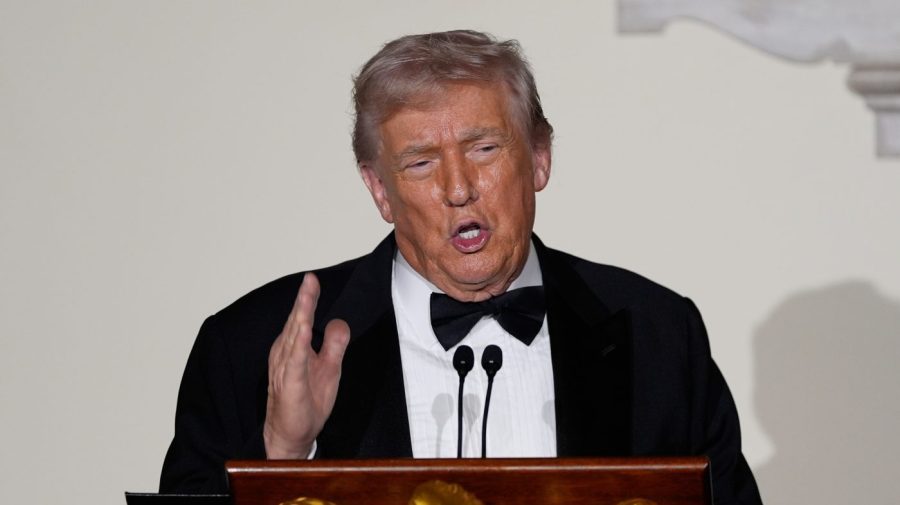
President Trump on Thursday promised the new White House ballroom will be complete in close to a year and a half — seemingly before the end of his second term if his pledge proves true. “I want to welcome you all to the White House. It’s an honor to have you…
Read More
- Indiana GOP’s Trump rebuke could lead to temporary redistricting detente
- House GOP leaders race to release health care package Friday
- GOP health care chaos spills into battleground midterm races
- Bill Gates appears in newly released photos from Epstein estate
- Trump, Clinton, Gates included in Epstein photo trove
- Trump promises White House ballroom completion in ‘about a year and a half’

- Gingrich: ‘Republicans are in real trouble’ if economy doesn’t ‘recover’

- Meet the candidates running to be the next U.S. Senator from Texas: James Talarico

- Trump’s National Guard deployments get Congressional scrutiny

- Trump predicts Indiana Senate GOP leader will lose next primary over redistricting vote
-

 The Dictatorship10 months ago
Pete Hegseth’s tenure at the Pentagon goes from bad to worse
-

 Politics10 months ago
Former ‘Squad’ members launching ‘Bowman and Bush’ YouTube show
-
Uncategorized1 year ago
Bob Good to step down as Freedom Caucus chair this week
-

 Politics10 months ago
Blue Light News’s Editorial Director Ryan Hutchins speaks at Blue Light News’s 2025 Governors Summit
-

 The Dictatorship10 months ago
Luigi Mangione acknowledges public support in first official statement since arrest
-

 The Josh Fourrier Show1 year ago
DOOMSDAY: Trump won, now what?
-

 Politics8 months ago
Democrat challenging Joni Ernst: I want to ‘tear down’ party, ‘build it back up’
-

 Politics10 months ago
Former Kentucky AG Daniel Cameron launches Senate bid