
Politics
John Cornyn spent years building the GOP. MAGA tore him down.

The storied career of Sen. John Cornyn came to a swift and decisive end at the hands of the GOP voters who once propelled him to power.
The senator was a towering figure in both national and Texas politics, known for his sober temperament, ability to cut deals and role in shaping the Senate GOP conference during the last four presidencies. Then, just about an hour after polls closed Tuesday, Cornyn lost his primary to Ken Paxton, a scandal-plagued MAGA darling who was boosted by President Donald Trump’s last-minute endorsement.
Cornyn’s defeat is rattling the establishment wing of the GOP, who viewed the brutal primary as a battle for the soul of the party. His supporters mourn his approaching absence in the Senate as another example of an institutionalist who fell victim to the rise of the populist right, what they see as the end of an era of compassionate conservatism.
“It just blows my mind that anybody could look at John Cornyn and somehow call him a secret liberal RINO,” said Josh Schroeder, mayor of Georgetown, Texas, and a Cornyn supporter. “If that guy can’t pass a conservative litmus test, who can?”
Cornyn’s loss stands to further deplete the corps of senators willing to work across the aisle on thorny policy issues, from immigration reform to gun safety — potentially contributing further to increasing polarization on Capitol Hill.
While Cornyn was not a frequent bipartisan operator in the mold of former Sens. Joe Manchin (I-W.Va.) or Rob Portman (R-Ohio), he occasionally dug in to try and find compromise. His loss comes just ten days after fellow Sen. Bill Cassidy (R-La.) lost his own primary to a Trump-backed challenger. Before that, it had been 14 years since the last elected senator lost a primary.
“He’s always been about delivering results for Texas rather than chasing headlines,” said Brian Walsh, Cornyn’s former communications director. “He respects the Senate as his institution and believes deeply in doing the work the right way, even when it’s difficult, or I would say politically inconvenient.”
His participation was often crucial as a member of the GOP leadership team and a key Republican fundraiser who operated with the tacit approval of Kentucky Sen. Mitch McConnell, who served as GOP leader for nearly all of Cornyn’s tenure.
Even though his supporters were long skeptical of his odds in the primary, Cornyn chose to go down swinging. He continued to run negative ads against Paxton throughout Texas until the last minute, harping on Paxton’s indiscretions. And he warned during an appearance on Fox News on Tuesday that the attorney general would be an “albatross” on the rest of the Republican ticket “likely to have a negative drag on the down ballot races in Texas, judges, local officials, House of Representatives, you name it.”
But those moral arguments did not sway a majority of primary voters — or Trump, who chose to endorse the attorney general and cited Cornyn’s decision to wait to endorse his third presidential run as proof he was insufficiently loyal.
Paxton’s supporters have long shrugged off his long trail of criminal and ethics investigations, impeachment by the state legislature and ongoing divorce, complete with accusations of infidelity, believing that his commitment to carrying the MAGA torch was more important than corruption allegations or a messy personal life. Paxton, for his part, has tried to focus the campaign on his qualifications for the Senate — and allegiance to Trump.
Paxton also benefitted from a strong anti-incumbency sentiment rippling throughout Texas. The GOP base was ripe for his argument that Cornyn was too enmeshed in the D.C. swamp to justify sending back to Washington even as those attacks bewildered Cornyn’s supporters, who pointed to his long record of voting for Trump’s agenda.
As majority whip during Trump’s first term, Cornyn helped shepherd the president’s signature tax bill across the finish line. In 2024, he fell just a few votes short of becoming majority leader against Sen. John Thune (R-S.D.). And few Republicans have demonstrated fundraising prowess like Cornyn, the former chair of the National Republican Senatorial Committee, who has brought in more than $400 million throughout the course of his political career.
“Senate Republicans were very eager to see their friend and colleague continue, and Cornyn is one of those guys that would’ve raised money for his fellow incumbents. That’s unlikely to continue,” said a GOP Senate strategist, granted anonymity to speak candidly.
Trump, after weeks of standing on the sidelines, swooped in at the start of early voting to back Paxton, a reward for the attorney general supporting his efforts to overturn the 2020 election. Cornyn, on the other hand, voted to certify the results.
Throughout the bitter campaign, Cornyn shifted to the right on some issues, adopting the fiery language of the MAGA base, which was seen as an effort to endear himself to Trump in a bid for his endorsement. Most prominently, he ran an ad declaring that “radical Islam is a bloodthirsty ideology.”
When Paxton cleverly declared that he would drop out of the primary if the Senate GOP killed the filibuster to pass the SAVE America Act, Trump’s priority election bill, that staved off the president’s planned endorsement of Cornyn. The Texas senator belatedly announced a reversal of his longheld support of the filibuster. And Cornyn introduced a bill two weeks ago to rename a major U.S. highway Interstate 47 to honor Trump. But it came far too late to save him.
But in a hyper-partisan environment, Cornyn’s decisions to occasionally work with Democrats doomed his standing among the rabidly conservative base in Texas.
Cornyn kept to the outskirts of high-stakes bipartisan immigration talks, such as the “Gang of Eight” that sought a comprehensive overhaul in 2013. But he later partnered with Sen. Kyrsten Sinema of Arizona in exploring a narrower, border-security-focused bill.
He also found success reaching across the aisle in 2022 on gun safety legislation in the aftermath of the Uvalde school shooting. The Bipartisan Safer Communities Act was modest relative to Democratic demands for stricter gun control. But it was still the most significant federal gun legislation in a generation — and it provoked intense backlash among hard-right voters in Texas.
“We both know that when we’re doing what’s right, it doesn’t matter what other people think,” Cornyn texted Sinema at the time.
Four years later, Paxton made the legislation a centerpiece of his campaign, accusing Cornyn of shepherding “the worst gun control bill in decades.”
Texas will now be swept up in an expensive and competitive Senate race, with Democrats amped to compete against Paxton, who they view as more vulnerable than Cornyn in a midterm environment favorable to their party. Many believe Democratic nominee and state Rep. James Talarico is their best shot in a generation at flipping a statewide seat.
Schroeder, who represents a small town in Talarico’s former district, said the Democrat is capable of pulling off a strong campaign: “He appears to be campaigning from the high road while the Democratic party is just slicing Paxton to shreds because they got a whole lot of ammunition.”
In the aftermath of the brutal primary, some Republicans fear that the state of the GOP is dire – and potentially unable to unify ahead of November with the possibility that some Cornyn supporters will sit out the race entirely or vote for Talarico. After the race was quickly called on Tuesday, Talarico posted on X: “To Senator Cornyn’s supporters: you have a place in our campaign.”
In his concession speech, Cornyn said he will support the GOP ticket: “I’ve fought the good fight, I’ve finished the race, and I’ve kept the faith.”
“I’ll have more to say later.”
Mike DeBonis and Samuel Benson contributed to this article.


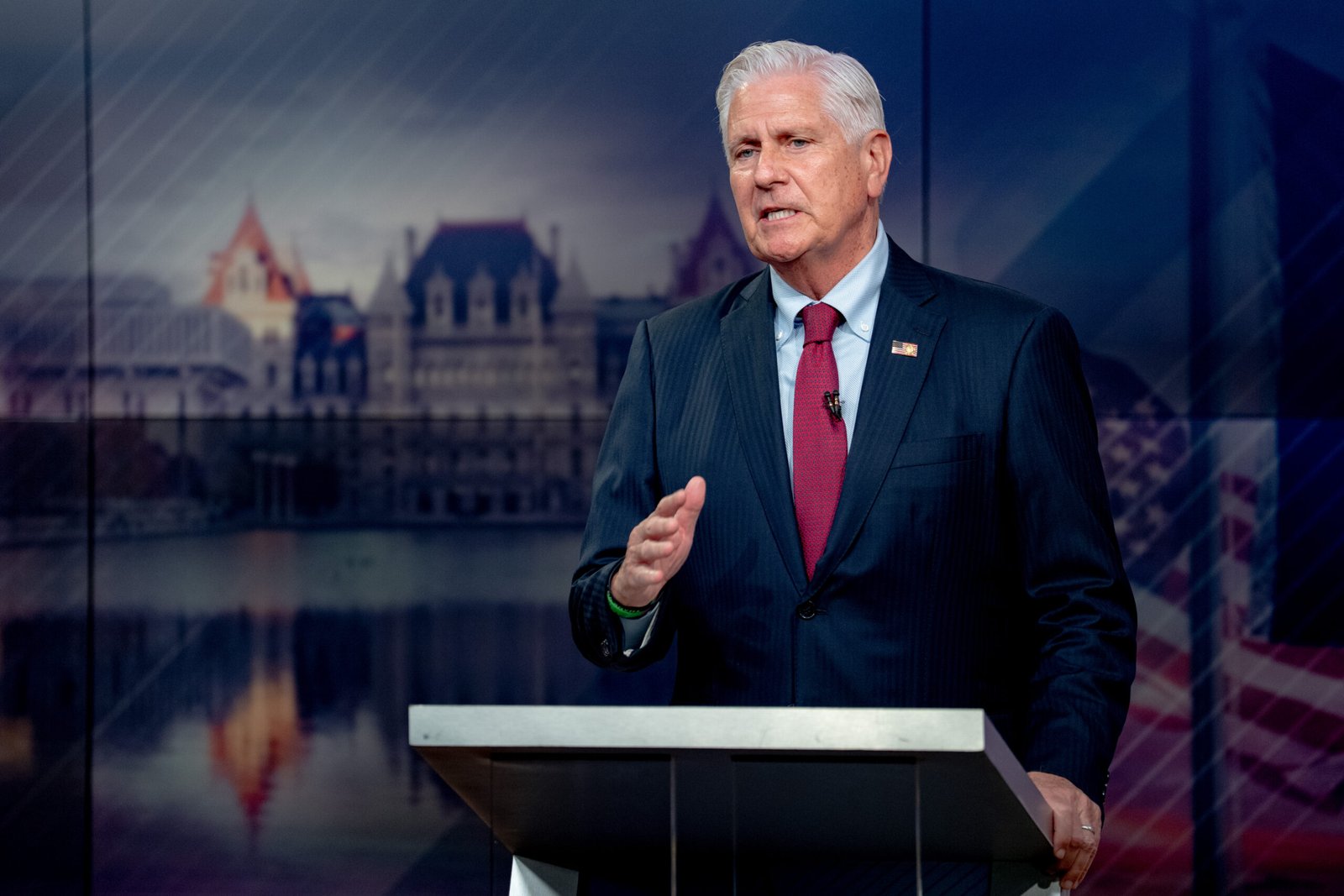
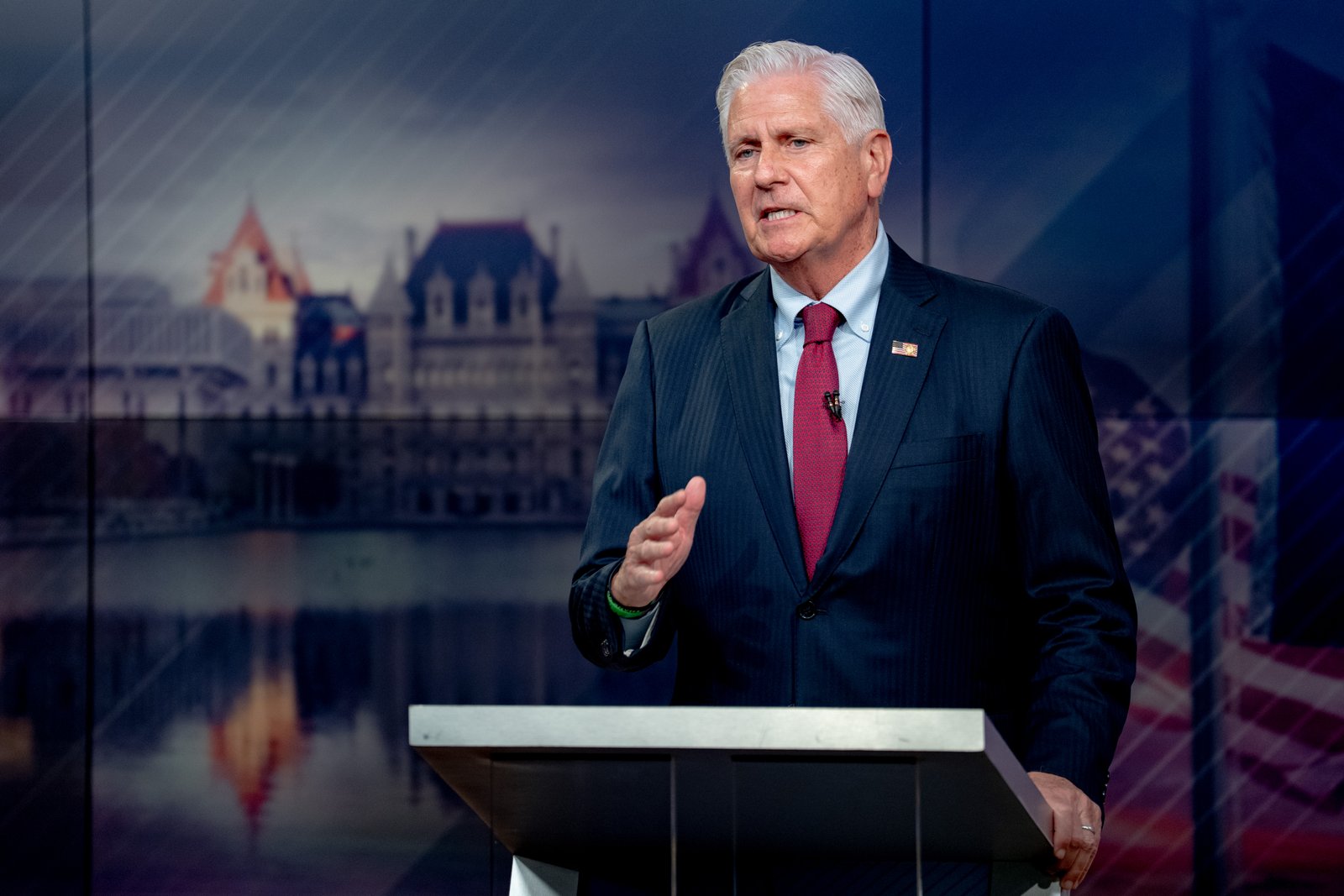
BLAKEMAN’S (LACK OF) ENERGY PLAN: GOP gubernatorial candidate Bruce Blakeman continued to hammer Gov. Kathy Hochul on rising energy costs today, promising to slash utility bills in half if he’s elected.
The Republican, however, still has not offered up a policy proposal on how he’d go about doing that.
“Kathy Hochul increased our utility rates 48 times in four years,” Blakeman said in upper Manhattan this morning.
The Washington Heights press conference, which included former Gov. George Pataki, was heavy on rhetoric and relatively light on details. Afterward, Blakeman’s campaign would not spell out how exactly he plans to cut consumer utility costs and did not respond to a request for clarification about his claim that Hochul increased utility rates 48 times. (While the state’s Public Service Commission has approved increases in major utility rate cases during Hochul’s tenure, those hikes have been less than what the utilities requested.)
“Donald Trump’s puppet, Bruce Blakeman … wants data centers raising your costs and said Trump was doing an ‘amazing job’ after he jacked up utility bills.” Hochul campaign spokesperson Sarafina Chitika said in a statement. “Two weeks from irrelevance, here’s what Blakeman won’t tell you: Governor Kathy Hochul delivered a billion dollars in energy relief, ten billion in tax relief, and made data centers pay for the energy they use.”
The Nassau County executive described meeting the owner of a Bronx diner who told him the business would need to sell 1,000 burgers a month to pay its $16,000 utility bill. Blakeman said he would legalize fracking to help New Yorkers lower their energy bills fast.
Aside from the fact that fracking doesn’t necessarily lead to lower utility bills and the reality that Blakeman would need buy-in from the state’s Democratic-dominated Legislature to do so, he insists that legalizing fracking could offer near-term relief from high energy costs.
“I met with those same individuals and companies that are doing the extraction of natural gas in Pennsylvania. They told me they can be up and running in 60 days,” Blakeman said. “If Albany has the will to reduce people’s utility bills … we can get it done in 60 days.”
He pointed to Pennsylvania, arguing that the state has lower electric bills because it allows fracking. But he neglected to mention that Pennsylvania is not part of the Regional Greenhouse Gas Initiative — the carbon trading program of 11 eastern states, which Blakeman has pledged to withdraw from if he is elected.
Pataki, the last Republican to serve as governor in the Empire State, spearheaded the creation of that initiative, which is commonly known as RGGI.
“The concept is right, but the way it’s being done in Albany is wrong,” Pataki said at the presser, accusing Albany of using RGGI as a “slush fund.”
Even if New York did withdraw from RGGI, the benefit would amount to a 5% to 6% decrease on an average New York residential household bill, according to an estimate from National Grid — barely making a dent in the 50% Blakeman is promising to slash.
Exactly how the state would cover the rest of his proposed cut remains unclear.
Affordability, though, continues to be a key concern in Washington Heights, a largely Dominican neighborhood that Mayor Zohran Mamdani did well in during his ascent to victory last year.
To drive their message home, the Republicans even attempted to make their pitch in Spanish. Pataki, much more practiced in this than Blakeman, talked about how much he loved the “barrio” when he was governor, describing Blakeman as a leader “muy fuerte.”
“Gracias, hombre grande,” Blakeman exclaimed, before touting what he views as the GOP ticket’s immigrant bonafides — Saritha Komatireddy for attorney general and Joe Hernandez for comptroller.
“Governor, your Spanish is better than my Spanish, and I grew up speaking it,” Hernandez praised Pataki. — Mona Zhang
From the Capitol
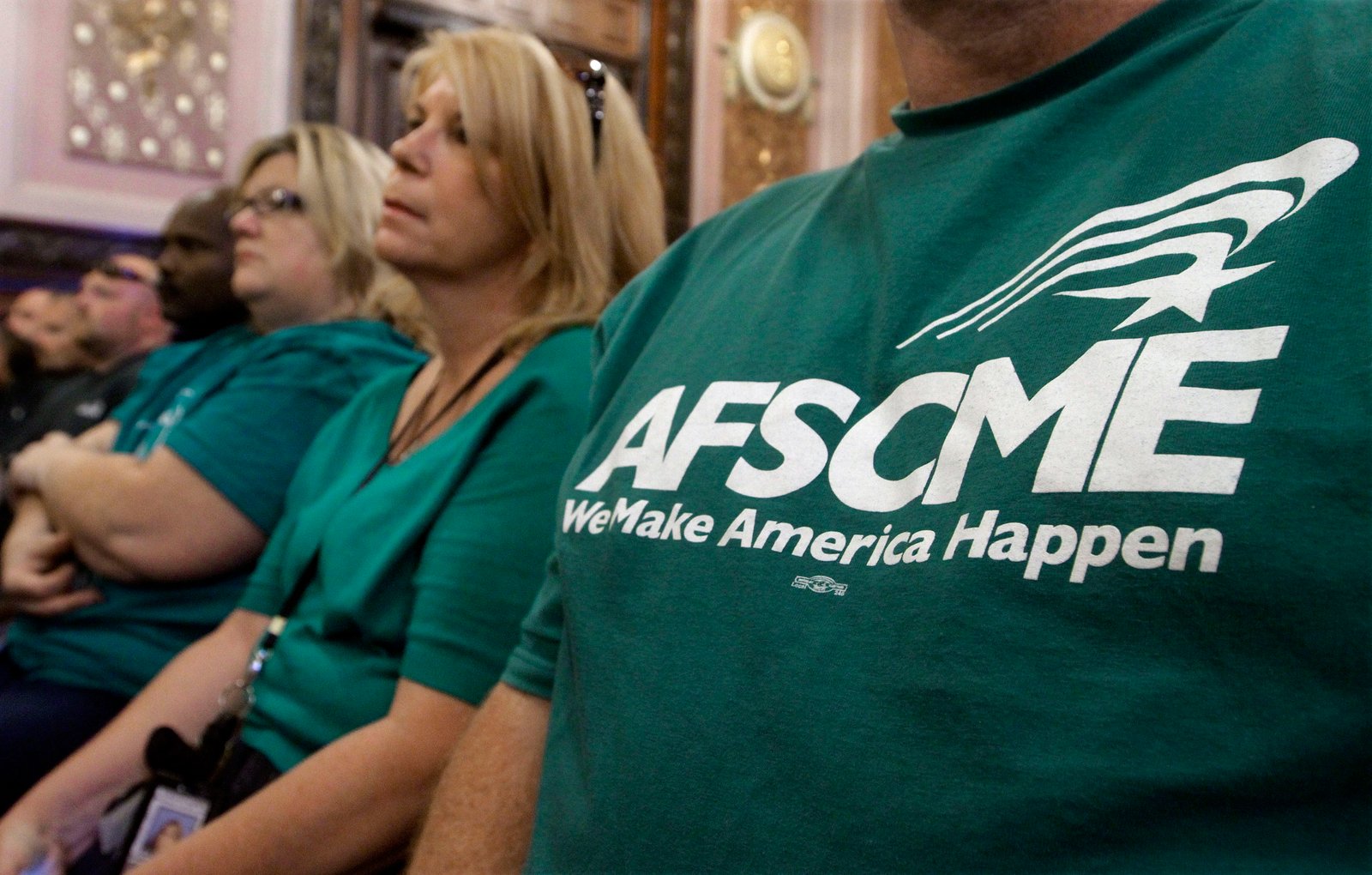
LABOR BOOSTS GOV: A coalition of public employee unions is joining the crowded roster of super PACs spending on the gubernatorial election.
The New York Accountability Coalition has received $550,000 in recent weeks from the Civil Service Employees Association, Public Employees Federation, District Council 37, and CWA District One. It’ll soon spend that money to boost Hochul.
The governor “is laser-focused on lowering costs for working families and investing in public services,” AFSCME’s Courtney Brunelle-Kim said. “Bruce Blakeman is just another pay-to-play politician. From now until Election Day, we’ll be working to ensure that voters in key districts know The Blakeman Record.”
The super PAC spent $460,000 this spring helping Comptroller Tom DiNapoli as he faced two Democratic primary challengers. — Bill Mahoney
FROM THE CAMPAIGN TRAIL
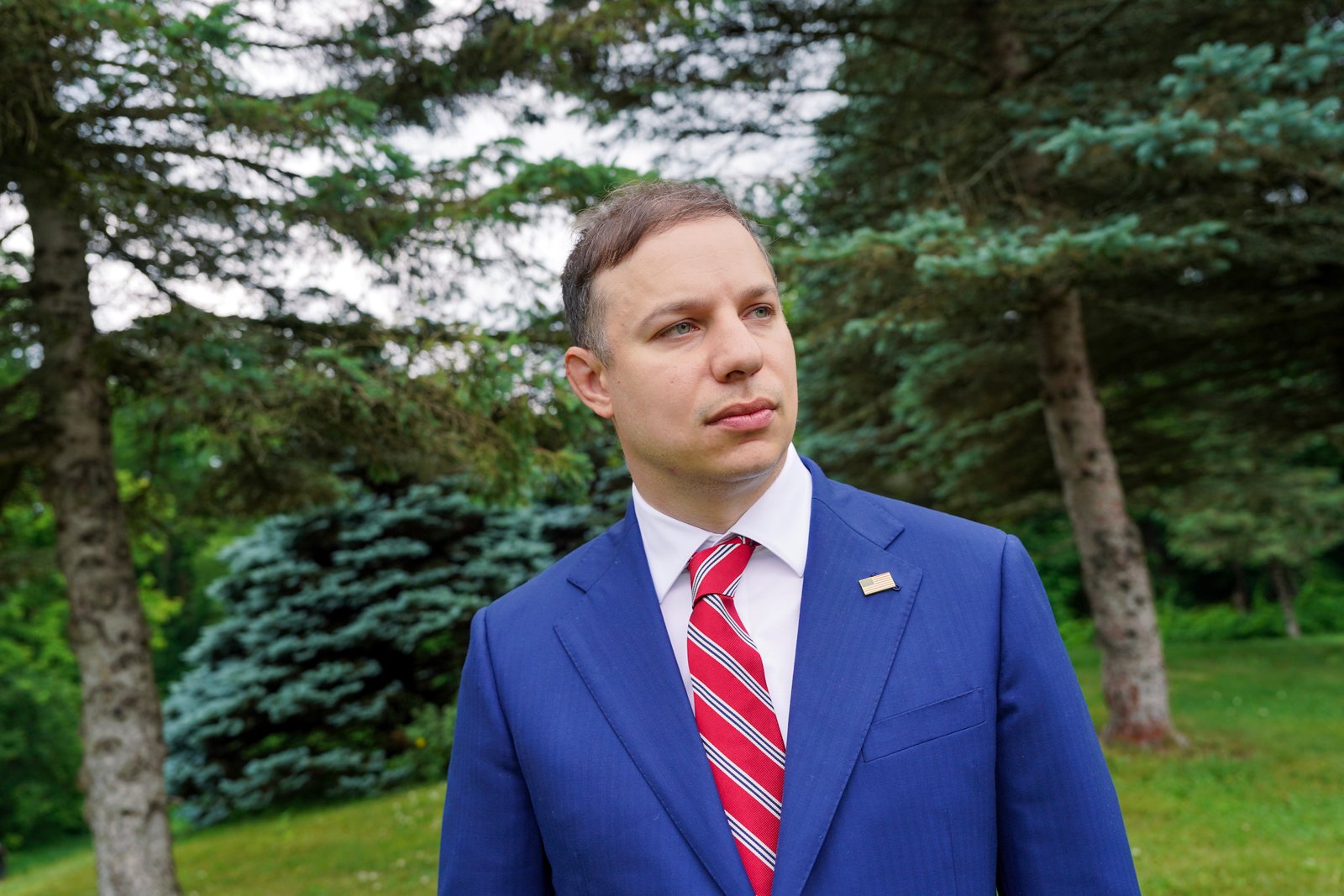
AD PULLED: A clean energy super PAC yanked a version of an ad airing in a competitive upstate House district after Republican candidate Anthony Constantino’s attorney complained the spot was defamatory.
The group Invest In Tomorrow Coalition recently began airing the spot in the sprawling North Country House seat that accused Constantino — who runs a custom sticker business — of selling anti-police merchandise.
“What do Anthony Constantino and violent anti-cop extremists have in common? They both think ‘kill the police’ is a good slogan,” the ad’s narrator says.
Constantino’s attorney last week contacted a lawyer for the super PAC alleging the contents of the ad were false and defamatory. On Saturday, the group signaled it would suspend further distribution of the current ad. So far, the PAC has spent some $243,000 in the district in the last three days, according to AdImpact.
“Anthony Constantino may lawyer up, but he can’t sticker over the truth: he’s gotten rich off selling vile merch, including hosting a listing for a ‘Kill the Police’ sticker and other anti-cop listings that are still active today,” said Chris Coffey, a spokesperson for the group. “As a token of our gratitude and recognition of his desire to spread that message, ITC PAC is putting $250,000 more behind the original ad buy to make sure all of NY-21 knows the real Anthony Constantino.”
The fight over the commercial comes as Constantino is trying to retain the seat being vacated by GOP Rep. Elise Stefanik. Polls have shown Democrat Blake Gendebien running competitively against the Republican, however, giving the race a surprising dose of uncertainty in the final two weeks. — Nick Reisman
HOUSE HUNTING: Two New York battleground districts have again moved in Democrats’ favor, according to a nonpartisan election forecaster.
Sabato’s Crystal Ball shifted Stefanik’s upstate seat from “likely Republican” to “leans Republican” today, as well as Democratic Rep. Laura Gillen’s Long Island district from “leans Democratic” to “likely Democratic.”
The Stefanik seat covers a sprawling, deep-red area — though Democrats are feeling bullish in part because of the Trump administration’s tariffs impacting farmers there.
Gillen faces a challenge from Hempstead Receiver of Taxes Jeanine Driscoll. Kamala Harris narrowly won that district in 2024, but Republicans are counting on tailwinds from Blakeman, the Nassau County executive, to boost down-ballot candidates. — Madison Fernandez
IN OTHER NEWS
— REAL ESTATE STRIKES BACK: A new organization called Built For New York hopes to promote the real estate industry’s interests in the wake of a pro-tenant political sweep in New York City. (The New York Times)
— PAC ALERT: A coalition of Jewish Democrats from the Capital Region launched a state-level PAC dedicated to supporting liberal candidates who push back on anti-Jewish and anti-Israel forces. (Jewish Insider)
— BOOZE BUCKS: Lily Fan, chair of the State Liquor Authority and a close Hochul ally, donated $40,000 to a pro-Hochul super PAC that’s run by people who lobby the liquor industry. (New York Focus)
Missed this morning’s New York Playbook? We forgive you. Read it here.
Republicans locked in tight races this November are desperately hoping the Trump administration’s last-minute gambit to send farmers $8 billion in taxpayer money will work.
President Donald Trump announced the new round of money, aimed at farmers struggling with high diesel prices, during a Monday rally for at-risk GOP Sen. Roger Marshall in Kansas. The move comes as White House officials have scrambled to address anger in farm states from Republicans. Trump’s decisions to import more foreign beef, his tariff regime and high fuel costs amid the Iran war have riled already strained farmers and ranchers — a key GOP voting bloc.
Farmers won’t know how much money to expect for several more weeks. Even then, if approved, they won’t receive the payments until late November or early December at the earliest, according to three people close to the plans, granted anonymity to share details.
With two weeks to go before the election, the new aid may also arrive too late to convince some voters.
But top Republicans are banking on the announcement to stem GOP bleeding in farm states — especially in the Midwest, where Marshall, GOP Senate nominee Ashley Hinson in Iowa and GOP Senate nominee Mike Rogers in Michigan have been struggling in their election campaigns. In some cases, they’ve broken with Trump publicly on high prices and the war.
“This will go a long way to making sure the folks that feed us have it a bit easier when they most need it,” said Rep. Derrick Van Orden, referring to the farmers in his district. The Republican is locked in a highly competitive race in a rural-heavy stretch in Wisconsin’s 3rd District.
However, the internal USDA taxpayer-funded account Trump is tapping for the payments doesn’t actually have enough money in it right now to make the payments, meaning Congress will have to approve the new funds or the administration will have to take it from another program, according to three Trump officials who were granted anonymity to discuss private conversations.
Marshall — who’s facing a tougher-than-expected reelection campaign in deep-red territory — and Rep. Austin Scott (R-Ga.) were among the Republicans who helped push for the $8 billion, according to the three Trump officials.
Marshall requested the administration allocate money to assist farmers with spiked fuel costs in a letter to Agriculture Secretary Brooke Rollins in September.
“Roger Marshall is the leader who fought for that to happen,” Trump said during the Monday rally.
Spokespeople for Marshall and for Scott did not respond to requests for comment. The White House referred Blue Light News to USDA’s announcement on the money.
USDA spokesperson Harry Fones said in a statement that the aid package is Trump’s “latest action to deliver” for farmers and the department is actively reviewing the data to determine payments.
Trump’s decision also comes after administration officials realized the president’s previous step to make off-road dyed diesel more widely available had limited benefits for farm country over other options, according to two of the Trump officials and another administration official involved in the matter. Top agriculture lobbyists further warned the dyed diesel plan could actually backfire on farmers, because they could still be required to pay taxes on the product — just further down the road.
So, Trump officials settled on the $8 billion tranche of direct money for farmers, given that similar kinds of payments to farmers — dating back during the president’s first trade war in 2018 — have quelled enough farmer and rural voter anger to shore up necessary support for Republicans during election season.
Trump officials and Republican operatives in the Midwest are banking on the money shoring up support again this cycle — especially for GOP voters who are angry but also don’t want to vote for Democrats. Trump heads this Thursday to Iowa — where top Republicans have been worried about internal polling that warned several weeks ago they could lose all three Iowa House races, key Senate races and other once-safe red seats across farm states.
“It’s going to help bring farmers’ votes out,” Sen. Chuck Grassley (R-Iowa) told Blue Light News of Trump’s plan on Tuesday.
“This is some way that the federal government can step in to help farmers for problems that they face through no fault of their own,” he said.
Most Hill Republicans weren’t given a heads-up about Trump’s announcement, including appropriators, and many hadn’t received any details from USDA as of Tuesday morning, according to two people familiar with the conversations who were granted anonymity to share private details.
Top agriculture groups have warned they’d need at least $50 billion in direct aid this fall to make farmers whole following the impacts of tariffs, weather-related disasters and other high costs linked to the Iran war’s chokehold on agricultural supplies. Farm-state Republicans are pushing to add at least $12 billion in direct farm aid payments to a separate year-end legislative package.
Monday’s aid rollout followed a number of other funding announcements made in swing rural districts. The White House doled out a first round of $12 billion in bailout funds earlier this year for growers of top agricultural commodities who were hit hard by Trump’s tariff agenda.
Alongside Republican Senate candidate Mike Collins in Georgia, Rollins announced a $3.3 billion loan to build a power plant last week. Rollins rolled out $180 million in funding for seed research alongside vulnerable Iowa Reps. Zach Nunn and Marianette Miller-Meeks earlier this month.
Trump also said he would approve long-derailed permanent year-round sales of ethanol during the Kansas rally — which would be a critical boon for corn growers across the Midwest. But the move has been long-stalled in Congress.
“With Roger Marshall in the Senate, we will make year-round E15 permanent. But if Adam Hamilton is in, I’m not doing it,” Trump said. “That’s a big deal for Kansas, actually.”
Rachel Shin contributed reporting.
Americans are fed up with data centers and Big Tech, and Republicans are poised to take more of the political blame in the Nov. 3 midterms.
The Blue Light News Poll found last week that Americans were far more likely to associate the GOP with giving tax incentives to tech companies at a time when the public’s concerns about artificial intelligence and data center sprawl are only deepening.
Nearly half of respondents — 47% — called Republicans the party of tech tax breaks, more than double the 21% who said the same for Democrats.
Voters are also far more likely to want candidates who propose stripping away tax incentives for the data centers needed to fuel the AI boom, according to the new poll, conducted by PF Global.
About a fifth of respondents said that ending those tax breaks would be among their most important tax issues in the midterms, while only 1 in 10 wanted to offer new preferences for data centers.
The top tax priorities for voters, according to the poll, are hiking taxes on billionaires and curbing breaks for big companies.
The findings come as lawmakers in both parties have scrambled to respond to the growing voter concerns over AI and data centers — and as Americans increasingly associate Silicon Valley titans with the Republican Party.
But in both Democratic and Republican-led states alike, governors have sought to put new limits on tax incentives that were already approved for data centers.
Sen. Bernie Moreno (R-Ohio) rolled out a proposal last week that would take that a step further by imposing a 100% tax on any state or local incentive offered to AI data centers.
But it’s Democrats who have gone more on the offensive about the issue.
Former Sen. Sherrod Brown, for instance, has made data center incentives a key issue as he tries to unseat Sen. Jon Husted (R-Ohio), a former state lawmaker and lieutenant governor.
“Jon Husted’s ‘deals’ gave wealthy tech companies a windfall and left Ohioans footing the bill,” Brown recently posted on social media.
Democrats have specifically homed in on Meta, which has cut its tax liability in recent years by billions of dollars as it builds out its AI products. And they have sought to tie expanded tax breaks approved by Republicans in last year’s megabill to the increase in data center construction.
The GOP enacted incentives for companies in a broad array of industries as part of the 2025 tax cuts. But Big Tech has found those tax breaks particularly useful, helping to drive a big decrease in corporate tax payments as AI spending keeps trending upward.
Meanwhile, Democrats with 2028 ambitions have floated new taxes on AI companies, while Democratic lawmakers have teed up legislation that would keep data centers from taking advantage of incentives like Opportunity Zones and bonus depreciation, both of which Republicans expanded in 2025.
In fact, Sen. Jon Ossoff (D-Ga.) recently gave last year’s megabill another new name in a recent debate with his opponent, Rep. Mike Collins (R-Ga.).
“I want to know if you will commit to voting to repeal that data center tax scam that you voted for,” Ossoff said.
It’s not clear how much the current anti-AI energy will lead to new legislative limits in the coming months. But the new poll found Americans have a real fear of the unknown with artificial intelligence.
A majority of respondents said that tech chief executives had been secretive about the potential risks of AI, while a plurality of Americans believe both that the risks of artificial intelligence development outweigh the benefits and that the government should strictly regulate the emerging technology.
- NRSC takes on $20M in loans
- Blakeman’s uptown fracking fiesta
- FEMA chief tells states to prepare to handle disasters on their own
- Trump is promising farmers $8B. Republicans are praying it will save their campaigns.
- Senate Democrats start spending in Mississippi
- Poll: Voters see Republicans as the party of Big Tech tax breaks
- Two Dans, four choices, one big headache for GOP in Alaska Senate race
- Democrats’ Musk-ask questions
- DCCC launches ads against Mike Turner in red Ohio district
- Capitol agenda: Dem gavels are coming for Elon Musk
-

 Politics2 years ago
Former ‘Squad’ members launching ‘Bowman and Bush’ YouTube show
-
Uncategorized2 years ago
Bob Good to step down as Freedom Caucus chair this week
-

 The Josh Fourrier Show2 years ago
DOOMSDAY: Trump won, now what?
-

 The Dictatorship2 years ago
Pete Hegseth’s tenure at the Pentagon goes from bad to worse
-

 Politics2 years ago
Former Kentucky AG Daniel Cameron launches Senate bid
-

 The Dictatorship2 years ago
Luigi Mangione acknowledges public support in first official statement since arrest
-

 Politics2 years ago
Blue Light News’s Editorial Director Ryan Hutchins speaks at Blue Light News’s 2025 Governors Summit
-
 Politics1 year ago
John Legend advises Trump to drop the ‘dictator s‑‑‑’ if he wants Nobel Peace Prize