
Politics
John Cornyn spent years building the GOP. MAGA tore him down.

The storied career of Sen. John Cornyn came to a swift and decisive end at the hands of the GOP voters who once propelled him to power.
The senator was a towering figure in both national and Texas politics, known for his sober temperament, ability to cut deals and role in shaping the Senate GOP conference during the last four presidencies. Then, just about an hour after polls closed Tuesday, Cornyn lost his primary to Ken Paxton, a scandal-plagued MAGA darling who was boosted by President Donald Trump’s last-minute endorsement.
Cornyn’s defeat is rattling the establishment wing of the GOP, who viewed the brutal primary as a battle for the soul of the party. His supporters mourn his approaching absence in the Senate as another example of an institutionalist who fell victim to the rise of the populist right, what they see as the end of an era of compassionate conservatism.
“It just blows my mind that anybody could look at John Cornyn and somehow call him a secret liberal RINO,” said Josh Schroeder, mayor of Georgetown, Texas, and a Cornyn supporter. “If that guy can’t pass a conservative litmus test, who can?”
Cornyn’s loss stands to further deplete the corps of senators willing to work across the aisle on thorny policy issues, from immigration reform to gun safety — potentially contributing further to increasing polarization on Capitol Hill.
While Cornyn was not a frequent bipartisan operator in the mold of former Sens. Joe Manchin (I-W.Va.) or Rob Portman (R-Ohio), he occasionally dug in to try and find compromise. His loss comes just ten days after fellow Sen. Bill Cassidy (R-La.) lost his own primary to a Trump-backed challenger. Before that, it had been 14 years since the last elected senator lost a primary.
“He’s always been about delivering results for Texas rather than chasing headlines,” said Brian Walsh, Cornyn’s former communications director. “He respects the Senate as his institution and believes deeply in doing the work the right way, even when it’s difficult, or I would say politically inconvenient.”
His participation was often crucial as a member of the GOP leadership team and a key Republican fundraiser who operated with the tacit approval of Kentucky Sen. Mitch McConnell, who served as GOP leader for nearly all of Cornyn’s tenure.
Even though his supporters were long skeptical of his odds in the primary, Cornyn chose to go down swinging. He continued to run negative ads against Paxton throughout Texas until the last minute, harping on Paxton’s indiscretions. And he warned during an appearance on Fox News on Tuesday that the attorney general would be an “albatross” on the rest of the Republican ticket “likely to have a negative drag on the down ballot races in Texas, judges, local officials, House of Representatives, you name it.”
But those moral arguments did not sway a majority of primary voters — or Trump, who chose to endorse the attorney general and cited Cornyn’s decision to wait to endorse his third presidential run as proof he was insufficiently loyal.
Paxton’s supporters have long shrugged off his long trail of criminal and ethics investigations, impeachment by the state legislature and ongoing divorce, complete with accusations of infidelity, believing that his commitment to carrying the MAGA torch was more important than corruption allegations or a messy personal life. Paxton, for his part, has tried to focus the campaign on his qualifications for the Senate — and allegiance to Trump.
Paxton also benefitted from a strong anti-incumbency sentiment rippling throughout Texas. The GOP base was ripe for his argument that Cornyn was too enmeshed in the D.C. swamp to justify sending back to Washington even as those attacks bewildered Cornyn’s supporters, who pointed to his long record of voting for Trump’s agenda.
As majority whip during Trump’s first term, Cornyn helped shepherd the president’s signature tax bill across the finish line. In 2024, he fell just a few votes short of becoming majority leader against Sen. John Thune (R-S.D.). And few Republicans have demonstrated fundraising prowess like Cornyn, the former chair of the National Republican Senatorial Committee, who has brought in more than $400 million throughout the course of his political career.
“Senate Republicans were very eager to see their friend and colleague continue, and Cornyn is one of those guys that would’ve raised money for his fellow incumbents. That’s unlikely to continue,” said a GOP Senate strategist, granted anonymity to speak candidly.
Trump, after weeks of standing on the sidelines, swooped in at the start of early voting to back Paxton, a reward for the attorney general supporting his efforts to overturn the 2020 election. Cornyn, on the other hand, voted to certify the results.
Throughout the bitter campaign, Cornyn shifted to the right on some issues, adopting the fiery language of the MAGA base, which was seen as an effort to endear himself to Trump in a bid for his endorsement. Most prominently, he ran an ad declaring that “radical Islam is a bloodthirsty ideology.”
When Paxton cleverly declared that he would drop out of the primary if the Senate GOP killed the filibuster to pass the SAVE America Act, Trump’s priority election bill, that staved off the president’s planned endorsement of Cornyn. The Texas senator belatedly announced a reversal of his longheld support of the filibuster. And Cornyn introduced a bill two weeks ago to rename a major U.S. highway Interstate 47 to honor Trump. But it came far too late to save him.
But in a hyper-partisan environment, Cornyn’s decisions to occasionally work with Democrats doomed his standing among the rabidly conservative base in Texas.
Cornyn kept to the outskirts of high-stakes bipartisan immigration talks, such as the “Gang of Eight” that sought a comprehensive overhaul in 2013. But he later partnered with Sen. Kyrsten Sinema of Arizona in exploring a narrower, border-security-focused bill.
He also found success reaching across the aisle in 2022 on gun safety legislation in the aftermath of the Uvalde school shooting. The Bipartisan Safer Communities Act was modest relative to Democratic demands for stricter gun control. But it was still the most significant federal gun legislation in a generation — and it provoked intense backlash among hard-right voters in Texas.
“We both know that when we’re doing what’s right, it doesn’t matter what other people think,” Cornyn texted Sinema at the time.
Four years later, Paxton made the legislation a centerpiece of his campaign, accusing Cornyn of shepherding “the worst gun control bill in decades.”
Texas will now be swept up in an expensive and competitive Senate race, with Democrats amped to compete against Paxton, who they view as more vulnerable than Cornyn in a midterm environment favorable to their party. Many believe Democratic nominee and state Rep. James Talarico is their best shot in a generation at flipping a statewide seat.
Schroeder, who represents a small town in Talarico’s former district, said the Democrat is capable of pulling off a strong campaign: “He appears to be campaigning from the high road while the Democratic party is just slicing Paxton to shreds because they got a whole lot of ammunition.”
In the aftermath of the brutal primary, some Republicans fear that the state of the GOP is dire – and potentially unable to unify ahead of November with the possibility that some Cornyn supporters will sit out the race entirely or vote for Talarico. After the race was quickly called on Tuesday, Talarico posted on X: “To Senator Cornyn’s supporters: you have a place in our campaign.”
In his concession speech, Cornyn said he will support the GOP ticket: “I’ve fought the good fight, I’ve finished the race, and I’ve kept the faith.”
“I’ll have more to say later.”
Mike DeBonis and Samuel Benson contributed to this article.


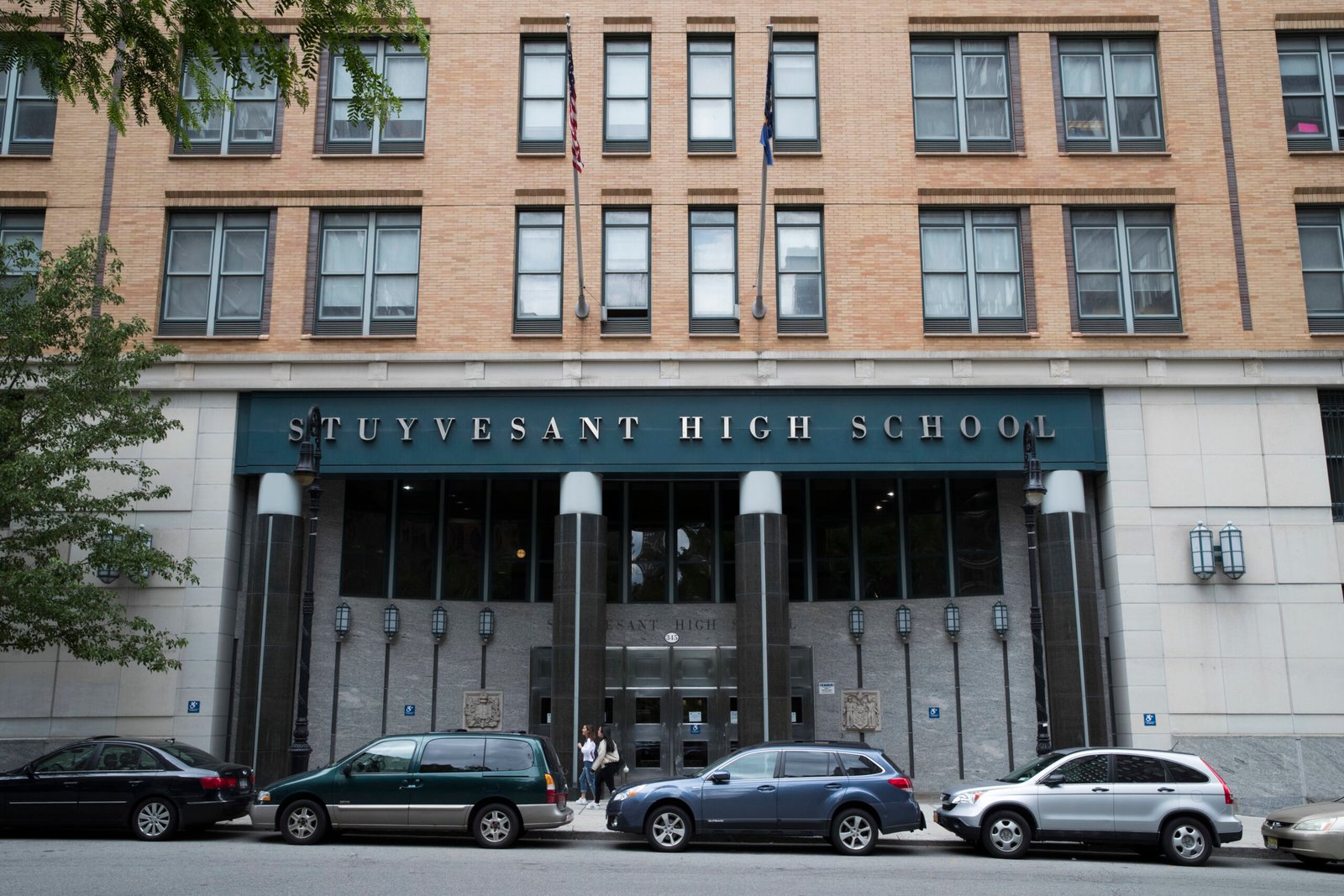
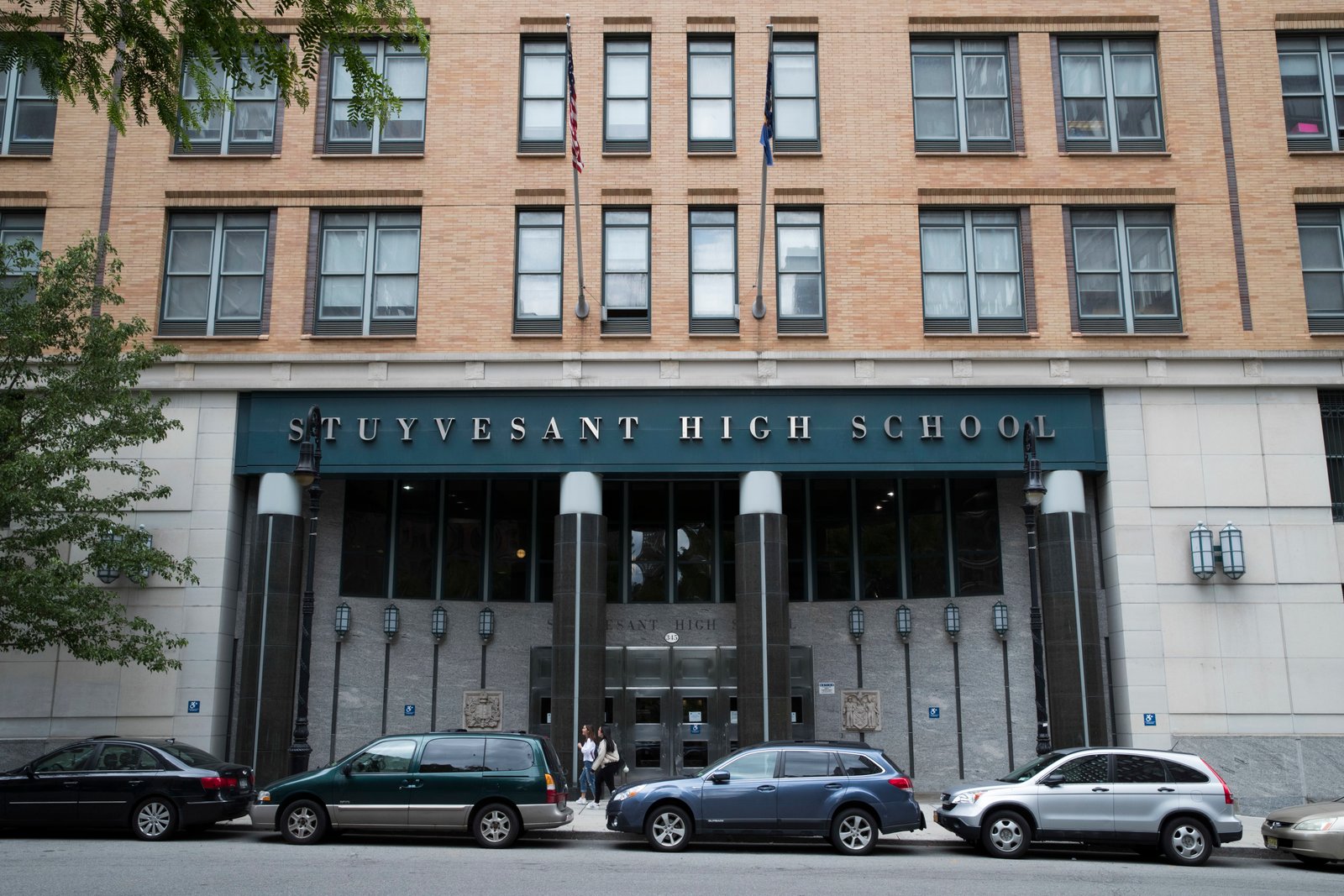
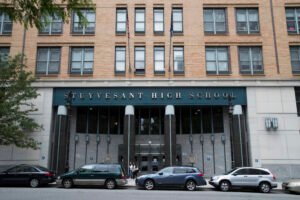
INTIFADA FLARE UP: One of New York City’s most prestigious public high schools is facing backlash because a school-based socialist youth group co-signed a social media post declaring “Intifada Until Victory!”
The Young Democratic Socialists of America chapter of Stuyvesant High School — along with YDSA chapters at Hunter College, the New School, City College and Lehman College — all signed onto an Oct. 8 Instagram post that accused the Democratic Socialists of America’s New York City chapter of silencing student activists who wanted to protest Mayor Zohran Mamdani over Israel.
The groups accused the democratic socialist mayor of betraying the Palestinian cause and blasted his decision to keep NYPD Commissioner Jessica Tisch in her position, referring to her as a “Zionist billionaire.”
The term intifada — which refers to violent uprisings against Jews in Israel — is viewed by many Jews as a call to violence against them.
Moshe Spern, president of United Jewish Teachers — an advocacy group representing Jewish teachers and students across the city — is demanding the posts be removed immediately and that the YDSA group provide a public apology to the school community.
“NYC public schools have seen hundreds of antisemitic and anti-Israel incidents since October 7, 2023,” he wrote in an email yesterday to Stuyvesant Principal Seung Yu and New York City Schools Chancellor Kamar Samuels. “When a school-recognized club amplifies this rhetoric, it risks contributing to a hostile environment.”
In the missive, Spern invoked Title VI — the federal law that bans discrimination based on race, shared ancestry and national origin — and demanded a review of the YDSA chapter’s charter, faculty adviser and recent activities for compliance.
Spern also cited a chancellor’s regulation that states that student clubs operate under the principal’s supervision and must remain consistent with the school’s educational goals.
Yu did not respond to requests for comment. Mamdani’s Department of Education also did not respond to Playbook.
Spern told Playbook today that he has yet to receive a response from Yu.
“To flat out ignore it is extremely irresponsible,” he said.
The NYC-DSA defended the organization.
“We support the right to organize,” NYC-DSA co-Chair Gustavo Gordillo said in a statement. “NYC-DSA did not organize or endorse this particular rally, but red scare tactics have never been effective tools for engaging with student movements.”
The social media uproar is the latest flashpoint in ongoing tensions in the city over Hamas’ Oct. 7, 2023, attack on Israel and the war that followed.
Mamdani, a longtime critic of Israel, was reluctant to condemn the term “globalize the intifada” on the campaign trail last year before finally saying he will not use the term. He also drew bipartisan backlash over his statement marking the third anniversary of the attack. Israeli Prime Minister Benjamin Netanyahu labeled the mayor an antisemite, which Mamdani has denied.
Mamdani, though, has also simultaneously faced backlash from pro-Palestinian activists who accused him of betraying the Palestinian cause by retaining Tisch, who’s Jewish and a self-described Zionist. Those critics have also criticized him for not doing enough to prevent local synagogues from holding events that promote land sales in Israel, some of them in the occupied West Bank. — Madina Touré
From the Capitol
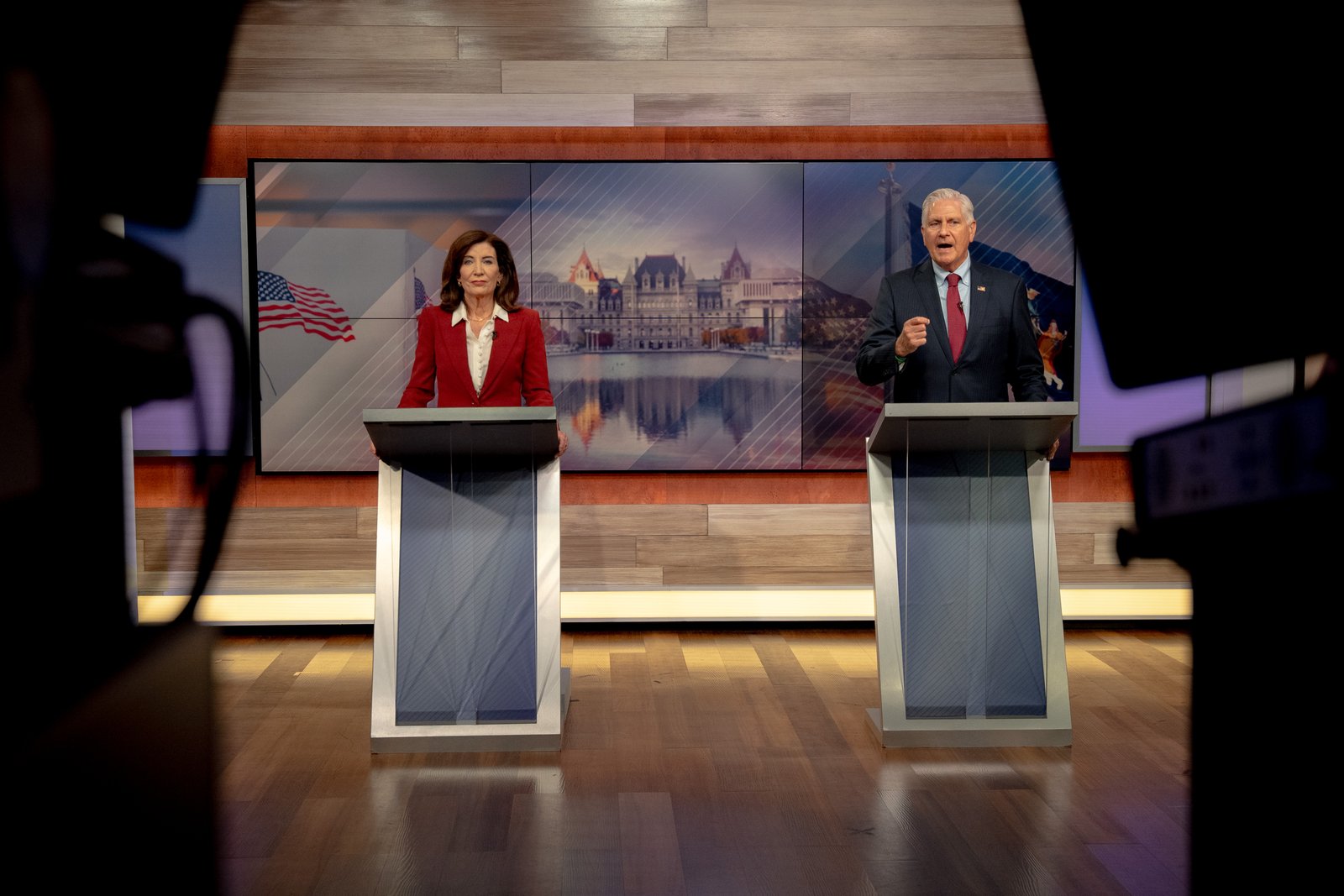
Q’S LATEST: Gov. Kathy Hochul has a 55-41 lead over Republican challenger Bruce Blakeman, a Quinnipiac University poll released this afternoon found.
That 14-point advantage is narrower than the 19-point lead Quinnipiac gave Hochul last month. But it’s more in line with the numbers from other pollsters: Marist found Hochul up by 11 two weeks ago, Emerson had Hochul up 12 in early October, and Siena measured her lead at 9 points last month.
Despite Hochul’s lead, the Q Poll concluded Blakeman has an enthusiasm advantage. A total of 65% of his backers were “very enthusiastic” to support him, while only 33% of Hochul’s supporters said the same. — Bill Mahoney
FROM THE CAMPAIGN TRAIL

LANDER DETAINED: Democratic congressional candidate Brad Lander was detained today by Israeli security officials while harvesting olives in the West Bank.
Lander, a self-described liberal Zionist and critic of Israel, said he went to the West Bank as part of the “Protect the Harvest” coalition to support Palestinians gathering crops.
Rabbi Jill Jacobs, CEO of T’ruah, a progressive rabbinical organization, said she was also detained Wednesday, along with “approximately 80 American, Israeli, and international volunteers providing a protective presence for Palestinian farmers.” According to a press release from T’ruah, there were “approximately two hours of peaceful harvesting” until “Israeli forces declared the area a closed military zone” and detained them to transport them to a police station, despite the volunteers agreeing to leave.
An Israeli military official told Blue Light News that officers from the Israel Defense Forces and Border Police, along with local police, arrived at the scene because Palestinians did not submit a request to coordinate harvesting in that area, which is required ahead of time. The official added that the farm in question “requires only a small number of harvesters to collect its produce” and “the security establishment views the arrival of dozens of activists as an act intended solely to provoke, which undermines the harvesting process.”
Lander was released “once the matter was brought to our attention” that he is a congressional candidate, the official said.
Lander confirmed in a social media post that he was released with a “warning” because of his “public profile.”
Read more from Madison Fernandez in Blue Light News.
IN OTHER NEWS
— MUSK: Elon Musk has spent more than $500,000 to support Rep. Mike Lawler’s reelection bid against Democratic challenger Cait Conley. (Gothamist)
— STOP: New York City deployed 600 red light cameras to intersections, the maximum number allowed under state law. (New York Daily News)
— MEASLES: In the wake of a measles crisis, the state Health Department remains locked in a court battle with Amish schools over religious vaccine exemptions. (The New York Times)
Missed this morning’s New York Playbook? We forgive you. Read it here.
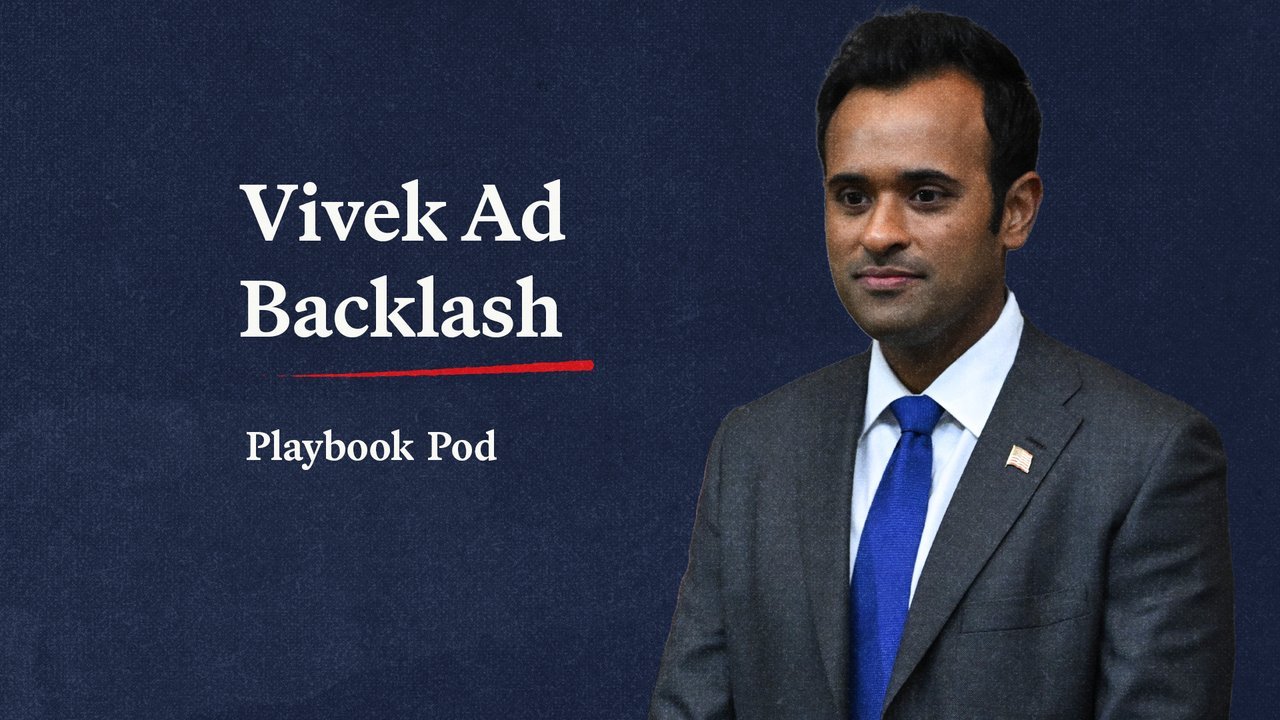
The GOP has a midterm messaging problem. Ramaswamy isn’t helping
lead image
Republicans are banking on a massive cash edge to help save their majority in Congress. But they are losing much of that advantage in an important arena: broadcast TV ads.
Republicans have spent $677 million on those ads across 10 key Senate battleground states, compared to $479 million by the Democrats. But the GOP’s money isn’t going nearly as far because they’re more dependent on outside groups that pay much higher rates than candidates.
The disparity has helped Democrats stay in the fight for Senate control amid an onslaught of GOP outside spending.
In Ohio’s Senate race, Republican groups make up 63% of the $218 million spent. But in spite of their nearly two-to-one spending advantage, they make up just over half of ads that are on the airwaves, according to data from the tracking service AdImpact. In Texas, Republicans have outspent Democrats by a three-to-one margin, but have aired just 58% of the ads. And in Michigan, the GOP accounts for 60% of the spending but just over half of the ads.
A large part of this discrepancy comes down to the mechanics of broadcast advertising. Candidates, and now political parties thanks to a recent Supreme Court ruling, are entitled to significantly lower rates. That has allowed Democratic candidates — who have posted bonkers fundraising hauls — to offset much of the GOP advantage in super PACs. Republican Senate candidates, on the other hand, struggled overall with their fundraising. And some GOP outside groups bought their ad time later, when it was even more expensive.
“There are limitations to the impact of ‘big money’ in politics,” said Sean Cooksey, a Republican former FEC commissioner. “It’s a good demonstration of the economics of campaign fundraising. Hard dollars really just go so much further.”
The disparity also shows “the Republican overreliance on outside groups,” said Ian Russell, a Democratic admaker.
“You get an eye-popping dollar amount, but it doesn’t actually translate into as many spots as you would think relative to a well-financed candidate,” Russell said. “[Republicans] were just hoping that they could spend their way out of everything that was going wrong for them. But the problem is, their issues run much deeper than a few ad buys can fix. Especially when you’ve got monster fundraising hauls from the Democratic side.”
Republicans in House and Senate races have long been more dependent on outside groups and megadonors, and for multiple cycles have seen their cash advantage undercut by fundraising strength from individual Democratic candidates. But that trend is particularly pronounced this year given the combination of Republican super PAC money and their candidates’ struggles.
In 2024, Republican outside groups spent only about 15% more than Democrats on TV ads across House and Senate general election contests, according to a Blue Light News analysis of AdImpact data. This cycle, GOP outside groups have spent 7% more.
In a few states, the discrepancy between dollars and airtime is less stark. Republicans account for 60% of the spending in Maine’s Senate race and an equal percentage of the ads, according to AdImpact. That’s in part because Sen. Susan Collins has outraised her Democratic opponent Troy Jackson over the whole cycle, although Jackson, who didn’t launch his campaign until July, raised far more in the third quarter.
The numbers show the shifting dynamics of campaign strategy after the Supreme Court opened the floodgates to more spending from parties by granting them the lower advertising rate.
Republicans have been faster to take advantage of the new rules: Major coordinated spending efforts from the NRSC and RNC have helped their side significantly this cycle.
Republicans have far outspent Democrats on Senate party-coordinated Senate advertising, $90 million to $34.6 million across TV, radio and digital ads, according to data from AdImpact.
“If I were the leader of either party, I would say you shouldn’t give a dollar, you shouldn’t give a single penny to these super PACs until you’ve maxed out to the party committee,” Cooksey said.
Some Republicans say that strategic errors have contributed to erasing their cash edge. A number of GOP strategists have also privately griped that MAGA Inc. — one of the major outside groups backing their candidates — bought TV airtime too late, forcing them to pay even higher rates and further draining resources and increasing the price of reaching voters. Republicans fretted for months about whether Trump’s well-financed super PAC, MAGA Inc., would get involved. The group has since spent heavily, but only launched its first general election ad buys in September.
“There is no question MAGA Inc. should have bought ads earlier in the cycle,” said one national GOP operative who was granted anonymity to discuss party strategy, noting that rates across the country increase as Election Day nears. Other top GOP outside groups, like the Senate Leadership Fund and the Congressional Leadership Fund, made their early advertising reservations much earlier in the cycle than MAGA Inc.
Trump allies waved away that criticism. A person familiar with the Trump operation’s midterm planning, granted anonymity to discuss strategy, said it’s “indisputable that the spending from the Trump political effort has kept us competitive in many Senate races.”
MAGA Inc. declined to comment.
Still, GOP outside groups are utilizing their cash advantage in some underappreciated ways.
Republican super PACs have massively outspent their Democratic counterparts on mail — roughly $157 million to $35 million for the general election — according to a Blue Light News analysis of independent expenditure filings submitted to the Federal Election Commission. That’s led by a whopping $44 million in spending on mail across 24 races from the Trump-aligned No Going Back PAC, along with $23.8 million across 20 races from Elon Musk’s America PAC.
GOP-aligned super PACs have also spent more than Democratic ones on phone calls and text messages, the data shows.
- NYC high school faces backlash over ‘intifada’ post
- Trump releases heating oil to the northeast to reduce surging prices
- Sen. Whitehouse says wind attacks threaten permitting deal
- The other Michigan race corporate America is watching
- Scalise heads to Florida to boost several GOP candidates
- ‘Very limited choice’: Data centers confront new constraints
- The GOP has a midterm messaging problem. Ramaswamy isn’t helping
- This member is so frustrated with Congress he wants voters to sidestep it
- Capitol agenda: The unknowns of a Sherrod Brown return
- Rick Jackson is Georgia Republicans’ best hope. Donald Trump may get in the way.
-

 Politics2 years ago
Former ‘Squad’ members launching ‘Bowman and Bush’ YouTube show
-
Uncategorized2 years ago
Bob Good to step down as Freedom Caucus chair this week
-

 The Josh Fourrier Show2 years ago
DOOMSDAY: Trump won, now what?
-

 The Dictatorship2 years ago
Pete Hegseth’s tenure at the Pentagon goes from bad to worse
-

 Politics2 years ago
Former Kentucky AG Daniel Cameron launches Senate bid
-

 The Dictatorship2 years ago
Luigi Mangione acknowledges public support in first official statement since arrest
-

 Politics2 years ago
Blue Light News’s Editorial Director Ryan Hutchins speaks at Blue Light News’s 2025 Governors Summit
-

 Politics1 year ago
John Legend advises Trump to drop the ‘dictator s‑‑‑’ if he wants Nobel Peace Prize