
Congress
Inside Jim Jordan’s quiet preparations for a GOP leadership void

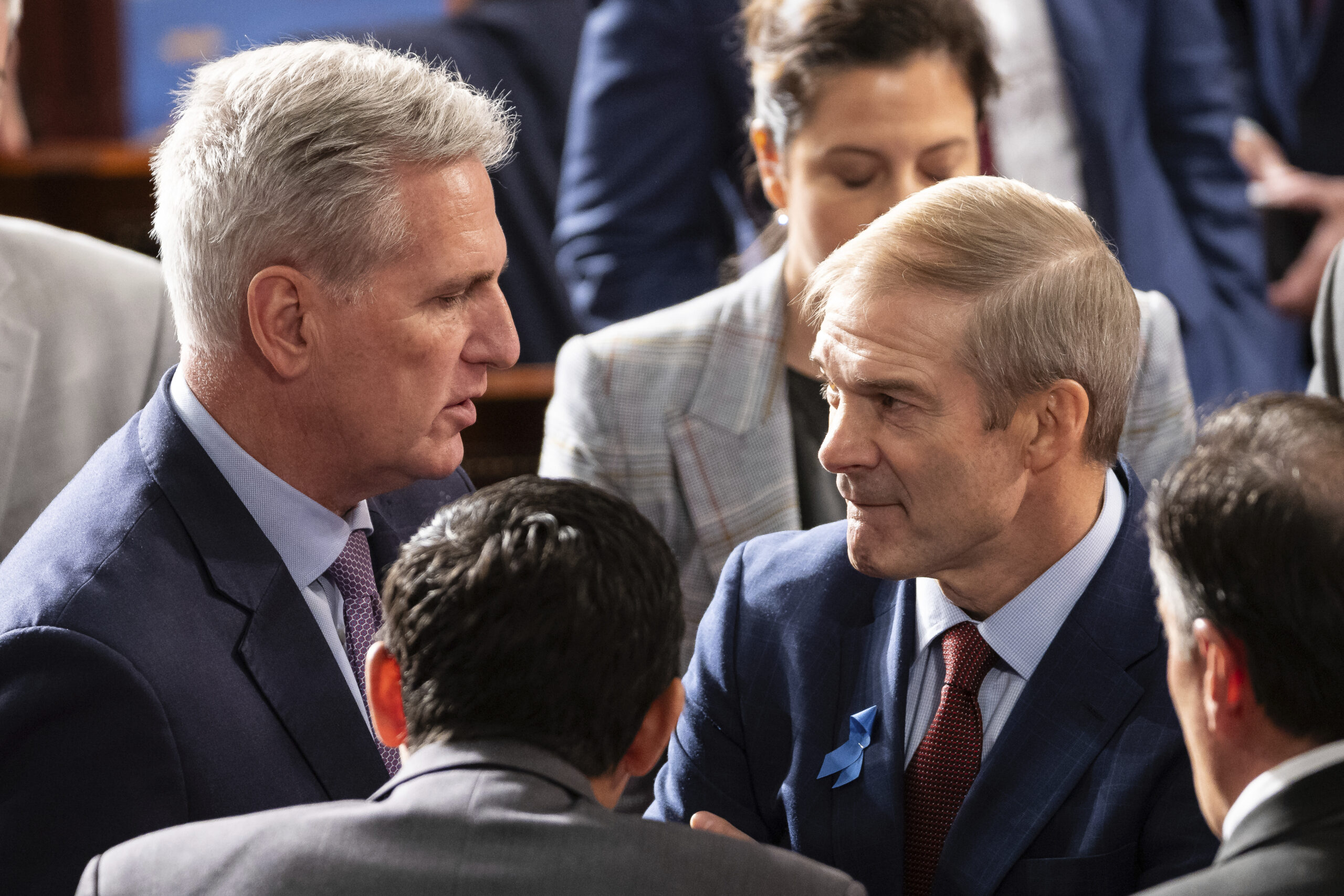
Jim Jordan has spent much of the past year out of the House GOP spotlight. Don’t expect that to last.
The Ohio Republican rose to prominence as a headline-grabbing conservative firebrand, then saw that reputation work against him when he made a failed bid for the speakership in 2023. Since then he has been supporting President Donald Trump as chair of the House Judiciary Committee and otherwise staying out of Speaker Mike Johnson’s way.
But now as frustrations with Johnson’s leadership rise inside the House GOP, and expectations grow that the Republican majority’s days might be numbered, speculation is brewing that the 62-year-old former wrestling star is preparing another push for the top leadership ranks.
“I’ve seen a concerted effort now for him to work with everybody and to travel the country,” said Rep. Jeff Van Drew (R-N.J.), a fellow Judiciary member. Should Jordan make another run, he said, “I think his base of appeal will be stronger and bigger.”
The open chatter that has erupted around Jordan and other possible contenders for the top House GOP spot — including current No. 2 leader Steve Scalise and No. 3 leader Tom Emmer — has been conspicuous, especially considering there is no vacancy to fill. Johnson insists he will retain the House majority in the November midterms and continue as speaker.
But other House Republicans believe that is growing more unlikely given the political headwinds they face and the general belief Johnson would step down from leadership rather than continue as minority leader. So they have been taking notice of the quiet moves already being made by possible candidates to build support among the rank-and-file.
And while Jordan has remained on the sidelines of recent high-profile intra-GOP feuds, he’s spent plenty of time helping vulnerable members on the campaign trail and, more recently, helping Trump wrangle potential conservative defectors on a key upcoming spy-powers vote.
Asked about mounting another run should Johnson step down after November, Jordan declined to rule it out in an interview.
“I am totally focused on keeping the majority, which I think we’re going to do,” he said.
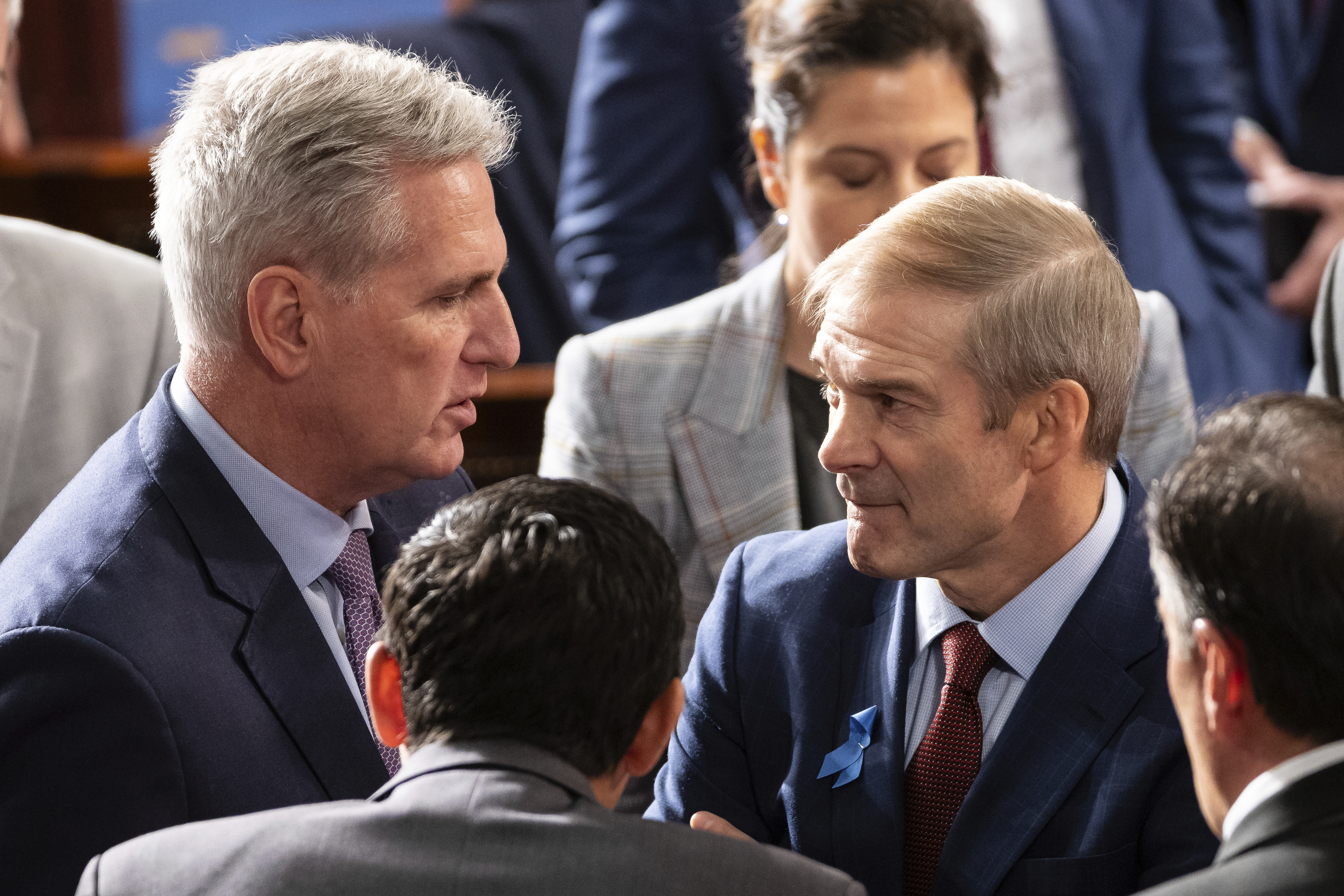
The last time Jordan took a shot at the speakership was after then-Speaker Kevin McCarthy was forced out of the position in 2023. Jordan won a plurality of votes on several secret internal ballots but failed to reach the necessary 218 votes. Dozens of more moderate members opposed his bid, most believing he was simply too combative to govern effectively.
But things could be different in November. For one, in a race for minority leader, Jordan would only need to win over a majority of House Republicans — not a majority of the entire chamber.
And while someone with a reputation as a “legislative terrorist” — as former Speaker John Boehner once called Jordan — might not make for a great speaker in the eyes of some members, leading a House minority can require a more confrontational approach.
One Republican lawmaker granted anonymity to speak candidly noted that a bad midterm showing could actually work to Jordan’s advantage by culling some of his moderate opposition.
“His base is in rock-hard GOP districts,” the member said. “The worse the night the fewer the number of ‘never Jordans’ who come to vote.”
But that member was among several who recognized that Jordan has also taken pains in the two-and-a-half years since he lost to build support in new corners of the House GOP: “He is working every day to lay the groundwork.”
Republicans have asked Jordan to come to their districts and help with both big- and small-dollar donations, one person familiar with the outreach said. Jordan in the interview noted he was about to head to California to campaign with Rep. Vince Fong — a protege of McCarthy’s who is hardly considered a conservative rabble-rouser.
“He’s definitely broadened his circle and his approach and his appeal,” said a swing-district GOP lawmaker, who like the others was granted anonymity to comment on a leadership race that has yet to actually materialize.
Should Johnson step down, the member said, Jordan could be an acceptable successor: “I’m not against it.”
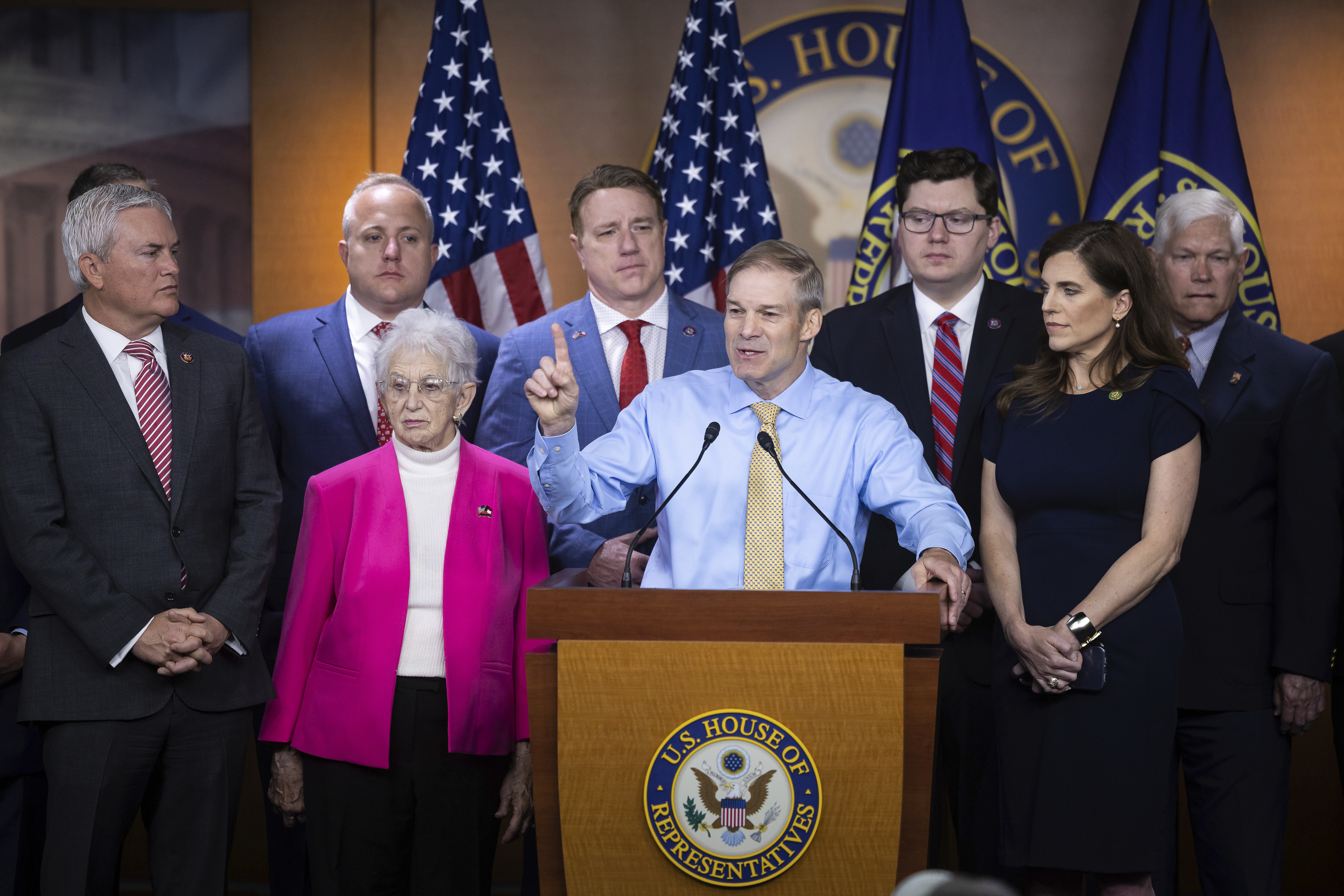
Among Jordan’s admirers is McCarthy himself, who soundly beat Jordan in the last House GOP election for a minority leader in 2018. The two men then formed an alliance that persisted even after a small group of conservative hard-liners tried to block McCarthy from the speakership. When the group rallied behind Jordan as an alternative, Jordan rejected the idea and instead gave a nominating speech for McCarthy.
In an interview, the former speaker called Jordan one of the party’s “best chairmen” and said he “would have done an excellent job” with the gavel had he been elected in 2023.
“Some people would go and quit if they didn’t win,” McCarthy said. “I watched him go help and elect people who were not good to him, who he had every reason to try to go and defeat then but he didn’t.”
Jordan denied he’s made any change in strategy. “I’ve always helped our colleagues,” he said, when asked if he’d stepped up his campaign trail work in anticipation of a leadership run.
What’s harder to deny is that Jordan has taken a much lower-key approach to internal House politics since Trump — a longtime ally — returned to the White House last year. That change has been on display during the recent fight over Department of Homeland Security funding.
After the Senate passed a bill last month that left out key immigration enforcement agencies, Jordan did not immediately join Johnson and other House leaders in trashing the bill, instead noting the upsides of the plan: Democrats didn’t succeed in hamstringing enforcement tactics, and Republicans would have their own opportunity to pass a party-line bill delivering the funding.
It ended up being a canny approach after Johnson backed down last week and agreed to advance the Senate-passed measure as the only workable alternative. In a nod to the conservative uproar, Jordan conceded the two-track approach set a bad precedent in a Wednesday radio interview. But his comments were only lightly critical at a moment when many members were furious that Johnson had made a U-turn on the bill.
“So the House said no to it,” he said. “All us Republicans voted against what the Senate had sent.”
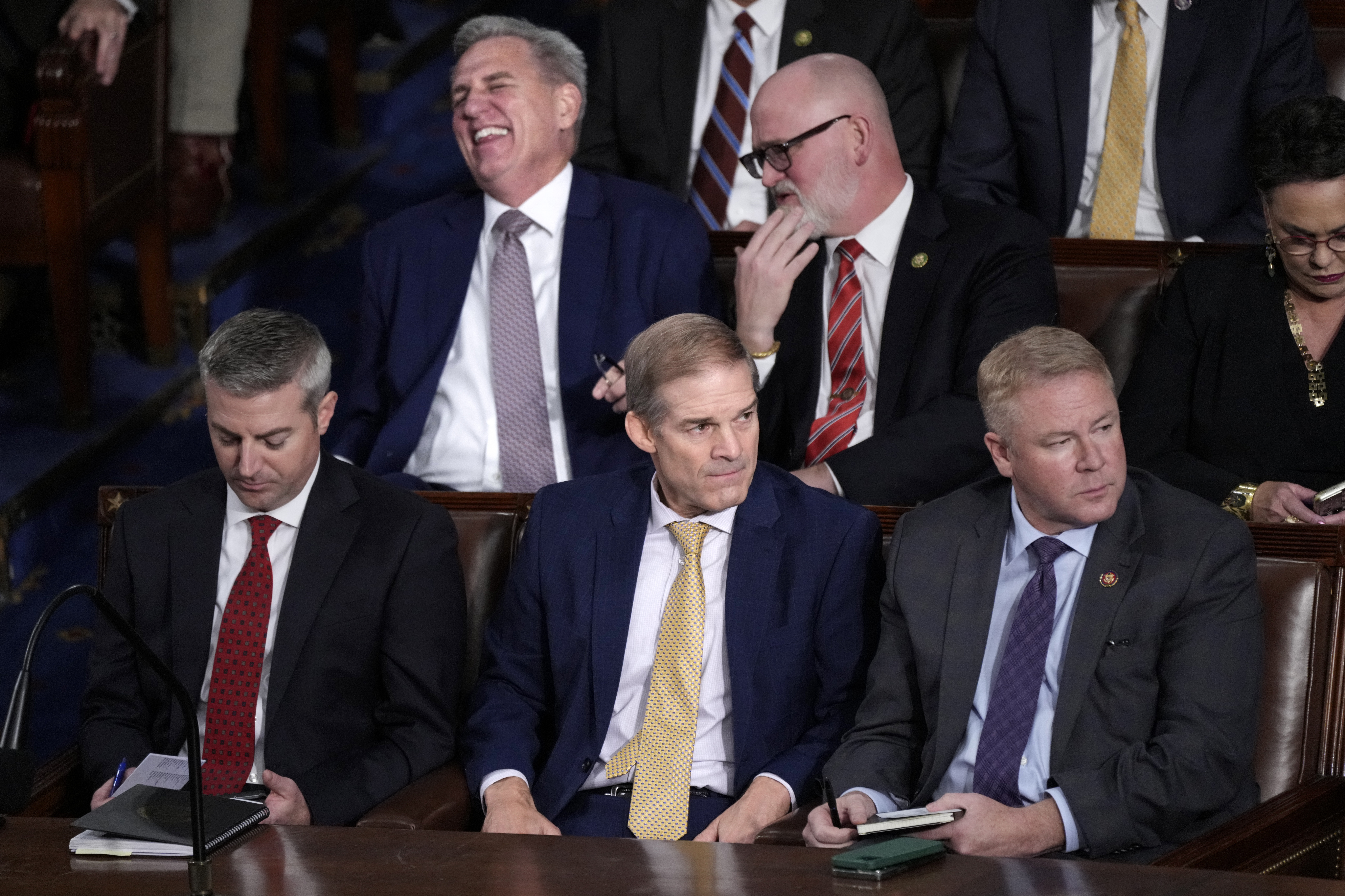
Jordan is playing an even more crucial role to ease through the quick reauthorization of a key surveillance program ahead of an April 20 deadline at the behest of the White House. That’s a flip from two years ago, when Jordan opposed renewing the program and eyed a push for “real reform” to protect Americans from warrantless spying in 2026.
Inside a closed-door House GOP meeting last month, Jordan stood alongside top Republican leaders and briefed members on why they should support a straight extension. That created friction with some of his traditional hard-liner allies, some of whom stood up and pointed out Jordan’s 180, according to two members granted anonymity to discuss the private meeting.
“The old Jim Jordan wouldn’t have done this,” one of the members said. “It’s clear that he sold out in order to keep chairmanship or to move up in leadership.”
Jordan said in an interview he has not changed his position because the program, known as Section 702, is “fundamentally different because of the reforms we all worked on and got in place” in prior renewals.
“So for a short-term extension, while we’re in the middle of a military conflict in Iran, that the commander in chief thinks makes sense for the short term, I think that’s fine,” he said.
Jordan’s spy-powers stance has surprised even Democrats, including Rep. Jamie Raskin of Maryland, the top Judiciary Democrat. Raskin opposes renewing the 702 program without new guardrails, but he credited his counterpart as an “able and effective political actor” inside the GOP who has his pulse on the party agenda.
“I don’t know whether he has traveled more towards the center of the Republican conference or the Republican conference has traveled more towards Jim Jordan,” Raskin said. “But in any event, it feels like he’s pretty close to the center of gravity right now.”
Meredith Lee Hill contributed to this report.


Connecticut Sen. Chris Murphy is giving more than $500,000 to Democratic national and state committees working to boost the party in the midterms.
Murphy will announce Monday — according to details first shared with Blue Light News — that he is investing $200,000 with the Democratic Senatorial Campaign Committee, $100,000 with the Democratic Congressional Campaign Committee and $100,000 to the Democratic National Committee.
He is also spreading a total of $125,000 across 25 state Democratic parties.
“Donald Trump and his MAGA agenda are failing the American people. Democrats can pass a new minimum wage, reign in Trump’s illegal war, and keep his billionaire friends in check,” Murphy said in a statement. “But we need majorities to do so. That requires investment.”
Murphy’s contributions come amid speculation that the lawmaker harbors 2028 presidential ambitions. They are also landing as Democrats believe they are within striking distance of winning the Senate majority after they’ve expanded the map and Trump’s numbers threaten to drag down Republicans.
In all, Murphy has contributed more than $2.5 million over the 2026 campaign cycle, including transferring nearly $250,000 to Democratic Senate candidates and raising more than $300,000 directly for Senate candidates. He also is expected to do more fundraisers in the final stretch of the midterms, saying that his aim is to support “candidates ready to build a populist movement.”
His support could bolster the candidates he backed in the primaries — including Minnesota Lt. Gov. Peggy Flanagan, who is running to succeed retiring Sen. Tina Smith.
Murphy is part of a group of progressive senators who endorsed some candidates, like Flanagan, who were either not supported or running against candidates backed by the DSCC or Minority Leader Chuck Schumer.
“His support has helped us build the momentum and resources we need to win,” Flanagan said in a statement of Murphy. “His leadership challenging the political influence of greedy corporations and fighting for working people is exactly what Washington needs more of, and I’m proud to have him in our corner as we work to bring a stronger, more people-focused vision to the Senate.”
The top executives running America’s most powerful artificial intelligence companies over the weekend agreed their industry needs to slow down — or risk humanity’s safety.
But the chance of Congress rushing to action in the coming weeks is next to zero.
One obstacle is the tight calendar before the midterms: Lawmakers return Monday, but the House is scheduled to leave by Friday and the Senate is already eyeing cutting their three-week session to two.
Another hurdle is the lack of momentum behind any plan. Senate Commerce could hold a markup of AI legislation this month, but it’s unclear a broad bipartisan AI safety bill being pushed by Majority Leader John Thune and Sen. Amy Klobuchar will be finalized. Senators can’t yet agree on provisions that would hold AI labs legally accountable.
And some don’t think there’s a need to do anything right now: Senior House Republicans have largely stood in line with President Donald Trump, who has brushed aside concerns of an existential threat in light of the AI arms race against China.
— WHAT’S NEXT: Speaker Mike Johnson suggested lawmakers, Trump and tech execs as soon as Monday “go in a big room, close the door and sort this out.”
Yet Johnson in a Sunday interview on BLN threw cold water on the idea of Congress fast-tracking a legislative solution, arguing that setting industry-wide safety protocols should be the responsibility of the tech companies themselves.
House Minority Leader Hakeem Jeffries, meanwhile, said AI would be “a high priority” during House Democrats’ weekly caucus meeting Tuesday.
But while he said Congress needed to “take decisive action to slow down the pace of development,” he didn’t articulate any plan for doing so.
Senate Minority Leader Chuck Schumer is out with a statement Monday morning that’s also short on details — saying simply that while he understands concerns about giving China the advantage on AI, Congress needs to act to put “safe, responsible and accountable guardrails on it.” He called for legislation to cut off the flow of advanced AI chips and semiconductor technology to China to slow their development.
He’s also calling for an all-senators classified briefing from administration officials on how they plan to deal with the rapidly-evolving technology.
— ALARM BELLS: Meanwhile concern is brewing within the rank-and-file of both parties that could add political pressure:
Rep. Lori Trahan told Blue Light News in an interview Sunday it was a mistake for the House to leave town so early and that she’d push for members to stay longer to deal with the AI risk. Short of the whole House remaining in session, she’s suggesting at least a smaller group of negotiators stick around to hash out a plan.
“I just want to make sure that Congress is in a position to act quickly,” Trahan said.
She’s worried, though, that leaders won’t get behind her bipartisan legislation that would, among other things, create a possible emergency brake for AI models. It’s the only comprehensive bill of its kind that’s ready to work its way through committee.
Retiring Rep. Chip Roy is also sounding the alarm in an interview with Blue Light News about the need to “have some degree of guardrails” on technology that could fundamentally change what it means to be a “free human.”
And on the campaign trail, frontline Michigan Senate candidate Mike Rogers on Sunday pointed to the tech executives’ warnings and said he believed AI development needed to slow down to allow the government to put a national security framework in place.
“The first role of our government is to keep us safe,” he said.
What else we’re watching:
— DATA CENTER VOTE ON TAP — House GOP leaders Tuesday plan to bring legislation to the floor to curb data center costs, marking lawmakers’ biggest step yet to regulate AI infrastructure. Meanwhile, Sen. Jon Husted is “having conversations on how the Senate can follow suit,” according to an aide. The decision to proceed this coming week signals that pressure has been building on leaders to act, underscored by the fact at least five House GOP frontliners have signed on as co-sponsors since Sept. 1: Reps. Bill Huizenga, Tom Barrett, David Valadao, Jen Kiggans and Mónica de la Cruz.
— GOP REVAMPS CRYPTO BILL — Senate Republicans late Sunday released revised text of a landmark cryptocurrency bill with key changes aimed at winning over Democratic holdouts, including new, White House-blessed government ethics language covering federal officials’ engagements with digital assets. It is unclear if the changes will be enough to win enough bipartisan support to advance the measure on the Senate floor this week. It is set for a key procedural vote Tuesday afternoon. Schumer convened Democrats to discuss the measure Sunday night, before Republicans unveiled their new text.
Ali Bianco, Kelsey Brugger, Nico Portuondo and Jasper Goodman contributed to this report.
Congress
Chip Roy is leaving Congress — but not before warning his colleagues to take the threat of AI seriously
Rep. Chip Roy isn’t known for his touchy-feely approach to legislating. But as the staunch conservative is preparing to leave Congress at the end of the year, he’s raising difficult, philosophical questions about whether the rapid rise of artificial intelligence could turn over human dominion to “entities that have no soul.”
The Texas Republican is grappling with how to square his small-government, anti-regulatory values with what he sees as an urgent need to bring some accountability to an industry that has answered few questions about whether the rapidly evolving technology could fundamentally change what it means to be a “free human.”
And as many of his fellow Republicans warn that regulating AI in the U.S. could cede ground to China, he keeps coming back to a nagging question: At what cost?
“All the proponents of technology will say, ’Oh, your life is better. You can do so many more things, so many advancements, curing cancer … blah blah blah.’ And I’m like, ‘yeah, but what world am I living in?’ And I think that’s a question we have to ask as we kind of work through all this stuff.”
The interview has been edited for length and clarity.
We’re speaking the day after an ex-AI researcher went on social media to issue a warning about the potential extinction threat posed by unchecked AI development. What do you think is going on here?
Everybody’s feeling like they’re losing control. They don’t know what their job’s going to look like. They don’t know what their life’s going to look like. They’re being told that we need to have all these data centers and invest in those, and whatever that means, whatever the impact is, don’t worry, it’ll be better, and there’ll be plenty of water, there’ll be plenty of electricity. But you got to do it because, “beat China?”
I’m a free market guy. I’m a limited government guy. I’m a guy that believes that the government can’t solve problems very well, but I’ve tried to have some conversations with folks about this in terms of responsibility. Is this not unlike nuclear proliferation?
Did you think you’ve had to rethink your free market inclinations at all?
None of this makes me rethink free market. The free market is the best thing you could possibly have to provide as many options as possible without government interference. However, what I want people in this space to acknowledge is, this is a unique issue. This is not the simple transition from a horse and buggy to a car. This is an earth shattering potential human replacement on multiple levels. And with no clear direction for what it means, and then ultimately no clear understanding of who’s in charge of what is supposed to be a tool for humanity — but can ultimately make humans the tools of the technology.
One researcher has put it at a greater than 10% chance that AI could end civilization. Do you take that seriously and, if so, does that mean Congress should act sooner rather than later?
I think that certainly raises eyebrows and opens eyes to, “wait, what are we talking about here?” And the biggest problem is that most of the people in the industry cannot just unilaterally deny it. They cannot answer the question of, “what does it do for the dignity of work and the ability of humans to continue to work and produce with their hands and through their own toil and production?”
At what point can the genie not go back in the bottle?
I am of the mindset that the genie cannot go back in the bottle. I am of the mindset that technology and entrepreneurs are our best hope for figuring out how to manage all of this — not government. But I do think government can provide some safety valves, right? If everything is digitized and AI is sort of running things, if everything goes sideways, what do I do? We have to be philosophical about what it means to live. Not all advancements make the world better; they make it different, and some of them do make it better, right? Was it better to grow up in the ’90s or in 2026 as a kid? I don’t know.
If your ultimate backstop as a human is that God gave us life and dominion over your world, why should I have to answer to a world that chose an AI-driven world? Why? I mean, you have to live in the world you’re in, but shouldn’t I have an option as a free human?
You’re talking about your faith — what role could Christians play here?
Do I think that there is a God question in this entire AI debate? I absolutely do. Do I think that God gave man dominion over the world, and that we owe it to ourselves and our posterity and to God to try to make sure that we maintain that dominion and not turn that over to, essentially, entities that have no soul and have no ability to understand humanity? You cannot turn leadership and decision-making over to soulless entities, and I think that that is a central question to everything that we’re going to be debating on this topic.
Do you think this will be a big issue in faith circles?
Yes. I don’t think people have caught up to it yet, but I do think that’s going to be a growing issue in faith circles, in Christian circles.
The White House’s position has largely been about the need for the U.S. to beat China.
So I’ll be honest. I don’t know what the proper role of government is here. The Big Tech bros need better answers if they want us just to all say, “oh yeah, just let the market figure it out.” Well, then give me my answers. So far the Big Tech bros’ answer has been: “but China.” And “but China” is not a policy prescription. It’s a fear mechanism.
It seems like you are really wrestling with the role of government here.
Yes. And all of us should be wrestling with it. And our predisposition as free market conservatives should be that the market is going to produce the best and most efficient and most effective solutions for all of these problems. But the people that are running the industries, they owe us an understanding that they’re doing that. Government has a role to have hearings. Government has a role to raise questions. Government has a role to maybe demand certain levels of safety or security, or maybe government has a role to demand some certain level of escape valve.
The reactions to the warnings from the AI researchers have come overwhelmingly from Democrats. Do you think we could see Republicans start to say, “oh, maybe progressives who want to ban superintelligence are right?”
I do not believe “we’re going to shut it all down” is either plausible or the best solution. I do think we must have some degree of guardrails and that the same laws and rules that apply to humans are going to have to apply to a world of AI, and there are other existential questions that have to be raised.
If you’re sitting as a red coat and a blue coat in the revolution, staring across the field, you know that if you walk out there, you’re gonna get shot, or you might get shot, and you got to be willing to risk it. And you’re risking your life. What is a robot risking? I think that’s a big deal.
- Chris Murphy gives $525K to party, state committees
- Capitol agenda: Congress isn’t rushing after AI alarms
- Texas Republicans denounce GOP statewide candidate over xenophobic post
- Trade wars are going electric. The planet could pay the price.
- Chip Roy is leaving Congress — but not before warning his colleagues to take the threat of AI seriously
- Obama calls for Dems to focus on AI
- GOP anxiety grows over North Carolina Senate race
- Convention puts GOP’s reality on display: Midterm policy agenda is skimpy
- At 9/11 ceremony, Giuliani and Mamdani … shake hands?

- Court deals first blow to Trump’s coal rescue campaign
-

 Politics2 years ago
Former ‘Squad’ members launching ‘Bowman and Bush’ YouTube show
-
Uncategorized2 years ago
Bob Good to step down as Freedom Caucus chair this week
-

 Politics2 years ago
Former Kentucky AG Daniel Cameron launches Senate bid
-

 The Dictatorship2 years ago
Luigi Mangione acknowledges public support in first official statement since arrest
-

 The Josh Fourrier Show2 years ago
DOOMSDAY: Trump won, now what?
-

 The Dictatorship2 years ago
Pete Hegseth’s tenure at the Pentagon goes from bad to worse
-

 Politics2 years ago
Blue Light News’s Editorial Director Ryan Hutchins speaks at Blue Light News’s 2025 Governors Summit
-

 The Dictatorship1 year ago
Mike Johnson sums up the GOP’s arrogant position on military occupation with two words