
Politics
Indiana GOP’s Trump rebuke could lead to temporary redistricting detente

Indiana Republicans’ redistricting rejection marks a rare ceasefire in the gerrymandering wars—and could lead to other state leaders backing off their own plans.
The result gives cover for some Democratic-leaning states to stand down, even as the party’s base is whipped into a frenzy over the issue. Lawmakers in Illinois and Maryland have for months had internal debates about whether to move forward with redrawing their maps, and Indiana’s decision was met with some relief from the mounting pressure they anticipated being under had Republicans in Indiana further gerrymandered their maps.
Illinois Democrats have long said they would only gerrymander if the Indiana GOP bowed to Trump’s demands and redid their own map. In the wake of Hoosier Republicans’ move on Thursday, they don’t seem eager to change their minds.
Maryland has been a mirror image of Indiana: One Democratic leader is rebuffing entreaties from top Democrats to eliminate the state’s lone remaining GOP seat.
Maryland Democratic Senate President Bill Ferguson has exchanged phone calls with Indiana Senate Republican leader Rodric Bray, four people familiar with the two leaders, granted anonymity because they weren’t authorized to speak publicly, tell Blue Light News. Each has resisted pressure from top officials in their party to move on redistricting. Bray’s success could now lessen the pressure on Ferguson. Bray’s spokesperson, Molly Swigart, said no deal was ever made between Bray and Ferguson on redistricting in their respective states.
And in Virginia, where Democrats gained 13 seats in their House of Delegates in November’s statewide elections, they’re poised to make drastic changes to their congressional maps that could net the party upwards of four seats. But that stance seems at odds with the views of Democratic Gov.-elect Abigail Spanberger, who sounded reluctant to the idea of making wholesale changes to congressional lines at a Blue Light News event earlier this week.
There are also headwinds elsewhere for Trump and his allies: Kansas and Kentucky Republicans have so far failed to move forward with their redistricting pushes that are complicated by opposition from Democratic governors; Ohio Republicans struck a compromise with Democrats for a less aggressive gerrymander than what some national leaders wanted; a judge picked a map in Utah that drew a safe Democratic seat; and Republicans are facing a potential setback for Missouri.
That doesn’t mean the redistricting wars are over. Lawmakers in a number of other states are still weighing their own maps, with GOP-led Florida and Democratic-controlled Virginia remaining the biggest question marks on the board. Republicans are still eying Kentucky and Nebraska as well.
“We’ve got a lot more states that we can do work on,” one person close to the White House granted anonymity to speak candidly on a sensitive matter told Blue Light News Friday, while admitting that “Indiana was definitely frustrating.”
And if the U.S. Supreme Court issues a ruling further gutting the Voting Rights Act in the coming months, a number of states are expected to rush to redraw their lines before their states’ filing deadlines, in a move that could give the GOP a huge boost and potentially put the House out of reach for Democrats.
“The truth is, I think we’re still, we’re in the middle of this redistricting war,” said John Bisognano, president of the National Democratic Redistricting Committee. “We’re all waiting to hear back from the Supreme Court as to what they’re going to do and how they’re going to move forward.”
Here’s what to expect in the coming weeks from states including Maryland, Florida, Illinois and a challenge to the already-passed maps passed in Missouri.
Maryland
Perhaps lawmakers breathing the biggest sigh of relief from Indiana bucking Trump’s redistricting push are those in Maryland.
Ferguson has for months been facing pressure from Democratic Maryland Gov. Wes Moore and national Democrats to wade into the redistricting fight. That lobbying campaign to net Maryland Democrats an additional seat would have been kicked into hyperdrive if Indiana had drawn new maps.
Reports of Ferguson possibly losing his grip on leading the Senate Democrats evaporated this week after he was unanimously renominated as Senate leader. Then on Thursday, just hours before the Indiana Senate cast the vote dooming the redistricting effort, Ferguson put out a statement with Democratic House Delegates Speaker Pro Tem Dana Stein declaring that lawmakers in the special session Moore called for next week will definitively not take up any new maps.
While that likely closes the door on the redistricting push for this year, Moore still has an opportunity to reignite a pressure campaign aimed at Ferguson to hold a vote on the issue in January, when the legislature returns for regular session. The governor’s Redistricting Advisory Commission is meeting Friday for its final public hearing to solicit comments from Maryland residents before its members make a recommendation to the governor and the General Assembly on whether to redraw maps.
Illinois
For months, Illinois Democrats have suggested they were unlikely to try to squeeze another seat out of their already-gerrymandered state unless Indiana Republicans redrew their seats.
And while state Democratic leaders didn’t completely rule out redistricting in the wake of the Indiana GOP’s vote, they don’t sound particularly eager for a new map.
“Our neighbors in Indiana have stood up to Trump’s threats and political pressure, instead choosing to do what’s right for their constituents and our democracy,” Gov. JB Pritzker said in a statement after the result, without saying what Illinois might do.
A person in Pritzker’s office, granted anonymity because they weren’t authorized to speak publicly, said the governor was less than equivocal in his statement because no one knows what Trump’s next move might be.
State House and Senate Democratic leaders struck similar tones, praising their Hoosier neighbors while pledging to stay vigilant against similar efforts in other states.
Virginia
Democrats’ best remaining chance for a multi-seat gerrymander is Old Dominion. But while statehouse leaders seem eager to push forward with a complicated plan for a voter referendum to approve a new gerrymander — much like California’s move — the state’s incoming Democratic governor doesn’t seem quite as eager to lend a hand.
The Democratic-dominated Virginia legislature is expected to easily pass a procedural measure before putting the issue of redistricting before voters to approve a constitutional Virginia amendment to redraw the state’s maps ahead of the midterms — a move that legislative leaders have teased could lead to a 10-1 map.
“I feel comfortable that we have an opportunity to do a number of maps here in Virginia to allow for us to level the playing field,” Virginia House Speaker Don Scott said at a Blue Light News event this week.
But at the same event, Spanberger hedged when asked if she supported redrawing maps to achieve the feat.
“The calendar is tight, and for me, I want to win,” Spanberger said, pointing to Virginia’s first and second congressional districts that are currently held by Republicans. “I want to flip seats in the House of Representatives and I know that we can because I just won those districts.”
But when asked directly if redistricting is the way to go, Spanberger said Virginia should “leave open the option” of new maps, but ultimately voters will decide if the legislature should move forward.
Florida
Florida Republicans could deliver their party three to five more seats if they press ahead with mid-decade redistricting. But two factors complicate that effort.
First, GOP leaders aren’t on the same page. GOP Gov. Ron DeSantis has been touting the need to draw new maps since last summer, has suggested waiting until the spring of next year in case the U.S. Supreme Court weakens the VRA and bars the consideration of race when drawing lines, a position backed by the state’s GOP Senate president, Ben Albritton.
But state GOP House Speaker Daniel Perez said this week it is “irresponsible” to wait and that the House is prepared to send a map to the Senate during its regular session that starts next month.
Second, GOP leaders may be constrained by Florida’s voter-approved constitutional ban on redistricting for partisan gain. Democrats have already asserted that drawing up any new map is “illegal’ and would violate these standards signaling that litigation is likely if state legislators pass a new map. But Florida’s conservative-dominated state Supreme Court already ruled in 2022 that legislators can sidestep minority protections when it allowed a previous GOP-drawn map that was muscled into law by DeSantis, weakening its impact.Perez insisted that he has not been under pressure from Trump or the White House to move ahead on redistricting. When asked on Friday if there was added pressure on the House to act due to the outcome in Indiana he said: “No sir.”
Missouri
Missouri Republicans already passed a map to flip Rep. Emanuel Cleaver’s (D-Mo.) district red, but Democrats are hoping to undo the GOP-passed map in Missouri via ballot measure. Earlier this week, they submitted more than double the 107,000 signatures required to force a statewide vote for the secretary of state.
If the signatures are validated, the map may not cannot go into effect in time for the midterms, and if voters approve the ballot measure, the map gets tossed. Republicans still have a bit of time, since GOP Secretary of State Denny Hoskins doesn’t have to approve the signatures until July. Plus, it’s unclear when the Republican-controlled Legislature will actually put those signatures up for a vote.
The timing is causing a bit of chaos. Since candidates need to file by the end of March, prospective members of Congress may have to file in districts that aren’t set for the midterms.
Adam Wren, Andrew Howard, Shia Kapos, Alex Gangitano and Gary Fineout contributed to this story.


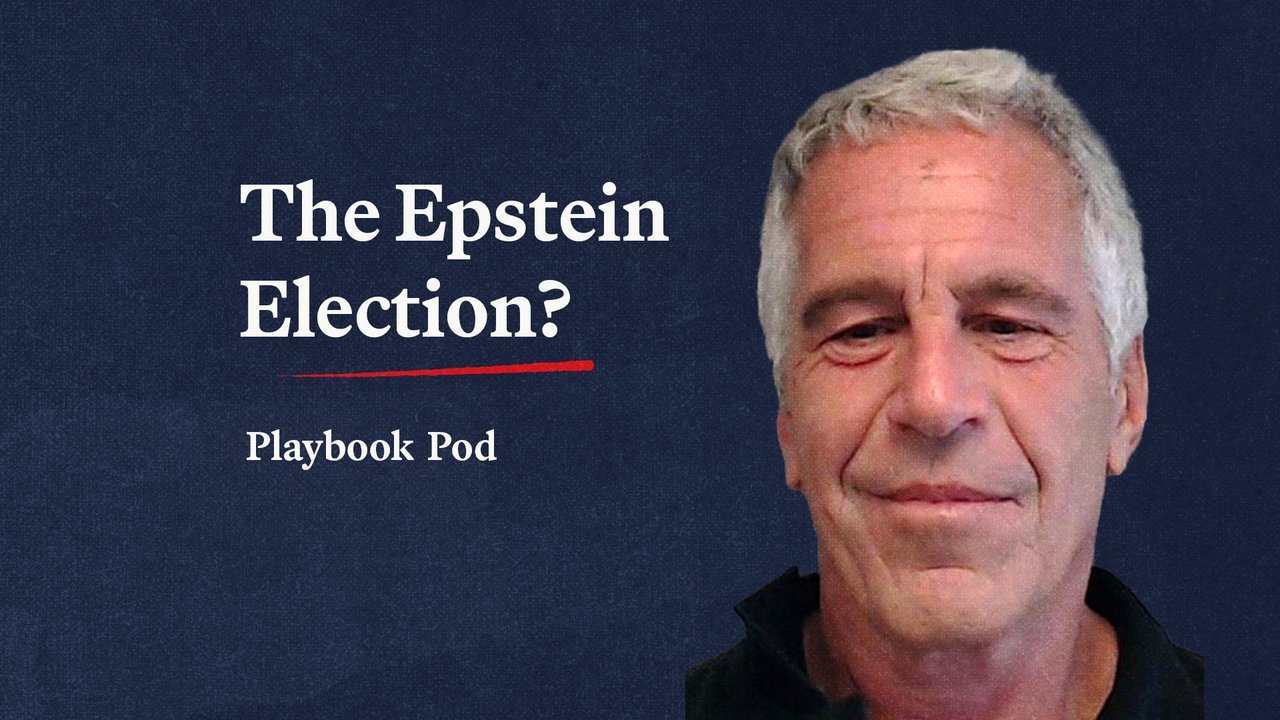
The Epstein election?
lead image
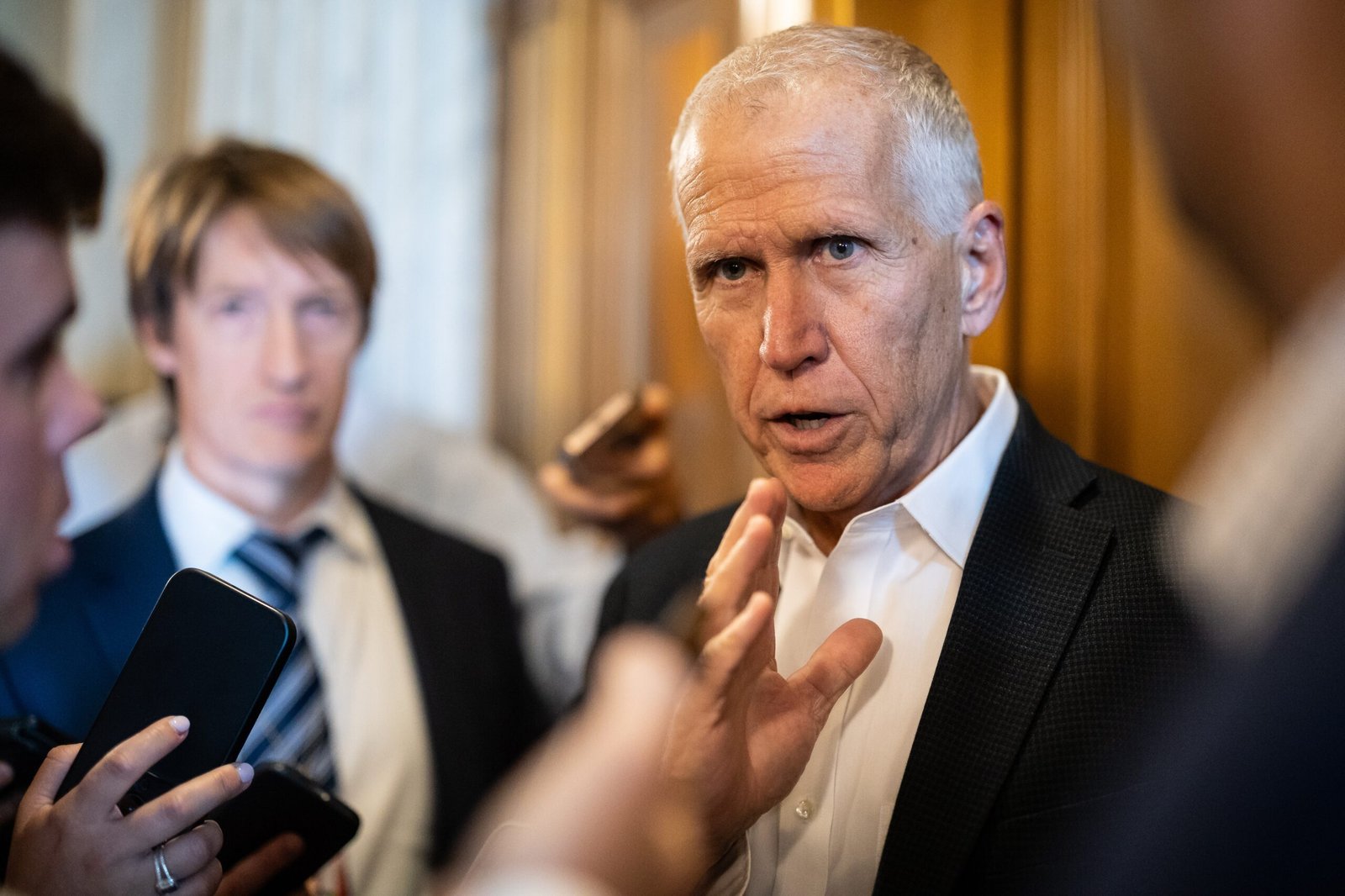
Republicans spurned by President Donald Trump aren’t interested in rescuing their would-be replacements.
Instead, a growing number of retiring or ousted GOP incumbents from Nevada to North Carolina are sitting those races out, and in some cases, openly bucking their own party.
Outgoing Sen. John Cornyn has raised money for various Republican Senate candidates — just not for Texas Attorney General Ken Paxton, who ousted him in the primary with support from Trump. He’s been vocal for months about what he sees as Paxton’s vulnerabilities and how Democrats could flip Texas blue for the first time in decades.
North Carolina Sen. Thom Tillis — who has frequently criticized some of Trump’s Cabinet and broken with the White House on policy — has played little role in the campaign of former RNC Chair Michael Whatley, Trump’s hand-picked Senate candidate. The distance between the two Republicans is particularly notable as Whatley struggles to close the gap against Democrat Roy Cooper.
Rep. Mark Amodei has repeatedly criticized, and now openly rejected voting for, the GOP nominee to replace him, David Flippo.
“The bedwetting from outgoing moderate Republicans will define their legacy and only help socialists get elected,” said David McIntosh, president of the Trump-aligned Club for Growth, which has endorsed Flippo and Paxton. “People like John Cornyn and Mark Amodei need to get on board and support Republican nominees and stop posturing for an MSNOW contract.”
But other Republicans defended their colleagues: “I never would question the loyalty to the party of Thom Tillis or John Cornyn. Both of them have contributed immensely to our party and our party’s successes in the past and I suspect will be going forward,” said North Dakota GOP Sen. Kevin Cramer. “But I also don’t begrudge them for their opinions and their right to be open about them.”
These outgoing Republicans, several of whom were explicitly pushed out by Trump or persuaded to retire given his hold on the GOP, are using the midterms as a test: whether the party will demand loyalty to the president or can return to a pre-Trump era.
“What [Trump’s] done is created a coalition that, in my opinion, will not stay with Republicans once we go back to traditional Republican platform priorities,” Tillis said in a recent interview with POLITICO. “A lot of the elements of the populism that Trump created to expand a base that made him successful running for president, I don’t think that stays with the party long-term.”
Some of those intraparty frustrations are starting to boil over, with Trump loyalist candidates and outgoing Republicans swiping at one another as Election Day barrels closer and the party’s overall fortunes look dire. The blame game is especially prominent in some of the Senate battlegrounds where Republicans have begun to quietly retreat in the final stretch of the midterms.
Tillis never followed through on his offers to help Whatley by reaching out to holdout donors in the North Carolina Senate race, said one person familiar with the campaign who was granted anonymity to speak candidly about internal matters.
“He was never part of our strategy because … I mean, if he could have been helpful to us, then he could have ran,” the person said, referring to Tillis’ decision not to seek reelection last year. “The Tillis of the past year ain’t the same guy who worked overtime to help elect Republican majorities here in NC back in 2010.”
One person with knowledge of Tillis and North Carolina politics, also granted anonymity to speak candidly, countered that the outgoing GOP senator “doesn’t help sure winners or sure losers” and “Whatley has been a sure loser throughout 2026, running as Donald Trump’s ‘guy,’ and making zero effort to build his own brand.”
“All Whatley had to do was to keep this race competitive, but instead the party is facing a potential wipeout. This is an embarrassing effort by a former RNC chairman who only has himself and his consultants to blame for the completely avoidable beat down coming on Nov. 3,” the person added.
Spokespeople for Tillis did not respond to a request for comment. Whatley’s campaign declined to comment.
Natalie Baldassarre, a spokesperson for the Republican National Committee, touted the president’s endorsement record in a statement. More pointedly, she said that “Republicans who chose not to help elect other Republicans may as well be helping Democrats.”
The White House did not respond to a request for comment.
While the dynamic is less pronounced on the House side — Reps. Don Bacon and Elise Stefanik have been helpful to the Republicans running to replace them — there’s a clear exception: Amodei.
Flippo, who’s trying to replace him, has dealt with a host of scandals, from stolen valor accusations to carpetbagging to campaign finance issues, but Trump’s endorsement helped boost him through the Republican primary in June. Top Republican outside groups, including Club for Growth, have poured millions into his race in Nevada’s 2nd District to rescue a seat the president won by 14 points in 2024.
Amodei said in an interview that whoever was advising Trump to jump in and endorse Flippo gave “awful advice.”
“The only criteria shouldn’t be, ‘Well, they’re the Republican,’” said Amodei, who cast his ballot for a third-party candidate this week. “I mean, politics is a team sport. But when a member of the team turns out to be this way, clearly this is not a bright and shining moment for the vetting process.”
Asked about Club for Growth president McIntosh’s criticism of moderate “bedwetting,” Amodei scoffed: “At least this crowd is absolutely consistent. Forget fundamental factual and character messes that campaigns won’t and can’t respond to; and attempt to change the focus to party loyalty,” the retiring representative said. “Let me know when Club For Growth does a statement on campaign finance compliance, stolen Valor, and individual background transparency.”

Even as figures like Cornyn and Amodei catch the fury of more Trump-aligned Republican forces for not falling behind the party line, that doesn’t mean they’re abandoning fellow Republicans overall.
Cornyn has raised more than $1.1 million at events in Dallas and Houston last month for the campaigns of Sens. Susan Collins of Maine, Jon Husted of Ohio and Dan Sullivan of Alaska — as well as for the National Republican Senatorial Committee and other Senate candidates: Iowa Rep. Ashley Hinson, former Michigan Rep. Mike Rogers and former New Hampshire Sen. John Sununu, according to a person familiar with the senator’s political operation who was granted anonymity to discuss private events.
He still clearly and explicitly draws a line against helping Paxton, telling reporters earlier this year, “Everything I said about him in the primary is true.”
A spokesperson for Paxton did not respond to a request for comment.
In Georgia, popular GOP Gov. Brian Kemp has been all-in on the governor’s race for Republican Rick Jackson — but he’s been comparatively quieter when it comes to Rep. Mike Collins’ Senate campaign to oust Democrat Jon Ossoff.
The governor had initially recruited, backed and supported a different candidate in the GOP primary, though he’s since helped the Collins campaign with a public endorsement and by headlining a major fundraiser in Atlanta and others. Still, some Collins allies want the governor to be more involved.
“Brian Kemp is someone who needs to be on the trail and someone who needs to help if Republicans are going to win,” said one GOP strategist working on races in Georgia who supports Collins and was granted anonymity to discuss internal dynamics. “But he did create some of this mess with the primary he ran against Mike who we all knew would be the nominee.”
Meyer Sigfried, a Collins spokesperson, in a statement dismissed any suggestion that Kemp isn’t fully supporting Collins: “He’s been on the trail rallying Georgians to get out and vote early for Mike and Republicans up and down the ballot, and his help behind the scenes has been just as important.”
A representative for Kemp referred Blue Light News to Collins’ statement of support.
Across the map, other frustrated Republicans have more directly pointed the finger at Trump for his interference, lambasting the president’s tendency to prop up candidates whom they deem too weak for the role.

In South Carolina, Rep. Ralph Norman said this week he has refused to campaign with Sen. Darline Graham, who defeated him in the primary with Trump’s help. Graham has been under scrutiny for her lack of experience in elected office. Republicans still expect her to win in deep-red South Carolina, but they’ve also made late investments to shore up her campaign as Democrat Annie Andrews dominates in fundraising.
Norman blamed the president, saying, “What he did to South Carolina … it’s just not right,” but added he will still vote for Graham.
T.W. Arrighi, a spokesperson for Graham, thanked the representative for his support in a statement, before hammering other Republicans — like Norman’s son, Warren Norman — who will not be voting for the GOP nominee: “It is unconscionable for anyone who claims to be a conservative in South Carolina to not vote straight ticket Republican and therefore endorse a Chuck Schumer-led Senate.”
In many cases, GOP lawmakers are defending their disgruntled colleagues who have decided not to help Trump-picked candidates.
“Folks have to follow their conscience. If a guy ‘smells bad’ then I wouldn’t,” said Bacon, who is supporting Brinker Harding, an Omaha city councilmember, in the race to replace him in his blue-leaning Nebraska district. “I like Brinker. He’s a good person.”A
“I believe we all ought to do all we can to help the good guys win the election,” Cramer added. “But I also understand people that … feel aggrieved and want to maybe not be as enthusiastic about that as I am.”
Mia McCarthy, Meredith Lee Hill and Aaron Pellish contributed to this report.
Republican Ashley Hinson wants Iowans to know she’ll pick a fight with President Donald Trump. Democrat Josh Turek wants them to know he’ll work with him.
The rivals in Iowa’s closely contested Senate race each sought to establish their independence in separate interviews aired Sunday on ABC’s “This Week,” pitching themselves as willing to put their state ahead of their respective party loyalty.
Asked about her campaign pledge to be Trump’s “strongest ally” in the Senate, Hinson added a condition: “If it’s for Iowa.”
“I will be someone’s ally when they’re with me on the issues that are important to Iowa,” the Republican lawmaker said. “And if they’re wrong, I’m going to pick a fight with them, no matter who that is.”
The conflicting comments come in a state Trump won by 13 points in the 2024 presidential election, but where Democrats now see an opportunity to win their first Senate election since 2008. The president campaigned in Iowa this past week as high fuel costs and frustration with his tariffs complicate Republicans’ efforts to maintain the seat.
Republicans close to Hinson told POLITICO last month that she needed to put some distance between herself and Trump, warning that his tariff agenda and the Iran war were undermining her chances.
On Sunday, Hinson rejected Trump’s positive assessment of the economy. “Well, sure doesn’t feel like it right now,” she said, later criticizing the administration’s dealings with Moscow.
“I don’t think we should be making any deals with Russia,” she said, pointing to her vote for sanctions. Her campaign told POLITICO on Friday that she opposed sanctions relief for Russia while supporting Trump’s use of the Defense Production Act to bolster domestic energy production.
But there were limits to her criticism. While calling for the Iran war to end quickly, Hinson declined to oppose a potential new offensive after the midterms, saying she trusted Trump and the military to determine what needed to be done.
Turek, meanwhile, called himself a “proud moderate” and sidestepped a question about whether Democrats had moved too far left.
“I don’t think a lot about the party as a whole. I think about myself, and I think about Iowa,” the Democratic state representative said.
That pitch follows a primary victory aided by national Democratic support, including from Senate Minority Leader Chuck Schumer’s leadership PAC — which contributed the maximum to Turek’s campaign, though Schumer did not formally endorse. VoteVets spent more than $10 million advertising on Turek’s behalf. He’s also secured the formal endorsement of former President Barack Obama, who appeared in an ad alongside Turek as the two played basketball.
Asked what Trump had done right, Turek said Trump had done “a better job on the border than Biden, for sure.” He also cited agreement on keeping private equity out of housing and eliminating taxes on tips, overtime and Social Security, while arguing that Trump’s economic policies had concentrated wealth and power.
Also asked whether endorsements mattered, Turek offered a blunt assessment: “Probably not.”
- The Epstein election?
- ‘We don’t need 50 more data centers.’ Arizona AG declares war on AI.
- Capitol agenda: Sanders could soon get a Senate bully pulpit
- Electric vehicle tax credits losing their luster for Democrats
- House Judiciary Democrats want a special counsel to investigate Trump’s ties to Epstein
- Bernie Sanders could soon get a powerful perch to help shape 2028
- Spurned by Trump, these outgoing Republicans aren’t helping their potential successors
- Iowa’s Senate rivals pitch independence from their parties
- AI has a language gap. That could be a problem for some voters.
- Australian defense land selloff runs into multiparty opposition
-

 Politics2 years ago
Former ‘Squad’ members launching ‘Bowman and Bush’ YouTube show
-
Uncategorized2 years ago
Bob Good to step down as Freedom Caucus chair this week
-

 The Josh Fourrier Show2 years ago
DOOMSDAY: Trump won, now what?
-

 The Dictatorship2 years ago
Pete Hegseth’s tenure at the Pentagon goes from bad to worse
-

 Politics2 years ago
Former Kentucky AG Daniel Cameron launches Senate bid
-
 Politics1 year ago
John Legend advises Trump to drop the ‘dictator s‑‑‑’ if he wants Nobel Peace Prize
-

 The Dictatorship2 years ago
Luigi Mangione acknowledges public support in first official statement since arrest
-

 Politics2 years ago
Blue Light News’s Editorial Director Ryan Hutchins speaks at Blue Light News’s 2025 Governors Summit