
Politics
Indiana GOP’s Trump rebuke could lead to temporary redistricting detente

Indiana Republicans’ redistricting rejection marks a rare ceasefire in the gerrymandering wars—and could lead to other state leaders backing off their own plans.
The result gives cover for some Democratic-leaning states to stand down, even as the party’s base is whipped into a frenzy over the issue. Lawmakers in Illinois and Maryland have for months had internal debates about whether to move forward with redrawing their maps, and Indiana’s decision was met with some relief from the mounting pressure they anticipated being under had Republicans in Indiana further gerrymandered their maps.
Illinois Democrats have long said they would only gerrymander if the Indiana GOP bowed to Trump’s demands and redid their own map. In the wake of Hoosier Republicans’ move on Thursday, they don’t seem eager to change their minds.
Maryland has been a mirror image of Indiana: One Democratic leader is rebuffing entreaties from top Democrats to eliminate the state’s lone remaining GOP seat.
Maryland Democratic Senate President Bill Ferguson has exchanged phone calls with Indiana Senate Republican leader Rodric Bray, four people familiar with the two leaders, granted anonymity because they weren’t authorized to speak publicly, tell Blue Light News. Each has resisted pressure from top officials in their party to move on redistricting. Bray’s success could now lessen the pressure on Ferguson. Bray’s spokesperson, Molly Swigart, said no deal was ever made between Bray and Ferguson on redistricting in their respective states.
And in Virginia, where Democrats gained 13 seats in their House of Delegates in November’s statewide elections, they’re poised to make drastic changes to their congressional maps that could net the party upwards of four seats. But that stance seems at odds with the views of Democratic Gov.-elect Abigail Spanberger, who sounded reluctant to the idea of making wholesale changes to congressional lines at a Blue Light News event earlier this week.
There are also headwinds elsewhere for Trump and his allies: Kansas and Kentucky Republicans have so far failed to move forward with their redistricting pushes that are complicated by opposition from Democratic governors; Ohio Republicans struck a compromise with Democrats for a less aggressive gerrymander than what some national leaders wanted; a judge picked a map in Utah that drew a safe Democratic seat; and Republicans are facing a potential setback for Missouri.
That doesn’t mean the redistricting wars are over. Lawmakers in a number of other states are still weighing their own maps, with GOP-led Florida and Democratic-controlled Virginia remaining the biggest question marks on the board. Republicans are still eying Kentucky and Nebraska as well.
“We’ve got a lot more states that we can do work on,” one person close to the White House granted anonymity to speak candidly on a sensitive matter told Blue Light News Friday, while admitting that “Indiana was definitely frustrating.”
And if the U.S. Supreme Court issues a ruling further gutting the Voting Rights Act in the coming months, a number of states are expected to rush to redraw their lines before their states’ filing deadlines, in a move that could give the GOP a huge boost and potentially put the House out of reach for Democrats.
“The truth is, I think we’re still, we’re in the middle of this redistricting war,” said John Bisognano, president of the National Democratic Redistricting Committee. “We’re all waiting to hear back from the Supreme Court as to what they’re going to do and how they’re going to move forward.”
Here’s what to expect in the coming weeks from states including Maryland, Florida, Illinois and a challenge to the already-passed maps passed in Missouri.
Maryland
Perhaps lawmakers breathing the biggest sigh of relief from Indiana bucking Trump’s redistricting push are those in Maryland.
Ferguson has for months been facing pressure from Democratic Maryland Gov. Wes Moore and national Democrats to wade into the redistricting fight. That lobbying campaign to net Maryland Democrats an additional seat would have been kicked into hyperdrive if Indiana had drawn new maps.
Reports of Ferguson possibly losing his grip on leading the Senate Democrats evaporated this week after he was unanimously renominated as Senate leader. Then on Thursday, just hours before the Indiana Senate cast the vote dooming the redistricting effort, Ferguson put out a statement with Democratic House Delegates Speaker Pro Tem Dana Stein declaring that lawmakers in the special session Moore called for next week will definitively not take up any new maps.
While that likely closes the door on the redistricting push for this year, Moore still has an opportunity to reignite a pressure campaign aimed at Ferguson to hold a vote on the issue in January, when the legislature returns for regular session. The governor’s Redistricting Advisory Commission is meeting Friday for its final public hearing to solicit comments from Maryland residents before its members make a recommendation to the governor and the General Assembly on whether to redraw maps.
Illinois
For months, Illinois Democrats have suggested they were unlikely to try to squeeze another seat out of their already-gerrymandered state unless Indiana Republicans redrew their seats.
And while state Democratic leaders didn’t completely rule out redistricting in the wake of the Indiana GOP’s vote, they don’t sound particularly eager for a new map.
“Our neighbors in Indiana have stood up to Trump’s threats and political pressure, instead choosing to do what’s right for their constituents and our democracy,” Gov. JB Pritzker said in a statement after the result, without saying what Illinois might do.
A person in Pritzker’s office, granted anonymity because they weren’t authorized to speak publicly, said the governor was less than equivocal in his statement because no one knows what Trump’s next move might be.
State House and Senate Democratic leaders struck similar tones, praising their Hoosier neighbors while pledging to stay vigilant against similar efforts in other states.
Virginia
Democrats’ best remaining chance for a multi-seat gerrymander is Old Dominion. But while statehouse leaders seem eager to push forward with a complicated plan for a voter referendum to approve a new gerrymander — much like California’s move — the state’s incoming Democratic governor doesn’t seem quite as eager to lend a hand.
The Democratic-dominated Virginia legislature is expected to easily pass a procedural measure before putting the issue of redistricting before voters to approve a constitutional Virginia amendment to redraw the state’s maps ahead of the midterms — a move that legislative leaders have teased could lead to a 10-1 map.
“I feel comfortable that we have an opportunity to do a number of maps here in Virginia to allow for us to level the playing field,” Virginia House Speaker Don Scott said at a Blue Light News event this week.
But at the same event, Spanberger hedged when asked if she supported redrawing maps to achieve the feat.
“The calendar is tight, and for me, I want to win,” Spanberger said, pointing to Virginia’s first and second congressional districts that are currently held by Republicans. “I want to flip seats in the House of Representatives and I know that we can because I just won those districts.”
But when asked directly if redistricting is the way to go, Spanberger said Virginia should “leave open the option” of new maps, but ultimately voters will decide if the legislature should move forward.
Florida
Florida Republicans could deliver their party three to five more seats if they press ahead with mid-decade redistricting. But two factors complicate that effort.
First, GOP leaders aren’t on the same page. GOP Gov. Ron DeSantis has been touting the need to draw new maps since last summer, has suggested waiting until the spring of next year in case the U.S. Supreme Court weakens the VRA and bars the consideration of race when drawing lines, a position backed by the state’s GOP Senate president, Ben Albritton.
But state GOP House Speaker Daniel Perez said this week it is “irresponsible” to wait and that the House is prepared to send a map to the Senate during its regular session that starts next month.
Second, GOP leaders may be constrained by Florida’s voter-approved constitutional ban on redistricting for partisan gain. Democrats have already asserted that drawing up any new map is “illegal’ and would violate these standards signaling that litigation is likely if state legislators pass a new map. But Florida’s conservative-dominated state Supreme Court already ruled in 2022 that legislators can sidestep minority protections when it allowed a previous GOP-drawn map that was muscled into law by DeSantis, weakening its impact.Perez insisted that he has not been under pressure from Trump or the White House to move ahead on redistricting. When asked on Friday if there was added pressure on the House to act due to the outcome in Indiana he said: “No sir.”
Missouri
Missouri Republicans already passed a map to flip Rep. Emanuel Cleaver’s (D-Mo.) district red, but Democrats are hoping to undo the GOP-passed map in Missouri via ballot measure. Earlier this week, they submitted more than double the 107,000 signatures required to force a statewide vote for the secretary of state.
If the signatures are validated, the map may not cannot go into effect in time for the midterms, and if voters approve the ballot measure, the map gets tossed. Republicans still have a bit of time, since GOP Secretary of State Denny Hoskins doesn’t have to approve the signatures until July. Plus, it’s unclear when the Republican-controlled Legislature will actually put those signatures up for a vote.
The timing is causing a bit of chaos. Since candidates need to file by the end of March, prospective members of Congress may have to file in districts that aren’t set for the midterms.
Adam Wren, Andrew Howard, Shia Kapos, Alex Gangitano and Gary Fineout contributed to this story.


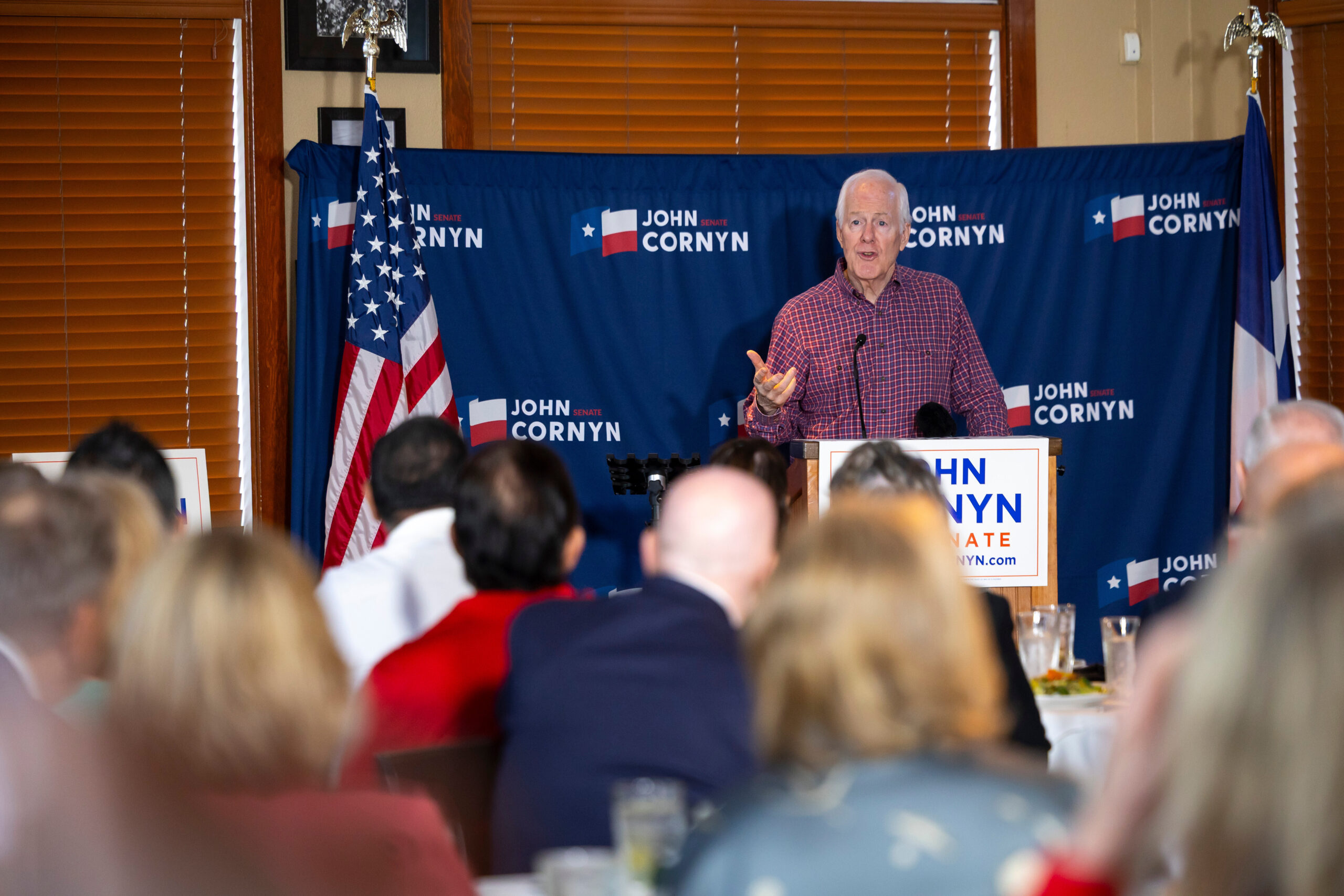
On Jan. 6, 2021, Texas Attorney General Ken Paxton declared to a raucous crowd of President Donald Trump’s supporters, many of whom were moments away from storming the U.S. Capitol: “We will not quit fighting.”
Five years later, Paxton’s fighting spirit has him poised to unseat a 24-year incumbent.
It’s been a steady journey. As Texas’ top lawyer, Paxton became a hero of the far right by using rapid-fire lawsuits to spearhead their most important causes, from expanding religious influence in schools to attempting to overturn the results of the 2020 election. He presented himself as a foil to the Obama and Biden administrations, filing more than 100 lawsuits over issues like immigration and environmental regulations. And he continues to steer the power of his office toward investigating alleged election irregularities, particularly in Democratic-led cities like Houston.
On Tuesday, the MAGA grassroots that fueled his rise will reach its apex of influence so far: Paxton is well-positioned to finish first against John Cornyn in the GOP primary for his Senate seat, despite being saddled with tons of political baggage and targeted by millions of dollars in attack ads.
The bare-knuckle Senate primary is likely headed to a runoff, dragging out the party’s own angst over generational change.
For the far-right in Texas, Paxton’s arc shows the ascendent strength of their movement, which has pushed Republican leaders toward adopting increasingly conservative positions. For Cornyn, it means the potential end of his long career in the Senate, and the near-extinction of establishment Republicans within the party.
“Ken Paxton is more than just an attorney general that’s been MAGA. He is a symbol of the heart of the grassroots MAGA movement,” said Steve Bannon, the former senior adviser to Trump and War Room host who has been broadcasting his popular show from a rented ranch in North Texas in the days leading up to the election.
“He’s resilient because folks here know he has fought the good fight for years and years and years,” Bannon said. “He has resilience because people know where his heart is, and he’s a fighter.”
Cornyn is in serious trouble
The MAGA movement is tenacious in protecting its own and knifing its Republican rivals. Paxton has survived an impeachment by the GOP-controlled state House, a federal securities fraud investigation and slew of ethics complaints. Three months after beginning his Senate campaign last year, Paxton’s wife filed for divorce, alleging an extramarital affair. His competitors — including Cornyn, who has said Paxton is too unethical to serve in public office — have hammered his trail of scandals.
And still he’s the front-runner.
Paxton has continued to lead in polling — from even before he launched — despite a concerted effort by Republicans in Washington to boost Cornyn.
“Ideally you want a saint to be your elected leader, and that is something we all hope and pray for one of these days,” said Bo French, former chair of the Tarrant County Republican party, who is running for a seat on the Texas Railroad Commission. “But until that happens, we need people who are going to be warriors for the cause. And he is seen and beloved among Republican primary voters in Texas as a warrior.”
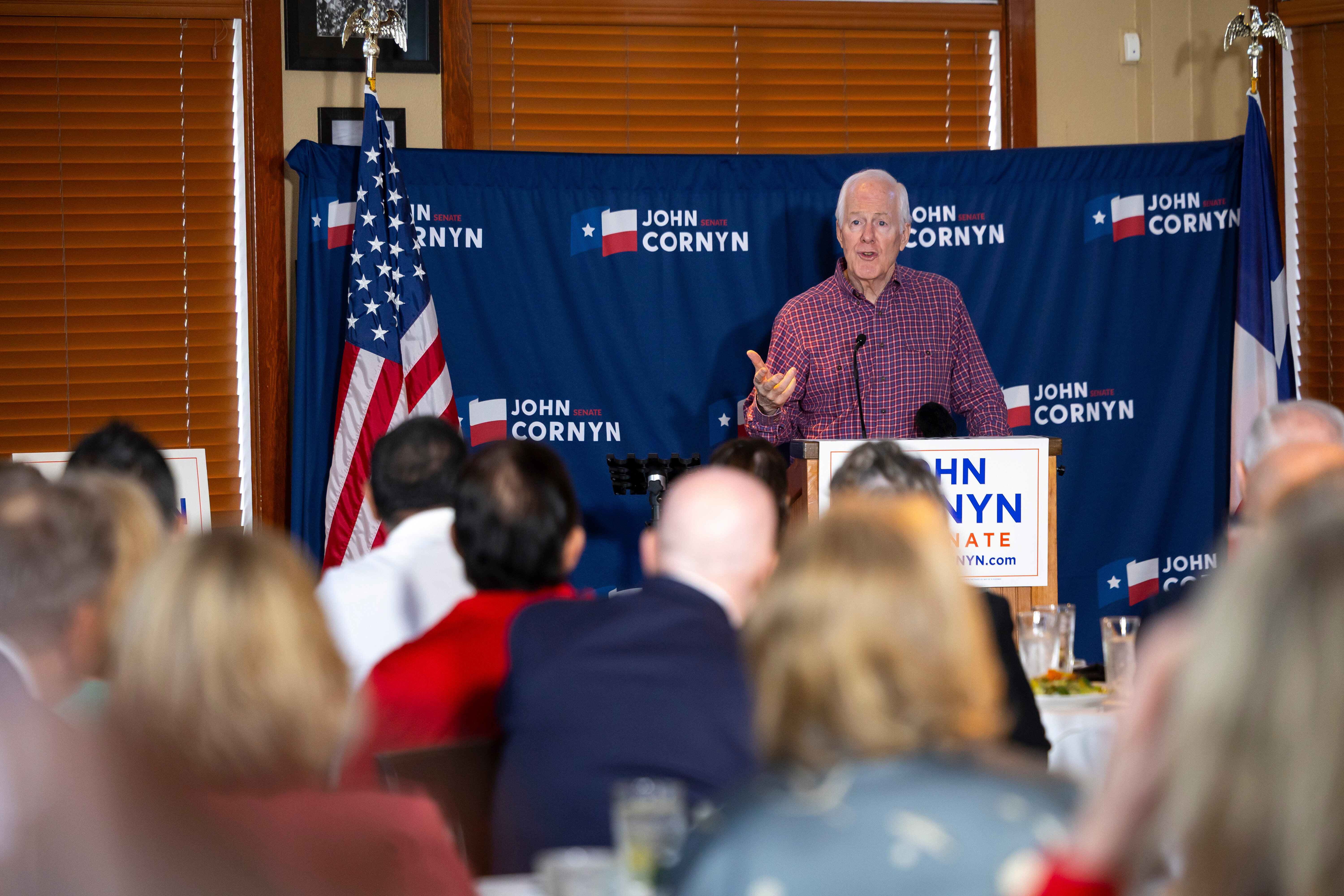
Cornyn knows the strong headwinds he’s facing, conceding that the composition of primary voters doesn’t reflect his usual base of support. Many Texas Republicans remain angry with the senator for voting in favor of a bipartisan gun control package after the Uvalde school shooting that left 19 children and two teachers dead. Cornyn was famously booed onstage at the Texas GOP convention in 2022.
“If only the most radical people show up in the primary … then I think that’s going to be a challenge,” Cornyn said in an interview Saturday with CBS. His other primary opponent, Rep. Wesley Hunt, who is also running a campaign appealing to the far right, said on X that Cornyn’s comments show he has “lost touch with the people you’re supposed to represent” and “your contempt for the voters of Texas is exactly why your career is coming to an end.”
Trump has not endorsed in the race, throwing a wrench into any MAGA pickup Cornyn could get — or that could put Paxton over the line. At an event in Corpus Christi last week, Trump said he had “pretty much” decided who to support, but did not reveal that pick.
Democrats believe Paxton’s baggage makes him beatable in the general election, a view shared by many national Republicans, including Senate Majority Leader John Thune, who is working to keep Cornyn in the GOP caucus.
Kendall Scudder, chair of the Texas Democratic Party, said Paxton jeopardizes Republicans at every level of the ticket. “Every one of these top-tier Republicans in the state is wildly unpopular, and they’ll be led by Ken Paxton,” he said. “That’s what puts a lot of these different seats in interesting hands.”
The MAGA vs. establishment fight has been years in the making
Paxton has endured years of legal and personal scrutiny. He also kept winning.
Texas Republicans have repeatedly reelected both Cornyn to the Senate and Paxton as attorney general, backing the leaders of both wings of the party. But recent elections have shown the growing strength of the MAGA faction.
Paxton’s reelections have been aided by the deep coffers of Texas megadonors like Tim Dunn and the Wilks brothers in addition to his hyper-conservative supporters. In 2022, he was challenged by Land Commissioner George P. Bush — the relativegrandson of former Presidents George H.W. Bush and George W. Bush.
Bush tried to sell conservative voters on his vision to restore integrity to the attorney general’s office at a time when Paxton was facing years of securities fraud investigations and bribery allegations. It’s a playbook Paxton allies say Cornyn is reusing.
Voters seemed to prefer Paxton’s combative style. Paxton thumped Bush by a two-to-one margin in that year’s run-off, the clearest sign yet that voters were siding with the MAGA wing and rejecting the old-school establishment.
In 2022, Paxton agreed to pay restitution and perform community service to settle the securities fraud case, which was brought over allegations that he duped investors in a tech startup. The Justice Department, in the final weeks of the Biden administration, decided not to prosecute Paxton over the remaining bribery charges. That eventually led the GOP-heavy Texas House to impeach him before the Senate voted to acquit.
As scrutiny over Paxton intensified within the Texas Republican Party, he cast himself as a martyr, a victim of spurious probes that not only threatened him, but also the integrity of the MAGA base. For the far-right, Paxton’s impeachment acquittal only further strengthened his parallels to Trump.
The onslaught energized his supporters. State Rep. Gary Gates, a Republican, learned that firsthand when he publicly recanted his vote to impeach Paxton after dealing with blowback from the base.
“There was a certain faction of those that support him that were rather upset,” said Gates, who represents a suburban district outside of Houston. “You have to deal with that political reality.”
Paxton often brags that he was one of the few Republicans to attend Trump’s campaign launch at Mar-A-Lago in 2022, when many in the party had abandoned him following the violent insurrection in the U.S. Capitol.

“When you try to take out somebody like those two guys who have fought for our values, and the whole world is weaponized against them, the people are ride-or-die,” said Aaron Reitz, a former deputy in Paxton’s office who, with his backing, is running to succeed him.
“I hope that the establishment wing of the GOP would learn a similar lesson when they have tried to take out Trump, which is they are not in control of this party,” Reitz said. “The grassroots, the people, are in control of the party, and they have to stop spending their millions.”
How Paxton got here
Paxton’s deep base of support is built in part from his lawsuits against frequent targets of the right — high-profile cases that were splashed on the front pages of local newspapers from Beaumont to Amarillo. Throughout his decade as Texas’ top lawyer, Paxton oversaw the Lone Star State’s transformation into an incubator for ultra conservatives issues, from defending abortion restrictions to warning that Muslims will attempt to introduce Islamic law in Texas.
At a recent campaign event in the Houston suburbs as early voting was underway, Paxton ticked off his courtroom successes to a group gathered at a “safari ranch” in Richmond with roaming peacocks, zebras and goats.
Paxton, speaking to the crowd of about 75 supporters, recounted the beginning of his career, starting with when he decided to run for attorney general during his first term in the state legislature because he viewed former President Barack Obama as “a really epic threat” who relied excessively on executive orders to bypass Congress.
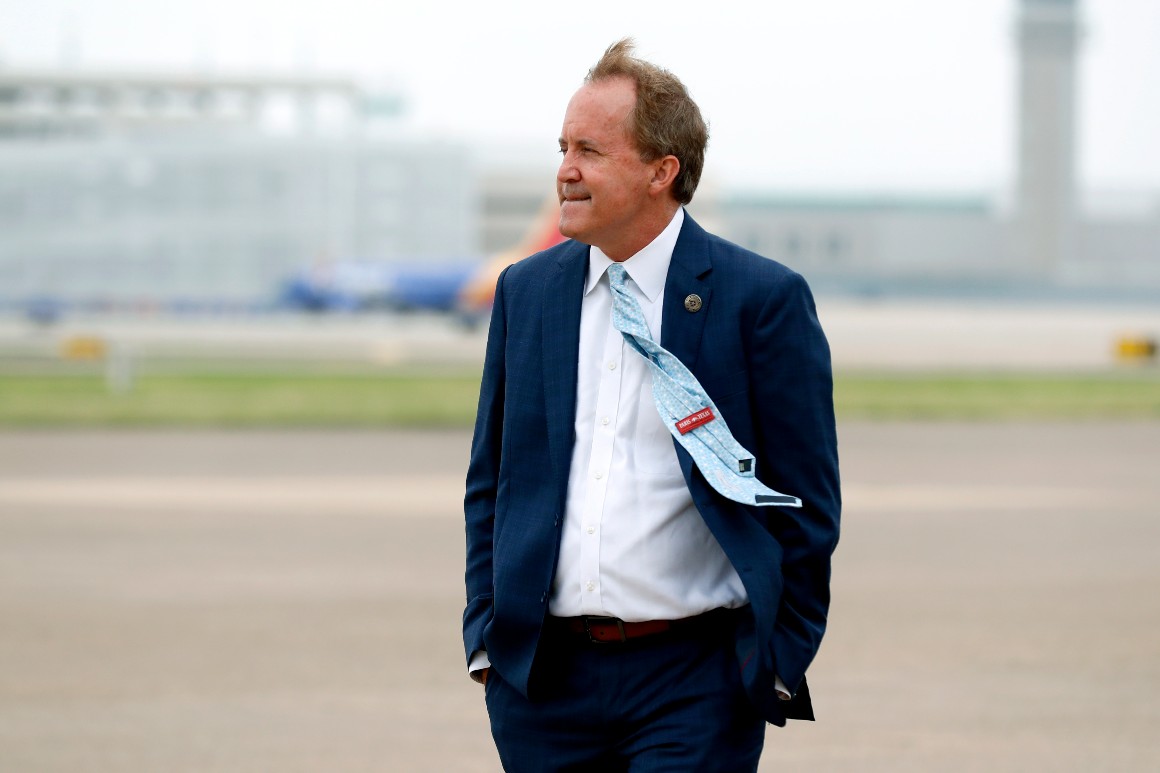
In his first AG race, Paxton rode the wave of the Tea Party insurgency to topple an establishment Republican backed by former President George W. Bush. Paxton told the audience, to chuckles, that he sued Obama 27 times in the 22 months they overlapped.
After Obama left office and Trump took his place, Paxton turned his sights away from the White House and toward Silicon Valley. He sued Google (“who was doing really bad things”), Facebook (“we got a lot of money from them”), Twitter (“before Elon”) and Pfizer (“they lied about the vaccine”).
Then Paxton became fixated on probing voter fraud allegations, making him an instrumental figure in Trump’s unsuccessful efforts to overthrow the results of the 2020 election. He even filed a case directly with the Supreme Court seeking to invalidate election results in Pennsylvania and other battleground states — though the justices rejected his attempt, ruling Texas did not have standing.
When Joe Biden was sworn in, Paxton picked back up his onslaught against the federal government. Then Trump was reelected in 2024, Paxton said, and he “felt like I didn’t have a mission. I’d done my three different missions. I felt like 12 years was enough.”
“And I looked around,” Paxton told the crowd, “and I saw a guy: John Cornyn.”
Adam Wren contributed reporting.

Texas Gov. Greg Abbott (R) on Monday warned that the possibility of Iranian “sleeper cells” is being “seriously” evaluated in the Lone Star state. Sleeper cells are foreign actors who live under the radar until called on to carry out a mission or attack. In Texas…
Read More

Washington, D.C., lifted its recreational advisory for the Potomac River on Monday after a large-scale sewage spill earlier this year. “Consistent water quality testing shows bacterial levels are now within safe ranges for recreation,” Mayor Muriel Bowser wrote in a Monday post on the social platform X…
Read More
- How Ken Paxton MAGAfied Texas in his rise to the top

- Texas Gov. Abbott warns Iranian ‘sleeper cells’ must be taken ‘seriously’

- DC lifts recreational advisory for Potomac River

- Trump slams Democrats over criticism of Iran strikes

- Vance says ‘there’s no way’ Trump will let US get into multiyear conflict

- US embassy in Riyadh struck by drones

- Centrist Dems met to plot 2028. Then Iran happened.

- Republicans took shots at Hillary Clinton — and she came ready to fight back
- No sign of Democratic surrender on DHS funding after Iran strikes
- Josh Hawley says he’ll oppose Iran war powers resolution
-

 The Dictatorship1 year ago
Luigi Mangione acknowledges public support in first official statement since arrest
-

 Politics1 year ago
Former ‘Squad’ members launching ‘Bowman and Bush’ YouTube show
-

 Politics1 year ago
Blue Light News’s Editorial Director Ryan Hutchins speaks at Blue Light News’s 2025 Governors Summit
-

 The Dictatorship6 months ago
Mike Johnson sums up the GOP’s arrogant position on military occupation with two words
-

 Politics1 year ago
Former Kentucky AG Daniel Cameron launches Senate bid
-

 The Dictatorship1 year ago
Pete Hegseth’s tenure at the Pentagon goes from bad to worse
-
Uncategorized1 year ago
Bob Good to step down as Freedom Caucus chair this week
-

 Politics11 months ago
Democrat challenging Joni Ernst: I want to ‘tear down’ party, ‘build it back up’