
The Dictatorship
How Trump’s tariffs have hurt manufacturers instead of helping them

WASHINGTON (AP) — Jay Allen is a fan of President Donald Trumpand voted for him on the belief that the Republican would cut taxes and trim regulations, helping his manufacturing business in northeast Arkansas.
But the tariffs at the core of Trump’s economic agenda have wreaked havoc on his company, Allen Engineering Corp., which makes industrial equipment used to install, finish and pave concrete. The import taxes have raised the costs of engines, steel, gearboxes and clutches made abroad that Allen needs to build power trowels that can sell for up to $100,000 each.
Jay Allen, owner of Allen Engineering Corporation, poses for a portrait Monday, March 16, 2026, in Paragould, Ark. (AP Photo/Kevin Wurm)
Jay Allen, owner of Allen Engineering Corporation, poses for a portrait Monday, March 16, 2026, in Paragould, Ark. (AP Photo/Kevin Wurm)
Allen’s experience embodies a growing body of evidence that the tariffs that Trump said would help American factories are, in fact, squashing many of them. The problem could get worse as the administration scrambles to craft new tariffs to replace the emergency import taxes that the Supreme Court ruled illegal in February.
Allen said he ran his company at a loss in 2025 because of tariffs. His payroll has fallen to 140 workers from a peak of 205. To get by this year, he has hiked prices by 8% to 10%, even though that might mean fewer sales.
“What’s really sad is the unintended consequences of his tariffs are hurting manufacturing in our country,” said Allen. “Unfortunately, the working-class people are getting squeezed.”
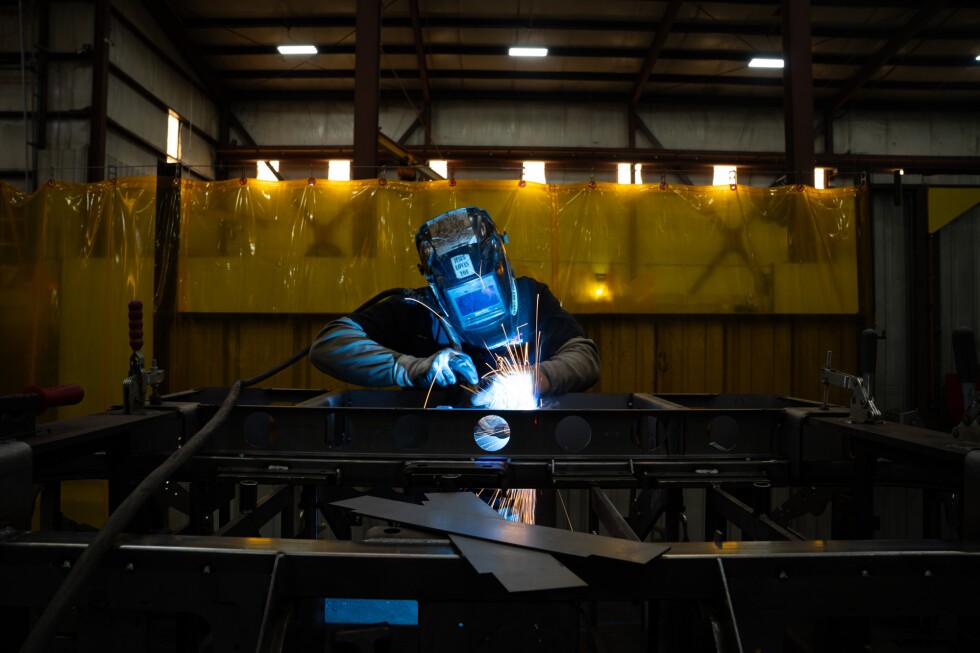
A welder is seen inside the Allen Engineering Corporation plant Monday, March 16, 2026, in Paragould, Ark. (AP Photo/Kevin Wurm)
A welder is seen inside the Allen Engineering Corporation plant Monday, March 16, 2026, in Paragould, Ark. (AP Photo/Kevin Wurm)
Manufacturing jobs have declined during Trump’s first year back
Trump’s core rationale for tariffs has been that they would force more factories to open in the U.S. and would generate enough revenue to close federal budget deficits. But that hasn’t materialized.
Factories continue to shed workers, with 98,000 manufacturing jobs lost during Trump’s first full 12 months back in the White House. American companies that foot the bill for tariffs are now suing the Trump administration for more than $130 billion in tariff refunds. Meanwhile, the federal deficit is projected to climb over the next decade.
The White House maintains that construction spending is high, more workers are being hired to build factories, new investments are being made and labor productivity in manufacturing is increasing — which could eventually fuel a factory revival.
“It takes time to get production online, and therefore it will be some more time before we fully materialize the benefits of the president’s policies,” Pierre Yared, the acting chairman of the White House Council of Economic Advisers, said in an email.

Assembly of a riding trowel is seen in the assembly department of the Allen Engineering Corporation plant Monday, March 16, 2026, in Paragould, Ark. (AP Photo/Kevin Wurm)
The Allen Engineering Corporation plant is seen Monday, March 16, 2026, in Paragould, Ark. (AP Photo/Kevin Wurm)
Construction is up — but that’s due to Biden’s bill
Some of the bright spots in construction cited by the White House appear to be the result of programs launched by then-President Joe Biden, a Democrat.
Factory construction spending began to accelerate in 2022 with the anticipation of government support from Biden’s CHIPS and Science Actwhich included big subsidies for computer chip plants. The law was a primary contributor to a historic surge in the annualized rate of construction spending on manufacturing facilities, said Skanda Amarnath, executive director of the economic policy group Employ America.
Construction spending on factories has slipped during Trump’s presidency, but the pace remains relatively high largely because of continuing work on Biden-era projects in Arizona, Texas and Idaho, Amarnath said.
Amarnath has also gone through the interviews regional Federal Reserve banks have held with businesses. Those comments show some companies might expand by taking advantage of Trump’s tax breaks on investments in equipment and new buildings.
But while the pharmaceutical drug sector might be expanding, the comments show no overall uptick in manufacturing because of Trump’s tariffs.
“You don’t get the sense that there is this new manufacturing renaissance underway,” Amarnath said.
An American flag and the Pledge of Allegiance is seen inside the Allen Engineering Corporation plant Monday, March 16, 2026, in Paragould, Ark. (AP Photo/Kevin Wurm)
An American flag and the Pledge of Allegiance is seen inside the Allen Engineering Corporation plant Monday, March 16, 2026, in Paragould, Ark. (AP Photo/Kevin Wurm)
Uncertainty in tariffs has deterred investments
Based on orders, proclamations and other statements, Trump has taken more than 50 actions on tariffs so far — and that tally doesn’t include the tariff threats he regularly makes on social media or in conversations with reporters but hasn’t formally put in place.
The flurry of announcementsreversals, exemptions and legal challenges — as well as Trump’s decision to bypass Congress to impose tariffs — has made it difficult for smaller manufacturing companies to plan.
For example, Allen Engineering imports its 75-horsepower diesel engines from Germany. Building them in the United States would require a $20 million investment — a huge risk if the status of the tariffs is unclear.
Are engine-makers “going to spend that kind of money to move production from Germany to the U.S. when they don’t know what the landscape is going to be in three years?” Allen said. “I don’t know who is going to be in the White House, and what the stance is going to be on these tariffs.”
Joseph Steinberg, an economist at the University of Toronto, said research shows that under the best-case scenario “it would take a decade for manufacturing employment to rise above where it was before tariffs were enacted.”
But Steinberg said “the current situation is nothing like the ‘best case,’” since U.S. trade policy is unsettled and that leaves companies reluctant to expand.
The main entrance to the Allen Engineering Corporation is seen Monday, March 16, 2026, in Paragould, Ark. (AP Photo/Kevin Wurm)
The main entrance to the Allen Engineering Corporation is seen Monday, March 16, 2026, in Paragould, Ark. (AP Photo/Kevin Wurm)
Equipment makers have been hit hard by rising steel costs
About 98% of U.S. manufacturing establishments have fewer than 200 workers, according to Census Bureau data, and don’t have the kind of name-brand recognition or lobbying heft to minimize the damage from tariffs that big players like Apple, General Motors and Ford possess.
The Association of Equipment Manufacturers in February reported that America’s share of global manufacturing severely lags China’s. The group has urged tax credits to offset the expense of tariffs, and specifically called for tariff relief on raw materials, parts and components that cannot be acquired domestically at scale.
Steel tariffs have been a particular concern. Trump imposed them last March and hiked them to 50% in June. They were not affected by the Supreme Court decision.
Trump has credited the tariffs with restoring profits at American steel mills. But they have hurt companies that use that steel, like Calder Brothers in South Carolina, which makes equipment to pave asphalt.
“The steel tariffs were the first thing that got my attention,” said Glen Calder, the company’s president. “My steel pricing jumped 25% two weeks before the tariffs went into effect for domestic steel. The market price just jumped. It has stayed elevated.”
Meanwhile, China’s trade surplus has grown
Part of Trump’s push to expand manufacturing was to help American companies compete against China — a country he plans to visit this spring for talks with its leader, Xi Jinping.
But the U.S. manufacturing trade imbalance rose last year under Trump instead of narrowing. Meanwhile, China’s trade surplus with the world climbed to a record $1.2 trillion.
This trend exposes one of the big problems with Trump’s tariff strategy, said Lori Wallach, director of the Rethink Trade program at American Economic Liberties Project. She noted that he largely bypassed Congress and failed to address gaps in the World Trade Organization’s rules for the trade frameworks that he negotiated with other countries.
Instead of working with partners to ensure there were penalties for foreign manufacturers with abusive labor practices and unfair subsidies, Trump chose against rallying partners to counter China as a unified group. American manufacturers are at a disadvantage, Wallach argued, because there is not a coalition of nations that can impose penalties for currency manipulation, subsidies and schemes to evade tariffs.
“The general revulsion of this administration to international cooperation means they’re trying to do it alone,” Wallach said.


The Dictatorship
Newly created Polymarket accounts bet big on US-Iran ceasefire in hours before Trump’s announcement
NEW YORK (AP) — A group of new accounts on the prediction market Polymarket made highly specific, well-timed bets on whether the U.S. and Iran would reach a ceasefire on April 7, resulting in hundreds of thousands of dollars in profits for these new customers.
These bets were made even though, in the hours before a two-week ceasefire was announced on Tuesday, President Donald Trump’s rhetoric had escalated sharply and there were few signals that a ceasefire deal was imminent. Early in the day Trump had issued a warning on social media that “a whole civilization will die tonight” if Iran did not meet his demand to open the Strait of Hormuz by his 8 p.m. ET deadline.
An analysis of publicly available blockchain data from Polymarket, using the crypto analytics platform Dune, shows that at least 50 accounts, or wallets, placed substantial “Yes” bets Tuesday before Trump announced the ceasefire in a Truth Social post at around 6:30 pm ET. These were the first bets made by these particular wallets.
One of these wallets, created Tuesday around 10 am ET, placed roughly $72,000 in bets at an average price of 8.8 cents. The buy-in for each betting event ranges from $0 to $1 each, reflecting a 0% to 100% chance of what users think could happen. This Polymarket user then cashed out for a profit of $200,000.
Another, which joined the platform on April 6 and traded on this exact event, shows a win of $125,500.
Another wallet, created 12 minutes before Trump’s post, made $31,908 of “Yes” bets at 33.7 cents, and is estimated to have earned a profit of $48,500. The higher price for “Yes” at that time may have reflected the efforts late Tuesday by the government of Pakistan to get Trump to extend his deadline by two weeks.
There is also the possibility that these individual Polymarket users placed their bets expecting Trump to back down, given his habit during his second term to make bold threats only to retreat — a phenomenon his critics have derided as “Trump Always Chickens Out,” or TACO.
While some users took handsome profits, others must wait for payouts because Polymarket has labeled the April 7 Iran-U.S. ceasefire contract as “disputed,” given that Iran was still placing restrictions on ships passing through the Strait of Hormuz and missile attacks in the region continued. That dispute could take 48 hours to resolve.
Public blockchain data cannot identify who controls the new wallets. Polymarket uses proxy smart contract wallets, meaning a single user can create multiple accounts. Only Polymarket has the internal data needed to determine whether these were new users or existing users opening additional accounts.
Polymarket did not respond to a request for comment.
Rep. Blake Moore, R-Utah, who has introduced legislation to regulate prediction markets, released a statement Wednesday saying: “It’s highly unlikely that these are good-faith trades; it’s much more likely that these are insiders with access to information ahead of the public. Without some kind of restrictions, there is nothing stopping government or military officials from profiting from their positions.”
The trading pattern of newly created Polymarket accounts placing strategic, well-timed bets mirrors earlier episodes on the platform. Newly created accounts placed large wagers hours before the January capture of Venezuelan President Nicolás Maduro, and made hundreds of thousands of dollars in profit. Similar clusters of accounts have also repeatedly profited from well-timed bets on military actions involving Iran.
Such bets have repeatedly raised questions from the public as well as members of Congress about whether some traders are using inside information to profit in these prediction markets. Bipartisan groups of senators as well as representatives have introduced legislation that would broaden the definition of insider trading to include prediction markets.
Even the two biggest platforms in the industry, Kalshi and Polymarket, have said they see a need to broaden the definition of insider trading on their platforms.
“This is why these markets need regulation,” said Todd Philips, a professor at Georgia State University who has written on prediction markets and the industry’s regulations. “We can’t have people trading with inside information and expect other traders are going to be OK being in these markets.”
_____
Keller reported from Albuquerque, N.M.
The Trump administration’s fragile white ego is in focus yet again thanks to newly proposed changes for an exhibit in Philadelphia centered on George Washington and slavery.
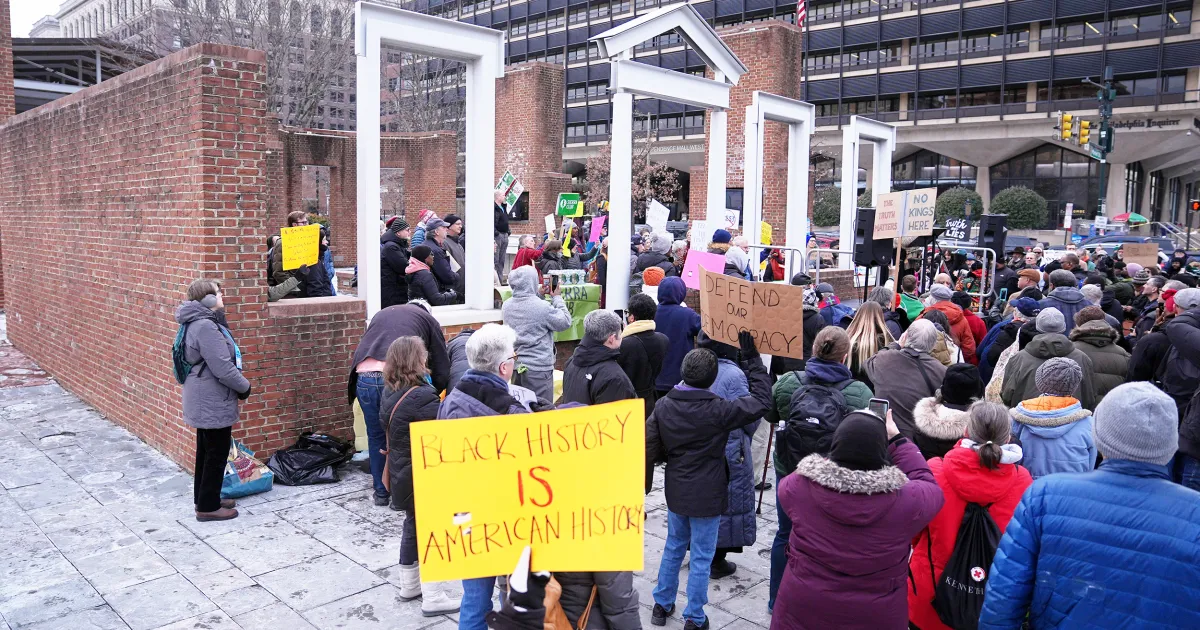
The administration is being sued by the city over its efforts to whitewash Washington’s history of slave ownership from the President’s House Site, the nation’s first official presidential residence. The push has been put on hold by a judge who compared it to the censorship depicted in George Orwell’s book “1984.”
The attempted alteration of the exhibit came after a Trump executive order demanded a review of national parks and museums to bar any displays that “inappropriately disparage Americans past or living.” Last year, Trump also lobbed a puerile complaint that Smithsonian musuems focus too much on “how bad” slavery was.
And all that kvetching provides context for the changes that Trump’s administration is seeking to impose at the President’s House Site — alterations that The Philadelphia Inquirer said places the first president’s slave ownership “in a more sympathetic light.”
The Inquirer flagged government renderings showing plans for new historical panels to be installed at the site, and it seems clear that the administration’s goal is to make Washington out to be a loving patriot or conscientious objector to slavery, rather than a racist slave driver.
First, note what the Inquirer said has been removed:
The panels taken down by the Park Service in January included displays titled ‘The Dirty Business of Slavery’ and ‘Life Under Slavery,’ as well as illustrations about the Fugitive Slave Act and Ona Judge, who was enslaved by Washington and later escaped.
So the administration wants to omit detailed references to Washington’s slavery history — which Black activists fought for years to include — while also promoting a whitewashed narrative that he was a fundamentally moral man despite the whole “claiming dominion over other human beings” thing. Per the Inquirer:
For instance, on one panel titled ‘Presidents Washington and Adams on Slavery,’ the Trump administration writes that ‘Caught between his private doubts about slavery and his public responsibilities as president, George Washington navigated a nation deeply divided over slavery.’
‘Privately, George Washington often expressed discomfort with the institution and a desire to see it abolished,’ the panel continued. ‘Yet as a Virginia plantation owner, his wealth and livelihood were deeply tied to it.’
And another example:
And later in the same panel: ‘Slaves living in the President’s House experienced a greater modicum of autonomy than elsewhere in the South such as to explore the city and sometimes even attend the theater, with Washington buying the tickets.’
When a censorship regime like Trump’s sees fit to tout a slave owner’s generosity — and the “greater modicum of autonomy” he purportedly granted to those he subjected to brutal bondage and forced labor — it leaves little doubt that the fundamental goal is to sanitize history, rather than teach it thoroughly.
A White House spokesperson told the Inquirer that the administration wants to acknowledge “the full breadth of our nation’s history” and that “no piece of history should be washed away.”
But “whitewashing” truly is the most apt descriptor for a plan that includes touting George Washington as some kind of selfless, principled gift-giver while brushing past, or deliberately omitting, details about his well-documented — and extremely lucrative — history of enslaving human beings.
Ja’han Jones is an MS NOW opinion blogger. He previously wrote The ReidOut Blog.
Today’s edition of quick hits.
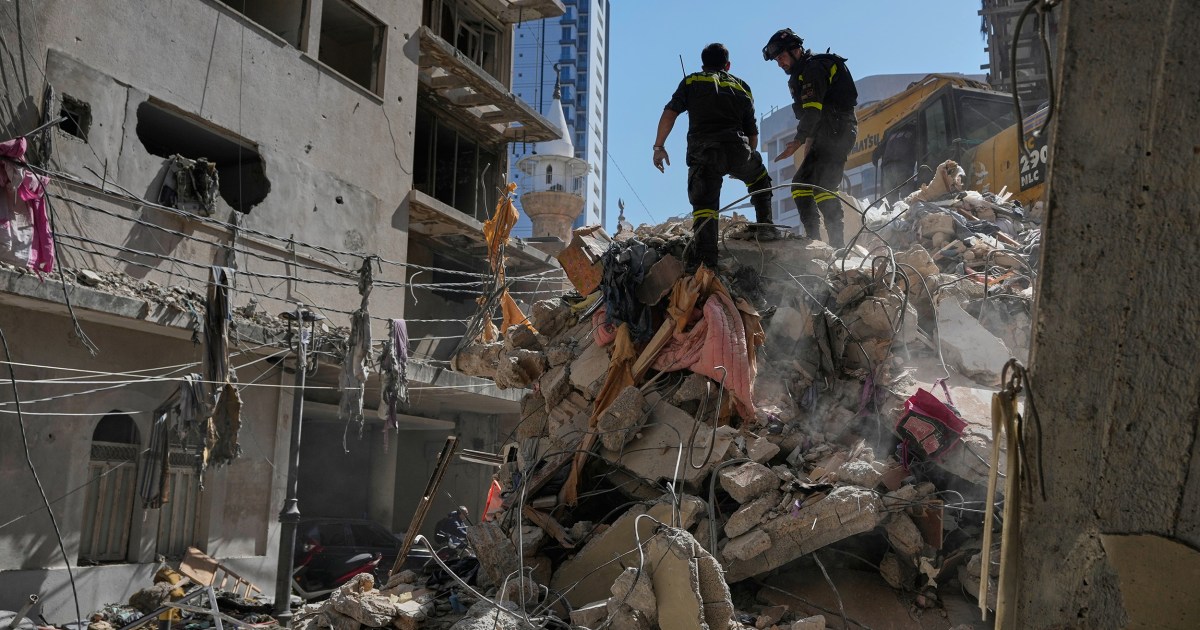
* Crisis conditions in Lebanon: “Prime Minister Benjamin Netanyahu of Israel vowed on Thursday to continue striking Hezbollah in Lebanon, hours after he appeared to make a concession by saying his country would start talks with the Lebanese government about trying to disarm the Iran-backed paramilitary group.”
* In related news: “More than 80 countries — which did not include the U.S. — condemned Israel’s lethal strikes on Lebanon. … Several international leaders have condemned Israel’s intensified strikes on Lebanon, which killed more than 300 people yesterday alone, according to The Associated Press, citing the country’s health ministry.”
* This wasn’t a problem before the war: “Ayatollah Mojtaba Khamenei vowed today to tighten control over the Strait of Hormuz and claimed victory in the ongoing war between his country and Israel and the U.S. ‘We will definitely take the management of the Strait of Hormuz to a new phase,’ Khamenei said in a series of posts on X.”
* Inflation news: “Core inflation held above the Federal Reserve’s target before the recent surge in energy prices, according to a key gauge released Thursday that offers the central bank a snapshot of conditions leading into the Iran war. The core personal consumption expenditures price index, which excludes food and energy, rose a seasonally adjusted 3% in February, the Commerce Department reported. The all-items headline inflation measure increased 2.8%.”
* The good news is, the vaccine saves lives; the bad news is, the Trump administration doesn’t want us to know that: “The acting director of the Centers for Disease Control and Prevention has delayed publication of a CDC report showing the covid-19 vaccine cut the likelihood of emergency department visits and hospitalizations for healthy adults last winter by about half, according to two scientists familiar with the decision.”
* Even for this White House, her remarks were weird: “First lady Melania Trump denied any ties to convicted sex offenders Jeffrey Epstein and Ghislaine Maxwell on Thursday. … ‘The lies linking me with the disgraceful Jeffrey Epstein need to end today,’ the first lady began in remarks delivered from the White House. … It was not clear who or which statements or reporting she was referring to.”
* On a related note, Donald Trump told MS NOW that he didn’t know about his wife’s press statement.
* Trump’s animosity toward the NFL has reached a new stage: “The Justice Department has opened an investigation into whether the National Football League has engaged in anticompetitive tactics that harm consumers, according to people familiar with the situation.”
See you tomorrow.
Steve Benen is a producer for “The Rachel Maddow Show,” the editor of MaddowBlog and an MS NOW political contributor. He’s also the bestselling author of “Ministry of Truth: Democracy, Reality, and the Republicans’ War on the Recent Past.”
- Nancy Pelosi and other Democrats call on Swalwell to end governor campaign
- Trump endorses ‘focused’ immigration enforcement funding bill
- Mamdani’s 100th day

- Inside the DNC’s Middle East (not) working group
- Pope Leo XIV condemns war, rejects claims of divine backing
- Harris gives her clearest signal she is mounting a 2028 presidential bid
- Newly created Polymarket accounts bet big on US-Iran ceasefire in hours before Trump’s announcement

- These Republican-on-Republican disputes are keeping Congress frozen
- Why Trump’s endorsement hasn’t been a ‘close out move’ for Louisiana Senate
- Candidate security costs up in era of political violence: Research

-

 Politics1 year ago
Former ‘Squad’ members launching ‘Bowman and Bush’ YouTube show
-

 The Dictatorship1 year ago
Luigi Mangione acknowledges public support in first official statement since arrest
-

 Politics1 year ago
Former Kentucky AG Daniel Cameron launches Senate bid
-

 The Dictatorship1 year ago
Pete Hegseth’s tenure at the Pentagon goes from bad to worse
-

 Politics1 year ago
Blue Light News’s Editorial Director Ryan Hutchins speaks at Blue Light News’s 2025 Governors Summit
-

 The Dictatorship7 months ago
Mike Johnson sums up the GOP’s arrogant position on military occupation with two words
-
Uncategorized1 year ago
Bob Good to step down as Freedom Caucus chair this week
-

 Politics12 months ago
Democrat challenging Joni Ernst: I want to ‘tear down’ party, ‘build it back up’