
Politics
How Trump plans to avoid a ‘Saturday Night Massacre’

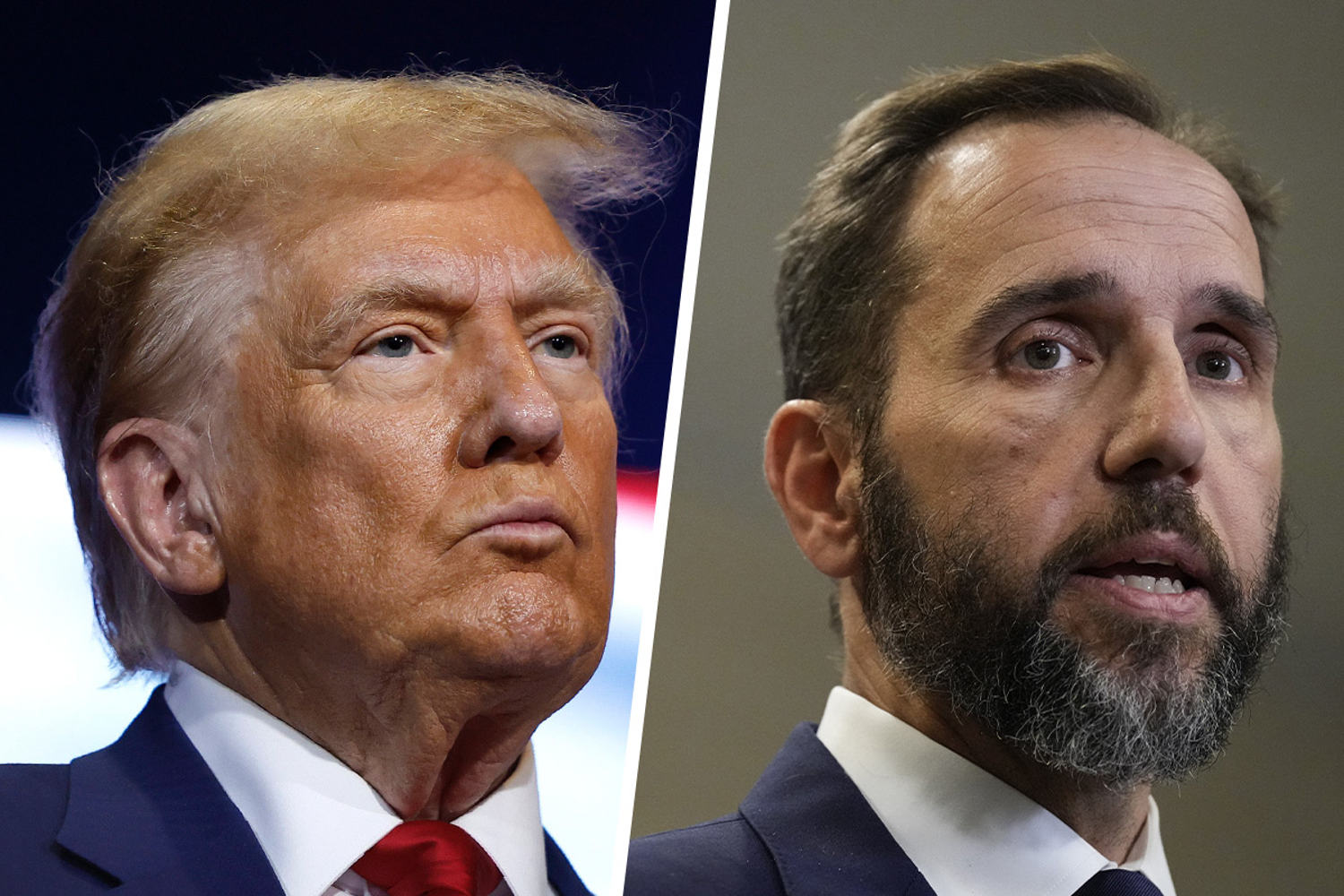
Donald Trump told a conservative radio host Thursday that, if elected, he would fire special counsel Jack Smith “within two seconds.” It’s hard to hear this without recalling how another Republican president, Richard Nixon, tried this same maneuver as a last-ditch attempt to avoid having to comply with a special prosecutor’s subpoena for what turned out to be incriminating audio tapes. Nixon’s directive to fire then-special prosecutor Archibald Cox led to the “Saturday Night Massacre,” when Nixon’s attorney general and deputy attorney general resigned rather than carry out Nixon’s order.
But Trump may have come up with a plan to avoid the messy Nixon-era optics of multiple resignations.
Given that he’s no student of history, Trump may not know that a president can’t fire a special counsel — at least not directly.
In November 2022, Attorney General Merrick Garland appointed Smith as special counsel and authorized him to conduct two investigations. The first covered possible crimes committed by Trump in connection with his attempts to retain the power of the presidency after losing the 2020 election, while the second concerned possible crimes surrounding his retention of classified documents in Florida. As a result of this appointment, Smith indicted Trump on four counts for crimes allegedly committed on and around Jan. 6, 2021, and 40 counts in the classified documents case.
Unsurprisingly, then, Trump has attacked Smith ever since his appointment, and is now promising to fire Smith as one of his first acts should he be elected to a second term.
Given that he’s no student of history, Trump may not know that a president can’t fire a special counsel — at least not directly. Only the attorney general can fire a special counsel. This is why, in 1973, when Nixon wanted to shut down Cox, he ordered Attorney General Elliot Richardson to do so. Richardson refused and immediately resigned. Nixon then turned to his deputy attorney general, William Ruckelshaus, and ordered him to fire Cox. Ruckelshaus also refused and resigned. Nixon then moved on to the No. 3 guy at the Department of Justice, Solicitor General Robert Bork and ordered him to fire Cox. Bork did so, though a court later would rule the firing was unlawful.
Trump has considered firing a special counsel once before. During Robert Mueller’s Russia investigation, Trump considered asking Deputy Attorney General Rod Rosenstein to fire Mueller (Attorney General Jeff Sessions had recused himself from overseeing the inquiry). But his White House counsel Don McGahn threatened to resign, and even loyal Republicans like Sen. Lindsey Graham warned that “any effort to go after Mueller could be the beginning of the end of the Trump presidency.”
This time, though, Trump may have a scheme to ensure a Justice Department official will do his dirty work. ABC News recently reported that Trump’s transition team has none other than Judge Aileen Cannon on the short list to be Trump’s attorney general. NBC News and BLN haven’t confirmed the report, which cited “sources familiar with the matter.” But Cannon’s appeal to Trump is obvious, as she might be just the person whom Trump could count on to fire Smith.
Trump likely won’t even have to tell Cannon to fire Smith, because, in substance, she already has.
Cannon was nominated to the federal bench by Trump (and confirmed after he lost the 2020 election). When the FBI seized classified documents from Mar-a-Lago, Trump’s Florida property, Trump filed suit contesting the legality of the seizure. Cannon was assigned to preside over the litigation, and her ruling appointing a special master to the matter effectively stopped the criminal investigation dead in its tracks. When the Department of Justice appealed, the 11th Circuit Court of Appeals reversed Cannon not once but twice for abusing her judicial discretion.
After Smith indicted Trump for crimes including unlawful retention of classified materials, obstructing justice and violating our nation’s espionage laws, the trial was unfortunately assigned to Cannon. After months of foot-dragging, she dismissed the charges against Trump, concluding that special counsels are unconstitutional. Cannon made this ruling notwithstanding the fact that special counsels and special prosecutors have been used in the criminal justice system dating back to the 1800s, and every judge and court that has ever litigated the issue has ruled that they are lawful and constitutional.
It’s fair to say that Trump hit the jackpot by having Cannon preside over and dismissing his criminal case. He certainly thinks so: though Trump has relentlessly and often viciously criticized virtually all other judges who are presiding over his criminal and civil cases, he has praised Cannon effusively every step of the way.
Now, the kicker: Let’s assume Trump nominates Cannon to be attorney general and she is confirmed by the Senate. Trump likely won’t even have to tell Cannon to fire Smith, because, in substance, she already has. Trump would be able to avoid the messy “Saturday Night Massacre” debacle that was part of Nixon’s downfall.
Trump’s promise to fire Smith is a final warning to voters that he is proudly and enthusiastically corrupt to his core. In the event voters return him to office, he undoubtedly will once again be willing to use that office’s powers to evade criminal accountability. And, given that the Supreme Court’s immunity ruling has given Trump a blueprint for how to continue to evade criminal accountability, it’s not hyperbole to conclude that in the upcoming election, the health of American democracy is on the line.

Glenn Kirschner, a former assistant U.S. attorney for Washington, D.C., is an NBC News and BLN legal analyst.



Leading Republicans are pulling back from the North Carolina Senate race, sending a clear message: What was a top-tier battleground at the start of the cycle is no longer worth the money.
The foremost Senate GOP super PAC, Senate Leadership Fund, is pausing its future spending in North Carolina and instead launching a seven-figure ad buy in deep-red Kansas, according to one person familiar with the move. The news was first reported by Semafor.
The dramatic change in strategy — less than four weeks before the midterms — comes after SLF previously spent more than $30 million to boost GOP nominee Michael Whatley. It also comes as public polling has continued to show Whatley unable to close the gap against popular former Gov. Roy Cooper, the Democratic candidate.
Republicans are now deprioritizing a state that President Donald Trump carried in all three presidential runs, and that Democrats haven’t won in the Senate since 2008.
“We are all clear-eyed about where North Carolina stands,” said one national GOP operative working on Senate races, who like others in this article was granted anonymity to speak candidly.
SLF isn’t the only major GOP group shifting away from North Carolina as Republicans focus on other must-win seats and deep-red states, amid the Iran war, high fuel prices and other economic fallout of the war in Iran.
Earlier Friday, the Koch-aligned Americans for Prosperity Action left North Carolina off its $22 million list of future spending across key Senate contests, as POLITICO reported. Another major Republican group focused specifically on boosting Whatley — Old North Action — removed $6.5 million in ad reservations from North Carolina’s Senate race last month.
“Michael Whatley is a good man who took one for the team — but with states like Alaska, Kansas, and Texas requiring continued resource commitments, there is only so much,” said another national GOP operative working on midterm races. “Especially against a very popular former Governor in Roy Cooper.”
The National Republican Senatorial Committee is currently running coordinated ad reservations with six of its battleground candidates. Whatley in North Carolina is not one of them, according to data from advertising tracking service AdImpact.
NRSC regional press secretary Nick Puglia said in a statement that “Whatley will put North Carolina families first by cutting taxes and keeping criminals locked up.”
Whatley for months has struggled to boost his name ID against the much better-known Cooper. Some recent public polls show Cooper leading Whatley by double-digit margins. Private polling has also hardly budged, despite the recent influx of spending, according to a person working on the race.
In a statement, Whatley spokesperson DJ Griffin said the team feels “confident we have the resources” to win in November.
“Roy Cooper recently said about federal elections in North Carolina, ‘Democrats are often ahead until they are not,’” Griffin said. “Undecided Voters who break late decide the election in North Carolina and the majority of those Late-Breakers typically go Republican.”
AFP Action and Old North Action did not immediately respond to a request for comment about North Carolina. SLF declined to comment.
SLF’s decision came as a shock to some, but not all, North Carolina Republicans — mostly because Senate Majority Leader John Thune has been scheduled to be in North Carolina for an event with Whatley on Thursday night. Thune ended up joining the event virtually, according to two people with direct knowledge of the matter.
For weeks, top Republicans acknowledged North Carolina may be slipping away. One Republican who attended a donor meeting with Senate Majority Leader John Thune and SLF during the Dallas convention told POLITICO that holding the state would be “tough.”
“The map has shifted a little bit, and to be fair, we knew that was going to be a tough one from the beginning,” said one GOP operative working on Senate races, granted anonymity to speak candidly about the landscape.
Democrats are not letting up, recognizing that the contest in the purple state could still be close.
“A Democrat has not won statewide federal office here in nearly two decades, and North Carolina is a 50-50 state,” Cooper campaign manager Jeff Allen said in a statement.
“We’re building a campaign to earn every vote and make sure North Carolinians know that Roy Cooper will fight for them, while Michael Whatley will continue to enrich himself at their expense,” Allen said.
One North Carolina GOP strategist said that while Whatley has been a “fine” candidate, the current political climate coupled with Cooper’s long record in the state may be too much to overcome. And while Republicans have repeatedly hammered Cooper on crime, he still has strong favorability ratings from his time as governor.
“He’s really kind of hard to paint as a radical, ’cause, you know, he’s like Aunt Martha. She’s just been there forever. And so it’s just very difficult to get any traction on that, because, you know, people say, ‘well, Roy’s okay,’” they said.
When told that SLF was moving money from North Carolina to Kansas, the strategist responded: “$6.50 diesel fuel will kick your ass.”
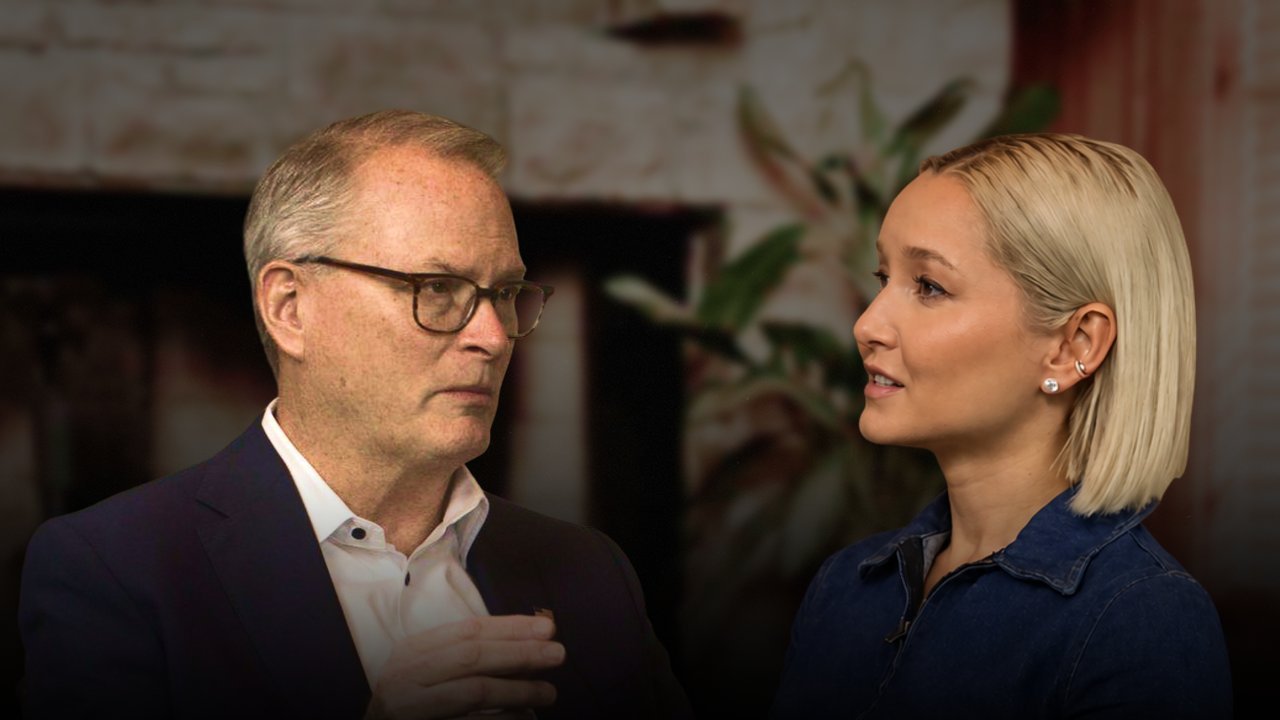
Adam Hamilton on faith, Trump and the fight for Kansas
lead image
- Top GOP groups scale back North Carolina spending
- October
- Sanders, AOC, Merkley propose bill to ban Flock cameras
- Capitol agenda: Dems spend big to help Hakeem’s dream
- The low-profile Democrat helping shape her party’s AI agenda
- ‘A game-changer’: House Dems aim for a big majority that could ease Hakeem Jeffries’ headaches
- Adam Hamilton on faith, Trump and the fight for Kansas

- New York grapples with kinks in $1B Medicaid system

- Top Democratic appropriator wants White House to pay for airing ‘propaganda’
- Barrage of lawsuits targets Trump’s funding cancellation
-

 Politics2 years ago
Former ‘Squad’ members launching ‘Bowman and Bush’ YouTube show
-
Uncategorized2 years ago
Bob Good to step down as Freedom Caucus chair this week
-

 The Josh Fourrier Show2 years ago
DOOMSDAY: Trump won, now what?
-

 Politics2 years ago
Former Kentucky AG Daniel Cameron launches Senate bid
-

 The Dictatorship2 years ago
Pete Hegseth’s tenure at the Pentagon goes from bad to worse
-

 The Dictatorship2 years ago
Luigi Mangione acknowledges public support in first official statement since arrest
-

 Politics2 years ago
Blue Light News’s Editorial Director Ryan Hutchins speaks at Blue Light News’s 2025 Governors Summit
-

 The Dictatorship1 year ago
Mike Johnson sums up the GOP’s arrogant position on military occupation with two words