
Politics
French and Spanish parties

Tonight’s semifinal game between France and Spain pits two of the EU’s biggest nations against each other for a chance to win the World Cup. It also comes on France’s national day, after celebrations and a military parade in Paris attended by world leaders.
In Brussels, the country’s diplomatic mission is hosting a celebration marking the event, which will double as a soccer screening. Blue Light News will be there to bring you a snapshot from the party. Whether les Bleus come out on top and the French end the day in a frenzy of national pride — or are left deflated by Spain’s La Roja — will become clear before midnight in Brussels.


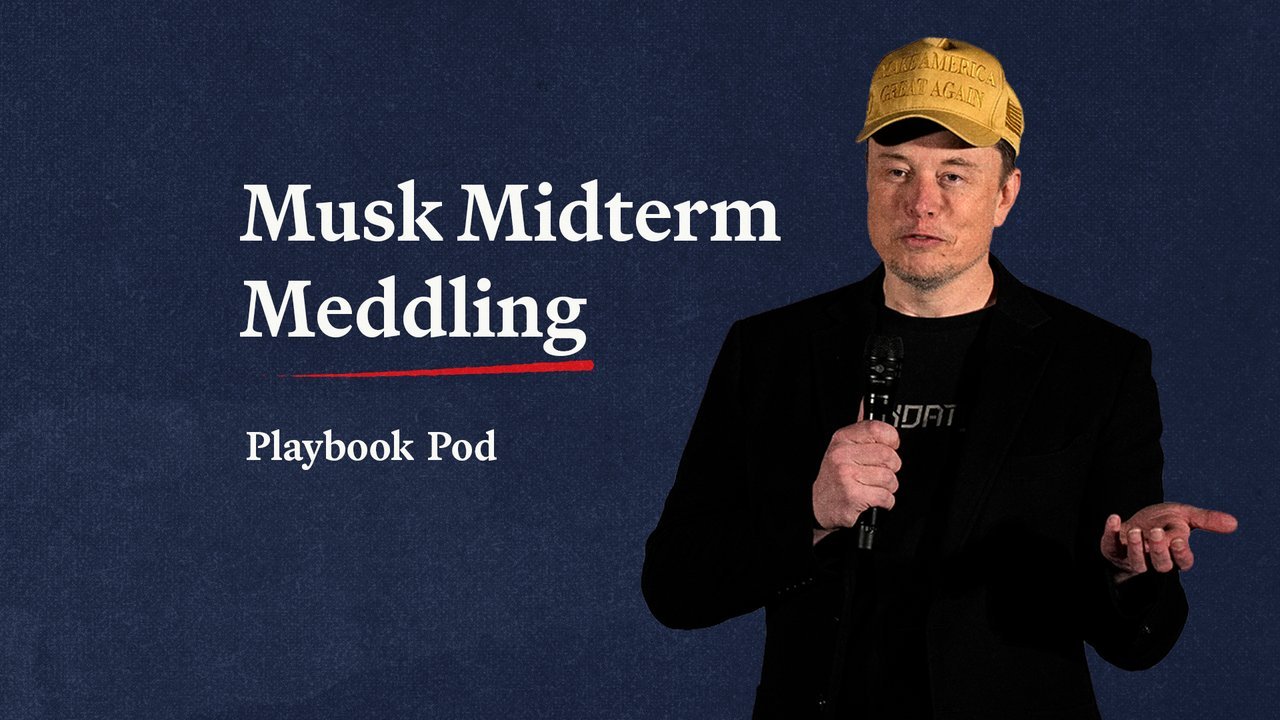
Democrats’ Musk-ask questions
lead image
CHICAGO — JB Pritzker is pouring tens of millions of dollars of his own money into boosting Black and Hispanic candidates this cycle. That could help him win over critical voters in 2028.
The billionaire Illinois governor — who’s also considered a potential presidential contender — is investing at least $38 million in battleground races, according to a person familiar with the governor’s political strategy granted anonymity to discuss details.
Much of that spending has gone to candidates of color, some of whom haven’t drawn much other investment from national Democrats. Pritzker is also investing in races in all six early states on the Democratic presidential nominating calendar, which was rearranged earlier this year to give prize spots to five states with significant Black or Hispanic communities: South Carolina, Nevada, New Mexico, Virginia and Michigan.
Asked by Blue Light News about how his midterms spending could lay the groundwork for a presidential campaign, Pritzker said he’s “focused on winning in 2026.”
But some of those receiving major infusions from Pritzker say it should earn him a serious look in 2028.
“Governor Pritzker is playing a very important role” in the party, said Rep. Shomari Figures, a Black Democrat facing an uphill fight in Alabama who has gotten an assist from Pritzker’s newly-formed super PAC, Ready for the Fight. “He actually cares and is… willing to invest in districts where minority candidates have a good shot if they have the right type of support. I think that’s an important element of any leadership.”
Pritzker said Ready for the Fight’s strategy focuses on GOP-leaning districts that would normally be “out of sight for Democrats” but have become competitive in a favorable midterm environment.
Figures is fighting for reelection in a district Republicans redrew to make it harder for a Democrat to win by decreasing the Black population, after the Supreme Court gutted the Voting Rights Act this past spring.
When that court decision came down, Figures said Pritzker was one of the first people to call him to offer help.
“The fact that he reached out and engaged us through that lens with that level of knowledge about what was happening in Alabama meant a lot to us,” Figures said.
Pritzker is spending $1.6 million for Figures, $1.9 million to boost Tennessee state Rep. Justin Pearson, another Black candidate running in a newly gerrymandered district that includes part of Memphis, and has put $1.3 million behind Arkansas Democrat Chris Jones in his race against Rep. French Hill (R-Ark.) in Little Rock, making him the largest Democratic spender besides the Democratic Congressional Campaign Committee in all three districts.
Pritzker is also the largest individual donor to Texas Democrat Gina Hinojosa’s gubernatorial campaign, personally contributing $200,000 before committing another $1 million earlier this month. The latter donation came with a matching contribution from the Democratic Governors Association. Hispanic officials and lawmakers have been ramping up the pressure on the group’s chair, fellow 2028 hopeful Kentucky Gov. Andy Beshear, to invest more in Texas.
Pritzker called Hinojosa an “outstanding person.”
“The opportunity for her to win and for Democrats to win as a result of her winning is tremendous,” Pritzker told Blue Light News at a Thursday press conference. “From my perspective, we all ought to be helping somebody like that to overcome the odds.”
And while he declined to criticize national Democrats’ strategic decisions not to spend for some candidates in tough races facing a deluge of GOP outside money, he made clear he was looking to make up for that lack of funding.
“If I were running in one of those districts, and I’m not getting dollars that I see going to other districts, I would feel frustrated,” Pritzker said. “There’s only so much you can do when you’re being outspent three to one or four to one nationally, and so I’m trying to do my best to fill in some of that wherever I can.”
Pritzker is not the only potential 2028er looking to woo politically powerful Black and Hispanic communities, and his day job and his own reelection bid keeps him away from the national trail — unlike some of the other senators and governors who’ve been criss-crossing the country for months. But what he lacks in time, he makes up for in money.
His spending strategy is catching the attention of senior Black Democratic leaders.
“People tend to take notice of the people who take notice of them,” said South Carolina Rep. Jim Clyburn.
Clyburn said he takes Pritzker “seriously” as a potential presidential candidate, but cautioned that Black voters and organizers in his home state, where Pritzker recently addressed the state NAACP’s annual convention, likely won’t be swayed by campaign contributions alone.
“We are going to take measure of candidates, not based upon how deep their pockets are, but we’re going to take measure of how deep their commitments are to those things deemed important in the African American community,” he said.
Still, the donations are helping the billionaire longtime Democratic donor and two-term governor forge new allies in key communities that could provide a boost come primary season.
“I appreciate Governor Pritzker’s willingness to invest in places others have written off,” said Jones, who also thanked the DCCC for recently adding him to their list of targeted races. “Convincing people a race is worth investing in has often been an insurmountable barrier for Black candidates.”
Pritzker’s PAC spent $2.8 million for New Mexico Democratic Rep. Gabe Vasquez and the governor made a $400,000 personal contribution into a super PAC backing Nevada gubernatorial candidate Aaron Ford, a Black candidate running in a heavily Hispanic early-voting state.
But his biggest investment of the cycle was to boost Illinois Lieutenant Governor Julianna Stratton, who he picked as his 2018 running mate when she was a little-known state representative, then invested $10 million to help her win her U.S. Senate primary this spring.
The move created some tensions: Pritzker’s endorsement of Stratton helped lift her 2026 Senate campaign significantly over two other candidates — including Rep. Robin Kelly (D-Ill.), another Black woman who has had a strained relationship with Pritzker over the years. That frustrated several members of the Congressional Black Caucus, though he’s sought to mend fences since. Clyburn, who endorsed and campaigned for Kelly, said that race won’t “dictate future relationships when it comes to putting our party in the best position to win the elections in 2028.”
And ultimately, Stratton’s ascendance is a significant step in his outreach to Black voters nationally. He will be credited with helping send just the sixth Black woman ever to the U.S. Senate after her likely victory in November. She could be a key 2028 surrogate should he run for president.
“He really does have a platform to raise awareness of critical races that people might not otherwise pay attention to,” Stratton said. “I’m really grateful for that.”
Democrats are salivating over, and Republicans are bracing for, a potentially massive blue wave. One GOP pollster is urging everyone to calm down.
Patrick Ruffini, a founding partner at Echelon Insights, has been loudly throwing cold water on Democrats’ hopes of sweeping the red state Senate seats that have become battlegrounds in a worsening national environment for Republicans.
“The polls are, I think, intentionally inflating the size of the battleground,” Ruffini told Blue Light News.
Democrats are pushing to flip Senate seats in Iowa, Texas, Ohio and Alaska — all states that President Donald Trump won by at least 11 points in 2024 — with dreams of going even deeper into the map Kansas, South Carolina and even Mississippi. Sensing a potential disaster, Republicans have significantly curtailed their investments in North Carolina and Georgia to direct resources elsewhere.
Ruffini, who isn’t polling for candidates or party committees in any federal races, said he’s skeptical of Democrats flipping some of those seats, particularly in the Midwest, and gives the GOP a coin flip’s chance at keeping control of the Senate.
If a blue wave were to come, he said it would defy the ingrained partisanship in deep-red states that has mirrored growing political polarization around the country.
“I think it would be somewhat of a historic shift if that were to happen,” he said.
Here’s more from Blue Light News’s chat with Ruffini, edited for length and clarity. A more condensed version of this interview ran in Blue Light News’s Morning Score campaign newsletter.
You’ve been pretty publicly skeptical of polling that indicates a big tsunami for Democrats in November. Why is that?
I think we can read the environment right, but the map wrong.
The pretty large shift towards Democrats that we’re seeing on the generic ballot and in a lot of individual races, I’m not saying that’s not going to materialize. What I am more skeptical of is… the ability of any major party in this polarized era that we’re in to rack up significant gains in states that went double digits for the other side.
I’m not ruling out — I think there will be some [examples]. I think Alaska is one where it’s both an idiosyncratic state, and [Democratic nominee Mary] Peltola has shown some specific candidate-centered strength. Nor would it shock me if [Democrat] James Talarico wins, despite the history in Texas. That would not surprise me, just given the candidate quality disparity, particularly on the Ken Paxton side.
Where I get more skeptical is when you move into the Midwest, where there has historically been pretty large polling errors [overstating Democrats’ chances] in states like Iowa, Ohio. And I think you can extend that to the Democratic enthusiasm around Kansas.
Is your skepticism coming more from the quality of the individual polls that you’re seeing that are showing massive Democratic surges in the Midwest, or is it the history of these states that you’re betting will ultimately win out?
I think fundamentals are going to play an important role, particularly in states where there was a solid Trump advantage. We’re not talking about a state like North Carolina or Georgia that’s only for Trump narrowly, where Democrats, at least in the Senate races, are clearly favored.
Historically the presumption is that states tend to converge on their base partisanship in the closing days of an election, but especially that’s been the pattern in the Midwest.
Specifically as it relates to the polls this year, I think any pollster you would talk to, including myself, is experiencing significant non-response bias favoring Democrats.
When you’re seeing high-propensity Democrats [responding to polls] at twice the rate of high-propensity Republicans, when we know that the turnout on both sides would be roughly evenly paired, that’s a warning sign for polling in this cycle.
It seems like there’s some GOP internal polling saying that Republicans are worried about these states, because they are moving money around to triage certain races. I’m curious if you feel like they’re wrong to be making those decisions?
Absolutely not. They’re not wrong. You do have to take the polls somewhat seriously in the sense of, if you do get a poll that’s within the margin of error, I think you’re duty-bound to spend money in those places and not to ignore what could be a potential signal.
I think that control of the Senate comes down to Texas, so they’re right to be spending money there. If you just look at the amount of money being spent in Texas versus Kansas, obviously it’s a much, much bigger state, and you need to spend much more money.
But it’s not something along the lines of ‘the battleground has shifted. It’s a foregone conclusion. Democrats are going to win the Senate,’ and then the battleground entirely shifts to a state like Kansas or to Iowa, right? I don’t think we’re seeing that.
It sounds like the issue you have is how the broader public is interpreting these polls rather than the polls themselves?
The polls are, I think, intentionally inflating the size of the battleground. And to some extent it’s happening both ways. The polls showing a margin-of- error race in Minnesota is possible, right? I’m not as concerned about a polling error in Minnesota as I am in Kansas.
But because of the number of Democratic internals and because of the incentive of Democratic internals to show close races across the battleground, what you generally tend to see is more of an inflated sense of how big the battleground actually is. A lot of these races just break a certain way.
We’ve reported that Republicans are privately conceding that the House is lost. Is that your reading of the data too?
That’s the best reading of the data. That said, if there’s a three-point polling error or something, then I think it gets very, very tight and anything can happen. But I think that’s the most likely outcome.
What is your prediction for the number of Senate seats Republicans will have?
My prediction for both the probability and the seat count is 50-50. There’s a 50-50 chance Republicans hold the Senate. I think if they do, it’s with 50 seats, probably. But obviously, that can tilt very easily.
Which of these states do you think are going to flip for Democrats?
Alaska is clearly favored. I mean, I don’t know if it’s clearly favored, but I think it’s at least still Democrat. I think Texas is going to be very, very close. I just think the partisanship of the state is — people forget it’s a little bit more Republican than it was back in 2018. I think Republicans are probably being underestimated in Ohio because of the past Midwestern polling error.
At the same time, I would say it’s still uphill in Maine and Michigan to some degree. I think Susan Collins has really been the lone bright spot, at least in terms of the conventional wisdom, the narrative in the Senate for Republicans. I think she has a fighting chance, but I think Republicans are still probably under a 50% chance in both Michigan and Maine, just due to the nature of their partisan lean.
If at the end of all of this it is a real blue wave in the Senate, what will have happened to have made you wrong?
If that happens, we will have seen a level of depolarization in the electorate that we haven’t seen since around 2012. You really have to go back in history for a state like Kansas to flip.That would be pretty unique historically, where it’s a flip where you have an incumbent losing.
That’s the kind of thing that used to happen in Senate races a lot, and then things, starting with Trump, got a lot more polarized. So what that would mean is, maybe this is the start of a new political era. But I think it would be somewhat of a historic shift if that were to happen.
- Democrats’ Musk-ask questions
- DCCC launches ads against Mike Turner in red Ohio district
- Capitol agenda: Dem gavels are coming for Elon Musk
- Pritzker’s big spending for Black and Hispanic candidates is drawing notice
- The ‘Congress addict’ serving as Trump’s fixer on Capitol Hill
- Elon Musk is in Democrats’ oversight crosshairs
- GOP lawmakers scramble to spare Ukraine from Trump
- Medicaid cuts haunt Republicans in battleground states
- GOP-linked PAC spends over $1M to boost third-party socialist in Ohio Senate race
- ‘A warning sign for polling’: Why one GOP pollster thinks a blue wave may fall short
-

 Politics2 years ago
Former ‘Squad’ members launching ‘Bowman and Bush’ YouTube show
-
Uncategorized2 years ago
Bob Good to step down as Freedom Caucus chair this week
-

 The Josh Fourrier Show2 years ago
DOOMSDAY: Trump won, now what?
-

 The Dictatorship2 years ago
Pete Hegseth’s tenure at the Pentagon goes from bad to worse
-

 Politics2 years ago
Former Kentucky AG Daniel Cameron launches Senate bid
-

 The Dictatorship2 years ago
Luigi Mangione acknowledges public support in first official statement since arrest
-

 Politics2 years ago
Blue Light News’s Editorial Director Ryan Hutchins speaks at Blue Light News’s 2025 Governors Summit
-
 Politics1 year ago
John Legend advises Trump to drop the ‘dictator s‑‑‑’ if he wants Nobel Peace Prize