
Politics
DNC candidates rip ‘DC insiders’ in first chair’s race forum


Candidates vying to lead the Democratic National Committee have found a common enemy: the D.C. consultant.
In the first DNC-sanctioned forum in the body’s low-profile race for chair on Saturday, DNC candidates channeled their frustration at the “D.C. insiders,” whom New York state Sen. James Skoufis vowed to “kick to the curb.” Minnesota Democratic-Farmer-Labor Party Chair Ken Martin pledged the “D.C. consultants” will “be gone when I’m there.” And Wisconsin Democratic Party Chair Ben Wikler promised he’d go into 2025 “with no commitments to anyone who’s been on a campaign payroll before.”
It’s a sign of the times for a party that burned through some $1.5 billion in the final months of the campaign, only to come up short against President-elect Donald Trump. As the party still searches for answers to its devastating losses in 2024, consultants became the punching bag while the DNC candidates largely avoided sparring with one another. They all agreed that the party needed to reground its identity with the working class and commit to a permanent campaign infrastructure across the country. But any light attacks — of which there were a few — came without names attached.
Saturday’s forum was the first of four meetings scheduled in January ahead of a Feb. 1 DNC chair election, the first big decision Democrats will make to redefine their party in the second Trump era.
Here are five takeaways from the virtual forum:
Paging Jaime Harrison
The candidates may have spent much of their 90-minute debate attacking D.C., but nearly all of them committed to moving to the capital if elected. It’s a question that had been percolating for weeks among DNC members, many of whom have been frustrated by the sitting DNC Chair Jaime Harrison’s decision to stay in South Carolina during his tenure.
Former Maryland Gov. Martin O’Malley said “leaders lead from the front, and they have to be present in the center of the circle,” while Skoufus, the only sitting elected official running, said he would step down from the New York state Senate because “the next DNC chair must be fully committed.”
But Wikler, who has a young family in Wisconsin, didn’t commit to a move. He said he planned to keep a “congressional schedule” and be in D.C. “on a regular basis,” but “I think there’s strength that comes from being in a place where Democrats don’t win every election a lot of the time.”
A mostly white, mostly male field of “dudes”
Across the forum’s hovering video-conference boxes on YouTube, it was hard to miss: The eight-member field of candidates are mostly white and mostly male. Aside from former Democratic presidential candidate Marianne Williamson and entrepreneur Quintessa Hathaway, the competitors for chair come nowhere close to reflecting the diversity of the larger party.
It’s a fact that irks some Democrats — that the field is not more reflective of the party as a whole.
“When you look at our party, and you look at the elected officials who have actually, like, gotten stuff done and accomplished difficult things in difficult states, none of them are involved in this conversation,” said Democratic campaign veteran Caitlin Legacki, who cautioned her comments were not targeted at the men in the field but a broader observation. “There are no women involved in this conversation. All of our biggest, most high profile pundits are dudes. All of the senators that are writing op-eds about the future of our party are dudes. And then you’ve got these candidates for DNC are dudes.”
She’s back
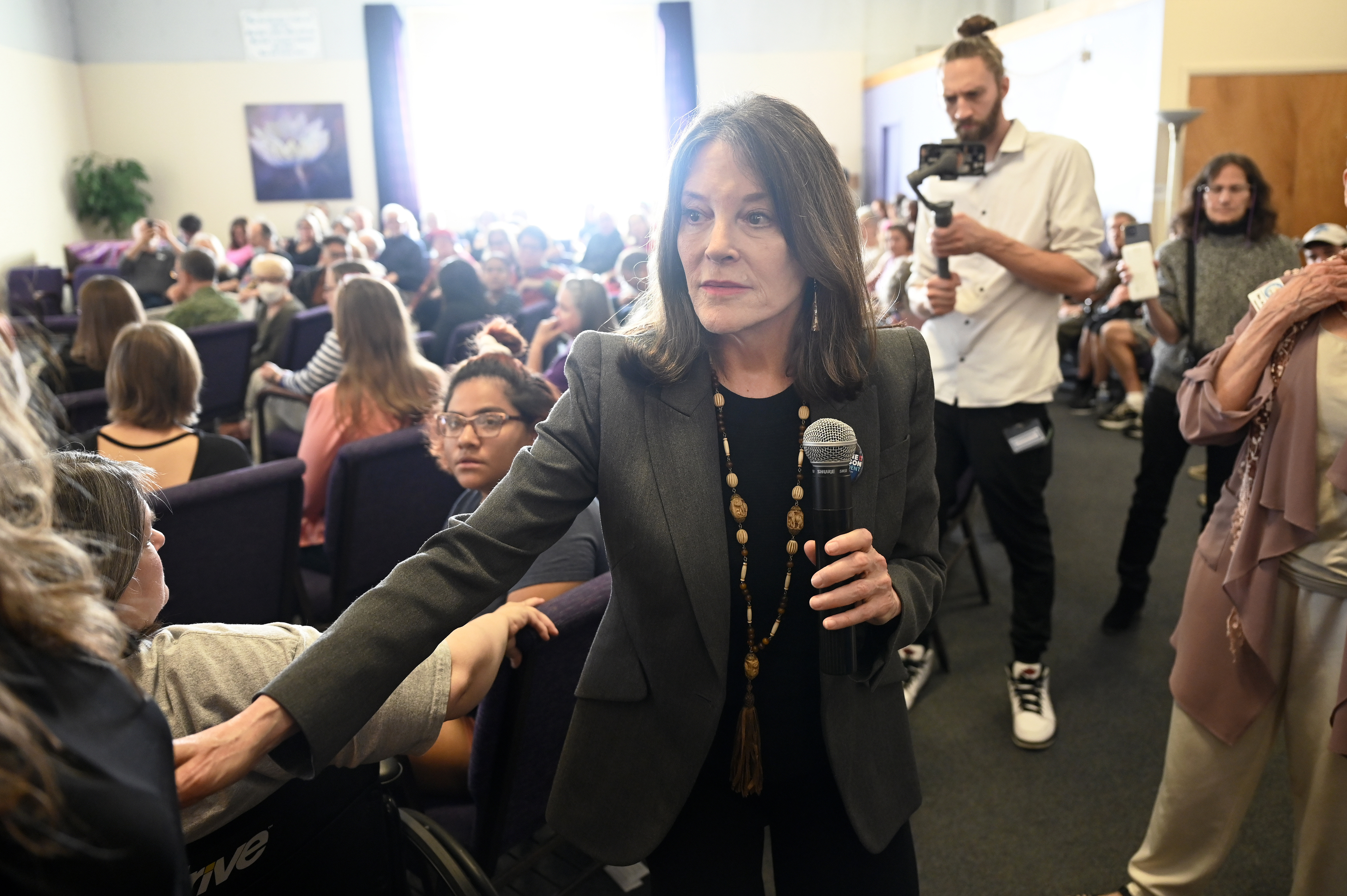
Williamson, the bestselling self-help author, is bringing her woo-woo brand of politics to the chair’s race.
Like her 2020 and 2024 bids, she has almost no chance of winning. But at least she makes it interesting. Williamson presented herself as the kind of spiritual healer the party needs, noting that she’s “worked very up close and personal with people whose lives were in trouble, they were sick and they didn’t have health care, they lacked opportunities, educational and economic, and they did not feel seen by the political class.”
Williamson brandished her iconoclastic bonafides saying that the DNC failed to push a “robust primary” last year, calling it the biggest mistake that the body made.
“In the name of saving democracy,” she said, “we ourselves suppressed democracy.”
It’s the economy, stupid
Plenty of lip service was paid to what Democrats broadly believe was one of the core reasons for their electoral downfall last year: the party’s economic messaging — or lack thereof.
O’Malley pegged Democrats’ disconnect from Americans’ kitchen tables as the party’s “biggest mistake.” Wikler lamented that “there were millions of Americans who didn’t know that we were fighting for working families.” And Martin decried voters’ perceptions that Republicans, not Democrats, best represent the working class — a concept he said was only reinforced by Democrats’ over-performance with wealthy households and college-educated voters — as a “damning indictment of our party brand.”
But they weren’t offering many concrete solutions to bring those voters back to the fold on Saturday — a sign that while Democrats have diagnosed a major flaw in their messaging, they’ve yet to figure out how to fix it. That’s a major potential problem for the party, with Trump poised to take credit for an economy that began improving under President Joe Biden.
O’Malley called for the next DNC chair to “reassert our dedication” to being a party focused on people’s economic security. Martin said the solution lay in year-round organizing in key communities. And Wikler’s suggestion for a course-correction: “communicate everywhere” from conservative media to nontraditional platforms.
So much for the resistance.
For a party that has spent much of the past decade running explicitly against Trump, the candidates vying to lead the DNC had little to say about the incoming president.
Call it a sign of the times.
Sure, O’Malley closed by saying the next DNC chair needs to “take on Trump and save our Republic.” And Skoufis repeatedly referenced lessons he’s learned from running and winning in a state Senate district Trump easily carried.
But as Democrats recalibrate their resistance to Trump to reflect the changed political landscape between his two terms, it appears the people looking to lead the party’s next chapter are taking note.


Under the political radar, the country’s food stamps program is undergoing a slow-motion transformation. The ramifications could bubble up into the midterms.
Changes to the Supplemental Nutrition Assistance Program from Republicans’ One Big Beautiful Bill Act are rolling out in phases, from tougher work requirements to restrictions on non-citizens. Food stamp rolls already shrank by more than 5 million people nationwide as of this summer, as the hardest-hit state, Arizona, saw an outright majority of its food stamp recipients lose benefits.
The latest alteration clicked into place Oct. 1, when the share of administrative costs states and counties have to pay rose to 75% from 50%. An even bigger financial shift looms in a year, when states with high payment error rates will have to assume some benefit costs for the first time, a scenario that’s already rippling through state and local budget planning.
It all adds up to a new era in federal-state relations — and in the size and nature of the welfare state.
In a year when affordability worries top voters’ priority lists and grocery prices strain their wallets, Democrats think the SNAP shift gives them an opening to make Republicans pay politically after the GOP used social safety net cuts to food aid and Medicaid to help pay for last year’s tax cuts.
“People are getting kicked off these programs at the very moment they’re going to the polls to vote,” House Agriculture ranking member Angie Craig (D-Minn.) said. “I sure wouldn’t want to be a Republican headed into the November ballot.”
But Republicans think they have a compelling story to tell voters, trying to right-size a program that spends millions of dollars on erroneous payments. The SNAP changes align with the Trump administration’s broader push to crack down on fraud and make the government smaller or more efficient. Implementing stricter work requirements for welfare often polls well, and trying to move people toward work gets at the root causes of poverty, they argue.
“The premise is simple: Let’s make sure that this program is preserved for those truly in need, and that we aren’t squandering taxpayer dollars,” a senior USDA official told Playbook in an interview. “And let’s make sure that if folks are able-bodied, they are work training or volunteering for 20 hours per week.”
That doesn’t mean Republicans in competitive races are putting SNAP and Medicaid cuts front and center on the campaign trail. When they tout last year’s megalaw, new tax breaks typically lead the messaging. And 10 frontline GOP House campaigns didn’t respond to requests for interviews about how they can win on SNAP.
At the state and county level, some governments are scrambling to prepare for a massive cost shift, hitting at the same time as significant Medicaid changes. The resulting bureaucratic jumble has contributed to some of the SNAP losses this year, as recipients struggled to get through overtaxed call centers, some states cut staff, and others tightened their processes.
“It really sets up a change in the federal responsibility, and I view it as a slippery slope,” warned Barbara Guinn, New York’s commissioner of the Office of Temporary and Disability Assistance. Her state is staring down a possible $1 billion added burden next year, though they’re advocating for a repeal of the benefits change. “Once they implement any kind of cost shift, I think it will be easier for them to take similar actions in the future.”
Whether to delay next year’s cost shift has already generated tensions over the farm bill in the Senate, where Democrats are demanding a longer postponement than Republicans’ offer of one year. Some Minnesota counties are considering significant property tax increases to pay for the extra costs, Craig said: “We’re going to be pushing hard for a two-year delay — at the request of, frankly, many of my Republican county commissioners, not just Democrats.”
Conservatives see the new calculus as a long overdue change to improve efficiency and incentivize program integrity. Improper payment rates are high in many states (though they comprise both over-payments and under-payments, and error rates are different from fraud). Those that reduce errors enough won’t have to take on paying the benefits. And even opponents of the changes think lower error rates are a worthy goal. SNAP rolls often ebb and flow with the economy, and the recent drop could reflect the job market pulling people out of need — or the removal of people who shouldn’t have been getting food stamps in the first place.
“There needs to be some level of accountability,” the USDA official said. States with high error rates “need to start to have skin in the game.”
But at a time when many households are already squeezed by inflation, the SNAP changes have correlated with higher numbers of Americans turning to charities to ward off hunger. The surge in people losing food aid came more quickly than expected. The unemployment rate hasn’t meaningfully changed. And the vast majority of large food banks in a recent NBC survey said they were grappling with higher demand, in part due to food stamp changes. Another rule kicking in the day after the midterms could lead to many retailers being bumped out of SNAP as places where low-income people can use their benefits.
For state governments, a set of sweeping operational changes are now underway to conform to new policy demands, often requiring more money or staffing at already under-resourced offices. And the budgetary stakes to get error rates lower are sky-high.
“It’s a really complicated, nuanced and confusing time for states who are trying to administer SNAP,” said Lauren Kallins, a senior legislative director at the nonpartisan National Conference of State Legislatures, which has advocated for a delay in the benefits costs shift.
National Democrats are increasingly shifting their attention away from North Carolina’s Senate race as polls show former Gov. Roy Cooper ahead, eyeing once long-shot races as possible pickups. But a veteran Democratic strategist who helped deliver the party’s last presidential victory in the state is urging donors not to take a win for granted.
David Plouffe, who managed behind Barack Obama’s narrow 2008 victory in North Carolina, urged Democratic donors and supporters not to grow complacent in the final weeks of Roy Cooper’s Senate campaign, according to audio obtained by Blue Light News.
“I think that this race … has I think been the best run race in the country,” Plouffe said on the call. “But that doesn’t mean that we can rest easy.”
He warned about North Carolina’s relatively fixed partisan makeup as a purple state, making it difficult for a candidate to dramatically expand their base of support.
“There’s certain states that elections happen within a bound, and this one will be that way as well,” he said.
In public polling, Cooper leads Republican Michael Whatley, who has struggled to boost his name recognition against the much better-known former governor. And as Democrats grow increasingly bullish on their candidate’s chances of flipping the seat — one of four pickups they need to take control of the Senate — national groups have begun shifting their money and attention to other contests, including most recently to Kansas.
But Plouffe said North Carolina needs to remain a priority.
“We have to win the ones we have to win,” he said on the call to Cooper’s finance committee.
Just days before Plouffe’s remarks, Senate Democrats’ top super PAC pulled back some of its spending in North Carolina, following a much bigger retreat by Republicans’ top super PAC in the state.
Plouffe cautioned that North Carolina has historically been a tough state for Democrats at the federal level, especially in recent years. The party hasn’t won a Senate race there since 2008, when Obama became the last Democratic presidential candidate to carry the state, winning by fewer than 15,000 votes. He lost the state in 2012.
“Even though we carried the electoral votes back then, we only did so by I think 14,000 votes. So it was our narrowest victory,” Plouffe said. “And in 2012, we tried to win North Carolina again with the help of so many people on this phone, and we just couldn’t get it done. And that tells you how difficult the state is.”
Plouffe also cast the stakes of Cooper’s race as extending beyond November, arguing that a Cooper victory could provide a blueprint for the party’s eventual 2028 presidential nominee.
“Democrats need to compete and win in North Carolina in 28,” he said. “And it’s one thing to look how a governor can win a state. The best route, the best scout that you receive, is how someone in a federal race won in a tough state, and that can show you the way.”
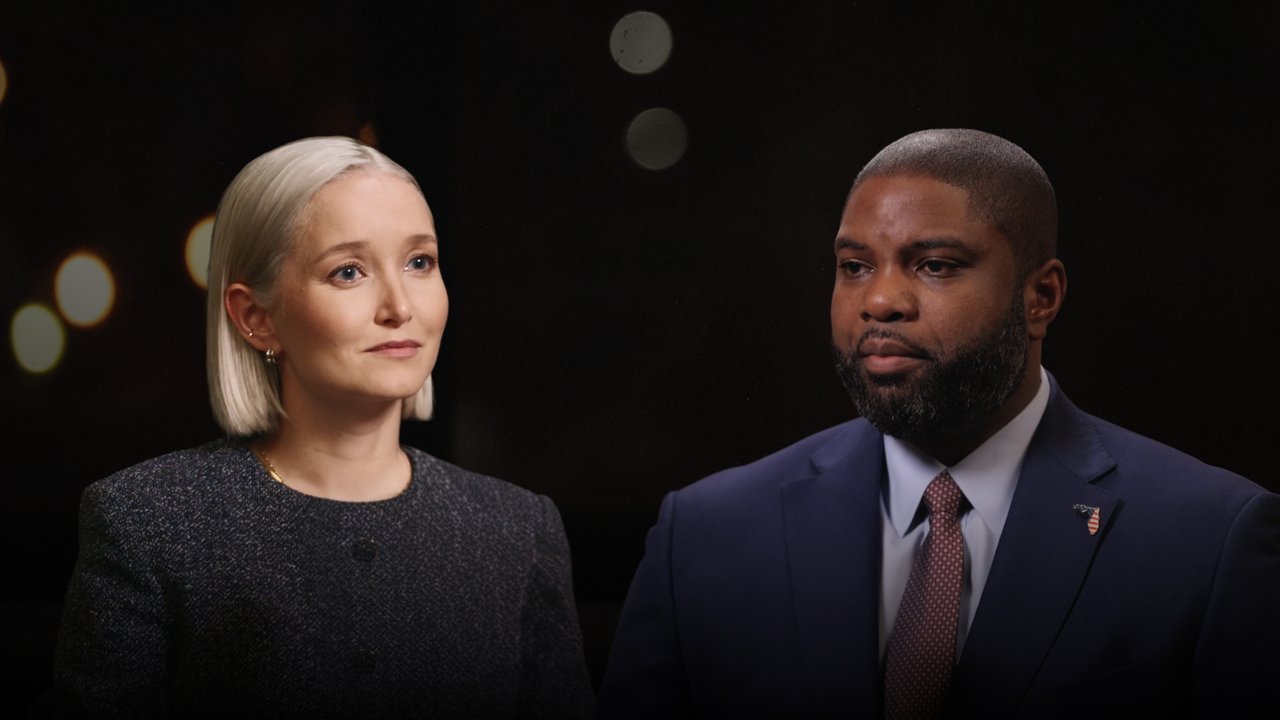
Byron Donalds says he is not a ‘yes man’ to Trump
lead image
-

 Politics2 years ago
Former ‘Squad’ members launching ‘Bowman and Bush’ YouTube show
-
Uncategorized2 years ago
Bob Good to step down as Freedom Caucus chair this week
-

 The Josh Fourrier Show2 years ago
DOOMSDAY: Trump won, now what?
-

 The Dictatorship2 years ago
Pete Hegseth’s tenure at the Pentagon goes from bad to worse
-

 Politics2 years ago
Former Kentucky AG Daniel Cameron launches Senate bid
-

 The Dictatorship2 years ago
Luigi Mangione acknowledges public support in first official statement since arrest
-

 Politics2 years ago
Blue Light News’s Editorial Director Ryan Hutchins speaks at Blue Light News’s 2025 Governors Summit
-

 The Dictatorship1 year ago
Mike Johnson sums up the GOP’s arrogant position on military occupation with two words