
Politics
Democrats look to push into GOP turf with buzzy candidate recruits for the midterms

Democrats are getting ready to push deeper into Republican-held turf next November.
Emboldened by the special elections last Tuesday, the GOP’s adversaries are sensing opportunity. Three buzzy Senate candidates announced bids this week — the same week that Democratic turnout powered them to a decisive win in the swing state of Wisconsin and two long-shot Democrats overperformed in a pair of deep-red Florida districts. Now, party recruiters are reporting an uptick in interest from candidates in tough-to-win territory.
“This puts a lot more on the field. That puts Democrats on offense. That is us saying — if you’re in a Trump plus-15 district, we’re playing there,” said Rep. Morgan McGarvey (D-Ky.), a co-chair tasked with recruitment for the party campaign arm. “We’re seeing right now a lot of interest from people all over the country in stepping up for their country to run for office.”
In Iowa, two state lawmakers are considering runs against Rep. Zach Nunn in a district sure to be impacted by tariffs. Two prospective candidates in Pennsylvania and Michigan lost or left jobs thanks to the Trump administration, giving them a powerful story on the campaign trail. A pair of former representatives are considering comeback bids for battleground districts in the Rust Belt.
And Democrats think at least two districts in Virginia, held by GOP Reps. Rob Wittman and Jen Kiggans, are increasingly in play thanks to backlash to Elon Musk’s government cost-cutting frenzy — both have significant military populations. A possible top recruit is emerging: Pamela Northam, the former first lady of Virginia, has been approached to run for Kiggans’ seat in the Hampton Roads area, according to two people familiar with those efforts, granted anonymity to discuss private conversations.
All this comes amid a punishing week for Republicans that saw the stock market crater after President Donald Trump rolled out tariffs and as his officials continue to face tough questions on the “Signalgate” debacle. Democrats are sensing an opening, and hoping to extend the momentum by recruiting candidates who might be newly energized to run.
“People are upset. If you can channel that, use it for the right energy, run a strong campaign, get out there to the people — I think you can win here in Iowa,” said J.D. Scholten, a Democrat who had been leaning against challenging Sen. Joni Ernst (R-Iowa) until Tuesday’s elections. Now, he said, he’s 50-50 on another run in a state where a Democrat hasn’t held a Senate seat since 2015.
House Democratic operatives have also reported an increasing openness from prospective Midwest candidates in Iowa, Michigan and Wisconsin over the past few weeks. And the Democratic Congressional Campaign Committee notes that based on Tuesday’s margins in Florida there are roughly 40 additional offensive targets that House Democrats could go after in the midterms.
House Majority PAC, Democrats’ top outside group focused on congressional races, reported “a tremendous amount of interest and enthusiasm from potential candidates across the country” in the days leading up to and after Tuesday.
“People have been receptive in the last 48 hours,” said one House Democratic recruiter, who has spoken to candidates in seats as red as R+7 since the special elections.
Meanwhile, previously dejected Democrats are starting to think seriously about mounting campaigns to win the handful of seats required to recapture the House majority.
Among them are former Rep. Andy Levin (D-Mich.), who is weighing a bid for elected office, possibly for the seat currently held by Republican Rep. John James, and Matt Cartwright, another former Democratic House member who is deciding whether to run again for his swing district in northeastern Pennsylvania.
Cartwright called Wisconsin’s election results “very heartening” and said House Republicans made a grave political error when they voted for a budget blueprint that Democrats argue laid the groundwork for cuts to Medicaid. His former opponent, Rep. Rob Bresnahan, was one of them. Cartwright said 200,000 people in his old district depend on the program.
At least two possible candidates have first-hand experience with the upheaval caused by the Trump administration.
Ryan Crosswell, a former federal prosecutor who stepped down after the Department of Justice moved to drop charges against New York Mayor Eric Adams, is considering running against freshman Rep. Ryan Mackenzie in Pennsylvania, according to a person familiar with his thinking. Crosswell declined to comment.
Andrew Lennox, a veteran who briefly lost his job at Veterans Affairs’ hospital in Ann Arbor, thanks to Musk’s Department of Government Efficiency, is mulling a run for GOP Rep. Tom Barrett’s seat in Michigan. Lennox, a guest of Sen. Elissa Slotkin (D-Mich.) at Trump’s address to Congress, said the elections on Tuesday and Sen. Cory Booker’s record-breaking speech left him inspired.
“People actually beat billionaires,” he said. “Seeing that happen, that was a breath of fresh air. And maybe there is some hope out there that this isn’t over.”
State Sen. Sarah Anthony is another potential candidate to take on Barrett. And in Des Moines, state Sen. Sarah Trone Garriott, an ordained minister, and state Rep. Jennifer Konfrst are both considering runs against Nunn, according to two people familiar with their thinking.
Bob Harvie, a county commissioner in the Philadelphia suburbs, launched a bid against Rep. Brian Fitzpatrick (R-Pa.) this week after having conversations with the DCCC, according to a person familiar with the communications.
And while Susan Wild, a former Democratic House member who represented a swing district in Pennsylvania’s Lehigh Valley, told Blue Light News she is not running in 2026, she is working hard “to make sure we have a really solid Democratic nominee” for her old seat.
“It’s got to make people more interested,” she said of this week’s election results, adding that Trump’s tariffs and other factors are also making the political environment more favorable to Democrats. “People who are contemplating running are saying, ‘You know, I think even these tough districts we could flip.’”
However, she cautioned Democrats not to overreach. She said Republican-plus-10 districts are difficult, and the party shouldn’t pursue them except in special cases.
“If they get ahead of themselves, if they get cocky about this, then the frontliners are gonna be really hurting,” she said, referring to the party’s vulnerable House incumbents.
In New Jersey, for example, Democrats would love to oust Republican Rep. Jeff Van Drew, a former Democrat who switched his affiliation in 2019, but not at the expense of easier targets.
Michael Suleiman, chair of the Atlantic County Democrats, acknowledged that the district “could be in play if we had a strong candidate.” But he cautioned that the top two priorities for New Jersey Democrats in 2026 are to protect freshman Democratic Rep. Nellie Pou and oust GOP Rep. Tom Kean Jr., both sitting in districts that Trump won by a little more than 1 percentage point. By contrast, he carried Van Drew’s district by nearly 13 percentage points.
And Democrats are still sizing up the impact of a shift among minority voters toward Trump in the 2024 election. Latino-heavy districts in particular moved to the right at the presidential level even as their voters picked Democratic congressional candidates last fall. Democrats are betting that shift was Trump-centric, but the GOP believes they will make even more inroads with Latinos down-ballot.
“Democrats are flailing with no vision, no leader, no message. This is just the latest Hail Mary from a party in freefall,” said Mike Marinella, a spokesperson for the House GOP campaign arm. “While they chase fantasies, we’ll keep exposing them for being out of touch and crush them again in 2026.”
But Democrats involved in flipping the House in the 2018 wave recalled that strong candidates in tough-to-win seats were a crucial part of their recipe for success. Formidable Democratic nominees like Kendra Horn in Oklahoma, Joe Cunningham in South Carolina and Ben McAdams in Utah were able to parlay a favorable political environment into wins in deep-red districts.
Veterans of that cycle said it pays dividends to recruit in longshot seats.
“I’d go as deep as R-plus-10, at least,” said Meredith Kelly, the top spokesperson for the DCCC during the 2018 cycle. “Put the surfboards in the water, you never know what’s going to come.”
Madison Fernandez and Elena Schneider contributed to this report.


Iowa Rep. Ashley Hinson took a swipe at the savings habits of millennials as she fielded a question Wednesday about Social Security during a Senate campaign debate.
Hinson, the Republican candidate facing off against Democrat state Rep. Josh Turek, was asked about ensuring the solvency of Social Security when she raised the broader prospect of savings by millennials, the demographic consisting of people born from 1981-1996.
She said the country needed to have a “serious conversation” about “how young people are saving money,” as part of the discussion about the future of Social Security.
“We also need to be talking about millennials saving money,” she later added. “Millennials are the worst group of savers in the country right now and have the least amount of savings. So those are ways where I think we can help have a bigger conversation around saving in general, planning for retirement, and making sure we’re all able to experience a robust retirement.”
Hinson faces a tough race in Iowa against Turek amid a difficult political environment for Republicans. Voters are overwhelmingly pessimistic about the state of the economy and their own personal finances, and they support Social Security while being concerned about the program’s future.
Hinson said she would not support cutting benefits and suggested creating a bipartisan commission to present suggestions to Congress to save the program. When pushed on her statement that “all options should be on the table,” she turned her attention to young people.
“I think my dad and I had this discussion when I was in sixth grade, looking at a ledger book and trying to figure out, hey, how are we going to make sure you’re set up for your life?” she said. “So we need to be having a conversation simultaneously to all solutions on the table, to make sure that it can stay solvent, while we’re also talking about, how do we get more young people to save?”
Hinson’s campaign did not immediately respond to a request for clarification.
Turek, when asked about Social Security, said he supports removing the payroll tax cap.
“The best way we can keep this solvent is by taking off the cap,” Turek said. “Let’s make sure that billionaires and large corporations are paying their fair share. That will move the needle in a very serious way to keep Social Security solvent.”
Hinson disagreed. “The only thing I’m hearing from him is that the only solution to everything is to raise taxes,” she said.
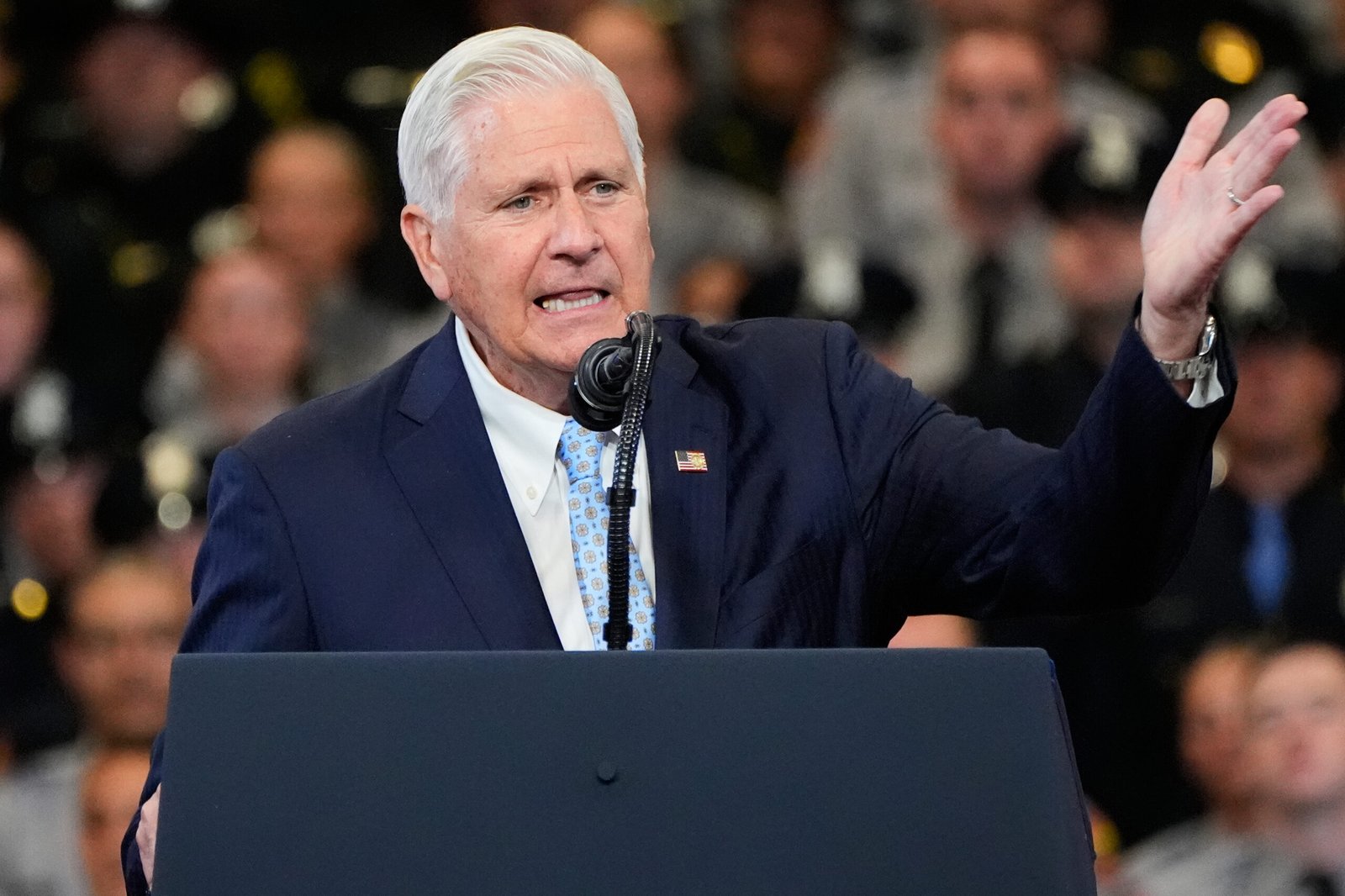
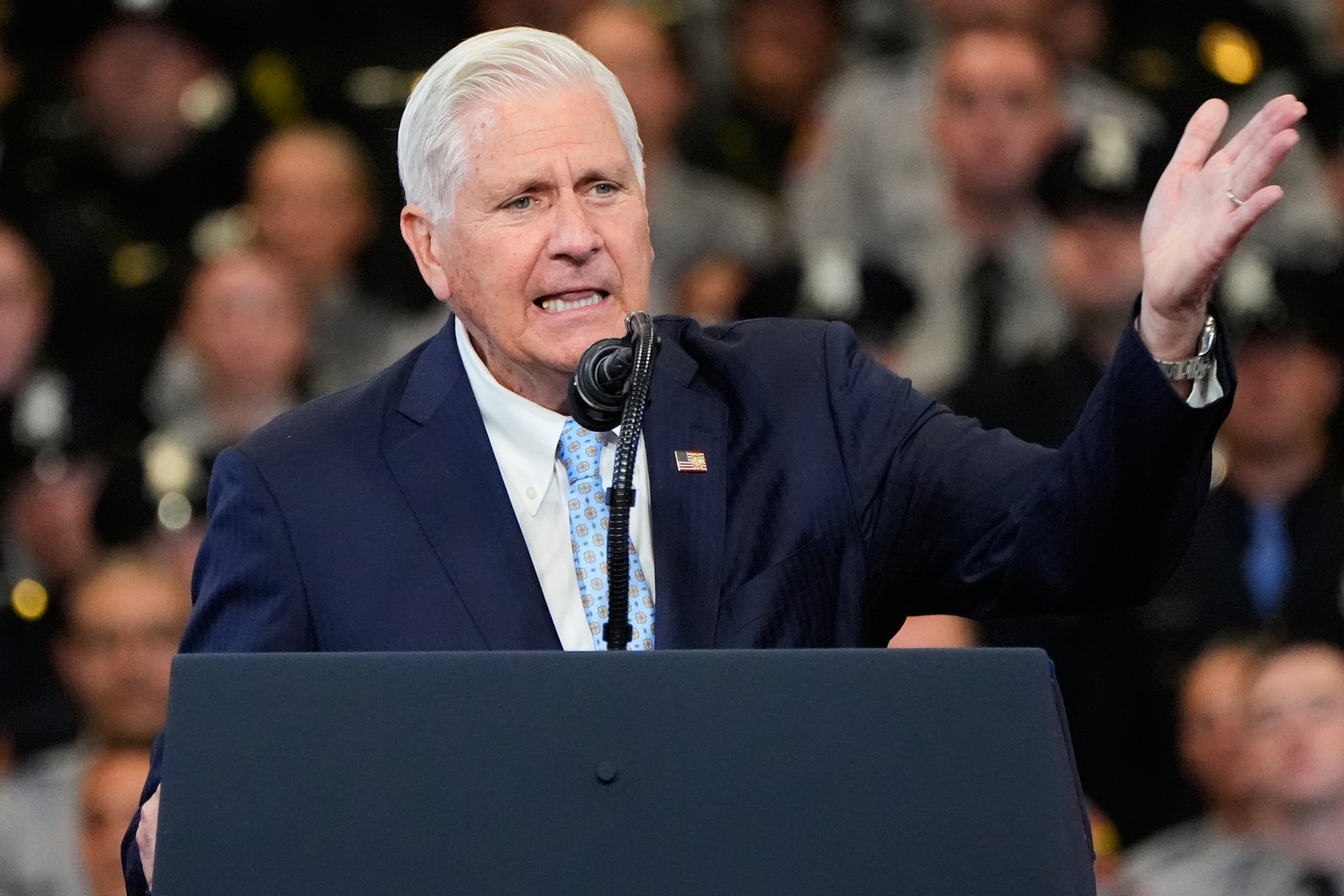
MO’ MONEY: Republican gubernatorial candidate Bruce Blakeman has received dozens of contributions surpassing the legal limit in recent months.
Blakeman has yet to refund roughly $360,000 to donors who have given to him above the cap, as POLITICO first reported on Monday. Gubernatorial candidates are allowed to raise $9,000 from individuals for each election — so $18,000 if they have both a primary and a general. Blakeman dodged a June election, so he’s required to give back any money he’s raised above $9,000.
Many of the excess contributions came early in the election cycle. Knicks owner James Dolan, for example, gave $18,000 on Jan. 20, before it was known whether there would be a primary.
But there have been at least 40 donations above the $9,000 limit that have come in since the Board of Elections certified the primary ballot on May 13, according to Blakeman’s disclosure reports.
Many of those came well past the primary. An Eric Sternberg who used a Nassau County PO Box, for example, gave Blakeman $15,000 in the spring. A donor with the same name who used a nearby home address gave $18,000 on Aug. 19; three more $5,000 checks from those Eric Sternbergs were reported on Sept. 10.
In addition to those 40 donations, there are several individuals who have gone over the limit by making multiple contributions. Former Republican Rep. Nan Hayworth, for example, gave $5,205.08 on May 22, then the same amount on July 31, bringing her total to $10,410.16 for the election cycle.
The unusual figure appears to arise from another way the Blakeman campaign is going past the $9,000 cap. His donation page asks people to make a supplemental contribution to cover processing fees — so somebody giving $5,000 gets a request to give an additional $205.08.
Attempting to donate $9,000 brings forth a suggested donation of $9,369.14. That exact amount has been given 22 times, including by Nassau resident — and one-time Trump administration official — Anthony Scaramucci.
“Anyone who looks at campaign finance filings will see every campaign eating the cost for processing fees,” Democratic campaign finance lawyer Ben Kallos said. “I admire the creativity of trying to have donors eat those costs, but you can’t go over the limit.”
Blue Light News asked the Blakeman campaign about the refunds it owes on Monday. It replied on Tuesday without addressing the issue.
“So many New Yorkers opened their wallets to support Bruce Blakeman that the state’s antiquated campaign finance system couldn’t keep up,” spokesperson Madison Spanodemos said. “The Board of Elections required the campaign to split its most recent finance report into multiple files since it included so much data, causing some contributions to appear multiple times.”
The Public Campaign Finance Board said it’s not to blame.
“Mr. Blakeman’s campaign is the only filer that experienced this issue,” Democratic co-director Brian Keegan said. “This is a user error, not a system error.”
Spanodemos did not respond to questions about the large donations or what the committee’s actual war chest is. If every potential duplicate is removed from Blakeman’s filing, his contribution total would fall by $292,000. That would lower his balance to a $114,000 deficit, even before accounting for the $360,000 in refunds he owes.
A shift like that wouldn’t be unprecedented. Blakeman’s previous report, submitted on July 15, showed he had $4.7 million in the bank. An amended version submitted on July 22 changed his balance to $6.1 million. Yet another amendment on Aug. 13 said that his war chest in mid-July had actually been $4.3 million.
Gov. Kathy Hochul has recently received a handful of contributions over the limit as well. But as has been the norm for gubernatorial candidates, her committee has returned surpluses: The New York State Council of Machinists, for example, gave $10,000 on Sept. 15 and got $1,000 back on Sept. 28.
Hochul’s campaign has started to make Blakeman’s campaign finance foibles an issue in recent weeks.
“It’s against the law,” state Democratic Committee Chair Jay Jacobs said of the Republican’s large contributions. “He’s desperate for money, and desperate people do desperate things. And I think to him, it’s more important he try to get elected than comply with the law.” — Bill Mahoney
ONE WEEK AWAY: Mayor Zohran Mamdani’s administration is pursuing a bold agenda to tame the city’s affordability crisis — making New York City a testing ground for progressives across the country. Join Blue Light News’s New York Outlook: Affordability, Industry & The Economy in NYC on Oct. 14 for live conversations about the business and policy decisions being made today that will shape the city’s economic future. The lineup includes NYC Comptroller Mark Levine, New York City Economic Development Corp. CEO Anthony Shorris, New York City Council Speaker Julie Menin, Partnership for NYC CEO Steven Fulop, Citizens Budget Commission President Andrew Rein, Charles H. Revson Foundation President Maria Torres-Springer, and more. Register now to attend in person or watch the livestream.
FROM CITY HALL
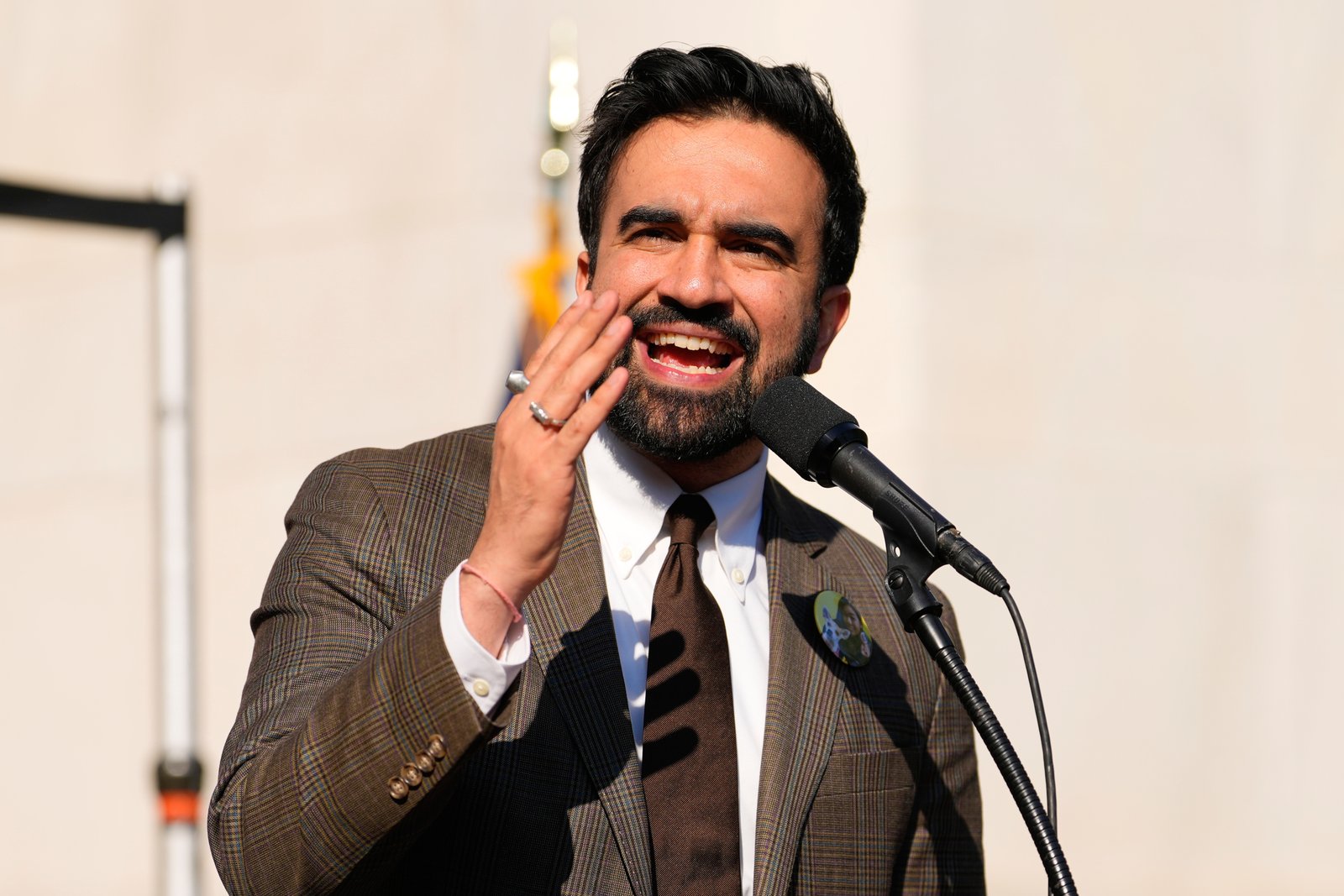
MAMDANI’S OCT. 7 MESSAGE: Mamdani marked the third anniversary of Hamas’ Oct. 7, 2023 attack by condemning the “horrific war crimes” that took place in Israel that day — and then proceeded to blast the American ally for the military campaign it launched in response.
“On that day, Hamas killed more than 1,100 Israelis and abducted 251 others. We grieve alongside our many friends and neighbors who still carry that unthinkable loss,” he said in a written statement this morning.
He then pivoted: “The suffering did not begin nor end that day. It instead continued through the Israeli government’s devastating, ongoing genocide in Gaza, in which it has killed more than 74,000 Palestinians — including more than 21,000 children … Many New Yorkers are reckoning with this unbearable grief, and we mourn alongside them — all while knowing that our tax dollars fund these war crimes.”
Mamdani’s missive — which he also posted on X, where it had garnered nearly 11 million views as of early this afternoon — was consistent with how he has for years messaged regarding the events on and after Oct. 7. What’s remarkable is that he did it as mayor on a somber day — the kind of occasion for which elected officials typically deploy restraint. Today marked his first time commemorating the anniversary as mayor of New York City, home to the largest Jewish community outside Israel, swaths of which believe Mamdani has fomented antisemitism by accusing the country of commiting a genocide in Gaza, a charge Israeli leaders vehemently deny.
Backlash to the mayor’s statement was swift.
“It is like turning September 11 into a day of mourning for al-Qaeda terrorists,” Danny Danon, Israel’s ambassador to the United Nations, wrote on X in response to Mamdani’s comments. “We will not let this happen. We will remember those who were murdered, and we will never forget who was behind this massacre.”
Rep. Dan Goldman, a fellow Democrat, called it a “reprehensible statement.”
“In the guise of ‘grieving’ with those mourning that day, Mayor Mamdani asserts as fact hotly disputed allegations that he knows full well will offend and further upset those same people he pretends to grieve with,” Goldman wrote on X. “On this day of all days, the Mayor of the city with the largest Jewish population outside of Israel embraces extreme activism instead of balanced leadership.”
A spokesperson for Mamdani declined to respond to such criticisms. The mayor is scheduled to attend an Oct. 7 remembrance vigil this evening.
Hochul commemorated the anniversary by ordering the Israeli flag be hoisted on top of the Capitol in Albany. She also ordered that flags be flown at half mast at all state government buildings across New York.
“It’s hard to fathom that it has been three years since the October 7 Hamas massacre. Three years since the deadliest day for the Jewish people since the Holocaust,” the governor said in a statement. “The pain of that dark day has not faded. But neither has the strength, resilience and enduring hope of the Jewish people.” — Chris Sommerfeldt
From the Capitol
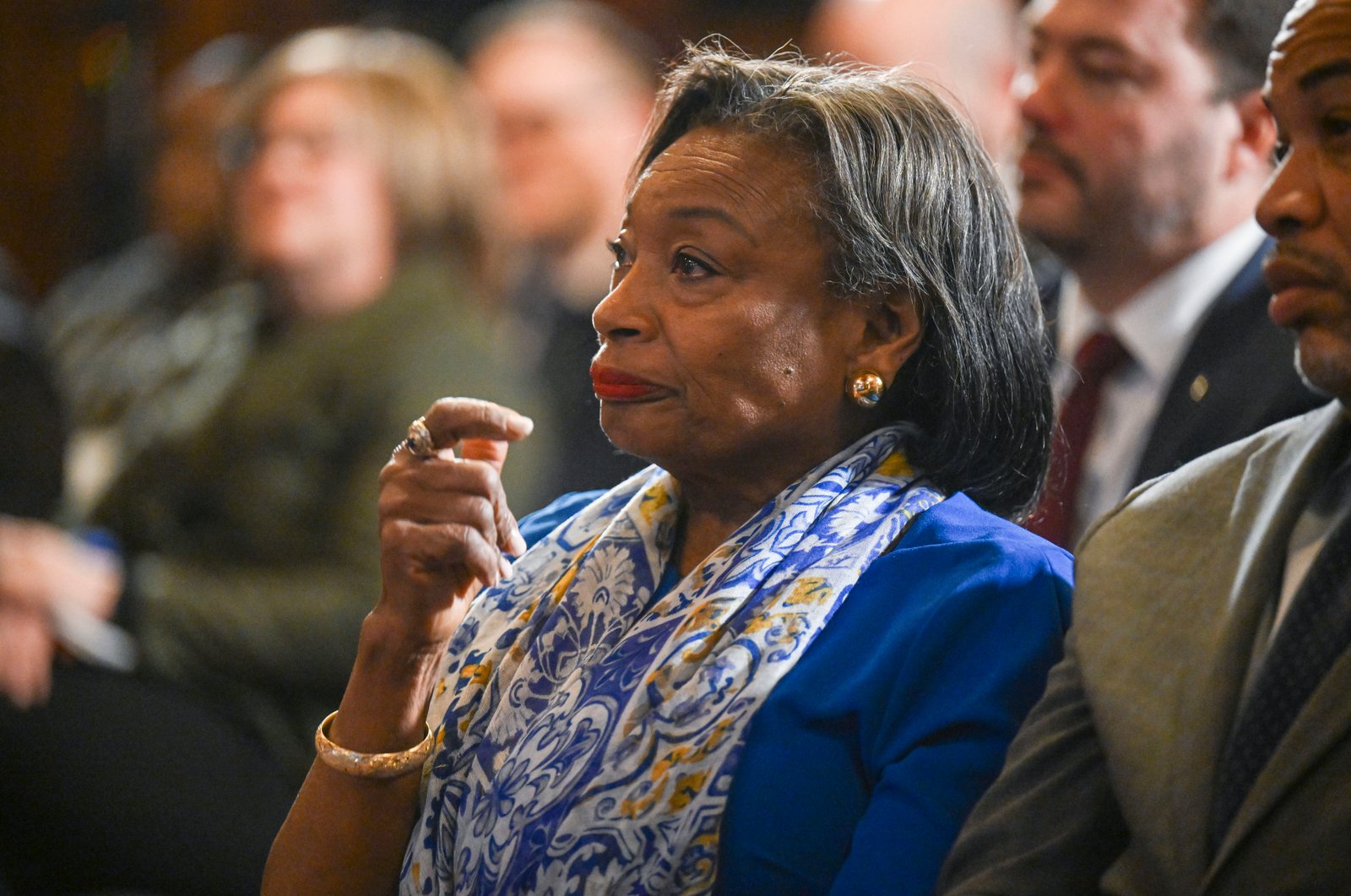
FEDERAL TAX CREDIT UNDER FIRE: New York’s legislative leaders are urging Hochul to reject a GOP-backed federal tax credit scholarship program, setting up a potential clash over the hot-button issue.
The Treasury Department released a pair of rules for the initiative — which was included in President Trump’s sweeping 2025 tax-and-spending package — last week. The program would give donors to nonprofits that support educational expenses a dollar-for-dollar tax credit of up to $1,700 annually. Married taxpayers filing jointly could receive a credit of up to $3,400.
In a statement Wednesday, state Senate Majority Leader Andrea Stewart-Cousins said the regulations would undercut the state’s ability to establish “meaningful guardrails,” leaving New York with little control over which schools and expenses qualify or how the funding is used. She also said it would allow the money to potentially flow to schools outside the state.
“I am apprehensive about this federal proposal and have serious reservations about the potential impact it could have on public schools across New York State,” Stewart-Cousins said. “New York should not opt in to this program.”
Assembly Speaker Carl Heastie also said Tuesday that his chamber will prioritize ensuring public schools are fully funded.
“Public dollars should support public schools that serve all children and are accountable to the taxpayers who fund them,” Heastie said in a statement. “New York should opt out of the federal voucher program and continue investing in the public schools that educate the overwhelming majority of our children.”
The city’s and state’s teachers unions, with which the Legislature is closely aligned, have also urged Hochul to reject the program.
Spokespeople for the governor did not immediately respond to a request for comment on the opposition of legislative leaders.
But Hochul has signaled support for the scholarship program.
Ahead of the release of the regulations, her office said the credits could expand educational opportunities for public and private school students statewide “without diverting resources from public schools or state and local budgets.” The governor’s team also said public schools could benefit from the program. — Madina Touré
FROM THE CAMPAIGN TRAIL

TAKING THE STAGE: A debate is on the books in the battleground race between Democratic Rep. Tom Suozzi and his Republican challenger, former Assemblymember Mike LiPetri.
The debate, hosted by News 12, will air on Oct. 20. The station said that’s the only Long Island congressional debate it’s hosting after Democratic Rep. Laura Gillen and Chris Gallant, Republican Rep. Nick LaLota’s Democratic challenger, declined News 12’s invite for their respective races. Republican Rep. Andrew Garbarino’s campaign did not respond to its invite, the station said.
Suozzi defeated LiPetri by 4 points in 2024. National Republicans are pouring millions into the seat in the final stretch of the race with the hope of flipping it this year. — Madison Fernandez
POLL POSITION: Hochul leads Republican foe Bruce Blakeman by 11 points in a Marist University survey released this morning.
Hochul, seeking a second full term, draws 53% in the poll; Blakeman stands at 42%. Voters by a 55% to 42% margin plan to support the Democratic congressional candidate, the survey found.
The poll of 1,361 likely voters was conducted from Oct. 1 to Oct. 4. It has a 3.6 percentage point margin of error. — Nick Reisman
IN OTHER NEWS
— GROCERY BRANDING: Branding for Mamdani’s signature city-run grocery stores will be handled by the same Brooklyn design firm behind trendy products like Graza olive oil and Yellowbird hot sauce. (New York Magazine)
— GENDER-AFFIRMING CARE: New York City plans to spend nearly $9 million on local organizations providing gender-affirming care to minors, after two major hospital systems in the city struck deals with the Trump administration to stop providing such care. (Gothamist)
— MAKE POLITICS SEXY AGAIN: Long Island Democratic congressional candidate Chris Gallant is leaning into sexiness, after the New York Post revealed last month he had appeared in bondage photos more than a decade ago. (The New York Times)
Missed this morning’s New York Playbook? We forgive you. Read it here.
Michigan Republican Senate nominee Mike Rogers called for an end to the “tariff war” with Canada in a new campaign advertisement released on Wednesday, another break from the Trump administration weeks before the midterm elections.
Rogers’ ad comes as Republican campaign groups across the country have entered triage mode in an effort to salvage GOP control in an unfavorable political environment.
“Here in Michigan, we know that Canada is not our enemy. We need to end this tariff war now,” Rogers said in the advertisement, which is part of a coordinated spend between his campaign at the National Republican Senatorial Committee.
He added, “as Michigan’s senator, I’ll bring both parties together to lower your prices.”
Each year, Michigan does roughly $80 billion in trade with Canada, according to the Michigan Chamber of Commerce.
The new video comes weeks after he put out another advertisement breaking with President Donald Trump, publicly calling for the war with Iran to end “quickly.”
In both commercials, Rogers said that prices are too high and neither mentioned the president by name.
The latest ad is a shift from his previous positioning on trade with Canada.
Last month, Rogers said that some of the tariffs imposed on Canadian goods are needed, as the state’s manufacturing sector has been gutted by cheap foreign imports in the past.
“President Trump is right to put America first — and tariffs are necessary, but are not a one-size-fits-all solution,” Rogers previously said in a press release.
But, he also said he has the pull to end the trade war threatening Michigan.
The White House, along with Rogers’ and Democratic nominee Abdul El-Sayed’s campaigns, did not immediately respond to requests for comment.
- Iowa’s Ashley Hinson slams the savings habits of millennials
- Trump approved Ohio disaster aid ahead of rally
- Clean energy group sets its sights on a new GOP target: Lauren Boebert
- Blakeman’s campaign finance mess
- HASC Dems weigh reviving Pentagon oversight subcommittee
- Trahan unveils AI liability discussion draft
- Vance to sit for CBS town hall in Michigan ahead of midterms
- Michigan’s Mike Rogers says trade war with Canada needs to end
- ‘He is welcome to raise his own money’: GOP confronts its Paxton woes
- The top House sleeper races to watch, according to the pros
-

 Politics2 years ago
Former ‘Squad’ members launching ‘Bowman and Bush’ YouTube show
-
Uncategorized2 years ago
Bob Good to step down as Freedom Caucus chair this week
-

 The Josh Fourrier Show2 years ago
DOOMSDAY: Trump won, now what?
-

 The Dictatorship2 years ago
Pete Hegseth’s tenure at the Pentagon goes from bad to worse
-

 Politics2 years ago
Former Kentucky AG Daniel Cameron launches Senate bid
-

 The Dictatorship2 years ago
Luigi Mangione acknowledges public support in first official statement since arrest
-

 Politics2 years ago
Blue Light News’s Editorial Director Ryan Hutchins speaks at Blue Light News’s 2025 Governors Summit
-

 The Dictatorship1 year ago
Mike Johnson sums up the GOP’s arrogant position on military occupation with two words