
Politics
Democrats desperately look for a redistricting edge in California, New York and Maryland

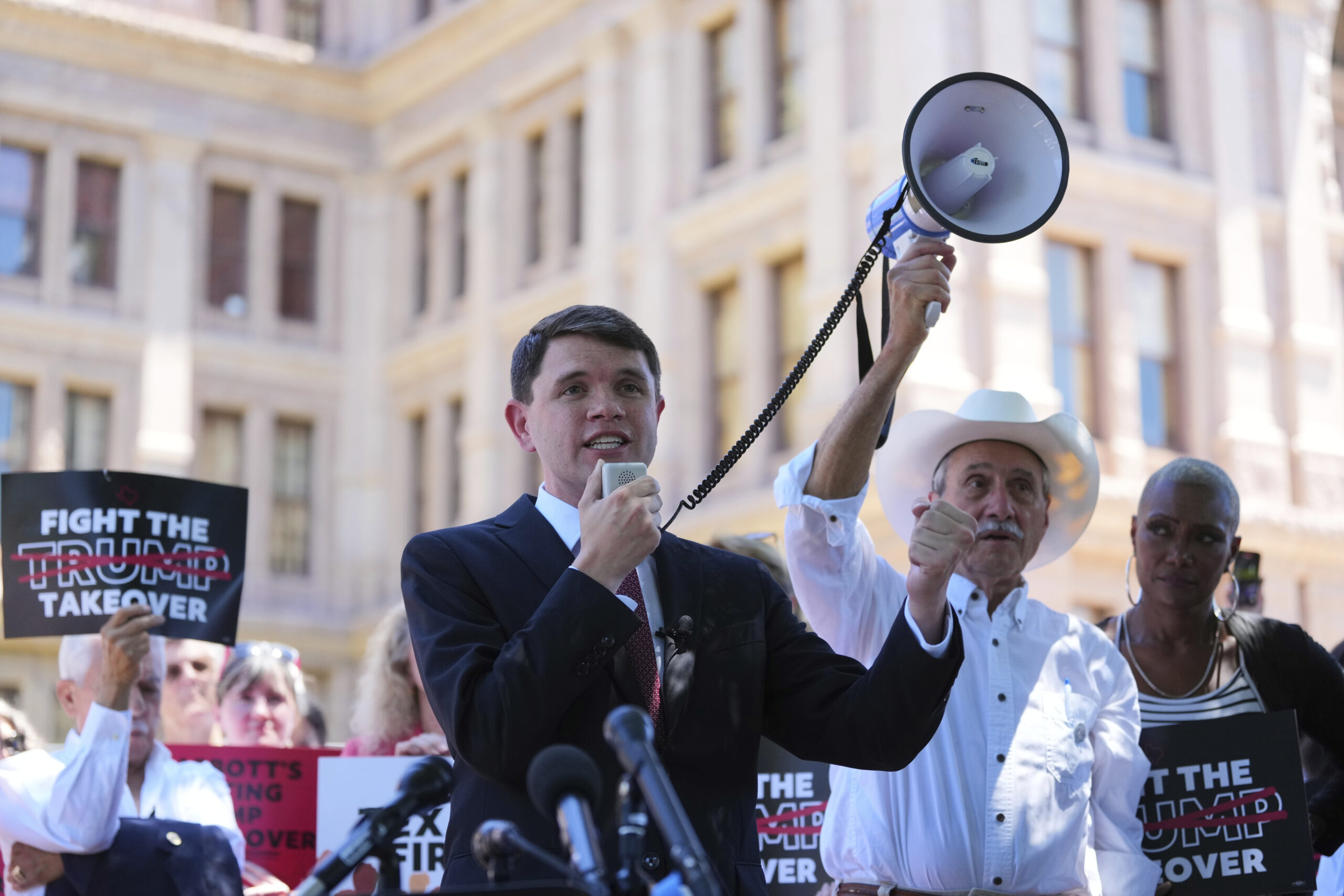
Democratic leaders are feeling pressure to join a brewing redistricting battle that is threatening to upend the midterms landscape — an effort that is likely to slam into legal and political reality.
As Texas Republicans pressed forward with a redistricting blitz designed to increase the number of red seats in the state, officials in the biggest Democratic states scrambled for a response. In New York, House Minority Leader Hakeem Jeffries spoke with Gov. Kathy Hochul in recent days to discuss what a counter-effort could look like. California Gov. Gavin Newsom’s administration talked to state election officials about the logistics and timing of a special election to overturn its nonpartisan commission. And Illinois Gov. JB Pritzker joined Newsom in meeting with Texas Democratic lawmakers on Friday about a strategy for stalling the GOP’s brazen attempt to carve out five new seats, per President Donald Trump’s demand.
The problem is Democrats don’t have many options. In conversations with more than a dozen state lawmakers and redistricting experts, Democrats’ best shot at redrawing a map lies in California, a heavily blue state with a huge number of congressional districts. They see the second-best option in New York, which saw Democratic gerrymandering efforts sputter in recent years, and Illinois, which is already a heavily pro-Democrat gerrymander. Far less likely options lie with Maryland and New Jersey, which have just four Republican-held seats between them.
Discussion of these options come as a debate rages within the party over whether to play hard ball to the same degree as Republicans.
“At this moment, it seems very clear that self defense is something we have to put as a priority,” said Maryland House Majority Leader David Moon, who introduced a bill this week that would force open Maryland’s redistricting process if another state pursues redistricting ahead of the U.S. Census. “If that’s where we are, and that’s where we’re forced to go, then I think that’s where Democratic states need to be prepared to go.”
Trump is pushing Republicans in an aggressive effort to redraw maps in hopes of holding onto the House in a potentially unfriendly midterms cycle. Efforts are already underway in Texas, where Trump wants to draw five additional GOP seats, and in Ohio, where Republicans hope to draw additional red districts during a legally mandated redistricting. Punchbowl News recently reported Trump is pressuring Missouri to rip up its own map ahead of the midterms, too.
All of this has sparked outrage from the Democratic base, but Republicans feel bullish about a midterms map that is reshaped by partisan redistricting.
“In an arms race where there’s a race to gerrymander the most, there’s not a scenario where they have more seats than we do,” said a GOP operative, granted anonymity to speak about party strategy.
Newsom has been the most strident of all the Democratic governors who lead trifectas in his vow to counter Texas Republicans, vowing on Friday to “put a stake into the heart” of the Trump administration by preventing Republicans from retaining the House.
But the obstacles are steep: Redrawing California’s map would require either calling a special election and convincing voters to return line-drawing power to politicians after they specifically voted to entrust a nonpartisan commission with that authority, or simply having the Legislature draw maps and effectively daring the courts to stop them.
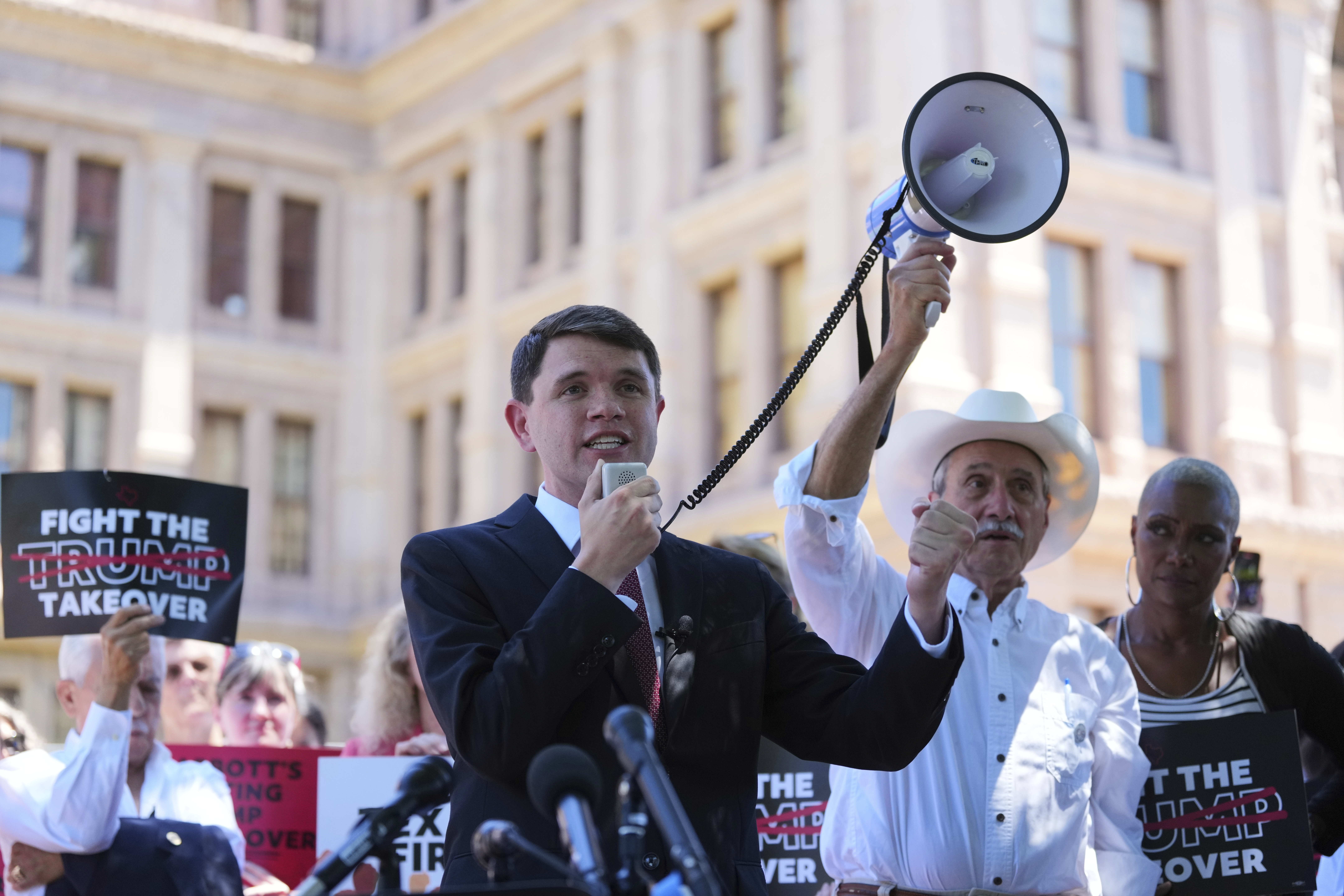
“I don’t think it’s doable. I think there are too many constitutional constraints,” said Bruce Cain, a Stanford political scientist who was deeply involved as a staffer in the partisan gerrymanders from a prior era of California politics.
It’s not just a legal obstacle. Undertaking redistricting would open up a huge “political fight” within the party by redrawing districts some politicians have run in for multiple cycles, he said. “You’d be borrowing from different kinds of Democrats and sticking them into other seats and the politics of that would be very complex,” Cain added.
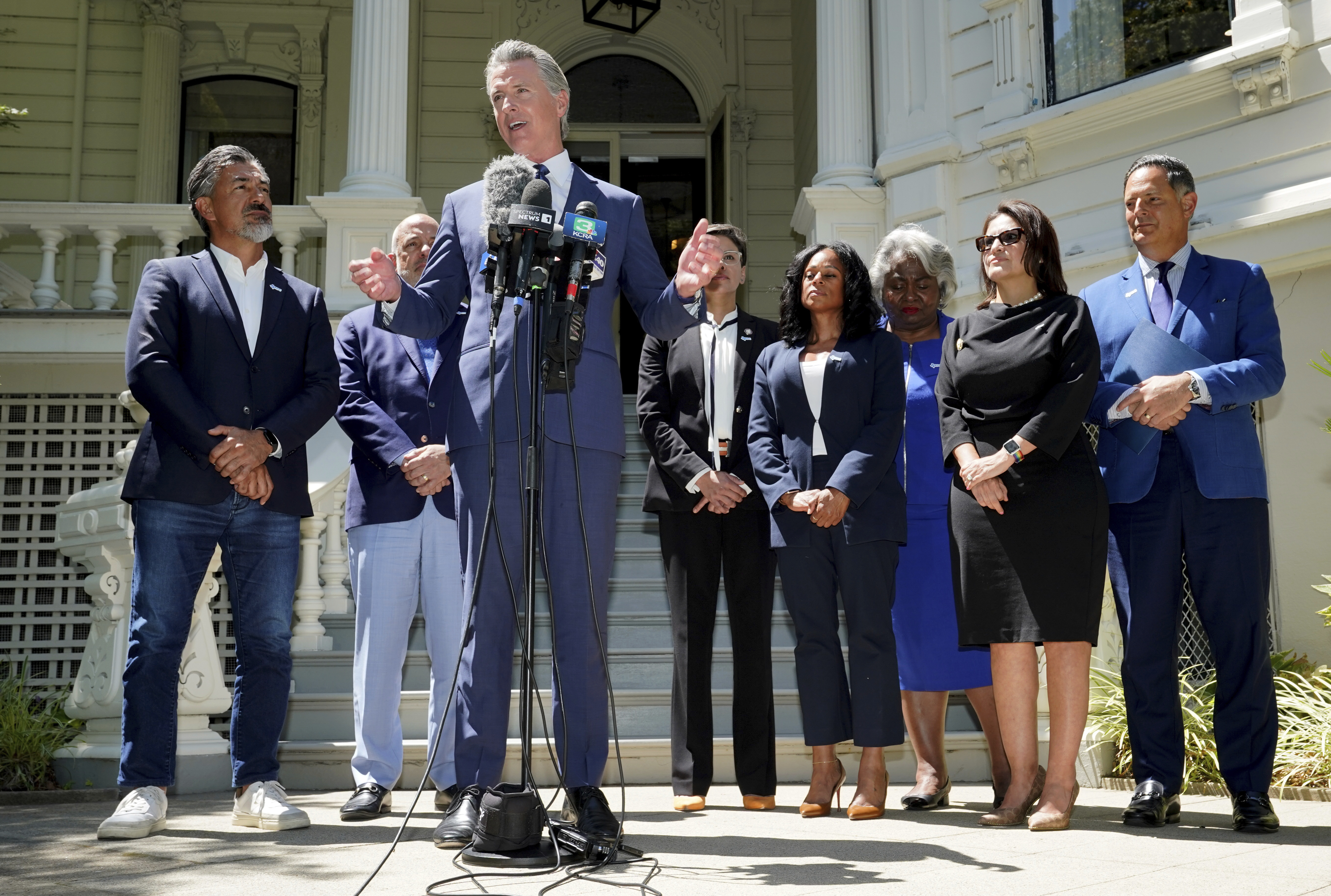
But Newsom, who has his eye on running for president in 2028, has been steadily laying the groundwork anyway. He hosted Texas Democrats at the governor’s mansion in Sacramento on Friday, doing his part to project a united national front against Republicans, and told reporters he was weighing several options to expand Democrats’ margins beyond their current, disproportionate hold on 43 of 52 House seats.
“The question I imagine many folks are asking here in California is: what do the politics of Texas have to do with the politics here in California?” Newsom told reporters on Friday, flanked by Texas lawmakers. “The answer is everything.”
Lawmakers and operatives who were initially caught off guard or skeptical of Newsom’s proposal are increasingly becoming convinced California has the authority and the political will to respond to Texas in kind. Sharing maps of a potential Democratic gerrymander has become a favorite pastime.
“I’ve seen a map that’s legal, upholds the Voting Rights Act, and produces 49 to 50 Democratic seats,” said Matt Barreto, a pollster and director of UCLA’s Voting Rights Project who polled for the Harris campaign and advised the Biden White House. California currently has 40 Democrats and 12 Republicans in Congress. “This is something lawmakers should consider if Texas goes first.”
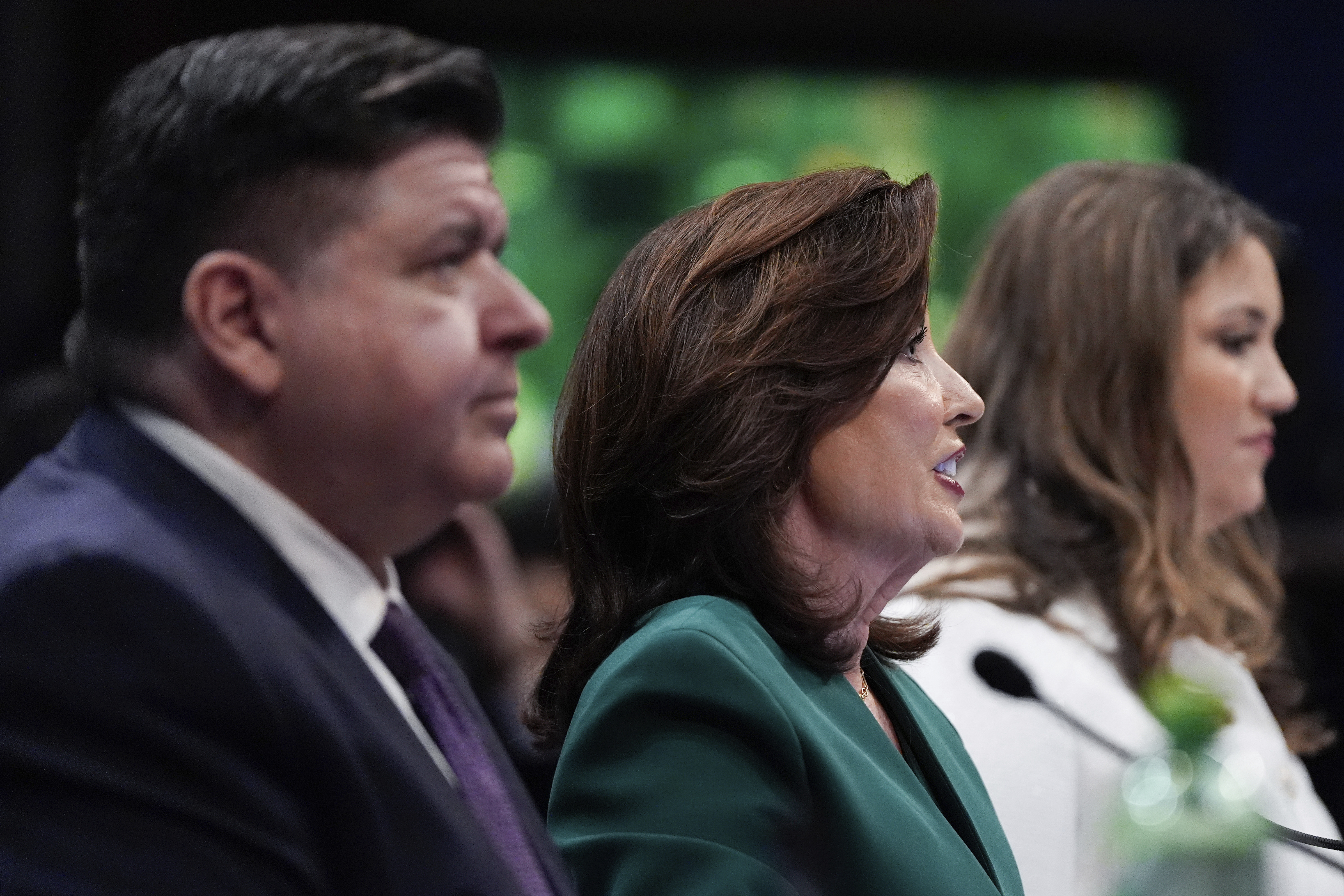
In New York, Jeffries’ staff spoke with Hochul’s office recently to discuss redistricting New York’s House seats, two people with direct knowledge of the conversation said. On Thursday, Hochul declared that “all’s fair in love and war” regarding returning to contentious congressional map redraw.
“If there’s other states violating the rules and are trying to give themselves an advantage, all I’m going to say is, I’m going to look at it with Hakeem Jeffries,” she said.
Even if state lawmakers plow ahead with redistricting, something the state Constitution says can only be done once per decade, the process would likely take more than a year to complete and may not be finished in time for the 2026 midterm elections.
New York tried an aggressive gerrymander that got blocked by the courts in 2022, and a court-drawn map was used instead. Democrats later drew a new map that is far less aggressive.
Hochul’s political allies believe there is little upside to drawing new lines.
“I understand those in New York who are watching what’s happening in Texas and Ohio want to offset their unfair advantage,” said New York Democratic Chair Jay Jacobs. But “the constitution seems pretty clear that this redistricting process should be done every 10 years. I don’t know where someone could interpret it as something you can do every two years.”
Beyond Texas, Republicans have their eye on picking up seats in other states like Missouri and Florida — which would put Democrats in a tough spot, given they don’t have as much leeway to squeeze out extra seats.
New Jersey Gov. Phil Murphy was noncommittal when asked by reporters earlier this week if he plans to pursue redistricting, noting that it’s “too early to make any definitive statement about it.” But he echoed what many other Democrats across the country have said when talking about the possibility of early redistricting: “Never bring a knife to a gunfight.”
New Jersey has its own constitutional impediment, which states that congressional districts, which are drawn by an independent commission, “shall remain unaltered through the next year ending in zero in which a federal census for this State is taken.”
Even if they were able to circumvent the state constitution, Democrats already have the majority in the New Jersey congressional delegation, and just two seats — the 7th, held by Republican Rep. Tom Kean Jr., and the 9th, held by Democratic Rep. Nellie Pou — are considered battlegrounds.
Even some other Hail Mary options seem off the table. State lawmakers in Washington, Minnesota and Colorado balked at the suggestion they should pursue drawing new maps in the next few months.
“It’s just not in the cards,” said Washington House Majority Leader Joe Fitzgibbon, citing the requirement that a two-thirds majority is needed in both the state House and Senate to reconvene the state’s bipartisan redistricting commission.
And Minnesota State Sen. Aric Nesbitt shut down the idea quickly: “We’re not power-crats, we’re Democrats. We should do things that improve democracy, even if that means sometimes we don’t get our way.” Democrats hold the governorship and state Senate in Minnesota, but Republicans narrowly control the House.
In Colorado “there’s really no debate,” said former Senate Leader Steve Fenberg, who helped create the state’s independent redistricting commission in 2018.“We’re at a juncture right now where the threat is so overwhelming that I don’t think Democrats should rule out responding in kind,” he said. “But in a state like Colorado, I don’t think it’s really in our DNA to do this kind of action and it’s not constitutionally allowed.”
Still, with a potentially tougher cycle ahead of them than they were anticipating given all of Trump’s strategy, redistricting is sure to be a hot topic of conversation as Democratic governors gather at the National Governors Association meeting this weekend in Colorado.
“I suspect as the Democratic governors get together for a drink or a coffee, this will be high on the agenda,” Murphy said.


President Donald Trump made major gains among Latino voters in 2024. Now, those same voters might cost Republicans control of Congress.
Fifty-nine percent of Latino registered voters prefer a Democratic-controlled Congress, compared with 35% who favor Republican control, according to a new NBC News/Telemundo poll released Sunday. That 24-point gap for Democrats is twice the party’s lead compared to the September 2024 version of the poll.
A separate CBS News/YouGov poll released Sunday also found Democrats ahead among Hispanic likely voters, with 60% backing a Democratic House candidate and 39% supporting a Republican.
The findings threaten gains the GOP made in 2024, when Trump narrowed Democrats’ long-standing advantage among Latino voters. A POLITICO analysis of that year’s election results found that Trump improved his vote share by an average of more than 6 percentage points in majority-Hispanic counties, compared with 2020.
With the midterms approaching, Republicans have made those gains central to their push to maintain control of the House. When Texas Republicans revealed their redistricting proposal last year, four of the five potential GOP pickup opportunities were in majority-Hispanic districts.
Meanwhile, Trump’s overall approval rating among Latino registered voters stands at just 27% in the NBC/Telemundo poll, while 69% disapprove. On the economy specifically, 74% of Latino voters disapprove of Trump’s handling, while 78% disapprove of how he’s dealt with cost-of-living concerns.
Nearly two-thirds, 65%, say Trump’s policies have hurt economic conditions. Inflation and cost of living rank as the most important issues facing the country for 33% of respondents, followed by government corruption at 22%. Another 10% named jobs and the economy.
Economic frustration helped drive Latino voters toward Trump in 2024, with Democrats across the country suggesting in the aftermath of his victory that he was better able to connect with the voting bloc on financial issues.
But now, Latino voters seem to favor Democrats over Republicans on the economy, 48% to 27%, and the cost of living, 45% compared to 26%.
The war with Iran, now in its seventh month, is also weighing on voters’ perceptions of energy costs. In September, the average price of diesel hit a record $6.53, according to AAA.
In the CBS survey, 91% of Hispanic registered voters attributed rising U.S. oil and gas prices to the conflict.
Trump’s immigration crackdown is also putting vulnerable Republicans on the defensive. Rep. María Elvira Salazar (R-Fla.) released an ad in English and Spanish criticizing the administration for going “too far” on immigration and saying Hispanics who backed Trump in 2024 feel “betrayed.”
In the days immediately following her ad, Trump told reporters that he still supported Salazar. “I’m very strong on the borders — and she isn’t,” Trump said. But the president later reposted a flurry of social media messages criticizing Salazar on Truth Social, including one calling for the Florida Republican’s replacement ahead of the midterms.
In the NBC/Telemundo poll, 67% of Latino voters say Trump’s immigration enforcement has gone too far, compared with 22% who say he has taken the right approach.
The White House did not immediately respond to a request for comment.
Dissatisfaction with Trump and Republicans has not translated into broadly positive views of Democrats. According to the NBC poll, Latino voters remain nearly evenly divided on the Democratic Party, with 41% viewing it positively and 42% negatively. Negative views of the GOP, meanwhile, have climbed to 62%, up from 46% in September 2024.
The NBC/Telemundo survey of 800 Latino registered voters was conducted Sept. 21-28 and has a margin of error of ±3.46%. The CBS/YouGov survey of 2,166 adults was conducted Sept. 30-Oct. 2, with a margin of error of ±2.5 points.
CONCORD, New Hampshire— Pete Buttigieg is barnstorming the nation in the final weeks before the midterms, boosting candidates in battlegrounds and even areas traditionally hostile to Democrats. And it’s helping him look beyond November.
Down the homestretch, Buttigieg is set to campaign in at least six states: North Carolina, Virginia, New Jersey, Georgia and Nevada, along with his adopted home state of Michigan, according to an itinerary shared first with Playbook by a spokesperson for Win the Era, his political group.
Buttigieg has been refining his campaign trail message as he crisscrosses the country, connecting concrete cost-of-living concerns to the more abstract need for political reform.
It’s a kind of real-world testing that helps him further define his political brand at the same time that he leverages it to “be useful,” as he so often puts it, to his party.
“I have a lot of conviction that, actually, your economic message only has credibility if you have a reform message, too,” Buttigieg said in an interview after a Rochester Opera House rally where he received a standing ovation. “Because otherwise, what you’re doing is you’re saying things that people agree with, which is great, but they might not believe that you can actually deliver it.”
He’s also building the kinds of relationships with voters and party leaders that can be useful if he runs for president in 2028, a question he was repeatedly asked. (“We’ll see,” he told one woman at the Deerfield Fair.)
“For Pete, it’s less about getting credit nationally for what he’s done for Democrats and more about building relationships in places that will be beneficial down the line,” said David Axelrod, a Buttigieg confidant.
Buttigieg’s status as an in-demand surrogate was on full display during his 48-hour swing through the Granite State, where he finished “a very, very, very close second place” to Sen. Bernie Sanders (I-Vt.) in the 2020 primary, as Buttigieg put it in Saturday evening remarks at the New Hampshire Democratic Party’s Eleanor Roosevelt Dinner in Concord.
“I couldn’t ask for a better wingman,” Rep. Chris Pappas said, introducing Buttigieg at the packed rally Friday in Rochester. “People know that he’s a trusted voice,” Stefany Shaheen, who is running for Pappas’ seat, told Blue Light News after campaigning at a book store, cafe and candy shop with Buttigieg along Elm Street in Manchester.
How Buttigieg is learning from the midterms
Buttigieg has neither a battleground governorship nor a personal fortune to wire into midterm races. What he has put on offer is himself: He’s made more than 100 endorsements this cycle, campaigning in person for roughly half of them, and stops in 37 states since he left the Transportation Department.
Buttigieg was welcomed in places where candidates shunned some of his potential rivals. He campaigned with Rob Sand and Josh Turek in Iowa as they run for governor and senator, respectively. He backed Brandon Dukes in his special election effort to flip a Pennsylvania state House seat that Trump won by 18 points. He was alone among his peers in endorsing Hartford Mayor Luke Bronin in his victory over longtime Rep. John Larson in Connecticut.
“If I can help give voice to what people are after in diverse geographies, including very conservative areas,” he said, “turns out that’s my best use of time.”
Buttigieg admitted he wasn’t certain what role he would play in the party’s midterms at the start of President Donald Trump’s second term. Now he’s processing all of the data and inputs he’s receiving along his travels.
“I’m learning a lot about our country and our party as I go, and what I’m seeing is that people have a real hunger for change,” he told Blue Light News. “First of all, in policy. Secondly, in the kind of politics that we have, and third, in the system itself.”
That’s developed into a core argument in his speeches connecting the cost of living to political reform: “If we want the kitchen table to be better off, we got to deal with the political system that is kicking the legs out from under the kitchen table,” Buttigieg said at the Rochester Opera House Friday evening.
It’s a message that can last long beyond the midterms, and Buttigieg is trying to point his party there.
“Part of what I’m really trying to push my party on is the need to have answers for ‘then what,’” he said. “There’s a big ‘then what’ for when Donald Trump leaves the political scene, but there’s an immediate ‘then what’ starting on Nov. 4.”
A Democratic Congress, he argued, needs “a compelling governing vision coming out of the gate” and should move quickly on tariffs, the minimum wage, tax fairness, health care, the Child Tax Credit and political reforms including gerrymandering.
The 2028 question
Even as he sidestepped several questions from reporters about his next moves, saying he was focused on 2026, remnants of his 2020 campaign and hints of a future one piled up. People wore “Pete for New Hampshire” buttons and T-shirts. His old playlist, including Creedence Clearwater Revival’s “Up Around the Bend,” played at the Friday night rally.
At the Roosevelt dinner the next night, in front of a sold-out crowd of over 400, Buttigieg earned a standing ovation that ended in “Pete, Pete, Pete” chants.
“Pete had a great New Hampshire organization in 2020, nearly winning,” Ray Buckley, the chair of the New Hampshire Democratic Party, told Blue Light News. “If anything, his popularity here has grown.”
Much has changed since then.
On Saturday evening, instead of walking out to Panic! At the Disco’s “High Hopes,” his ubiquitous anthem back then, or even Imagine Dragons’ “It’s Time,” which he road-tested last year, Buttigieg employed “You Get What You Give” by the New Radicals.
There have been deeper changes, too: Buttigieg is now the father of 5-year-old twins, Gus and Penelope. He is weighing whether he can run for president and remain a good and present father.
His husband, Chasten, is a “great dad” and “knows why I’m on the road.”
Back on the road, Buttigieg is winning over those who didn’t back him in 2020.
At the back of the room in Rochester on Friday night, the town’s Mayor Chuck Grassie wore a “Pete for New Hampshire” button as he took in the scene. Grassie, who backed Massachusetts Sen. Elizabeth Warren in 2020 and considers himself a “pragmatic progressive,” said Buttigieg could knit together the party’s moderate and progressive factions.
“He’s a guy I think would attract a lot of people,” Grassie said. “And a lot of people I talk to are saying, ‘You know, he’s looking better and better every day.’”
Added Grassie: “In New Hampshire, I think Pete may be the guy to beat.”
Sen. Ted Cruz fired back at JD Vance for suggesting he’s already focused on a 2028 presidential bid, calling the vice president “insecure” while insisting he’s focused on the 2026 midterms.
“In my experience, people engage in political bomb-throwing when they’re feeling insecure,” Cruz said in a phone interview Saturday. “So he’s welcome to make whatever comments he likes. I’m going to keep focusing on the midterms and helping us win on Election Day in the next 30 days.”
Cruz’s comments came in response to an NBC News interview Thursday with Vance in which the vice president suggested Cruz was prematurely eyeing a White House run.
“It is really obvious to me that, at this very moment, Ted Cruz is running for president,” Vance said. “At this moment, I’m not. I’m trying to help elect Republicans. That’s what I’m going to keep on doing.”
Vance is widely viewed as the frontrunner for the Republican presidential nomination, but Cruz has said he doesn’t believe Vance is the sure-fire nominee and suggested he might throw his own hat in the ring. “I’ll certainly be part of the discussion,” he told MS NOW in August.
On Saturday, Cruz told Blue Light News he is dedicated to helping Republicans maintain control of both chambers of Congress. He pointed to his travel this cycle to campaign with candidates in Georgia, Iowa, Nebraska, South Carolina as well as in his home state of Texas as proof. He also said he has trips planned this month to campaign with Republicans in Alaska, Florida, North Carolina and South Carolina.
“Over the last 10 years, there’s no Republican in the country who has campaigned for more Senate candidates, more House candidates, more gubernatorial candidates than I have, and this year will be no exception,” he said.
Cruz rattled off a list of a dozen GOP candidates he’s helped bolster in past years, including former Virginia Gov. Glenn Youngkin, Sen. Thom Tillis of North Carolina, U.S. House candidate Karoline Leavitt — and the vice president.
“Indeed, ironically, I spent a full day on the road with JD Vance, campaigning with him when he was running for Senate in Ohio [in 2022],” Cruz said. “I was very glad he won that race. I was very glad to help him.”
A spokesperson for Vance did not immediately respond to Cruz’s latest comments.
Vance campaigned in Texas and Florida this week and will hold a rally in Alaska on Monday.
-

 Politics2 years ago
Former ‘Squad’ members launching ‘Bowman and Bush’ YouTube show
-
Uncategorized2 years ago
Bob Good to step down as Freedom Caucus chair this week
-

 The Josh Fourrier Show2 years ago
DOOMSDAY: Trump won, now what?
-

 The Dictatorship2 years ago
Pete Hegseth’s tenure at the Pentagon goes from bad to worse
-

 Politics2 years ago
Former Kentucky AG Daniel Cameron launches Senate bid
-

 The Dictatorship2 years ago
Luigi Mangione acknowledges public support in first official statement since arrest
-

 Politics2 years ago
Blue Light News’s Editorial Director Ryan Hutchins speaks at Blue Light News’s 2025 Governors Summit
-

 The Dictatorship1 year ago
Mike Johnson sums up the GOP’s arrogant position on military occupation with two words