
Politics
Dearborn’s Arab Americans feel vindicated by Harris’ loss

DEARBORN, Michigan — Arab American leaders for months warned Vice President Kamala Harris that she needed to separate herself from President Joe Biden’s support of Israel in the war in Gaza — or face an electoral backlash from this influential community in a key battleground.
But those pleas went largely ignored.
Instead, Harris made strategic errors that deeply insulted Arab American voters reeling from intense grief as the death toll in the Middle East climbed. She refused to host a Palestinian American onstage at the Democratic National Convention. She curtly shut down protesters at campaign rallies who criticized her solidarity with Biden over the conflict. She dispatched pro-Israel surrogates to Michigan.
Now, many Arab American residents in Dearborn “feel like they’ve been redeemed,” said Michael Sareini, Dearborn city council president. “They wanted to send a message and they did.”
“This stance on endless wars and killing of innocent women and children has got to end,” he said.
In the initial days after the election, as Democrats despaired over the results, Dearborn residents felt unsurprised by President-elect Donald Trump’s resounding win, according to interviews with nearly a dozen Arab American leaders in this densely populated Muslim city just outside Detroit. Adding to their sense that they were right, their protest vote was not limited solely to Arab Americans, who make up a fraction of the U.S. population. Their furor toward the Biden administration over Gaza spilled out onto college campuses across the nation and among progressives of all ages, amounting to the most significant anti-war protest in a generation.
“While we dealt with that grief, we became much more politically mature,” said Amer Zahr, a Palestinian American activist.
Unofficial results show Trump received the most votes in Dearborn, with 42 percent, while Harris earned 36 percent — a 33 percentage point drop from when Biden won Dearborn in 2020. Green party candidate Jill Stein collected 18 percent.
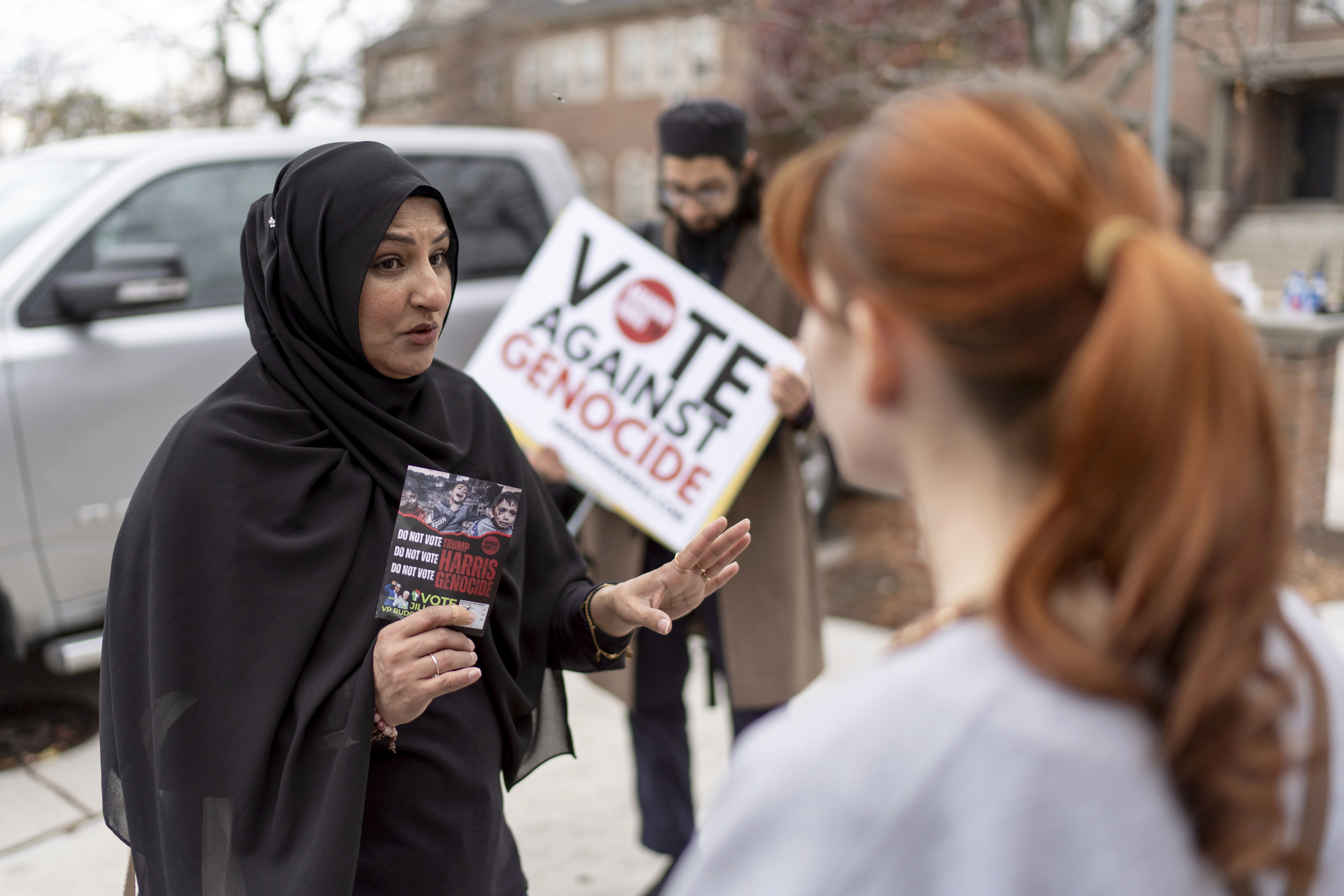
Zoom into Arab American neighborhoods and you’ll find an even more dramatic crumbling for the vice president. Trump showed up big throughout the Eastern and Southern parts of Dearborn, where a high concentration of the community lives. In one of those precincts, Harris earned only 13 percent while Trump got 51 percent.
Multiple Dearborn leaders said that Trump’s social conservatism and isolationist “America First” foreign policy made Arabs more comfortable with backing a Republican after the community fled from the GOP in the aftermath of 9/11. And, for a population that often feels targeted by the justice system, many identified with Trump’s legal woes.
But those leaders emphasized that the dramatic move toward Trump does not mark a permanent realignment with the Republican party for this demographic historically part of the Democratic base but rather an explicit rejection of Biden and Harris. The top of the ticket was the exception: Democrats won Dearborn at every other level of the ballot, from U.S. Rep. Rashida Talib down to state lawmakers and school board members.
“They didn’t vote for Trump because they believe Trump is the best candidate,” said Osama Siblani, publisher of the Arab American News. “No, they voted for Trump because they want to punish the Democrats and Harris.”
‘I am speaking now’
When Harris took Biden’s place as the Democratic nominee in July, Arab Americans were hopeful. She had given some indications of a softer stance in the Middle East, and Dearborn residents were optimistic that she may be the president who would stand up against Israel. By that point, the war in Gaza had endured for nine months — and Biden repeatedly refused to order an arms embargo against Israel, despite pleas from the community for an end to the bombardment that according to Gaza health officials has killed more than 40,000 Palestinians.
But when Palestinian Americans were denied a speaking slot at the DNC convention a few weeks later, residents in Dearborn started to feel disgruntled. That resentment grew when Harris in August told a pro-Palestinan protester “I am speaking now” — a line that Arab Americans now point to as a difficult moment for Harris to overcome.
As the deaths increased in the Middle East — and images of dead bodies were shared widely on social media — the Arab community felt even more pushed aside by the Biden administration. It started to feel, they said, like a betrayal from Harris herself.
When Israel launched a ground invasion into Lebanon in October, which they stated was in response to military attacks by Hezbollah, Arab Americans’ rage over the response by the U.S. reached its peak.
Opposition to Harris “built up slowly but surely,” as the war continued on, said Abed Hammoud, founder of the Arab American Political Action Committee. A large share of Dearborn’s population comes from South Lebanon, which has been devastated by the military action. Some Michigan residents have seen their entire families overseas killed.
“I wake up in the morning, I turn on the news just to see which village was leveled to the ground and who was killed,” said Sam Baydoun, Wayne County commissioner, who emigrated to America from Lebanon when he was 15. “This is the daily routine we have here in Michigan.”

In the final weeks of the campaign, the Harris campaign dispatched surrogates to Michigan who deeply offended the Arab community. Bill Clinton, speaking at a rally in late October, said Israelis were in the Holy Land “first.” Residents also grumbled about appearances by New York Rep. Richie Torres, a staunch Israel proponent.
Adding to insult, the campaign touted the endorsement of former Vice President Dick Cheney, the mastermind behind the war in Iraq. His daughter, Liz Cheney, who was the former No. 3 Republican in the House and a staunch Trump critic, was featured as part of Harris’ closing message.
By that point, Harris’ repeated statements that she wanted to end the war in Gaza and return hostages felt hollow to this community. She had lost them.
An opening for Trump
The Trump campaign viewed the Arab community’s disdain toward Harris in the waning weeks before the election as an opportunity. Residents were inundated with anti-Harris texts and mailers, which “played big” among voters, said Ali Jawad, founder of the Lebanese American Heritage Club.
Then Trump paid a visit to Dearborn four days before the election. He stood in a restaurant surrounded by a crowd of Arab Americans and declared that under his presidency, “we’re going to have peace in the Middle East — but not with the clowns that you have running the U.S. right now.”
Harris never personally visited Dearborn. Campaign staff and surrogates went in her place instead.
“The Democrats did this,” Zahr said. “They created a situation where Donald Trump was walking around our city, putting his feet up, shaking hands, kissing babies and Harris didn’t even enter our community. She was afraid.”
Arabs in Dearborn were united in anguish but deeply divided on how to express it politically. Factions emerged. Conversations among themselves grew tense. The main PAC representing Arab American interests not only declined to make a presidential endorsement but urged residents not to vote for Harris or Trump. Some residents decided to skip voting in the presidential race entirely.
There was a split among the area’s mayors. Dearborn Mayor Abdullah Hammoud emerged as a strong ally of the uncommitted movement, the Michigan-born coalition that galvanized antiwar sentiment on college campuses. Election results revealed that some big liberal college counties seemed to underperform for the Democratic ticket by at least a point.
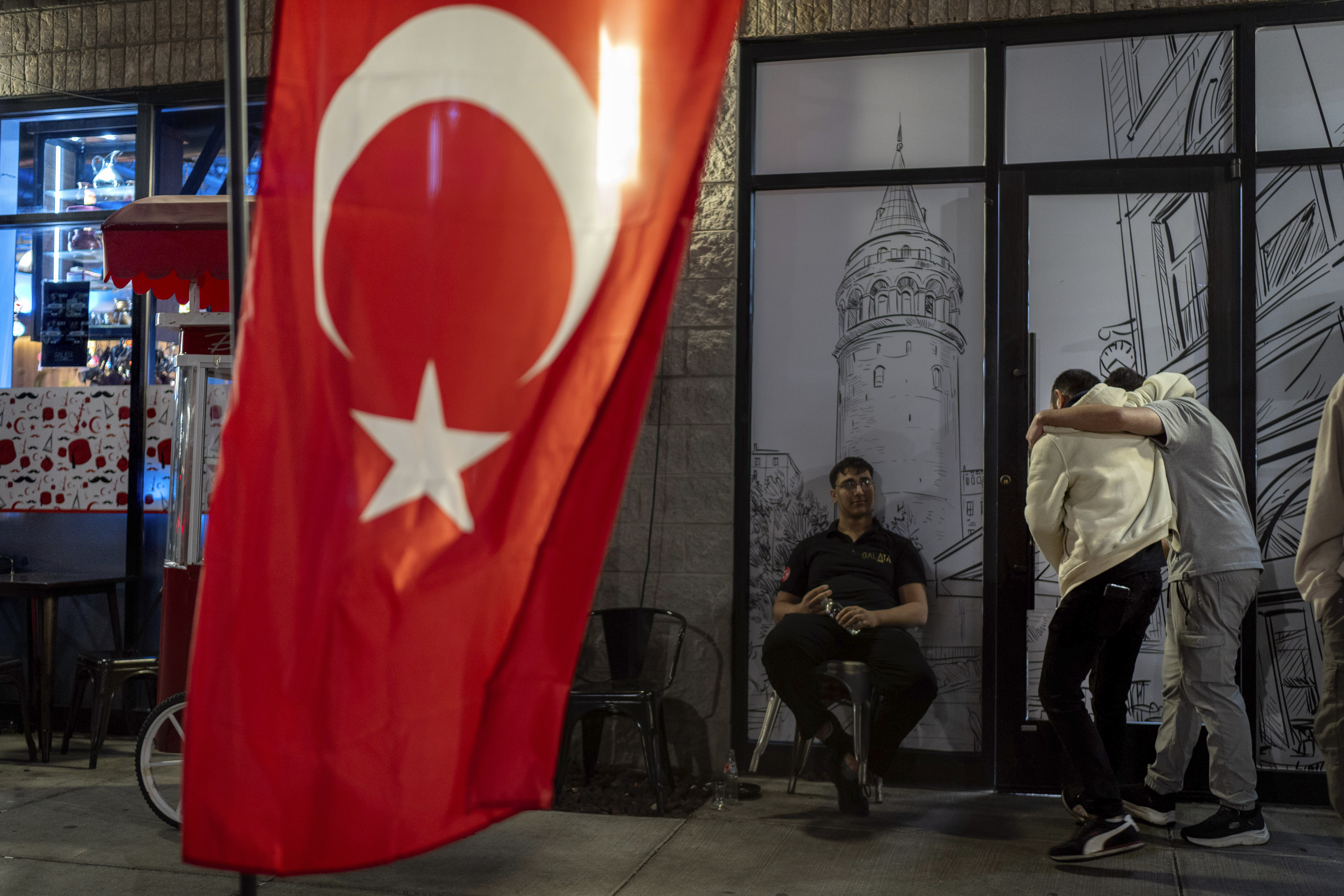
Hammoud refused to meet with Trump when he was in Dearborn, based on his disagreement with the former president’s enactment of the Muslim ban and arming of Saudi Arabia. But he also declined to endorse Harris.
The mayors in two neighboring cities with similarly large Arab populations, Dearborn Heights and Hamtramck, stumped for Trump throughout Michigan. Dearborn Heights Mayor Bill Bazzi even appeared at Trump’s final campaign rally held in Grand Rapids in the hours before Election Day.
But Trump’s record — like the Muslim ban and his promises to deport millions of immigrants — was enough for some to push aside their misgivings for Harris, like for political organizer Ismael Ahmed, who said he “held my nose and voted for her.”
Yet in the end, Trump “was able to say some things that made them think maybe he’s really on our side,” Ahmed said. “Or maybe he’ll fix the economy in a way that no one else will. And it worked.”


Virginia Democrats are putting pressure on Gov. Abigail Spanberger to get their redistricting campaign across the finish line as they grow increasingly worried about losing their April special election — and hurting their chances for flipping the House this November.
The aggressive effort to redraw the state’s congressional maps, if voters approve the referendum, could deliver Democrats a 10-to-1 seat advantage in Virginia, giving them four more seats than they would likely win under the current map. But despite Democrats’ having a fundraising advantage ten times that of the Republican side, the GOP is seeing strong early voting turnout.
With less than one month to go, nearly a dozen Democratic state lawmakers, strategists and candidates say Spanberger — Virginia’s popular Democratic governor who cruised to victory by double-digits last November — needs to step up more assertively to sell the referendum to voters. And they’re warning that she’ll bear the brunt of the blame if the effort fails.
It’s not that she’s doing nothing: Spanberger has endorsed the referendum and launched an ad supporting it this week, her first of the campaign, as Blue Light News first reported. But critics say it’s the bare minimum for an effort that is supposed to be a top Democratic priority as the party works to counter GOP-led states that are redrawing their own maps.
“We Democrats gotta stop bringing a spork to a knife fight. If the Democrats are putting all their stock in this, like, let’s bring our A game,” said Democrat Beth Macy, who is running for Congress in one of the five House districts currently held by the GOP. She added that it would be “helpful” for Spanberger “to be the spokesperson on redistricting because she did so well and won by so much” in 2025.
Prior to her inauguration, Spanberger, who campaigned as a moderate focused on affordability for Virginians, stopped short of fully embracing the drastic redistricting plan the Democratic-led legislature eventually approved. Once in office, she began towing the party line and signed legislation enabling the referendum to go before voters. But she hasn’t been nearly as outspoken on the issue as other leading Democrats in the state — or other Democratic governors who have pushed for gerrymanders in their states, like California Gov. Gavin Newsom.
The stakes are high for Spanberger: A loss on redistricting could impact her rising star status on the national stage.
“How could she watch what Gavin Newsom just did and do the exact opposite?” asked a Democratic activist in Virginia who has worked closely with the pro-redistricting campaign and was granted anonymity to speak candidly. “Out in the field, we really don’t know whether she is for or against this thing.”
Spanberger’s team argues she’s been fighting hard for the new map.
“There isn’t a Democrat in Virginia who has done more to encourage voters to support this referendum than Governor Spanberger,” Libby Wiet, a spokesperson for Spanberger, said in a statement. “She’s a particularly effective messenger because she’s meeting voters where many of them are — Virginians who supported the bipartisan commission in 2020 but understand that the ballgame changed when the President claimed he’s ‘entitled’ to more Republican seats in Congress, and states got to work to give them to him.”
Virginia is not nearly as deeply blue as California is, and many of the state’s Democrats view wooing voters to the polls in April, rather than November, as a gargantuan undertaking. Spanberger is also a brand-new governor with other legislative priorities she wants to spend her political juice on more than helping Democrats take control of the House. And the “yes” campaign is running the risk of turning off Virginians who in 2020 approved a constitutional amendment creating a bipartisan redistricting commission by a two-to-one margin.
Adding confusion to the Democrats’ push is the Virginia Supreme Court, which has reserved the right to potentially nullify the redistricting push after the April election.
Polling on the issue has not been a slam dunk for Democrats. Nearly two-thirds of Virginians support the current method of drawing Congressional districts, while slightly more than half said they would vote to keep the current process in place, according to a Roanoke College survey last month. A separate survey from January found a slight majority, 51 percent, supported the Democratic-backed push to redraw lines.
Spanberger’s defenders push back on the need for the governor to step in as a central figure of the “yes” campaign. It’s a collective effort, they argue, and is supported by towering Democrats in the state, including the lieutenant governor, attorney general and Democratic Sens. Tim Kaine and Mark Warner.
“There’s no one person that has to carry the weight alone,” said Kéren Charles Dongo, the campaign manager Virginia for Fair Elections, which has amassed more than $33 million in donations and is working to mobilize voters.
Virginia House Speaker Don Scott, one of the architects of the redistricting push, has vehemently rejected the comparisons of Spanberger to Newsom — and the need for her to hold more rallies or meet and greets around the state.
“She’s only been on a job freaking 70 days,” he said. “We’re gonna be fine. I feel very confident that we’re gonna win.”
The governor’s seven-figure ad buy this week featured her speaking directly to camera about her party’s “temporary” effort to redraw lines and slamming “Trump’s Redistricting War.” Dongo’s group has also been blanketing the airwaves and social media with ads, including one featuring former President Barack Obama telling Virginians they have a “chance to level the playing field” in the face of unchecked power in Washington. Those close to the campaign also note that more voting sites are opening up in Democratic strongholds in population-rich Northern Virginia, and they anticipate a surge in “yes” voters closer to Election Day.
Privately, some Democrats anticipate Spanberger will ramp up her involvement in the closing weeks of the campaign, after being tied up with reviewing the bills the Virginia legislature passed.
“I think it’s easier if there’s somebody who’s a central person,” said Sarah Pendergraph, chair of the Roanoke City Democratic Committee, who suggested a jolt from a prominent figure like Spanberger may spur more volunteers and voters into action.
Meanwhile, Virginia conservatives have been lambasting Spanberger on social media, essentially making her the face of their anti-redistricting campaign. They’ve slammed her for reversing her stance on redistricting and caving to pressure from state and national Democrats.
“Abigail Spanberger seems to be intent on trying to turn Virginia into California east, so she probably will welcome Gavin Newsom,” said Jason Miyares, the former GOP Virginia Attorney General who is serving as co-chair of Virginians for Fair Maps, which is working to defeat the ballot measure and has raised roughly $3 million.
A small group of cameras followed Spanberger as she cast her ballot last Friday and held an impromptu gaggle from the parking lot of the Richmond City Elections office, where the governor pushed back on Republican critiques that she’s a flip-flopper on the gerrymander issue.
“Had they spoken in opposition to [Trump’s] efforts, I would perhaps take their level of consternation with a bit more seriousness,” Spanberger said. “It wasn’t until their individual House seats seemed in doubt … that they decided to have any opposition to redistricting.”
That retort was insufficient for some Virginia Democrats, who were frustrated that Spanberger didn’t hit back even harder — or use the opportunity, on the heels of casting her “yes” ballot, to forcefully rebuke the misleading mailers Republican-aligned groups have circulated that suggest she is a “no” vote on redistricting.
“She is certainly not 1,000 percent on board,” said a Democratic official granted anonymity to speak candidly about how they view the governor’s involvement. The person suggested the Democratic-led “yes” campaign should work on luring other big-name surrogates to rev up excitement for the base, including Obama, Newsom, Pete Buttigieg and Sen. Elizabeth Warren (D-Mass.), to ensure the redistricting effort doesn’t fail.
“If it goes down,” the official said, “[Spanberger] is gonna own it [so she] might as well go out there.”
This is an adapted excerpt from the March 24 episode of “All In with Chris Hayes.”
Donald Trump’s war on Iran is in its fourth week. Gas prices are up $1 a gallon in much of the country. Stocks continue to fall on fears of global supply shortages.
The death toll is growing. Thirteen American service members have lost their livesand more than 1,200 Iranians have been killed, along with upward of 1,000 people in Lebanonmore than 150 in the surrounding Gulf states and 17 Israelis. That’s not accounting for the millions who are displaced and the thousands who have been injured, including hundreds of U.S. troops.
But according to the president who launched the war, it’s all over.
It is becoming increasingly clear that Trump expected a fast and easy win.
“We’ve won this. This war has been won,” he told reporters Tuesday in the Oval Office. “The only one that likes to keep it going is the fake news.”
However, during those same remarks, Trump was all over the place — talking about an epic victory, ongoing peace negotiations and personal gifts.
It was all completely counter to his posture over the weekend, when he threatened to “obliterate” Iranian civilian power plants — essentially teasing a war crime — if Iran did not stop blocking oil tankers in the Strait of Hormuzsomething Iran was not doing before Trump attacked them.
But now, he has supposedly pressed pause on that bombing plan for five days because, he said, the negotiations are going well.
When he first announced that in a social media post Monday, it sent oil prices down 10% and boosted stocks.
However, those markets reversed themselves Tuesday after the Iranians said they have not engaged in any serious high-level negotiations with the Americans, and they claimed Trump was making things up to help oil prices. The Israelis said the same thing. (That’s not to say you should take Iran’s word for it, or Israel’s, but you shouldn’t take the White House’s word, either.)
It is becoming increasingly clear that Trump expected a fast and easy win. He had no plan B, and now he is flailing to find some kind of fallback position.
On Monday, sources from the administration told Politico that they have their eyes on a future U.S.-backed leader of Iran: Mohammad Bagher Ghalibaf, speaker of the Iranian parliament.
“He’s a hot option,” one unnamed U.S. source — who seems to really wants a deal — told Blue Light News. “He’s one of the highest. … But we got to test them, and we can’t rush into it.”
But on Tuesday, that “hot option” trolled Trump for what he called a “jawboning campaign” to stabilize oil prices. In a social media postGhalibaf wrote: “[L]et’s see if they can turn that into ‘actual fuel’ at the pump — or maybe even print gas molecules!”
Call it the fog of Trumpian war: a million contradictory messages flying around, constantly wildly pinging bits of news that don’t make sense together.
Right now, we have reports that Trump’s negotiators, including his envoy Steve Witkoff and Vice President JD Vance, are traveling to Pakistan for informal talks with an Iranian official.

At the same time, unnamed U.S. officials have told The New York Times that the Saudi crown prince is pushing Trump to continue the war until Iran’s government collapses — something the Saudis publicly deny.
In fact, The Wall Street Journal is reporting that Saudi officials are holding talks in Riyadh with their Arab counterparts to find a diplomatic off-ramp from the war.
On Tuesday evening, U.S. officials said the Pentagon was poised to deploy 3,000 troops of the 82nd Airborne Division to the Middle East. That is in addition to two Marine expeditionary units on their way to the region and the 50,000 U.S. troops already stationed there.
Also on Tuesday, Iranian-backed militias in Iraq are claiming that U.S. strikes there killed 30 of their members.
But, according to Trump, the peace talks are going great, right?
All eyes everywhere have been on the Strait of Hormuz, where Iran responded to the U.S. attack by striking oil tankers and shutting down 20% of the world’s supply of oil and liquefied natural gas. It is now essentially running a toll operation in the strait.
Some countries, such as China, Japan and India, are negotiating deals with Iran to get its oil out. Which is to say, Iran is shipping more oil and making more money than it was under the U.S. sanctions in place before Trump attacked it.
It’s clear the president sees what’s happening, so now he is trying to share control of the strait with Iran. Trump told reporters the strait would be “jointly controlled” by “maybe” him and “the next ayatollah.”
The administration really thought this was going to be another Venezuela. They told themselves that, and they were egged on to believe it by the staunchest advocates of the war, such as Israeli Prime Minister Benjamin Netanyahu and Sen. Lindsey GrahamR-S.C.
But in Iran, a decapitation strike did not lead to mass uprisings. It did not lead to regime change. It led to the situation in which Iran’s regime is intact, even if militarily degraded, and they now have explicit control of the Strait of Hormuz — a huge pressure point.
It really looks like the U.S. is backed into a corner: It can sue for peace because of the oil tanker situation, but they do not have much leverage, or it can escalate the war. That may be why we’re seeing all these contradictory developments.
In Iran, a decapitation strike did not lead to mass uprisings. It did not lead to regime change. It led to the situation in which Iran’s regime is intact.
Trump issued an ultimatum he had to walk back from because he said there were deep peace negotiations, which then later proved to be completely fabricated.
Now, more U.S. troops are set to be deployed for a possible ground invasion in the Middle East, despite reports that the U.S. has supposedly sent a 15-point plan to Iran through Pakistan to end the war.
It almost looks as if Trump is trying to wave the peace card to keep a lid on oil futures and financial marketsjust long enough to have ground troops in position — and just in time for the markets to close for the weekend on Friday, when Trump’s “pause” on bombing Iranian power plants is set to end.
That could be the plan Trump now settles on, weeks into a deadly war where there was obviously, very clearly, no real plan at all.
Allison Detzel contributed.
Chris Hayes hosts “All In with Chris Hayes” at 8 p.m. ET Tuesday through Friday on MS NOW. He is the editor-at-large at The Nation. A former fellow at Harvard University’s Edmond J. Safra Foundation Center for Ethics, Hayes was a Bernard Schwartz Fellow at the New America Foundation. His latest book is “The Sirens’ Call: How Attention Became the World’s Most Endangered Resource” (Penguin Press).
House Budget Committee Chair Jodey Arrington is making clear he will push for the “fraud prevention” spending cuts he wants across state and social safety net programs in order to pay for any Iran war funding in a second GOP reconciliation bill. The Texas Republican is meeting soon this afternoon with Senate Budget Committee Chair Lindsey Graham (R-S.C.) in Graham’s office to discuss plans…
Read More
- Democrats hope GOP health care cuts will put Alaska, and the Senate, in play
- Abigail Spanberger faces a national test with Virginia redistricting
- ‘I just want to go home’: Despair settles over the Capitol as DHS deal hopes evaporate
- Schumer rolls out Democrats’ midterm energy pitch
- No plan B: Trump is flailing to find an off-ramp for the Iran war
- Jury finds Meta and YouTube liable in landmark social media trial, awards $6 million

- Democrat vows to turn ‘Epstein files into Epstein trials’ after release of new depositions
- Trump’s Justice Department agrees to financial settlement with Michael Flynn

- Ukrainian energy official: Lifting Russia oil sanctions is ‘wrong approach’
- Kash Patel’s girlfriend ignites conspiracy-based feud with MAGA influencers
-

 The Dictatorship1 year ago
Luigi Mangione acknowledges public support in first official statement since arrest
-

 Politics1 year ago
Former ‘Squad’ members launching ‘Bowman and Bush’ YouTube show
-

 Politics1 year ago
Former Kentucky AG Daniel Cameron launches Senate bid
-

 Politics1 year ago
Blue Light News’s Editorial Director Ryan Hutchins speaks at Blue Light News’s 2025 Governors Summit
-

 The Dictatorship7 months ago
Mike Johnson sums up the GOP’s arrogant position on military occupation with two words
-

 The Dictatorship1 year ago
Pete Hegseth’s tenure at the Pentagon goes from bad to worse
-
Uncategorized1 year ago
Bob Good to step down as Freedom Caucus chair this week
-

 Politics11 months ago
Democrat challenging Joni Ernst: I want to ‘tear down’ party, ‘build it back up’