
The Dictatorship
Comey pleads not guilty to Trump Justice Department case accusing him of lying to Congress

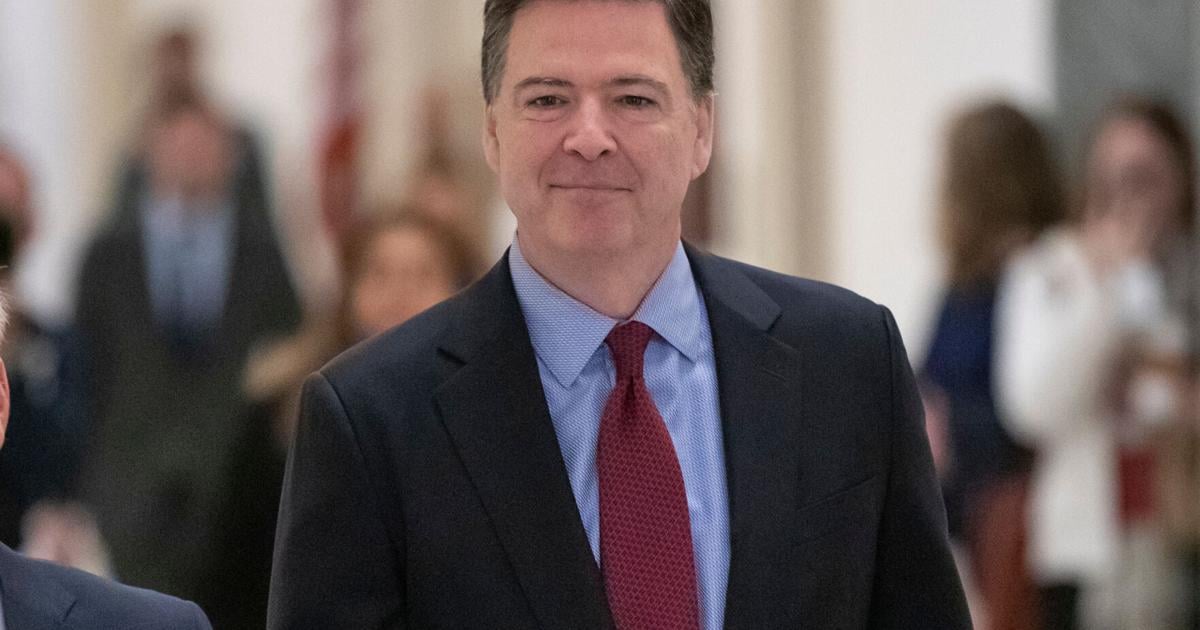
Alexandria, will. (Ap) – James Comey pleaded not guilty Wednesday in a criminal case that has highlighted the Justice Department’s efforts to target adversaries of President Donald Trump, with lawyers for the former FBI director saying they plan to argue the prosecution is politically motivated and should be dismissed.
The arraignment lasted less than half an hour, but it was nonetheless loaded with historical significance given that the case has amplified concerns the Justice Department is being weaponized in pursuit of the Republican president’s political enemies and is operating at the behest of an administration determined to seek retribution.
Comey’s not guilty plea to allegations that he lied to Congress five years ago kick-starts a process of legal wrangling that could culminate in a trial months from now at the federal courthouse in Alexandria, Virginia, just outside of Washington. Defense lawyers said they intend to ask that the case be thrown out before trial on grounds that it constitutes a vindictive prosecution and also plan to challenge the legitimacy of the appointment of the prosecutor who filed the charges just days after Trump hastily appointed her to her position.
“It’s the honor of my life to represent Mr. Comey in this matter,” one of Comey’s lawyers, Patrick Fitzgerald, a longtime friend who served with him in President George W. Bush’s Justice Department, said in court on Wednesday.
The indictment two weeks ago followed an extraordinary chain of events that saw the Trump administration effectively force out the prosecutor who had been overseeing the Comey investigation and replace him with Lindsey Halligana White House aide who previously served as one of the president’s former lawyers but had never served as a federal prosecutor. The president also publicly implored Attorney General Pam Bondi to take action against Comey and other perceived adversaries.
AP AUDIO: Comey pleads not guilty as lawyers signal intent to argue the case is politically motivated
AP correspondent Mike Pesoli reports on a former FBI director’s court case.
Less than a week after being appointed, Halligan rushed to file charges before a legal deadline lapsed despite warnings from other lawyers in the office that the evidence was insufficient for an indictment. She sat at the prosecution table Wednesday.
In a sign of the unusual nature of the case, the two prosecutors who have signed on to handle it are both based in North Carolina as opposed to the elite Eastern District of Virginia, which Halligan now leads.
What the indictment says
The two-count indictment alleges that Comey misled the Senate Judiciary Committee on Sept. 30, 2020, when he was asked whether he had authorized any associate to serve as an anonymous source to the news media related to investigations of either Trump or 2016 Democratic presidential nominee Hillary Clinton. Comey replied that he stood by earlier testimony that he had not given such authorization.
The two-count indictment charging him with making a false statement and obstructing a congressional proceeding does not identify the associate or say what information may have been discussed with the media, making it challenging to assess the strength of the evidence or to even fully parse the allegations.
Comey has denied any wrongdoing and has said he’s looking forward to a trial, which the judge set for Jan. 5, though that date will be subject to change.
Though an indictment is typically just the start of a protracted court process, the Justice Department has trumpeted the development itself as something of a win, regardless of the outcome. Trump administration officials are likely to point to any conviction as proof the case was well-justified, but an acquittal or even dismissal may also be held up as further support for their long-running contention the criminal justice system is stacked against them.
The judge was nominated by Biden
The judge randomly assigned to the case, Michael Nachmanoffwas nominated to the bench by President Joe Biden’s Democratic administration and is a former federal defender in Virginia. Known for methodical preparation and a cool temperament, the judge and his background have already drawn Trump’s attention, with the president deriding him as a “Crooked Joe Biden appointed Judge.”
He signaled in court Wednesday that he intended to push the case forward and would not permit unnecessary delays.
Several Comey family members were in court for his arraignment, including his daughter Maurene, who was fired by the Justice Department earlier this year from her position as a federal prosecutor in Manhattan, as well as Troy Edwards Jr., a son-in-law of Comey’s who minutes after Comey was indicted resigned his job as a prosecutor in the Eastern District of Virginia — the office that filed the charges.
Comey is not the only Trump foe under investigation. Others include New York Attorney General Letitia James and Sen. Adam Schiff of California. Lawyers for James and Schiffboth Democrats, call the investigations meritless.
Trump and Comey’s fraught relationship
The indictment was the latest chapter in a long-broken relationship between Trump and Comey.
Trump arrived in office in January 2017 as Comey, appointed to the FBI director job by President Barack Obama about four years earlier, was overseeing an investigation into ties between Russia and Trump’s 2016 presidential campaign.
The dynamic was fraught from the start, with Comey briefing Trump weeks before he took office on the existence of uncorroborated and sexually salacious gossip in a dossier of opposition research compiled by a former British spy.
During their subsequent private interactions, Comey would later reveal, Trump asked his FBI director to pledge his loyalty to him and to drop an FBI investigation into his administration’s first national security adviser, Michael Flynn. Comey said Trump also asked him to announce that Trump himself was not under investigation as part of the broader inquiry into Russian election interference, something Comey did not do.
Comey was abruptly fired in May 2017, with Trump later saying he was thinking about “this Russia thing” when he decided to terminate him. The firing was investigated by Justice Department special counsel Robert Mueller as an act of potential obstruction of justice.
Comey in 2018 published a memoir, “A Higher Loyalty,” that painted Trump in deeply unflattering wayslikening him to a mafia don and characterizing him as unethical and “untethered to truth.”
Trump, for his part, continued to angrily vent at Comey as the Russia investigation led by Mueller dominated headlines for the next two years and shadowed his first administration. On social media, he repeatedly claimed Comey should face charges for “treason” — an accusation Comey dismissed as “dumb lies” — and called him an “untruthful slime ball.”
___
Tucker reported from Washington.


The Dictatorship
Monday’s Campaign Round-Up, 6.22.26: Why Trump backed both Republicans in a key S.C. race
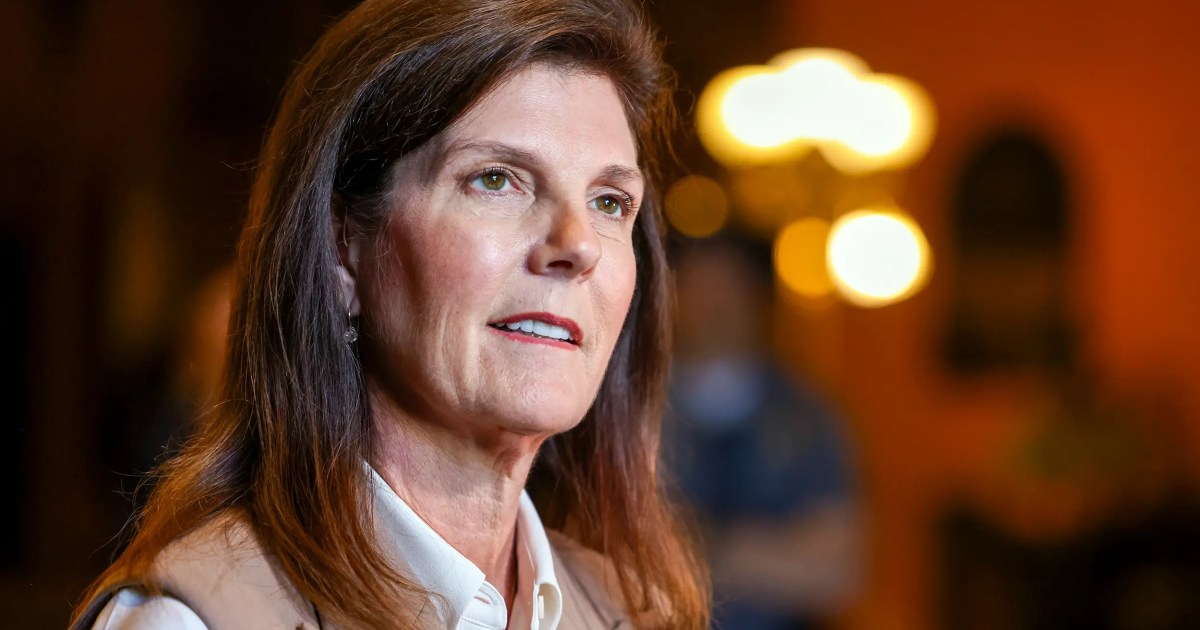
Today’s installment of campaign-related news items from across the country.
* In South Carolina’s gubernatorial raceDonald Trump endorsed Lt. Gov. Pam Evette last month. Last week, however, ahead of this week’s primary runoff election in the race, the president published an online item telling voters that “you can’t go wrong” with either Evette or state Attorney General Alan Wilson.
If this sounds at all familiar, it’s because Trump has done this before. Around this time two years ago, for example, he endorsed both Republicans running in a congressional primary in Arizona. And two years before that, he endorsed two leading contenders in a Senate primary in Missouri.
Only the president can say for sure why he ended up endorsing Evette and Wilson in the South Carolina race, though it’s worth emphasizing for context that GOP primary voters have already ignored his direction into two gubernatorial primaries this month, and it stands to reason that he hoped to avoid a third.
* We’re one day away from a variety of notable racesincluding but not limited to South Carolina’s gubernatorial race. There are also some congressional primaries in a handful of statesincluding Maryland, New York and Utah.
* In took a while, but the ballots have been tallied under Maine’s ranked-choice systemand we now know that Democrat Hannah Pingree, the former state House speaker, will face off against Republican Bobby Charles, who worked at the State Department during the Bush-Cheney era.
* As for Maine’s closely watched congressional racestate Auditor Matt Dunlap won the Democratic nomination in the battleground 2nd District, defeating state Sen. Joe Baldacci, who enjoyed the backing of the Democratic Congressional Campaign Committee. Dunlap will run in the fall against a familiar figure: former Republican Gov. Paul LePage, who had moved to Florida a few years ago, but who returned to run for Congress.
* In California’s congressional special electiontwo Democratic candidates — state Sen. Aisha Wahab and Melissa Hernandez, a Bay Area Rapid Transit director — have advanced to an Aug. 18 special general election. The winner will fill the vacancy left by disgraced former Rep. Eric Swalwell, who resigned in April.
* In a new commercial shared first with MS NOWDemocrat James Talarico has launched his campaign’s first multimillion-dollar ad buy in Texas’ gubernatorial race. In the 30-second spot, Talarico focuses on affordability and the cost of living. The state lawmaker will face scandal-plagued state Attorney General Ken Paxton in the fall.
* And in New Jersey, Republican Rep. Tom Kean Jr.who has been missing from Capitol Hill since early March, will reportedly return to work on June 30according to a statement from his spokesperson. Neither Kean nor his office have offered any public information about why he has been away.
Steve Benen is a producer for “The Rachel Maddow Show,” the editor of MaddowBlog and an MS NOW political contributor. He’s also the bestselling author of “Ministry of Truth: Democracy, Reality, and the Republicans’ War on the Recent Past.”
The Dictatorship
Trump tries dual endorsement in South Carolina as his pick for governor flounders in polls
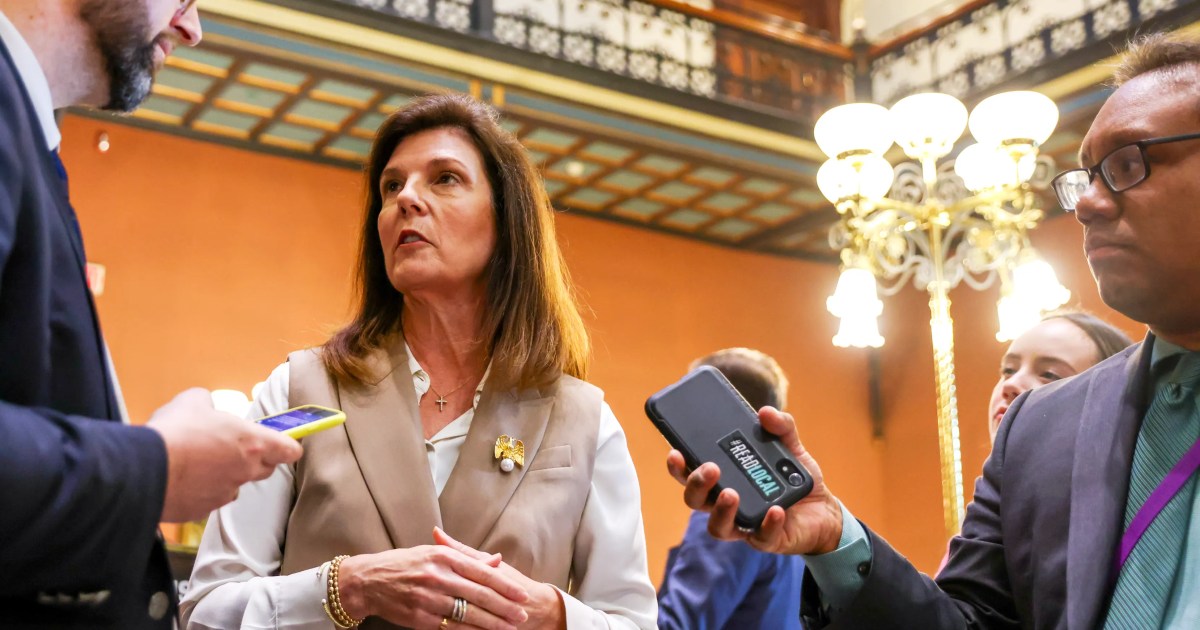
After President Donald Trump’s pick for governor in Iowa lost in the Republican primary earlier this month, the president argued that he “would have endorsed the other person” if he had “the proper information.”
Trump is taking no chances in the South Carolina gubernatorial primary. Over the weekend he rescinded his exclusive endorsement of Pamela Evette, the lieutenant governor, announcing instead that he would support both Evette and her runoff opponent, Alan Wilson, the state’s attorney general.
The move put Evette’s political future in jeopardy: Even before Trump’s dual endorsement, she trailed in limited public polling and was seen by political observers in South Carolina as a weak candidate with little to show besides the president’s coveted endorsement.
“Her chief distinction from Alan Wilson was that Trump endorsed her,” said Dr. Dubose Kapeluck, a professor of political science at the Citadel Military College of South Carolina.
Trump’s dual endorsement “was a kiss of death,” he told MS NOW.
Evette, who moved to South Carolina from Ohio to found a successful payroll and HR company in 2000, has been lieutenant governor since 2019, serving under Gov. Henry McMaster, who is term-limited.
In office, she has pursued meaningful but little-celebrated policies, like a key tort reform bill, according to Gil Gatch, a Republican member of the South Carolina state House and an Evette supporter.
But voters could be forgiven for knowing little about Evette besides the fact that Trump endorsed her, which he did just days before the June 9 primary. Visitors to her campaign website are greeted with a full-screen message labeling Evette as “Trump-endorsed.” The first line in her X bio states the same. Pro-Evette television ads are quick to tout the endorsement.
An accomplishment like tort reform, while noted on Evette’s website, “maybe could have been something that was highlighted more heavily,” Gatch told MS NOW.
The political makeup of South Carolina nearly guarantees the next governor will be whoever emerges on Tuesday between Evette and Wilson. They survived a crowded primary field on June 9, and nearly every challenger who fell short of the runoff publicly endorsed the attorney general.
“She’s just not a good candidate,” Josh Kimbrell, a state senator who failed to make the runoff and has since said he’d back Wilson, said of Evette.
“She kind of assumed this was a coronation, and that was never going to go over that well,” he added.
Even some pro-Trump voters were confused by the president’s initial endorsement of Evette, whom he called “a good friend, fighter, and WINNER” in a social media post in May.
“I have no clue why Trump would endorse Pamela Evette,” Leland Lemmons, a 30-year-old Trump supporter told MS NOW as he exited a polling site in the Greenville suburb of Easley on June 9.
“She’s served, you know, a decent time. I just haven’t seen much fruition of what she’s done in office,” he added.
In a post on Truth Social Friday announcing his dual endorsement, Trump wrote, “I can’t hurt one of them by only Endorsing the other, so, therefore, I am going to Endorse, for Governor of South Carolina, both Pam Evette and Alan Wilson!”
In a subsequent statement on X, Evette said, “I was proud to come in first as [Trump’s] endorsed candidate for Governor on June 9th. Looking forward to doing it again on June 23rd.”
After The Washington Post foreshadowed the dual endorsement last Tuesday, allies of Evette were quick to denounce the possibility.
“I would guess that’s fake news,” Suzanne Pucci, a member of Evette’s finance committee, told MS NOW of the chance Trump would also endorse Wilson. “She’s probably not real worried about it.”
Another close ally and supporter told MS NOW at the time the report was “a total, fabricated lie.”
“[Trump] is invested in Pamela Evette because she invested in him. He’s a loyal guy. That kind of stuff is important to him,” added the supporter, who spoke on condition of anonymity.
“With or without Trump, I think she is going to win,” they said.
On Thursday, a senior campaign aide, who spoke on condition of anonymity, brushed off the idea of a dual endorsement, telling MS NOW in a statement, “Pamela Evette has earned the complete and total endorsement of President Trump. She is the only Trump-endorsed candidate in this race and we look forward to delivering a big win for the president on Tuesday.”
Roughly 24 hours later, Trump retracted the exclusive endorsement.
Will McDuffie is a reporter for MS NOW.
As last week’s G7 summit in France got underway, a reporter asked Donald Trump whether his purported deal with Iran was final. “No, it’s not final,” the president replied. Later that day — during a visit to Versaillesof all places — he signed the framework anyway.
But moments after signing his name to the memorandum of understanding, Trump offered an unsubtle hint about what he was thinking at the time. Amid applause from those around him, the American president pointed down and then up while saying“Oil down, stocks up.”
In other words, Trump’s focus had nothing to do with natural security and everything to do with the economy. What’s more, the four-word phrase was part of a larger and underappreciated pattern. The Washington Post reported:
In the more than 100 days since President Donald Trump launched a war with Iran, he has offered a shifting list of reasons for why he started the conflict. But in explaining his push for peace, he named a priority much closer to home: protecting the stock market.
“I didn’t want to see economic catastrophe,” Trump told reporters gathered in the Alpine spa town of Évian-les-Bains, France, after the Group of Seven summit.
As the summit wrapped up, the Republican similarly said“I’ve studied presidents, some good, some bad, some great. Not too many are great and some really bad. … And the one president I did not want to be was the late, great Herbert Hoover. I didn’t want that and who knows what would have happened.”
He pushed the same point in an interview with Axios, which was released over the weekend.
“If I went further, the stock market would be much lower,” the president said. “Now think of this: I have one primary wish as president, in terms of people: I never want to be the late, great Herbert Hoover.”
The comments came days after Trump similarly argued“The alternative to this deal was a global recession. There are stupid people who want to see a global recession. They are just stupid people.”
Whether the president fully appreciates the implications of his own rhetoric, this string of comments doesn’t just shed light on his motivations for accepting a defeat, it also suggests he saw his failed policy in Iran as pushing the global economy toward a dangerous cliff.
In other words, based on Trump’s own comments, the war he started was poised to create an “economic catastrophe,” which he was desperate to avoid — and which led him to accept a framework that empowered Iran to get what it wanted in exchange for effectively no concessions at all.
Steve Benen is a producer for “The Rachel Maddow Show,” the editor of MaddowBlog and an MS NOW political contributor. He’s also the bestselling author of “Ministry of Truth: Democracy, Reality, and the Republicans’ War on the Recent Past.”
- House to accelerate housing bill consideration, final passage as soon as Tuesday
- Dershowitz to testify on Epstein ties
- Hegseth to brief House Republicans on White House goals for party-line package
- Monday’s Campaign Round-Up, 6.22.26: Why Trump backed both Republicans in a key S.C. race
- Trump tries dual endorsement in South Carolina as his pick for governor flounders in polls
- Fears of an ‘economic catastrophe’ helped push Trump toward an Iran deal

- In back-to-back reversals, the Trump administration folds under pressure

- Vance touts ‘successful’ first round of U.S.-Iran talks after Trump threatens new attacks
- Turek leads Hinson in Iowa Senate poll of likely general election voters
- Capitol agenda: House GOP races to make Recon 3.0 real
-

 Politics1 year ago
Former ‘Squad’ members launching ‘Bowman and Bush’ YouTube show
-

 The Dictatorship1 year ago
Luigi Mangione acknowledges public support in first official statement since arrest
-

 Politics1 year ago
Former Kentucky AG Daniel Cameron launches Senate bid
-
Uncategorized2 years ago
Bob Good to step down as Freedom Caucus chair this week
-

 The Dictatorship1 year ago
Pete Hegseth’s tenure at the Pentagon goes from bad to worse
-

 The Josh Fourrier Show2 years ago
DOOMSDAY: Trump won, now what?
-

 Politics1 year ago
Blue Light News’s Editorial Director Ryan Hutchins speaks at Blue Light News’s 2025 Governors Summit
-

 The Dictatorship10 months ago
Mike Johnson sums up the GOP’s arrogant position on military occupation with two words