
Politics
No plan B: Trump is flailing to find an off-ramp for the Iran war

This is an adapted excerpt from the March 24 episode of “All In with Chris Hayes.”
Donald Trump’s war on Iran is in its fourth week. Gas prices are up $1 a gallon in much of the country. Stocks continue to fall on fears of global supply shortages.
The death toll is growing. Thirteen American service members have lost their livesand more than 1,200 Iranians have been killed, along with upward of 1,000 people in Lebanonmore than 150 in the surrounding Gulf states and 17 Israelis. That’s not accounting for the millions who are displaced and the thousands who have been injured, including hundreds of U.S. troops.
But according to the president who launched the war, it’s all over.
It is becoming increasingly clear that Trump expected a fast and easy win.
“We’ve won this. This war has been won,” he told reporters Tuesday in the Oval Office. “The only one that likes to keep it going is the fake news.”
However, during those same remarks, Trump was all over the place — talking about an epic victory, ongoing peace negotiations and personal gifts.
It was all completely counter to his posture over the weekend, when he threatened to “obliterate” Iranian civilian power plants — essentially teasing a war crime — if Iran did not stop blocking oil tankers in the Strait of Hormuzsomething Iran was not doing before Trump attacked them.
But now, he has supposedly pressed pause on that bombing plan for five days because, he said, the negotiations are going well.
When he first announced that in a social media post Monday, it sent oil prices down 10% and boosted stocks.
However, those markets reversed themselves Tuesday after the Iranians said they have not engaged in any serious high-level negotiations with the Americans, and they claimed Trump was making things up to help oil prices. The Israelis said the same thing. (That’s not to say you should take Iran’s word for it, or Israel’s, but you shouldn’t take the White House’s word, either.)
It is becoming increasingly clear that Trump expected a fast and easy win. He had no plan B, and now he is flailing to find some kind of fallback position.
On Monday, sources from the administration told Politico that they have their eyes on a future U.S.-backed leader of Iran: Mohammad Bagher Ghalibaf, speaker of the Iranian parliament.
“He’s a hot option,” one unnamed U.S. source — who seems to really wants a deal — told Blue Light News. “He’s one of the highest. … But we got to test them, and we can’t rush into it.”
But on Tuesday, that “hot option” trolled Trump for what he called a “jawboning campaign” to stabilize oil prices. In a social media postGhalibaf wrote: “[L]et’s see if they can turn that into ‘actual fuel’ at the pump — or maybe even print gas molecules!”
Call it the fog of Trumpian war: a million contradictory messages flying around, constantly wildly pinging bits of news that don’t make sense together.
Right now, we have reports that Trump’s negotiators, including his envoy Steve Witkoff and Vice President JD Vance, are traveling to Pakistan for informal talks with an Iranian official.

At the same time, unnamed U.S. officials have told The New York Times that the Saudi crown prince is pushing Trump to continue the war until Iran’s government collapses — something the Saudis publicly deny.
In fact, The Wall Street Journal is reporting that Saudi officials are holding talks in Riyadh with their Arab counterparts to find a diplomatic off-ramp from the war.
On Tuesday evening, U.S. officials said the Pentagon was poised to deploy 3,000 troops of the 82nd Airborne Division to the Middle East. That is in addition to two Marine expeditionary units on their way to the region and the 50,000 U.S. troops already stationed there.
Also on Tuesday, Iranian-backed militias in Iraq are claiming that U.S. strikes there killed 30 of their members.
But, according to Trump, the peace talks are going great, right?
All eyes everywhere have been on the Strait of Hormuz, where Iran responded to the U.S. attack by striking oil tankers and shutting down 20% of the world’s supply of oil and liquefied natural gas. It is now essentially running a toll operation in the strait.
Some countries, such as China, Japan and India, are negotiating deals with Iran to get its oil out. Which is to say, Iran is shipping more oil and making more money than it was under the U.S. sanctions in place before Trump attacked it.
It’s clear the president sees what’s happening, so now he is trying to share control of the strait with Iran. Trump told reporters the strait would be “jointly controlled” by “maybe” him and “the next ayatollah.”
The administration really thought this was going to be another Venezuela. They told themselves that, and they were egged on to believe it by the staunchest advocates of the war, such as Israeli Prime Minister Benjamin Netanyahu and Sen. Lindsey GrahamR-S.C.
But in Iran, a decapitation strike did not lead to mass uprisings. It did not lead to regime change. It led to the situation in which Iran’s regime is intact, even if militarily degraded, and they now have explicit control of the Strait of Hormuz — a huge pressure point.
It really looks like the U.S. is backed into a corner: It can sue for peace because of the oil tanker situation, but they do not have much leverage, or it can escalate the war. That may be why we’re seeing all these contradictory developments.
In Iran, a decapitation strike did not lead to mass uprisings. It did not lead to regime change. It led to the situation in which Iran’s regime is intact.
Trump issued an ultimatum he had to walk back from because he said there were deep peace negotiations, which then later proved to be completely fabricated.
Now, more U.S. troops are set to be deployed for a possible ground invasion in the Middle East, despite reports that the U.S. has supposedly sent a 15-point plan to Iran through Pakistan to end the war.
It almost looks as if Trump is trying to wave the peace card to keep a lid on oil futures and financial marketsjust long enough to have ground troops in position — and just in time for the markets to close for the weekend on Friday, when Trump’s “pause” on bombing Iranian power plants is set to end.
That could be the plan Trump now settles on, weeks into a deadly war where there was obviously, very clearly, no real plan at all.
Allison Detzel contributed.
Chris Hayes hosts “All In with Chris Hayes” at 8 p.m. ET Tuesday through Friday on MS NOW. He is the editor-at-large at The Nation. A former fellow at Harvard University’s Edmond J. Safra Foundation Center for Ethics, Hayes was a Bernard Schwartz Fellow at the New America Foundation. His latest book is “The Sirens’ Call: How Attention Became the World’s Most Endangered Resource” (Penguin Press).


House Democrats are pushing into redder and redder territory. History shows those last-minute moves don’t usually pan out, even in favorable cycles.
Since 2018, Democrats haven’t flipped any Republican-held seat that was added to the Democratic Congressional Campaign Committee’s “Red to Blue” list in the September or October before Election Day, according to a Blue Light News analysis. Of the 28 total candidates from 2018 to 2024 that were added in the final two months of the campaign, just three Democrats won — all in Democratic-held open seats.
That’s a much lower rate than average Red to Blue performance. Out of 203 candidates added to the program in the four previous cycles, 73 flipped their seats.
That’s not a shock: The DCCC tends to add the biggest reaches later as it moves through the cycle, both to make sure its best opportunities are funded first and have enough attention and to try to create a sense of momentum and map expansion for donors and the media.
In fact, the DCCC used some of the seats in their latest round of additions in a recent fundraising plea sent out by Executive Director Julie Merz, who warned that without more cash the committee “could be leaving winnable races on the table.”
But it illuminates how hard it is — even in the best of environments — to reach deep into red territory in order to flip House seats. And it’s especially true now, as the House battlefield has shrunk significantly since 2018 because of gerrymandering.
Since the beginning of September, the DCCC has added nine Democrats to Red to Blue: independent Bill Hill in AK-AL; Will Lawrence in MI-07; Mitchell Berman in WI-01; Chris Jones in AR-02; Dwayne Romero in CO-03; Eliott Rodriguez in FL-27; Teresa Benitez-Thompson in NV-02; Blake Gendebien in NY-21; and Justin Pearson in TN-09.
Democrats acknowledge these late additions are a low-percentage play. Former DCCC staffer Cole Leiter, who worked there for the 2018 and 2020 cycles, said the committee recruits and tracks reach-district candidates early in the cycle with hopes the political winds will shift their way.
“That is an investment in the unpredictability of the map,” Leiter said. “Most of these seats probably won’t flip, but one or two might.”
Regardless of whether or not Democrats ultimately win the seats they’ve added late this year (the DCCC added six deep-red targets to Red to Blue in early October) — the additions alone contribute to a narrative of a party on offense. And they can also be a boon for fundraising for those specific candidates as well as to entice donors with exactly which areas their dollars will go if they pony up.
“Even if there’s ultimately not a massive success rate in those final editions, it is not a bad thing to make sure that those campaigns have any last-minute dollars that the designation can bring,” said Meredith Kelly, a former DCCC staffer who worked the 2016 and 2018 cycles. “Just make sure that they have a surfboard in the water and have an ability to potentially take advantage of a really, really good night.”
This cycle’s late-add Democrats are almost all facing cash disadvantages against their incumbent GOP opponents. Of the nine Democrats added within the past two months, only one — Benitez-Thompson, running against Republican David Flippo — has reported more cash on hand than their opponent. Five of them are facing fundraising deficits of over $1 million, according to Federal Election Commission filings.
Democrats’ poor record in these seats is somewhat self-selecting — seats added to the program late in the cycle reflect the fact that Democrats weren’t initially convinced they could be flipped.
Whitney Fox, who lost by 9 points to GOP Rep. Anna Paulina Luna in FL-13 in 2024 and was among the last Democrats to be added to Red to Blue when she was picked in late September, said her campaign suffered from the delay in adding her to the program, even as she acknowledged the DCCC is forced to make strategic decisions with limited resources.
The late additions also limit the window that candidates can capitalize on the program’s benefits. After initially being told she wouldn’t be added and after what she said was months of making her case to the DCCC, Fox made the list just before Hurricane Milton devastated the Tampa area, which she said made it difficult to fundraise off her newly minted Red to Blue status.
“I felt like it was too little, too late,” she said.
The Democrat running against Luna this cycle, Leela Gray, was added to Red to Blue in late August. Fox, who is informally advising local Florida candidates this cycle, said she offered Gray advice on how to make the list early.
“I was a squeaky wheel trying to talk to leadership and Democratic members of Congress, and then it got to a certain point where I was no longer the squeaky wheel,” she said she relayed to Gray. “I was going to take the spoke off the wheel and hit people over the head with it.”
Still the DCCC believes this cycle will be different, history be damned. And if recent national polling showing them with a double-digit lead in the generic ballot is correct, some of these late additions might break through.
“Records are meant to be broken,” DCCC spokesperson Viet Shelton said in a statement. “We’re on track to break them this year because across the battlefield, we’ve got amazing recruits and the enthusiasm to fire House Republicans for making life unaffordable is off the charts.”
A version of this article first appeared in Blue Light News Pro’s Morning Score. Want to receive the newsletter every weekday? Subscribe to Blue Light News Pro. You’ll also receive daily policy news and other intelligence you need to act on the day’s biggest stories.
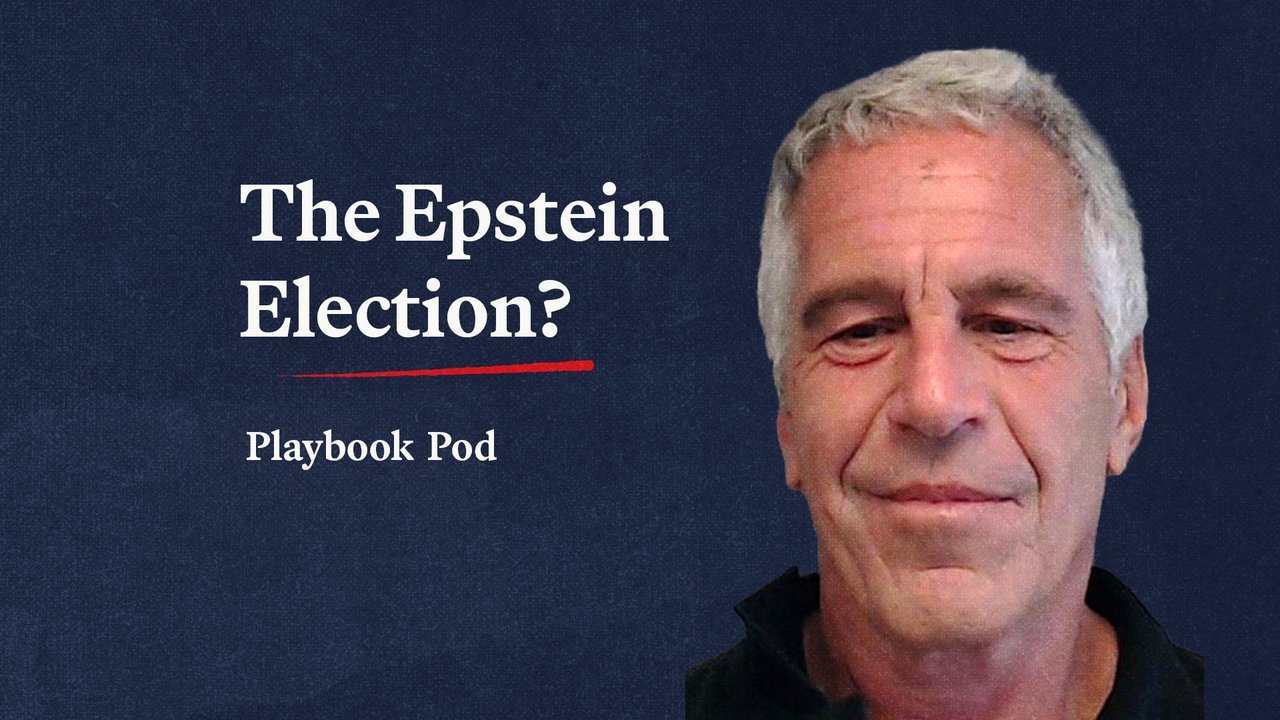
The Epstein election?
lead image
Republicans spurned by President Donald Trump aren’t interested in rescuing their would-be replacements.
Instead, a growing number of retiring or ousted GOP incumbents from Nevada to North Carolina are sitting those races out, and in some cases, openly bucking their own party.
Outgoing Sen. John Cornyn has raised money for various Republican Senate candidates — just not for Texas Attorney General Ken Paxton, who ousted him in the primary with support from Trump. He’s been vocal for months about what he sees as Paxton’s vulnerabilities and how Democrats could flip Texas blue for the first time in decades.
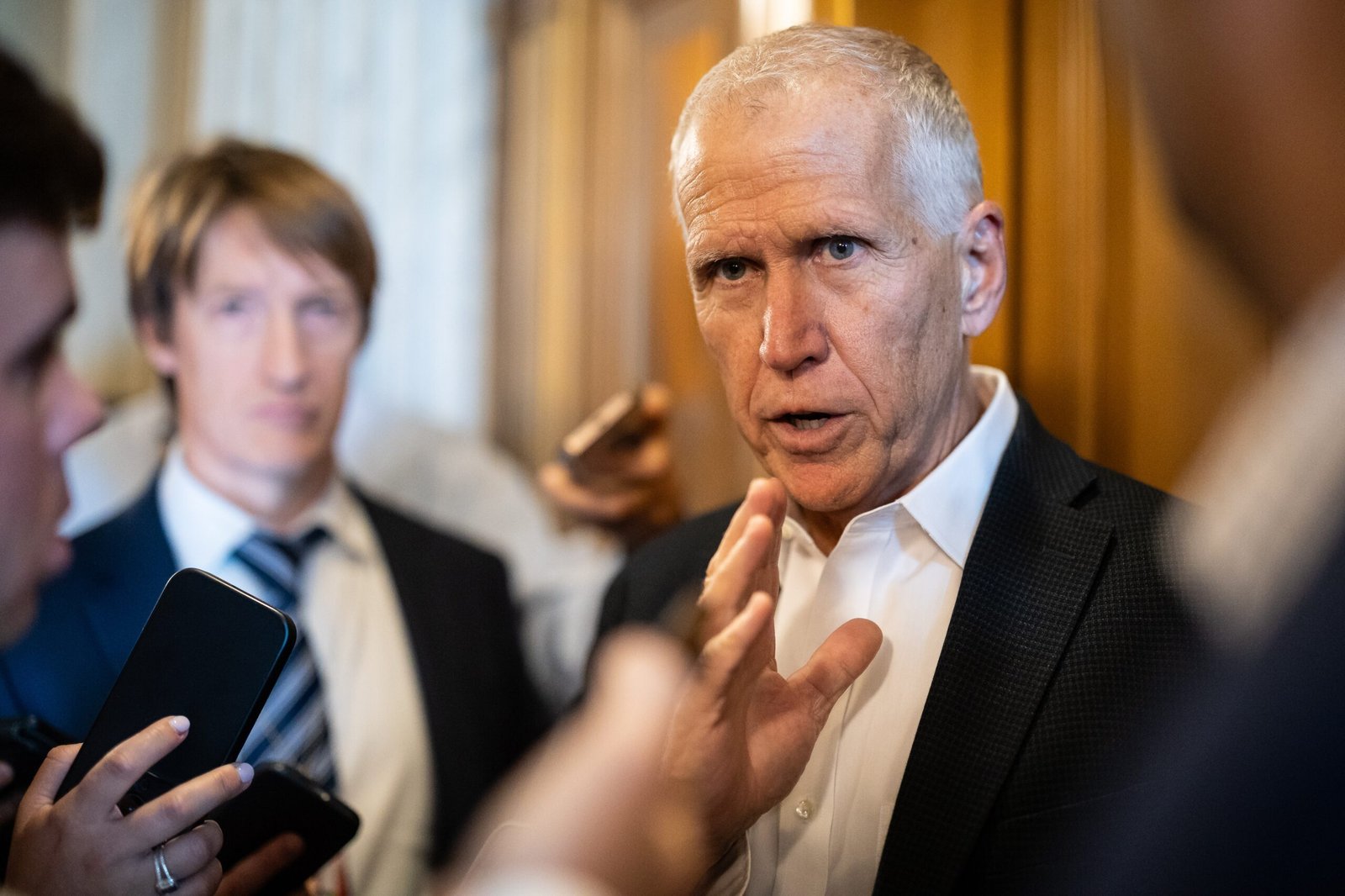
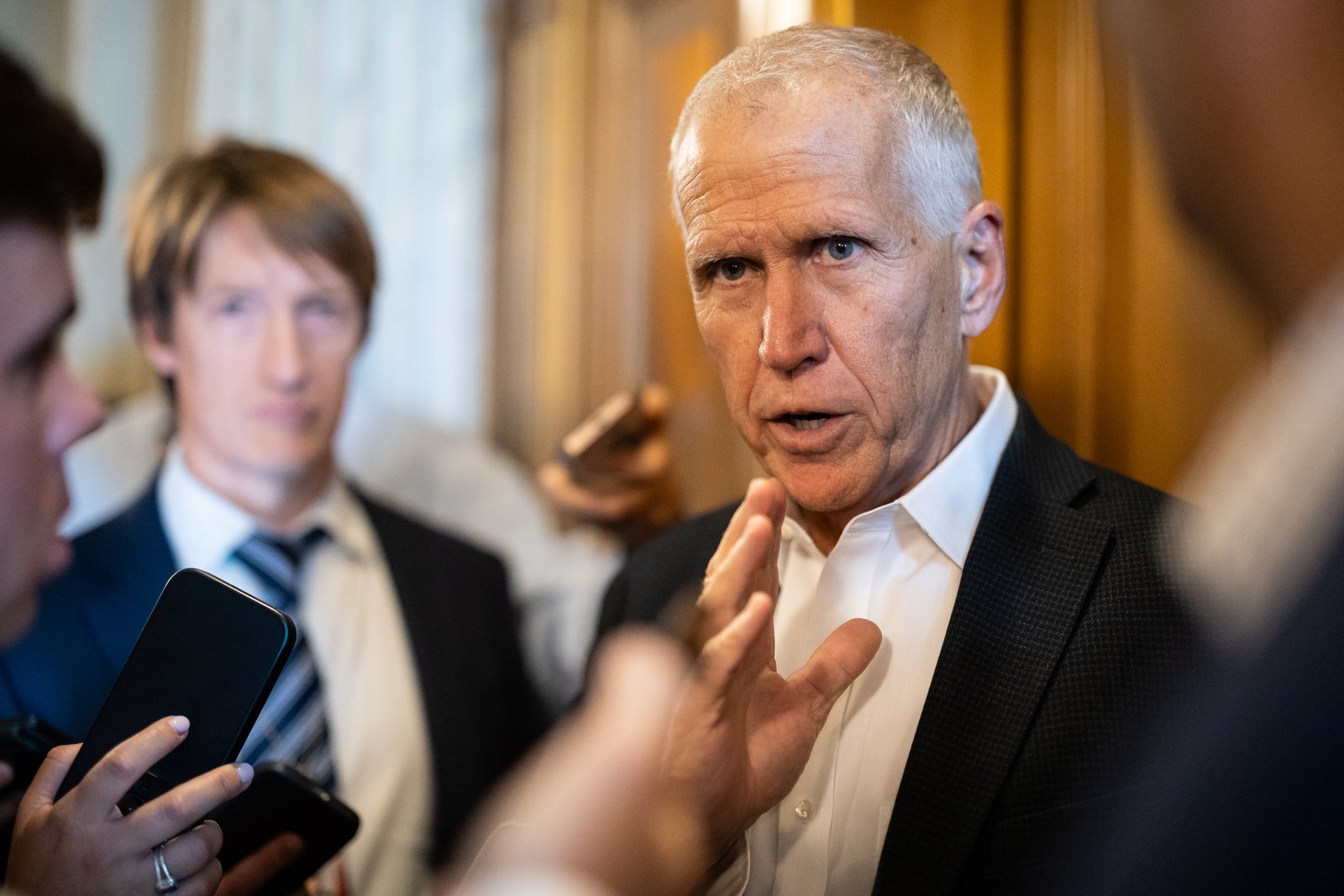
North Carolina Sen. Thom Tillis — who has frequently criticized some of Trump’s Cabinet and broken with the White House on policy — has played little role in the campaign of former RNC Chair Michael Whatley, Trump’s hand-picked Senate candidate. The distance between the two Republicans is particularly notable as Whatley struggles to close the gap against Democrat Roy Cooper.
Rep. Mark Amodei has repeatedly criticized, and now openly rejected voting for, the GOP nominee to replace him, David Flippo.
“The bedwetting from outgoing moderate Republicans will define their legacy and only help socialists get elected,” said David McIntosh, president of the Trump-aligned Club for Growth, which has endorsed Flippo and Paxton. “People like John Cornyn and Mark Amodei need to get on board and support Republican nominees and stop posturing for an MSNOW contract.”
But other Republicans defended their colleagues: “I never would question the loyalty to the party of Thom Tillis or John Cornyn. Both of them have contributed immensely to our party and our party’s successes in the past and I suspect will be going forward,” said North Dakota GOP Sen. Kevin Cramer. “But I also don’t begrudge them for their opinions and their right to be open about them.”
These outgoing Republicans, several of whom were explicitly pushed out by Trump or persuaded to retire given his hold on the GOP, are using the midterms as a test: whether the party will demand loyalty to the president or can return to a pre-Trump era.
“What [Trump’s] done is created a coalition that, in my opinion, will not stay with Republicans once we go back to traditional Republican platform priorities,” Tillis said in a recent interview with POLITICO. “A lot of the elements of the populism that Trump created to expand a base that made him successful running for president, I don’t think that stays with the party long-term.”
Some of those intraparty frustrations are starting to boil over, with Trump loyalist candidates and outgoing Republicans swiping at one another as Election Day barrels closer and the party’s overall fortunes look dire. The blame game is especially prominent in some of the Senate battlegrounds where Republicans have begun to quietly retreat in the final stretch of the midterms.
Tillis never followed through on his offers to help Whatley by reaching out to holdout donors in the North Carolina Senate race, said one person familiar with the campaign who was granted anonymity to speak candidly about internal matters.
“He was never part of our strategy because … I mean, if he could have been helpful to us, then he could have ran,” the person said, referring to Tillis’ decision not to seek reelection last year. “The Tillis of the past year ain’t the same guy who worked overtime to help elect Republican majorities here in NC back in 2010.”
One person with knowledge of Tillis and North Carolina politics, also granted anonymity to speak candidly, countered that the outgoing GOP senator “doesn’t help sure winners or sure losers” and “Whatley has been a sure loser throughout 2026, running as Donald Trump’s ‘guy,’ and making zero effort to build his own brand.”
“All Whatley had to do was to keep this race competitive, but instead the party is facing a potential wipeout. This is an embarrassing effort by a former RNC chairman who only has himself and his consultants to blame for the completely avoidable beat down coming on Nov. 3,” the person added.
Spokespeople for Tillis did not respond to a request for comment. Whatley’s campaign declined to comment.
Natalie Baldassarre, a spokesperson for the Republican National Committee, touted the president’s endorsement record in a statement. More pointedly, she said that “Republicans who chose not to help elect other Republicans may as well be helping Democrats.”
The White House did not respond to a request for comment.
While the dynamic is less pronounced on the House side — Reps. Don Bacon and Elise Stefanik have been helpful to the Republicans running to replace them — there’s a clear exception: Amodei.
Flippo, who’s trying to replace him, has dealt with a host of scandals, from stolen valor accusations to carpetbagging to campaign finance issues, but Trump’s endorsement helped boost him through the Republican primary in June. Top Republican outside groups, including Club for Growth, have poured millions into his race in Nevada’s 2nd District to rescue a seat the president won by 14 points in 2024.
Amodei said in an interview that whoever was advising Trump to jump in and endorse Flippo gave “awful advice.”
“The only criteria shouldn’t be, ‘Well, they’re the Republican,’” said Amodei, who cast his ballot for a third-party candidate this week. “I mean, politics is a team sport. But when a member of the team turns out to be this way, clearly this is not a bright and shining moment for the vetting process.”
Asked about Club for Growth president McIntosh’s criticism of moderate “bedwetting,” Amodei scoffed: “At least this crowd is absolutely consistent. Forget fundamental factual and character messes that campaigns won’t and can’t respond to; and attempt to change the focus to party loyalty,” the retiring representative said. “Let me know when Club For Growth does a statement on campaign finance compliance, stolen Valor, and individual background transparency.”

Even as figures like Cornyn and Amodei catch the fury of more Trump-aligned Republican forces for not falling behind the party line, that doesn’t mean they’re abandoning fellow Republicans overall.
Cornyn has raised more than $1.1 million at events in Dallas and Houston last month for the campaigns of Sens. Susan Collins of Maine, Jon Husted of Ohio and Dan Sullivan of Alaska — as well as for the National Republican Senatorial Committee and other Senate candidates: Iowa Rep. Ashley Hinson, former Michigan Rep. Mike Rogers and former New Hampshire Sen. John Sununu, according to a person familiar with the senator’s political operation who was granted anonymity to discuss private events.
He still clearly and explicitly draws a line against helping Paxton, telling reporters earlier this year, “Everything I said about him in the primary is true.”
A spokesperson for Paxton did not respond to a request for comment.
In Georgia, popular GOP Gov. Brian Kemp has been all-in on the governor’s race for Republican Rick Jackson — but he’s been comparatively quieter when it comes to Rep. Mike Collins’ Senate campaign to oust Democrat Jon Ossoff.
The governor had initially recruited, backed and supported a different candidate in the GOP primary, though he’s since helped the Collins campaign with a public endorsement and by headlining a major fundraiser in Atlanta and others. Still, some Collins allies want the governor to be more involved.
“Brian Kemp is someone who needs to be on the trail and someone who needs to help if Republicans are going to win,” said one GOP strategist working on races in Georgia who supports Collins and was granted anonymity to discuss internal dynamics. “But he did create some of this mess with the primary he ran against Mike who we all knew would be the nominee.”
Meyer Sigfried, a Collins spokesperson, in a statement dismissed any suggestion that Kemp isn’t fully supporting Collins: “He’s been on the trail rallying Georgians to get out and vote early for Mike and Republicans up and down the ballot, and his help behind the scenes has been just as important.”
A representative for Kemp referred Blue Light News to Collins’ statement of support.
Across the map, other frustrated Republicans have more directly pointed the finger at Trump for his interference, lambasting the president’s tendency to prop up candidates whom they deem too weak for the role.

In South Carolina, Rep. Ralph Norman said this week he has refused to campaign with Sen. Darline Graham, who defeated him in the primary with Trump’s help. Graham has been under scrutiny for her lack of experience in elected office. Republicans still expect her to win in deep-red South Carolina, but they’ve also made late investments to shore up her campaign as Democrat Annie Andrews dominates in fundraising.
Norman blamed the president, saying, “What he did to South Carolina … it’s just not right,” but added he will still vote for Graham.
T.W. Arrighi, a spokesperson for Graham, thanked the representative for his support in a statement, before hammering other Republicans — like Norman’s son, Warren Norman — who will not be voting for the GOP nominee: “It is unconscionable for anyone who claims to be a conservative in South Carolina to not vote straight ticket Republican and therefore endorse a Chuck Schumer-led Senate.”
In many cases, GOP lawmakers are defending their disgruntled colleagues who have decided not to help Trump-picked candidates.
“Folks have to follow their conscience. If a guy ‘smells bad’ then I wouldn’t,” said Bacon, who is supporting Brinker Harding, an Omaha city councilmember, in the race to replace him in his blue-leaning Nebraska district. “I like Brinker. He’s a good person.”A
“I believe we all ought to do all we can to help the good guys win the election,” Cramer added. “But I also understand people that … feel aggrieved and want to maybe not be as enthusiastic about that as I am.”
Mia McCarthy, Meredith Lee Hill and Aaron Pellish contributed to this report.
- House Republicans set leadership elections
- Raskin warns oil industry against Trump’s Russian diesel deal
- Gallego plans final midterm travel around Latino enclaves
- Asian voters are swinging toward Talarico in Texas. Dems still say more outreach is needed.
- Jeffries edges closer to Hegseth impeachment as he eyes the gavel
- Why Dems’ late House reaches don’t usually pan out
- The Epstein election?
- ‘We don’t need 50 more data centers.’ Arizona AG declares war on AI.
- Capitol agenda: Sanders could soon get a Senate bully pulpit
- Electric vehicle tax credits losing their luster for Democrats
-

 Politics2 years ago
Former ‘Squad’ members launching ‘Bowman and Bush’ YouTube show
-
Uncategorized2 years ago
Bob Good to step down as Freedom Caucus chair this week
-

 The Josh Fourrier Show2 years ago
DOOMSDAY: Trump won, now what?
-

 The Dictatorship2 years ago
Pete Hegseth’s tenure at the Pentagon goes from bad to worse
-

 Politics2 years ago
Former Kentucky AG Daniel Cameron launches Senate bid
-

 Politics1 year ago
John Legend advises Trump to drop the ‘dictator s‑‑‑’ if he wants Nobel Peace Prize
-

 The Dictatorship2 years ago
Luigi Mangione acknowledges public support in first official statement since arrest
-

 Politics2 years ago
Blue Light News’s Editorial Director Ryan Hutchins speaks at Blue Light News’s 2025 Governors Summit