
The Dictatorship
Coal miners with black lung fight Trump on rollback of health, safety protections

OAK HILL, W.Va. (AP) — Lisa Emery loves to talk about her “boys.” With each word, the respiratory therapist’s face softens and shines with pride. But keep her talking, and it doesn’t take long for that passion to switch to hurt. She knows the names, ages, families and the intimate stories of each one’s scarred lungs. She worries about a whole community of West Virginia coal miners — including a growing number in their 30s and 40s — who come to her for help while getting sicker and sicker from what used to be considered an old-timer’s disease: black lung.
“I love these guys,” she said, wiping tears. “I tell them … ‘Every single one of y’all that sits down in that chair is why I feel like I was put on this earth.’”
As director of the New River Health Association Black Lung Clinic, Emery’s seen guys as young as 45 getting double lung transplants as disease rates soar among miners forced to dig through more rock filled with deadly silica to reach the remaining coal — far worse than the dust their grandfathers inhaled. A rule approved last year by the U.S. Mine Safety and Health Administration would cut the federal limit for allowable respirable crystalline silica dust exposure by half to help protect miners of all types nationwide from the current driving force of black lung and other illnesses.
But, now, it’s in jeopardy amid other Trump administration cutbacks and proposals targeting workers’ health and safety guardrails: Stuck in a politically charged environment that promotes industry, with lawmakers arguing to change it and the federal agency that wrote the rule not pushing to enforce it. Some angry retired miners with black lung are fighting back, demanding that President Donald Trump honor promises he made to the people who voted him in.
The opposition comes months after Trump signed executive orders to allow coal-fired plants to pollute more and to streamline the permitting process and open up new areas for mineral production, including oil and natural gas drilling and mining of “beautiful, clean coal.” He was celebrated at the White House by smiling miners in hard hats, including some with West Virginia stickers, as he promised to put more people to work underground.
Stay up to date with the news and the best of AP by following our WhatsApp channel.

“One thing I learned about the coal miners: That’s what they want to do,” Trump said. “You could give them a penthouse on Fifth Avenue in a different kind of a job, and they’d be unhappy. They want to mine coal.”
Lisa Emery, director of the New River Health Association Black Lung Clinic, examines a chest X-ray showing progressive massive fibrosis, the most complicated form of black lung, at the center on Sept. 23, 2025, in Oak Hill, W.Va. (AP Photo/Carolyn Kaster)
Lisa Emery, director of the New River Health Association Black Lung Clinic, examines a chest X-ray showing progressive massive fibrosis, the most complicated form of black lung, at the center on Sept. 23, 2025, in Oak Hill, W.Va. (AP Photo/Carolyn Kaster)

Coal miner Ethan Carper leans against his truck outside a convenience store, Wednesday, Sept. 17, 2025, in Oak Hill, W.Va. (AP Photo/Carolyn Kaster)

Former coal miner and black lung disease patient Roger James pauses to catch his breath after walking across the parking lot at the Maynor Freewill Baptist Church, Sept. 24, 2025, in Beckley, W.Va. (AP Photo/Carolyn Kaster)
But since his inauguration in January, a volley of firings, department eliminations and proposed regulation rollbacks have targeted hard-won health and safety protections fought for over decades to safeguard coal miners and other working-class folks.
The silica rule was delayed in April after industry groups suing the government filed an emergency request in court to block it from taking effect, citing costs and difficulties implementing it. Around the same time, the Trump administration told nearly all employees at the National Institute for Occupational Safety and Health that their jobs were being cut. That included those running a congressionally mandated surveillance program that certifies black lung cases.
Loud public uproar and bipartisan criticism followed, and a fraction of the agency’s positions were reinstated. That came only after a West Virginia coal miner diagnosed with black lung sued. A federal judge in that case issued a preliminary injunction ordering the government to bring back respiratory health division workers at NIOSH.
But some jobs, including those focused on mine safety and research, have not been restored. And even employees who have been recalled say a lack of funding and loss of expertise in specialized positions, from chemists to engineers, have made it impossible for them to operate at the same level as before.
In addition, the Labor Department has proposed altering some mining regulations to weaken the authority of district mine health and safety managers that could impact ventilation, roof prevention and training programs.
The result of all these changes is that many blue-collar workers and first responders nationwide — from commercial fishermen and miners to firefighters and construction workers — will have fewer people working to help keep them safe and healthy while doing some of the country’s most dangerous jobs, many of them deep in Trump country.
In fact, the two reddest states in America — Wyoming and West Virginia — had the highest overall worker death rates in 2023, according to the latest government figures. Together they experienced more than a dozen fatalities in the mining, quarrying and oil and gas sector that year.
As a United Steelworkers union leader representing about 700 trona miners in Wyoming, Marshal Cummings worries the little-known white powdery rock he digs — used in everything from glass and detergents to paper — could be making workers sick. He helped push for the silica rule to cover miners like him, offering them the same free health screenings as coal miners, and was forced to wait for researchers from NIOSH to investigate air quality at his site after a request he filed was initially killed by the layoffs.
“We got promised that we were going to make America great again, make America healthy again,” Cummings said at the time.
“You should be making these cuts with the scalpel,” he added. “You shouldn’t be using a chainsaw and chunking out all these things because you’re impacting workers.”
On the other side of the country, Emery sits in her office off a busy highway nestled amid West Virginia’s breathtaking mountains and whitewater rivers that attract tourists from across the world. Data collected from her clinic along with more than two dozen others nationwide, spell out what she sees in real time every day: Of the 11,500 coal miners from central Appalachia with X-rays analyzed by NIOSH-certified readers from mid-2020 through mid-2025, 55% had some form of black lung with the highest annual rate — 62% — recorded among miners seen in the past year, according to researcher Kirsten Almberg at the University of Illinois Chicago. That compares to 41% elsewhere in the U.S. over the same five-year period.
Experts say that’s because much of the easy-to-reach coal has already been extracted in West Virginia and neighboring Virginia and Kentucky, forcing miners to use massive equipment to eat through walls of quartz-filled sandstone to reach the remaining thin coal seams. This creates excess dust laced with shards of silica, which also cause lung cancer and kidney disease. It’s 20 times more toxic than coal dust, the major culprit of the past that often sickened older workers. The silica crystals embed in miners’ lungs, causing chronic inflammation and eventually irreversible scarring that peppers X-rays with chalky spots. It leaves proud, once-strong men skinny and weak. They choke on their food and gasp after just a few steps, cradling shiny cylinders that provide a lifeline of oxygen through tubes snaking into their nostrils.
Mark F. Powell, a fourth-generation coal miner in southern West Virginia, stands for a portrait at attorney Sam Petsonk’s office Thursday, Sept. 18, 2025, in Oak Hill, W.Va. (AP Photo/Carolyn Kaster)
Mark F. Powell, a fourth-generation coal miner in southern West Virginia, stands for a portrait at attorney Sam Petsonk’s office Thursday, Sept. 18, 2025, in Oak Hill, W.Va. (AP Photo/Carolyn Kaster)
“If you’ve ever about drowned — or anybody’s about drowned — they know what I’m talking about because I go through that every morning,” said Mark F. Powell, a fourth-generation miner from southern West Virginia who’s upset with Trump’s policies. “By the end of the day, I’m so tired. Sometimes I don’t even eat supper. I’ll come home and sometimes I’m not even able to take a shower. I’m not ashamed to tell it. I’ll lay on the floor and go to sleep.”
He said he wore his protective respirator throughout his nearly 30-year career, but was still diagnosed with a progressive form of complicated black lung and silicosis when he was 45. NIOSH certified his X-ray, allowing him to move to a job on the surface with no pay cut. Now, just four years later, he said he doesn’t have the wind to mow his lawn.
A banner with an image of President Donald Trump hangs outside the U.S. Department of Labor, Oct. 14, 2025, in Washington. (AP Photo/Carolyn Kaster)
A banner with an image of President Donald Trump hangs outside the U.S. Department of Labor, Oct. 14, 2025, in Washington. (AP Photo/Carolyn Kaster)
He said he worries about younger miners. Some, no longer protected by unions, were afraid to speak to The Associated Press or question bosses who may be skirting health and safety regulations.
From 1970 to 2016, more than 75,000 miners’ deaths were connected to black lung, according to NIOSH. Disease rates dropped after Congress put the agency’s Coal Workers’ Health Surveillance Program in place, but have surged since the late 1990s. NIOSH and unions have highlighted the need for the silica rule for decades, which cuts permissible silica dust levels inside mines from 100 to 50 micrograms per cubic meter of air averaged over an eight-hour shift — the same levels already enforced by the Occupational Safety and Health Administration in other industries such as construction. In 2018, NIOSH published a report showing around one in five coal miners with at least 25 years’ experience in central Appalachia had black lung. Those findings were based largely off of working miners who may not have been sick when X-rayed. Researchers say the newer numbers collected from black lung clinics like Emery’s show a bleaker picture because they capture miners who are disabled or retired, many of whom were never screened by NIOSH.
In July, seven House Republicans, led by Rep. Tim Walberg of Michigan, who chairs the House Education and Workforce committee, wrote a letter to the Mine Safety and Health Administration opposing parts of the silica rule, saying it ignored commonsense controls such as job rotation and personal protective equipment. The letter did not mention black lung or other diseases caused by silica dust, but said the rule was an example of Biden administration red tape and “imposed hundreds of millions of dollars in costs” on the mining industry.
Walberg did not respond to questions from AP, but a committee spokesperson said in a statement that while the Republicans support ensuring miner safety, the current silica rule does not provide mine operators enough flexibility to apply the standards in an economically feasible way.
The White House and the Labor Department insisted the administration can maintain miners’ health and safety while rolling back regulations.
“President Trump cares about our miners more than any other president in modern history – which is why he has implemented his energy dominance agenda to protect their jobs and revive the mining industry,” said White House spokeswoman Taylor Rogers.
But sick miners say the cost, for them, is their lives. Even after removing all exposure to silica and coal dust, symptoms continue to worsen, typically resulting in only two options: A risky, expensive lung transplant or death.
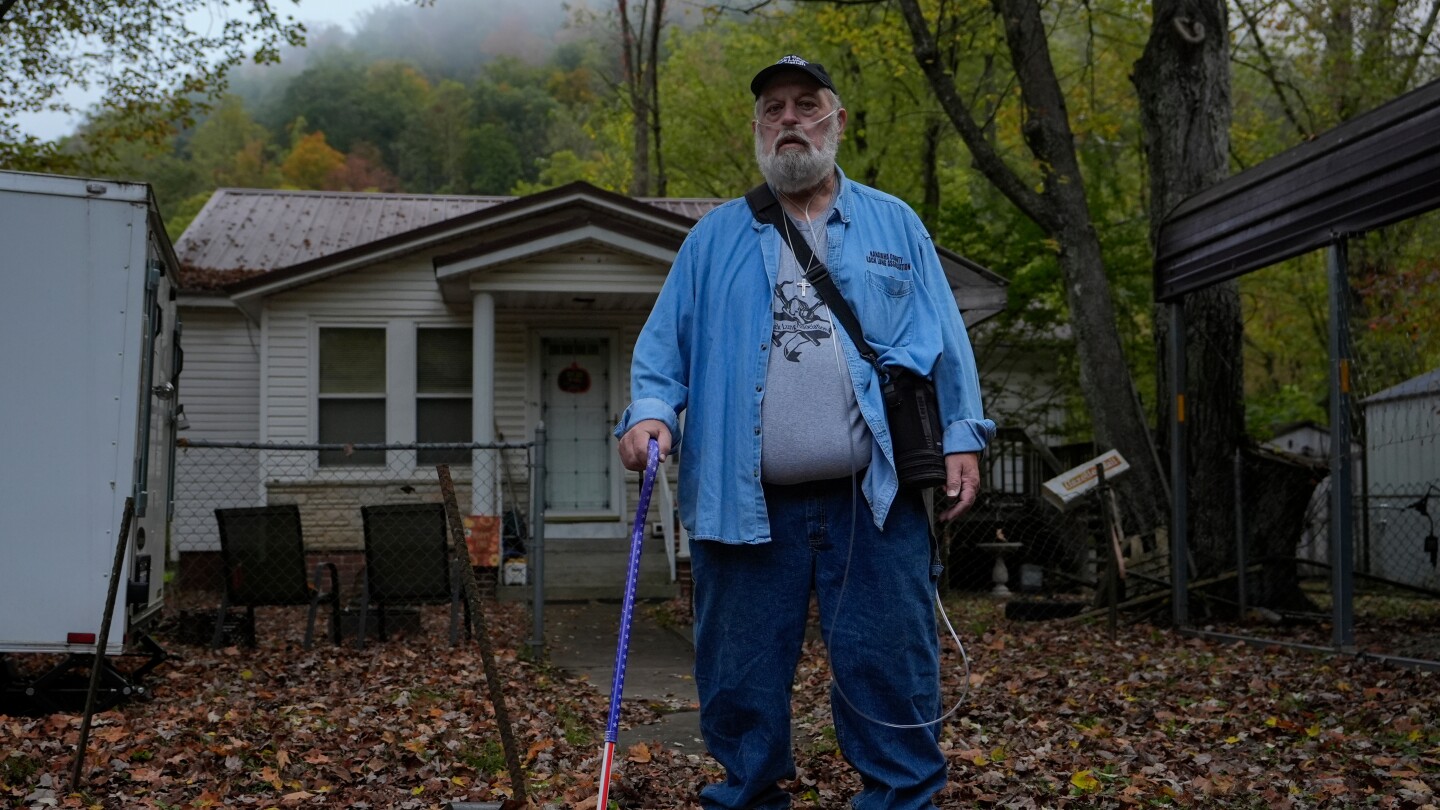
“I feel like in our part of the country … we’re kinda forgotten about,” said John Robinson, a former miner from Nickelsville, Virginia, who uses a walking stick and oxygen after being diagnosed with the disease 12 years ago at age 47. “I don’t think it’s right.”
Emery said her youngest patient with the most complicated form of black lung, called progressive massive fibrosis, was just 31 when he was diagnosed after only 10 years underground. And he’s not alone: Rates in the region have jumped in recent years — hitting an all-time high for long-tenured miners in the mid-2000s, according to NIOSH data.
“What we’re seeing at the black lung clinics is just really alarming,” she said. “So truly, if the rule got put in place today, cutting the silica exposure level in half, you already have sick miners. It’s going to take a solid 15 to 20 years for us to start to see this taper off.”
Fierce history of fight, fueled by tragedy
Crosses and grave markers are seen at the Hawks Nest Workers Memorial and Grave Site, Sept. 24, 2025, in Mount Lookout, W.Va. Silica created one of the worst occupational disasters in U.S. history when more than 750 miners — most of them Black — died from breathing the toxic dust while drilling the Hawks Nest tunnel in the early 1930s to divert water to power a metal plant. (AP Photo/Carolyn Kaster)
Crosses and grave markers are seen at the Hawks Nest Workers Memorial and Grave Site, Sept. 24, 2025, in Mount Lookout, W.Va. Silica cre ated one of the worst occupational disasters in U.S. history when more than 750 miners — most of them Black — died from breathing the toxic dust while drilling the Hawks Nest tunnel in the early 1930s to divert water to power a metal plant. (AP Photo/Carolyn Kaster)
The history of disease and sacrifice is everywhere in these mountains. Just a few miles from Emery’s office, silica created one of the worst occupational disasters in U.S. history when more than 750 miners — most of them Black — died from breathing the toxic dust while drilling the Hawks Nest tunnel in the early 1930s to divert water to power a metal plant. A small cemetery with rows of sunken, unmarked graves memorializes the tragedy in an area where rumbling coal trains and steep mining tipples remain the backdrop in tired rural towns blighted by unemployment and decaying houses.
But the region also has a proud legacy of using disasters to galvanize workers to fight for greater rights. And West Virginia coal miners have been at the center of it.
Joe Megna was just a teenager when his dad left for the No. 9 mine in Farmington on the day he was set to retire in November 1968.
“I said, ‘This is your last shift, don’t go to work, we’ll go trout fishing,’” Megna said, recalling his dad’s dutiful response to the company. “He said: ‘I owe them that much.’”
Megna said his father then told him he loved him — for the first time — and drove off.
“This was the last time we talked,” he said.
Early the next morning, the ground shook so hard, it was felt miles away. Roaring plumes of smoke billowed more than 100 feet into the sky from a raging fire. Megna’s dad was among 78 miners who did not escape the explosion. His body remains entombed there along with 18 other men who were sealed inside.
Dense smoke pours from the Mod’s Run air vent of the No. 9 mine, where 78 miners were killed as a result of the mine explosion near Farmington, W.Va., Nov. 21, 1968. (AP Photo/File)
The second of two seven-man search teams exit a mine shaft, near Farmington, W.Va. The No. 9 mine explosion killed 78 miners, Nov. 24, 1968. (AP Photo/File)
It was the first mining disaster broadcast on national television, shocking the public and enraging workers. A few months later, roughly 40,000 West Virginia coal miners walked off the job in an unauthorized wildcat strike, demanding better black lung protections and benefits when the state was a Democratic stronghold. Congress responded by passing the Federal Coal Mine Health and Safety Act of 1969, which required government oversight and enforcement at coal mines and established breathable dust standards — the same ones the 2024 silica rule would cut in half — and compensation for miners disabled by black lung.
The federal black lung surveillance program was created as part of that act, which also helped lay the framework for broader workplace safety legislation a year later that formed OSHA and NIOSH as agencies. While OSHA is charged with enforcing worker health and safety standards under the Department of Labor, including citing employers for violations, NIOSH is the quiet research and development arm. It focuses on making recommendations to avoid work-related illness and injury and is overseen by the U.S. Centers for Disease Control and Prevention.
NIOSH investigates and studies firefighter deaths, including cancers. It certifies N95 masks and reviews and verifies illnesses involving 9/11 first responders who could be eligible for benefits under the federal World Trade Center Health Program. Scientists in its Spokane, Washington, laboratory — which remains gutted — work to keep wildland firefighters, oil and gas workers and commercial fishermen safe. Some were also helping to develop real-time monitors to alert miners of silica dust overexposure.
The chaotic layoffs in April and May were made in the name of redundancy when Elon Musk was at the helm of the Department of Government Efficiency, or DOGEbut no other agency does what NIOSH does. Health Secretary Robert F. Kennedy Jr., admitted during a congressional budget hearing in May that “we made a couple of mistakes” while saying he restored 328 jobs at NIOSH, mostly in Cincinnati and Morgantown, West Virginia.
“Under Secretary Kennedy’s leadership, the nation’s critical public health functions remain intact and effective,” a Health and Human Services Department spokesperson said in a statement. “The Trump Administration is committed to protecting essential services like those that support coal miners through NIOSH.”
Unions estimate around 500 employees remain on administrative leave while their future is hashed out in court after lawsuits were filed to have the jobs reinstated. Others took buyouts or have accepted positions elsewhere. The Trump administration has attacked federal employee unions, including those representing the agency, attempting to strip collective bargaining rights. That too has prompted lawsuits.
NIOSH was slated to become part of the newly planned Administration for a Healthy America, and Kennedy proposed its budget for fiscal year 2026 be slashed to $73 million — an 80% decrease from the previous year. Meanwhile, in September, the Trump administration provided $625 million in funding to expand and improve coal-powered plants.
Prior to the government shutdownthe House and Senate appropriations committees recommended the agency’s funding either be slightly reduced or maintained near pre-Trump levels. Experts have argued NIOSH is a bargain, costing about $2.20 per working American annually. In 2023, the nonprofit National Safety Council found workplace injuries alone amount to about $177 billion each year.
“We like to say that NIOSH is the little agency that no one’s heard of that’s probably helped save your life,” said Micah Niemeier-Walsh, an industrial hygienist at the agency’s Cincinnati offices, who spoke as vice president of the AFGE Local 3840 union. “Every single workplace safety and health regulation is written in blood.”
‘Let’s stop the killing in Appalachia!’
Arvin Hanshaw, of Summersville, W.Va., left, and Randy Lawrence, president of the Kanawha County Black Lung Association, right, put their hats back on after praying during a rally protesting the government’s failure to limit exposure to deadly silica in mines, outside the U.S. Department of Labor, Oct. 14, 2025, in Washington. (AP Photo/Carolyn Kaster)
Arvin Hanshaw, of Summersville, W.Va., left, and Randy Lawrence, president of the Kanawha County Black Lung Association, right, put their hats back on after praying during a rally protesting the government’s failure to limit exposure to deadly silica in mines, outside the U.S. Department of Labor, Oct. 14, 2025, in Washington. (AP Photo/Carolyn Kaster)
The fight has not died for some aging former West Virginia coal miners with black lung who meet regularly in a building adjacent to Emery’s clinic in Oak Hill. Last month, dozens of them drove hours along with counterparts from elsewhere in Appalachia to protest on the steps of the shuttered Labor Department, some pushing walkers and stopping to catch their breath every few steps. They held up photographs of dead friends and loved ones with signs reading “Coal Miners Lives Matter.”
On the opposite side of the building, an enormous banner with Trump’s face read: “American Workers First.”
Former miner and coal truck driver Randy Lawrence said both Trump and Kennedy should do an eight-hour shift underground to see why NIOSH and the silica rule are essential. He said he hopes to send a loud message to the president he voted for, but no longer supports.
“They’re doing everything they can to hurt the working man,” he said, lugging his oxygen tank. “They ain’t worried about the miners or people in West Virginia or coal miners anywhere. All they’re worried about is the almighty dollar in D.C. They don’t care about the little people that put them there.”
Outgoing United Mine Workers of America union president Cecil Roberts went a step further, accusing those delaying the silica rule of holding a pillow over miners’ faces, suffocating workers. The UMWA has tried to intervene in the silica rule lawsuit to help push for its enforcement, but government lawyers have opposed it.
(AP Video/Carolyn Kaster)
“Let’s stop the killing in Appalachia!” he yelled into the crowd. “This country owes coal miners so much. … We allowed those fat-ass people up on Wall Street to be millionaires and billionaires. It’s our turn!”
The silica rule lawsuit is backed by a number of industry groups that represent different types of mining nationwide.
“We are absolutely supportive of the new lower levels,” said Ashley Burke, a spokeswoman at the National Mining Association, which is part of the lawsuit. She said the problem is instead with how the new rule is regulated.
Industry wants it to match more closely with OSHA’s methods of compliance, including allowing personal protective equipment to be used more to help meet the standards. But the mining rule calls for company ventilation systems and dust suppression devices to be used as part of the primary means of control.
Miners say respirators clog up frequently, making it hard to breathe, and they often slip or don’t seal properly due to beards, sweat or coal dust. They can also make it difficult for them to hear, see or talk in the noisy environment underground.
Retired miners who attended the rally say they also are pushing to make sure the Mine Safety and Health Administration isn’t weakened. Wayne Palmer was recently confirmed to lead the agency, which has seen a dwindling number of inspectors. Palmer previously worked as an executive for an industrial minerals trade association that filed a legal brief opposing the silica rule. Protest organizers say they asked to meet with Palmer, but never got a reply. The Labor Department did not respond to specific questions about the silica rule or whether Palmer planned to address the group.
Gary Hairston, president of the Fayette County Black Lung Association and the National Black Lung Association, wipes tears from his eyes during a protest outside the U.S. Department of Labor, Oct. 14, 2025, in Washington. (AP Photo/Carolyn Kaster)
Gary Hairston, president of the Fayette County Black Lung Association and the National Black Lung Association, wipes tears from his eyes during a protest outside the U.S. Department of Labor, Oct. 14, 2025, in Washington. (AP Photo/Carolyn Kaster)
“That’s like having a fox in a chicken house,” said Gary Hairston, 71, president of the National Black Lung Association, who came out of the mines in southern West Virginia sick at 48 years old. He said coal companies cannot be trusted to police themselves, adding he used to put tape over his air monitor to make sure he didn’t get bad samples because he feared being fired. He said the company also alerted miners when inspectors arrived to make sure all the safety violations were hidden. “You ain’t got nobody to go to.”
The Mine Safety and Health Administration houses inspectors who would be responsible for enforcing the silica rule, which the agency agreed to pause in April, citing restructuring at NIOSH and technical issues. This administration did not push back against the industry lawsuit in federal appeals court and was granted another delay in October, due to the government shutdown. The Labor Department has also proposed changes that would limit district managers’ authority to force mines to comply with ventilation, roofing and training regulations to carry out Trump’s directive to eliminate bureaucracy.
But at Emery’s black lung clinic in southern West Virginia, far from the lawsuits and the policy changes, all she can think about is one gasping miner arriving after another. Many are still working with limited lung capacity just to keep their health insurance, and they come to her with questions, hoping she can help delay the inevitable. She sees the young ones struggling to throw a football in the yard or make it to school sporting events.
Lisa Emery, director of the New River Health Association Black Lung Clinic, right, works a patient with black lung disease Tuesday, Sept. 23, 2025, in Oak Hill, W.Va. (AP Photo/Carolyn Kaster)
Lisa Emery, director of the New River Health Association Black Lung Clinic, right, works a patient with black lung disease Tuesday, Sept. 23, 2025, in Oak Hill, W.Va. (AP Photo/Carolyn Kaster)
“These families, you know, they’re my families,” she said. “It’s miners whose kids go to school with my kids.”
The worst ones have the number to her cellphone, which is never turned off. Sometimes they call in a panic, desperate for help.
“‘Lisa, I can’t breathe! Lisa, what do I do?’”
—-
Contact AP’s global investigative team at [email protected] or https://www.ap.org/tips/.


The Senate Judiciary Committee postponed a vote on acting Attorney General Todd Blanche’s nomination, a spokesperson said late Wednesday, as two retiring Republicans on the panel dug in over President Donald Trump’s personal “anti-weaponization” deal with the government he runs.
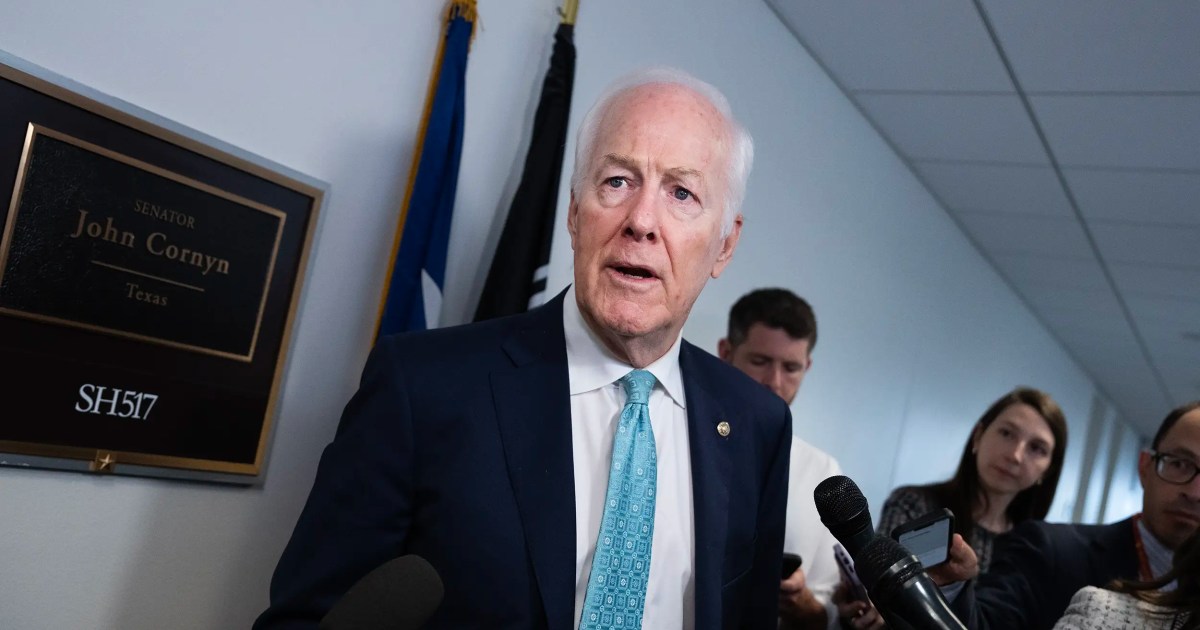
Sen. Chuck Grassley’s decision to delay the committee vote that had been set for Thursday marks a setback for one of Trump’s highest-profile Cabinet nominees, at the hands of Texas Sen. John Cornyn and Sen. Thom Tillis of North Carolina, a pair of Republicans set to leave the chamber next year.
“Chairman Grassley works to set President Trump’s nominees up for success in committee, not failure. Senators Cornyn and Tillis want written assurances from the Department of Justice regarding the Trump-IRS settlement,” the committee spokesperson said.
Blanche’s nomination to permanently head the Department of Justice needs the support of either Cornyn or Tillis to make it out of the committee to a vote by the full Senate, assuming all Democrats remain opposed.
“Why don’t you call over the Department of Justice and tell them they have one hour and 50 minutes to get me what I asked for,” Cornyn told reporters Wednesday afternoon amid the hardening standoff over his demand that Blanche and the DOJ put in writing a commitment never to pursue the president’s prized “anti-weaponization” fund, and to clarify the terms of Trump’s personal deal with the Internal Revenue Service.
Tillis told MS NOW that the conversations were complicated by the need for the Justice Department to get “several parties” to agree on the language of the statement Cornyn and Tillis are seeking.
“What I’ve advised the chair, and I would assume Senator Cornyn said something similar, is that we’re not prepared to vote yes yet,” he added.
“The Department has been in regular communication with Committee members for weeks, and we look forward to continuing to work productively with Senators to address any concerns,” a Justice Department spokesperson said in response to the decision to postpone the committee vote.
Cornyn was set to meet with Blanche on Wednesday morning, but the meeting was called off after Blanche failed to meet the senator’s demand for written proposals to modify the controversial settlement agreement he brokered between Trump and the IRS. The Republican senator is set to leave Congress when his term ends in January after a bruising May primary loss to Texas Attorney General Ken Paxton, Trump’s chosen candidate.
“Maybe John Cornyn’s upset with me because I didn’t endorse him,” Trump told reporters Wednesday afternoon in the Oval Office. “I don’t know what it is, but I haven’t heard that there’s a problem. I heard (Blanche) is going through quite nicely.”
Cornyn made clear to Blanche during his confirmation hearing that he will not get his support until he agrees to reopen and modify the settlement. Due to the committee’s narrow Republican majority, one GOP “no” vote is enough to sink Blanche’s nomination.
The senator has asked Blanche to provide proof that the proposed nearly $1.8 billion “anti-weaponization” fund established as part of the deal between Trump and the IRS is formally dead, and he has also demanded Blanche narrow the tax audit immunity provisions the settlement afforded to Trump and his family.
Blanche has publicly stated that his department has dropped the fund, but he and the DOJ have dodged requests from Cornyn and a federal judge to put that in writing.
After announcing his meeting with Blanche would not take place Wednesday morning, Cornyn told reporters that changes from Blanche “in a modified release form” would be acceptable, but that “for some reason … they simply refuse to do it,” referring to the DOJ.
Shortly after the meeting was called off, a Justice Department official told MS NOW that the department “provided a written proposal to Senator Cornyn’s staff yesterday following ongoing discussion with both the Committee and the Senator’s office.”
Cornyn said that proposal was “not responsive” to his demands because it did not address the tax audit immunity provisions in the settlement, one of his key demands.
In May, Blanche signed an addendum as part of the deal that granted Trump, his family and his businesses immunity from pending IRS tax audits. That agreement, which has been decried by former IRS officials and legal experts as unlawful self-dealing, is being contested in federal court.
Cornyn noted that Blanche testified under oath that he could meet the request during his confirmation hearing.
“Maybe they think I’m just going to give up or you know, go along, but they’re mistaken,” Cornyn said when asked why he thinks the DOJ could be slow-walking his request.
Kevin Frey contributed to this report.
Sydney Carruth is a breaking news reporter covering national politics and policy for MS NOW. You can send her tips from a non-work device on Signal at SydneyCarruth.46 or follow her work on X and Bluesky.
Mychael Schnell is a reporter for MS NOW.
Ebony Davis is a breaking news reporter for MS NOW based in Washington, D.C. She previously worked at BLN as a campaign reporter covering elections and politics.
When Israeli Prime Minister Benjamin Netanyahu arrived this week for his tour of Washington, he may have had a mission in mind.
Netanyahu needed to overcome his newly diminished stature and waning influence over his once close friend President Donald Trump as both leaders grapple with the unpopularity of a war they started together and is escaping their control.
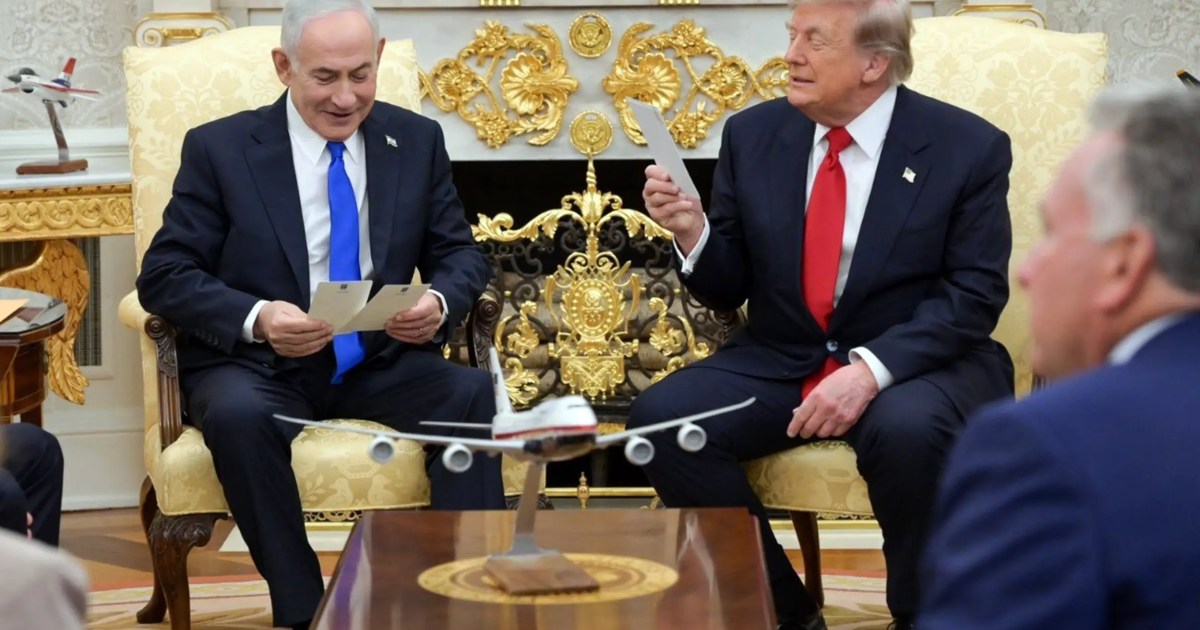
His meeting at the White House with Trump on Tuesday, which was closed to the press, was the first face-to-face encounter between the two allies since the U.S. and Israel launched a joint attack against Iran on Feb. 28.
Trump gave him a muted welcome and afterwards simply described the meeting as “very good.” “Obviously, many important subjects were discussed,” the president wrote on Truth Social.
Rather than an intimate one-on-one setting, the Oval Office was full of top U.S. officials — Vice President JD Vance, Secretary of State Marco Rubio, Treasury Secretary Scott Bessent, Secretary of Defense Pete Hegseth, Chairman of the Joint Chiefs of Staff Gen. Dan Caine, and special envoy Steve Witkoff.
But Netanyahu continued the full court press on the Trump administration.
Over the course of two days, in addition to seeing Trump and attending Sen. Lindsey Graham’s funeral at the Capitol, Netanyahu also met separately with Vance, Hegseth, and Rubio, White House and Israeli officials confirmed to MS NOW.
The Israeli prime minister’s slate of meetings with key U.S. national security officials comes at a pivotal moment in the Iran conflict as tensions escalate in the region and Americans increasingly sour on the war. A recent Quinnipiac poll shows 60% of American voters opposing U.S. military action against Iran and 74% against sending U.S. ground troops into Iran.
Not only does Trump face pressure as Republicans face an uphill battle to retain congressional control in this fall’s midterms, Netanyahu’s fate as prime minister is at stake in Israel’s upcoming September elections – and he can’t afford to lose Trump’s favor.
The talks largely focused on what to do next as Iran continues to menace shipping in the Strait of Hormuz and retaliate against American bases in the region and launch attacks on Gulf allies.
According to a senior Israeli official who was granted anonymity to describe the closed-door meeting, President Trump and Israeli Prime Minister Netanyahu did not come to a final decision after discussing three paths forward: get a “good deal” focused on Iran’s nuclear program and enriched material, have no deal and instead continue the blockade and economic pressure, or take escalated military action.
But Netanyahu did not tell Trump what he should do – nor did he express a preference.
The senior Israeli official noted Netanyahu has not ruled out diplomacy – as long as it is coupled with “very strong pressures,” calling the push to dismantle Iran’s nuclear program “a contest of will and a contest of force.”
“There are ways of squeezing them and squeezing them and squeezing them and negotiating at the same time,” the official said.
Netanyahu did not present President Trump with new intelligence regarding the underground Iranian nuclear facility Pickaxe Mountain, per the senior Israeli official, noting the U.S. and Israel already are constantly sharing intelligence – and know where Iran’s highly enriched material is. “We don’t think it’s moved, and I think we have a pretty good grasp on that,” the official said.
During their meeting on Tuesday, Trump and Netanyahu discussed ways Israel and the U.S. can work together to stop Iran’s nuclear program and get the Strait of Hormuz open to maritime trade, the senior Israeli official said.
The two leaders also discussed a third goal: to continue to undermine the Iranian regime and “possibly create future conditions for a change in that area.” U.S. officials have backed away from pursuing paths that would overthrow the current leadership, but Netanyahu still believes that could happen.
“The chasm that has been created between the people and the regime is not about to be closed,” the senior Israeli official said of Netanyahu’s thinking.
Netanyahu advised Trump in February that Israeli intelligence indicated launching strikes against Iran would lead to the toppling of the Islamic Republic’s regime – and five months later, the slain ayatollah’s son retains power with a close circle of hardliners, calling into question the accuracy of Israel’s intelligence apparatus.
But the senior Israeli official said at the time, Netanyahu did not promise the Iranian people would take fate into their own hands following a coordinated attack. Rather, he chose his words carefully and said that an attack could create conditions to “advance the probability or the possibility that that would happen.”
The conditions needed for the Iranian regime to fall, “did not materialize,” the official told MS NOW, adding, “not for lack of insight, but for either operational failure or decisions that were made.”
Despite Netanyahu insisting Israel and the U.S. are on the same page, differences still remain: the sale of F-35 fighter jets to Turkey and the Saudi nuclear arrangement did not come up during Wednesday’s White House meeting, according to a second Israeli official granted anonymity to describe sensitive discussions.
Meanwhile, the conflict continues to spread, with an Iranian drone attacking a U.S. gas storage tanker off the coast of Egypt on Wednesday.
Trump indicated he would not let Iran’s latest action slide, telling reporters on Wednesday that the U.S. would retaliate against Iran even as he leaves room for diplomatic talks to resume.
“It’s our turn, and we’ll see if we get there with an agreement at some point,” Trump said. “But we’re going to hit them very hard.”
As for what it would take for Israel to join the U.S. strikes, the senior Israeli official said that if Israel is attacked by Iran, “We will respond very, very forcefully and very quickly. And I think Iran would make a great mistake.”
Julia Jester covers politics for MS NOW and is based in Washington, D.C.
International rage over FIFA’s close ties to President Donald Trump has reached a fever pitch after soccer’s governing body announced a plan to sell a significant stake to an investor group led by Joshua Kushner, the brother of Trump’s son-in-law.
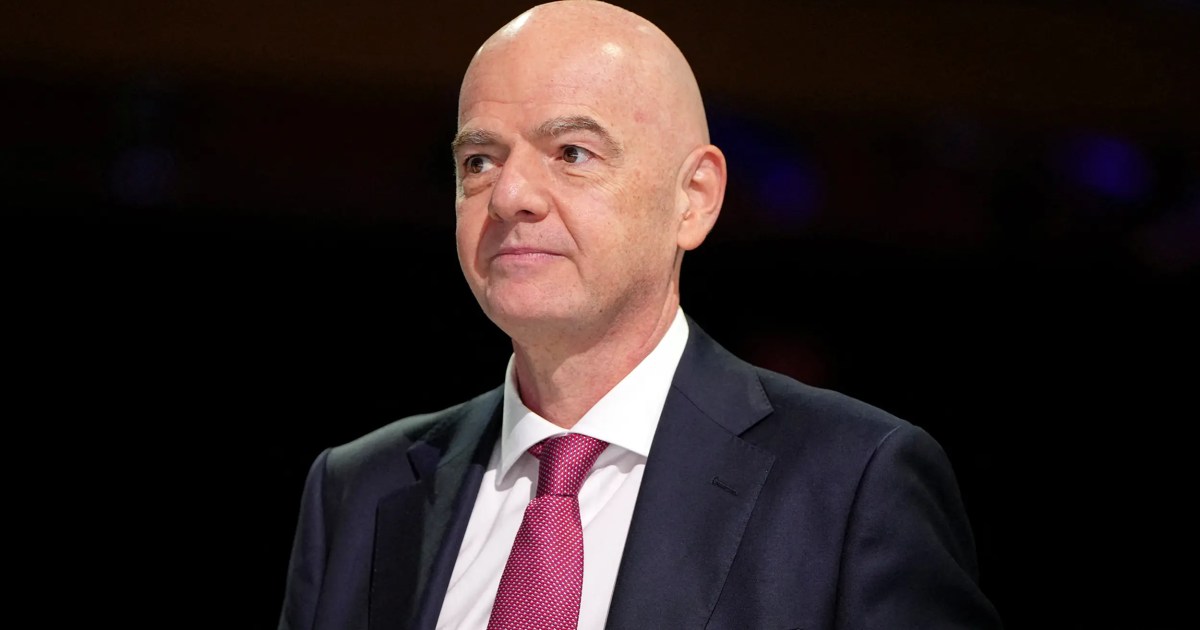
The president and his family have all but turned the White House into their personal piggy bank. And FIFA — which has its own sordid history of corruption — seems to have made itself a party to Trump’s self-enrichment under Gianni Infantino’s leadership, such as by paying for space inside Trump Tower in New York. (The organization has defended the office rental as a World Cup outpost.)
Soccer is seen by many as a unifying game. But Trump’s incorporation of FIFA into his political dynasty is threatening that idea.
FIFA has announced plans to sell a large minority stake in a new company that will run its main events, including the World Cup and Club World Cup, as part of a plan to triple the amount of development money it dishes out to its 211 member associations.
Under the proposals — which are subject to approval by a majority of those national associations and FIFA’s 37-member council — a new entity called FIFA Forward Enterprises (FFE) will take over all commercial operations, while FIFA remains the game’s global governing body and retains a majority stake in FFE.
A press release from FIFA confirmed the plans and said Thrive Eternal, which was launched by Joshua Kushner, is expected to lead the investment group that would control FIFA Forward Enterprise. FIFA did not clarify why Thrive Eternal was selected, and Kushner was already dabbling in sports.
But Trump basically has already given son-in-law Jared Kushner carte blanche to dictate U.S. foreign policy in the Middle East while simultaneously hatching business plans in the region. (Jared Kushner has denied any conflicts of interest.)
Joshua Kushner reportedly has been a major donor to Democrats. But, predictably, the idea of another Kushner becoming financially entwined with the World Cup — the world’s most popular sporting event — and basically being dropped into a position of global significance isn’t going over well. Several other soccer governing bodies have expressed concerns, including Europe’s UEFA.
“This crosses a line that football’s governing institutions should never cross,” UEFA said in a statement about The Athletic’s report, adding: “The soul and governance of football are not assets to trade — especially with zero transparency as to who gains financially. None of us are the owners of football. It is not FIFA’s to sell.”
Democrats on the House Judiciary Committee also rebuked the plan, writing on X: “Apparently the fake Peace Prize and giant lease with Trump Tower weren’t enough — now Infantino performs a kickback hat trick by pursuing a multibillion-dollar deal with Jared Kushner’s brother to sell ownership stakes in the World Cup to private investors.”
FIFA, Donald Trump’s favorite corrupt racketeering enterprise in world sports, is now going directly into business with the Trump family!
Apparently the fake Peace Prize and giant lease with Trump Tower weren’t enough—now Infantino performs a kickback hat trick by pursuing a… https://t.co/knSZibuMea
— House Judiciary Dems (@HouseJudiciary) July 28, 2026
Rep. Jamie Raskin, D-Md., has already launched an investigation into the FIFA leader’s relationship with the Trump administration, while dozens of European lawmakers — citing concerns about “potential breaches of political neutrality” — have called for the FIFA Ethics Committee to investigate Infantino. This new proposal seems unlikely to assuage those concerns.
But what it does seem likely to do is fuel global anger toward the U.S. — the kind that has been growing since Trump retook office.
And when you consider that, it’s truly remarkable how the same MAGA movement whose members whined for years about politics mixing with sports is now in lockstep with a president who seems dead-set on casting his shadow over every sports event he can.
This post on X basically sums up the foul stench around FIFA’s latest proposal.
Sepp Blatter was Infantino’s predecessor as FIFA president and oversaw the organization amid some of its many scandals. When heof all people, is warning about how Trump and Infantino’s relationship is “deeply damaging” soccer, it’s a sign of how far FIFA has descended into the gutter.
Ja’han Jones is an MS NOW opinion blogger. He previously wrote The ReidOut Blog.
- New Democrats back candidates in deep-red districts
- Inside Thune and Barrasso’s midterm campaigning plans
- Capitol agenda: Dems face tricky votes before midterm sprint
- Republicans scheme to block Trump’s funding cancellations
- Senate passes bipartisan bill to overhaul college sports
- Taxpayer-funded ads are the latest Trump headache for beleaguered GOP senators
- Senate negotiators reach deal on permitting text
- Menin’s AI moment

- Vance, RFK Jr. and Iron Mike to headline MAHA Summit
- John Thune: Taxpayer dollars shouldn’t fund Trump ads
-

 Politics2 years ago
Former ‘Squad’ members launching ‘Bowman and Bush’ YouTube show
-
Uncategorized2 years ago
Bob Good to step down as Freedom Caucus chair this week
-

 The Josh Fourrier Show2 years ago
DOOMSDAY: Trump won, now what?
-

 Politics2 years ago
Former Kentucky AG Daniel Cameron launches Senate bid
-

 The Dictatorship2 years ago
Pete Hegseth’s tenure at the Pentagon goes from bad to worse
-

 The Dictatorship2 years ago
Luigi Mangione acknowledges public support in first official statement since arrest
-

 Politics2 years ago
Blue Light News’s Editorial Director Ryan Hutchins speaks at Blue Light News’s 2025 Governors Summit
-

 The Dictatorship1 year ago
Mike Johnson sums up the GOP’s arrogant position on military occupation with two words