
Politics
Charlie Kirk’s final endorsement is on the ropes — despite his group’s big push

Turning Point USA has gone all-in to make GOP Rep. Andy Biggs the next governor of Arizona, their top priority of the cycle.
It appears they will come up short.
Biggs was the last candidate Turning Point founder Charlie Kirk personally endorsed before he was killed one year ago. Kirk himself recruited the longtime ally in their home state to run for governor this cycle — and Turning Point has since spent $18 million, the most they’ve dropped for anyone this cycle, to try to salvage his campaign.
“It’s a legacy thing for them,” said former Rep. Matt Salmon (R-Ariz.). “This is their swan song. This is kind of all-or-nothing for them.”
But Biggs, a former chair of the hardline House Freedom Caucus and close ally of President Donald Trump who previously served as Arizona Senate president, has trailed Democratic Gov. Katie Hobbs in virtually every public poll of the race this year, most of them outside the margin of error. And some Arizona Republicans have been baffled by Turning Point’s strategy.
The group faces immense criticism from within the state GOP for delaying its biggest spending until September, just weeks before ballots were sent out, according to conversations with 10 local operatives and officials.
Biggs’ race is the most high-stakes political test for Turning Point Action since Kirk’s 2025 death, and the result will have major implications for the group’s reputation and relevancy within the GOP moving forward. Turning Point has already preemptively endorsed Vice President JD Vance, who was particularly close to Kirk, for president. Should Vance decide to run, he could rely on Turning Point’s ground operation in swing states like Arizona and beyond.
The group could well overperform this year, and if they are successful in lifting Biggs in their home state, it could send a signal. But a loss could have 2028 repercussions, too.
“If JD Vance intends to run for president, I think it would be a good idea to reevaluate any thoughts he might have about utilizing Turning Point Action as his field operation,” said Gina Swoboda, a former chair of the Arizona Republican Party who has openly sparred with the organization.
A spokesperson for Vance did not respond to a request for comment.
Other Republicans, including the Biggs’ campaign, said they’re grateful that Turning Point didn’t wave the white flag in a tough year for the GOP, as voters reel from the impact of Trump’s policies.
“Turning Point Action’s investments both on the ground and over the airwaves in Arizona have been tremendous. We are very grateful they’ve stepped up to support Andy and Republicans up and down the ballot in an extremely difficult environment,” Biggs campaign spokesperson Drew Sexton said in a statement.
In a statement, Tyler Bowyer, chief operating officer of Turning Point Action, said he is “very proud of the strides we have made in Arizona and other swing states.” He emphasized TP Action is “a Get-Out-The-Vote (GOTV) centric organization” and not TV-focused, pointing the blame elsewhere.
“It is the job of national apparatus groups to go on air early and support Republican nominees,” he said. “We of course are disappointed that more national Republican dollars are not matching the national Democrat dollars being spent on Presidential swing states like Arizona.”
While the RGA has stayed out of the race, the Democratic Governors Association has spent at least $10 million.
Hobbs, who was elected to the purple state’s governorship in 2022, launched her first general election TV ad in May, while Biggs was still focused on his late July primary. At the time, Turning Point mocked Hobbs for “spending like a drunken sailor” by launching spending so early.
But now, Republicans say that Hobbs was able to entrench her lead in the race by spending early while Biggs was dark on the airwaves — and blame Turning Point along with other GOP outside groups like the Republican Governors Association for not spending earlier to keep the race competitive. The RGA declined to comment on their decision not to spend in the race.
In a state like Arizona, where an incumbent governor hasn’t lost reelection since 1966 and some 80% of voters cast ballots before Election Day, a late deluge of cash is less likely to sway the race.
“If you’re spending that much money, a big portion of that would’ve been really helpful earlier in the race when Andy was completely broke, he didn’t have two nickels to rub together, and Hobbs was dominating the airwaves with no response and beating the crap out of Andy,” said Salmon.”A lot of us are scratching our heads.”
Biggs’ campaign reported just $1.26 million cash on hand in July, while Hobbs’ campaign reported double that. Many donors to former GOP Gov. Doug Ducey have stayed on the sidelines this year.
One Republican operative working on other Arizona races, granted anonymity to speak candidly, said that at this point, “No amount of spending is going to change the fact that Biggs is going to lose.”
“In all likelihood, the top statewide seats are going Democrat. And Turning Point owns it,” the strategist added. “They wanted to be the player. They wanted to be the guy. Guess what? They are.”
Many local Republicans are frustrated that the RGA never spent a penny on the top race in a state Trump won in 2024. While Biggs was getting hammered early on the airwaves, the RGA was spending nearly $4 million on the Wisconsin Democratic primary to boost a democratic socialist who narrowly lost.
For several cycles, Turning Point has muscled statewide candidates through messy Republican primaries, only to see them falter in November. In 2022, it pushed hardliners Blake Masters and Kari Lake as nominees for U.S. Senate and governor, only to see both lose. In 2024, they backed Lake’s bid for Senate; even as Trump won Arizona by five points, Lake lost by two.
Biggs, some Republicans thought, would be different. He had high name ID statewide and a track record of public service for Arizona, both in the state Senate and the U.S. House. Kirk himself personally urged Biggs to enter the governor’s race, Biggs told the Arizona Republic, even though Trump had already endorsed Karrin Taylor Robson, a Phoenix attorney and businesswoman, early in the race.
After Biggs entered the race in January 2025, Trump split his endorsement between Robson and Biggs — and Turning Point took a victory lap.
“Turning Point Action will marshall our organization’s full resources, ground game, and support behind the Biggs for Arizona campaign, and we’re honored to be able to do so,” Charlie Kirk said in a May 2025 statement. “He has my full and complete endorsement.”
Robson later dropped out, and Turning Point helped Biggs romp to a massive victory in the primary. Next Tuesday will test if their general-election acumen has improved.


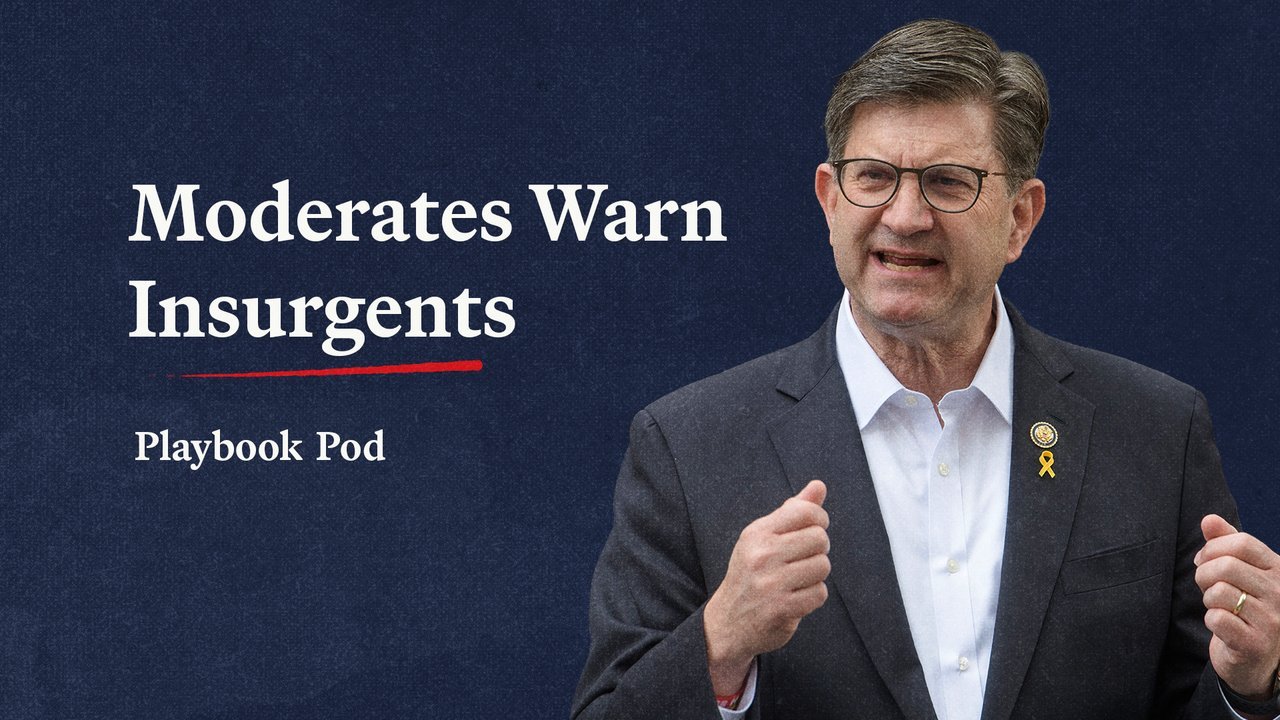
Moderates put the left on notice
lead image
DEARBORN, MICHIGAN — “A threat to America.” “Radical ideology.” “A jihadist.”
President Donald Trump and Republicans are ratcheting up their efforts to brand Democrat Abdul El-Sayed, a Michigan-born Muslim whose parents emigrated from Egypt, as an “extremist” in the final days of the state’s critical Senate race.
It has sparked concern among some El-Sayed supporters, who fear the deluge of attacks could break through to some undecided voters. It has infuriated some of the president’s one-time Muslim and Arab allies in the state with the largest concentration of Arab Americans in the country, who view the comments as Islamophobic and racist. And it has caused some of them to lose hope in Republicans.
“You turned off a lot of people. Even people that were working to get Trump elected and get people to vote Republican here have flipped. We did all this work for them to turn around and use us as enemies, to be able just to win an election,” said Hassan Nehme, a GOP statehouse candidate and former Michigan Republican Party vice chair who helped lead Arab American outreach for the GOP in 2024. He is undecided in how he’ll vote in this year’s Senate race. “It’s to the point [where] I’m like, why am I even fighting to be in this party?”
Republicans’ increasingly incendiary rhetoric in the crucial Senate race is overshadowing the close of an already polarizing election.
“Michigan is a battleground. That’s the truth. And racism is real,” Dearborn Mayor Abdullah Hammoud, a Democrat in an Arab-majority city who is backing El-Sayed, said in an interview at his office Tuesday. “If you have folks who refuse to vote for somebody because of the direction in which they pray, it most certainly has an impact.”
Hammoud believes most voters will see past it. But Republicans are bearing down.
Trump, who has repeatedly mocked and mispronounced El-Sayed’s name, labeled him a “jihadist” during a rally for GOP nominee Mike Rogers in Port Huron this past Sunday and said he would “be unable to get a seat on an airplane.”
Health and Human Services Secretary Robert F. Kennedy Jr., in a campaign event with Rogers in Grand Rapids on Monday, claimed the world’s 500 million Arabs no longer produce award-winning science or literature and instead create “stagnant societies that do two things — hatred and war and victimization.”
Sen. Ted Cruz (R-Texas), while campaigning for Rogers in Michigan on Wednesday, called El-Sayed a “jihadist leprechaun.”
Ads from Rogers’ campaign and allied GOP groups attacking El-Sayed in this vein run in rotation across Michigan television. Senate Leadership Fund, the top GOP Senate super PAC, says El-Sayed gets “dirty money” from an “Islamic extremist group” that is “tied to Hamas.” Rogers, in a direct-to-camera clip, calls El-Sayed “a threat to America.”
Bishara Bahbah, an Arizona resident who founded Arab Americans for Trump and helped facilitate Trump’s 2024 outreach to Michigan’s Arab community, said Trump’s Sunday comments cross “a red line.”
“The only consequence that I can see from these comments is a complete reversal of the support in Michigan and other states where Arabs and Muslims vote, toward the Democratic Party.”
Rogers has been more specific in how he’s gone after his opponent. He has attacked El-Sayed for taking campaign donations from donors affiliated with the Council on American-Islamic Relations, a Muslim advocacy group, which Republicans have long attacked as a terrorist group even though the U.S. government has not designated it as such. He’s alleged ties between El-Sayed’s family and the Muslim Brotherhood, in part through El-Sayed’s father-in-law’s involvement with CAIR and the Islamic Society of North America, another Muslim group. El-Sayed’s campaign referred to past statements from both CAIR and ISNA denying affiliation with the Muslim Brotherhood. Rogers has also referenced El-Sayed’s mother’s work for a charity that the Bush administration classified as a supporter of terrorist groups, as reported by The New York Times.
El-Sayed has disavowed the Muslim Brotherhood and said his family has “no” ties to it. El-Sayed’s parents separated when he was three years old, and he says he was raised by his father and stepmother. His campaign responded to Trump’s rally in a statement saying while Trump and Rogers “lie and resort to desperate, bad faith attacks, Abdul remains laser focused on his plans to bring down costs and stand up to the chaos and corruption in Washington.”
“I’m not worried,” El-Sayed told reporters at a Detroit union hall on Monday, “because just like I did 18 months ago when I kicked off this campaign, I am taking a bet on the bigness of Michiganders.”
And President Barack Obama, in a rally with El-Sayed in Detroit on Saturday, said: “This stuff didn’t work on me, not in Michigan. It’s not going to work on Abdul.”
But some of El-Sayed’s allies are concerned.
James Tate, president of the Detroit City Council noted that El-Sayed “can’t defend himself in every household.”
El-Sayed’s campaign and his allies are fighting back by knocking on doors and hitting the airwaves, a sign they’re cognizant the attacks could have an impact. One El-Sayed ad features his white step-grandparents responding to some of Trump’s attacks. “Communist? We’re Presbyterian!” his grandparents say in the spot.
El-Sayed cut another ad featuring images of a menorah and of him praying with Black parishioners.
“His faith — I think that scares some people,” said Dana Harris, the director of the Coalition of Black Trade Unionists, who was doorknocking for El-Sayed across northwest Detroit last Saturday. “But at the end of the day. he’s a human being like the rest of us. And he wants change.”
Rogers and his allies say questioning ties to extremist organizations doesn’t equate to Islamophobia. Rogers’ campaign referred Blue Light News to comments he made ahead of Trump and Kennedy’s events.
“This is not about Islam. It’s not about how he prays,” Rogers said on NBC’s “Meet the Press” Sunday morning. “It is about his adherence to this radical Islamic agenda.”
In a statement, White House spokesperson Davis Ingle said Trump “will continue to unapologetically fight for American greatness and call out extremists like Abdulrahman Mohamed El-Sayed without apology.”
Statewide ballot measures are flying under the national radar — but some are drawing big spending.
At least $400 million has been spent on TV ads for ballot initiatives, according to data from the ad-tracking firm AdImpact. The 145 ballot measures across 39 states include fights attracting the attention of future presidential candidates and millions from dark-money groups on both sides of the aisle.
The focus of this year’s ballot measures reflect broader shifts in the political discourse. The number of abortion-related initiatives has dropped precipitously since 2022 as states have had time to determine their individual laws following the repeal of Roe v. Wade. At the same time, voters in five states will weigh in on ballot measures focusing on transgender issues, the most in history.
Here are the most consequential ballot initiatives facing voters in November:
California’s wealth tax
By far the most expensive and most aggressively targeted ballot measure in November is California’s Prop 40, which if passed would levy a one-time 5% tax on the state’s billionaires. An eye-watering $92 million has been spent on TV ads debating the issue, mostly on the “No” side, although that pales in comparison to what the Silicon Valley tycoons opposing the initiative like tech investor Peter Thiel and Google co-founder Sergey Brin would be forced to pay should it pass.
Leading progressive figures including Bernie Sanders and Ro Khanna are backing the “Yes” side. Caught in the middle is Gov. Gavin Newsom, a potential 2028 presidential candidate, who’s opposed the measure even as he’s tried to claim some populist credibility by proposing a national tax hike on billionaires. A Citrin-POLITICO poll earlier this month found the measure receiving 46% support, short of the majority needed to pass.
Newsom and Brin are both backing another ballot measure, Prop 42, a separate question that would cancel out the Prop 40 wealth tax if it passes. If both pass, Prop 42 could still cancel out Prop 40 if it receives more votes.
Redistricting wars continue
Maryland Gov. Wes Moore is making himself the face of a constitutional amendment that, if it passes, would pave the way for the state legislature to draw new lines turning the state’s lone GOP House seat solidly blue. Moore, a potential presidential candidate in 2028, is taking a cue from Newsom, who passed a redistricting referendum last year that is likely to swing five House seats in favor of Democrats. Former President Barack Obama cut an adfor the “Yes” campaign this week.
Missouri Democrats recently won a contentious legal battle that barred the GOP from using a new gerrymander to erase a Kansas City-area Democratic seat held by Rep. Emanuel Cleaver and allowed voters a referendum on whether that gerrymander will be used in future elections.. Now, voters get to choose what the state does going forward. The campaign pushing “No” on the referendum reported raising $6 million earlier this month, with big help from Democratic megadonors, including LinkedIn co-founder Reid Hoffman and Illinois Gov. JB Pritzker.
Transgender rights restrictions hit the ballot
This year marks the first time multiple states have taken up ballot initiatives focusing on transgender issues.
The six initiatives across Colorado, Missouri, Washington, Arizona and Nebraska help make up the most LGBTQ-related ballot measures in a year since the Supreme Court legalized same-sex marriage in 2015. Each of the measures asks voters to either ban transgender surgeries for minors or restrict access to girls sports for transgender girls.
Abortion access measures in four states
Measures in Nevada and Virginia would enshrine abortion access in those states’ constitutions, similar to measures that have passed over the last few years in Ohio, Michigan, Montana and other states.
A measure in Idaho, which would override the state’s near-total ban, is a statutory change rather than a constitutional one, meaning the GOP-dominated state legislature could (and is expected to) vote to override it if it passes.
Missouri has a social conservative combo: a proposition to overturn the abortion-rights constitutional amendment that voters approved in 2024 and reinstate a near-total ban on the procedure that would also prohibit gender transition surgeries for minors. Advocacy groups on both sides are pouring millions into the initiatives, with abortion rights groups spending $22.5 million and anti-abortion groups spending $8.7 million on TV ads, with most of that money being spent in Missouri.
Voting on voting
Over a dozen ballot measures will weigh election administration rules for future elections. In seven states,voters could approve requirements for valid ID to vote. Six states will give voters the chance to explicitly codify in state law that only U.S. citizens can vote in the state. Massachusetts voters will weigh in on whether to establish a top-two nonpartisan primary system, like California has, while Alaska voters will decide if the state will end its top-four primary and ranked-choice voting laws in favor of traditional party primaries and first-past-the-post vote counting.
- Judge strikes down Trump admin’s definition of ‘medically frail’ in Medicaid work rules
- Charlie Kirk’s final endorsement is on the ropes — despite his group’s big push
- Capitol agenda: House Democrats’ next big battle
- Moderates put the left on notice
- Trump clashes with Maryland over golf project on a Superfund site
- Trump’s anti-Muslim attacks dominate Michigan’s election homestretch
- Elizabeth Warren eyes post-election Senate leadership move
- Top House Democrats demand Trump preserve conversations with Grok
- The battle for the future of a House Democratic majority is raging
- ‘Lisa is Lisa’: Murkowski endorses a Democrat as she faces 2028 dilemma
-

 Politics2 years ago
Former ‘Squad’ members launching ‘Bowman and Bush’ YouTube show
-
Uncategorized2 years ago
Bob Good to step down as Freedom Caucus chair this week
-

 The Josh Fourrier Show2 years ago
DOOMSDAY: Trump won, now what?
-

 Politics1 year ago
John Legend advises Trump to drop the ‘dictator s‑‑‑’ if he wants Nobel Peace Prize
-

 The Dictatorship2 years ago
Pete Hegseth’s tenure at the Pentagon goes from bad to worse
-

 Politics2 years ago
Former Kentucky AG Daniel Cameron launches Senate bid
-

 The Dictatorship2 years ago
Luigi Mangione acknowledges public support in first official statement since arrest
-

 Politics2 years ago
Blue Light News’s Editorial Director Ryan Hutchins speaks at Blue Light News’s 2025 Governors Summit