
Politics
Brad Raffensperger navigates his party’s MAGA reality

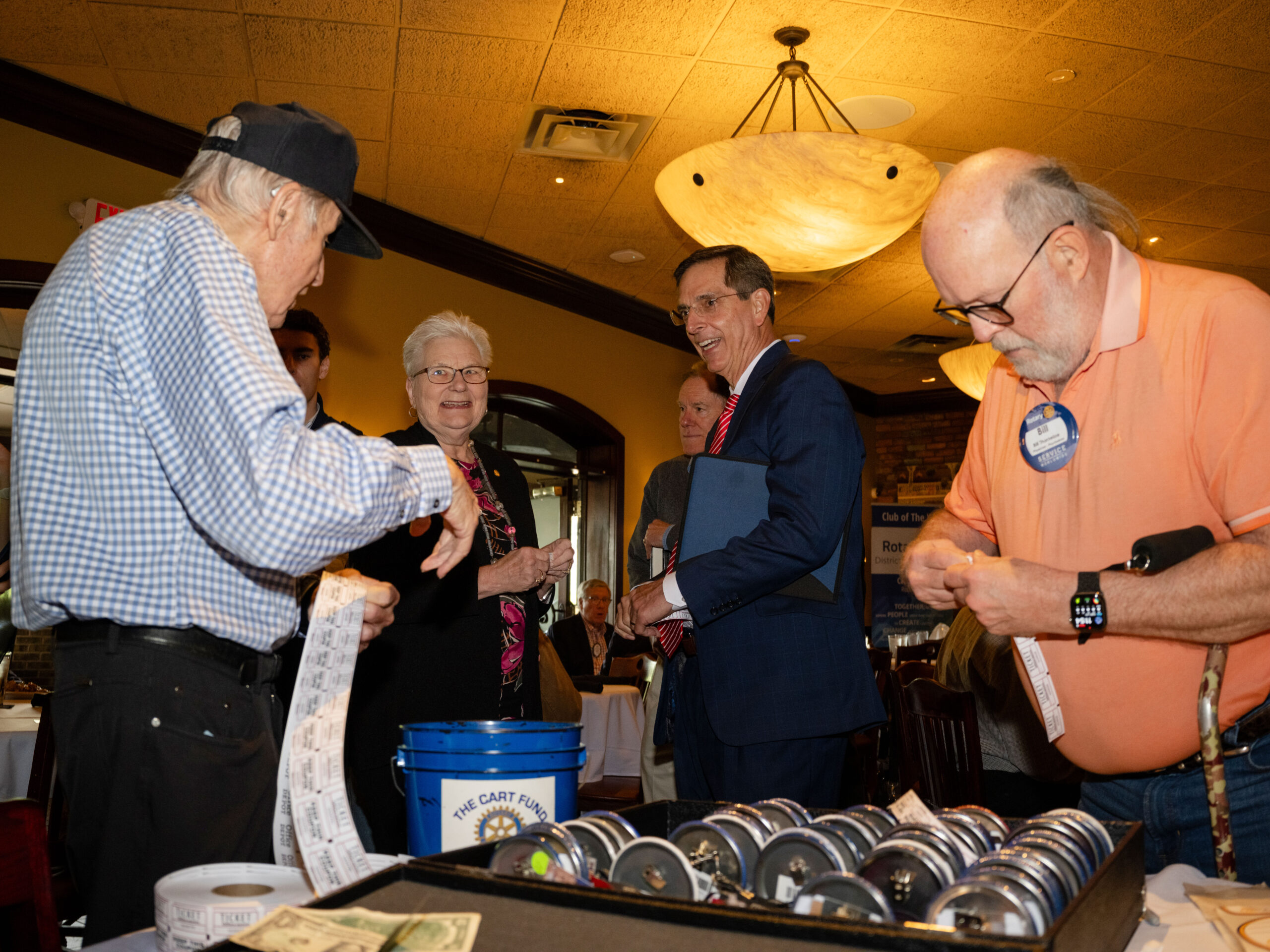
VININGS, Ga. — Brad Raffensperger is fighting to save his political future as MAGA takes hold of the Georgia GOP.
The secretary of state rose to national prominence by defying President Donald Trump’s efforts to overturn the 2020 election, but he is carefully trying to avoid the anti-Trump lane while he runs for governor.
Instead, he’s running an old-school campaign aimed at an old-school Republican Party: He’s holding low-key events compared with his GOP opponents’ flashier rallies, and he’s focusing on bread-and-butter issues, rather than harping on election security. At one Atlanta-area rotary club gathering in April, Raffensperger was all too happy to tout his business background and his pledge to cap property taxes. Everywhere he goes, he drops the word conservative.
“I have my own lane, and I feel good where we are,” Raffensperger told Blue Light News after the event. “It’s the lane about being a Christian conservative businessman who’s built a business from scratch.”
At its core, Raffensperger’s candidacy is a test of whether the party’s non-MAGA guard can hold on in one of the nation’s premiere battleground states. He’s defied expectations before, fending off a Trump-backed candidate in 2022 to keep his current position. But 2026 poses a new challenge, as Georgia’s GOP has increasingly shunned its small government roots in favor of aligning with the populist right.
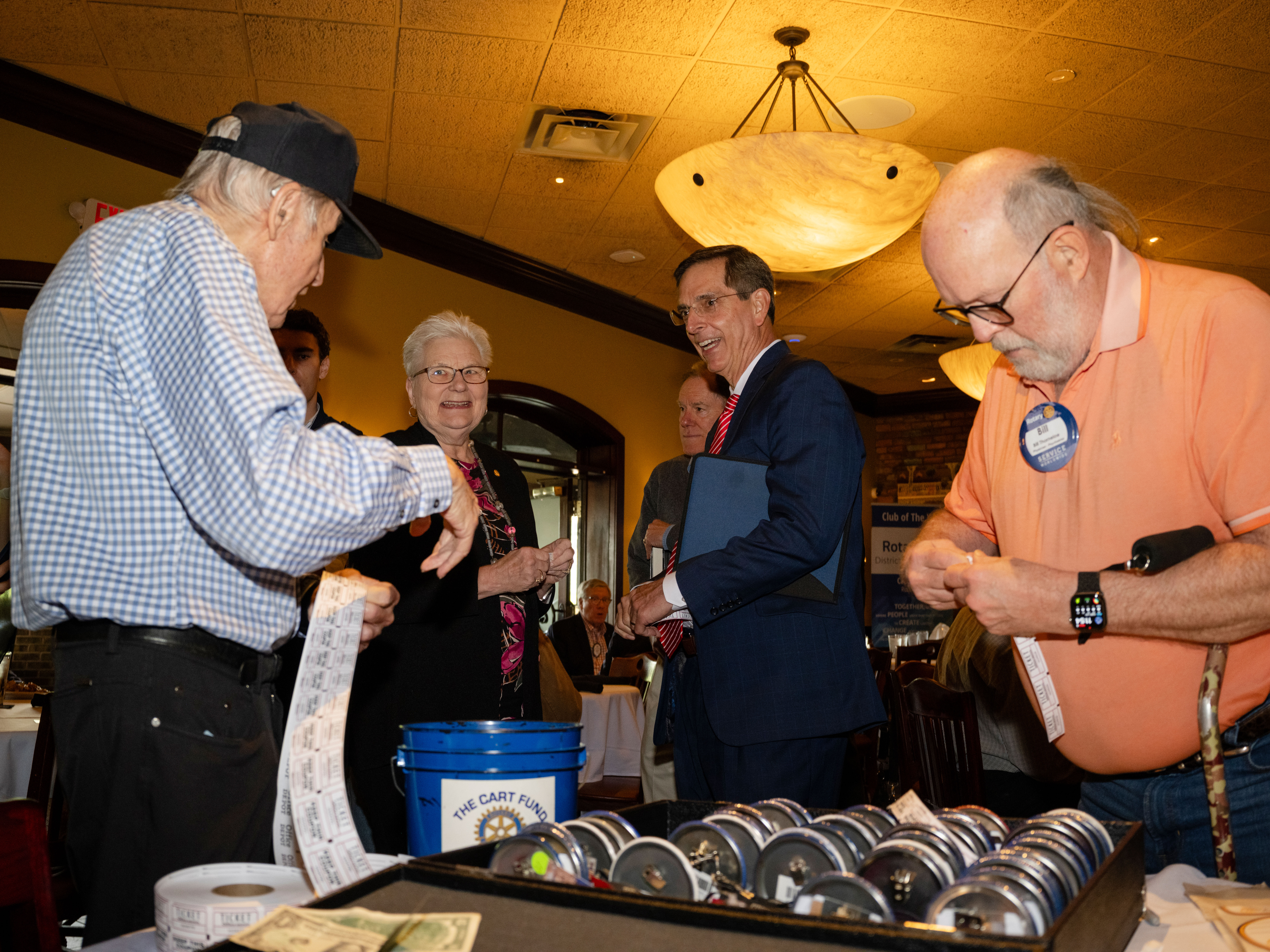
Raffensperger maintains he has a path to victory. Asked whether Trump’s grip on the party is complicating it, he deflected: “I’m doing just fine. I’m going to be in the run-off.”
But the reality is Raffensperger is still struggling to break through in the governor’s race, polling at a consistent third place behind Trump-backed Lt. Gov. Burt Jones and billionaire Rick Jackson ahead of the May 19 primary. Republican strategists and officials in the state were widely skeptical of Raffensperger’s chances of success.
“This is the party of Trump today — like it or not, it is — and I find it very difficult to see someone being able to be anti-Trump in a Republican primary and be successful,” said Casey Cagle, a Republican who served as lieutenant governor from 2007 to 2019. He’s experienced the rise of the MAGA base firsthand and has since tacked further to the right.
“The base has grown far, far greater to the right than what it was in my day,” said Cagle, who is supporting Jones in the governor’s race. “The core of the Republican Party has moved far away from the Chamber of Commerce mindset.”
Before February of this year, Raffensperger seemed poised to draw enough support in the primary to keep Jones under the 50 percent threshold he needed to trigger a run-off election. Then Jackson upended the race with his bombastic spending and MAGA pandering, pushing Raffensperger further down in the polls.
Even if the secretary of state were to make a run-off against either Jones or Jackson, his chances of actually winning the nomination are still slim, said GOP strategist Jeremy Brand, who has worked on Gov. Brian Kemp-aligned committees and is unaffiliated in the governor’s race.
“It’d be incredibly tough,” Brand said. “The edge in a run-off where voters are traditionally more conservative, that are willing to come back out again, I think the odds go to the more conservative candidate.”
2020 election woes
Raffensperger has been battling his own party on various fronts since he first stood up to Trump.
A faction of the Georgia GOP tried to bar him from seeking office again on the Republican ticket. And local party leaders recently broke with precedent to allow the RNC to eschew its neutrality and spend resources on backing Jones in the primary. The MAGA base that failed to oust Raffensperger in 2022 is trying again to end his political career — along with others deemed insufficiently loyal to the president.
Attorney General Chris Carr, like Raffensperger, is also mounting a bid for governor and previously defeated a Trump-backed challenger in 2022. But he’s polling even lower than the secretary of state. And Gabriel Sterling, a former top Raffensperger lieutenant, is locked in a noisy primary in his bid for secretary of state as he faces off against a former Democrat-turned-MAGA acolyte and a GOP state representative who once served as Kemp’s top aide.
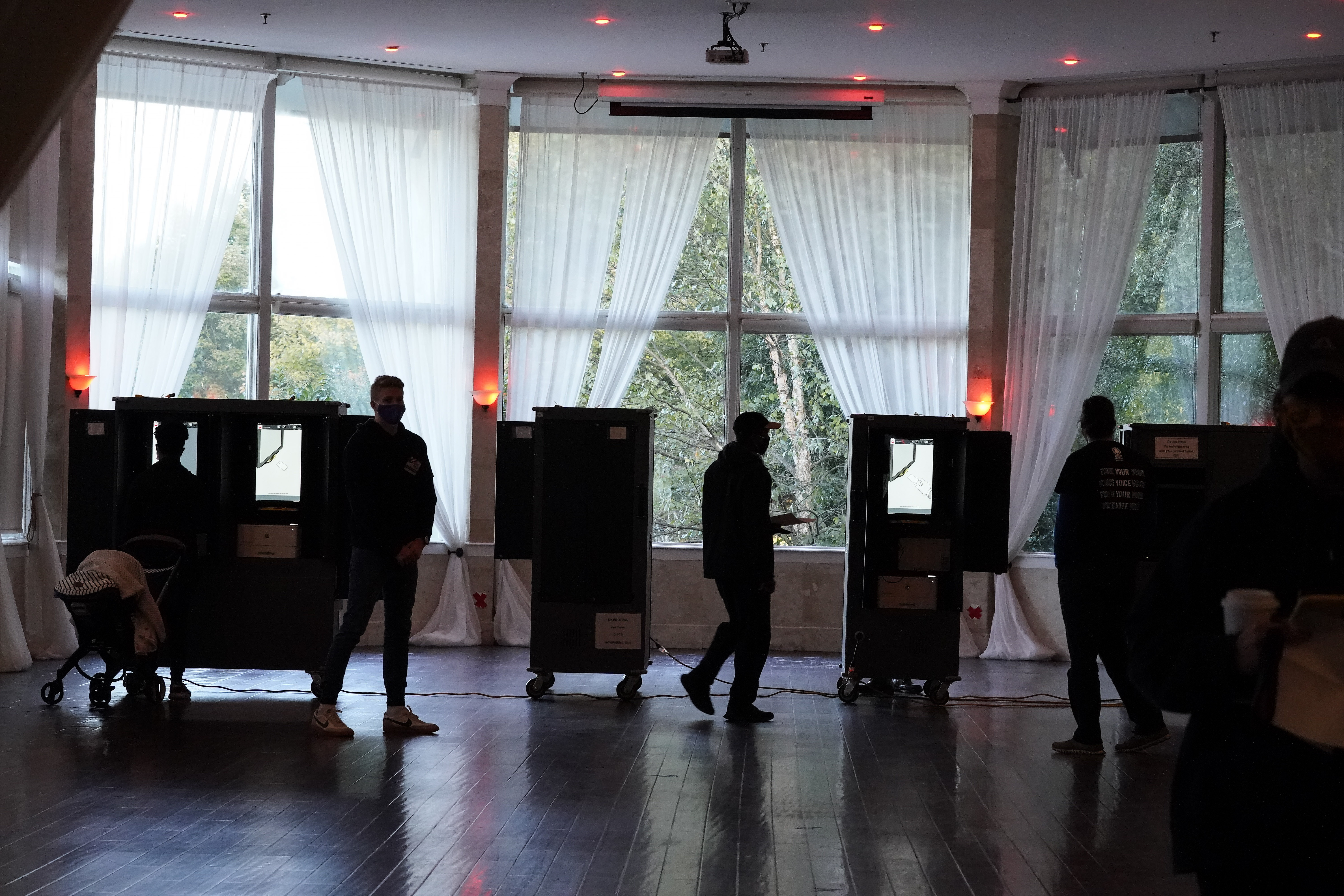
The 2020 election has continued to be a key litmus test in Georgia, especially as Trump continues to air his grievances over his loss. Several recounts and extensive litigation have only proven Raffensperger’s case that former President Joe Biden fairly defeated Trump in 2020. But many voters and candidates continue to question the truth of the results in a show of loyalty to the president, further isolating the secretary from the increasingly conservative Republican base.
“I voted for Trump. I wish he’d have won. I think he did win, I’m one of those people,” said Bruce Brooker, 72, outside a Jones campaign event in rural Atkinson County earlier this month.
An April POLITICO Poll found that most respondents who plan to vote for Republicans this midterm are still skeptical: Nearly 40 percent say the 2020 election was stolen, while 25 percent don’t believe it was but have questions about the election’s legitimacy. Just 25 percent say the election wasn’t stolen.
Raffensperger continues to defend his work and the integrity of Georgia’s elections at large — “I’m really proud because we made elections more secure” — and is quick to highlight the changes he and state Republicans made in their 2021 overhaul of how the state conducts elections, which drew ire from Democrats and the MLB alike.
Still, several Georgia Republicans say he’s struggling to play catch-up as the base shifts away from his technocratic approach to politics.
“Brad stands in stark conflict to a party that is at the activist level very much aligned with President Trump, when Raffensperger is anything but,” said one former longtime state GOP official, granted anonymity to speak openly about evolving party dynamics. “His candidacy will be and is a test to determine if that lane still exists in the Georgia Republican Party apparatus.”
Raffensperger’s path forward
On a recent afternoon, Raffensperger, clad in a navy suit and striped red tie, headlined the Vinings-Cumberland Rotary Club’s weekly meeting, shaking hands and chatting with voters before taking his place behind the lectern at the front of the room. The state’s legislative session had ended barely a week earlier.
“What I thought I’d do is tell you where we are right now. We just finished up my last session,” he told the audience, ticking through accomplishments: streamlining professional licensing processes, securing an agreement to have money returned to victims of a local Ponzi scheme, and improving systems to make Georgia elections “free, fair and fast.”
It wasn’t the kind of red meat fodder that Republican politics thrive on in the Trump era, but the type of accolades that resonate with the kind of voters at the meeting, held just over the border from Atlanta’s city limits in suburban Cobb County.

Cobb County is one of several former Republican bastions surrounding metro Atlanta that have flipped blue as the Trump-styled GOP turned off suburban voters. Once the homebase for conservative stalwart former Speaker Newt Gingrich, the county voted overwhelmingly for former Vice President Kamala Harris in 2024 despite her statewide loss to Trump.
It’s still home to plenty of business-focused Republican voters who are not keen on the president — then-Sen. Marco Rubio carried the county over Trump during the 2016 GOP primaries, and former United Nations Ambassador Nikki Haley performed nearly twice as well in the county compared to her statewide returns against the president in 2024. These are the voters Raffensperger is focused on, content to let Jones and Jackson battle it out for the MAGA class.
Jason Shepherd, the former Cobb County Republican chair, said the low-key civic group events have “been the hallmark of Brad Raffensperger’s success” and an emblem of the party’s business-focused past. It’s in sharp contrast with the attention-grabbing rallies that have defined Trump’s dominance of Republican politics.
Raffensperger’s quieter approach has previously served him well, when he overcame a 2022 primary challenge from former Rep. Jody Hice (R-Ga.) who ran with the president’s endorsement. This time is different: Then, he held the power of incumbency and benefited from Trump’s influence waning temporarily in the aftermath of Jan. 6 and his 2020 election defeat.
Now, Trump, back in power, has reaffirmed his iron grip on the party and Raffensperger is up against two MAGA candidates pining for the base’s attention. Add to that the fact he’s being massively outspent: His $4 million has been dwarfed by Jackson’s whopping $61 million and Jones’ $26 million in expenditures, according to an AdImpact analysis.
The Jones and Carr campaigns were quick to dismiss claims that the secretary of state had a path to the run-off and an eventual win. A spokesperson for Jackson did not respond to a request for comment.
If Raffensperger were to lose the primary, his loss would become another nail in the coffin for an old-school GOP that continues to resist MAGA. But his insistence that his lane — and version of the Republican Party — still exists is, for his closest allies, a testament to his persistence.
“Brad Raffensperger never really stopped from 2022 on,” said Sterling, the Raffensperger ally who’s running for secretary of state and has also faced MAGA’s ire for refusing to overturn election results. “He could have set up a foundation, gone around the country and just talked about democracy and he would have been applauded. Instead he chose to go into the battle and fight.”


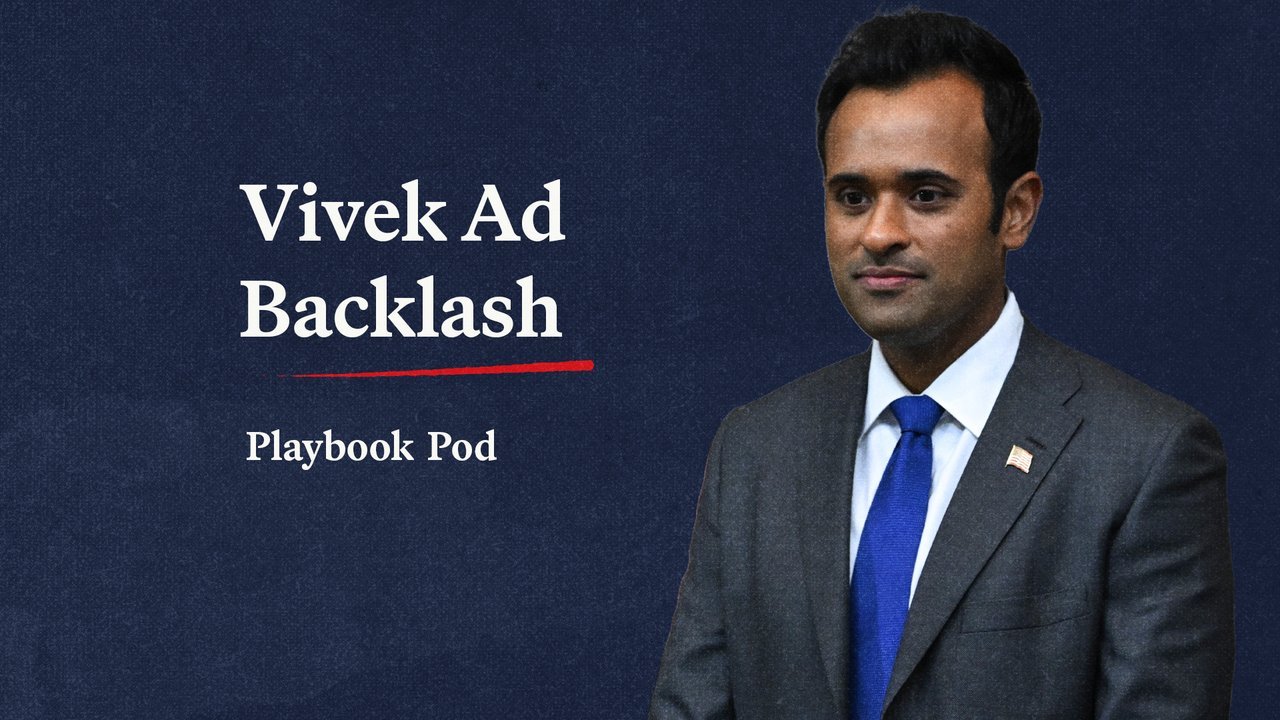
The GOP has a midterm messaging problem. Ramaswamy isn’t helping
lead image
Republicans are banking on a massive cash edge to help save their majority in Congress. But they are losing much of that advantage in an important arena: broadcast TV ads.
Republicans have spent $677 million on those ads across 10 key Senate battleground states, compared to $479 million by the Democrats. But the GOP’s money isn’t going nearly as far because they’re more dependent on outside groups that pay much higher rates than candidates.
The disparity has helped Democrats stay in the fight for Senate control amid an onslaught of GOP outside spending.
In Ohio’s Senate race, Republican groups make up 63% of the $218 million spent. But in spite of their nearly two-to-one spending advantage, they make up just over half of ads that are on the airwaves, according to data from the tracking service AdImpact. In Texas, Republicans have outspent Democrats by a three-to-one margin, but have aired just 58% of the ads. And in Michigan, the GOP accounts for 60% of the spending but just over half of the ads.
A large part of this discrepancy comes down to the mechanics of broadcast advertising. Candidates, and now political parties thanks to a recent Supreme Court ruling, are entitled to significantly lower rates. That has allowed Democratic candidates — who have posted bonkers fundraising hauls — to offset much of the GOP advantage in super PACs. Republican Senate candidates, on the other hand, struggled overall with their fundraising. And some GOP outside groups bought their ad time later, when it was even more expensive.
“There are limitations to the impact of ‘big money’ in politics,” said Sean Cooksey, a Republican former FEC commissioner. “It’s a good demonstration of the economics of campaign fundraising. Hard dollars really just go so much further.”
The disparity also shows “the Republican overreliance on outside groups,” said Ian Russell, a Democratic admaker.
“You get an eye-popping dollar amount, but it doesn’t actually translate into as many spots as you would think relative to a well-financed candidate,” Russell said. “[Republicans] were just hoping that they could spend their way out of everything that was going wrong for them. But the problem is, their issues run much deeper than a few ad buys can fix. Especially when you’ve got monster fundraising hauls from the Democratic side.”
Republicans in House and Senate races have long been more dependent on outside groups and megadonors, and for multiple cycles have seen their cash advantage undercut by fundraising strength from individual Democratic candidates. But that trend is particularly pronounced this year given the combination of Republican super PAC money and their candidates’ struggles.
In 2024, Republican outside groups spent only about 15% more than Democrats on TV ads across House and Senate general election contests, according to a Blue Light News analysis of AdImpact data. This cycle, GOP outside groups have spent 7% more.
In a few states, the discrepancy between dollars and airtime is less stark. Republicans account for 60% of the spending in Maine’s Senate race and an equal percentage of the ads, according to AdImpact. That’s in part because Sen. Susan Collins has outraised her Democratic opponent Troy Jackson over the whole cycle, although Jackson, who didn’t launch his campaign until July, raised far more in the third quarter.
The numbers show the shifting dynamics of campaign strategy after the Supreme Court opened the floodgates to more spending from parties by granting them the lower advertising rate.
Republicans have been faster to take advantage of the new rules: Major coordinated spending efforts from the NRSC and RNC have helped their side significantly this cycle.
Republicans have far outspent Democrats on Senate party-coordinated Senate advertising, $90 million to $34.6 million across TV, radio and digital ads, according to data from AdImpact.
“If I were the leader of either party, I would say you shouldn’t give a dollar, you shouldn’t give a single penny to these super PACs until you’ve maxed out to the party committee,” Cooksey said.
Some Republicans say that strategic errors have contributed to erasing their cash edge. A number of GOP strategists have also privately griped that MAGA Inc. — one of the major outside groups backing their candidates — bought TV airtime too late, forcing them to pay even higher rates and further draining resources and increasing the price of reaching voters. Republicans fretted for months about whether Trump’s well-financed super PAC, MAGA Inc., would get involved. The group has since spent heavily, but only launched its first general election ad buys in September.
“There is no question MAGA Inc. should have bought ads earlier in the cycle,” said one national GOP operative who was granted anonymity to discuss party strategy, noting that rates across the country increase as Election Day nears. Other top GOP outside groups, like the Senate Leadership Fund and the Congressional Leadership Fund, made their early advertising reservations much earlier in the cycle than MAGA Inc.
Trump allies waved away that criticism. A person familiar with the Trump operation’s midterm planning, granted anonymity to discuss strategy, said it’s “indisputable that the spending from the Trump political effort has kept us competitive in many Senate races.”
MAGA Inc. declined to comment.
Still, GOP outside groups are utilizing their cash advantage in some underappreciated ways.
Republican super PACs have massively outspent their Democratic counterparts on mail — roughly $157 million to $35 million for the general election — according to a Blue Light News analysis of independent expenditure filings submitted to the Federal Election Commission. That’s led by a whopping $44 million in spending on mail across 24 races from the Trump-aligned No Going Back PAC, along with $23.8 million across 20 races from Elon Musk’s America PAC.
GOP-aligned super PACs have also spent more than Democratic ones on phone calls and text messages, the data shows.
Georgia Republicans are counting on Rick Jackson to save them from a wipeout in November — if President Donald Trump doesn’t get in the way.
The billionaire health care executive and political newcomer has spent nearly $200 million since he entered the Georgia governor’s race earlier this year. That’s boosted GOP hopes as many in the party have all but given up on the state’s marquee Senate race, where Rep. Mike Collins is struggling to close the gap against a formidably well-funded Democratic Sen. Jon Ossoff. Republicans worry that their open contests for attorney general and lieutenant governor as well as control of the state general assembly could be in peril in a larger blue wave.
But Jackson’s deep pockets are being tested against a difficult political environment for Republicans, weighed down by unpopular Trump actions, including the war in Iran. And some in the GOP worry that the president’s repeated visits to Georgia could only make the situation worse.
“I don’t know that Trump coming helps Republicans more so than it excites Democrats, especially in a wave election year, and so becomes and becomes a catch-22 for Republican candidates,” said Jason Shepherd, a former Cobb County chair who is supporting Jackson.
One Georgia-based Republican strategist who is not involved in the gubernatorial race posited that Trump’s dual appearances in the state almost certainly did more harm than help. They, like others in this article, were granted anonymity to speak openly about the race to avoid reprisals.
“Every piece of data that I’ve seen, it is not MAGA Republicans that are unmotivated to vote in this election,” the person said. “All the data that I’ve seen is that the undecideds in our marquee races, and specifically in the governor’s race, have a very, very negative opinion of the president. So, I can’t really rationalize a case for how it would be helpful.”
Jackson, for his part, has carefully navigated his relationship with the president, and has not publicly broken with him on policy like other battleground Republicans. But he has not mentioned the president in any of the nearly 150 ads he’s run in the general election, according to an analysis of data from tracking firm AdImpact. Shortly after the RNC announced that Trump would return to the state this weekend, Jackson’s team said in a statement that the candidate will be campaigning in a different part of Georgia.
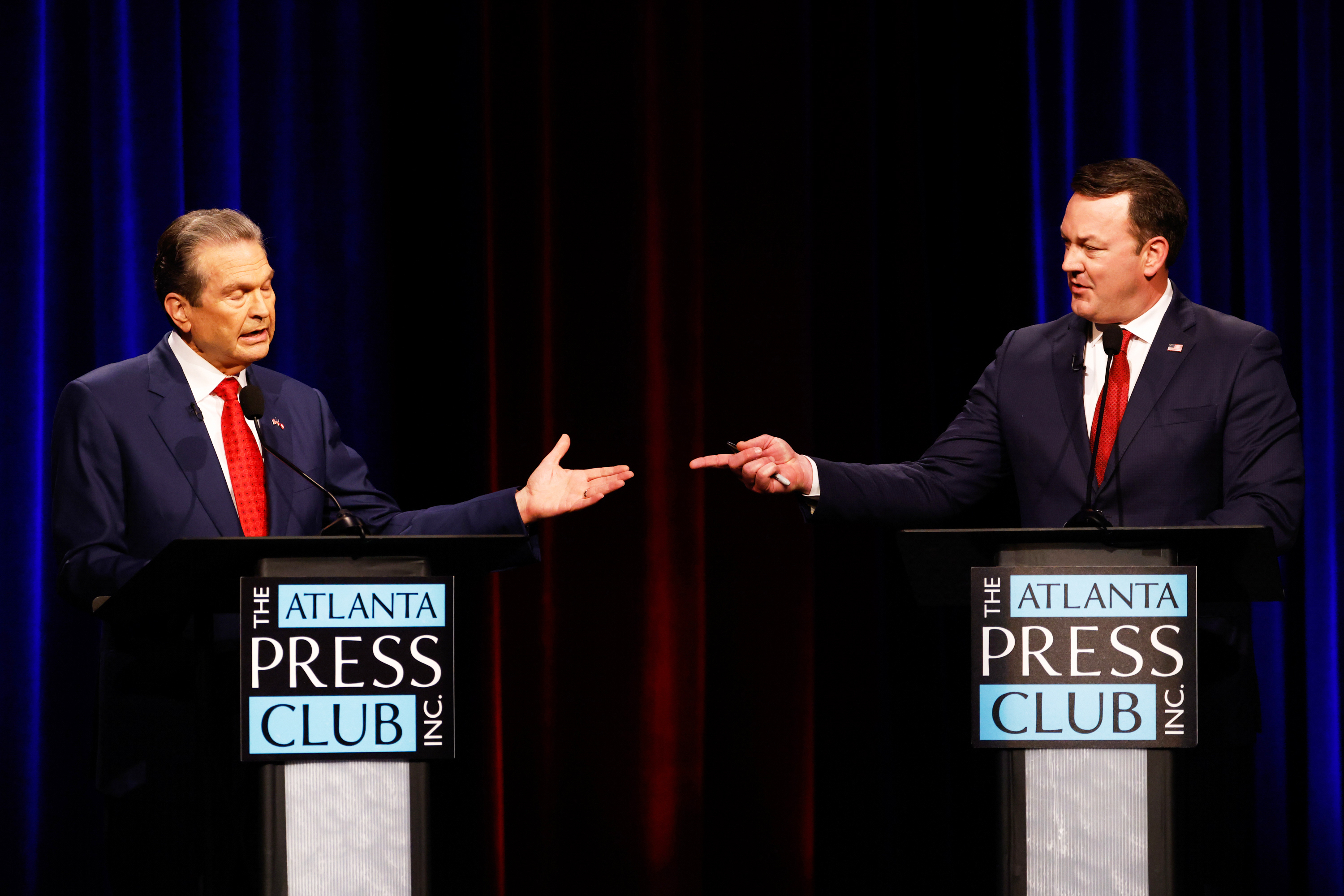
And during his only televised gubernatorial debate on Oct. 6 against Democrat Keisha Lance Bottoms, Jackson never name-dropped the president — despite his opponent invoking Trump’s name eight times. Instead, the Republican mentioned popular outgoing GOP Gov. Brian Kemp five times and focused on Bottoms’ tenure as mayor of Atlanta during the COVID pandemic.
“It’s been proven time and again that when the message is on Georgia, and the results under Brian Kemp and the conservative vision and roadmap that’s been laid out here, that we win in Georgia. When the focus is on D.C. and personal politics, we lose,” said Cole Muzio, president of the conservative Frontline Policy Action group.
The Jackson campaign declined to comment for this story.
“President Trump is the unequivocal leader, best messenger, and unmatched motivator for the Republican Party,” White House spokesperson Davis Ingle said in a statement.
Natalie Baldassarre, a spokesperson for the Republican National Committee, said in a statement that Republicans “are laser focused on winning, and our candidates will run the races necessary to best represent their districts and prevent Democrats from taking control.”
Jackson is one of several Republicans across the country who now must balance between keeping the president close enough to turn out Republican base voters, but not so closely as to alienate the center.
Though many Georgia Republicans see Jackson as their de-facto ticket-topper, they don’t see his win as a guarantee against Bottoms, the former Atlanta mayor, in a finicky battleground state like Georgia. Jackson has outspent Bottoms nearly five-to-one in the final stretch of the race, but still remains in a close race in public polling.
And yet, without him, Republicans fear the bottom would have already fallen out on races up and down the ballot, given how poorly Collins is performing in polls against Ossoff. Republicans’ top Senate super PAC, Senate Leadership Fund, was dark in Georgia last week, a sign the race may be slipping out of reach.
“If Rick Jackson weren’t running, we would all be in a lot of trouble,” said Stephen Lawson, a Georgia-based Republican strategist and Jackson ally. “He’s our best hope at keeping the state red.”
A second Georgia-based Republican strategist, who is working on other races in the state, underscored how Jackson’s money is keeping the party afloat. “There is no question in my mind that without the extra $150 million he spent in his general election, that the ticket would be lost,” this person said. “That is the only reason there’s still a fight to be had.”
But, this person cautioned, the race is still very much a toss-up, and Jackson’s victory will rely on a large share of Georgia voters choosing to split their ballots between Ossoff for Senate and Jackson for governor.
Jackson’s allies are optimistic that a significant number of voters will do just that. A private statewide poll reviewed by Blue Light News found that roughly 19% of Georgia voters say they are definitely or likely to cast a vote for at least one Democrat and one Republican — a potentially significant pool of crossover voters that could power two very different results in the marquee contests.
Whether the sheer force of Jackson’s spending will prove successful enough to overcome Trump is a microcosm of the larger issue his party is experiencing across the country: National Republicans, flush with cash, hold an enormous financial advantage over Democrats. But money alone may not be enough to insulate candidates in battlegrounds or even in traditionally red territory.
“I don’t know that Republicans across the country should feel as bullish about the cash influx that we’ve gotten because it didn’t work here,” said the first GOP operative. “In terms of actively moving races in our favor, it at least didn’t work here.”
In the last month, as Bottoms began to spend more heavily on the air amid Jackson’s spending advantage, her campaign has noted that polling has started to move marginally in her favor — even if the race remains largely within the margin of error. Her high name ID, as well as cash spent after the primary to define her early, are helping.
“Rick Jackson has spent $200 million in this campaign but all the money in the world can’t hide the fact that he would be a lackey for Donald Trump,” TaNisha Cameron, a spokesperson for Bottoms, said in a statement. “Despite being outspent, Keisha’s message is breaking through and she has the momentum in this race right when it matters.”
Jackson is making more of an effort to tie himself closely to Kemp, who won over moderates and independents in his 2022 reelection for governor and has an approval rating that sits 30 points higher than the president’s in Georgia, according to a recent poll by the Atlanta Journal-Constitution. Kemp, for his part, has continued to be a presence on the trail for Jackson, including joining him on a statewide tour earlier this month and appearing in at least three TV ads for the campaign.
But Jackson’s pathway to victory requires him to not only secure crossover voters that may support Ossoff in the Senate race or the type of voters who broke for Kemp, but also turn out the MAGA base who powered the president’s two presidential victories in the perennial battleground.
The president is intent on still showing up for him.
Shortly after Jackson dispatched Trump’s initially preferred candidate, Lt. Gov. Burt Jones, in June’s primary runoff, the president was quick to praise Jackson as standing “strong with ‘TRUMP.’” And in subsequent posts on Truth Social, Trump has called the health care executive a “good friend.”
Trump, onstage on Friday, called Jackson a “great businessman,” before adding: “I’ve been watching you, you are good, and he never did this before. Hedid it because he wants to straighten out things and he’s an amazing, an amazing story.”
Aaron Pellish contributed reporting.
- The other Michigan race corporate America is watching
- Scalise heads to Florida to boost several GOP candidates
- ‘Very limited choice’: Data centers confront new constraints
- The GOP has a midterm messaging problem. Ramaswamy isn’t helping
- This member is so frustrated with Congress he wants voters to sidestep it
- Capitol agenda: The unknowns of a Sherrod Brown return
- Rick Jackson is Georgia Republicans’ best hope. Donald Trump may get in the way.
- Why Republicans’ massive cash advantage is evaporating on the airwaves
- The House GOP’s imminent decision on the Omar raid
- NRSC takes on $20M in loans
-

 Politics2 years ago
Former ‘Squad’ members launching ‘Bowman and Bush’ YouTube show
-
Uncategorized2 years ago
Bob Good to step down as Freedom Caucus chair this week
-

 The Josh Fourrier Show2 years ago
DOOMSDAY: Trump won, now what?
-

 The Dictatorship2 years ago
Pete Hegseth’s tenure at the Pentagon goes from bad to worse
-

 Politics2 years ago
Former Kentucky AG Daniel Cameron launches Senate bid
-

 The Dictatorship2 years ago
Luigi Mangione acknowledges public support in first official statement since arrest
-

 Politics2 years ago
Blue Light News’s Editorial Director Ryan Hutchins speaks at Blue Light News’s 2025 Governors Summit
-
 Politics1 year ago
John Legend advises Trump to drop the ‘dictator s‑‑‑’ if he wants Nobel Peace Prize