
Politics
Brad Raffensperger navigates his party’s MAGA reality

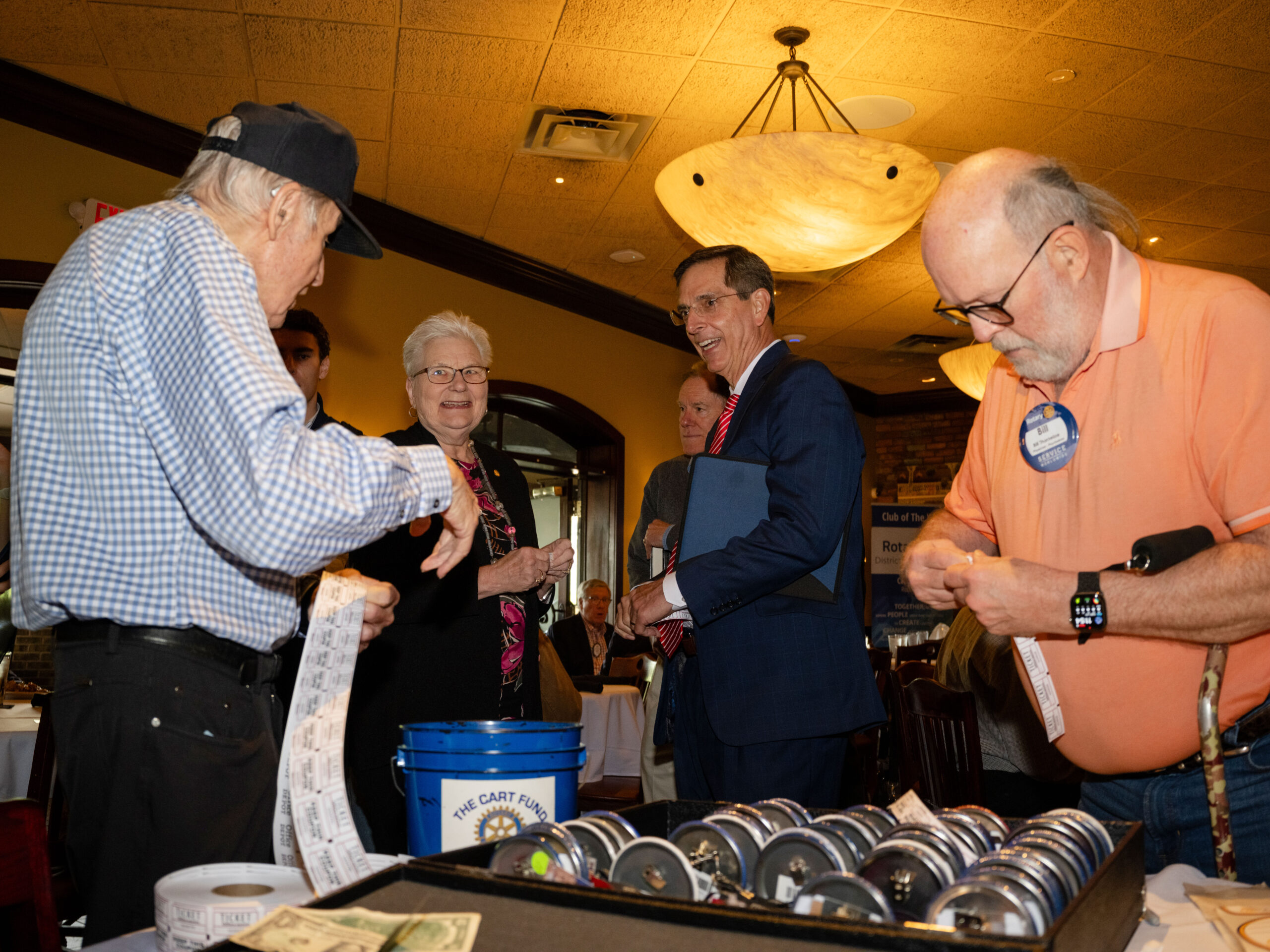
VININGS, Ga. — Brad Raffensperger is fighting to save his political future as MAGA takes hold of the Georgia GOP.
The secretary of state rose to national prominence by defying President Donald Trump’s efforts to overturn the 2020 election, but he is carefully trying to avoid the anti-Trump lane while he runs for governor.
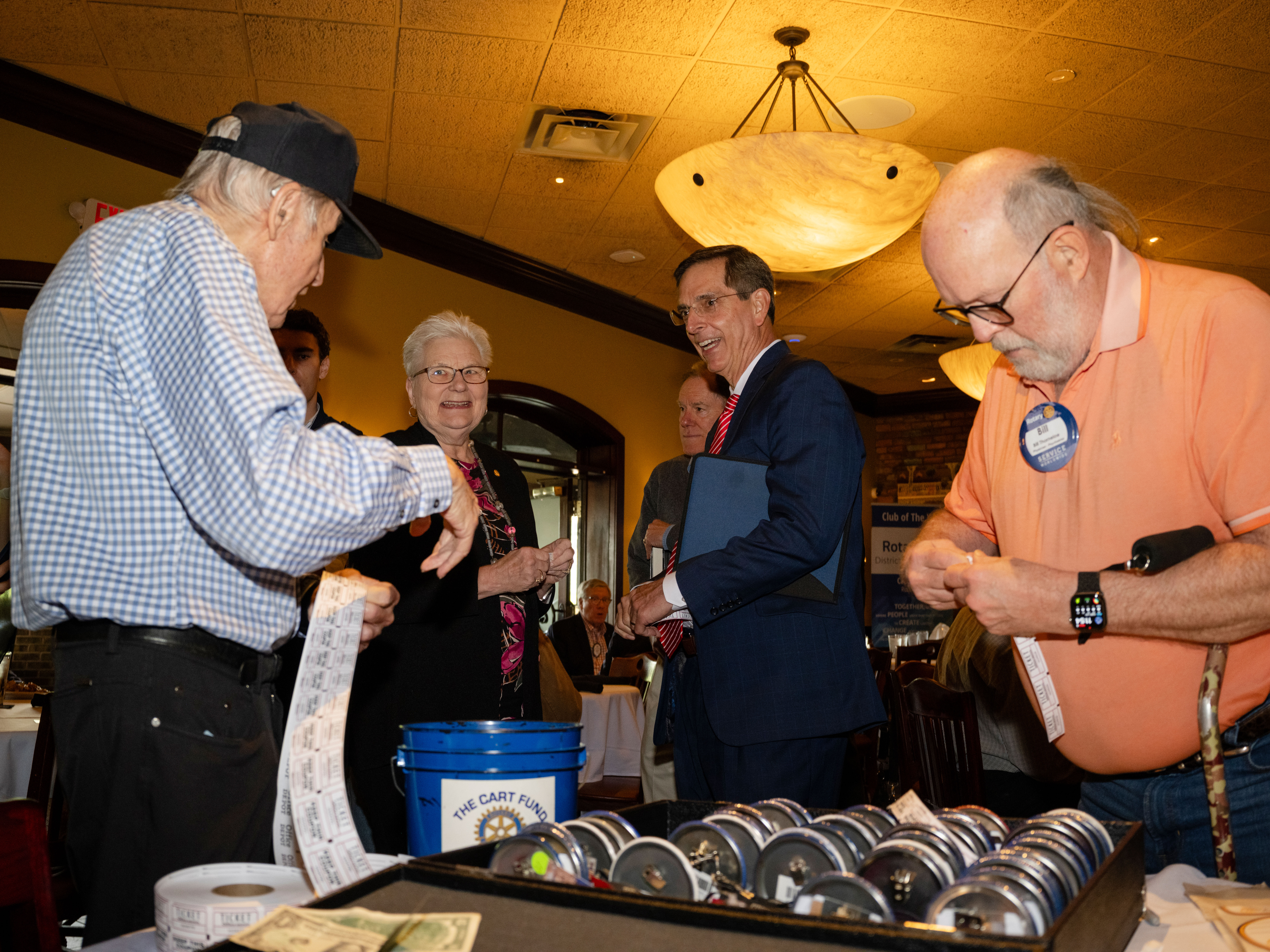
Instead, he’s running an old-school campaign aimed at an old-school Republican Party: He’s holding low-key events compared with his GOP opponents’ flashier rallies, and he’s focusing on bread-and-butter issues, rather than harping on election security. At one Atlanta-area rotary club gathering in April, Raffensperger was all too happy to tout his business background and his pledge to cap property taxes. Everywhere he goes, he drops the word conservative.
“I have my own lane, and I feel good where we are,” Raffensperger told Blue Light News after the event. “It’s the lane about being a Christian conservative businessman who’s built a business from scratch.”
At its core, Raffensperger’s candidacy is a test of whether the party’s non-MAGA guard can hold on in one of the nation’s premiere battleground states. He’s defied expectations before, fending off a Trump-backed candidate in 2022 to keep his current position. But 2026 poses a new challenge, as Georgia’s GOP has increasingly shunned its small government roots in favor of aligning with the populist right.
Raffensperger maintains he has a path to victory. Asked whether Trump’s grip on the party is complicating it, he deflected: “I’m doing just fine. I’m going to be in the run-off.”
But the reality is Raffensperger is still struggling to break through in the governor’s race, polling at a consistent third place behind Trump-backed Lt. Gov. Burt Jones and billionaire Rick Jackson ahead of the May 19 primary. Republican strategists and officials in the state were widely skeptical of Raffensperger’s chances of success.
“This is the party of Trump today — like it or not, it is — and I find it very difficult to see someone being able to be anti-Trump in a Republican primary and be successful,” said Casey Cagle, a Republican who served as lieutenant governor from 2007 to 2019. He’s experienced the rise of the MAGA base firsthand and has since tacked further to the right.
“The base has grown far, far greater to the right than what it was in my day,” said Cagle, who is supporting Jones in the governor’s race. “The core of the Republican Party has moved far away from the Chamber of Commerce mindset.”
Before February of this year, Raffensperger seemed poised to draw enough support in the primary to keep Jones under the 50 percent threshold he needed to trigger a run-off election. Then Jackson upended the race with his bombastic spending and MAGA pandering, pushing Raffensperger further down in the polls.
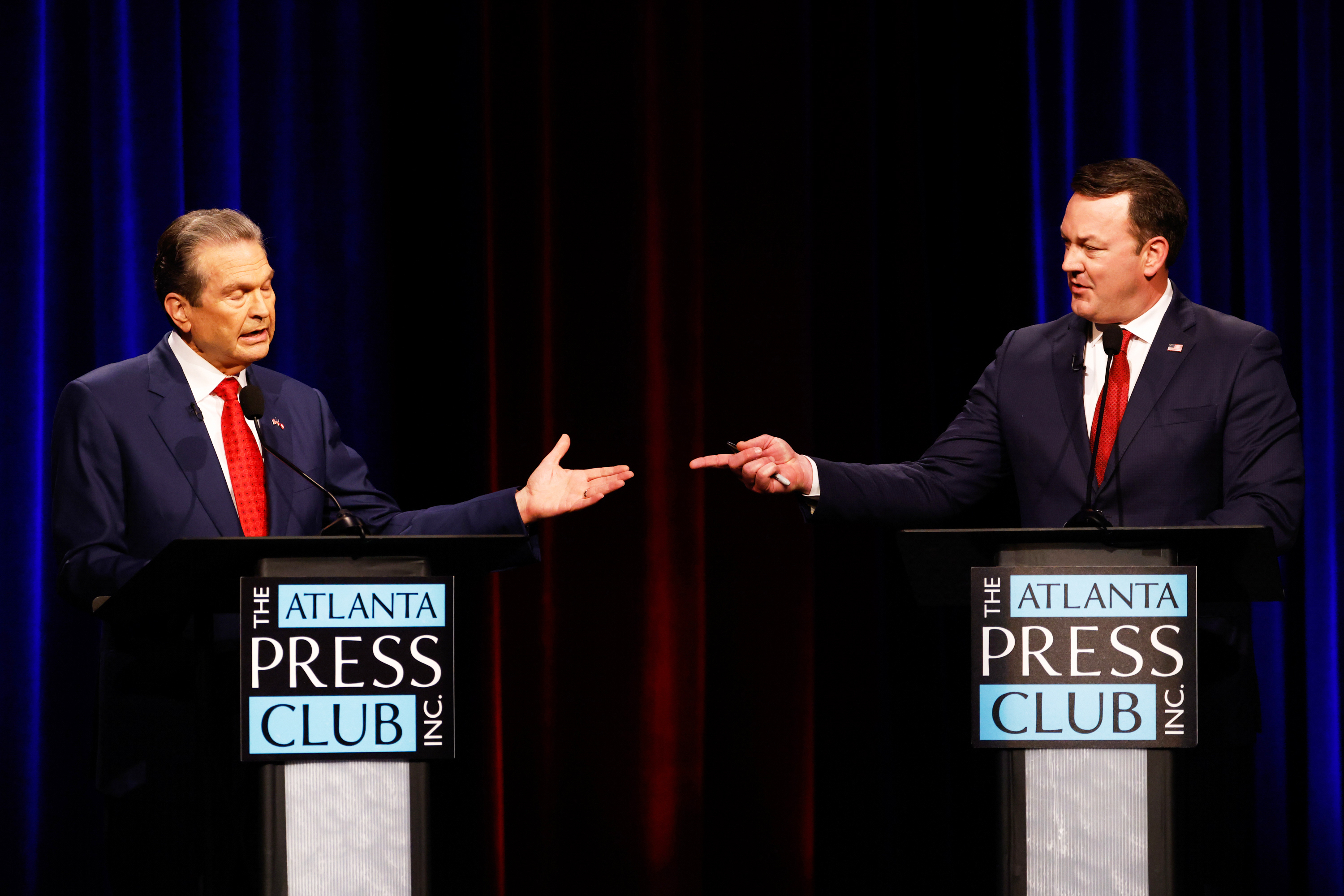
Even if the secretary of state were to make a run-off against either Jones or Jackson, his chances of actually winning the nomination are still slim, said GOP strategist Jeremy Brand, who has worked on Gov. Brian Kemp-aligned committees and is unaffiliated in the governor’s race.
“It’d be incredibly tough,” Brand said. “The edge in a run-off where voters are traditionally more conservative, that are willing to come back out again, I think the odds go to the more conservative candidate.”
2020 election woes
Raffensperger has been battling his own party on various fronts since he first stood up to Trump.
A faction of the Georgia GOP tried to bar him from seeking office again on the Republican ticket. And local party leaders recently broke with precedent to allow the RNC to eschew its neutrality and spend resources on backing Jones in the primary. The MAGA base that failed to oust Raffensperger in 2022 is trying again to end his political career — along with others deemed insufficiently loyal to the president.
Attorney General Chris Carr, like Raffensperger, is also mounting a bid for governor and previously defeated a Trump-backed challenger in 2022. But he’s polling even lower than the secretary of state. And Gabriel Sterling, a former top Raffensperger lieutenant, is locked in a noisy primary in his bid for secretary of state as he faces off against a former Democrat-turned-MAGA acolyte and a GOP state representative who once served as Kemp’s top aide.
The 2020 election has continued to be a key litmus test in Georgia, especially as Trump continues to air his grievances over his loss. Several recounts and extensive litigation have only proven Raffensperger’s case that former President Joe Biden fairly defeated Trump in 2020. But many voters and candidates continue to question the truth of the results in a show of loyalty to the president, further isolating the secretary from the increasingly conservative Republican base.
“I voted for Trump. I wish he’d have won. I think he did win, I’m one of those people,” said Bruce Brooker, 72, outside a Jones campaign event in rural Atkinson County earlier this month.

An April POLITICO Poll found that most respondents who plan to vote for Republicans this midterm are still skeptical: Nearly 40 percent say the 2020 election was stolen, while 25 percent don’t believe it was but have questions about the election’s legitimacy. Just 25 percent say the election wasn’t stolen.
Raffensperger continues to defend his work and the integrity of Georgia’s elections at large — “I’m really proud because we made elections more secure” — and is quick to highlight the changes he and state Republicans made in their 2021 overhaul of how the state conducts elections, which drew ire from Democrats and the MLB alike.
Still, several Georgia Republicans say he’s struggling to play catch-up as the base shifts away from his technocratic approach to politics.
“Brad stands in stark conflict to a party that is at the activist level very much aligned with President Trump, when Raffensperger is anything but,” said one former longtime state GOP official, granted anonymity to speak openly about evolving party dynamics. “His candidacy will be and is a test to determine if that lane still exists in the Georgia Republican Party apparatus.”
Raffensperger’s path forward
On a recent afternoon, Raffensperger, clad in a navy suit and striped red tie, headlined the Vinings-Cumberland Rotary Club’s weekly meeting, shaking hands and chatting with voters before taking his place behind the lectern at the front of the room. The state’s legislative session had ended barely a week earlier.
“What I thought I’d do is tell you where we are right now. We just finished up my last session,” he told the audience, ticking through accomplishments: streamlining professional licensing processes, securing an agreement to have money returned to victims of a local Ponzi scheme, and improving systems to make Georgia elections “free, fair and fast.”
It wasn’t the kind of red meat fodder that Republican politics thrive on in the Trump era, but the type of accolades that resonate with the kind of voters at the meeting, held just over the border from Atlanta’s city limits in suburban Cobb County.

Cobb County is one of several former Republican bastions surrounding metro Atlanta that have flipped blue as the Trump-styled GOP turned off suburban voters. Once the homebase for conservative stalwart former Speaker Newt Gingrich, the county voted overwhelmingly for former Vice President Kamala Harris in 2024 despite her statewide loss to Trump.
It’s still home to plenty of business-focused Republican voters who are not keen on the president — then-Sen. Marco Rubio carried the county over Trump during the 2016 GOP primaries, and former United Nations Ambassador Nikki Haley performed nearly twice as well in the county compared to her statewide returns against the president in 2024. These are the voters Raffensperger is focused on, content to let Jones and Jackson battle it out for the MAGA class.
Jason Shepherd, the former Cobb County Republican chair, said the low-key civic group events have “been the hallmark of Brad Raffensperger’s success” and an emblem of the party’s business-focused past. It’s in sharp contrast with the attention-grabbing rallies that have defined Trump’s dominance of Republican politics.
Raffensperger’s quieter approach has previously served him well, when he overcame a 2022 primary challenge from former Rep. Jody Hice (R-Ga.) who ran with the president’s endorsement. This time is different: Then, he held the power of incumbency and benefited from Trump’s influence waning temporarily in the aftermath of Jan. 6 and his 2020 election defeat.
Now, Trump, back in power, has reaffirmed his iron grip on the party and Raffensperger is up against two MAGA candidates pining for the base’s attention. Add to that the fact he’s being massively outspent: His $4 million has been dwarfed by Jackson’s whopping $61 million and Jones’ $26 million in expenditures, according to an AdImpact analysis.
The Jones and Carr campaigns were quick to dismiss claims that the secretary of state had a path to the run-off and an eventual win. A spokesperson for Jackson did not respond to a request for comment.
If Raffensperger were to lose the primary, his loss would become another nail in the coffin for an old-school GOP that continues to resist MAGA. But his insistence that his lane — and version of the Republican Party — still exists is, for his closest allies, a testament to his persistence.
“Brad Raffensperger never really stopped from 2022 on,” said Sterling, the Raffensperger ally who’s running for secretary of state and has also faced MAGA’s ire for refusing to overturn election results. “He could have set up a foundation, gone around the country and just talked about democracy and he would have been applauded. Instead he chose to go into the battle and fight.”


Kamala Harris will campaign with Sen. Jon Ossoff in Georgia and headline a fundraising dinner hosted by Fulton County Democrats next month, marking her latest involvement in the midterm elections.
Harris is also slated to join Nevada attorney general and gubernatorial candidate Aaron Ford next month in Las Vegas and campaign with Democratic challengers in two competitive House races in her home state.
“It is critical for Democrats to win this November so we can fight the Trump administration’s corruption and work to lower costs for the American people,” a Harris spokesperson said in a statement. “Vice President Harris will continue to do whatever is needed to support candidates in races where she can be helpful.”
The events in Georgia were first reported by CNN. Harris will also be the keynote speaker at the fundraising dinner on Oct. 30 in Atlanta. An Ossoff campaign spokesperson confirmed his plan to campaign with Harris. Ossoff’s campaign previously told Blue Light News that it would welcome Harris to Georgia to stump with or on behalf of the senator.
Still, the announcements come as some Democrats have been keeping distance from the party’s last presidential nominee.
In Iowa, where Democrats are hoping to flip a Senate seat and retake the governor’s mansion in a state where Harris lost by 13 points in 2024, the two candidates both declined to have Harris’ help. So did Mary Peltola, the Democratic Senate candidate in Alaska who “isn’t seeking endorsements from anyone from the Lower 48,” and House candidates in some red states and rural districts.
For her part, Harris has skirted the question of whether she will run again in 2028 and said she is focusing on the midterm elections.
“Right now midterms [are] full-time occupying my thoughts, my mind and my work,” Harris said in a recent podcast episode with Megan Rapinoe on Vox Media. “I’m spending full time working on doing everything I can to help people restore some balance in our government, which is through the midterms, winning back Congress, the House and the Senate.”
“I haven’t decided. But honestly, from my perspective, ’28 doesn’t matter if we don’t win ’26,” she said to a question on another presidential bid.
It’s been a bad year to be an incumbent.
Rhode Island Gov. Dan McKee’s ouster on Wednesday, the first primary defeat for an incumbent governor in eight years, caps off a primary season that’s seen longtime leaders fall across the map and politicians across both parties struggle to make the leap to higher office.
Thirteen members of Congress have lost their reelection bids: seven Democrats and six Republicans, including two GOP senators. At least 16 more who were trying to move from the House to the Senate or take on statewide office have lost primaries: nine Republicans and seven Democrats, including Colorado Sen. Michael Bennet who unsuccessfully ran for governor.
The upheaval has been driven by a confluence of factors that will continue to dog incumbents through November. Voters are frustrated with both parties’ leadership in Washington. President Donald Trump has targeted some GOP foes as he looks to cement his legacy; Democrats are in the midst of pitched generational and ideological battles. Some members in both parties faced daunting new district lines. Others faced scandals that sank them.
In some races, those factors converged. Rep. Haley Stevens (D-Mich.) didn’t benefit much from her years in Washington in her Senate bid — and lost her primary to a left-flank rival who yoked her to the party establishment.
Caitlin Legacki, who advised Stevens’ bid, said incumbents’ losses this year show voters are simply fed up.
“It speaks to the high level of dissatisfaction that voters have with everyone,” said Legacki, who noted the anti-incumbent climate contributed to Stevens’ loss. “It’s a major ‘throw the bums out’ moment.”
DEMS KICK INCUMBENTS TO THE CURB
Democrats disillusioned with their leadership in Washington are taking it out on the party’s rank and file.
Progressives picked off more-moderate House members from New York to Colorado. Younger challengers ousted older incumbents from Texas to Connecticut. Local elected officials outran Washington incumbents. And voters have spurned lawmakers seeking higher office from Michigan to Minnesota.
Sometimes age was the biggest factor, sometimes it was ideology and sometimes both played a role. Democratic socialists defeated decades-older Reps. Diana DeGette of Colorado and Rep. Adriano Espaillat of New York. Former Hartford Mayor Luke Bronin relied on generational change to topple longtime Rep. John Larson in Connecticut.
THE TRUMP FACTOR
For Republicans, Trump played a major role in directing voters against his longstanding Washington foes.
Trump-backed challengers wiped MAGA irritants Sen. Bill Cassidy (R-Louisiana) and Rep. Thomas Massie (R-Ky.) off the map. And the president’s late-stage endorsement of Texas Attorney General Ken Paxton in the Senate runoff helped sink Sen. John Cornyn (R-Texas).
REDISTRICTING RIPPLE EFFECTS
The unusual mid-decade gerrymandering war took out members of both parties, who lost competitive races in less favorable districts, ran for other offices or switched parties to avoid similar fates.
Texas Democratic Rep. Al Green was ousted by Rep. Christian Menefee in a member-on-member primary forced by gerrymandering that played on their generational divide.
Democratic Rep. Julie Johnson lost her redrawn Dallas-area district to former Rep. Colin Allred, while Rep. Dan Crenshaw’s right-flank challenger leveraged the redraw (as well as some of Crenshaw’s breaks with Trump) to oust the Republican.
Others chose to retire rather than keep fighting uphill battles. Democratic Reps. Steve Cohen of Tennessee (who had already been facing a generational primary challenge before the redraw), Lloyd Doggett of Texas and Cleo Fields of Louisiana hung it up after Republicans dismantled their districts. So did GOP Reps. Darrell Issa of California and Burgess Owens of Utah after their districts were redrawn. California Rep. Kevin Kiley, who opposed the mid-decade gerrymanders and switched from GOP to independent after his district was redrawn, said the new maps have unleashed “chaos” on the House and “reduced the quality of representation in Congress.”
SWEPT OUT BY SCANDAL
Call it the midterms of controversy: Incumbents in both parties have succumbed to the political pressures of their scandals this year.
Democratic Rep. Eric Swalwell ended his run for California governor and exited Congress amid sexual assault and misconduct allegations. Rep. Tony Gonzales (R-Texas) dropped his reelection bid and resigned after admitting to having an affair with a staffer who later killed herself.
Tennessee GOP Rep. Andy Ogles, despite his Trump endorsement, couldn’t overcome his past controversies, a newly redrawn district and outside spending. Republican Florida Rep. Cory Mills faced attacks over probes of his conduct from primary winner Ryan Elijah. Elijah told Blue Light News this week that he believed Mills’ controversies collided with voters’ anti-incumbent angst.
“We ran on our merits, but trust was a factor,” Elijah said. “I think trust was the biggest factor.”
HIGHER OFFICE FLAMEOUTS
Several congressional Democrats struggled to outmatch opponents without Washington ties in Senate primaries. Bennet, Stevens and Reps. Angie Craig (D-Minn.), Jasmine Crockett (D-Texas), Raja Krishnamoorthi (D-Ill.) and Robin Kelly (D-Ill.) all lost statewide primaries to rivals who hadn’t served in D.C.
Voters haven’t been kind to GOP representatives seeking higher office either. Reps. Randy Feenstra of Iowa, Dusty Johnson of South Dakota and Nancy Mace and Ralph Norman of South Carolina all lost their gubernatorial bids. Voters rejected Norman twice: He also lost the snap primary for Lindsey Graham’s seat to the late senator’s sister — a total political newcomer. Texas Rep. Chip Roy also lost a runoff for state attorney general.
Rhode Island Democratic Gov. Dan McKee became the first governor in eight years in the U.S. to lose a primary, falling on Wednesday to former CVS executive Helena Foulkes and becoming the latest victim of a rough year for incumbents.
McKee’s campaign was bogged down by the botched handling of a years-long project to rebuild the Washington Bridge, which transports more than 70,000 drivers through Providence each day. The project has suffered from delays, cost overruns and disputes between state officials and former contractors that have raised questions about transparency and accountability for the project.
Foulkes spent much of the primary hammering McKee over his handling of the bridge project — a strategy that ultimately proved successful.
McKee had partially closed the bridge in 2023, and estimated at the time that it would fully reopen this summer. But last year, he said the bridge likely won’t be completed until 2028. Construction began in June.
Throughout his campaign, McKee continued to insist that the bridge project was handled well. He told The New York Times in August that “people are going to realize we did the right thing.”
The last incumbent governor to lose a primary was Kansas Gov. Jeff Colyer in 2018. McKee’s loss Wednesday adds to the substantial list of Democratic incumbents ousted in primary challenges, though this race didn’t feature the same generational and ideological contrasts as other primaries that have felled Democrats this cycle. Foulkes and McKee, both baby boomers, both ran center-left campaigns.
Foulkes’ victory adds a chapter to her family’s long political lineage. Her grandfather, Thomas J. Dodd, and her uncle, Chris Dodd, were both senators from Connecticut. She worked as an executive at CVS for over 25 years before launching a 2022 run for governor.
McKee won that round, but she got the final word on Wednesday.
-

 Politics2 years ago
Former ‘Squad’ members launching ‘Bowman and Bush’ YouTube show
-
Uncategorized2 years ago
Bob Good to step down as Freedom Caucus chair this week
-

 Politics2 years ago
Former Kentucky AG Daniel Cameron launches Senate bid
-

 The Josh Fourrier Show2 years ago
DOOMSDAY: Trump won, now what?
-

 The Dictatorship2 years ago
Luigi Mangione acknowledges public support in first official statement since arrest
-

 The Dictatorship2 years ago
Pete Hegseth’s tenure at the Pentagon goes from bad to worse
-

 Politics2 years ago
Blue Light News’s Editorial Director Ryan Hutchins speaks at Blue Light News’s 2025 Governors Summit
-

 The Dictatorship1 year ago
Mike Johnson sums up the GOP’s arrogant position on military occupation with two words