
Politics
‘The Kamala Harris problem’: Vance’s 2028 hopes hinge on Trump, Iowa Republicans say

DES MOINES, Iowa — Vice President JD Vance was greeted warmly by Republicans in Iowa on Tuesday, with would-be caucus goers and strategists optimistically curious about his potential as a 2028 presidential contender.
But first, they’re hoping he can help turn the economy around.
Vance’s fate is unavoidably linked to President Donald Trump’s. He’ll either carry the mantle of Trump’s accomplishments all the way into his own term in the White House — or be dragged down by Trump’s dismal approval ratings, which have spiraled amid an unpopular war in Iran and voters’ economic pessimism.
During Vance’s first trip as vice president to the early caucus state — where he was campaigning for Republican Rep. Zach Nunn at a rally in a manufacturing warehouse in this battleground House district — Vance’s close ties with Trump were on full display. He credited the president repeatedly for tariffs, tax cuts and agriculture industry aid. And he avoided any mention of 2028.
But his association with Trump’s agenda presents a high-risk, high-reward proposition that could make or break his political future, operatives and rallygoers said.
“That’s the risk of being part of an administration,” Iowa GOP strategist David Kochel said. “This is the Kamala Harris problem.”
Rep. Randy Feenstra, who is running for governor, said in between shaking hands with attendees that Iowans “absolutely” associate Vance with Trump and expressed confidence that the White House can deliver outcomes that benefit the state.
“We’re all in this together,” he said. “We trust Trump and the vice president and what they’re doing, and things are going to be great.”
Republicans in Iowa are loath to turn their back on Trump, the 2024 caucus winner who remains deeply popular among the base. Faded Trump-Vance campaign signs still line the rural roads around the state, and Iowa Republicans said they remained largely optimistic that Trump, with Vance by his side, can steer the economy in the right direction.
In a brief post-rally interview, Nunn said part of the benefit of the vice president’s trip was allowing Iowa Republican officials to “share what they want to see out of the next leader in 2028.”
But Americans’ patience for the administration’s economic policy to have a positive effect is wearing thin. A Washington Post/ABC News/Ipsos poll released on Sunday found 65 percent of Americans disapprove of Trump’s handling of the economy and 76 percent disapprove of Trump’s handling of cost of living issues. And even as Vance blamed former President Joe Biden’s administration for the teetering economy, an April POLITICO Poll found 46 percent of Americans feel Trump bears at least some responsibility for the state of the economy.
And the economic effects of Trump’s policies are particularly hard felt in Iowa’s vast agriculture industry. Trump’s tariff regime blocked off markets that had been reliable purchasers of U.S. agriculture goods, while the war in Iran has spiked the cost of diesel, which farmers depend on heavily.
Jake Chapman, a former president of the Iowa Senate who has advised multiple Republican presidential candidates in Iowa, said the conflict and the trade negotiations with other countries are top of mind for Iowa Republicans.
“A lot of people are thinking about foreign policy in particular, and how that impacts ag inputs and our agriculture economy,” he said.
In his speech, Vance acknowledged that the Trump administration hasn’t fully delivered on its economic promises. “We got a lot more work to do,” Vance told the crowd of hundreds. “We recognize that work. We’re excited about that work. That’s why you sent us to Washington, D.C.”
Still, those negative feelings towards Trump appear to be spilling over to Vance. That same poll found 48 percent of Americans disapprove of Vance — slightly worse than other senior Trump administration officials, including FBI Director Kash Patel, Defense Secretary Pete Hegseth and fellow potential 2028 candidate Secretary of State Marco Rubio.
Rubio’s ascension in the 2028 shadow primary — both in the eyes of Americans and in standing with Trump’s inner circle — further complicates Vance’s path to the nomination. Eric Branstad, the son of former Iowa Gov. Terry Branstad and adviser to Trump’s three presidential campaigns in Iowa, said Vance’s portfolio may not resonate with Iowans as much as Rubio’s in an administration juggling multiple high-profile foreign conflicts.
“They’ve watched the secretary of state completely perform. He’s been put in all of the tough spots, and he has overperformed,” Branstad said. “The vice president is performing great. It’s just not been as noticeable as the secretary of state.”
Vance, however, has gotten an early start on building a campaign infrastructure, should he so choose to activate it. He has been a frequent surrogate and fundraiser for the GOP’s midterm operation and has campaigned for Republicans in battleground seats around the country. On Tuesday, he voted in Ohio’s competitive 1st District GOP primary and headlined a fundraiser in Oklahoma before travelling to Iowa.
“He’s the man who’s leading the charge to win the midterms,” Nunn said during his remarks.
Even as Vance stayed focused on this year’s elections on Tuesday, some Republicans are ready to look beyond the midterms. GOP gubernatorial candidate Adam Steen said on the outskirts of the rally he thinks Iowa Republicans are eager to organize around the next generation of party leadership.
“I don’t know why not just start talking about 2028,” Steen said. “We need to know who we’re going to be getting behind. And if they did that now, I don’t think it’d offend anybody. I think it’d be a great thing.”
The vice president’s office declined to comment on Vance’s thinking about a future presidential campaign.
Whether or not the vice president can carry the ideological torch for Trump’s political movement may depend on how closely Vance — or any 2028 hopeful — can align with Trump. Iowa GOP Chair Jeff Kaufmann said at the rally he doesn’t believe the next Republican presidential nominee necessarily has to appeal directly to Trump’s base to be successful.
“The Republican Party is multifaceted,” Kaufmann said. “We have MAGA voters… We have Christian evangelicals, we have business, we have Libertarians. I think all of them together are going to unite around some of the basic principles that everybody shares.”
Yet being Trump’s vice president brings certain advantages with Republican voters. Even if Vance isn’t afforded the goodwill that brought the president a dominant wire-to-wire favorite in the 2024 Republican primaries, Kochel said Vance “gets one of the gold tickets” in the contest.
“[Vance] will be the front-runner going into any caucuses that we have here in Iowa,” GOP governor candidate and state Rep. Eddie Andrews said on the sidelines of Tuesday’s rally.
But Iowa caucusgoers are notoriously scrupulous when vetting future world leaders. And Nunn acknowledged that Vance will at some point need to forge his own path to leading the party.
“Nobody can walk in Donald Trump’s footsteps, because it’s Donald Trump,” Nunn said.


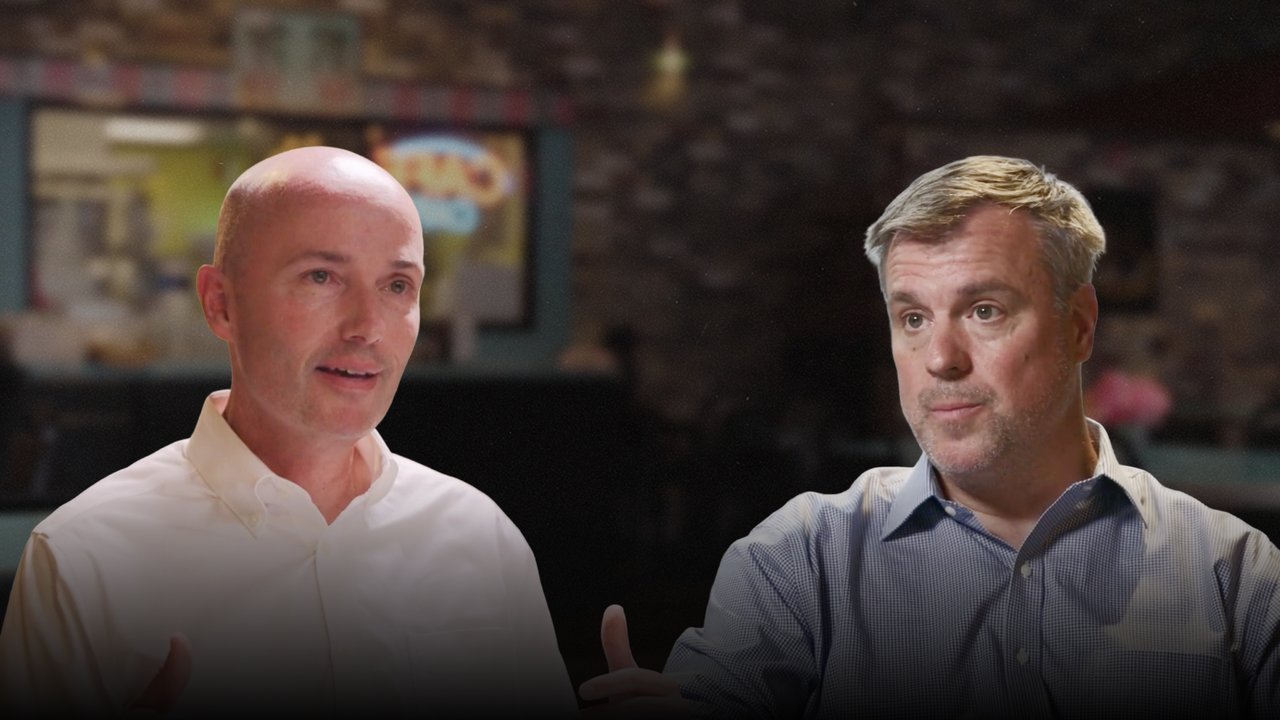
Spencer Cox: America’s political divide is destroying families and friendships
lead image
The Shaheen political dynasty lives on in New Hampshire.
Stefany Shaheen, the eldest daughter of Sen. Jeanne Shaheen (D-N.H.), won Tuesday’s hotly contested Democratic primary for the state’s 1st District, defeating Maura Sullivan and a host of other rivals despite facing attacks that she was leaning on her well-known surname.
The seat, left open by Democratic Rep. Chris Pappas when he opted to run for Senate, is considered to be fairly competitive for the general election — former Vice President Kamala Harris won it by just two points in 2024.
Shaheen attempted to create distance from her mother throughout her campaign, rebuking the deal the senator helped broker to end last fall’s government shutdown and leaning into her public service in Portsmouth and medical-research advocacy on the trail.
Still, her family name helped her build an early polling lead and bank financial support.
Nearly $740,000 raised by Shaheen’s campaign came from donors who had previously given to her mother — 39 percent of total itemized campaign dollars, according to a Blue Light News analysis. One of those donors told Blue Light News the senator reached out last fall seeking their support for her daughter.
Sullivan, Shaheen’s main rival, attempted to weaponize the scion’s family ties in a year where the Democratic base has repeatedly spurned candidates with a perceived connection to the establishment.
The primary grew acrimonious in its closing weeks as Shaheen and Sullivan tangled over campaign donations and aired attack ads as polls showed a tightening race. The contest also underwent a rapid winnowing toward the end as two candidates dropped out; one, progressive Christian Urrutia, endorsed Shaheen.
A ruling from the Supreme Court on Tuesday means Missouri voters will likely go to the polls this fall under the same congressional map used two years ago, not one Republican state lawmakers adopted to try to pick up an additional House seat for the GOP.
Justice Brett Kavanaugh turned down a Republican-backed emergency appeal that sought to block a Missouri Supreme Court ruling last week restoring earlier district lines and ordering voters to weigh in on the redistricting plan in November for use in future elections.
Kavanaugh issued the ruling because he handles urgent matters arising in the 8th Circuit, which includes Missouri. Kavanaugh issued no explanation of his decision, nor did he indicate that he referred the matter to the full court, as is customary in significant cases. Missouri officials could ask another justice for relief, but such requests are almost never granted.
The justices rarely disturb state courts’ decisions about matters like the referendum petitions in Missouri that sought to put the redistricting before voters for approval.
However, lawyers for Missouri Secretary of State Denny Hoskins warned the Supreme Court that the state faced “disaster” and “unprecedented chaos” in part because primaries already took place under the new lines last month.
Democrats argued any last-minute chaos to Missouri’s election administration was intentionally created by Hoskins, pointing to Republican leaders in the state arguing that delaying the decision on the redistricting referendum would benefit Republicans.
President Donald Trump denounced the state supreme court ruling last week.
“The Election Process, as usual, is being disturbed in America!” he wrotein a post on Truth Social. “Missouri must be able to use the map that was in effect just a couple of months ago, in the Primary. This is a Dark Day for “Justice” in Missouri!”
- Sanders to host AI briefing for senators
- Cruz says guardrails needed after dire AI warning
- Key oil benchmark tops $100 a barrel for first time since July, as midterms loom
- Lawmakers urge Congress to act after AI researcher’s dire warning
- ‘No good options’: GOP’s midterm hopes suffer under energy inflation
- Capitol agenda: Will Schumer go long for college sports?
- Spencer Cox: America’s political divide is destroying families and friendships

- Louisiana’s abortion pill case could wipe out access in blue states
- Schumer and Jeffries opposed a Brooklyn power play. It happened anyway.
- Stefany Shaheen, daughter of Sen. Jeanne Shaheen, wins New Hampshire House primary
-

 Politics2 years ago
Former ‘Squad’ members launching ‘Bowman and Bush’ YouTube show
-
Uncategorized2 years ago
Bob Good to step down as Freedom Caucus chair this week
-

 Politics2 years ago
Former Kentucky AG Daniel Cameron launches Senate bid
-

 The Josh Fourrier Show2 years ago
DOOMSDAY: Trump won, now what?
-

 The Dictatorship2 years ago
Luigi Mangione acknowledges public support in first official statement since arrest
-

 The Dictatorship2 years ago
Pete Hegseth’s tenure at the Pentagon goes from bad to worse
-

 Politics2 years ago
Blue Light News’s Editorial Director Ryan Hutchins speaks at Blue Light News’s 2025 Governors Summit
-

 The Dictatorship12 months ago
Mike Johnson sums up the GOP’s arrogant position on military occupation with two words