
Politics
Michigan’s three-car pileup of a primary has Senate Democrats worried


DETROIT — As a professional driver navigated a gleaming new Ford Bronco Sport up a steep ridge, Mallory McMorrow found herself pinned in the back seat clinging to the overhead roll bar.
The Detroit Auto Show course is designed to show off the Bronco’s capabilities — while putting an escapist scare into its thrill-seeking passengers. But it just reminded McMorrow of her day-to-day reality running for Michigan’s open Senate seat.
“It’s a teeter-totter, man,” McMorrow told Blue Light News about her race, after having navigated a very literal giant teeter-totter in the Bronco. “It could go any direction.”
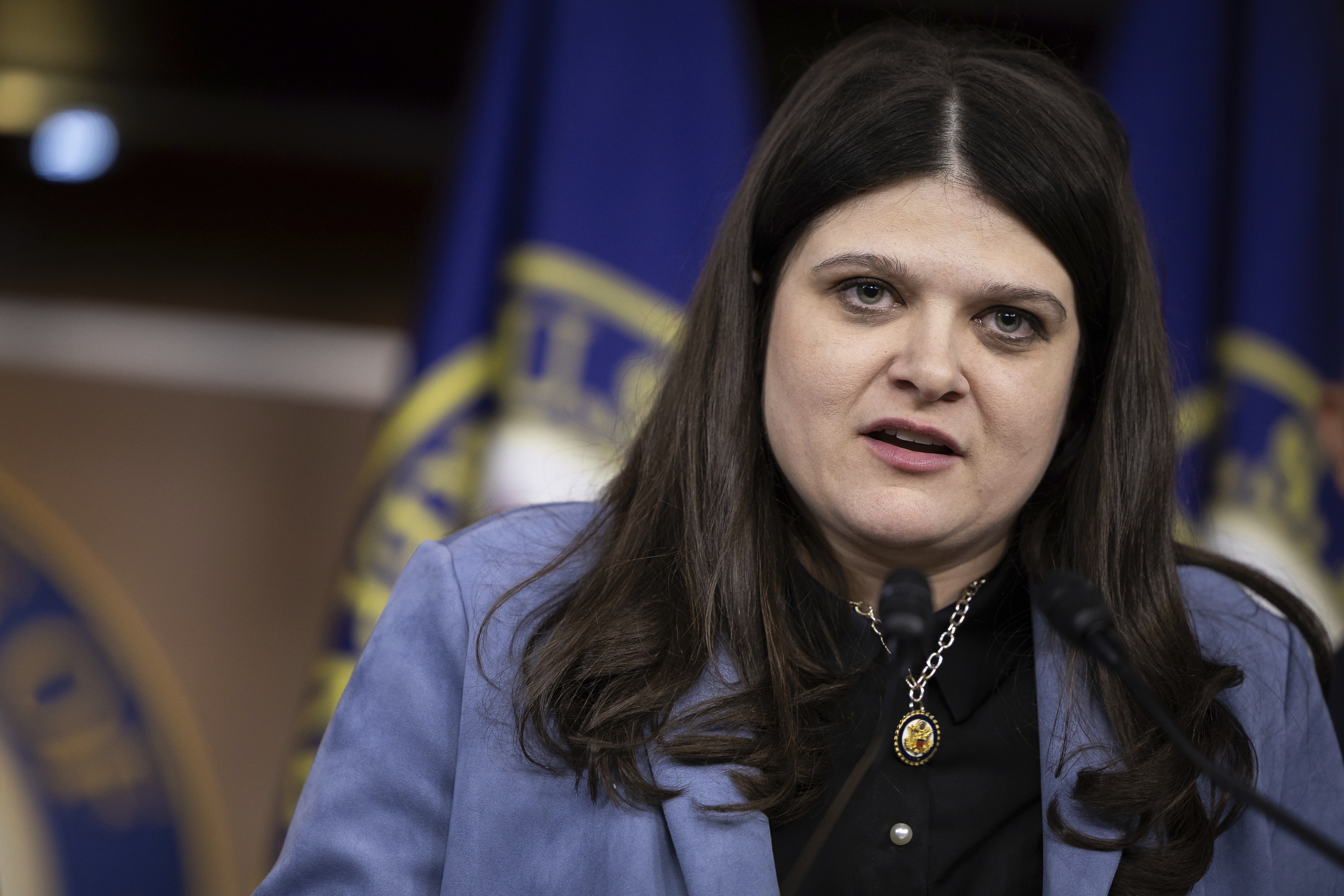
McMorrow is locked in a tight three-way primary with Rep. Haley Stevens and physician Abdul El-Sayed that has emerged as a test for what the next generation of Democrats will look like — and whether they can win a key swing-state election that will help determine Senate control.
In recent days, the trio of candidates’ squabbles careened hour to hour from whether they should embrace Medicare for All, to how far Democrats should go in fighting ICE. In fact, the contest has emerged as a catch-all for every question and problem plaguing Democrats politically and tactically: Where should they stand on Israel and Gaza? Should they send their aging congressional leaders packing? What does electability look like in this political environment? Should Democrats tap into the attention economy or focus on traditional campaigning?
El-Sayed, on the left, has taken consistently maximalist positions fitting for a man who wrote a book titled “Medicare For All: A Citizen’s Guide” and has vocal support from Sen. Bernie Sanders. Stevens, a classic swing-state centrist favored by many establishment Democrats, has taken smaller-bore stances. Between them sits McMorrow, who’s aiming to appeal to voters in both of their lanes.

But this three-way battle to replace retiring Sen. Gary Peters (D-Mich.) isn’t just about what direction the Democratic Party takes in Washington — it’s whether they can get there in the first place.
Democrats think they see a route back to the Senate majority. But if they don’t hold on to their seat in Michigan, that faint path won’t materialize.
“It’s already a long shot, but it’s a doable thing — but not without Michigan,” said David Axelrod, the longtime senior adviser to former President Barack Obama.
Axelrod called it the “most fascinating and consequential primary” in the country.
Democratic leaders both in Michigan and D.C. are growing more worried by the day that the hard-fought contest, which won’t be decided until the August primary, will exacerbate ideological tensions and leave the nominee in a weakened position heading into a contest against former Rep. Mike Rogers (R-Mich.).
“We’re used to having long primaries,” Sen. Elissa Slotkin (D-Mich.) told Blue Light News. “No one loves them, but we’re used to having them. And I don’t think it’s insurmountable.”
For now, the race is wide open.
Most public polls have found a tight three-way race in the primary, with Stevens or McMorrow holding a slight lead depending on the survey; in those same polls, Stevens runs slightly ahead of Rogers in the general election, with McMorrow just a bit behind her and El-Sayed a bit further back.
Stevens has a fundraising edge. According to the latest Federal Election Commission reports, which posted on Saturday, she brought in $2.1 million in the past quarter and has $3 million cash on hand; McMorrow and El-Sayed both raised around $1.75 million and each has just under $2 million in the bank. Rogers raised just under $2 million and has just under $3.5 million cash on hand.
Part of the lack of separation in the polls is that voters haven’t engaged yet. The campaigns don’t expect cleavage until paid media starts happening in full (El-Sayed is the only candidate so far to roll out a statewide ad.)
“Only the most political have started to click in,” Slotkin said.
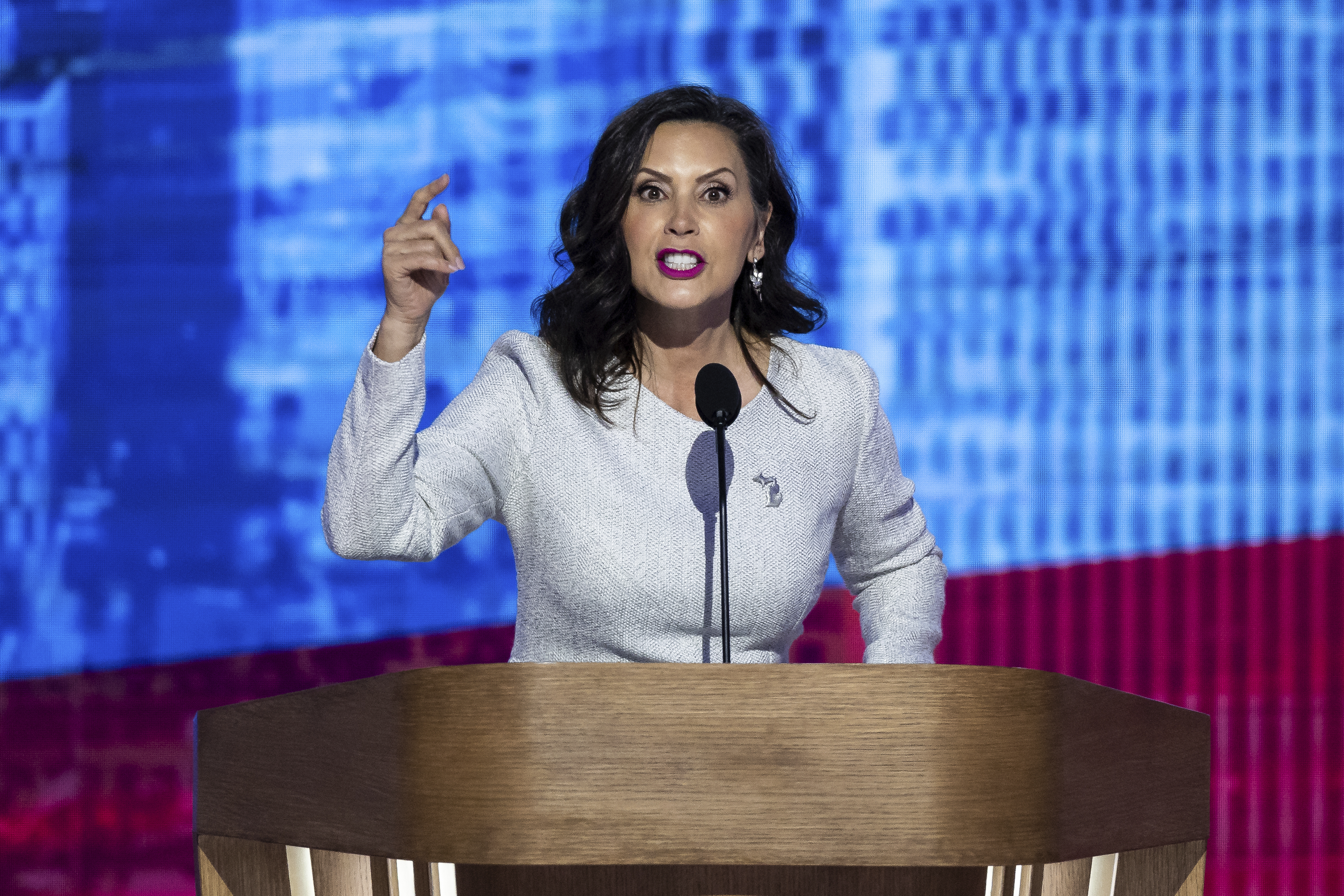
Michigan Democrats also worried about the impact the primary could have on the rest of the party as they fight to hold on to term-limited Gov. Gretchen Whitmer’s office and win back control of the Legislature.
Whitmer, with her 60 percent approval rating, is facing a pressure campaign from some in the party to endorse either Stevens or McMorrow early in the race to narrow the field, according to two senior Michigan Democratic officials granted anonymity to speak about private discussions. Otherwise, one of them worried, “we could see real losses.”
Whitmer and El-Sayed duked it out in a 2018 gubernatorial primary, and the officials say bad blood remains between them.
A Whitmer spokesperson declined to comment.
A clash of ideologies
The candidates have sharp ideological divides on major issues including health care, Israel and Gaza and accepting corporate PAC money.
After a second person was killed by a federal immigration agent in Minneapolis, the three candidates’ diverging approach to ICE and its funding supercharged the primary.
While McMorrow and Stevens glad-handed at the Detroit Auto Show and union halls around the MLK holiday, after immigration agents killed Renee Good and before they killed Alex Pretti, El-Sayed, who has championed the Abolish ICE movement since 2018, went to Minneapolis and filmed man-on-the-street interviews for social media that were reminiscent of New York Mayor Zohran Mamdani’s successful viral campaign videos.
He told Blue Light News he was there to “understand what it looks like when an arm of the government lays siege to a city in America.” (El-Sayed also jetted to California for a fundraiser earlier that week).
McMorrow has expressed supportfor reforms to ICE, such as requiring agents to be unmasked, and argues Republicans and Democrats should “deny DHS one penny more until complete overhaul and accountability of this agency” happens.
Stevens, meanwhile, is co-sponsoring a bill that would divert what she called ICE’s $75 billion “slush fund” to state and local law enforcement agencies; she has also called for DHS Secretary Kristi Noem’s impeachment.
The candidates are also at odds over health care, an issue over which they’ve sparred in recent days.
In an interview with Democratic influencer Brian Tyler Cohen last week, El-Sayed reignited the health care debate. He said, “if you like your insurance from your employer or from your union, that can still be there for you,” apparently flipping on his stance on Medicare for All. McMorrow and her allies seized on his remarks as El-Sayed seemingly embracing a position he had repeatedly attacked her on. El-Sayed hosted a December health care town hall with Sanders where he contrasted his Medicare for All support with McMorrow’s and Steven’s backing of a public option.
“It’s wild to call yourself the ‘next generation’ of Democratic leadership and be running AGAINST Medicare for All in 2026,” he posted on X a month ago, quote-tweeting McMorrow.
In an interview with Blue Light News after the dustup, El-Sayed declined to discuss specifics of his position on the record. In a statement, a spokesperson said that he supports Medicare for All as a baseline option for everyone, “and if folks want additional private coverage through a union or an employer then that can be there for them too.”
The conflict in Gaza has also led to sharp divisions in the race.
El-Sayed, who is the son of Egyptian immigrants, has been an outspoken critic of Israel, which he has long said was committing genocide in Gaza. That’s a major issue in a state with the highest percent of Arab-Americans in the country; more than 100,000 people voted “uncommitted” instead of backing then-President Joe Biden in the 2024 primary over his administration’s support of Israel — an effort El-Sayed helped lead.
He told Blue Light News that when he talks about U.S. tax dollars “being misappropriated to weaponize food against children and to subsidize a genocide, rather than to invest in real people in their communities and their kids and their schools and their health care, it is the single biggest applause line in every speech.”
McMorrow took a bit more time to come to that view. In October, when asked whether she thought the conflict was a genocide, she paused for several seconds, exhaled, and responded, “Based on the definition, yes.” Her campaign said her view was informed by a September United Nations Commission of Inquiry report.
Stevens has been more supportive of Israel, and has the support of AIPAC, the politically influential pro-Israel lobby. Some senior Michigan Democrats have expressed concern that an AIPAC independent expenditure campaign backing Haley could make the primary even more toxic ahead of the general election. Asked about their plans, an AIPAC spokesperson told Blue Light News they had no updates.
Asked by Blue Light News in November whether she was comfortable with AIPAC support, Stevens dodged, saying she’s delighted to “see the hostages get home,” and added she “wanted to see an enduring ceasefire where Hamas surrenders and so that we can get the people of Palestine and Israel in long standing peace, living peacefully, side by side with one another.”
Stevens’ campaign also attacked both El-Sayed and McMorrow’s record on manufacturing, a sector that employs some 600,000 in Michigan. She told Blue Light News that McMorrow “has a history of criticizing Michigan’s key industries” and that El-Sayed “supports policies that would decimate Michigan’s manufacturing economy,” citing his support for the Green New Deal.
“I’m going to call out what isn’t working for Michigan’s manufacturing economy, whether it is Mike Rogers or members of my own party,” Stevens said in an interview in the conference room of the Teamsters Local 234 union hall in Plymouth.
Old school vs. new school
The race is also shaping up as a test of offline coalitional politics at a moment increasingly defined more by viral videos than baby-kissing and union hall campaign stops.
Stevens has leaned hardest into traditional brick-and-mortar campaigning, while El-Sayed has been much more focused online, with McMorrow’s approach once again falling between them.
McMorrow’s biggest splash of the campaign so far came with a viral video that attacked NFL RedZone for adding ads as “the latest example of corporate greed,” and tied it to spiking grocery costs. It earned nearly 2 million views.
El-Sayed has built a national profile and fundraising network in part with a health care-focused podcast on Crooked Media, the network run by the Pod Save America team made up largely of former Obama senior advisers. At least three members, Jon Favreau, Jon Lovett and Ben Rhodes, appeared as hosts on an invite to El-Sayed’s fundraiser earlier this month in California.
Stevens has taken a different tack, putting more focus on campaign stops and meat-and-potatoes fights for local industry, especially auto and other factory jobs.
In a year-out-from-election day memo, Stevens’ campaign argued that her “strength with Black Michiganders and union workers, her relentless focus on lowering costs and protecting Michigan manufacturing, and her record fighting for Michiganders — which has led to her winning tough primaries and general elections — will propel her to victory.”
Campaigning at a Teamsters Local 234 union hall in Plymouth, she spent a lot more time talking about a local labor contract dispute than national concerns.
“Look, manufacturing might not light up the internet, but it fuels a lot of jobs here,” she told Blue Light News afterward.
That dogged approach helped her flip and hold a swing seat, then win a tough incumbent-on-incumbent primary in 2022, and is one she thinks will pay dividends now.
“I’ve had a couple of tough primaries before, and I’m just out here trying to win it for Michiganders,” she said.
But it remains unclear how well it will translate in a statewide campaign.
“Haley seems to have more institutional support — whether or not it’s admitted as such — and that is a strength, but it also could be a weakness,” said a longtime Michigan Democratic operative who remains neutral in the race and was granted anonymity to assess the primary. “Her presence on the campaign trail I’m not sure is one that’s really like, Man, I got to be with her.”
Stevens has earned criticism over whether she can galvanize the online, grassroots activists, or electrify crowds on the trail. “She’s [an] uneven campaigner when it comes to the retail stuff,” said Adam Jentleson, a longtime Democratic campaign strategist whois pushing for the party to break more with left-wing interest groups and focus more on expanding the party’s coalition to win (he also voiced concern about El-Sayed as a general-election candidate).
Right now, both El-Sayed and Stevens have been training most of their fire on McMorrow rather than each other, seeing her as the bigger threat to their potential voting coalitions.

Insiders and outsiders
Stevens’ electoral track record is part of why many establishment-leaning Democrats in D.C. prefer her in the race.
Democratic Senatorial Campaign Committee Chair Kirsten Gillibrand (D-N.Y.) invited her to attend a fundraising retreat in Napa Valley that featured a crypto roundtable, but Stevens told Blue Light News she did not attend due to the government shutdown.
In an interview with POLITICO, Senate Minority Leader Chuck Schumer was bullish on defending Michigan but declined to appraise any individual candidacies; a DSCC spokesperson declined to comment on whether the committee would officially endorse in the race.
McMorrow has taken a very different approach to D.C.’s Democratic leadership.
Shetold POLITICO last March, before she was even officially a candidate, that she wouldn’t vote for Schumer as party leader should she win her Senate seat. She also previously penned a scathing letter to Biden following his disastrous debate with Donald Trump, urging him to drop out.
“We’re drawing a contrast that is really about defining my lane,” McMorrow said in an interview at a campaign stop at a park in Grand Rapids late last year, suggesting Stevens, without naming her, was running “an uninspiring campaign that’s right out of the D.C. playbook” and that El-Sayed, also without naming him, was campaigning on the idea “that there’s just one weird trick to fix democracy.”
Stevens has said it’s too early to determine whether to would back Schumer; she has called him “a great leader.”
El-Sayed also hasn’t said whether he’d back Schumer for leader. But he’s made it clear he is running headlong against the Democratic establishment.
“The movement we’re building is about taking a bet on the divide in our politics not really being about left versus right, but being about the folks who are locked out and the folks who are locking them out,” El-Sayed told Blue Light News.
About the only thing the candidates can all agree on is the stakes of the contest.
“The future of this party is going to be based on what happens in this race,” McMorrow said.
Elena Scheider contributed to this report.


NEW YORK — A state lawmaker who gained national attention for his opposition to unchecked AI during a failed campaign for Congress this year is launching a $30 million effort to unite Democrats around regulating the technology, according to the organization’s new website.
New York Assemblymember Alex Bores is unveiling the organization — called “Who Decides” — on Tuesday to “build the winning Democratic answer to AI,” according to a website that was publicly available Monday night.
“Who Decides’ goal is that by 2028, Democratic candidates from the top of the ticket on down run with a common AI safety agenda,” reads an announcement on the site dated Tuesday. “That means addressing the harms people already see and the broader danger that increasingly powerful and out-of-control systems could destabilize our economy, our democracy, and our safety.”
It was not immediately clear whether Who Decides would be organized as a federal super PAC, 501(c)(4) nonprofit or other type of group. The website has a “donate” link that redirects to a webpage hosted by “Give Butter,” an organization focused on helping nonprofits fundraise. The announcement said the group would reject “corporate money or contributions from senior executives at frontier AI companies.”
Bores did not immediately respond to questions about the organization Monday night, including whether Bores, a sitting state lawmaker, personally fundraised for the group while holding public office. He is launching the organization with his former chief of staff, Anna Myers, the website says.
The apparent launch of Who Decides comes at a moment when the quickly-advancing technology has become a major political issue.
Last week, a former Anthropic researcher issued a dire warning that artificial intelligence has a chance of bringing about the end of humanity. The concerns from the researcher, Jacob Coxon, who also worked for OpenAI, were followed up by calls from the leaders of Anthropic and OpenAI, along with Elon Musk, to regulate the industry and slow development to build more guardrails.
Politicians have scrambled to respond, with both parties trying to coalesce around a policy agenda — and political message — on the rapidly evolving issue. Former President Barack Obama called last week for Democrats to focus on AI, and prominent party strategists from across the ideological spectrum gathered to begin mapping out a strategy.
President Donald Trump rejected recent calls from Republicans and Democrats to quickly regulate the industry in a spate of Monday social media posts.
“We don’t let five people write the laws for hundreds of millions of Americans,” Bores says in the launch announcement on the website, an apparent reference to the top executives in the AI industry. “There is no reason to let them write the rules for AI.”
The group says on the site it will focus on 11 states that it says will be key to the 2028 presidential primary and general election: South Carolina, Nevada, New Hampshire, New Mexico, Michigan, Virginia, Arizona, Georgia, North Carolina, Pennsylvania and Wisconsin. It says it will conduct quarterly national and state polls, host national conferences and partner with local groups in the states.
Earlier this year, Bores lost the primary for retiring Manhattan Democratic Rep. Jerry Nadler’s seat. His campaign largely centered on a push to regulate artificial intelligence following his work to pass the RAISE Act in the state Legislature, which aimed to enact safeguards for the technology. His campaign attracted a combined $21 million from super PACs backed by dueling factions of the AI community, which spent both in support and opposition of him. Democratic Assemblymember Micah Lasher ultimately won the primary and is all but assured to win in November in the deep-blue seat.
“The lesson Bores and Myers took from those fights was that confronting the AI industry is fertile political ground and that public demand for answers on AI policy exists but remains scattered,” the website said, referencing his congressional campaign. “What’s missing is a coalition capable of turning that energy into a governing consensus before the technology, the economic dislocation, and the partisan battle lines harden.”
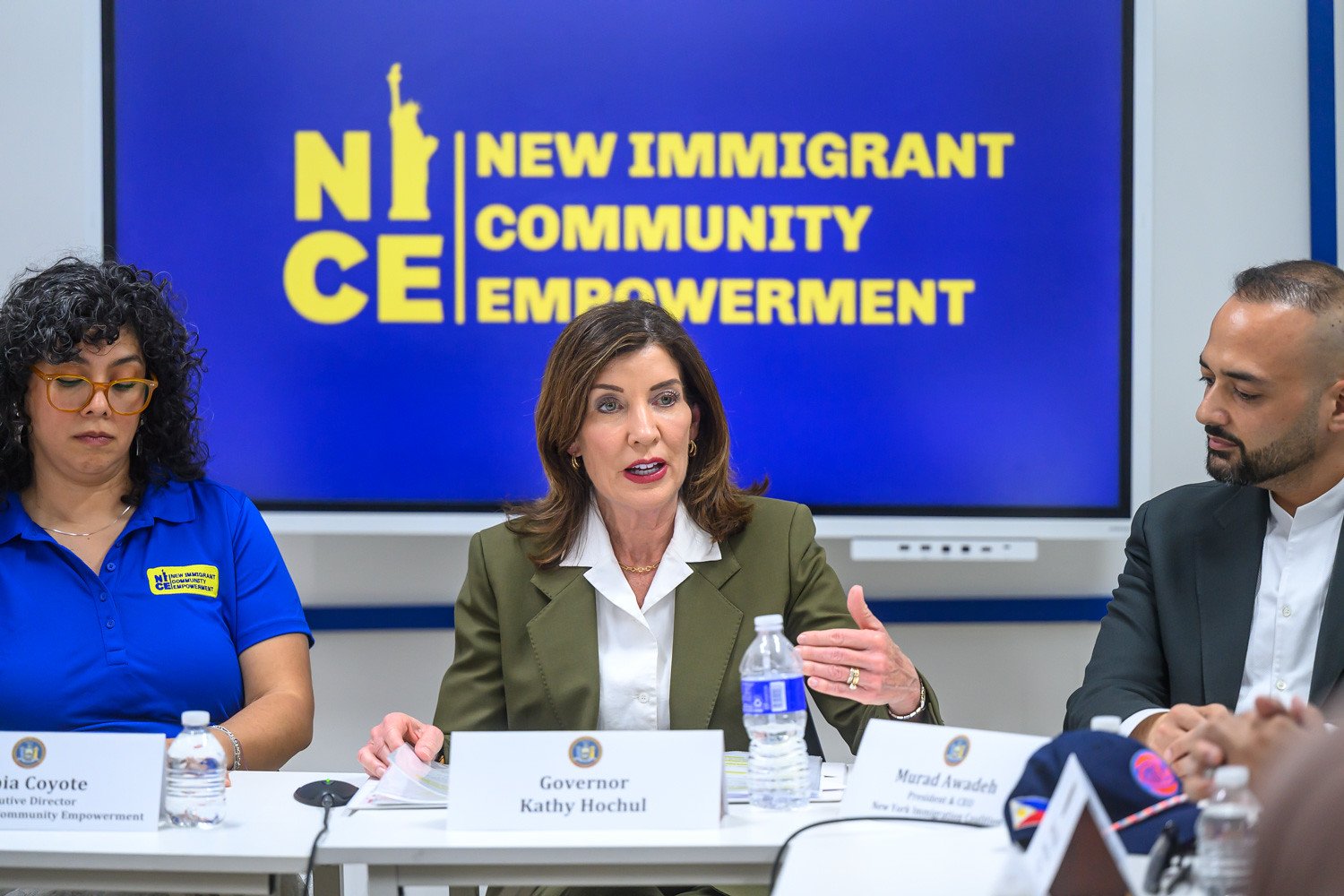
ICE TO SEE YOU: Gov. Kathy Hochul’s office is advising local governments that zoning and state environmental laws can stymie Immigration and Customs Enforcement from building or expanding detention facilities in their communities.
Those legal barriers — spelled out in a letter sent today by Hochul to local government leaders — represent the latest effort by her administration to halt ICE’s efforts in New York.
“We need localities focused on keeping our communities safe, which depends upon the efforts of local law enforcement, civil servants, and regulators,” Hochul wrote in the letter, which was exclusively obtained by Playbook. “While my administration will continue to demand answers and transparency from federal immigration authorities, should you become aware of these projects, my office is ready to partner with you to determine any appropriate next steps to protect our local communities.”
The missive is a new front in Hochul’s broader push to erect roadblocks against President Donald Trump’s sweeping deportation campaign — which includes a push to build or convert facilities in parts of New York.
New York lawmakers and Hochul agreed in May to a package of sweeping measures meant to limit Trump’s immigration enforcement.
Included in those measures were provisions that required expanded public notice — including holding at least two hearings — for the expansion or construction of an immigration detention facility. The law also prohibits local governments from providing financial benefits meant to offset the cost of a facility.
Hochul’s Republican critics have railed against the measures, which were first proposed during the aggressive deportation crackdown in Minnesota, which left two U.S. citizens dead.
Broome County Sheriff Fred Akshar is set to testify Tuesday to the House Judiciary Committee in Washington on “the continuing tragedy of sanctuary laws.” Akshar’s office did not immediately return a message seeking comment.
Local government officials have already sounded an alarm this year over ICE’s apparent efforts to expand the agency’s detention capacity by leasing or expanding sites in Batavia, Newburgh and Rochester.
Hochul wrote to Homeland Security Secretary Markwayne Mullin earlier this summer requesting more information on ICE’s New York plans.
Last month her administration got a reply.
An ICE official wrote to the governor that the agency has “not directed the establishment of a detention facility” in Rochester. In Batavia, ICE is “in the early stages” of weighing a bedspace and usage expansion at a site. And in the Hudson Valley, the agency confirmed that “an acquisition [is] underway to identify a new facility to lease through the General Services Administration” that would house its investigations, enforcement and removal operations.
Details were scant in the letter, but the response is the first time the federal government has formally laid out any of its plans for ICE expansion in New York to state officials.
On Monday in New York City, Mayor Zohran Mamdani and state Attorney General Letitia James offered some of their own push back: two lawsuits seeking to stop the Trump administration from making it harder for immigrants lawfully in the U.S. to change their status.
The suits target a federal rule change set to take effect Friday. The change would give immigration agents more leeway to deny green cards or visas to lawful immigrants on the basis of being a “public charge” — someone who’s using social safety net programs. The rule change would allow agents to factor in the use of Medicaid or food assistance into their decision making.
The Trump administration has said the rule is necessary to ensure the country is not authorizing immigrants who drain public resources.
Mamdani countered that, rather than saving the U.S. money, the change will force immigrants to forgo routine medical care, increasing the likelihood of medical emergencies.
“None of this is abstract,” Mamdani said. “People could die as a result of these changes.”
James said the administration’s rule change is overly broad and flies in the face of more than 100 years of legal precedent.
“This public charge rule goes back to 1822, where Congress basically said that it only applies to individuals who cannot support themselves, not individuals who apply every now and then for public assistance because they fall on hard times,” she said. — Nick Reisman and Joe Anuta
From the Capitol

REGENTS EXAM PHASE-OUT COMING: The high school class of 2027 will be the final one required to pass the state Regents exams to graduate.
The state Board of Regents authorized the Education Department today to move forward with the next phase of the “New York Inspires” program. As part of that program, the board voted last year to adopt a framework that lets students demonstrate proficiency through other measures like projects or coursework. That framework will replace the Regents exam.
While the Regents will remain as an option, it will no longer be a requirement for high school graduation, beginning with students graduating in 2028, education officials said during the board’s monthly meeting today.
“For years, we looked at what elite private schools provide for their students and they do not worry about the Regents exam,” State Education Commissioner Betty Rosa said. “They don’t even worry when you apply to colleges that it’s on their transcript.”
The department said it plans to advance the regulation changes to the board by February 2027 so it can implement the changes in the 2027-28 school year. The board unanimously passed a resolution to that effect today.
Districts will have to develop strategies for assessment that draw on multiple sources of evidence, including classroom performance, student work and state assessments.
Some Regents board members sought more clarity on resources to support families.
“What I did not hear was what resources, what tools do we have for parents and students who are in this purgatory period?” said Regents member Hasoni Pratts, a New York City public school parent.
The news comes as the state grapples with abysmal performance on this year’s reading exams — despite New York spending more per pupil than any other state in the country. Experts and advocates have been questioning what those results say about student learning, and precisely what led to those fluctuations. — Madina Touré
FROM CITY HALL

DEEPFAKE CRACKDOWN: Manhattan District Attorney Alvin Bragg announced today that his office seized control of a dozen domains used to create, disseminate and sell AI deepfake porn.
The sites in question featured AI-generated images and videos of roughly 1,200 individuals — primarily women and celebrities — engaging in sexually explicit activity.
“These horrific violations of privacy follow victims into their careers and personal lives, and take an immense toll on their emotional and mental well-being,” Bragg said. “We were able to seize these domains because a brave survivor stepped forward. And while victims of these sites are largely celebrities, we know that anyone can be a victim of these crimes, particularly in domestic violence cases.”
New York penal law prohibits the dissemination of pornography without a subject’s consent, and violations are punishable by up to a year in prison. That statute was updated in 2023 to explicitly prohibit AI-generated porn.
Bragg’s announcement comes as lawmakers in Albany and Washington grapple with the looming threat of artificial intelligence. But Bragg declined to comment on the potential role of the Manhattan DA’s office in working towards larger scale AI regulation.
“This is a crime in New York State,” he said, referring to the circulation of deepfake pornography. “We don’t have to talk about regulation, legislation. This is a crime now.” —Molly Reinmann
FROM THE CAMPAIGN TRAIL
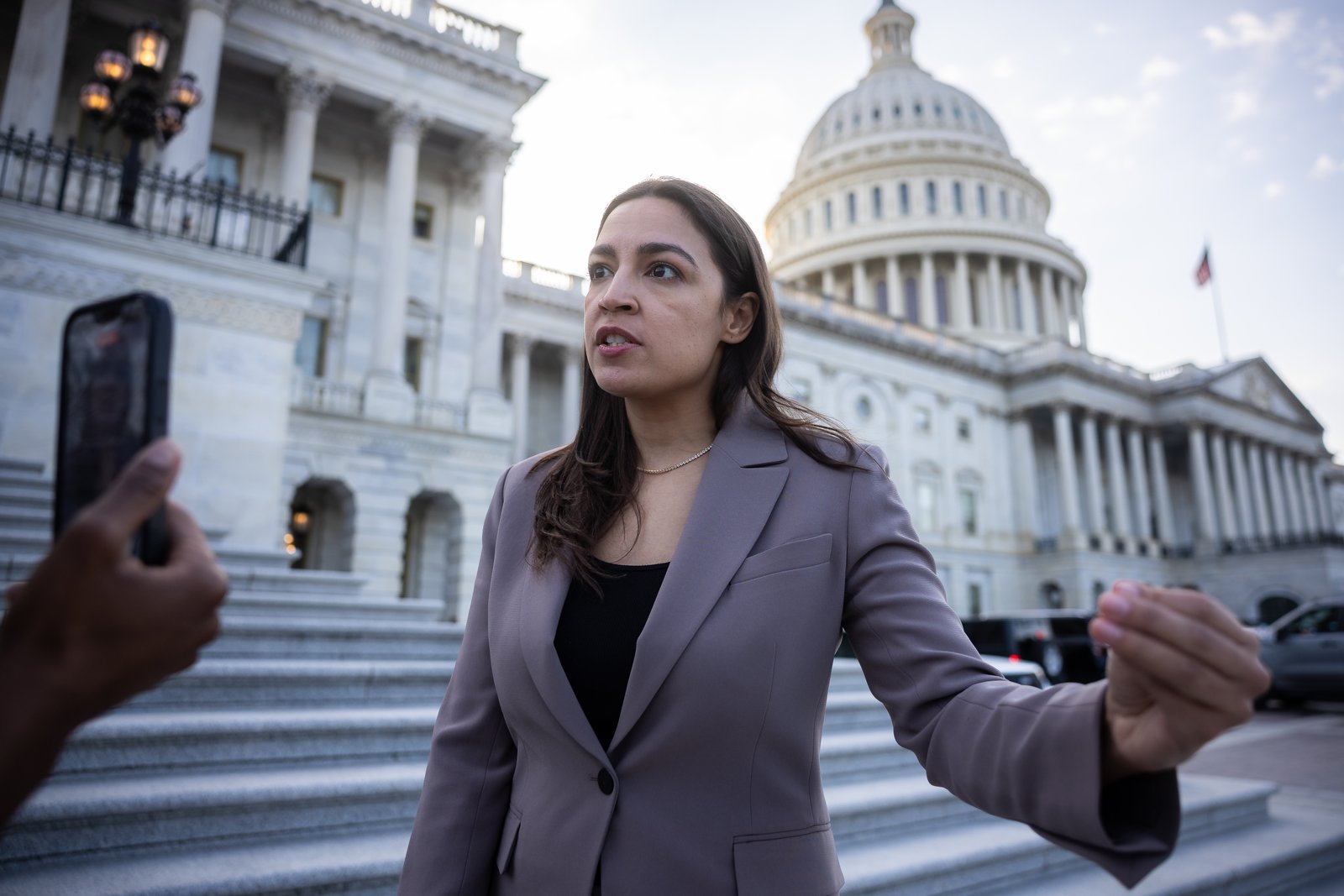
2028 VISION: Rep. Alexandria Ocasio-Cortez is leaning into the speculation swirling around her 2028 aspirations.
“In some ways, I understand the interest. But I wanted to write to you today to be direct about what I’m focused on,” Ocasio-Cortez wrote in a fundraising email. “Frankly, I could not care less about titles or positions for myself. That’s not why I got into this work. What matters to me is changing this country so that it finally works for all of us, and that’s why my focus is on the decision working people around the country will make in the next 50 days.”
She added that her political operation is “mobilizing resources, not just to get me re-elected or build for a future campaign, but most importantly to win the midterms and take back the majority.”
Ocasio-Cortez, who’s been active on the trail boosting down-ballot candidates, has kept the door open for either a Senate run or a presidential bid in 2028 — though some progressives are urging her to aim for the White House.
Any clarity on her 2028 decision before this coming Election Day seems unlikely, though — especially given how “concerned” she says she is “by how some in our party are talking” about the midterms.
“There is a narrative taking hold in Washington that the Republicans are already cooked,” her email continued. “That kind of complacency is how we grasp defeat from the jaws of victory. … All of this is why I am not spending this fall thinking about myself. I am spending it working my butt off to deliver a majority in the House and the Senate.” — Madison Fernandez
A DIFFERENT LAUDER GIVES: Estee Lauder Chair William Lauder gave $500,000 to the super PAC backing Republican gubernatorial candidate Bruce Blakeman.
Lauder’s contribution comes after his uncle, prolific GOP donor Ronald Lauder, ceased his political giving this year. Ronald Lauder was the principal backer of a super PAC aiding Republican Lee Zeldin’s 2022 bid against Hochul.
William Lauder wasn’t the only deep-pocketed titan to donate to the Blakeman PAC recently. Home Depot founder Ken Langone, a GOP megadonor who once led Republicans for Cuomo, gave $50,000. — Nick Reisman
IN OTHER NEWS
— STALLED SECURITY: More than eight months into his term, Mamdani is still waiting on federal security clearance. (Gothamist)
— LEGIONELLA LOCATIONS: A Yankee Stadium cooling tower tested positive for the bacteria that can cause Legionnaires’ disease, according to the New York City Health Department. (Daily News)
— SIGN LANGUAGE: A PAC funded by Knicks owner James Dolan launched a $250,000 billboard campaign backing Blakeman and blaming Hochul for an exodus from the state. (NY Post)
Missed this morning’s New York Playbook? We forgive you. Read it here.
Bo French, the GOP nominee for a spot on the Texas Railroad Commission, doubled down on Monday on a xenophobic post that disparaged Asian American students at the University of Texas after receiving blowback from fellow Republicans over the weekend.
On X, French was quick to turn his viral post, which had received more than 35 million views as of Monday afternoon, into a fundraising pledge, calling the criticism he has received an attack from “the radical left and their allies.”
He also stood by his post in an appearance on the conservative radio broadcast “The Mark Davis Show” on Monday.
“The radical left, you know, they want to make everything about race,” he said on the show. “Of course, there are some people in our party who are uncomfortable talking about those things because it scares them.”
The social media firestorm started after French posted a photo on X on Sunday of UT students celebrating in the crowd and wrote: “I heard UT graduation this year looked like this. I didn’t believe it. The problem is now obviously far worse than anyone imagined.”
The post drew swift rebukes from Democrats and some Texas Republicans, including outgoing Sen. John Cornyn — who called on other Republican officials to “condemn the intolerance and racism” — as well as several state lawmakers.
During his radio appearance, French said his social media post is a criticism of admissions and hiring policies at UT, the state’s public flagship, that he said discriminated against Texas residents.
“It’s not racist to point out that we should be favoring Texans over foreigners,” French said.
There’s no indication that the students French targeted are foreigners. Most of UT’s student body is made up of Texans.
According to state law, Texas high school students in the top 5% of their class are automatically admitted to UT, and around 80% of the student body is from the state.
He also took a shot at Cornyn and other Republicans who condemned him, saying many were from the establishment wing of the party that opposed him in the GOP primary.
“What is he doing to help elect [Ken] Paxton? So we have to ask those questions,” he said. “I just think we should be prioritizing our Republican platform, which, by the way, is an America First platform, which prioritizes Americans.”
French, who is running for a seat on the influential statewide body that regulates its oil and gas industry, has a history of making controversial statements.
Earlier this year, he suggested Republicans should fear Islam and advocated for deporting 100 million people.
- Alex Bores launches $30 million effort to unify Dems on AI
- College sports bill opposition brews despite Cruz, Cantwell optimism
- House Republicans must decide whether they want to pass Trump’s AI loyalty test
- Russia sanctions bill clears procedural House hurdle
- Sen. Kennedy readies AI ‘kill switch’ bill
- ‘Not too much they can do about it’: Frustrated White House faces spiking oil prices
- EPA rollback may worsen Trump’s Supreme Court climate headache
- Hegseth allies campaign to put loyalist in Army secretary job
- ‘Beyond our authority’: EPA dumps power plant climate rules
- Hochul’s how-to guide to stopping ICE

-

 Politics2 years ago
Former ‘Squad’ members launching ‘Bowman and Bush’ YouTube show
-
Uncategorized2 years ago
Bob Good to step down as Freedom Caucus chair this week
-

 Politics2 years ago
Former Kentucky AG Daniel Cameron launches Senate bid
-

 The Dictatorship2 years ago
Luigi Mangione acknowledges public support in first official statement since arrest
-

 The Josh Fourrier Show2 years ago
DOOMSDAY: Trump won, now what?
-

 The Dictatorship2 years ago
Pete Hegseth’s tenure at the Pentagon goes from bad to worse
-

 Politics2 years ago
Blue Light News’s Editorial Director Ryan Hutchins speaks at Blue Light News’s 2025 Governors Summit
-

 The Dictatorship1 year ago
Mike Johnson sums up the GOP’s arrogant position on military occupation with two words