
Politics
Michigan’s three-car pileup of a primary has Senate Democrats worried

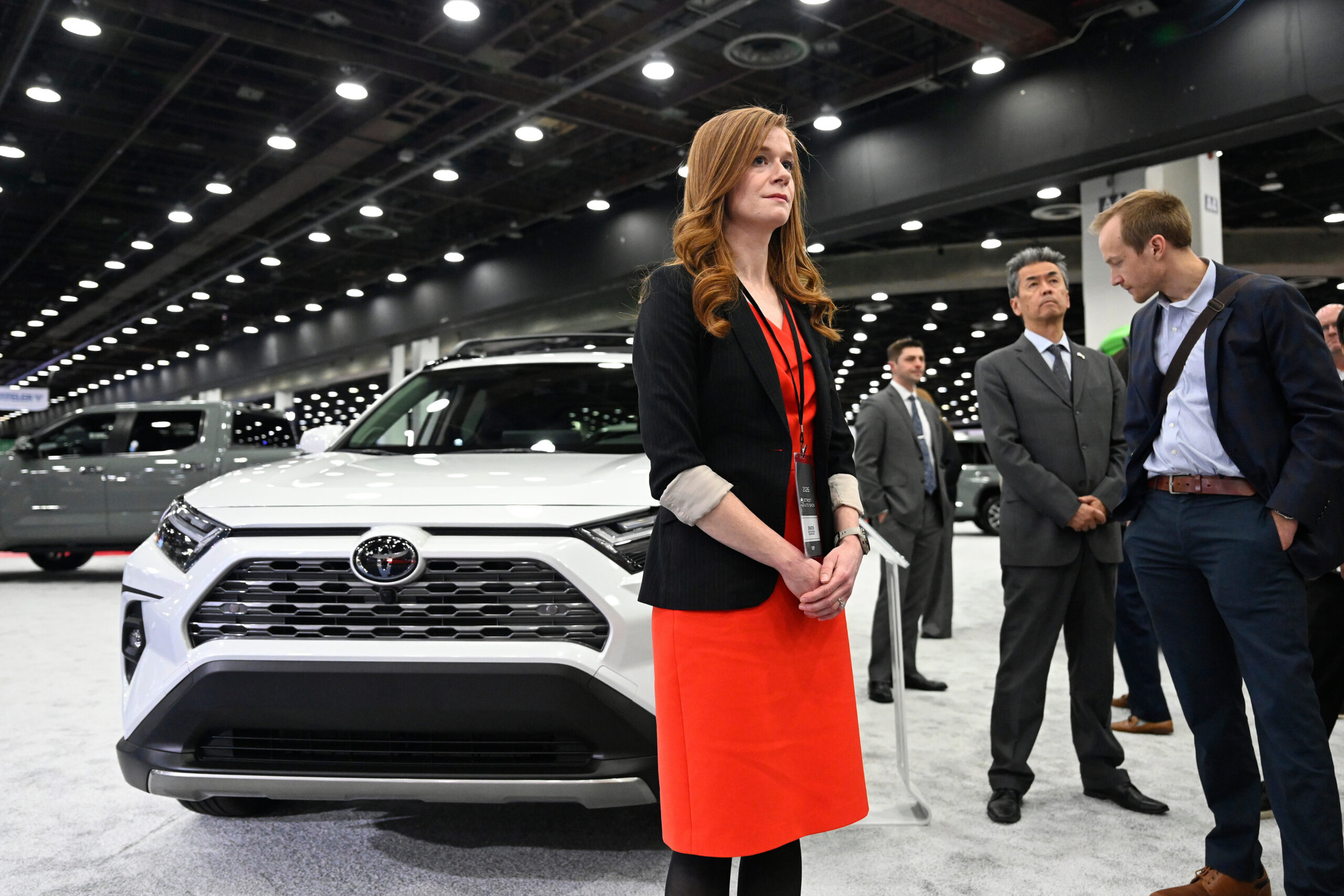
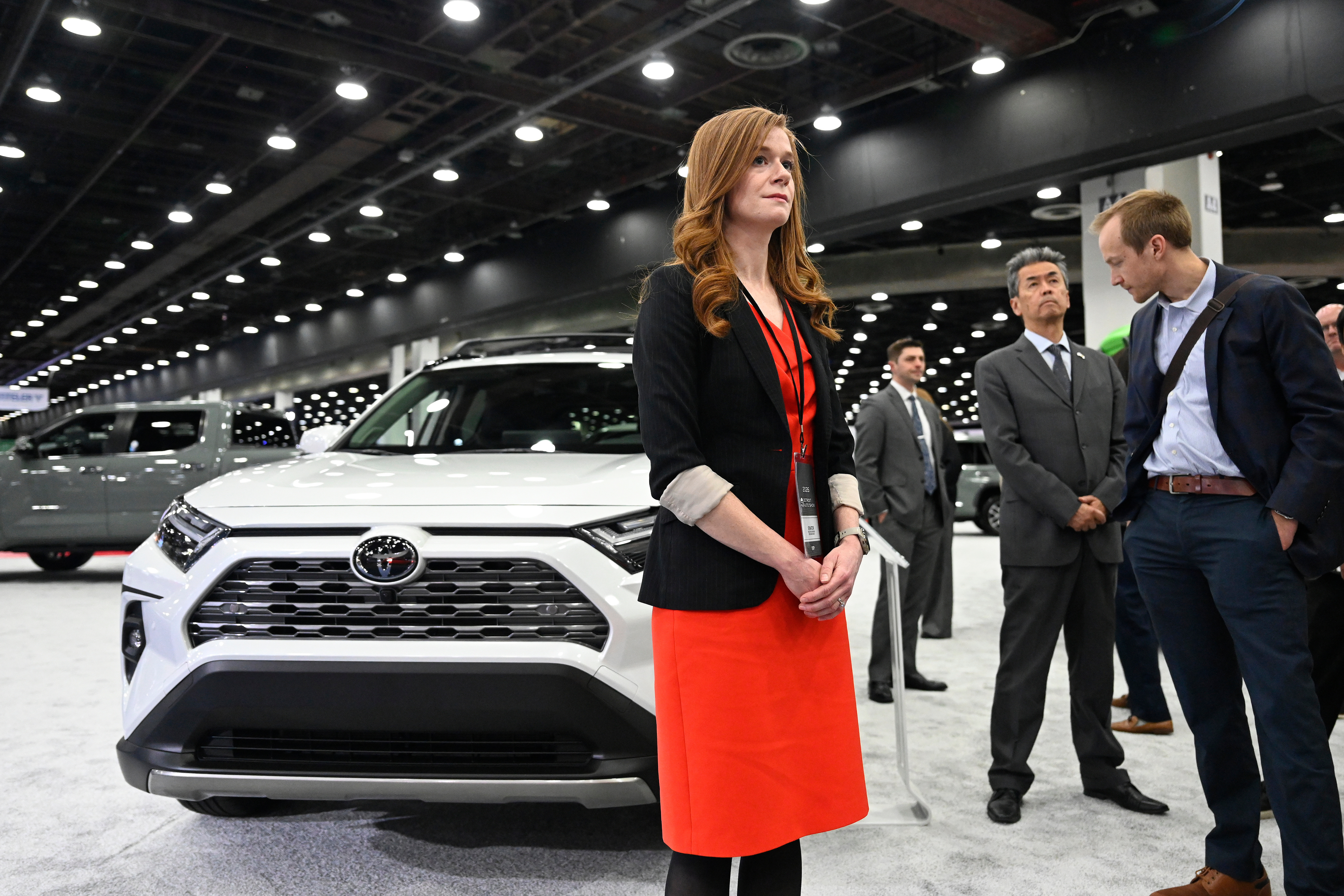
DETROIT — As a professional driver navigated a gleaming new Ford Bronco Sport up a steep ridge, Mallory McMorrow found herself pinned in the back seat clinging to the overhead roll bar.
The Detroit Auto Show course is designed to show off the Bronco’s capabilities — while putting an escapist scare into its thrill-seeking passengers. But it just reminded McMorrow of her day-to-day reality running for Michigan’s open Senate seat.
“It’s a teeter-totter, man,” McMorrow told Blue Light News about her race, after having navigated a very literal giant teeter-totter in the Bronco. “It could go any direction.”
McMorrow is locked in a tight three-way primary with Rep. Haley Stevens and physician Abdul El-Sayed that has emerged as a test for what the next generation of Democrats will look like — and whether they can win a key swing-state election that will help determine Senate control.
In recent days, the trio of candidates’ squabbles careened hour to hour from whether they should embrace Medicare for All, to how far Democrats should go in fighting ICE. In fact, the contest has emerged as a catch-all for every question and problem plaguing Democrats politically and tactically: Where should they stand on Israel and Gaza? Should they send their aging congressional leaders packing? What does electability look like in this political environment? Should Democrats tap into the attention economy or focus on traditional campaigning?
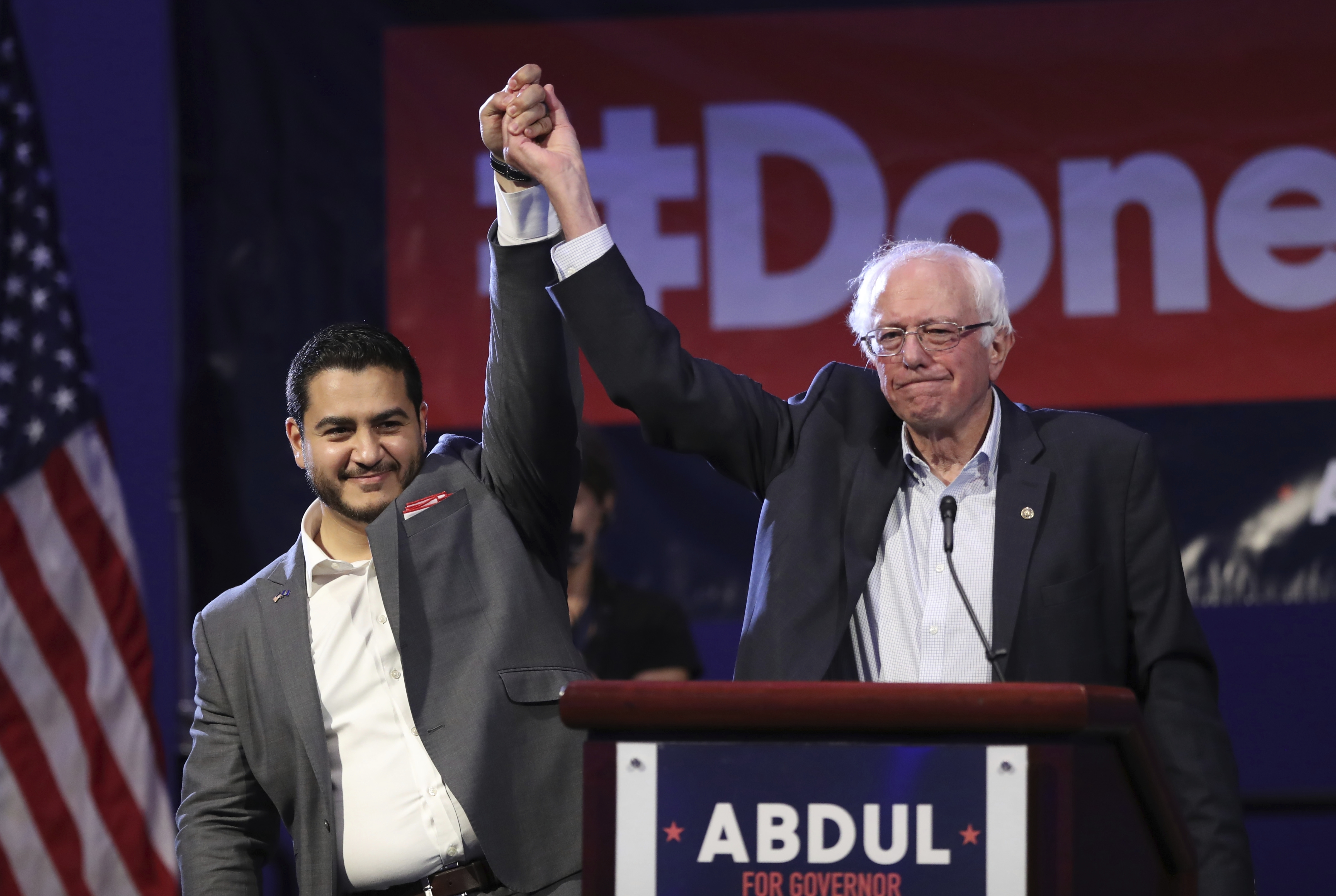
El-Sayed, on the left, has taken consistently maximalist positions fitting for a man who wrote a book titled “Medicare For All: A Citizen’s Guide” and has vocal support from Sen. Bernie Sanders. Stevens, a classic swing-state centrist favored by many establishment Democrats, has taken smaller-bore stances. Between them sits McMorrow, who’s aiming to appeal to voters in both of their lanes.
But this three-way battle to replace retiring Sen. Gary Peters (D-Mich.) isn’t just about what direction the Democratic Party takes in Washington — it’s whether they can get there in the first place.
Democrats think they see a route back to the Senate majority. But if they don’t hold on to their seat in Michigan, that faint path won’t materialize.
“It’s already a long shot, but it’s a doable thing — but not without Michigan,” said David Axelrod, the longtime senior adviser to former President Barack Obama.
Axelrod called it the “most fascinating and consequential primary” in the country.
Democratic leaders both in Michigan and D.C. are growing more worried by the day that the hard-fought contest, which won’t be decided until the August primary, will exacerbate ideological tensions and leave the nominee in a weakened position heading into a contest against former Rep. Mike Rogers (R-Mich.).
“We’re used to having long primaries,” Sen. Elissa Slotkin (D-Mich.) told Blue Light News. “No one loves them, but we’re used to having them. And I don’t think it’s insurmountable.”
For now, the race is wide open.
Most public polls have found a tight three-way race in the primary, with Stevens or McMorrow holding a slight lead depending on the survey; in those same polls, Stevens runs slightly ahead of Rogers in the general election, with McMorrow just a bit behind her and El-Sayed a bit further back.
Stevens has a fundraising edge. According to the latest Federal Election Commission reports, which posted on Saturday, she brought in $2.1 million in the past quarter and has $3 million cash on hand; McMorrow and El-Sayed both raised around $1.75 million and each has just under $2 million in the bank. Rogers raised just under $2 million and has just under $3.5 million cash on hand.
Part of the lack of separation in the polls is that voters haven’t engaged yet. The campaigns don’t expect cleavage until paid media starts happening in full (El-Sayed is the only candidate so far to roll out a statewide ad.)
“Only the most political have started to click in,” Slotkin said.
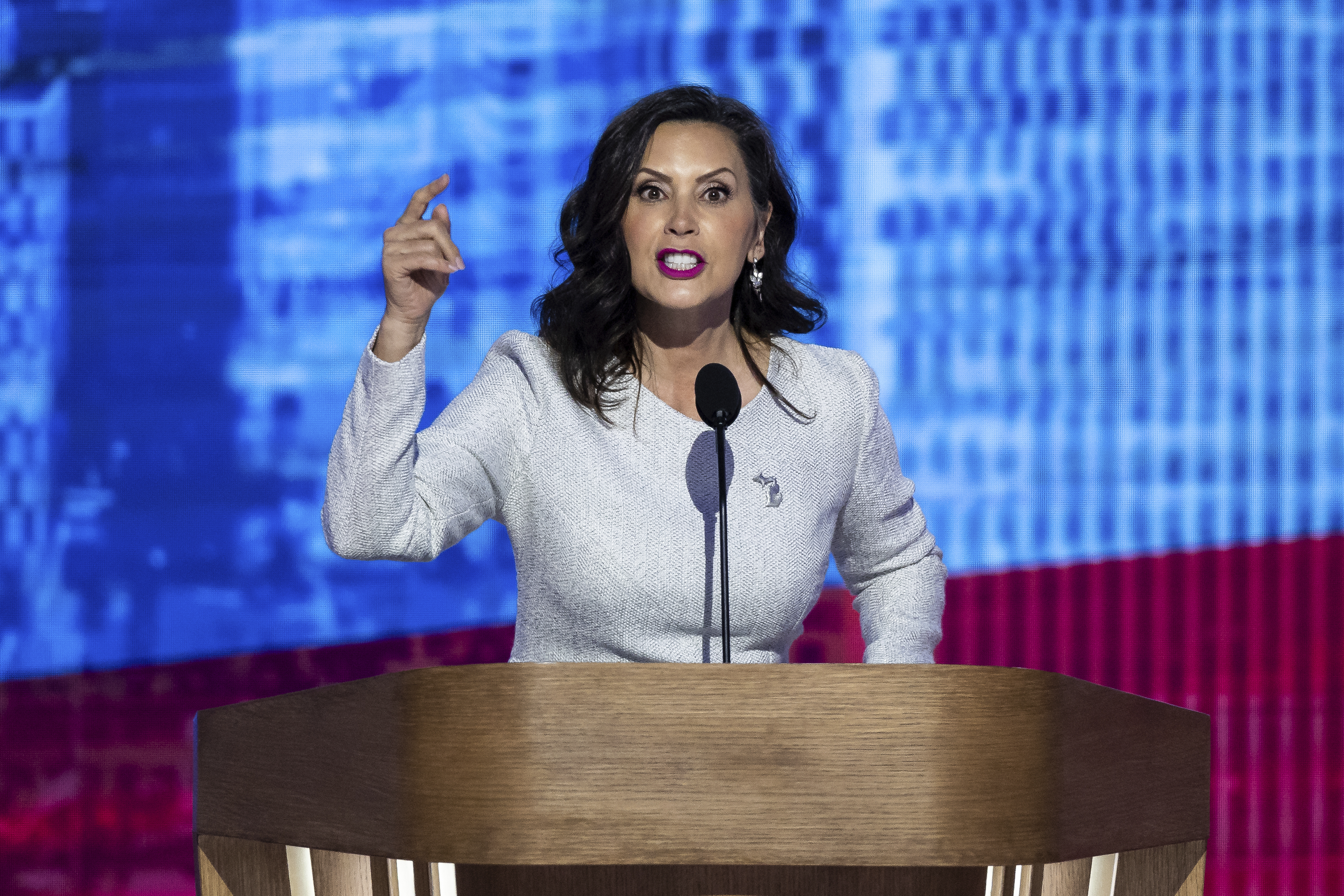
Michigan Democrats also worried about the impact the primary could have on the rest of the party as they fight to hold on to term-limited Gov. Gretchen Whitmer’s office and win back control of the Legislature.
Whitmer, with her 60 percent approval rating, is facing a pressure campaign from some in the party to endorse either Stevens or McMorrow early in the race to narrow the field, according to two senior Michigan Democratic officials granted anonymity to speak about private discussions. Otherwise, one of them worried, “we could see real losses.”
Whitmer and El-Sayed duked it out in a 2018 gubernatorial primary, and the officials say bad blood remains between them.
A Whitmer spokesperson declined to comment.
A clash of ideologies
The candidates have sharp ideological divides on major issues including health care, Israel and Gaza and accepting corporate PAC money.
After a second person was killed by a federal immigration agent in Minneapolis, the three candidates’ diverging approach to ICE and its funding supercharged the primary.
While McMorrow and Stevens glad-handed at the Detroit Auto Show and union halls around the MLK holiday, after immigration agents killed Renee Good and before they killed Alex Pretti, El-Sayed, who has championed the Abolish ICE movement since 2018, went to Minneapolis and filmed man-on-the-street interviews for social media that were reminiscent of New York Mayor Zohran Mamdani’s successful viral campaign videos.
He told Blue Light News he was there to “understand what it looks like when an arm of the government lays siege to a city in America.” (El-Sayed also jetted to California for a fundraiser earlier that week).
McMorrow has expressed supportfor reforms to ICE, such as requiring agents to be unmasked, and argues Republicans and Democrats should “deny DHS one penny more until complete overhaul and accountability of this agency” happens.
Stevens, meanwhile, is co-sponsoring a bill that would divert what she called ICE’s $75 billion “slush fund” to state and local law enforcement agencies; she has also called for DHS Secretary Kristi Noem’s impeachment.
The candidates are also at odds over health care, an issue over which they’ve sparred in recent days.
In an interview with Democratic influencer Brian Tyler Cohen last week, El-Sayed reignited the health care debate. He said, “if you like your insurance from your employer or from your union, that can still be there for you,” apparently flipping on his stance on Medicare for All. McMorrow and her allies seized on his remarks as El-Sayed seemingly embracing a position he had repeatedly attacked her on. El-Sayed hosted a December health care town hall with Sanders where he contrasted his Medicare for All support with McMorrow’s and Steven’s backing of a public option.
“It’s wild to call yourself the ‘next generation’ of Democratic leadership and be running AGAINST Medicare for All in 2026,” he posted on X a month ago, quote-tweeting McMorrow.
In an interview with Blue Light News after the dustup, El-Sayed declined to discuss specifics of his position on the record. In a statement, a spokesperson said that he supports Medicare for All as a baseline option for everyone, “and if folks want additional private coverage through a union or an employer then that can be there for them too.”
The conflict in Gaza has also led to sharp divisions in the race.
El-Sayed, who is the son of Egyptian immigrants, has been an outspoken critic of Israel, which he has long said was committing genocide in Gaza. That’s a major issue in a state with the highest percent of Arab-Americans in the country; more than 100,000 people voted “uncommitted” instead of backing then-President Joe Biden in the 2024 primary over his administration’s support of Israel — an effort El-Sayed helped lead.
He told Blue Light News that when he talks about U.S. tax dollars “being misappropriated to weaponize food against children and to subsidize a genocide, rather than to invest in real people in their communities and their kids and their schools and their health care, it is the single biggest applause line in every speech.”
McMorrow took a bit more time to come to that view. In October, when asked whether she thought the conflict was a genocide, she paused for several seconds, exhaled, and responded, “Based on the definition, yes.” Her campaign said her view was informed by a September United Nations Commission of Inquiry report.
Stevens has been more supportive of Israel, and has the support of AIPAC, the politically influential pro-Israel lobby. Some senior Michigan Democrats have expressed concern that an AIPAC independent expenditure campaign backing Haley could make the primary even more toxic ahead of the general election. Asked about their plans, an AIPAC spokesperson told Blue Light News they had no updates.
Asked by Blue Light News in November whether she was comfortable with AIPAC support, Stevens dodged, saying she’s delighted to “see the hostages get home,” and added she “wanted to see an enduring ceasefire where Hamas surrenders and so that we can get the people of Palestine and Israel in long standing peace, living peacefully, side by side with one another.”
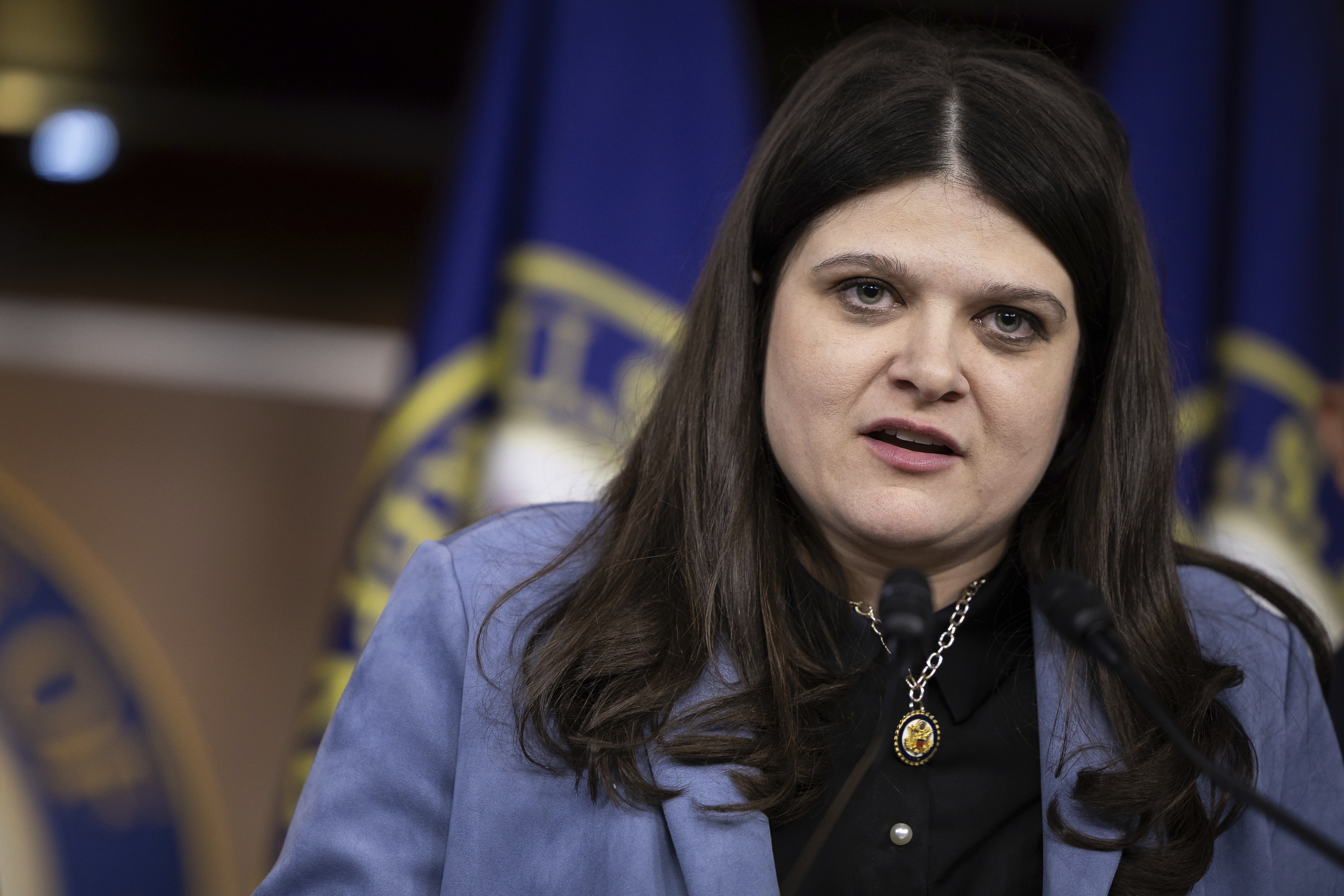
Stevens’ campaign also attacked both El-Sayed and McMorrow’s record on manufacturing, a sector that employs some 600,000 in Michigan. She told Blue Light News that McMorrow “has a history of criticizing Michigan’s key industries” and that El-Sayed “supports policies that would decimate Michigan’s manufacturing economy,” citing his support for the Green New Deal.
“I’m going to call out what isn’t working for Michigan’s manufacturing economy, whether it is Mike Rogers or members of my own party,” Stevens said in an interview in the conference room of the Teamsters Local 234 union hall in Plymouth.
Old school vs. new school
The race is also shaping up as a test of offline coalitional politics at a moment increasingly defined more by viral videos than baby-kissing and union hall campaign stops.
Stevens has leaned hardest into traditional brick-and-mortar campaigning, while El-Sayed has been much more focused online, with McMorrow’s approach once again falling between them.
McMorrow’s biggest splash of the campaign so far came with a viral video that attacked NFL RedZone for adding ads as “the latest example of corporate greed,” and tied it to spiking grocery costs. It earned nearly 2 million views.
El-Sayed has built a national profile and fundraising network in part with a health care-focused podcast on Crooked Media, the network run by the Pod Save America team made up largely of former Obama senior advisers. At least three members, Jon Favreau, Jon Lovett and Ben Rhodes, appeared as hosts on an invite to El-Sayed’s fundraiser earlier this month in California.
Stevens has taken a different tack, putting more focus on campaign stops and meat-and-potatoes fights for local industry, especially auto and other factory jobs.
In a year-out-from-election day memo, Stevens’ campaign argued that her “strength with Black Michiganders and union workers, her relentless focus on lowering costs and protecting Michigan manufacturing, and her record fighting for Michiganders — which has led to her winning tough primaries and general elections — will propel her to victory.”
Campaigning at a Teamsters Local 234 union hall in Plymouth, she spent a lot more time talking about a local labor contract dispute than national concerns.
“Look, manufacturing might not light up the internet, but it fuels a lot of jobs here,” she told Blue Light News afterward.
That dogged approach helped her flip and hold a swing seat, then win a tough incumbent-on-incumbent primary in 2022, and is one she thinks will pay dividends now.
“I’ve had a couple of tough primaries before, and I’m just out here trying to win it for Michiganders,” she said.
But it remains unclear how well it will translate in a statewide campaign.
“Haley seems to have more institutional support — whether or not it’s admitted as such — and that is a strength, but it also could be a weakness,” said a longtime Michigan Democratic operative who remains neutral in the race and was granted anonymity to assess the primary. “Her presence on the campaign trail I’m not sure is one that’s really like, Man, I got to be with her.”
Stevens has earned criticism over whether she can galvanize the online, grassroots activists, or electrify crowds on the trail. “She’s [an] uneven campaigner when it comes to the retail stuff,” said Adam Jentleson, a longtime Democratic campaign strategist whois pushing for the party to break more with left-wing interest groups and focus more on expanding the party’s coalition to win (he also voiced concern about El-Sayed as a general-election candidate).
Right now, both El-Sayed and Stevens have been training most of their fire on McMorrow rather than each other, seeing her as the bigger threat to their potential voting coalitions.
Insiders and outsiders
Stevens’ electoral track record is part of why many establishment-leaning Democrats in D.C. prefer her in the race.
Democratic Senatorial Campaign Committee Chair Kirsten Gillibrand (D-N.Y.) invited her to attend a fundraising retreat in Napa Valley that featured a crypto roundtable, but Stevens told Blue Light News she did not attend due to the government shutdown.
In an interview with POLITICO, Senate Minority Leader Chuck Schumer was bullish on defending Michigan but declined to appraise any individual candidacies; a DSCC spokesperson declined to comment on whether the committee would officially endorse in the race.
McMorrow has taken a very different approach to D.C.’s Democratic leadership.
Shetold POLITICO last March, before she was even officially a candidate, that she wouldn’t vote for Schumer as party leader should she win her Senate seat. She also previously penned a scathing letter to Biden following his disastrous debate with Donald Trump, urging him to drop out.
“We’re drawing a contrast that is really about defining my lane,” McMorrow said in an interview at a campaign stop at a park in Grand Rapids late last year, suggesting Stevens, without naming her, was running “an uninspiring campaign that’s right out of the D.C. playbook” and that El-Sayed, also without naming him, was campaigning on the idea “that there’s just one weird trick to fix democracy.”
Stevens has said it’s too early to determine whether to would back Schumer; she has called him “a great leader.”
El-Sayed also hasn’t said whether he’d back Schumer for leader. But he’s made it clear he is running headlong against the Democratic establishment.
“The movement we’re building is about taking a bet on the divide in our politics not really being about left versus right, but being about the folks who are locked out and the folks who are locking them out,” El-Sayed told Blue Light News.
About the only thing the candidates can all agree on is the stakes of the contest.
“The future of this party is going to be based on what happens in this race,” McMorrow said.
Elena Scheider contributed to this report.


Prominent Texas Republicans are denouncing Bo French, a Republican nominee to join the state’s railroad commission, after he made a xenophobic post describing a group of Asian American students attending a University of Texas football game as a “problem.”
French posted a photo on X of UT students celebrating in the crowd and wrote: “I heard UT graduation this year looked like this. I didn’t believe it. The problem is now obviously far worse than anyone imagined.”
Sen. John Cornyn immediately condemned the post as racist and called on other Republican officials to speak out.
“This is the Republican nominee for statewide office,” Cornyn wrote on X. “Are other Republican elected officials going to condemn the intolerance and racism, or look the other way while it becomes normalized. This is how great political parties self-destruct. Sad.”
Texas Gov. Greg Abbott also rejected French’s message in a statement shared with Blue Light News, saying the picture instead showed Texans united behind their college football team, which had just defeated top-ranked Ohio State.
“That is not my message,” Abbott said. “A selective picture of Longhorn fans celebrating our biggest home victory-ever-actually shows a way that Texans unite. We all support our college football teams.”
“The way we win the state is the same way we win football games,” Abbott added. “We unite under the brand of Texas.”
Abbott also defended Texas’ hard-line immigration policies, saying unity “doesn’t mean that Texas cannot also lead in having the toughest immigration laws of any state in America and freezing H1B visas at our universities.”
Several Republican members of the Texas House also joined in the backlash. State Rep. Lacey Hull urged French to remove the post, writing: “This post breaks my heart. I see college kids cheering on their football team. I see Texans.”
State Rep. Jared Patterson called the post “racist” and said it demeaned students because of their race or ethnicity.
“There is absolutely nothing Christian or conservative about looking at a crowd of young Texans at a college football game, seeing the color of their skin, and declaring that they are a ‘problem,’” Patterson wrote on X. “These are 20-year-old kids cheering for their university — not political props and not targets for racial attacks.”
Texas House Speaker Dustin Burrows similarly wrote that opposing immigration policy does not justify “demeaning people because of their race or ethnicity,” adding that French’s post has “crossed the line” and should be deleted. State Rep. Jeff Leach offered a more succinct request: “Delete this, Bo.”
But French also drew support from some Republicans who attacked Cornyn for condemning him. Former Texas GOP Chair Matt Rinaldi accused Cornyn and other Republicans of mortgaging “our children’s future for government handouts and cheap labor,” while state Rep. Andy Hopper called Cornyn a “smug globalist” who had brought the policies at issue to Texas.
French has repeatedly engaged in inflammatory rhetoric. Earlier this year, he suggested Republicans should fear Islam and advocated for deporting 100 million people.
Representatives for French and Lt. Gov. Dan Patrick did not immediately respond to requests for comment.
Former President Barack Obama is urging Democrats — including 2028 presidential candidates and congressional leaders — to more aggressively focus on a comprehensive AI agenda, warning in a closed-door fundraiser that the technology is at an inflection point.
“This is something that is moving very fast in private hands, and if we don’t get on top of it, I think can be dangerous,” Obama said at the fundraiser Thursday, according to a partial transcript of his remarks provided by his office. “If we do get on top of it, I do think it’s beneficial.”
Speaking alongside House Minority Leader Hakeem Jeffries at the New-York Historical Society in Manhattan, Obama said he is neither a “doomer” nor an “accelerationist.” His remarks come amid increasing alarm over the technology’s advance, with executives at two of the country’s leading AI labs joining Elon Musk in calling for slowing its development, following months and years of cries from within the industry for government to act.
Obama said AI development would be “one of my central agendas” if he were running for president, throwing down a gauntlet as the shadow 2028 Democratic primary debate responded to the AI leaders’ calls.
“I would have a very clear plan, and I would talk about this, and I would say, here’s our plan for safety, here’s our plan for making sure our kids are not corrupted by this,” Obama said, according to excerpts of his remarks shared with Blue Light News by his office and first reportedby The New York Times.
Among the top concerns, Obama said: “I would be thinking about the economic impacts in very concrete ways and understanding what does it mean if there’s going to be job displacement. Where is that going to hit? How are we going to respond? Are there going to be limits to the amount of displacement that can take place? What is that going to mean for our social safety net? If it turns out that you’ve got a lot more people who can’t find full-time work because they’ve been rendered redundant, how are we going to respond?”
He also called for Congress to take action, telling Jeffries that Democrats should “put together a framework for a very public conversation” centered on the biggest issues.
Obama’s remarks mark a larger shift for both himself and the Democratic Party writ large: He governed as a tech-friendly Democrat, who broke POTUS tech barriers by having a laptop and iPad while in office and whose 2011 town hall at Facebook headquarters was widely seen as typifying the administration’s friendliness with Silicon Valley.
The Obama era was also known for Washington’s failure to confront the growing monopolization of power in the tech industry, most famously in the Federal Trade Commission’s 2013 decision not to file an antitrust lawsuit against Google. (The first Trump Justice Department later filed such a suit seven years later.)
Already on Sunday, at least two potential 2028 Democratic presidential candidates addressed the issue of slowing the pace of cutting-edge AI development, or otherwise keeping their products from launching pandemics or cyberattacks.
Speaking on NBC’s “Meet the Press,” former Transportation Secretary Pete Buttigieg said Democrats need to “address it head on.”
“There needs to be safeguards. There need to be rules. There need to be limits. There needs to be a kill switch on rogue AI,” Buttigieg said, criticizing congressional Republicans and the White House for not moving quicker to rein in AI development.
Pennsylvania Gov. Josh Shapiro, who has gone from courting AI investment to pumping the brakes on data center development, posted to X Sunday that it’s “long past time for our federal government to step up, take this seriously, and put up some guardrails — both here at home and on the global stage.”
The calls for “some guardrails” are still much milder than the proposals coming from the far left of the Democratic caucus, including the proposal by Sen. Bernie Sanders (I-Vt.) and Rep. Greg Casar (D-Texas) to pause the development of advanced AI models and permanently ban “artificial superintelligence.” And Obama’s remarks underscore the leadership vacuum in a Democratic Party that remains in the wilderness after brutal 2024 losses and continues to struggle to unify around a policy agenda.
In a portion of his remarks, Obama acknowledged the lack of high-level leadership on the AI issue, saying that “part of the job for us is to give people a reason to believe again in the idea of the democratic project, the American project, the economy that works for everyone, opportunity for every kid, to reassure people that if we work together, we can deliver those things. That’s hard to do without somebody in the White House to lead the charge, but I do think that people are ready for that message.”
President Donald Trump, meanwhile, has dismissed any worries about AI posing an existential threat, telling reporters last week that he’s mainly worried about beating China to dominate the technology.
Obama compared AI to other “dangerous technologies like nuclear power,” but added that it did not have the same “natural” and “physical constraints” on it that is not “under state control.”
In Congress, House and Senate lawmakers have sought to advance legislation to slow down or impose limits on AI development, so far without success. One key Senate proposal, led by Sen. Amy Klobuchar (D-Minn.) and Senate Majority Leader John Thune, faces an uncertain future because of differences over how to impose a legal duty on Silicon Valley companies that would hold them liable for harms their models cause. Another contentious issue is whether the legislation should preempt state from imposing their own AI laws.
House Speaker Mike Johnson said Sunday morning he would support talks with tech leaders on AI but insisted that developers — not Congress — are primarily responsible for ensuring their products are safe.
As lawmakers campaign in their districts ahead of the midterm elections, they are fighting to own the messaging as voters sour on data centers and the impact of AI systems on jobs and education, among other key areas.
DALLAS — Republicans are increasingly worried that North Carolina’s Senate race is slipping out of contention.
For months, they had argued that a post-Labor Day infusion of cash could jolt new energy into the largely stagnant but critical Senate race. But as Republican nominee Michael Whatley struggles to meaningfully close the gap against Democrat Roy Cooper in the polls, some in the party fear they’re running out of time.
Republicans’ concerns were apparent in side conversations, closed-door meetings and even on-stage speeches at their splashy midterm convention in Dallas.
Sen. Rick Scott of Florida, a former National Republican Senatorial Committee chair, told Blue Light News that North Carolina was “probably one of the hardest” states on the map.
“You’re running against an existing governor,” Scott said of Cooper. “So that makes it harder in an open seat.”
One person, granted anonymity to discuss a private lunch they attended with Senate Majority Leader John Thune and the Senate Leadership Fund on the second day of the convention, similarly described the North Carolina race as “tough.” The lunch was focused on the party’s battleground Senate map, and Thune zeroed in on Alaska, Maine and Michigan as top targets.
“North Carolina and Georgia are seen by most as off the map at this point, and with Michigan and New Hampshire becoming real flip opportunities as we get closer to November, it’s becoming even more challenging to justify spending in North Carolina and Georgia,” said one GOP pollster who was in Dallas for the convention and, like others in this article, was granted anonymity to speak candidly.
Public polling has consistently shown Cooper ahead, including a survey released Thursday that found the Democrat leading Whatley by 11 points among likely voters.
Even President Donald Trump appeared to acknowledge the challenge: “Now in North Carolina, you have a little more difficult case, because people don’t quite get it, but they’re going to find out,” he said during his speech on the first night of the convention, while reiterating his support for Whatley, his former handpicked Republican National Committee chair.
The White House later announced that he will travel to Gastonia, North Carolina, for a campaign rally with Whatley next week. “The president’s first visit in the coming week is going to be helpful,” said a person close to the Whatley campaign. “Roy Cooper has maxed out his support and can’t grow anymore. But voters in NC, especially on the right, tune in late and break late. The Trump visit will be a good motivator for our voters.”
North Carolina’s Senate contest has been one of the more subdued races of the cycle, especially for a perennial battleground that could play a pivotal role in determining control of the upper chamber. That could change as more money pours in during the final stretch — and if Whatley can pick up more steam.
“Some in D.C. — [Republicans] and [Democrats] — have viewed North Carolina as typically a slam dunk for Republicans,” Doug Heye, a longtime GOP strategist who is from North Carolina. “But that just isn’t true, as tight presidential and senatorial margins have shown us time and again.”
SLF, the top Senate super PAC, has pledged an initial $71 million in North Carolina through Election Day, including an initial $17 million summer advertising campaign supporting Whatley. No Going Back PAC, which is affiliated with the president’s MAGA Inc. super PAC, dropped roughly $5 million into North Carolina earlier this week. But in a state that has some of the country’s most expensive media markets, both parties may ultimately need to spend substantially more.
Whatley was at the Dallas convention, where he attended an event hosted jointly by SLF and the NRSC discussing the battleground map. He also had a speaking slot.
Whatley told Blue Light News that he was confident his campaign was “going to have the resources that we need to get our message out and talk to the voters about the issues that they care about.” Asked about the prospect of an influx of support from MAGA Inc., Whatley said he would “wait and see how that entire universe is going to come.”
But some Republicans are questioning whether additional money is enough to change the race’s trajectory at this point.
“There is still time, but even with at least $100 million, [Whatley] would need a campaign team capable of turning that money into actual points,” said one North Carolina-based Republican operative.
And Whatley could run up against the overall difficult environment for the GOP, as the party needs to shore up Republicans in other expensive states — like Texas — that historically have not needed attention.
“We can’t allocate a limited amount of resources and energy to 10 Senate races and expect to do well. We should be over-indexing where we think we have an edge,” the GOP pollster told Blue Light News in Dallas.
The NRSC isn’t worried about Whatley’s current standing.
“Summer polling has flattered North Carolina Senate Democratic candidates before only to be proven wrong in November,” Bernadette Breslin, NRSC national press secretary, said in a statement. In 2020, polling at this point in the cycle showed GOP Sen. Thom Tillis trailing Cal Cunningham, the Democrat, before Tillis ultimately won by roughly two percentage points. Cunningham was also caught in a late-cycle scandal.
Democrats haven’t won a Senate race or carried North Carolina at the presidential level since 2008, though they’ve come close a few times. But it’s undeniable that Republicans’ struggle to address high costs of living — voters’ top concern heading into November — and Trump’s sagging approval ratings are putting Democrats in a strong position, both in North Carolina and other key battleground states.
“When you look at Republicans who won close races in the past, the setting and political environment aren’t the same,” said a national GOP operative who was also in Dallas for the convention.
“Sen. Tillis was elected in 2014, a wave year for Republicans,” the operative said. “Tillis won reelection in 2020 with Trump at the top of the ticket, and his opponent had a huge scandal. 2022 was an open seat [and] Ted Budd was a congressman. Dems gave up on the seat and didn’t put the money needed into the race to win.”
For their part, North Carolina Democrats aren’t relying on Cooper’s current wide polling advantage to hold. The Cooper campaign noted that the former governor’s lead is already narrowing.
The political dynamics of the state also make Democrats uneasy: North Carolina has backed the Republican presidential nominee in each of the last four elections, and Whatley could still benefit from an enormous influx of outside spending.
“A Democrat has not won statewide federal office here in nearly two decades — and Whatley’s elite D.C. connections mean Republicans are going to spend whatever it takes to keep this seat,” Jeff Allen, Cooper’s North Carolina campaign manager, said in a statement. “North Carolina is a 50-50 state and this will be a margin-of-error race, which is why we’re building a campaign to earn every vote and make sure North Carolinians know that Roy Cooper will fight for them, while Michael Whatley will continue to enrich himself at their expense.”
Still, for Republicans, the challenge goes beyond money. Motivating lower-propensity Republican voters — who are loyal to Trump but who may otherwise ignore a midterm election — is central to the party’s strategy. It was an overarching goal of the midterm convention as GOP lawmakers and Trump officials repeatedly warned of a democratic socialist takeover and focused on bread-and-butter issues for their base.
Paul Shumaker, a longtime North Carolina GOP operative and top consultant for Tillis, said Whatley is running up against two key hurdles that threaten to dog Republicans this cycle: GOP voters’ low enthusiasm and Trump’s sinking standing with unaffiliated voters.
“The President is underwater with unaffiliated voters, and Michael Whatley has to win a majority of those unaffiliated who turn out this election year,” said Shumaker, who is unaffiliated in the race. “Given North Carolina’s registration number and the fact that there is little to no crossover voting between the two major parties, fixing both problems is the only path to victory.”
Meredith Lee Hill contributed to this report.
- Texas Republicans denounce GOP statewide candidate over xenophobic post
- Trade wars are going electric. The planet could pay the price.
- Chip Roy is leaving Congress — but not before warning his colleagues to take the threat of AI seriously
- Obama calls for Dems to focus on AI
- GOP anxiety grows over North Carolina Senate race
- Convention puts GOP’s reality on display: Midterm policy agenda is skimpy
- At 9/11 ceremony, Giuliani and Mamdani … shake hands?

- Court deals first blow to Trump’s coal rescue campaign
- House sets vote on Russia sanctions bill
- House eyes Tuesday vote on bill to curb data center costs
-

 Politics2 years ago
Former ‘Squad’ members launching ‘Bowman and Bush’ YouTube show
-
Uncategorized2 years ago
Bob Good to step down as Freedom Caucus chair this week
-

 Politics2 years ago
Former Kentucky AG Daniel Cameron launches Senate bid
-

 The Dictatorship2 years ago
Luigi Mangione acknowledges public support in first official statement since arrest
-

 The Josh Fourrier Show2 years ago
DOOMSDAY: Trump won, now what?
-

 The Dictatorship2 years ago
Pete Hegseth’s tenure at the Pentagon goes from bad to worse
-

 Politics2 years ago
Blue Light News’s Editorial Director Ryan Hutchins speaks at Blue Light News’s 2025 Governors Summit
-

 The Dictatorship1 year ago
Mike Johnson sums up the GOP’s arrogant position on military occupation with two words