
The Dictatorship
SHUTDOWN PUNISHMENT

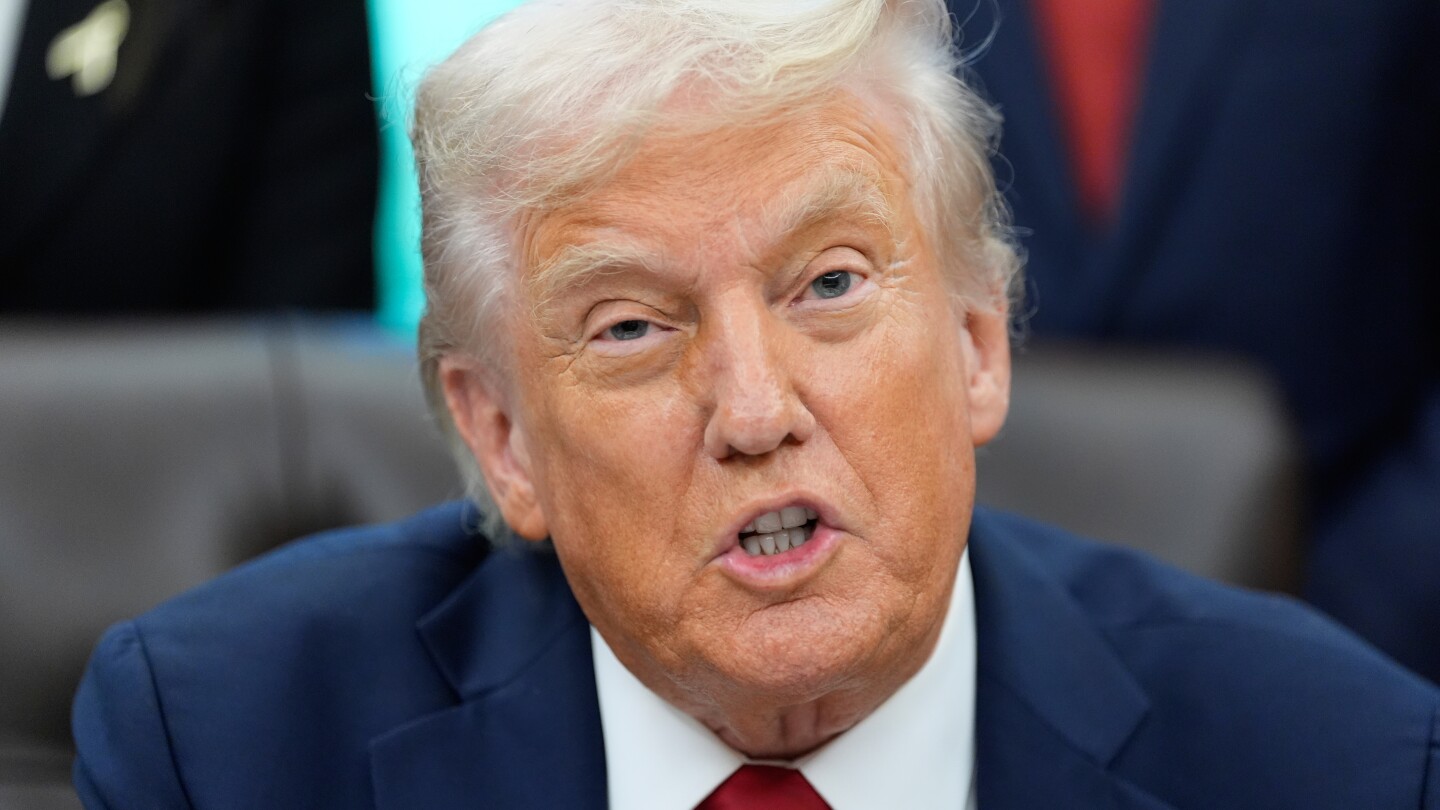
WASHINGTON (AP) — President Donald Trump has seized on the government shutdown as an opportunity to reshape the federal workforce and punish detractors, saying he planned to meet with budget director Russ Vought to talk through “temporary or permanent” spending cuts that could set up a lose-lose dynamic for Democratic lawmakers.
Trump announced the meeting on social media Thursday morning, saying he and Vought would determine “which of the many Democrat Agencies” would be cut — continuing their efforts to slash federal spending by threatening mass firings of workers and suggesting “irreversible” cuts to Democratic priorities. The White House declined to comment on the timing or details of the meeting, despite the importance placed on it by the president.
“I can’t believe the Radical Left Democrats gave me this unprecedented opportunity,” Trump wrote on his social media account. “They are not stupid people, so maybe this is their way of wanting to, quietly and quickly, MAKE AMERICA GREAT AGAIN!”
Trump has been very direct about his intentions in saying that he believes the Democrats would get the blame if he chooses to fire people or cut spending as part of the shutdown.
“There could be firings and that’s their fault,” the president said in an interview with One America News that was released Thursday. “I mean, we could cut projects that they wanted, favorite projects, and they’d be permanently cut.”
The Truth Social post was notable in its explicit embrace of Project 2025a controversial policy blueprint drafted by the Heritage Foundation that Trump distanced himself from during his reelection campaign. The effort aimed to reshape the federal government around right-wing policies, and Democrats repeatedly pointed to its goals to warn of the consequences of a second Trump administration.
Vought on Wednesday offered an opening salvo of the pressure he hoped to put on Democrats. He announced he was withholding $18 billion for the Hudson River rail tunnel and Second Avenue subway line in New York City that have been championed by both Democratic leaders, Senate Democratic leader Chuck Schumer and House Democratic leader Hakeem Jeffriesin their home state. Vought is also canceling $8 billion in green energy projects in states with Democratic senators.
“Trump’s so-called ‘maximum pain’ plan isn’t hurting Democrats — it’s hurting American families,” Schumer said in a statement Thursday. “He’s snatching paychecks, threatening jobs, and deliberately inflicting suffering on working people just to score petty political points.”
Meanwhile, the White House is preparing for mass firings of federal workers, rather than simply furloughing them, as is the usual practice during a shutdown. White House press secretary Karoline Leavitt said earlier this week that layoffs were “imminent.”
“If they don’t want further harm on their constituents back home, then they need to reopen the government,” Leavitt said Thursday of Democrats.
A starring role for Russ Vought
The bespectacled and bearded Vought has emerged as a central figure in the shutdown — promising layoffs of government workers that would be a show of strength by the Trump administration as well as a possible liability given the weakening job market and existing voter unhappiness over the economy.
The strategic goal is to increase the political pressure on Democratic lawmakers as agencies tasked with environmental protection, racial equity and addressing poverty, among other things, could be gutted over the course of the shutdown.
But Democratic lawmakers also see Vought as the architect of a strategy to refuse to spend congressionally approved funds, using a tool known as a “pocket rescission” in which the administration submits plans to return unspent money to Congress just before the end of the fiscal year, causing that money to lapse.
All of this means that Democratic spending priorities might be in jeopardy regardless of whether they want to keep the government open or partially closed.
Ahead of the end of the fiscal year in September, Vought used the pocket rescission to block the spending of $4.9 billion in foreign aid.
White House officials refused to speculate on the future use of pocket rescissions after rolling them out in late August. But one of Vought’s former colleagues, insisting on anonymity to discuss the budget director’s plans, said that future pocket rescissions could be 20 times higher.
Shutdown continues with no endgame in sight
Thursday is Day 2 of the shutdown, and already the dial is turned high. The aggressive approach coming from the Trump administration is what certain lawmakers and budget observers feared if Congress, which has the responsibility to pass legislation to fund government, failed to do its work and relinquished control to the White House.
Vought, in a private conference call with House GOP lawmakers Wednesday afternoon, told them of layoffs starting in the next day or two. It’s an extension of the Department of Government Efficiency work under Elon Musk that slashed through the federal government at the start of the year.
“These are all things that the Trump administration has been doing since January 20th,” Jeffries said. “The cruelty is the point.”
House Speaker Mike Johnson underscored Thursday that the shutdown gives Trump and Vought vast power over the federal government. He blamed Democrats and said “they have effectively turned off the legislative branch” and “handed it over to the president.”
“When Congress turns off the funding, and the funding runs out, it is up to the commander-in-chief, the president of the United States, to determine how those resources will be spent,” the Republican speaker said.
Still, Johnson said that Trump and Vought take “no pleasure in this.”
Trump and the congressional leaders are not expected to meet again soon. Congress had no action scheduled Thursday in observance of the Jewish holy day, with senators due back Friday. The House is set to resume session next week.
The Democrats are holding fast to their demands to preserve health care funding and refusing to back a bill that fails to do so, warning of price spikes for millions of Americans nationwide.
This shutdown could harm the economy
With no easy endgame at hand, the standoff risks dragging deeper into October, when federal workers who remain on the job will begin missing paychecks. The nonpartisan Congressional Budget Office has estimated roughly 750,000 federal workers could be furloughed on any given day during the shutdown, a loss of $400 million daily in wages.
The economic effects could spill over into the broader economy. Past shutdowns saw reduced demand for goods and services that pushed down the GDP, the CBO said, but that reversed once people returned to work.
Previous shutdowns have done minimal economic damage, in part because their consequences were either contained or reversed once the government fully reopened. But the impact would be different if there were permanent layoffs at a time when the labor market was already starting to struggle.
How Trump and Vought can reshape the federal government
With Congress as a standstill, the Trump administration has taken advantage of new levers to determine how to shape the federal government.
The Trump administration can tap into funds to pay workers at the Defense Department and Homeland Security from what’s commonly called the “One Big Beautiful Bill” that was signed into law this summer, according to the CBO.
That would ensure Trump’s immigration enforcement and mass deportation agenda is uninterrupted. But employees who remain on the job at many other agencies will have to wait for the government to reopen before they get a paycheck.
___
Associated Press writers Chris Megerian, Stephen Groves, Joey Cappelletti, Matt Brown, Kevin Freking and Mary Clare Jalonick contributed to this report.


The Dictatorship
Alaska Supreme Court says man with same name as Sen. Dan Sullivan can be on primary ballot
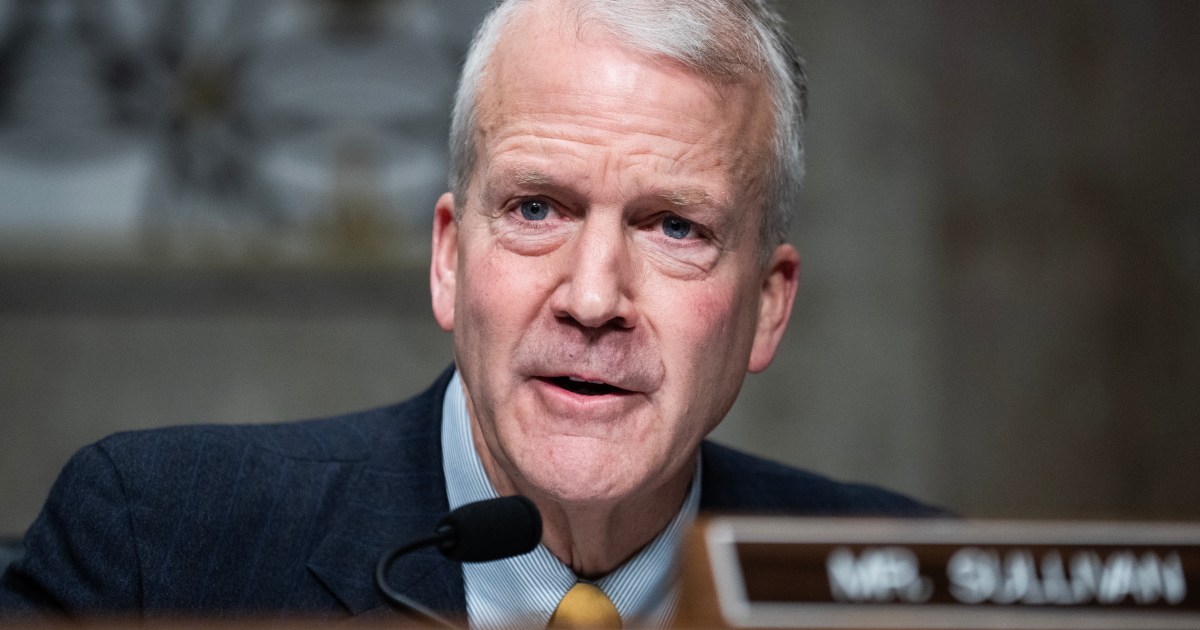
JUNEAU, Alaska (AP) — The Alaska Supreme Court ruled Monday that a man with the same nameand party affiliation as Alaska Republican U.S. Sen. Dan Sullivan is qualified to run for the seat and ordered elections officials to place him on the August primary ballot.
The ruling came hours after the court heard arguments and just days after state court Judge Thomas Matthews found the Division of Elections had “abused its discretion”in booting the challenger Sullivan from the ballot. The Supreme Court, in a brief ruling, affirmed Matthews’ decision to include the challenger on the ballot but sent back to the division the issue of how he should be listed as a candidate “within the confines of existing Alaska ballot design law.”
The court said a full opinion explaining its decision would be released later.
Jeffrey Robinson, an attorney for the challenger Sullivan, expressed gratitude for the ruling and said he expected the division “will act in full compliance” with ballot design law in preparing the ballots. Sam Curtis, a spokesperson for the state Department of Law, said the state appreciated the quick ruling “and will work to implement the order.”
Nate Adams, a spokesperson for Sen. Sullivan’s campaign, said while disappointed by the ruling, the campaign is encouraged that Beecher “will be able to use her expertise to differentiate between the Petersburg fraud and the incumbent — Senator Dan Sullivan — to the benefit of Alaska voters.”
Division of Elections Director Carol Beecher issued a decision June 15 finding the challenger’s candidacy was not filed in good faith and instead was done with an intent to confuse voters. But Matthews said Beecher’s decision was not based on the requirements set out by the U.S. Constitution to serve in the Senate — which address age, citizenship and residency — or on state laws or regulations.
Alaska’s US Senate race could help determine control of chamber
The dust-up over the two Dan Sullivans began with the challenger filing his candidacy about a month ago and has roiled one of the most closely watched Senate races in the country. Alaska’s race is one of about a half dozen Senate contests that are considered competitive and could determine control of the chamber for President Donald Trump’s final two years in office.
The candidate filing prompted accusations by the senator and his alliesincluding the National Republican Senatorial Committee, that the challenger is a sham candidate intent on sowing chaos. Republican Lt. Gov. Nancy Dahlstrom, who oversees elections, responded by announcing an investigation into the challenger’s candidacy.
Two complaints raising questions about his party affiliation and motives were filed by the Alaska Republican Party chair.
The senator also accused the challenger Sullivan of working with Democrats and the campaign of Democratic former U.S. Rep. Mary Peltola to cause confusion. Peltola’s campaign and state Democrats have denied the allegation, as has the challenger, who said the decision to run was “my choice.”
Peltola is seen as the senator’s main rival in the race, which features more than a dozen candidates.
The top four vote-getters in the primary, regardless of party affiliation, advance to a ranked choice general election in November.
The challenger Sullivan, 69, a retired teacher from the small fishing community of Petersburg, told The Associated Press on Monday he had grown frustrated with the incumbent and thought the timing for a run was right. “I just decided it was something I needed to do,” he said. “I will find out if it was the right thing or not, but I’m going to give it a shot.”
He said he aims to pull votes from the senator, as any challenger would. “But no, I’m not trying to trick people,” he told the AP.
Arguments before the state Supreme Court
Attorneys for the challenger Sullivanin filings before the state Supreme Court, said the elections division disqualified their client “because of what it thought were his reasons for running.” They called the good-faith standard applied by Beecher “legally unsupportable.”
Matthews agreed in his decision Friday to allow Sullivan on the ballot, saying, the elections division determination “was based upon a new, previously unstated, ‘good-faith’ criteria.”
Beecher, in disqualifying the challenger Sullivan, said he had registered to vote as Daniel J. Sullivan Jr. and in conjunction with his candidacy changed his party affiliation to Republican, an affiliation he did not previously had. She cited similarities between his campaign website and the senator’s, and his work with a consultant whose clients have included some Democrats. She did not mention finding any evidence of coordination.
Attorneys general from 14 Republican-led states submitted a brief supporting the division and asking the state Supreme Court to keep the challenger Sullivan off the ballot.
The division initially certified both Sullivans as candidates, identifying the challenger as Dan J. Sullivan and the incumbent as Dan S. Sullivan.
Debate over ballot design
Attorneys representing the state, in their filings, said using a middle initial on the ballot would not be enough to help voters distinguish between the two Sullivans. They asked the court to uphold Beecher’s finding.
But if the court ordered the challenger Sullivan on the ballot, they proposed he be listed as Daniel James Sullivan Jr. with a nonpartisan party affiliation — arguing the division believed it could deny him being labeled a Republican since he had no prior affiliation with that party before running. The attorneys, led by outside counsel Christopher Murray, proposed in their brief that the senator be listed as Dan Sullivan, registered Republican and incumbent.
Attorneys for the challenger said any proposal to list their client as “nonpartisan” would be unlawful because Alaska law allows him to be listed according to his party preference. It proposed he be listed on the ballot as Dan J. Sullivan, a Republican.
They said the senator could ensure his supporters are aware of his middle initial and that the state’s candidate information pamphlet, which is sent to voters, also could help address any confusion.
At least one outside group supporting the senator has been running ads and sending political mailers referring to him as Sen. Dan S. Sullivan.

A week after a trio of progressive House candidates backed by New York City Mayor Zohran Mamdani swept their races over establishment favoritesColorado’s primaries on Tuesday will test whether the left’s momentum can travel west.
The Democratic Socialists of America are backing an insurgent against one of the state’s most established Democratic House incumbents. More broadly, a wider field of progressive challengers is pressing the establishment in races the DSA has stayed out of, a sign of how much leftward energy is coursing through the primary even beyond the group’s own slate.
“As an American, I don’t like the DSA. As a Democrat, I don’t like the DSA,” said Adam Frisch, a former Colorado congressional candidate now working to help the centrist wing of the party.
The question Tuesday is whether reliably blue Colorado feels the same way. Re-electing or elevating the relatively moderate incumbents could suggest that New York’s results owed more to Mamdani’s singular appeal than to any broad hunger among rank-and-file Democrats for a leftward turn. Ousting them would land as a warning shot to the party establishment.
The DSA has been explicit about its ambitions. “Today, the East Coast,” the group wrote on X last week“next week the Mountain West.”
Here are the races to watch.
Curse vs. DeGette
In the state’s 1st Congressional District, 29-year-old Melat Kiros — backed by both the DSA and Sen. Bernie Sanders, I-Vt. — is attempting an uphill bid to unseat Rep. Diana DeGette, 68, who has held the reliably blue Denver-based seat since the 1990s. (A third candidate, Wanda James, a member of the University of Colorado board of regents, is also running, though she has struggled to break through in a race that has focused largely on the matchup between Kiros and DeGette.)
Kiros, an Ethiopian-born Ph.D. student and former lawyer, has campaigned heavily on her opposition to funding military aid to Israel while also calling to abolish Immigration and Customs Enforcement and backing universal healthcare. She cast herself as an agent of generational change. The race, she told MS NOW, is “about addressing the corruption and actually fighting for the policies that are going to help working families.” Establishment Democrats who “have been in their seats for decades at a time,” she added, “aren’t up to that task.”
DeGette, meanwhile, has leaned on her experience on Capitol Hill while also touting her own progressive bona fides, including her record fighting the Trump administration, her seniority on the Energy and Commerce Committee and her leadership of the Reproductive Freedom Caucus in the House.
Kiros’ stance on Israel has played a key role in the race, underscoring its growing salience for Democratic primary voters. Her biography on the website of the Justice Democrats, which also endorsed her, suggests that she lost her job as a lawyer in New York City after writing an essay defending college students protesting Israel’s war in Gaza. She has also castigated establishment Democrats for being too willing, in her view, to take money from the American Israel Public Affairs Committee, writing on X in September: “We cannot wait for them to find the courage to stand for what’s right, it’s time to clean house on all of them.”
Kiros recently faced criticism from progressive leaders for declining to characterize last year’s deadly Boulder firebombing at a pro-Israel demonstration — which led to the death of an 82-year-old woman — as antisemitic in a local news interview. (In an interview with MS NOW’s Jacob Soboroff this weekend, Kiros called the firebombing “a horrific attack on a group of Jewish people that were peacefully protesting,” and called to distinguish antisemitism from anti-Zionism.)
DeGette has rarely faced a serious electoral challenge during her decades in Congress.
Gonzales vs. Hickenlooper
State Sen. Julie Gonzales, a former DSA memberis running to unseat Sen. John Hickenlooper, a 74-year-old Democrat who formerly served as Denver’s mayor and Colorado’s governor. Hickenlooper was first elected to the Senate in 2020 after a short-lived campaign for president he launched — and ended — the year before.
Gonzales, who has served in the state Senate since 2019, has centered her campaign on affordability, but has also taken a vocal stance on Israel, including by backing an arms embargo to the country. She has also taken Hickenlooper to task for voting to confirm President Donald Trump’s Cabinet nominees for the departments of Agriculture and Energy and the Treasury. But Hickenlooper has cash on his side, having raised $9.8 million in the race to her approximately $870,000, per Federal Election Commission filings.
State Sen. Mark Baisley is running unopposed for the GOP nomination in the race.
A heated primary in a battleground seat
Colorado’s 8th District is widely considered one of the most competitive races in the country, as Republican Rep. Gabe Evans seeks re-election in a cycle likely to favor Democrats. On the left, a three-way race for the Democratic nomination is widely expected to come down to former state Rep. Shannon Bird and current state Rep. Manny Rutinel.
Rutinel has positioned himself as the more progressive choice of the two, though the Denver chapter of the DSA has declined to endorse his candidacy after he allegedly changed his stance on several issues, including funding for Israel, in a recent interview with the Colorado Sun. Bird — who raised about half as much as Rutinel did, per FEC filings — has a reputation as a moderate dating to her days in the statehouse. The candidates’ positions on ICE have emerged as a flash point in the race — the district they are competing to represent is 40% Latino — with both leading candidates touting their support for reforming the agency.
Other races
In the governor’s race, Sen. Michael Bennet was widely considered a shoo-in when he launched his candidacy last year. But state Attorney General Phil Weiser has run hard to Bennet’s left, touting himself as a change candidate who can carry the state in a more progressive direction than Bennet, who has a reputation as a moderate. The race has been an expensive one, with Weiser taking in roughly $6.7 million to Bennet’s $5.8 million. Four Republicans are running for the GOP nomination in the race, but Colorado has not elected a Republican governor since 1998.
In the 5th Congressional District, Democrats are hoping either Jessica Killin or Joe Reagan — both Army veterans — can knock off Republican Rep. Jeff Crank. Killin, a former chief of staff to onetime second gentleman Doug Emhoff, has vastly outraised Reaganwho narrowly lost the 2024 Democratic primary for the seat. The Democratic Congressional Campaign Committee has backed Killin; the DSA has stayed out.
Hunter Woodall contributed to this article.
Julianne McShane is a breaking news reporter for MS NOW who also covers the politics of abortion and reproductive rights. You can send her tips from a non-work device on Signal at jmcshane.19 or follow her on X or Bluesky.
Over the weekend, less than two weeks after Iran and the United States signed a memorandum of understanding to end hostilities, the countries exchanged multiple attacks. Iran fired at a ship crossing the Strait of Hormuz, the U.S. shot at Iranian missile and drone sites, then both sides launched more strikes while claiming retaliation for the other violating the ceasefire. A meeting between the two countries was called offthough the White House now says there will be new meetings in Qatar.
This isn’t a return to full-scale war, but it isn’t peace either. It is a new phase in the conflict: the fight to control Hormuz. The United States already lost the fight Trump started; it failed to achieve his declared goal of the Iranian regime’s unconditional surrender, or, barring that, Tehran’s acceptance of stringent nuclear restrictions. Now the conflict is over whether Iran controls Hormuz and can charge fees, or if the U.S. can restore the pre-war status quo, with ships transiting freely.
The U.S.-accepted language doesn’t officially acknowledge Iranian control of Hormuz, but, if anything, it favors Tehran’s interpretation.
The two sides are making incompatible claims about the MOU’s contents. Iran’s Foreign Minister Abbas Araghchi said that under the agreement, Iran has sole responsibility for the strait. Meanwhile, the Trump administration asserts that the U.S. will not allow Iran to “illegally control an international waterway.”
The MOU itself is ambiguous enough to allow for either interpretation. But that’s the problem: this core issue was never worked out. The MOU was essentially a negotiated agreement to negotiate an agreement, punting all major points of contention to future talks.
Article 5 of the MOU says “the traffic of commercial vessels will immediately start” and “Iran will make arrangements using its best efforts for the safe passage” but doesn’t say if those arrangements can include tolls. Beyond that, all the MOU does is require Iran to talk with Oman “to define the future administration and maritime services in the Strait of Hormuz” while recognizing “the sovereign rights of coastal states.”

The U.S.-accepted language doesn’t officially acknowledge Iranian control of Hormuz, but, if anything, it favors Tehran’s interpretation. Professional diplomats would have demanded more specifics, including on the limits of coastal sovereignty over what has long been treated as an international waterway. But the U.S. negotiating team was led by an inexperienced vice president (JD Vance), the president’s son-in-law (Jared Kushner), and a real estate investor (Steve Witkoff). Perhaps they thought they could use the ambiguity to their advantage, or that any language was worth getting something they could call a deal. Whatever their logic, agreeing to this text set up the fight for Hormuz.
Iran is treating control of Hormuz as a spoil of a successful defensive war. After surviving the initial U.S.-Israeli assault and demonstrating that its military can block Hormuz despite U.S. efforts to prevent it, the Iranian government has consistently asserted that it will control the strait. Last month, Iran set up something called the Persian Gulf Strait Authority and told ships they’ll have to register and sign up for a mandatory insurance policy (which sounds like a euphemism for tolls).
Neither side looks interested in reigniting the high-intensity warfare that ended with a provisional ceasefire on April 8. But they’re still asserting incompatible claims over the strait.
Meanwhile, the United States is acting as if it’s still the predominant military force in the Persian Gulf, as if the war didn’t alter the regional power structure. Trump has been declaring Hormuz totally open and freeand lying that Iran agreed to it. Gulf Arab states are saying they won’t pay tolls. After the signing of the MOU, a stream of ships began exiting the Gulf via a route hugging Omanknown to be clear of Iranian mines. But the vessels are still within easy range for Iranian missiles and drones, as shown by the Iranian attack on a merchant vessel Thursday that kicked off the weekend’s exchanges of fire.
If ships can use this route without registering with the Iranian government, it will establish a corridor through Hormuz outside Iran’s control. That would effectively surrender Iran’s claims to sovereignty over the strait and erase most of Iran’s longer-term geopolitical and economic gains from the war, making this a put-up-or-shut-up moment for the Iranian regime and especially its Revolutionary Guard. That points towards further escalation.
Neither side looks interested in reigniting the high-intensity warfare that ended with a provisional ceasefire on April 8. But they’re still asserting incompatible claims over the strait, so there will likely be further military exchanges.

Maybe Iran re-establishes enough of a threat, including over the Oman corridor, that ships won’t risk transit. But that would undo the MOU, which in practical terms means economic benefits for Iran in exchange for allowing ships in and out of Hormuz. Iran is already enjoying the removal of the naval blockade the U.S. imposed in April and waivers for U.S. sanctions, thereby facilitating the sale of Iranian oil. They want other economic benefits the MOU promises, but they likely want the strategic and economic benefits of controlling Hormuz more.
And time is on Iran’s side. Disrupted shipping in the Gulf harms the global economy, and the bigger the economic damage, the more that the U.S. attacking Iran becomes a cautionary tale. For now, countries and companies are covering the oil shortfall by drawing down reserves, but reserves are running out.
Fear of a big energy market disruption, when daily oil demand increasingly exceeds available supply, was a main reason Trump surrendered to Iran in the first place. At the G7 summit on June 17, Trump said“We run out of reserves at about four weeks.” That would put the deadline in mid-July.
Maybe it’s more like August or September, but whatever the deadline, big economic problems will come if oil reserves run out and ships from the Gulf aren’t on the way bringing more. The markets did react positively when shipping began to pick up after the MOU, with oil futures dropping to around pre-war levels. But that won’t last if conditions stagnate or worsen.
Either way, Trump messed up this war so badly that the U.S. aim now is just to get back to something like the pre-war status quo. And at this point, even that looks unachievable.
Nicholas Grossman is a political science professor at the University of Illinois, editor of Arc Digital and the author of “Drones and Terrorism.”
- Alaska Supreme Court says man with same name as Sen. Dan Sullivan can be on primary ballot
- Colorado Democrats face a test of how far left the party will go

- The U.S.-Iran war just entered a new phase. Here’s what’s at stake.
- The Supreme Court defended mail-in voting. That won’t stop Trump.
- Supreme Court to rule on birthright citizenship, campaign finance and transgender athletes
- Alaska Supreme Court says man with same name as Sen. Dan Sullivan can be on primary ballot
- Capitol agenda: SAVE America swallows Washington
- RFK Jr. says Cassidy accusing him of breaking promises ‘not true’

- Key panel advances Johnson’s plan to merge SAVE America Act with NDAA

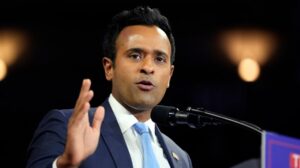
- Ramaswamy, Husted trail Democrats in Ohio poll by AARP
-

 Politics1 year ago
Former ‘Squad’ members launching ‘Bowman and Bush’ YouTube show
-

 The Dictatorship1 year ago
Luigi Mangione acknowledges public support in first official statement since arrest
-

 Politics1 year ago
Former Kentucky AG Daniel Cameron launches Senate bid
-
Uncategorized2 years ago
Bob Good to step down as Freedom Caucus chair this week
-

 The Josh Fourrier Show2 years ago
DOOMSDAY: Trump won, now what?
-

 The Dictatorship1 year ago
Pete Hegseth’s tenure at the Pentagon goes from bad to worse
-

 Politics1 year ago
Blue Light News’s Editorial Director Ryan Hutchins speaks at Blue Light News’s 2025 Governors Summit
-

 The Dictatorship10 months ago
Mike Johnson sums up the GOP’s arrogant position on military occupation with two words