
Congress
Fed’s Powell says Trump can’t fire him; `Not permitted under the law’

Federal Reserve Chair Jerome Powell had a simple response Thursday as to whether he would leave his post if President-elect Donald Trump asked him to.
“No.”
Powell, speaking to reporters after Fed policymakers cut interest rates again, tried during his press conference to avoid the political fray. Still, he made clear that he’s not going anywhere. He declared that it’s “not permitted under the law” for presidents to remove members of the independent central bank.
Despite years of criticism of the Fed chief, the once and future president said over the summer that he would let Powell finish out his term, which doesn’t end until mid-2026 — “especially if I thought he was doing the right thing.” But close advisers to Trump — who once questioned whether Powell was a “bigger enemy” to the U.S. than China’s Xi Jinping — have suggested the Fed chief should simply resign.
Trump, who says he believes the president should have a say in monetary policy, has made no secret of his preference for low interest rates and will likely resume his previous habit of tweeting barbs at the Fed chief if he thinks borrowing costs are too high. He explored the question of whether he could fire Powell during his first term, a prospect that added to market turmoil at the time.
The Fed lowered rates again on Thursday, as expected, but the timing for future cuts is less clear — in part because Trump’s policies could alter the economy’s trajectory. Bond investors pushed up yields on Wednesday as they weighed the possibility that higher tariffs and fewer immigrant workers could stoke inflation.
Powell told reporters that Fed officials always take policies — both from the executive branch and Congress — into account if they affect the economy, but “we don’t know what the timing and substance of any policy changes will be,” he said. “We therefore don’t know what the effects on the economy would be.”


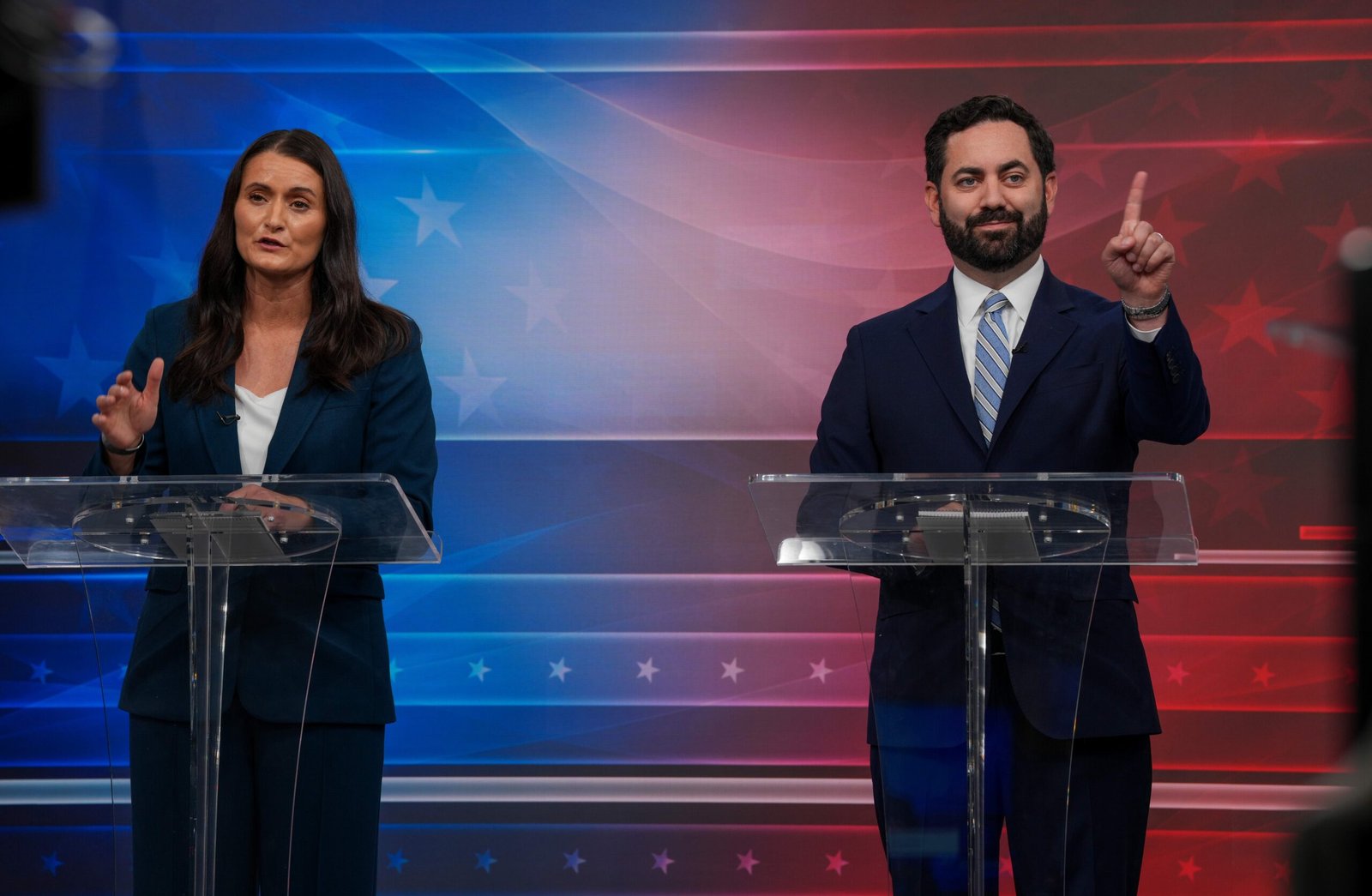
NEW YORK — One of the most vulnerable Republicans in the House is running on immigration — and taking on both parties over it.
Rep. Mike Lawler is hammering Democrats over “sanctuary” policies while criticizing the Trump administration’s aggressive — and at times lethal — immigration enforcement tactics.
“Renee Good and Alex Pretti should not be dead. But neither should Sheridan Gorman, and neither should Laken Riley, and neither should the thousands of people who have been murdered by people who are in our country illegally and committing crimes,” Lawler said at a candidate forum earlier this month. “So yes, ICE needs reforms, but you know what? Sanctuary jurisdictions should not exist. Criminals should be deported.”
Lawler is betting his self-described “common sense” approach can win him a third term in a suburban Hudson Valley district Kamala Harris carried in 2024. His race against Democrat Cait Conley, an Army veteran and first-time candidate, could help determine control of the House.
Immigration has helped Republicans win elections, but broad dissatisfaction with President Donald Trump’s policies has made it a less certain advantage this year. Lawler is pressing it anyway.
He’s run paid media on the topic and held multiple events decrying Democrats’ immigration policies. In a recent interview with a panel of local reporters, he even brought it up himself: “We did not touch on immigration, and I want to raise this because this is a real problem,” he said.
“Fundamentally, when you look at the challenge, I think most people want common sense, not extremism, on the issue of immigration,” Lawler told reporters after a debate with Conley earlier this week.
Whether that emphasis matches voters’ priorities is another question. A recent Emerson College poll found immigration ranked far behind the economy and threats to democracy among the district’s most important issues. And Trump, whose approval ratings are abysmal in New York state, is often at the center of the immigration debate.
Lawler has been able to criticize Trump without drawing the backlash other Republicans have faced. He repeatedly highlights his fight with the president to raise the cap for the state and local tax deduction, which Trump ended up praising him for at a rally earlier this year.
Other Republicans who’ve sought to create distance with the president haven’t fared nearly as well. Rep. María Elvira Salazar is just one. Trump eviscerated the Florida Republican after she released a campaign ad challenging his immigration crackdown.
Yet even Lawler’s leverage with Trump has limits.
He’s highlighted his support for extending Temporary Protected Status, or TPS, for Haitians, thousands of whom live in his district. When the Trump administration announced it would be ending those protections for Haitians earlier this year, Lawler made his opposition known, warning it was not safe to send people back to the country.
He said he’s been working on individual cases to support Haitians in his district. Jean Bernard Charles, who lives in Rockland County, told Blue Light News that Lawler’s office was helpful in getting his wife to the country and he recommended his friends facing the same situation to go to the office for help.
Lawler also cosponsored legislation to extend TPS, which is stalled in the Senate. He argued that he’s fulfilled his role by passing a bill through the House and has blamed Senate Minority Leader Chuck Schumer for not moving it along. (In response, Schumer’s office said in a statement that the leader “moved to extend Haitian TPS on the Senate floor by unanimous consent and was blocked by Senate Republicans and President Trump, who Lawler constantly supports.”)
“I’ve explained this to the White House, repeatedly, that ending TPS was a stupid decision,” Lawler said at the forum. “I am opposed to it, and I will continue to fight back against it.”
The administration hasn’t budged, though. Community leaders in Rockland County, where the district’s Haitian community is based, say many immigrants are too scared to leave their homes. Some are growing frustrated that more isn’t being done.
“If there was the help, our folks would not be wearing ankle monitors,” said Nicole Hines, the NAACP’s mid-Hudson and Westchester regional director.
Renold Julien, the executive director of Konbit Neg Lakay, a Haitian community center in Lawler’s district, pointed to Lawler’s close relationship with Trump, including the president coming to the district earlier this year and Lawler appearing at a meeting at the White House with Jewish leaders, some of whom are from the district.
“I feel bad for Mike Lawler,” Julien said. “Friends don’t treat friends like that. … His friend Donald Trump is doing his best to create a problem between him and the dark-skinned immigrants here of Rockland.”
Conley has also questioned his work regarding Haitian TPS.
“He can have enough capital to get Donald Trump to fly out here and visit the district in May, to go to Dallas at Trump’s midterm convention and be a keynote speaker, but he can’t get Donald Trump to actually take care of people in the Hudson Valley and protect our Haitian community by extending TPS?” she asked.
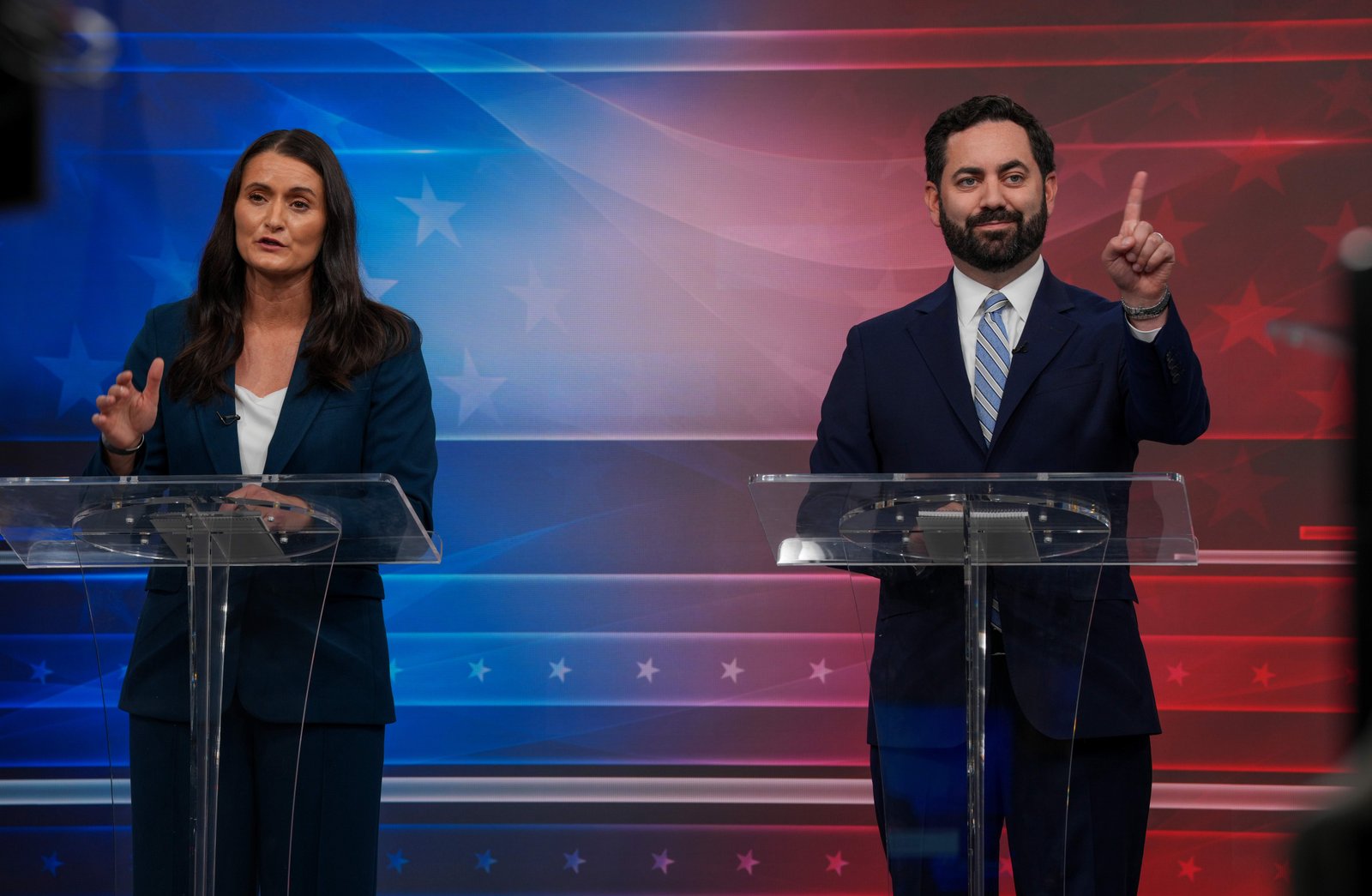
When asked how she would advocate for Haitians if she wins — especially since she won’t have Trump’s ear like Lawler does — Conley said she thinks Democrats will win the Senate, clearing the way for the bill to extend TPS to get to the president’s desk.
Lawler has repeatedly bashed Democratic Gov. Kathy Hochul’s recent law that ended cooperation between local police departments and Immigration and Customs Enforcement on civil immigration cases, and questioned why the state is not honoring the Department of Homeland Security’s detainer requests, as the agency has stated. The parents of Sheridan Gorman — a teenager from Lawler’s district who was killed earlier this year in Chicago, allegedly by a Venezuelan living in the U.S. illegally — have appeared on the trail with him a handful of times to criticize Democrats’ immigration policies.
“The sanctuary policies being pushed by Kathy Hochul and Democrats killed our daughter,” Jessica Gorman, Sheridan’s mother, said in an advertisement for Lawler. At an event last week, she accused Hochul and Conley of not caring about protecting families.
Hochul has waved off such criticisms, saying that law enforcement is still permitted to work with federal officials to remove violent criminals.
Even if immigration isn’t voters’ top concern, it’s a topic Lawler can own, said Sarah Chamberlain, the head of the Republican Main Street Partnership, of which Lawler is a member. The economy is a harder sell to frustrated voters, she added. Focusing on Hochul’s policy also taps into her middling popularity as she runs for reelection. Hochul’s opponent, Bruce Blakeman, has similarly been hammering the issue.
“He’s been extremely successful finding middle ground on it,” Chamberlain said of Lawler, praising his focus on deporting immigrants who have committed crimes and noting the district’s proximity to New York City. “He uniquely can do it because it’s very specific to his district and to where he lives. Some other members couldn’t be doing it the same way.”
Not everyone is convinced his approach will work.
“Mike Lawler is reading the tea leaves and realizing what we have been saying is true — that the vast majority of Americans across this country and in this state are against Donald Trump’s mass deportation agenda,” said Murad Awawdeh, president and CEO of NYIC Action, the political arm of the nonprofit New York Immigration Coalition. “While he may be doing a couple of vibes-oriented things to illustrate he’s not 100 percent MAGA and mass deportation, his actions actually speak louder than his words.”
Awawdeh said that even though Lawler has made some moves on Haitian TPS, that “doesn’t erase the horrors that he’s cosigned to date” in supporting increased funding for ICE. And while Lawler does back the Dignity Act — the bipartisan immigration reform bill that would create a vehicle for potentially millions of immigrants who entered the country unlawfully to gain work permits and remain in the U.S. legally — some immigrant advocates argue it doesn’t go far enough in creating a pathway to citizenship. The bill has yet to reach the House floor for a vote.
“Immigrant families are not props for his moderate image,” Awawdeh said.
When asked if he thinks his immigration message is getting muddled, Lawler said he has “never wavered in my position” and that most Americans “want the border secure, they want criminals deported and they want cashless bail gone.”
Lawler has sought to cast Conley as too weak on the border and crime, pointing to her support for revoking partnerships between local police and ICE, known as 287(g) agreements.
Conley told Blue Light News she’s in favor of getting rid of those agreements because she wants “our local cops to be focused on protecting our local communities, not doing the federal government’s job.” While she said former President Joe Biden messed up border security, she criticized ICE under Trump for “violence against American citizens” and not “prioritizing violent criminals.” She said she does not support cashless bail, which Lawler has repeatedly pointed to as a catalyst of crime, along with sanctuary policies.
Conley, though, has focused more of her energy on voters’ top concern this cycle: affordability. She said she hears concerns about paying bills and affording gas and health care more frequently on the trail, as opposed to immigration. She accused Lawler of using the issue as a “distraction” to “shift focus away from where he is failing our communities.”
Mike Madrid, a Republican political consultant, said it’s commendable that Lawler is finding balance on the issue but “the problem is no one’s making their voting decision based on this” and it “doesn’t cut through the headwinds on the economy.”
Lawler thinks voters are picking up on the nuance.
“I’ve been leading on this issue for years, saying that the immigration system needs to be reformed,” he told Blue Light News after a recent press conference slamming Hochul’s law. “These things are not in conflict. It’s recognizing how complex our immigration system is, but it’s also having common sense and applying it.”
The Senate could soon be in the market for a new internal cop. Nobody wants the job.
The top two lawmakers on the Senate Ethics Committee are poised to take over other panels next year, depending on the outcome of the midterms. Republican Sen. James Lankford of Oklahoma, the current chair, is in line to potentially lead the Committee on Homeland Security and Governmental Affairs, while the current senior Democrat, Sen. Chris Coons of Delaware, would chair the Foreign Relations Committee if his party flips the chamber.
Asked if he’d want to stay on as Ethics chair, Lankford laughed.
“No one asks to be on the Ethics Committee. No one — you can ask Chris Coons the same thing — no one asks to be on the Ethics Committee,” he said. “You’re asked to be on it and it’s a way of serving your conference.”
Coons was more diplomatic when asked if he wanted to serve on the panel again in any capacity, patting Lankford and himself on the back for their ability to “reach effective, swift, reasonable bipartisan resolutions to complex issues.”
“I enjoy the members of the committee,” he added.
Serving as chair of the Ethics Committee is an unenviable role — requiring lawmakers to lead investigations into allegations of misconduct against their coworkers and, in many cases, their friends.
There are also few rewards for the assignment: Unlike other committee leadership posts, sitting atop Ethics doesn’t provide a fundraising foothold or generate campaign ad-worthy headlines. It leaves little incentive for any lawmaker to take on the task.
“Nobody wants to be chair of the Ethics Committee. Period,” said Sen. Jim Risch of Idaho, the second-most-senior member of the panel who is also expected to continue leading Foreign Relations Republicans. “It’s very difficult when you have matters you have to deal with concerning your friends and colleagues.”
The third-ranking Ethics Committee Republican, Sen. Deb Fischer of Nebraska, noted she’s on tap to become Rules Committee chair next year.
As for whether she’d be willing to lead Ethics, too, she replied, “Deb Fischer is not going to do that.”
Unlike the House Ethics Committee, which has picked up the pace in recent months in holding members accountable, the Senate Ethics Committee has gone through long stretches of public inaction. It has issued just two public rebukes in the past decade: a letter of admonition to former Sen. Bob Menendez (D-N.J.) in 2018, and one to the late Sen. Lindsey Graham (R-S.C.) in 2023. Aside from those instances, one would have to go all the way back to 2012 to find the next most recent public disciplinary action.
When Menendez was found by the panel to have improperly received gifts from a friend — then used his position of power to advance that person’s interests following a mistrial in his federal bribery case — the committee wrote him a letter of admonition requiring him to repay the gifts.
Menendez went on to be convicted in a subsequent federal corruption case on charges of bribery and acting as a foreign agent, resulting in an 11-year prison sentence.
The Senate Ethics Committee slapped Graham with an admonishment in 2023 for “impermissibly conducted campaign activity in a federal building.”
Neither Senate Majority Leader John Thune nor Minority Leader Chuck Schumer — who are both focused on the Nov. 3 midterms — have spoken publicly about who they might put atop the Ethics panel if they find themselves needing a new chair.
There are also some unknowns. For Lankford to take over Homeland Security, for instance, current Chair Rand Paul of Kentucky would need to first decide whether to decamp for the Health, Education, Labor and Pensions Committee, where Louisiana Sen. Bill Cassidy’s retirement will leave an opening.
Given the Ethics Committee’s distinction as a “select” panel, Senate leaders have more leeway over who they tap for a chair position, especially if they run into hurdles finding someone willing to take it.
It’s rare, but not unheard of, for a senator to lead both the Ethics Committee and a “standing” committee simultaneously. It’s happened on three occasions since the committee was given its name in 1977, according to data compiled by the Congressional Research Service and the Senate Historical Office.
That means Lankford or Coons could end up being asked to continue in their roles, even if they are also chairing another panel. If not, Senate leaders could struggle to find a replacement further down the committee rosterr, which would force them to bring in a senator not currently on the panel.
Democrats already need to recruit at least one new member to the panel: Sen. Jeanne Shaheen of New Hampshire is not returning for the next Congress, and Sen. Brian Schatz of Hawaii is expected to succeed outgoing Sen. Dick Durbin in the caucus’s No. 2 leadership spot.
As for Republicans, Risch said he’ll pass.
He burst into laughter and said he was confused why someone would ask if he wanted to serve as chair.
Sen. Bernie Moreno said Thursday he expects the Senate to move a party-line legislative package after the midterm elections — especially if Democrats flip one or both chambers.
“We will do a reconciliation bill — one way or the other we will,” the Ohio Republican told reporters at the Capitol, referring to the simple-majority budget process. “Obviously, if we lose control of Congress, it’ll be the Last Supper.”
Such a bill, he added, would be “giant” and would include “all the Republican priorities that we can get done.”
The House approved a framework for a party-line bill over the summer that includes war funding, farm aid and election integrity incentives. But the push has so far run aground in the Senate
Moreno said the threat of imminent Democratic control of either the House or Senate would jumpstart matters — and potentially push Republicans to include a debt-ceiling increase as well.
The borrowing limit is set to be reached sometime next year, and a Democratic majority could have significant leverage to demand concessions as part of any deal — something the GOP could forestall by acting in the lame-duck session.
“I mean, nobody wants to see a debt default,” Moreno said. “That would be 1929 on steroids.”
Rep. Rob Wittman (R-Va.) also told reporters on Capitol Hill that a new reconciliation bill “has to happen” after the election but warned against expanding the scope of the House framework.
“I think you have to go with the one that we’ve got,” he told reporters. “The Senate needs to act and get the job done.”
A senior member of the Armed Services Committee, Wittman said the legislation is “key to restock our weapons magazine” and “should be the main focus when [members] get back.”
Moreno said if Democrats win control of both chambers, Republicans should stay in session nonstop to pass GOP legislation — which could be a tall order given worries about poor post-election attendance.
“If we lose the House and the Senate, we should be here from Nov. 9 until Dec. 31 with no break at all,” Moreno said. “Like, we’ll have turkeys here for Thanksgiving because we have to get this done.”
- Internal FEMA memo reveals plans to curb states’ reliance on federal aid
- House Democrat introduces bipartisan bill to block Trump’s Russian diesel deal
- A vulnerable Republican takes on both parties over immigration

- RFK Jr. and his allies are standing by Russell Brand as the comedian’s rape trial begins
- Haley Stevens is everywhere — except on the trail for El-Sayed
- No one wants to be on the Senate Ethics Committee
- Senate Republicans are getting smoked in fundraising
- Inside the democratic socialists’ plan to shake up Congress

- Trump lashes out at Republicans as Ken Paxton struggles in Texas
- Trump’s defense dreams are on life support
-

 Politics2 years ago
Former ‘Squad’ members launching ‘Bowman and Bush’ YouTube show
-
Uncategorized2 years ago
Bob Good to step down as Freedom Caucus chair this week
-

 The Josh Fourrier Show2 years ago
DOOMSDAY: Trump won, now what?
-

 The Dictatorship2 years ago
Pete Hegseth’s tenure at the Pentagon goes from bad to worse
-

 Politics2 years ago
Former Kentucky AG Daniel Cameron launches Senate bid
-

 The Dictatorship2 years ago
Luigi Mangione acknowledges public support in first official statement since arrest
-

 Politics2 years ago
Blue Light News’s Editorial Director Ryan Hutchins speaks at Blue Light News’s 2025 Governors Summit
-

 The Dictatorship1 year ago
Mike Johnson sums up the GOP’s arrogant position on military occupation with two words