
Politics
Texas redistricting already took out one longtime Democrat. Here’s how.

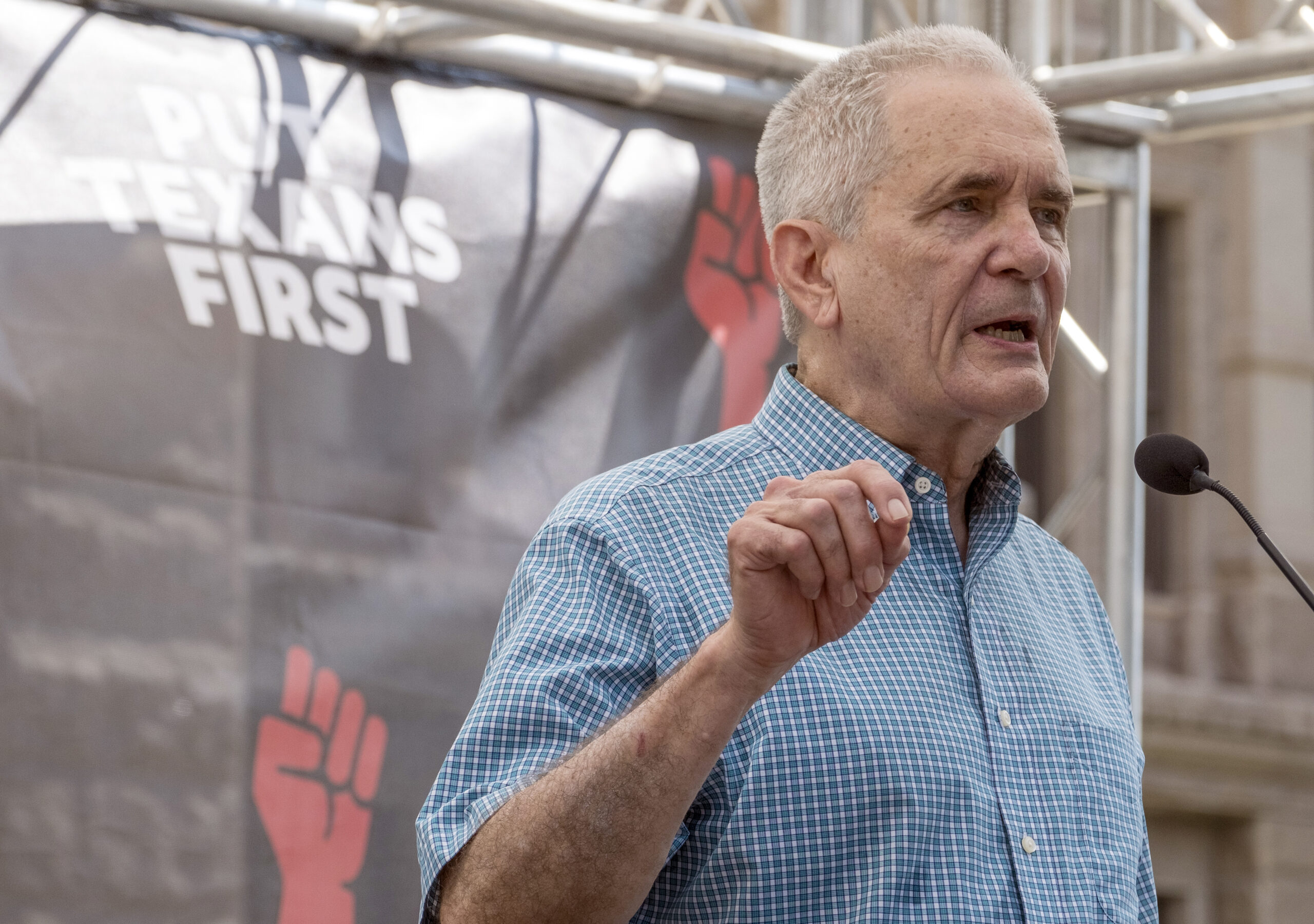
Democrats were forced into a generational fight in Texas — and the next younger generation won.
As Texas Republicans pressed forward with a mid-decade redistricting plan to shore up the GOP’s miniscule House minority, Democrats scrambled to gain an edge in a potential member-on-member matchup.
For weeks, three-decade incumbent Rep. Lloyd Doggett, 78, publicly insisted he was going to run in the redrawn 37th District while urging 36-year-old Rep. Greg Casar to run for a redder version of his current seat. But Doggett, a veteran of previous redistricting fights, ultimately announced last week he wouldn’t seek reelection in a newly configured Austin-area district — opting against an expensive, messy fight against a rising star.
“I think in the last two weeks Lloyd Doggett thought that some of the folks who would be with him money, marbles, and chalk … were, in fact, with Greg, and that gave him great pause as to what his chances were,” said Mark Littlefield, an Austin-based political strategist, using what he called an old Texas political aphorism.
The staredown between the two politicians — which played out before a primary campaign fully kicked off — came as Democrats have been grappling with a broader reckoning over seniority and age. The party has experienced a swell of anti-incumbent sentiment since President Joe Biden was pushed off the ticket last year, and many Democrats are steeling themselves for messy primaries. Casar, who was elected to the House in 2022 and has earned national attention for his meteoric climb to become chair of the Congressional Progressive Caucus, appeared poised to tap into the party’s thirst for fresh talent in any race against Doggett.
Publicly, Casar managed to stay out of the spotlight and above the fray; behind the scenes, however, he was quietly starting to collect endorsements and fundraising commitments. Meanwhile, Doggett prompted some hand-wringing in the party after he urged Casar to run in a different district. Both Doggett and Casar declined to comment.
Before Doggett reversed course, Casar was prepared to time his official entry into the primary contest with the rollout of an endorsement slate containing half of the Austin City Council and more than a dozen members of Congress from a diverse cross-section of the Democratic Caucus, according to a person granted anonymity to share private campaign details.
Casar’s allies had already prepared $1.5 million in outside spending to boost him in a potential primary, with more expected to land as energetic grassroots groups mobilized. Outside progressive groups like End Citizens United and the Working Families Party were gearing up to support Casar, too.
“There’s no question where we stand, and will continue to stand. We would have stood with Greg,” said Maurice Mitchell, national director of the Working Families Party.
Some buzzy figures in Democratic politics were maneuvering to shore up Casar’s standing. Strategist and philanthropist Luis A. Miranda Jr., also the father of “Hamilton” creator Lin-Manuel Miranda, even hosted a “Latinos for Greg” fundraiser along with Democratic fundraiser Regina Montoya. Democratic activist and actress Jane Fonda was scheduled to hold an event on Casar’s behalf, too, said the person familiar with the campaign.
Organizations like BOLD PAC, the Congressional Hispanic Caucus’ political arm, were also gearing up to fight against Doggett, who is white, in support of Casar, the child of Mexican immigrants.
BOLD PAC spokesperson Valeria Ojeda-Avitia denounced the Texas gerrymandering as “racist” and “partisan” and said the group “is prepared to go all in to defend our incumbents and ensure Latino communities have the representation they deserve.”
Casar was also already ready to launch a campaign with a formidable national team, including Molly Murphy and Madeline Conway of Impact Research. He had a launch video produced by Morris Katz, an advisor to Zohran Mamdani, ready to go.
Only adding to the pressure was an op-ed authored by a slate of Texas political veterans calling on Doggett to “pass the torch,” which helped signal that many of Doggett’s longtime backers might not stick with him through another tough race.
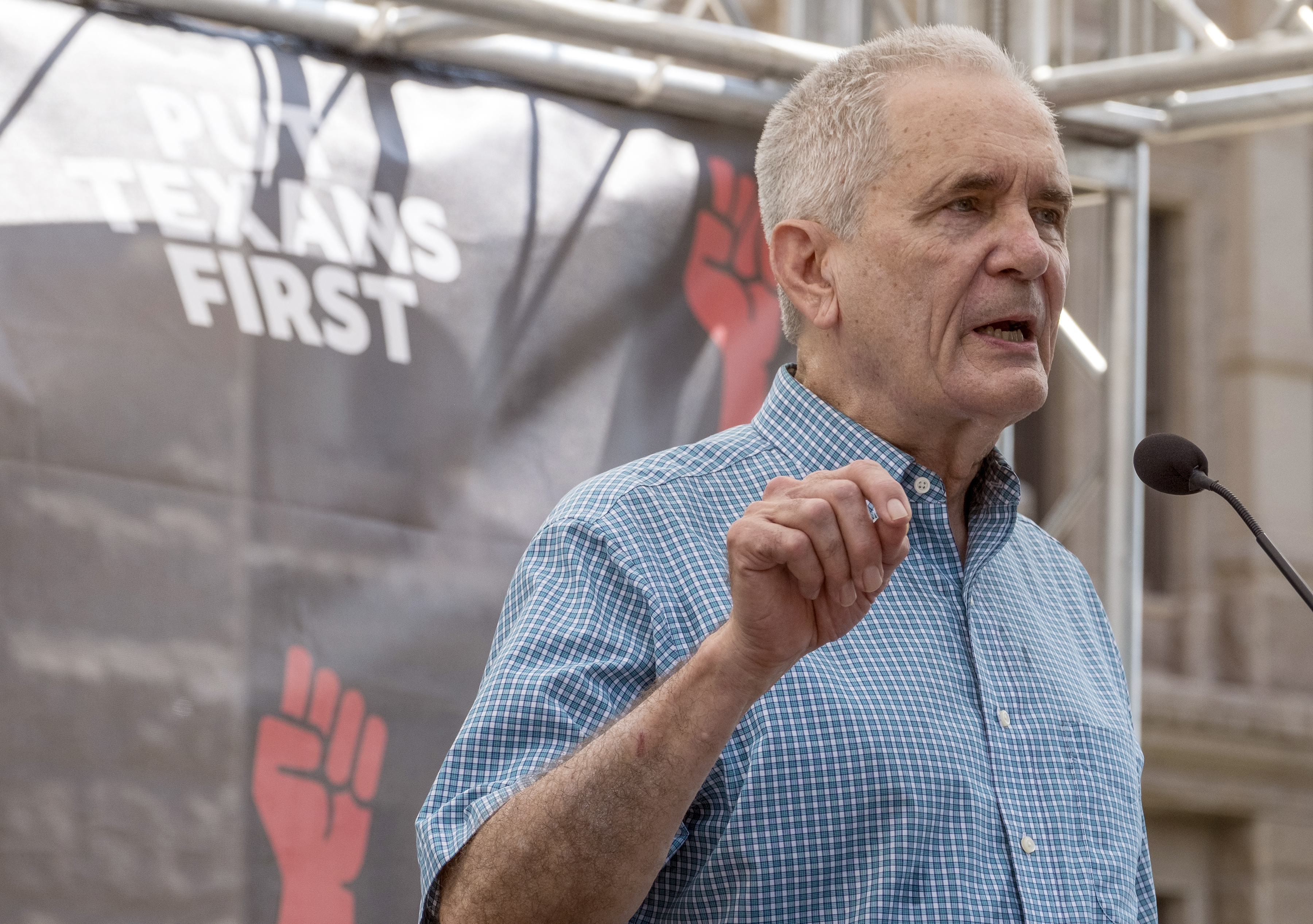
Despite all this, Doggett’s announcement took some Democrats by surprise: He’s the dean of the Texas delegation with $6.2 million in the bank and a seat on one of the most influential Congressional committees, the taxwriting Ways and Means panel.
But Democrats had privately blanched at the prospect of the member-on-member contest, especially between two lawmakers so closely aligned on progressive politics that could test allegiances.
Most Democrats still wish they hadn’t been forced to choose between the two men, especially with Doggett’s longstanding ties to the party.
“This redistricting mid-decade is really fucked up,” said Tory Gavito, president of Way to Win, which was set to back Casar. “When I found out that I was going to have to push toward the primary, I literally cried. It’s just not a position I wanted to be in.”
Yet even with the potential matchup in the 37th district clear, Democrats are still facing other messy contests in the wake of Republicans’ new map that could net the GOP up to five new seats. Casar and Doggett aren’t the only two Democratic incumbents being drawn into the same district, with other incumbents having to choose which of a shrinking number of Democratic or competitive seats they want to run for.
Rep. Jasmine Crockett, an outspoken voice in the party, has signaled she might run for a redrawn seat currently held by the more centrist Rep. Marc Veasey, who himself was drawn out of his Fort Worth home. If Veasey moves to one of the two redrawn Democratic Dallas-area seats, this could result in a potential matchup between Crockett and first-term Rep. Julie Johnson, whose current Dallas-area district was redrawn into a sprawling red seat.
And in Houston, longtime Rep. Al Green could opt to run for the vacant seat held by the late Rep. Sylvester Turner after the district turned redder. Green’s office did not respond to a request for comment. But doing so would put him on a collision course with the victor in an ambitious field of Democrats now running in a special November special election for the current district.
“My goal and my plan is to serve this district long term,” said Harris County Attorney Christian Menefee in an interview. He’s leading some polls for the seat along with former Houston City Council Member Amanda Edwards, who struck a similar tone: “Right now I want to focus my attention on the special election…given the fluidity, it’s my intention to serve this 18th Congressional District.”


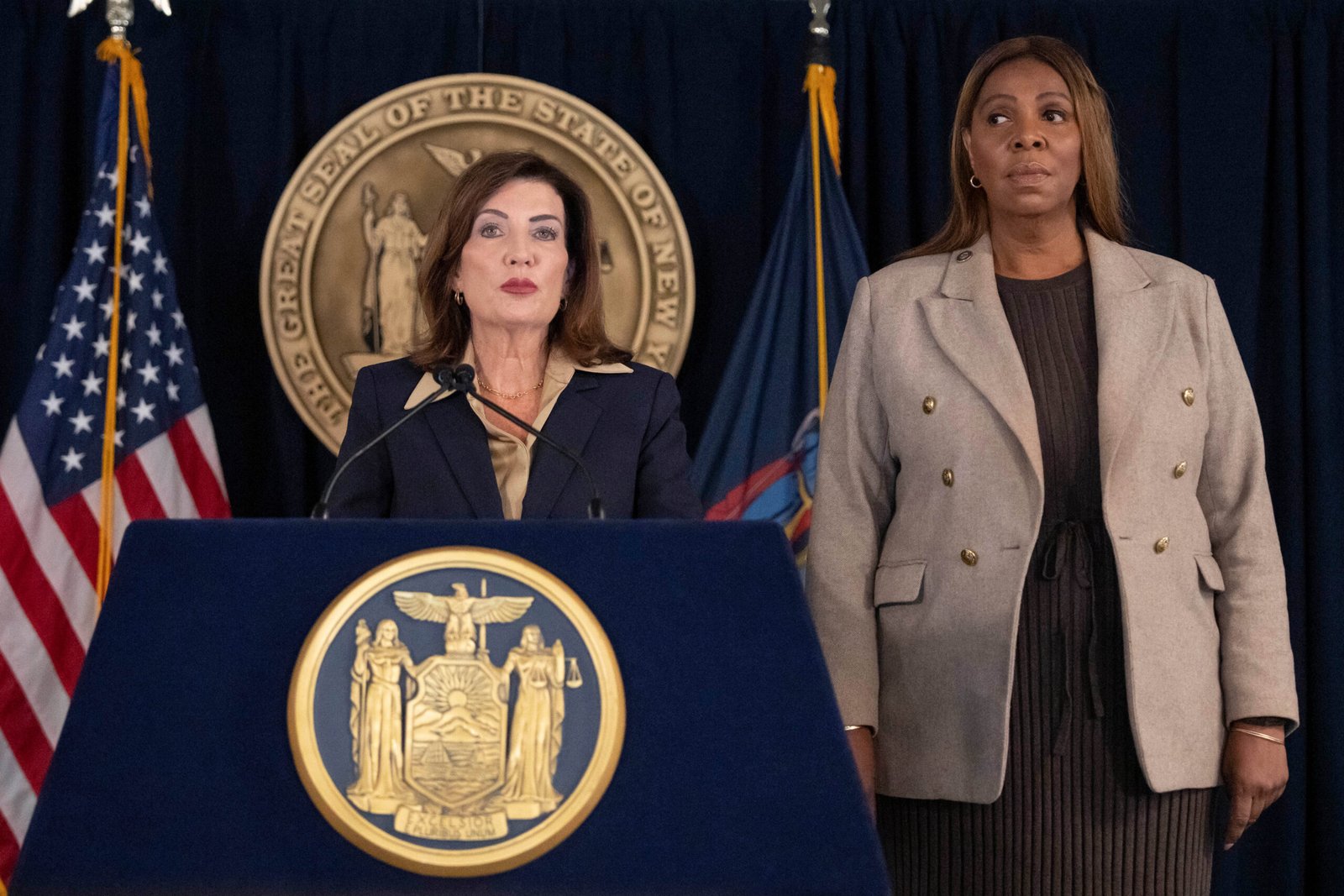
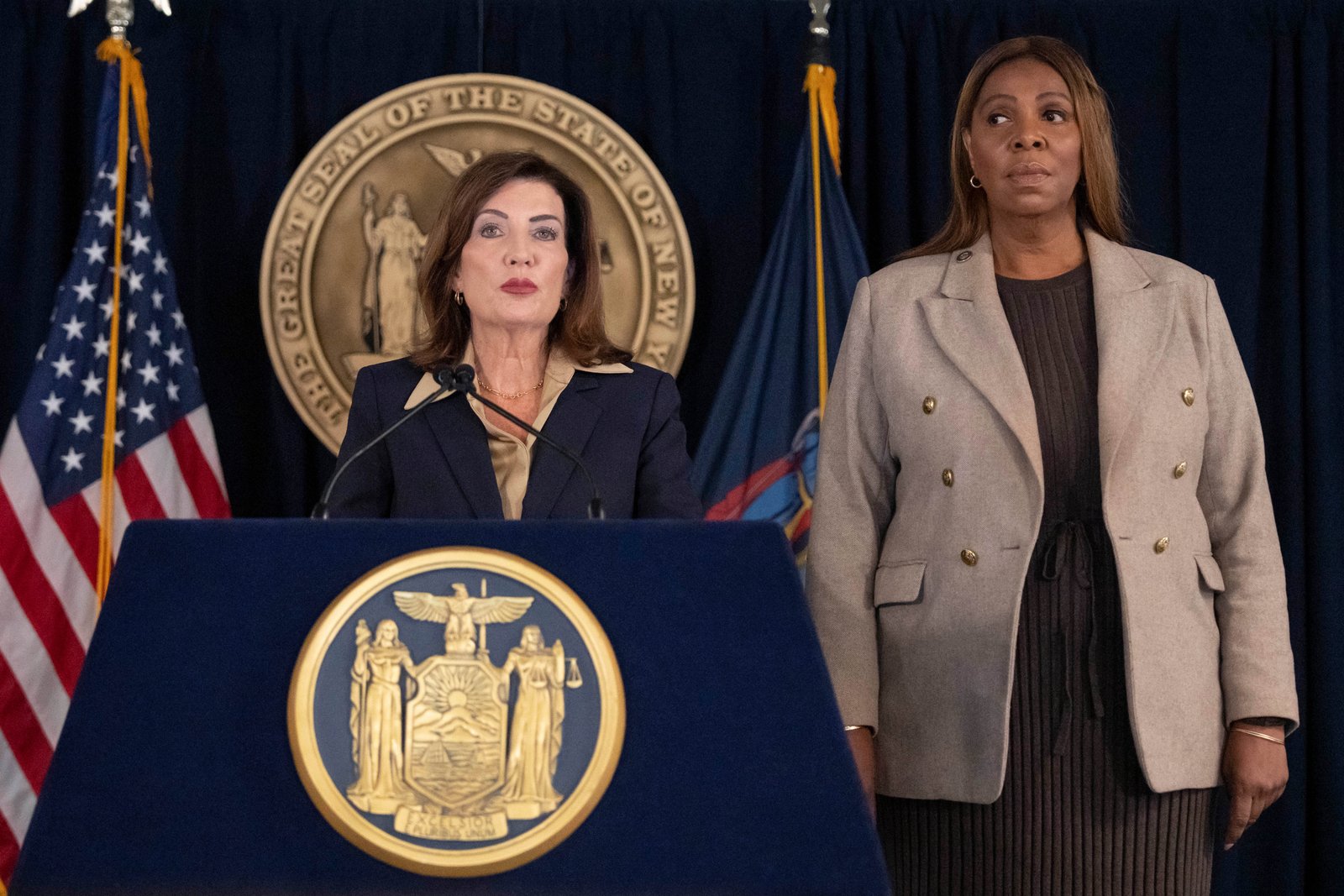
RAPE LAW LOOPHOLE: Gov. Kathy Hochul vowed today to close a loophole embedded in state rape law around voluntary intoxification as she laced into Cornell University police and a local district attorney for their handling of a 2024 gang rape allegation.
Under current law, proving sexual assault is difficult if a victim voluntarily consumed alcohol or drugs. Individuals cannot consent “by reason of being mentally disabled or mentally incapacitated,” which generally applies to involuntary consumption of drugs or alcohol. Hochul said she would work with lawmakers “early” to change the law when they return to Albany in January.
“Voluntary intoxication is not a license for sexual assault or gang rape,” Hochul told reporters at her Midtown Manhattan office. “Period. I support closing this loophole and will work with the New York State Legislature to accomplish this.”
The State Senate has consistently attempted to do just that through legislation, but the Assembly has yet to bring the bill up for a vote.
Hochul also appointed New York Attorney General Letitia James as special prosecutor on the case. Cornell President Michael Kotlikoff has agreed to an independent review.
The plaintiff, a former Cornell student, alleged in a lawsuit that several men raped her at the Chi Phi house after coercing her into consuming drugs. The case attracted national attention after the student-run Cornell Daily Sun broke the story.
The woman, identified in court papers as Jane Doe, told the Cornell campus police that she was “100 percent confident that she had been raped,” according to a transcript of her conversation with investigators.
But that part of her account, Hochul noted, was omitted from the materials Cornell police sent to Tompkins County District Attorney Matthew Van Houten, who declined to pursue charges without interviewing the woman.
“In what world would the police learn from the victim that she had been literally gang-raped while intoxicated by five men in a fraternity house and not elevate those allegations to the district attorney?” she said. “In what world does the district attorney not even interview her or anyone else involved, or even request the full transcript?”
Earlier this week, James expressed solidarity with Jane Doe on social media. When asked about her decision to affirm the allegation, she declined to comment.
Rebecca Valli, a Cornell spokesperson, said the university agrees with the governor’s decision.
“We fully support the appointment of a special prosecutor and efforts to change New York State’s rape law and are committed to an independent external review of all aspects of how Cornell has handled this case,” Valli said in a statement.
Van Houten, the Tompkins County prosecutor, said in a statement today that “we were not provided the full picture by the university.” — Madina Touré
MARK YOUR CALENDAR: Join Blue Light News’s New York Outlook: Affordability, Industry & The Economy on Oct. 14 for live conversations about the business and policy decisions being made today — from City Hall to the State Capitol — that will shape the city’s economic future. The lineup includes New York City Council Speaker Julie Menin, New York City Economic Development Corp. CEO Anthony Shorris, Partnership for NYC CEO Steven Fulop, Citizens Budget Commission President Andrew Rein, Charles H. Revson Foundation President Maria Torres-Springer, and more. Register now to attend in person or watch the livestream.
From the Capitol
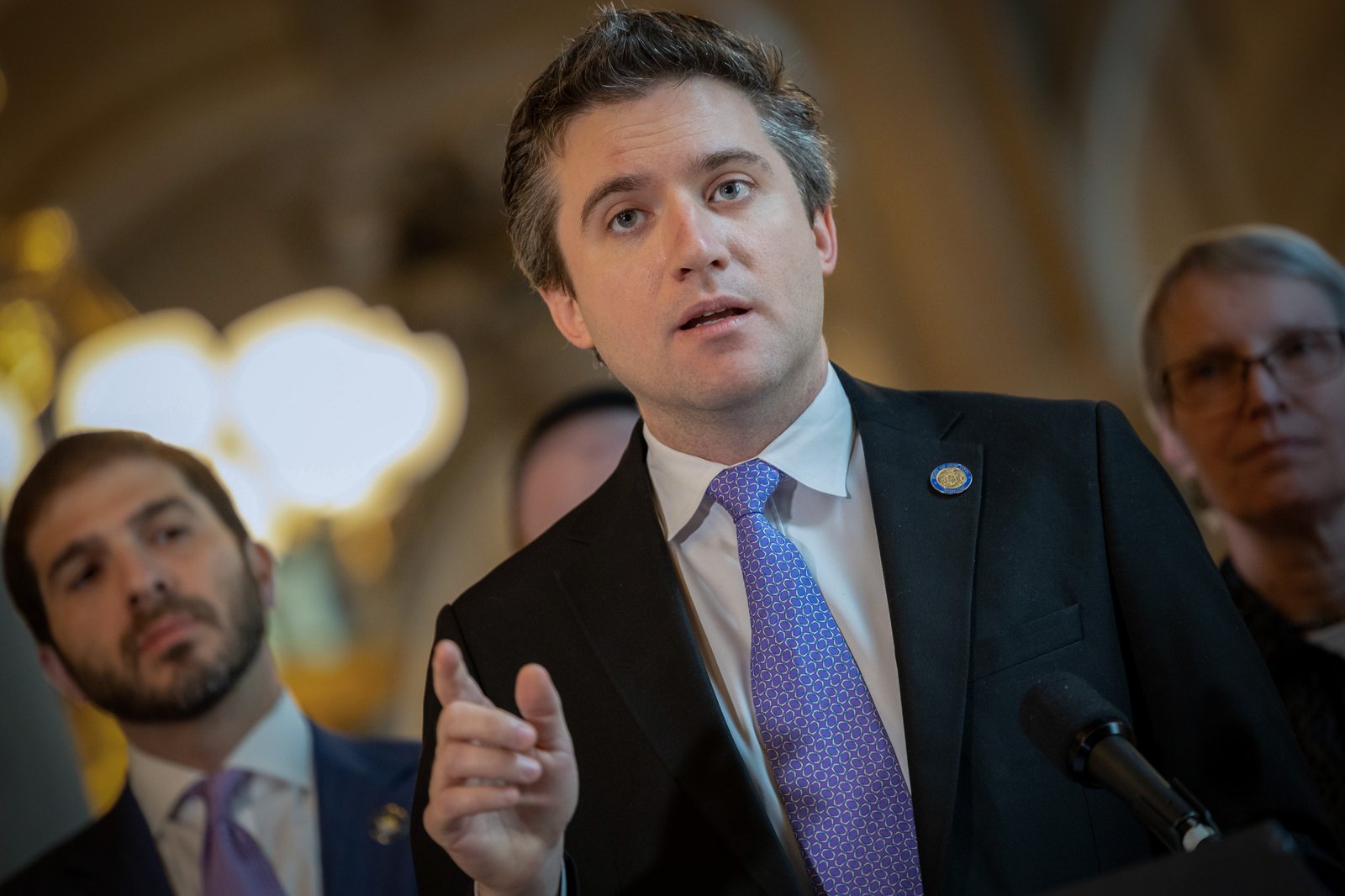
SPACE JAM: The fledgling United States Space Force is trying to find a home for its academy.
State Sen. James Skoufis wants to make it so in the Hudson Valley, proposing that the recently formed military branch select Stewart International Airport.
“New York Stewart International Airport would be an exceptional site for this project. It offers existing aerospace infrastructure — including one of the few runways in the country designated for space shuttle landings — alongside significant on-site development opportunities,” Skoufis wrote in a letter to Hochul this week.
The Democratic state lawmaker is seizing on a NASA-led effort seeking input from governors interested in hosting or sponsoring the academy in their state.
Skoufis wants to build interest in having the academy placed in New York, where some officials are trying to encourage growth in the space sector.
“We built the Apollo lunar landers and refined the optics for every major NASA telescope,” said Patrick Chase, co-founder of Empire Space, a non-profit promoting economic opportunities in space. “The Empire State is the best location for the United States Space Academy, continuing our bold legacy as a pioneer of the American Space Age.” — Nick Reisman
BLAKEMAN’S VAGUE VOWS: Republican Bruce Blakeman has spent this year’s gubernatorial campaign focused on attacks — leaving serious questions about what he’d actually do if elected governor.
With a month to go until Election Day, the Nassau County executive doesn’t have a policy section on his website. On the campaign trail, he’s opted against making detailed policy prescriptions in favor of going after Hochul and Mayor Zohran Mamdani.
When asked in August about his plan to reign in housing costs — a top concern among New York voters — Blakeman pivoted immediately to ideology: “It’s not through socialism.”
“That’s a failed system,” he said at the time. “Mamdani the Commie and Comrade Kathy, they have this completely backwards because wherever they’ve instituted socialism it’s been making people miserable.”
Blakeman’s policy agenda has focused on two major issues — massive tax cuts and an immediate 50 percent reduction in utility bills on his first day in office. But neither plan has been backed up by accounting that might suggest they’re plausible. His campaign declined repeated requests to release a plan detailing the cuts needed for the tax breaks.
“It strikes me as very back-of-the-envelope,” said E.J. McMahon, who helped author former Republican Gov. George Pataki’s tax cut proposal. “A damp, coffee-stained envelope.”
George Marlin, a former Conservative Party mayoral nominee in New York City and ex-director of the Nassau Interim Finance Authority, took such criticism a step further, writing in a Times Union op-ed today that Blakeman’s record on Long Island suggests he is not “fiscally skilled enough to merit a promotion to the state’s top job.”
“As county executive, Blakeman has done nothing to restrain spending,” Marlin wrote. “Despite his misleading campaign rhetoric, he has never cut a penny in county taxes.”
Blakeman’s campaign did not respond to Marlin’s attacks.
Read more from Bill Mahoney in Blue Light News here.
TROOPER ONE’S SUIT: A federal judge this week dismissed one of the retaliation claims against ex-Gov. Andrew Cuomo in a lawsuit filed by a former member of his State Police security detail.
U.S. District Court Judge LaShann DeArcy Hall determined that because the alleged retaliation occurred in February 2022 — after Cuomo resigned from office — it did not constitute acting “under color of state law.”
The woman, known in court documents as Trooper 1, alleged in the lawsuit that Cuomo sexually harassed her and that his former top aides subsequently retaliated against her. The former governor has denied any wrongdoing.
“We respectfully disagree with the Court’s decision,” said Valdi Licul, Trooper 1’s lawyer. “Multiple federal and state agencies found that Cuomo sexually harassed Trooper 1 and other women. We don’t believe his resignation in response to his proven misconduct permitted him to further violate the law by threatening one of his victims. We intend to appeal as soon as we are able.”
Azzopardi, Cuomo’s spokesperson, responded: “Despite what Trooper 1’s attorneys may think, New Yorkers aren’t stupid, they know Governor Cuomo never harassed nor retaliated against anyone and a simple review of the facts by the courts is why their case continues to crumble, the same way 5 DA’s review of those same ‘agency reviews’ found no there there and the two civil cases against him were ultimately dropped.” — Nick Reisman
FROM CITY HALL

FINAL FRONTIER FEAR: At least one of the artificial intelligence firms set to testify before the City Council is supportive of the lawmakers’ regulatory efforts.
Council Speaker Julie Menin plans to convene the entire body Monday for a hearing where leading AI companies will testify and provide input on a legislative package that would put guardrails around the emerging technology.
In a letter sent Thursday to Menin and her colleagues — and obtained by Playbook — an executive from OpenAI said the firm is broadly behind the Council’s push.
“We appreciate the Council’s focus on frontier safety, including transparency, third-party assessments, reporting of critical incidents and protecting whistleblowers, consumer protection, election-related deepfakes, and other key safety areas,” wrote Chan Park, head of U.S. and Canada policy and partnerships for OpenAI. “We also strongly support the Council’s goal of strengthening the City’s readiness to prevent and respond to AI-related cyber threats and emergencies.”
In his letter, Park noted the ways AI is contributing to advances in science and education, but acknowledged the concerns over frontier AI models raised by Menin and the company’s own executives as part of a broad unease over how rapidly the technology is advancing.
Park did not get into the particulars of each Council bill, but he noted OpenAI is also supportive of a state regulatory framework known as the RAISE Act and has been providing Albany with input on tweaks to the legislation and the state’s cybersecurity efforts.
“Our own safeguards are essential, but voluntary company commitments alone are not enough,” Park wrote. “Enforceable standards, independent scrutiny, and public accountability are necessary to ensure that increasingly capable AI is developed and used responsibly.” — Joe Anuta
IN OTHER NEWS
— FLUSHING’S FACELIFT: As plans for a new “town square” in Flushing move forward, residents have raised concerns about gentrification and displacement. (Gothamist)
— FOSTER CARE: Foster care agencies in New York are facing an unprecedented crisis of rapidly rising insurance costs, and they want state Democrats to approve a relief bill. (Times Union)
— HAMAS HELPERS: The NYPD helped catch two brothers from Louisiana allegedly involved in a Hamas fundraising scheme. (New York Post)
Missed this morning’s New York Playbook? We forgive you. Read it here.
Senate Republicans are suddenly rushing to save a Senate seat in Kansas.
On Friday, the Senate Leadership Fund, Senate Republicans’ top super PAC, reserved over $8 million in ads starting this weekend to prop up GOP Sen. Roger Marshall, according to tracking firm AdImpact.
The spending in a state where Democrats haven’t won a Senate race in 94 years comes amid a deteriorating national political environment for the GOP. The impact of spiking diesel and fertilizer prices driven by the war with Iran, coupled with President Donald Trump’s trade wars, have been acutely felt in the heartland.
Private polling from both parties shows a deadlocked race between Marshall and Democrat Adam Hamilton in a state Trump carried by 16 points in 2024.
“It’s a perfect storm,” said one senior Senate GOP aide, granted anonymity to candidly discuss the race. “The president isn’t making it any better.”
Lower Costs Now, a new Super PAC affiliated with former Vice President Kamala Harris’ Super PAC, dropped about $700,000 into the state Thursday night, and Democrats are considering more spending to bolster Hamilton. Senate Minority Leader Chuck Schumer has been including Kansas in private fundraising pitches to donors, according to two people familiar with the conversations.
It’s a remarkable shift in a state that was not high on either party’s target list just a few months ago — and shows the ferocity of the headwinds Republicans face in the final month of the campaign.
“I think we’re on track to win, but I am comforted to know that the cavalry is coming,” said Danedri Herbert, chair of the Kansas Republican Party. Herbert said Hamilton’s particular appeal as a pastor who heads the largest United Methodist church in the country, located in suburban Kansas City, made him formidable.
“I personally know people who attend or have attended that church in the past,” said Herbert. “The ones that I know are right-leaning, and so that’s troublesome. That’s trouble — just the sheer ability to reach some of those people who are just always our people. I was telling national groups early on, like, ‘you should pay attention here.’”
Republicans say the warning signs have been visible in Kansas for months as the agriculture-heavy state got hammered by a series of economic blows, including increased input prices from Trump’s tariffs, high fuel prices as a result of the Iran war, his decision to increase foreign beef imports, and heavy-handed immigration enforcement.
As diesel prices shot up just ahead of the peak harvest season, the situation started to deteriorate even more in Kansas, according to Republicans.
Vice President JD Vance visited Olathe, Kansas, in mid-September to campaign with Marshall, a sign of the GOP’s growing worries. Days later, he took a shot at Hamilton during a speech in western Iowa for having “kind of a ‘gee whiz, I’m a nice pastor’ vibe,” but said he “tells his congregation not about the gospel of Jesus Christ, but that they need to repent for their white privilege while eating beef” — a reference to a frequent attack line on Hamilton about his past calls to decrease carbon emissions. Marshall recently criticized the Trump administration’s immigration enforcement, saying recent ICE operations in western Kansas should have coordinated with local law enforcement.
A handful of recent public polls have shown a close race in recent weeks. Hamilton’s internal polling and a recent poll for the Democratic Attorneys General Association shared with Blue Light News found him tied or up a few points against Marshall. Republicans’ numbers are no better: One Republican involved in the race said a recent private GOP poll had Marshall down within the margin of error and said Trump’s approval rating has been underwater since summer in the state; another person said a different GOP poll of Kansas found a tied Senate race.
“I take it as a compliment that the Republicans are now going, ‘Oh my gosh, we didn’t think we were going to have to put money into Kansas, and now we’re going to pour millions of dollars in to try to save Roger Marshall,’” said Hamilton in an interview on The Conversation with Dasha Burns, published Friday. “And I don’t think they’re going to save him.”
SLF’s Kansas ad buy came as they pulled back in North Carolina — the latest sign of a deteriorating national political environment.
And the agriculture-heavy Midwest has been particularly impacted by Trump’s policies. Republicans are currently fighting to hold onto Senate, House and governor’s seats in red-leaning Iowa and Ohio, and even redder Nebraska and Kansas.
Retiring GOP Rep. Don Bacon (R-Neb.) said the repeated economic blows to the Midwest were contributing to a series of tighter than comfortable races, including the Kansas Senate race.
“It’s the policies and the chaos,” Bacon said. “That’s why Trump’s numbers are low. Tariffs are not popular in the Midwest and they contribute to the cost of goods.”
National Republicans played down those concerns for weeks, arguing Marshall was still holding strong in polling and dispelling the belief that a Democrat could actually win the state.
But privately, top Senate GOP operatives and Republican senators have been deeply worried about worsening economic conditions across the Midwest, increasing the states where they need to play defense.
“He’s running scared,” one western Kansas Republican, granted anonymity to speak candidly about the race, said. “I don’t know if they took Hamilton for granted, but people are tired of Marshall not doing anything.”
Asked for comment for this story, a spokesperson for the Marshall campaign sent a link to a New York Post article that details a $1.2 million buy for an ad that alleges Hamilton failed to report a pedophile who volunteered at Hamilton’s church’s camp; Hamilton’s campaign has previously said the attacks are false.
“Adam Hamilton is a pedophile protector who would vote with Democrats like Chuck Schumer. He will never be the U.S. Senator from Kansas,” said National Republican Senatorial Committee spokesperson Samantha Cantrell.
The SLF ad launching Saturday accuses Hamilton of being “a two-faced extremist,” and accuses him of “founding a radical group promoting the idea that all white people are racist.”
The Democratic Senatorial Committee didn’t immediately respond to a request for comment for this story.
Hamilton spokesperson Tyson Brody referenced a New York Times report about Marshall, a former obstetrician, and his involvement in lawsuits against patients who didn’t pay past due bills as he dismissed the ad barrage on behalf of a “failing” incumbent.
“With this new ad, Marshall is turning to these desperate lies and false attacks because Kansans have learned Roger Marshall had pregnant mothers arrested and jailed over small medical debts, and voted to block the release of the Epstein files,” he said.
Democrats have also hammered Marshall over the amount of time his family spends in Florida, where they have a second home.
Hamilton is considering a late-stage fundraising swing later this month that includes an event in Boston, according to a person familiar with the planning and granted anonymity to discuss it. Democrats are bullish about the state, but are facing a cash crunch across the map that could hinder their ability to spread money so far that it reaches Kansas. Senate Majority PAC was already “actively thinking” about whether to wade into the state, its president told Blue Light News last week.
Democrats are growing bullish about other Kansas races as well. Recent polling has also shown a relatively close race in the fight to replace term-limited Democratic Gov. Laura Kelly as well as for attorney general. And the Democratic Congressional Campaign Committee added Kansas’ 2nd District, which Trump carried by nearly 20 points in 2024, to its extended offensive targets list Friday.
“It’s momentum, and that’s what we’re seeing across the state,” said Chris Mann, the Democratic nominee for attorney general.
A spokesperson for Ty Masterson, the Republican gubernatorial candidate, pointed Blue Light News to a mid-September Emerson College poll which showed their candidate leading Holscher 51% to 44%. The same poll found Hamilton leading Marshall 45% to 43%.
Leading Republicans are pulling back from the North Carolina Senate race, sending a clear message: What was a top-tier battleground at the start of the cycle is no longer worth the money.
The foremost Senate GOP super PAC, Senate Leadership Fund, is pausing its future spending in North Carolina and instead launching a seven-figure ad buy in deep-red Kansas, according to one person familiar with the move. The news was first reported by Semafor.
The dramatic change in strategy — less than four weeks before the midterms — comes after SLF previously spent more than $30 million to boost GOP nominee Michael Whatley. It also comes as public polling has continued to show Whatley unable to close the gap against popular former Gov. Roy Cooper, the Democratic candidate.
Republicans are now deprioritizing a state that President Donald Trump carried in all three presidential runs, and that Democrats haven’t won in the Senate since 2008.
“We are all clear-eyed about where North Carolina stands,” said one national GOP operative working on Senate races, who like others in this article was granted anonymity to speak candidly.
SLF isn’t the only major GOP group shifting away from North Carolina as Republicans focus on other must-win seats and deep-red states, amid the Iran war, high fuel prices and other economic fallout of the war in Iran.
Earlier Friday, the Koch-aligned Americans for Prosperity Action left North Carolina off its $22 million list of future spending across key Senate contests, as POLITICO reported. Another major Republican group focused specifically on boosting Whatley — Old North Action — removed $6.5 million in ad reservations from North Carolina’s Senate race last month.
“Michael Whatley is a good man who took one for the team — but with states like Alaska, Kansas, and Texas requiring continued resource commitments, there is only so much,” said another national GOP operative working on midterm races. “Especially against a very popular former Governor in Roy Cooper.”
The National Republican Senatorial Committee is currently running coordinated ad reservations with six of its battleground candidates. Whatley in North Carolina is not one of them, according to data from advertising tracking service AdImpact.
NRSC regional press secretary Nick Puglia said in a statement that “Whatley will put North Carolina families first by cutting taxes and keeping criminals locked up.”
Whatley for months has struggled to boost his name ID against the much better-known Cooper. Some recent public polls show Cooper leading Whatley by double-digit margins. Private polling has also hardly budged, despite the recent influx of spending, according to a person working on the race.
In a statement, Whatley spokesperson DJ Griffin said the team feels “confident we have the resources” to win in November.
“Roy Cooper recently said about federal elections in North Carolina, ‘Democrats are often ahead until they are not,’” Griffin said. “Undecided Voters who break late decide the election in North Carolina and the majority of those Late-Breakers typically go Republican.”
AFP Action and Old North Action did not immediately respond to a request for comment about North Carolina. SLF declined to comment.
SLF’s decision came as a shock to some, but not all, North Carolina Republicans — mostly because Senate Majority Leader John Thune has been scheduled to be in North Carolina for an event with Whatley on Thursday night. Thune ended up joining the event virtually, according to two people with direct knowledge of the matter.
For weeks, top Republicans acknowledged North Carolina may be slipping away. One Republican who attended a donor meeting with Senate Majority Leader John Thune and SLF during the Dallas convention told POLITICO that holding the state would be “tough.”
“The map has shifted a little bit, and to be fair, we knew that was going to be a tough one from the beginning,” said one GOP operative working on Senate races, granted anonymity to speak candidly about the landscape.
Democrats are not letting up, recognizing that the contest in the purple state could still be close.
“A Democrat has not won statewide federal office here in nearly two decades, and North Carolina is a 50-50 state,” Cooper campaign manager Jeff Allen said in a statement.
“We’re building a campaign to earn every vote and make sure North Carolinians know that Roy Cooper will fight for them, while Michael Whatley will continue to enrich himself at their expense,” Allen said.
One North Carolina GOP strategist said that while Whatley has been a “fine” candidate, the current political climate coupled with Cooper’s long record in the state may be too much to overcome. And while Republicans have repeatedly hammered Cooper on crime, he still has strong favorability ratings from his time as governor.
“He’s really kind of hard to paint as a radical, ’cause, you know, he’s like Aunt Martha. She’s just been there forever. And so it’s just very difficult to get any traction on that, because, you know, people say, ‘well, Roy’s okay,’” they said.
When told that SLF was moving money from North Carolina to Kansas, the strategist responded: “$6.50 diesel fuel will kick your ass.”
- Trump rules out diesel export ban after Europe agrees to tap stockpiles
- Sanders to rally for Troy Jackson in Maine
- Hill: Trump’s ‘lack of favorability’ creating challenging politics
- Hochul eyes changes to state’s rape law amid Cornell crisis
- Kansas becomes a surprise Senate battleground
- Musk-led war commission triggers alarms in Pentagon
- ‘Blackmail’: Europe fumes against White House demand for more diesel
- Top GOP groups scale back North Carolina spending
- October
- Sanders, AOC, Merkley propose bill to ban Flock cameras
-

 Politics2 years ago
Former ‘Squad’ members launching ‘Bowman and Bush’ YouTube show
-
Uncategorized2 years ago
Bob Good to step down as Freedom Caucus chair this week
-

 The Josh Fourrier Show2 years ago
DOOMSDAY: Trump won, now what?
-

 The Dictatorship2 years ago
Pete Hegseth’s tenure at the Pentagon goes from bad to worse
-

 Politics2 years ago
Former Kentucky AG Daniel Cameron launches Senate bid
-

 The Dictatorship2 years ago
Luigi Mangione acknowledges public support in first official statement since arrest
-

 Politics2 years ago
Blue Light News’s Editorial Director Ryan Hutchins speaks at Blue Light News’s 2025 Governors Summit
-

 The Dictatorship1 year ago
Mike Johnson sums up the GOP’s arrogant position on military occupation with two words