
Congress
House Republicans wanted the Senate to fix their megabill. They ‘miscalculated.’

It was the exact opposite of what nearly everyone on Capitol Hill expected.
Rather than soften its edges, Senate Republicans took the sprawling Republican megabill the House sent them and sharpened it further, making the heart of President Donald Trump’s legislative agenda more politically explosive.
GOP senators made steeper cuts to Medicaid, hastened cuts to wind and solar energy tax credits and also managed to add hundreds of billions of dollars more to the deficit compared to the House plan.
Usually, it’s far-right conservatives in the House proposing politically precarious policies, leaving the careful moderates in the Senate — the “cooling saucer,” according to the old Hill cliche — to dial them back.
This time, Senate Republicans were dead-set on making an expensive suite of pro-growth business tax cuts permanent. That required finding deep offsetting cuts, and the cold, hard calculus by the Senate GOP’s chief architects was that enough of their 53-member conference would ultimately swallow their protests and go along.
That bet paid off Tuesday with a 51-50 nail-biter vote. But now GOP senators are having to do some explaining to House Republicans who are already balking at the remodeled bill — particularly moderates who were counting on senators to water down the Medicaid and clean-energy provisions.
Sen. Kevin Cramer (R-N.D.) said House members who thought the Senate would walk back some of its changes had “miscalculated.”
“We are a more conservative body,” Cramer said in an interview, adding that there are moderates in the House who “cringe at the sound of any word that starts with ‘Medi.’”
As for conservatives who are cringing at the higher deficits created by the Senate bill, they’re not finding much sympathy among their Senate counterparts, who ended up embracing a controversial accounting tactic that effectively zeros out the cost of extending expiring tax cuts.
“We actually make the business provisions permanent, right? That’s the main difference,” Sen. Ron Johnson (R-Wis.) said in an interview Monday about complaints by the House Freedom Caucus that the bill would add $651 billion to the deficit. Johnson was among a group of Senate fiscal hawks who railed against the legislation for months, then fell in line for the final vote Tuesday, just like their colleagues anticipated.
No permanence enemies
In the end, the fiscal impact of the bill grew in two directions: Despite Senate leaders’ vow to find more spending cuts, their bill might well have increased spending on net as a result of negotiations with holdouts who successfully pushed for increased funding for rural hospitals and carve-outs on safety-net program cutbacks.
“The bill includes over $500 billion in new spending, and at the end to get the vote of the Alaska senator, billions and billions more were added,” said Sen. Rand Paul of Kentucky, one of the three Republicans who voted against the bill Tuesday.
House members, he added, are “going to look at it and see that it’s much less conservative than it started out to be and it’s going to add much more to the debt.”
Strict Senate budget rules also meant that some House spending cuts had to be scaled back or dropped altogether, so senators had to dig deep to find offsets elsewhere — especially given the $466 billion cost of adding the permanent business tax cuts to the bill versus just extending them through 2029, as the House did.
Yet there was no serious discussion about leaving those tax cuts behind. Majority Leader John Thune, Senate Finance Chair Mike Crapo and other tax-writing Republicans considered it their top priority. Thune called it a red line for many of his members, and it was one that ultimately influenced some of the Senate’s most politically fraught decisions.
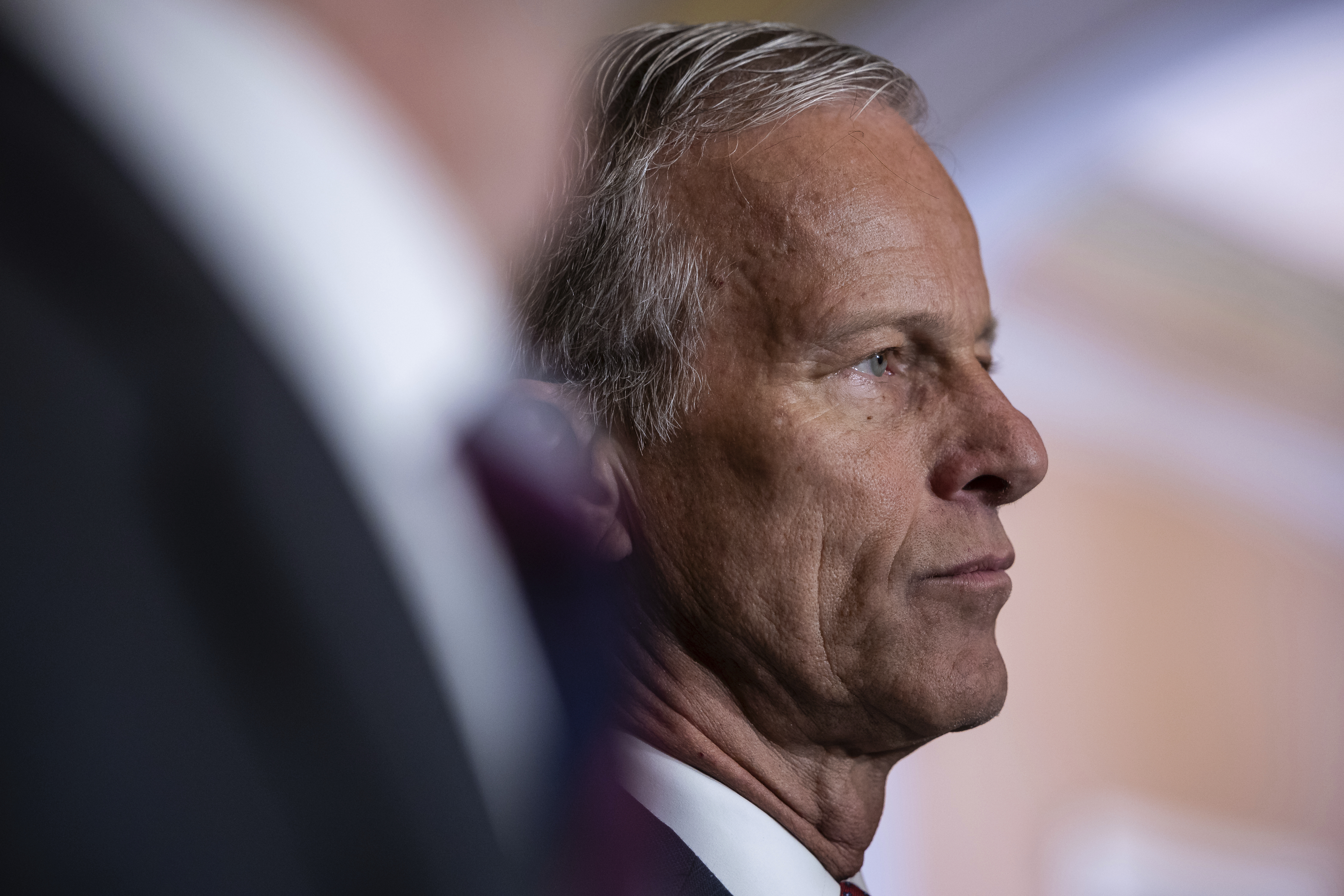
In an interview after the bill’s passage, Thune acknowledged that the decision to make the business tax cuts permanent impacted the savings and overall strategy for the bill.“We really believed that permanence was the key to economic growth because it creates certainty,” he said. “All the models that we saw showed that you got more growth with permanence.”
To compensate, Finance Committee Republicans significantly dialed back some of Trump’s marquee campaign promises to enact tax relief for tipped wages and overtime work. Many of those senators privately scoffed that the populist tax policies were not particularly pro-growth, as opposed to the write-offs for business equipment and research and development expenses.
Even more explosive, however, is how they chose to wring additional savings out of Medicaid. The joint federal-state health program had already emerged as a political hornet’s nest in the House, where members balked at various proposals that would turn off the federal money spigot and force states to kick residents off their health plans.
Eventually the House landed on a compromise proposal of capping medical provider taxes, a popular financing mechanism for state Medicaid programs. Many Republicans objected, but it beat several alternatives, such as explicitly reducing the federal cost share formula for Medicaid enrollees.
Medicaid backlash
Many Republican senators prepared to make their peace with the proposal, including Sen. Josh Hawley of Missouri, who said in a Monday interview that he was privately prepared to accept the House’s provider tax cap with minor tweaks after a hospital association in his state formally blessed it.
But before Hawley could announce his support, the Senate Finance Committee released a draft that discarded the freeze and instead drastically scaled down the tax. Instead of waving a white flag, Hawley went on the warpath, urging Thune to drop the Senate proposal and backchanneling with House leadership to undermine it.
Hawley, who described himself as “stunned” by the Senate’s provider tax language, said he never got an explanation for why leadership went down that route. In the interview, he held up and rubbed his fingers together — indicating that he believed they were looking for money.
“I think it’s a matter of our mark, the Senate mark, made a lot more of the business tax cuts permanent,” he said.
While leadership was ultimately able to get Hawley on board — he won approval for a radiation victims compensation fund he’s championed and other smaller goodies — the decision to go deeper on Medicaid lost Republicans two key senators during the final vote on Tuesday afternoon — Maine’s Susan Collins and North Carolina’s Thom Tillis.
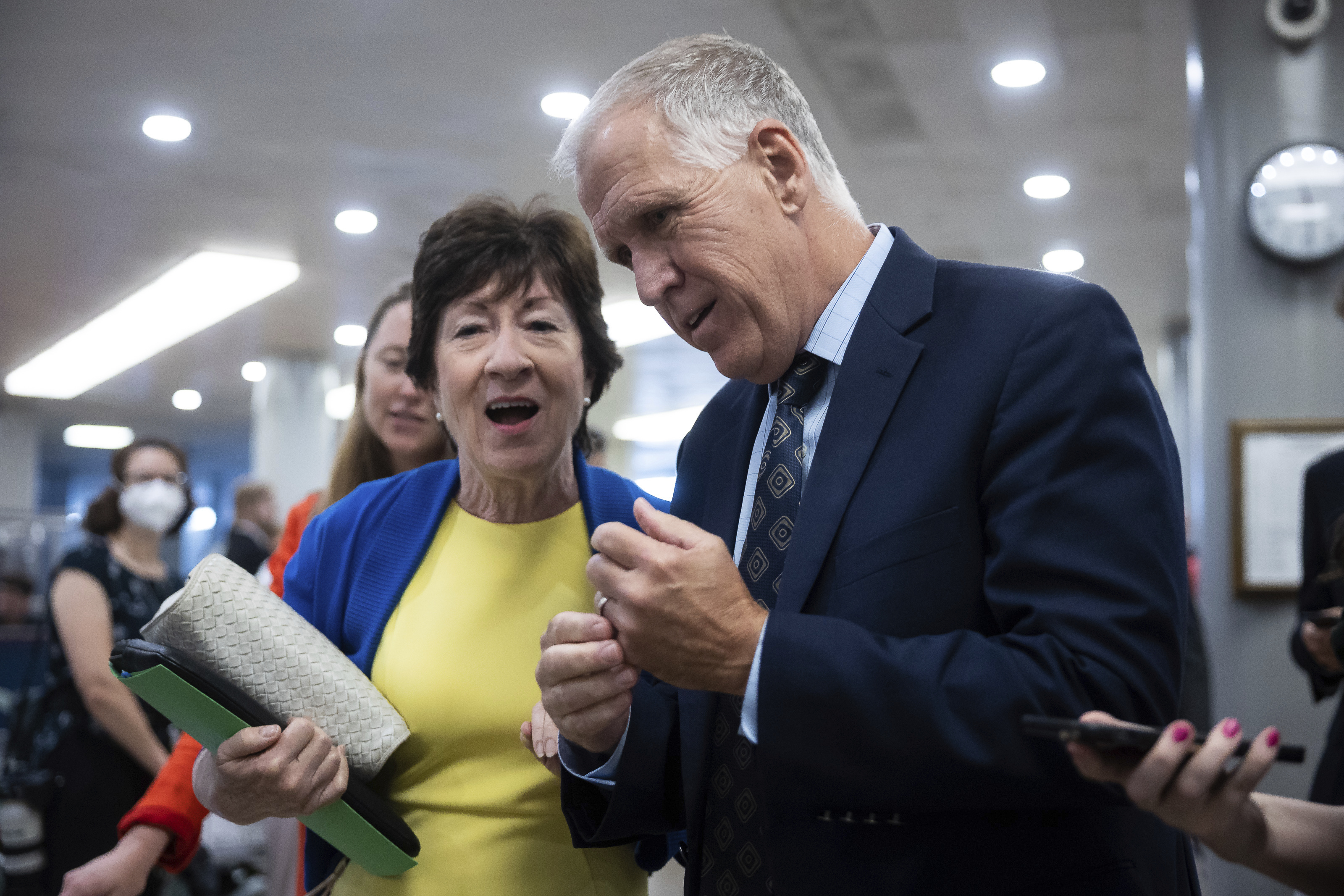
Both purple-state senators urged the Senate to revert to the House Medicaid language. Tillis privately warned leaders the Senate proposal would devastate his state and cost him reelection. Days later, he announced he would not run again and publicly torched the bill, saying it would “betray the promise Donald Trump made.”
The Senate’s Medicaid swerve has also put Speaker Mike Johnson in a bind. When he was locking down support for the House to pass its version of the bill, he privately reassured his members that the Senate would soften his chamber’s Medicaid cuts. Over the past week, he continued to reiterate to them that the Senate would end up closer to what the House passed. Now, he has to explain to increasingly frustrated House moderates why that didn’t happen.
But even as House Republicans were publicly banking on the Senate to soften the Medicaid cuts, Senate Republicans were pushing to go further. During an early June Finance Committee meeting with Trump at the White House, Sen. John Barrasso of Wyoming described to the president how the provider tax amounted to “money laundering” and would constitute cracking down on fraud, according to a person granted anonymity to disclose private discussions.
The parliamentarian and the billionaire
Other unpredictable events forced Senate Republicans to lose out on hundreds of billions of dollars in savings. After lengthy debates between Republican and Democratic staff in June, Senate Parliamentarian Elizabeth MacDonough advised that upward of $200 billion in House offsets would have to be left out of the bill because they didn’t comply with Senate budget rules.
House Republicans had also banked on $116 billion in revenue from retaliatory taxes aimed at dissuading foreign countries from implementing digital levies and a global minimum tax that the GOP detests. Shortly after the Senate included the proposal in its text — and a freakout by analysts on Wall Street — Treasury Secretary Scott Bessent announced a deal with G7 countries on the global tax and asked for the retaliatory taxes to be removed.
Other changes, like sharp cuts to certain clean-energy tax credits, seemed spurred more by politics than fiscal considerations. After the megabill passed the House in May, far-right influencers and lawmakers got increasingly vocal about what they perceived as deeply unfair subsidies to green industries.
Trump began calling Thune to urge him to take an axe to wind and solar energy incentives that had been enacted by former President Joe Biden, even after softened language backed by Senate moderates was inserted into the Finance Committee text. Trump told the same to Senate conservatives, many of whom had been swayed by fossil-fuel advocate Alex Epstein. They invited Epstein to address a Senate lunch in June to win over skeptical colleagues.
Even a late intervention from the world’s richest man couldn’t move the needle. Elon Musk publicly lashed out at Republicans for scaling back the tax credits, including making a public appeal to Speaker Mike Johnson to keep them online. He also personally approached Thune in recent days as the Senate debated the bill. Thune declined to comment on the conversation, but afterward Musk continued attacking the bill, arguing that it would hurt America’s ability to compete with China.
Senate holdouts did manage to clinch the removal of a controversial tax on solar and wind energy projects in 11th-hour negotiations, as well as a carve-out from the phaseouts for projects that start construction immediately. But the harsh language pushed by Epstein, which required most other wind and solar projects to be placed in service by the end of 2027 to qualify for the incentives, stayed in the final Senate product.
Tillis, liberated of political niceties after announcing his retirement, railed against the clean-energy changes on the Senate floor on Sunday, arguing that they would gut power projects that are already being developed.
Taking aim at Epstein, Tillis chalked up the changes to “people who have never worked a day in this industry, maybe philosophized and written a few white papers on it, but haven’t gotten their hands dirty.”
Ben Jacobs contributed to this report.


Congress
Trump apparently shares Tom Cotton’s phone number in push to make Daylight Saving Time permanent
President Donald Trump appeared to share Sen. Tom Cotton’s phone number in a Saturday morning social media post imploring the Arkansas Republican to get behind a bill to make Daylight Saving Time permanent.
“Almost everybody wants “The Sunshine Protection Act” to pass, except for Tom Cotton,” Trump wrote on Truth Social. “To the Great People of Arkansas, please let your Senator know it would be a GREAT Bipartisan WIN for the United States Senate, and for America, itself.”
The president has spent months personally pushing Senate Republicans to end the practice that sees Americans change their clocks twice a year, cementing more sunlight hours in the evening for all twelve months of the calendar. Cotton, whom Trump called “a friend of mine” in the Saturday post, has long argued that making daylight saving time permanent would leave children, farmers and other early risers in the dark for hours on winter mornings.
One of Trump’s key selling points on Saturday: the PGA tour.
“The PGA TOUR, as an example, needs more Daylight in the afternoon in order to finish their Tournaments,” he said, attaching a letter from PGA Tour CEO Brian Rolapp endorsing the bill. ”Likewise, regular Golfers, Tennis Players, Hunters and, perhaps most importantly, Farmers who want more Daylight to play or work.
A Blue Light News call to the cellphone number went to voicemail. A spokesperson for Cotton did not respond to a request for comment. The White House did not immediately respond to a request for comment.
The current version of the bill was introduced in the House in January 2025 by Rep. Vern Buchanan (R-Fla.), with Sen. Rick Scott (R-Fla.) leading the Senate version. The legislation would make daylight saving time permanent across most of the country, ending the twice-yearly clock changes. The legislation has been stalled in the Senate since July.
The president encouraged supporters of the bill, dubbed the “The Sunshine Protection Act,” to call Cotton to “let your Senator know it would be a GREAT Bipartisan WIN for the United States Senate, and for America, itself.”
During the 2016 Republican presidential primary, he publicly gave out the personal cellphone number of then-rival Sen. Lindsey Graham after the South Carolina Republican criticized him. Trump, who came to count on Graham as a reliable Senate ally after he won the presidency, revisited the moment during Graham’s funeral in July, acknowledging that sharing the number was something he “shouldn’t have done.”
Kelsey Brugger contributed to this report.
Sen. Bernie Sanders will hit the road for Troy Jackson in Maine starting Oct. 10, the first time the progressive leader will stump for the candidate this cycle.
The Vermont independent plans to hold three rallies with Jackson, according to an itinerary shared first with Blue Light News: first in Bangor on Oct. 10th followed by Lewiston and Biddeford on Oct. 11.
The Maine swing will kick off Sanders’ travel for the final stretch of the midterms, covering ground throughout October for House and Senate candidates, POLITICO reported.
“Bernie and Troy know that working people built this country and deserve a government that fights for them,” Jackson spokesperson Dan Gottlieb told Blue Light News. “Susan Collins has had nearly 30 years to deliver, and working Mainers are still getting squeezed while she serves the billionaires and corporate interests who bankroll her campaigns. Mainers don’t need another six years of excuses.”
Sanders campaigned ahead of major wins for progressives in the primary season, speaking at more than 60 rallies since last year’s Fight the Oligarchy tour and endorsing more than 90 candidates up and down the ballot.
He’s also opening his substantial $23 million campaign war chest, POLITICO reported, and contributing hundreds of thousands of dollars toMinnesota Lt. Gov. Peggy Flanagan’s Senate campaign and others including Angie Nixon in Florida and Minnesota Attorney General Keith Ellison,
Sanders will return to Maine after initially backing Graham Platner’s campaign for Senate. Allegations reported by POLITICO ultimately led him to call on the Democratic nominee to drop out of the race.
Sanders had not formally endorsed Jackson since he clinched the nomination from Platner, though he previously backed Jackson’s initial run for governor.
House Financial Services Chair French Hill said he has “no concerns” about winning back his Arkansas seat in the upcoming midterm elections, but the six-term House member acknowledged the political headwinds for his party.
“I consider the atmosphere a very tough political environment right now because of President [Donald] Trump’s lack of favorability at the top, and you know people are concerned about, as I say, what it’s like to live under an inflated economy the last four years,” Hill said in an interview.
Hill is in a solidly red district, according to the nonpartisan Cook Political Report, and said he is up against a “weaker candidate this time than I’ve had in past races.” Polling in the district, however, has shown a tighter race. The two polls done this year placed Democratic challenger Chris Jones ahead of Hill by a few percentage points. Any perceived polling victory for Jones is still well within the margin of error, and one of the polls had a Democratic sponsor.
Stephannie Lane Baker, a spokesperson for Jones, said that “of all the Republicans in Congress, the chairman of the Financial Services Committee doesn’t get to dodge responsibility for this economy. He’s in trouble, and he knows it.”
Additionally, Illinois Gov. JB Pritzker’s PAC, Ready for the Fight, committed more than $1 million in television ads through the next five weeks for Jones’ race in Arkansas’s 2nd District, Jordan Abudayyeh, a spokesperson for the PAC confirmed. Overall Democratic spending on advertising for the race was just over $1 million, primarily made up by contributions from the Ready for the Fight PAC, with Republicans spending almost $2.7 million on ad buys, according to AdImpact, an advertising tracking service.
Hill said he has addressed affordability concerns “head on” this Congress.
“My work on housing, my work on the Price Stability Act, my work to try to reduce waste, fraud, and abuse, and drop the federal budget deficit as a percentage of GDP,” Hill said. “All these things can contribute to a more affordable environment for people. So I’ve tried to make that a forefront of my campaign this year.”
Hill was a key architect of the 21st Century ROAD to Housing Act, a bipartisan housing affordability bill that became law in July. The Price Stability Act, which is unlikely to become law this year, would narrow the Federal Reserve’s current dual mandate of pursuing maximum employment and price stability to focus exclusively on containing inflation.
-

 Politics2 years ago
Former ‘Squad’ members launching ‘Bowman and Bush’ YouTube show
-
Uncategorized2 years ago
Bob Good to step down as Freedom Caucus chair this week
-

 The Josh Fourrier Show2 years ago
DOOMSDAY: Trump won, now what?
-

 The Dictatorship2 years ago
Pete Hegseth’s tenure at the Pentagon goes from bad to worse
-

 Politics2 years ago
Former Kentucky AG Daniel Cameron launches Senate bid
-

 The Dictatorship2 years ago
Luigi Mangione acknowledges public support in first official statement since arrest
-

 Politics2 years ago
Blue Light News’s Editorial Director Ryan Hutchins speaks at Blue Light News’s 2025 Governors Summit
-

 The Dictatorship1 year ago
Mike Johnson sums up the GOP’s arrogant position on military occupation with two words