
The Dictatorship
The Latest: Shaky ceasefire between Israel and Iran appears to hold


Today’s live updates have ended. Read what you missed below and find more coverage at apnews.com.
A new U.S. intelligence report suggests that Iran’s nuclear program has been set back only a few months by U.S. strikes, according to two people familiar with the early assessment who were not authorized to address the report publicly and spoke on condition of anonymity.
The assessment contradicts U.S. President Donald Trump’s statements that Iran’s nuclear program was “completely and fully obliterated” after the strikes. According to the people, the report issued by the Defense Intelligence Agency on Monday found that although Iran’s nuclear sites sustained significant damageat least some of Iran’s highly enriched uranium was moved prior to the strikes and survived, and Iran’s centrifuges were largely left intact.
Trump’s special Middle East envoy, Steve Witkoff, said the U.S. airstrikes achieved their objectives and the White House called the assessment “flat-out wrong.”
What to know:
- Terms of the ceasefire still unknown: Trump claimed a ceasefire between Iran and Israel was “in effect” on Tuesday, and while both Iran and Israel have acknowledged the shaky ceasefire, no details have emerged about the terms of the deal or what concessions either side may have made.
- Trump lashes out: After Israel claimed that Iran launched missiles into its airspace after the truce was supposed to take effect, which Iran denied, Trump used an expletive to hammer home his frustration at both nations as he spoke to reporters at the White House. He said he was “not happy” with Israel, adding that the two countries have fought “for so long and so hard” that they do not know what to do.
- Casualties: Israel’s emergency services claimed that 28 people in Israel were killed during the 12-day war. The Washington-based group Human Rights Activists said at least 974 people in Iran have been killed.
- How we got here: Israel launched a surprise barrage of attacks on sites in Iran on June 13which officials said were necessary to head off an imminent threat that Iran would build nuclear bombs. The two nations volleyed strikes for several days. The U.S. military struck Iran’s nuclear sites June 22, dismissing assessments from Trump’s own intelligence agents that Iran was not building a nuclear weapon.
Trump envoy says US and Iran discussing return to negotiating table
Trump’s special Middle East envoy, Steve Witkoff, says the U.S. and Iran are engaged in both direct talks and through intermediaries about getting back to the table after Israeli and U.S. strikes against Iran’s nuclear facilities.
“The conversations are promising. We’re hopeful,” he said in an interview with Fox News.
“Now it’s time to sit down with the Iranians and get to a comprehensive peace deal.”
Witkoff did not provide details but said the weekend U.S. airstrikes achieved their objectives: eliminating Iran’s ability to convert any weapons-grade uranium it might have had or produce in the future into an actual weapon; and setting back Iran’s ability to enrich uranium to that point by years.
France urges Iran to reach deal on nuclear program this summer or face ‘snapback’ of UN sanctions
France’s U.N. ambassador called on Iran to resume full cooperation with the International Atomic Energy Agency agency and allow access for U.N. nuclear inspectors as soon as possible to its nuclear facilities to determine that its uranium stocks have not been moved.
Jerome Bonnafont also called on Tehran to return to negotiations on “a robust, verifiable and lasting diplomatic solution” that responds to international concerns that it is pursuing nuclear weapons.
He spoke at a Security Council meeting on its resolution endorsing the 2015 nuclear deal between Iran and six major powers to rein in its nuclear program that imposed wide-ranging sanctions on the Islamic Republic. The last sanctions, on Iran’s nuclear activities and transfers, expire on Oct. 18.
Bonnafont said France and its European partners Britain and Germany, who are still part of the nuclear deal – President Trump pulled the U.S. out in 2018 – are ready to use the 2015 resolution’s provision to “snapback” U.N. sanctions “if such an agreement were not to be found by the summer.”
He said an agreement with Iran needs to take account the nonproliferation of nuclear weapons, regional stability and European security interests.
Early US intelligence report suggests US strikes only set back Iran’s nuclear program by months
A new U.S. intelligence report found that Iran’s nuclear program has been set back only a few months after a U.S. strike, and was not “completely and fully obliterated” as President Trump has said, according to two people familiar with the early assessment.
The early intelligence report issued by the Defense Intelligence Agency on Monday contradicts statements from Trump and Israeli Prime Minister Benjamin Netanyahu about the status of Iran’s nuclear facilities. The people were not authorized to address the matter publicly and spoke on condition of anonymity.
According to the people, the report found that while the Saturday strikes at the Fordo, Natanz and Isfahan nuclear sites did significant damage, they were not totally destroyed.
The White House strongly pushed back on the assessment, calling it “flat-out wrong.”
“The leaking of this alleged assessment is a clear attempt to demean President Trump, and discredit the brave fighter pilots who conducted a perfectly executed mission to obliterate Iran’s nuclear program,” White House press secretary Karoline Leavitt said in a statement.
The CIA and the Office of the Director of National Intelligence declined to comment on the DIA assessment.
US urges Iran ‘to seize this opportunity for peace’ and stop violating UN resolutions
The acting U.S. ambassador to the United Nations pointed to Iran’s accelerated nuclear activities, including uranium enrichment to 60%, in violation of the 2015 nuclear deal it signed with six key powers which was endorsed by the Security Council. President Trump pulled the U.S. out of the deal known as the JCPOA in 2018.
Dorothy Shea told a Security Council meeting on compliance with the 2015 agreement that Iran also violated U.N. resolutions by providing weapons to Yemen’s Houthi rebels, Hezbollah militants in Lebanon, and by transferring hundreds of drones to Russia in 2022 to use in attacks against Ukraine.
“Iran’s failure to uphold its nonproliferation obligations has prolonged conflicts and perpetuated instability across the Middle East and beyond for many years,” she said.
Shea warned that “The United States will not turn a blind eye to Iran’s noncompliance and ongoing threat to regional stability.”
She said U.S. airstrikes June 21 on three Iranian nuclear facilities were aimed at mitigating Iran’s threat to Israel, the region and more broadly to international peace and security — and degraded its capacity to produce a nuclear weapon.
“In this critical moment,” Shea said, “we must all urge Iran to seize this opportunity for peace and prosperity – and abide by its international obligations.”
JUST IN: Early US intelligence report suggests US strikes only set back Iran’s nuclear program by a few months, AP sources say
European Union says lasting solution to Iran nuclear issue can only be through a negotiated deal
EU Ambassador Stavros Lambrinidis told the U.N. Security Council that following the Israel-Iran ceasefire “we urgently need to come back to a diplomatic solution.”
He said Iran’s nuclear program can only be addressed with “adequate involvement of the international community.”
Ensuring Iran doesn’t acquire or develop a nuclear weapon is “a key security priority” for the 27-nation EU, he stressed.
Lambrinidis said the U.N. nuclear watchdog, the International Atomic Energy Agency, must remain “the sole impartial and independent international organization to monitor and verify the implementation of Iran’s nuclear non-proliferation commitments.”
Israel-Iran ceasefire is opportunity ‘to avoid catastrophic escalation,’ UN political chief says
Rosemary DiCarlo told the U.N. Security Council that the ceasefire is also an opportunity to peacefully resolve the Iran nuclear issue.
She said, “Diplomacy, dialogue and verification remain the best option to ensure the exclusively peaceful nature of Iran’s nuclear program and to bring about concrete economic benefits to the people of Iran.”
DiCarlo spoke at a council meeting on the remaining U.N. sanctions on Iranian nuclear activities and transfers under the 2015 nuclear deal it signed with six key nations in 2015 that expire in October. U.S. President Donald Trump pulled the U.S. out of the deal in 2018.
Israel’s UN ambassador says diplomacy ‘will happen soon’ following the Israel-Iran ceasefire
Danny Danon told U.N. reporters that “We will have to speak and negotiate and make sure that we will not repeat and get to the situation where we were 12 days ago, where we had a major threat in the Middle East.”
While it’s still too early to assess all the strikes on Iran’s nuclear facilities, he said, “We know we were able to push back the program, we were able to remove the imminent threat that we had.”
As for calls for a ceasefire in the Israel-Hamas war in Gaza, Danon said Israel hopes to renew negotiations on the ceasefire proposal that U.S. Mideast envoy Steve Witkoff put on the table.
He also said he has no doubt that Israel’s ability to confront the threats it faced during the conflict will lead other countries to normalize relations with his country.
In response to a question, Danon said, “I think that president Trump deserves a Nobel Peace Prize.”
Israel to ease nationwide civil defense restrictions
Israel’s military announced Tuesday that it is easing nationwide civil defense restrictions, allowing most of the country to return to full activity starting at 8 p.m. local time.
The decision, made following a situational assessment and approved by Defense Minister Israel Katz, applies to all areas except communities near the Gaza border, which will continue to follow Southern Command guidelines, the military said.
Netanyahu says Israel brought Iran’s nuclear program ‘to ruin’

FILE – Israeli Prime Minister Benjamin Netanyahu speaks during a press conference in Jerusalem, May 21, 2025. (Ronen Zvulun/Pool Photo via AP, File)
FILE – Israeli Prime Minister Benjamin Netanyahu speaks during a press conference in Jerusalem, May 21, 2025. (Ronen Zvulun/Pool Photo via AP, File)
Israeli Prime Minister Benjamin Netanyahu said Tuesday that Israel’s war against Iran brought the country’s nuclear program “to ruin.”
Speaking in a televised statement, he listed Israel’s achievements in the war, including its attacks on top generals and nuclear scientists. He said Israel destroyed nuclear facilities in Natanz and Isfahan, along with the Arak heavy water reactor.
“For dozens of years, I promised you that Iran would not have nuclear weapons and indeed … we brought to ruin Iran’s nuclear program,” Netanyahu said.
JUST IN: Netanyahu says Israel brought Iran’s nuclear program ‘to ruin’
After US strikes on Iran, Trump told Netanyahu not to expect further American offensive military action, White House official says
After the U.S. carried out strikes on Iran, President Trump told Israeli Prime Minister Benjamin Netanyahu not to expect further American offensive military action, a senior White House official said.
Following Sunday’s bombardment on three key Iranian nuclear sites, Trump told Netanyahu that it was time to stop the war and return to diplomatic negotiations.
Trump’s position was that the U.S. had removed any imminent threat posed by Iran, according to the official, who spoke on the condition of anonymity because they were not authorized to comment publicly about the sensitive diplomatic talks.
The U.S. official said Netanyahu understood Trump’s stance that the U.S. had no desire to be further involved with the situation militarily.
JUST IN: After US strikes on Iran, Trump told Netanyahu not to expect further American offensive military action, AP source says
Secretary of State makes Iran-related phone calls with various foreign ministers
The State Department said Tuesday that Secretary of State Marco Rubio had spoken to Turkmenistan’s foreign minister, Rashid Meredov, about the conflict, mainly to impress the importance the U.S. places on allowing American citizens to leave neighboring Iran by land through his country.
Nearly 200 American citizens had been stuck at the Iranian-Turkmenistan border over the weekend waiting for permission to enter.
The State Department sent a diplomatic note to Turkmenistan appealing for assistance in the matter on Sunday and officials said Tuesday that the situation appeared to have been resolved.
“The United States expressed gratitude for Turkmenistan’s cooperation and looks forward to further partnership with Turkmenistan, including expanding economic and commercial ties,” the State Department said in a readout of Rubio’s call.
Rubio also spoke by phone about Iran with Italian Foreign Minister Antonio Tajani in part to review “next steps to promote a durable peace between Israel and Iran.”
Italy has hosted several rounds of now-stalled nuclear talks between the U.S. and Iran and has offered, along with the Vatican, to host more in the future. The readout of the Rubio-Tajani call provided no additional details.
UN chief urges Israel and Iran to respect the ceasefire and hopes it can be replicated in Gaza
Secretary-General Antonio Guterres welcomed U.S. President Trump’s announcement of a ceasefire and said the fighting must stop.
“The people of the two countries have already suffered too much,” he tweeted on X.
As for the war in Gaza, U.N. spokesman Stephane Dujarric said the United States, Qatar and Egypt have been able to achieve limited ceasefires between Israel and Hamas.
“It is high time that leaders on both sides find the political courage to put a stop to this carnage,” he said
Pakistan welcomes ceasefire between Iran and Israel, urges parties to uphold the agreement
The Ministry of Foreign Affairs also said in the Tuesday statement that Islamabad welcomes and supports efforts aimed at reviving dialogue and diplomacy in the region.
“Pakistan believes that lasting peace and stability can only be achieved through strict adherence to the purposes and principles of the United Nations Charter and by refraining from the use of force,” the ministry said.
The country has no diplomatic ties with Israel and has said it is ready to play a role in promoting peace in the Middle East.
The IAEA says additional impacts from US strikes on nuclear facilities in Iran may have caused localized contamination
The IAEA said it has identified additional impact points at the Fordo and Natanz nuclear sites, including possible localized contamination and chemical hazards.
“Regarding the additional strikes to Fordo that were reported early on Monday – after the U.S. bombing of the facility early on Sunday – the IAEA assesses that access roads close to the underground facility and one of its entrances were hit,” the statement read.
At Natanz, the IAEA said that it has identified “two impact holes from the U.S. strikes above the underground halls that had been used for enrichment as well as for storage.”
“Based on its knowledge of what these halls contained, the IAEA assesses that this strike may have caused localized contamination and chemical hazards,” it added.
UN nuclear watchdog chief stresses need for agency to resume work in Iran
International Atomic Energy Agency chief Rafael Grossi said that he wrote a letter to Iranian Foreign Minister Abbas Araghchi stressing the need for a resumption of the agency’s work in Iran and expressing readiness for a meeting.
“Resuming cooperation with the IAEA is key to a successful diplomatic agreement to finally resolve the dispute over Iran’s nuclear activities,” he said in the statement published by the agency.
The agency’s inspectors have “remained in Iran throughout the conflict and are ready to start working as soon as possible, going back to the country’s nuclear sites and verifying the inventories of nuclear material – including more than 400 kg of uranium enriched to 60% – which they last verified a few days before the Israeli air strikes began on 13 June,” the statement said.

International Atomic Energy Agency (IAEA) Director General, Rafael Grossi, attends an IAEA Board of Governors meeting in Vienna, Austria, Monday, June 23, 2025. (AP Photo/Michael Gruber)
International Atomic Energy Agency (IAEA) Director General, Rafael Grossi, attends an IAEA Board of Governors meeting in Vienna, Austria, Monday, June 23, 2025. (AP Photo/Michael Gruber)
Oil prices drop further
Oil prices are dropping further on hopes that Israel’s war with Iran will not damage the global flow of crude.
A barrel of benchmark U.S. crude has fallen 4.9% to $65.12. Brent crude, the international standard, has dropped 4.8% to $67.13.
Oil prices have dropped so much in the last two days that they’re below where they were before Israel attacked Iran nearly two weeks ago.
Iran is a major producer of crude, and it could try to block the Strait of Hormuz off its coast. That’s where 20% of the world’s daily oil needs pass through on ships.
UN calls Israeli attack on an Iranian prison a breach of international law
The United Nations human rights office has called Israel’s attack on Iran’s Evin prison a “grave” breach of international humanitarian law. It says the prison should not have been a target.
Israel on Monday attacked the prison, which is known for holding political activists. Israel said it attacked “regime targets and government repression bodies in the heart of Tehran.”
Iran says it has transferred all inmates out of the prison so workers can repair damage.
US official: Iran still has tactical capability to threaten US
A top U.S. military official says Iran still possesses “significant tactical capability” in spite of an American strike over the weekend on three of the country’s nuclear sites.
Vice Admiral Brad Cooper told lawmakers Tuesday that capability was demonstrated by a limited retaliatory missile strike by Iran a day earlier on a U.S. military base in Qatar.
In response to a question about whether Iran still poses a threat to U.S. troops and Americans around the world, he replied, “They do.”
Cooper, currently the deputy commander of the U.S. Central Command, made the remarks at a Senate Armed Services Committee hearing as the panel considers his nomination for the position of commander of Central Command.
US strikes on Iran add to global travel disruptions
The U.S. entry into Israel’s war with Iran caused travel disruptions to pile up globally this week, with flight cancellations continuing Tuesday.
Airports and skies throughout the region have been on edge since Israel began the deadly war on June 13. And in the days following the escalatory U.S. strikes, more and more carriers canceled flights, particularly in Qatar and the United Arab Emirates, which sit just across the Persian Gulf from Iran.
Qatar Airways said its flights were suspended because of Monday’s closure of air traffic in Qatar. Qatar Airways shared that it was working to restore operations after the country’s airspace reopened — but noted that disruptions may continue through Thursday.
Emirates suspended all flights to Iran and Iraq, including those serving Baghdad and Basra, through June 30.
Elsewhere, Singapore Airlines, British Airways and Dutch carrier KLM were among firms cancelling some flights to Middle Eastern airports.
China says it supports Iran in achieving real ceasefire

FILE – In this Aug. 30, 2020 file photo, Chinese Foreign Minister Wang Yi delivers a speech during a press conference at the Institute for International Relations in Paris. (AP Photo/Kamil Zihnioglu, File)
FILE – In this Aug. 30, 2020 file photo, Chinese Foreign Minister Wang Yi delivers a speech during a press conference at the Institute for International Relations in Paris. (AP Photo/Kamil Zihnioglu, File)
China supports Iran in safeguarding its sovereignty and security and “achieving a real ceasefire,” Chinese Foreign Minister Wang Yi said in a phone call Tuesday with his Iranian counterpart.
Wang repeated China’s earlier condemnation of the military strikes on nuclear facilities in Iran and thanked Tehran for its support in evacuating Chinese citizens in Iran, according to a readout of their conversation published on the Chinese Foreign Ministry’s website.
Iranian Foreign Minister Abbas Araghchi said that though Iran and Israel have agreed on a ceasefire, the situation remains unstable.
He said “real negotiations” can only begin once Israel halts its “aggression.”
Egypt and Iran agree to work on de-escalation in the region
Egypt’s Foreign Minister Badr Abdelatty attends a joint press conference with U.S. Secretary of State Antony Blinken in Tahrir Palace in Cairo, Egypt Wednesday, Sept. 18, 2024. (Evelyn Hockstein/Pool Photo via AP)
Egypt’s Foreign Minister Badr Abdelatty attends a joint press conference with U.S. Secretary of State Antony Blinken in Tahrir Palace in Cairo, Egypt Wednesday, Sept. 18, 2024. (Evelyn Hockstein/Pool Photo via AP)
Egypt’s foreign minister Badr Abdelatty has emphasized to his Iranian counterpart, Abbas Araghchi, the importance of honoring the sovereignty of Gulf and Arab states.
During the call on Tuesday, Araghchi confirmed that Iran respects the sovereignty and peace of Qatar and honors the friendly neighborhood policy, according to a statement released by Egypt’s foreign ministry.
Both foreign ministers agreed to work on de-escalation in the region.
Trump: China can continue to purchase oil from Iran
President Donald Trump has said in a social media post said that “China can now continue to purchase Oil from Iran,” suggesting that the ceasefire would prevent the disruption of Iranian oil production.
A 2024 re port by the U.S. Energy Information Administration contained estimates suggesting that roughly 80% to 90% of the oil exported by Iran went to China.
The Chinese economy could struggle to preserve its industrial production without the roughly 1.2 million barrels of oil and other fossil fuels provided by Iran.
About 100 French nationals arrive in Cyprus from Israel
About 100 French citizens have arrived in Cyprus on Tuesday aboard a French military aircraft that evacuated them from Israel.
The passengers, who flew from Tel Aviv, will catch flights from Cyprus back to France.

In this photo provided by the French Army, French nationals embark an A400M as they are evacuated from Tel Aviv’s Ben Gurion airport to Cyprus, Tuesday, June 24, 2025. (Etat-Major des Armées via AP)
In this photo provided by the French Army, French nationals embark an A400M as they are evacuated from Tel Aviv’s Ben Gurion airport to Cyprus, Tuesday, June 24, 2025. (Etat-Major des Armées via AP)
Jeremie Khiat said he arrived in Israel 15 days ago for a vacation when the missiles started flying at the start of the war between Israel and Iran on June 8.
He said “lots of buildings where destroyed” in the area where he was staying near the U.S. embassy in Tel Aviv.
“There was like a few attacks that were very scary, but everyone is doing great,” said Khiat.
Cyprus has become a key transit hub for people evacuated from Israel to be repatriated following the start of the war.
Russia says it is ready to help settle the conflict

Russian Foreign Minister Sergey Lavrov attends the talks between Russian President Vladimir Putin and Interim President of the Republic of Mali Assimi Goita at the Grand Kremlin Palace at the Kremlin in Moscow, Russia, Monday, June 23, 2025. (AP Photo/Pavel Bednyakov, Pool)
Russian Foreign Minister Sergey Lavrov attends the talks between Russian President Vladimir Putin and Interim President of the Republic of Mali Assimi Goita at the Grand Kremlin Palace at the Kremlin in Moscow, Russia, Monday, June 23, 2025. (AP Photo/Pavel Bednyakov, Pool)
Russian Foreign Minister Sergey Lavrov says Moscow is ready to help settle the conflict between Israel and Iran, but will not act as a mediator.
Lavrov spoke Tuesday in Moscow. He also asserted that there was no evidence Iran had been readying an attack on Israel before Israel attacked.
Analysts say Russia’s muted response to the U.S. attack on Iran nuclear sites, without any apparent military aid, is likely to disappoint Iran. It also reflects Russia’s diminished influence in the Middle East.
The Kremlin has bristled at suggestions it is abandoning or neglecting Iran. Kremlin spokesman Dmitry Peskov on Tuesday denied claims that Moscow had not given meaningful support.
India welcomes ceasefire
India has welcomed the role played by the U.S and Qatar in bringing about the ceasefire between Iran and Israel.
“There is no alternative to dialogue and diplomacy,” India’s foreign ministry said in a statement on Tuesday, expressing hope that all concerned parties will work towards sustained peace.
Israeli ambassador: Strikes have killed at least 14 Iranian scientists
Israeli ambassador to France Joshua Zarka speaks during a ceremony in remembrance of the 11 Israeli athletes killed during the 1972 Munich Olympic Games, at the 2024 Summer Olympics, Tuesday, Aug. 6, 2024, in Paris, France. (AP Photo/David Goldman)
Israeli ambassador to France Joshua Zarka speaks during a ceremony in remembrance of the 11 Israeli athletes killed during the 1972 Munich Olympic Games, at the 2024 Summer Olympics, Tuesday, Aug. 6, 2024, in Paris, France. (AP Photo/David Goldman)
In an interview with The Associated PressIsrael’s ambassador to France said Israeli strikes have killed at least 14 Iranian physicists and nuclear engineers who he alleged were “personally involved” in nuclear weapons development.
Ambassador Joshua Zarka said “the fact that the whole group disappeared is basically throwing back the program by a number of years.”
He said the strikes could deter other scientists from taking their place. “I do think that people that will be asked to be part of a future nuclear weapon program in Iran will think twice about it,” he said Monday.
On Tuesday, Iran state TV reported the death of another Iranian nuclear scientist, Mohammad Reza Sedighi Saber, in an Israeli strike.
Nuclear analysts say Iran has other scientists who can take their place.
China says it hopes a ceasefire can be realized soon
China has reacted to President Trump’s announcement of a ceasefire between Israel and Iran, saying it does not want to see “the spiral of escalations.”
China’s comments came in a foreign ministry briefing Tuesday. It said it hopes that “a ceasefire can be realized as soon as possible.”
China is Iran’s largest trading partner and only remaining oil customer. It had condemned the weekend U.S. strikes on Iran nuclear sites and called them a serious violation of international law that further inflamed tensions in the Middle East.
Iran calls Qatari Emir to express regret over attack on military base
Iran’s president has called the Qatari Emir and expressed his regret over the attack on a U.S. military base in Qatar, according to Qatari Prime Minister Mohammed bin Abdulrahman Al Thani.
The Emir told the Iranian president on Tuesday that Qatar is a friendly neighbor and and didn’t expect a move that violated the country’s sovereignty, Al Thani said.
“We welcome the announcement (of the ceasefire) despite the violations we saw today. We hope the ceasefire holds and we call parties to abide by the ceasefire reached,” he said.

FILE – Qatar’s Prime Minister Sheikh Mohammed Bin Abdulrahman Al Thani speaks at a joint press conference with the U.S. secretary of state in Doha, Qatar, June 12, 2024. (Ibraheem Al Omari/AP File)
FILE – Qatar’s Prime Minister Sheikh Mohammed Bin Abdulrahman Al Thani speaks at a joint press conference with the U.S. secretary of state in Doha, Qatar, June 12, 2024. (Ibraheem Al Omari/AP File)
Trump: Iran ‘should be able to rebuild and do a good job’
“You know, the Iranians are very good traders, very good businesspeople, and they got a lot of oil. They should be fine. They should be able to rebuild and do a good job,” Trump continued on Air Force One.
“They’re never going to have nuclear, but other than that they should do a great job,” he told reporters.
Trump says he doesn’t want regime change in Iran
President Donald Trump said he wasn’t seeking regime change in Iran, two days after first floating the idea.
“I don’t want it. I’d like to see everything calm down as quickly as possible,” Trump told reporters on Air Force One as he traveled to the NATO summit in The Hague, Netherlands. “Regime change takes chaos and ideally, we don’t want to see so much chaos, so we’ll see how it does.
Over the weekend, he mused on his social media account that “if the current Iranian Regime is unable to MAKE IRAN GREAT AGAIN, why wouldn’t there be a Regime change???”
Israel’s emergency services: 28 killed during 12 days of war with Iran

Israeli soldiers and rescue workers carry a body from a residential building destroyed by an Iranian missile strike that killed several people, in Beersheba, Israel, on Tuesday, June 24, 2025. (AP Photo/Bernat Armangue)
Israeli soldiers and rescue workers carry a body from a residential building destroyed by an Iranian missile strike that killed several people, in Beersheba, Israel, on Tuesday, June 24, 2025. (AP Photo/Bernat Armangue)
As a ceasefire between Iran and Israel took effect Tuesday, Israel’s emergency services released final figures from 12 days of fighting.
According to the data, 1,347 people in Israel were affected, including 28 killed, 17 seriously wounded, 29 moderately wounded, 872 lightly wounded and 401 treated for anxiety.
Netanyahu’s office says he held off on tougher strike after speaking to Trump
Netanyahu’s office says Israel struck an Iranian radar in response to the Iranian missile attack early Tuesday. But it says the Israeli leader held off tougher action after an appeal from President Donald Trump.
“Following President Trump’s conversation with Prime Minister Netanyahu, Israel refrained from additional attacks,” Netanyahu’s office says.
JUST IN: Israel’s Netanyahu says he held off tougher strike against Iran after speaking to President Donald Trump
JUST IN: Trump affirms he isn’t looking for regime change in Iran as tentative ceasefire takes hold
Iran TV says another nuclear scientist was killed in Israeli airstrike
A high-profile Iranian nuclear scientist was killed in an Israeli strike, Iran state TV said, making him the latest in a list of top atomic experts who are said to have been killed in Israeli attacks over the last 12 days.
Mohammad Reza Sedighi Saber, who the U.S. State Department had sanctioned last month, was killed at his father-in-law’s residence in an early Tuesday morning strike in northern Iran, according to the report.
It added that three projectiles had hit the residence, and an earlier round of strikes had killed his 17-year-old son on June 13.
The Council on Foreign Relations on Monday said that Israeli strikes had killed at least 10 nuclear scientists since the Israel-Iran war broke out. The U.S. State Department last month described Sedighi Saber as the head of Iran’s Organization of Defensive Innovation and Research’s Shahid Karimi Group, which works on explosives-related projects, adding that he was “linked to projects including research and testing applicable to the development of nuclear explosive devices.”
Trump ‘exceptionally firm and direct’ in call with Netanyahu
President Donald Trump has spoken to Israeli Prime Minster Benjamin Netanyahu from Air Force One as he made his way to the NATO summit at The Hague.
Trump did not mince words, according to a White House official familiar with the matter. The official, who was not authorized to comment publicly about the private leaders’ call, said Trump was “exceptionally firm and direct with Prime Minister Netanyahu about what needed to happen to sustain the ceasefire.”
The official added that Netanyahu understood the severity of situation and acknowledged Trump’s concerns.
Trump says ‘ceasefire is in effect’
President Donald Trump has said in a Truth Social post that Israeli fighter jets will “turn around” and won’t attack Iran, as he presses both sides to abide by a ceasefire.
The comments came shortly after he expressed deep frustration with both Israel and Iran as the truce appeared to falter.
“ISRAEL is not going to attack Iran. All planes will turn around and head home, while doing a friendly ‘Plane Wave’ to Iran. Nobody will be hurt, the Ceasefire is in effect!” Trump said in his post.
Egyptian president condemns Iran’s attack on US air base in Qatar
“Egypt completely rejects any violation of the sovereignty of the State of Qatar, following the recent Iranian attacks on the Al-Udeid base,” read a statement from the spokesperson for Egyptian President Abdel Fattah El-Sissi.
It also lauded the Qatari military’s capability and the efficiency of its air defense systems in repelling Iran’s attack.
Iran launched a limited missile attack Monday on the U.S. military base, retaliating for the American bombing of its nuclear sites.
Trump warns Israel to ‘bring your pilots home now’
President Donald Trump has expressed deep disappointment with both Israel and Iran over the truce he helped broker as validation for his strategic gamble of ordering U.S. airstrikes on Iranian nuclear sites.
“I’m not happy with them. I’m not happy with Iran either but I’m really unhappy with Israel going out this morning,” Trump said at the White House.
He used an expletive as he spoke to reporters.
“We basically have two countries that have been fighting so long and so hard that they don’t know what the f— they’re doing.”
The president took to his Truth Social platform to warn Israel to end its attacks.
“ISRAEL. DO NOT DROP THOSE BOMBS. IF YOU DO IT IS A MAJOR VIOLATION,” Trump posted. “BRING YOUR PILOTS HOME, NOW!”
Turkey urges all parties to fully observe ceasefire
Turkey has welcomed the ceasefire between Israel and Iran but also said it was closely monitoring statements indicating violations.
In a statement issued Tuesday, the Turkish Foreign Ministry urged all parties to fully observe the ceasefire the “critical period ahead,” saying the Middle East was in need of peace and stability.
The ministry also called for the resolution of the Palestinian issue which it described as being at the “root of many problems in the Middle East.”
Macron expresses concerns that Iran could continue work to enrich uranium
French President Emmanuel Macron has expressed concerns that the Israel-Iran war has increased the risk that Iranian leaders will continue work in secret to enrich uranium that can be used for nuclear weapons.
“This risk has, it’s true, increased with what has happened recently,” Macron said. He was asked if Iranian uranium-enrichment work could continue in secret after nearly two weeks of Israeli airstrikes and the dropping of giant bunker-busting bombs by U.S. stealth bombers on Iranian nuclear plants.
He repeated France’s desire for negotiations to address concerns about Iran’s nuclear and ballistic missile programs.
“Our shared objective is that Iran doesn’t equip itself with a nuclear weapon,” he said.
Trump: Israel and Iran violated ceasefire
President Donald Trump says both Israel and Iran violated ceasefire terms with attacks following an early Tuesday deadline to cease hostilities.
Trump made the comments to reporters at the White House before departing for the NATO summit at The Hague. He expressed disappointment about the continued attacks.
“They violated it but Israel violated it too,” Trump said. He added, ”I’m not happy with Israel.”
JUST IN: Trump says both Israel and Iran violated a ceasefire.
Qatar condemns Iranian attacks on US air base
“Attacking Qatar is unacceptable… we were surprised by the attack on the military base,” said Qatari Prime Minister and Foreign Affairs Minister Mohammed bin Abdulrahman Al Thani, referring to Monday’s attack on the Al idid on base.
The base is a sprawling desert facility in Qatar that serves as a major regional military hub for American forces.
He told reporters Tuesday that the Iranian attack had left a “scar” on his country’s relationship with Tehran.
Al Thani said Qatar will not resort to escalatory steps, but will rely on legal measures and diplomacy instead when responding to the attack. He added that Qatar intercepted all missiles except one that fell in a deserted area.
A gaping hole in the city of Beersheba after Iranian strike
In the Israeli city of Beersheba, where an Iranian missile hit the top floor of an apartment building and killed several people, a gaping hole overlooked the street where the side of an apartment building once stood.
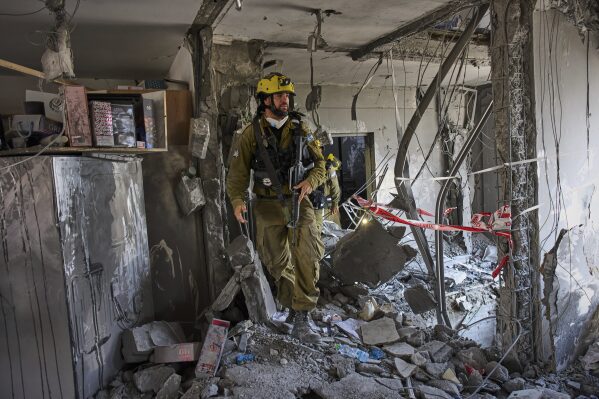
Israeli soldiers from the search and rescue unit work amid the rubble of residential buildings destroyed by an Iranian missile strike that killed several people, in Beersheba, Israel, on Tuesday, June 24, 2025. (AP Photo/Bernat Armangue)
Israeli soldiers from the search and rescue unit work amid the rubble of residential buildings destroyed by an Iranian missile strike that killed several people, in Beersheba, Israel, on Tuesday, June 24, 2025. (AP Photo/Bernat Armangue)
AP reporters got rare access into the building and saw clothes and kitchen utensils strewn among the smashed concrete, as first responders kept searching for survivors and bodies.
The responders say that the damage caused by Iran’s ballistic missiles was more extensive than attacks they’ve dealt with in the past. They also include bomblets — small explosive submunitions — which makes it more dangerous to search for people as quickly as the area has to first be cleared.
Israeli strike killed 7 Revolutionary Guard members Monday, Iran media reports
An Israeli strike Monday on Iran’s city of Karaj near Tehran killed seven members of Iran’s Revolutionary Guard, including two generals with the paramilitary force, the state-run IRNA news agency reported.
Iran claims Israeli strikes continued until 9am local
The central headquarters of Iran’s Revolutionary Guard has claimed that Israel conducted strikes in Iran until 9 a.m. local (0530GMT,) Iranian state television reported.
However, there were no reports of Israeli strikes in Iran after 4 a.m. local, around the time Iranian Foreign Minister Abbas Araghchi said Tehran would hold its fire if Israel did the same. The Guard offered no evidence to support their claim of the later Israeli attacks.
Under the ceasefire plan announced by President Donald Trump, Israel had until 1000GMT to conduct strikes.


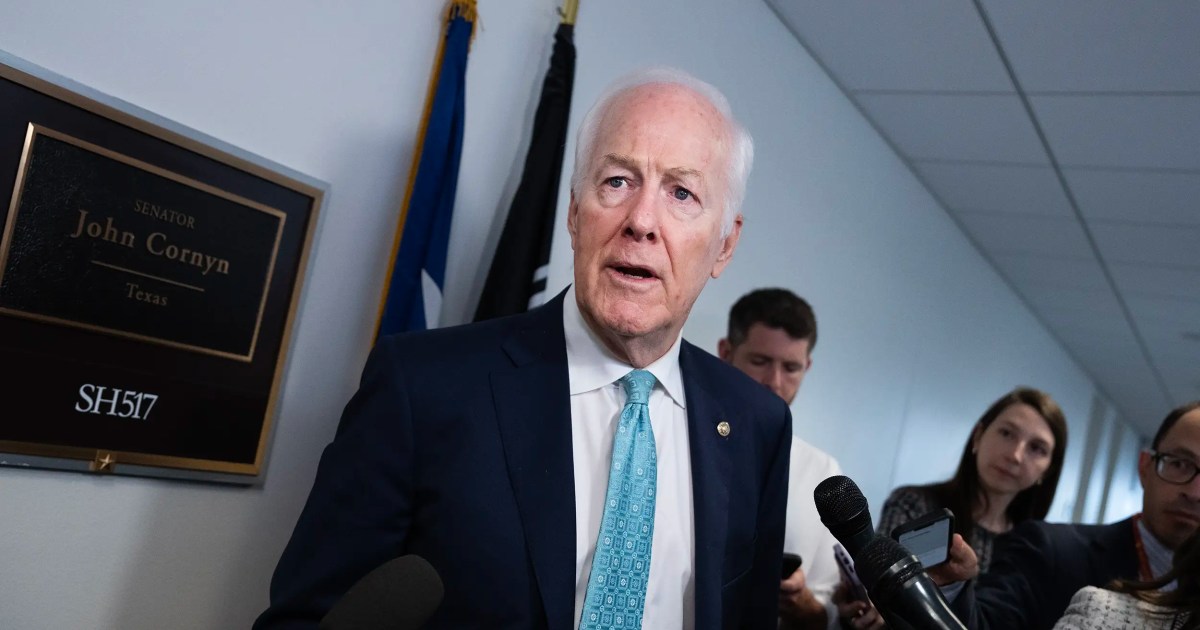
The Senate Judiciary Committee postponed a vote on acting Attorney General Todd Blanche’s nomination, a spokesperson said late Wednesday, as two retiring Republicans on the panel dug in over President Donald Trump’s personal “anti-weaponization” deal with the government he runs.
Sen. Chuck Grassley’s decision to delay the committee vote that had been set for Thursday marks a setback for one of Trump’s highest-profile Cabinet nominees, at the hands of Texas Sen. John Cornyn and Sen. Thom Tillis of North Carolina, a pair of Republicans set to leave the chamber next year.
“Chairman Grassley works to set President Trump’s nominees up for success in committee, not failure. Senators Cornyn and Tillis want written assurances from the Department of Justice regarding the Trump-IRS settlement,” the committee spokesperson said.
Blanche’s nomination to permanently head the Department of Justice needs the support of either Cornyn or Tillis to make it out of the committee to a vote by the full Senate, assuming all Democrats remain opposed.
“Why don’t you call over the Department of Justice and tell them they have one hour and 50 minutes to get me what I asked for,” Cornyn told reporters Wednesday afternoon amid the hardening standoff over his demand that Blanche and the DOJ put in writing a commitment never to pursue the president’s prized “anti-weaponization” fund, and to clarify the terms of Trump’s personal deal with the Internal Revenue Service.
Tillis told MS NOW that the conversations were complicated by the need for the Justice Department to get “several parties” to agree on the language of the statement Cornyn and Tillis are seeking.
“What I’ve advised the chair, and I would assume Senator Cornyn said something similar, is that we’re not prepared to vote yes yet,” he added.
“The Department has been in regular communication with Committee members for weeks, and we look forward to continuing to work productively with Senators to address any concerns,” a Justice Department spokesperson said in response to the decision to postpone the committee vote.
Cornyn was set to meet with Blanche on Wednesday morning, but the meeting was called off after Blanche failed to meet the senator’s demand for written proposals to modify the controversial settlement agreement he brokered between Trump and the IRS. The Republican senator is set to leave Congress when his term ends in January after a bruising May primary loss to Texas Attorney General Ken Paxton, Trump’s chosen candidate.
“Maybe John Cornyn’s upset with me because I didn’t endorse him,” Trump told reporters Wednesday afternoon in the Oval Office. “I don’t know what it is, but I haven’t heard that there’s a problem. I heard (Blanche) is going through quite nicely.”
Cornyn made clear to Blanche during his confirmation hearing that he will not get his support until he agrees to reopen and modify the settlement. Due to the committee’s narrow Republican majority, one GOP “no” vote is enough to sink Blanche’s nomination.
The senator has asked Blanche to provide proof that the proposed nearly $1.8 billion “anti-weaponization” fund established as part of the deal between Trump and the IRS is formally dead, and he has also demanded Blanche narrow the tax audit immunity provisions the settlement afforded to Trump and his family.
Blanche has publicly stated that his department has dropped the fund, but he and the DOJ have dodged requests from Cornyn and a federal judge to put that in writing.
After announcing his meeting with Blanche would not take place Wednesday morning, Cornyn told reporters that changes from Blanche “in a modified release form” would be acceptable, but that “for some reason … they simply refuse to do it,” referring to the DOJ.
Shortly after the meeting was called off, a Justice Department official told MS NOW that the department “provided a written proposal to Senator Cornyn’s staff yesterday following ongoing discussion with both the Committee and the Senator’s office.”
Cornyn said that proposal was “not responsive” to his demands because it did not address the tax audit immunity provisions in the settlement, one of his key demands.
In May, Blanche signed an addendum as part of the deal that granted Trump, his family and his businesses immunity from pending IRS tax audits. That agreement, which has been decried by former IRS officials and legal experts as unlawful self-dealing, is being contested in federal court.
Cornyn noted that Blanche testified under oath that he could meet the request during his confirmation hearing.
“Maybe they think I’m just going to give up or you know, go along, but they’re mistaken,” Cornyn said when asked why he thinks the DOJ could be slow-walking his request.
Kevin Frey contributed to this report.
Sydney Carruth is a breaking news reporter covering national politics and policy for MS NOW. You can send her tips from a non-work device on Signal at SydneyCarruth.46 or follow her work on X and Bluesky.
Mychael Schnell is a reporter for MS NOW.
Ebony Davis is a breaking news reporter for MS NOW based in Washington, D.C. She previously worked at BLN as a campaign reporter covering elections and politics.
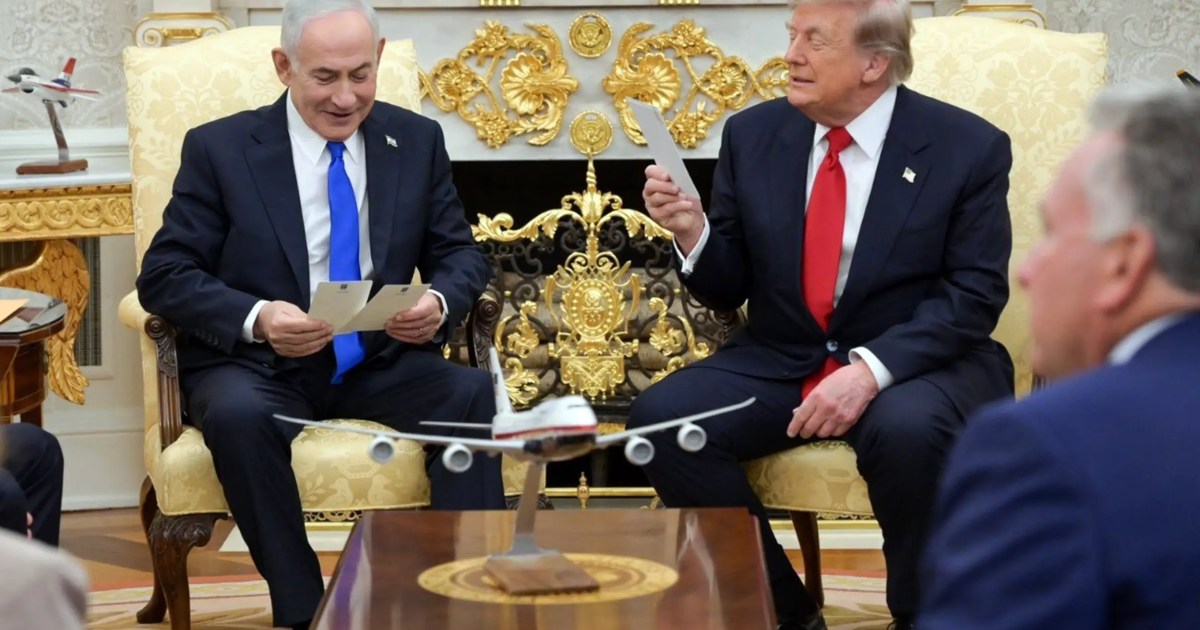
When Israeli Prime Minister Benjamin Netanyahu arrived this week for his tour of Washington, he may have had a mission in mind.
Netanyahu needed to overcome his newly diminished stature and waning influence over his once close friend President Donald Trump as both leaders grapple with the unpopularity of a war they started together and is escaping their control.
His meeting at the White House with Trump on Tuesday, which was closed to the press, was the first face-to-face encounter between the two allies since the U.S. and Israel launched a joint attack against Iran on Feb. 28.
Trump gave him a muted welcome and afterwards simply described the meeting as “very good.” “Obviously, many important subjects were discussed,” the president wrote on Truth Social.
Rather than an intimate one-on-one setting, the Oval Office was full of top U.S. officials — Vice President JD Vance, Secretary of State Marco Rubio, Treasury Secretary Scott Bessent, Secretary of Defense Pete Hegseth, Chairman of the Joint Chiefs of Staff Gen. Dan Caine, and special envoy Steve Witkoff.
But Netanyahu continued the full court press on the Trump administration.
Over the course of two days, in addition to seeing Trump and attending Sen. Lindsey Graham’s funeral at the Capitol, Netanyahu also met separately with Vance, Hegseth, and Rubio, White House and Israeli officials confirmed to MS NOW.
The Israeli prime minister’s slate of meetings with key U.S. national security officials comes at a pivotal moment in the Iran conflict as tensions escalate in the region and Americans increasingly sour on the war. A recent Quinnipiac poll shows 60% of American voters opposing U.S. military action against Iran and 74% against sending U.S. ground troops into Iran.
Not only does Trump face pressure as Republicans face an uphill battle to retain congressional control in this fall’s midterms, Netanyahu’s fate as prime minister is at stake in Israel’s upcoming September elections – and he can’t afford to lose Trump’s favor.
The talks largely focused on what to do next as Iran continues to menace shipping in the Strait of Hormuz and retaliate against American bases in the region and launch attacks on Gulf allies.
According to a senior Israeli official who was granted anonymity to describe the closed-door meeting, President Trump and Israeli Prime Minister Netanyahu did not come to a final decision after discussing three paths forward: get a “good deal” focused on Iran’s nuclear program and enriched material, have no deal and instead continue the blockade and economic pressure, or take escalated military action.
But Netanyahu did not tell Trump what he should do – nor did he express a preference.
The senior Israeli official noted Netanyahu has not ruled out diplomacy – as long as it is coupled with “very strong pressures,” calling the push to dismantle Iran’s nuclear program “a contest of will and a contest of force.”
“There are ways of squeezing them and squeezing them and squeezing them and negotiating at the same time,” the official said.
Netanyahu did not present President Trump with new intelligence regarding the underground Iranian nuclear facility Pickaxe Mountain, per the senior Israeli official, noting the U.S. and Israel already are constantly sharing intelligence – and know where Iran’s highly enriched material is. “We don’t think it’s moved, and I think we have a pretty good grasp on that,” the official said.
During their meeting on Tuesday, Trump and Netanyahu discussed ways Israel and the U.S. can work together to stop Iran’s nuclear program and get the Strait of Hormuz open to maritime trade, the senior Israeli official said.
The two leaders also discussed a third goal: to continue to undermine the Iranian regime and “possibly create future conditions for a change in that area.” U.S. officials have backed away from pursuing paths that would overthrow the current leadership, but Netanyahu still believes that could happen.
“The chasm that has been created between the people and the regime is not about to be closed,” the senior Israeli official said of Netanyahu’s thinking.
Netanyahu advised Trump in February that Israeli intelligence indicated launching strikes against Iran would lead to the toppling of the Islamic Republic’s regime – and five months later, the slain ayatollah’s son retains power with a close circle of hardliners, calling into question the accuracy of Israel’s intelligence apparatus.
But the senior Israeli official said at the time, Netanyahu did not promise the Iranian people would take fate into their own hands following a coordinated attack. Rather, he chose his words carefully and said that an attack could create conditions to “advance the probability or the possibility that that would happen.”
The conditions needed for the Iranian regime to fall, “did not materialize,” the official told MS NOW, adding, “not for lack of insight, but for either operational failure or decisions that were made.”
Despite Netanyahu insisting Israel and the U.S. are on the same page, differences still remain: the sale of F-35 fighter jets to Turkey and the Saudi nuclear arrangement did not come up during Wednesday’s White House meeting, according to a second Israeli official granted anonymity to describe sensitive discussions.
Meanwhile, the conflict continues to spread, with an Iranian drone attacking a U.S. gas storage tanker off the coast of Egypt on Wednesday.
Trump indicated he would not let Iran’s latest action slide, telling reporters on Wednesday that the U.S. would retaliate against Iran even as he leaves room for diplomatic talks to resume.
“It’s our turn, and we’ll see if we get there with an agreement at some point,” Trump said. “But we’re going to hit them very hard.”
As for what it would take for Israel to join the U.S. strikes, the senior Israeli official said that if Israel is attacked by Iran, “We will respond very, very forcefully and very quickly. And I think Iran would make a great mistake.”
Julia Jester covers politics for MS NOW and is based in Washington, D.C.
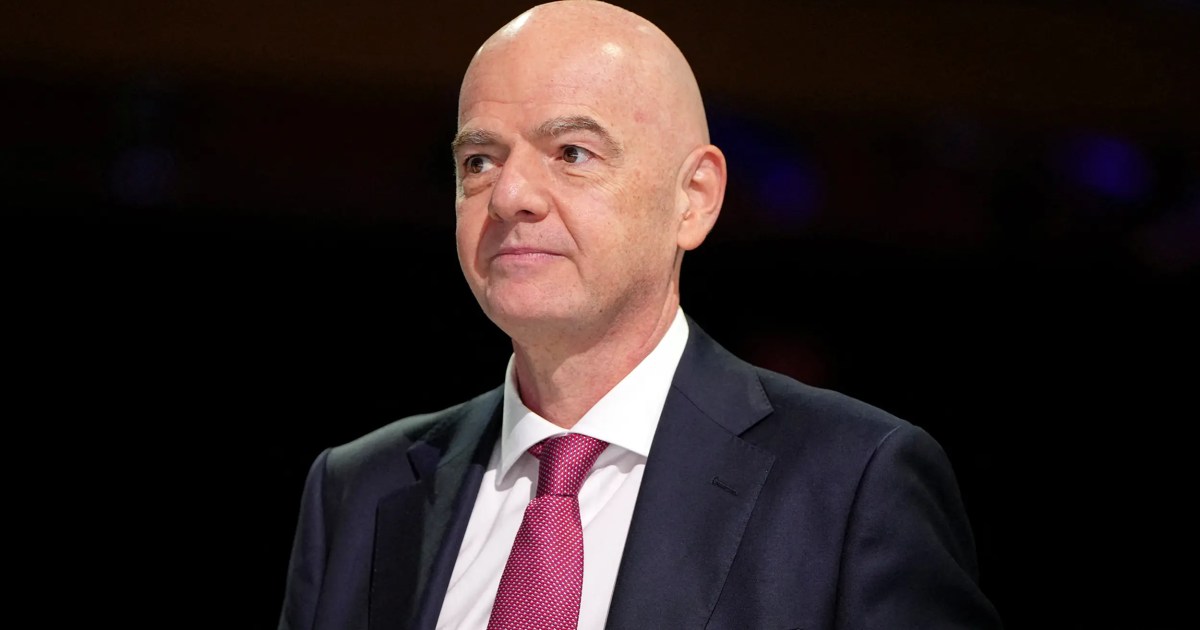
International rage over FIFA’s close ties to President Donald Trump has reached a fever pitch after soccer’s governing body announced a plan to sell a significant stake to an investor group led by Joshua Kushner, the brother of Trump’s son-in-law.
The president and his family have all but turned the White House into their personal piggy bank. And FIFA — which has its own sordid history of corruption — seems to have made itself a party to Trump’s self-enrichment under Gianni Infantino’s leadership, such as by paying for space inside Trump Tower in New York. (The organization has defended the office rental as a World Cup outpost.)
Soccer is seen by many as a unifying game. But Trump’s incorporation of FIFA into his political dynasty is threatening that idea.
FIFA has announced plans to sell a large minority stake in a new company that will run its main events, including the World Cup and Club World Cup, as part of a plan to triple the amount of development money it dishes out to its 211 member associations.
Under the proposals — which are subject to approval by a majority of those national associations and FIFA’s 37-member council — a new entity called FIFA Forward Enterprises (FFE) will take over all commercial operations, while FIFA remains the game’s global governing body and retains a majority stake in FFE.
A press release from FIFA confirmed the plans and said Thrive Eternal, which was launched by Joshua Kushner, is expected to lead the investment group that would control FIFA Forward Enterprise. FIFA did not clarify why Thrive Eternal was selected, and Kushner was already dabbling in sports.
But Trump basically has already given son-in-law Jared Kushner carte blanche to dictate U.S. foreign policy in the Middle East while simultaneously hatching business plans in the region. (Jared Kushner has denied any conflicts of interest.)
Joshua Kushner reportedly has been a major donor to Democrats. But, predictably, the idea of another Kushner becoming financially entwined with the World Cup — the world’s most popular sporting event — and basically being dropped into a position of global significance isn’t going over well. Several other soccer governing bodies have expressed concerns, including Europe’s UEFA.
“This crosses a line that football’s governing institutions should never cross,” UEFA said in a statement about The Athletic’s report, adding: “The soul and governance of football are not assets to trade — especially with zero transparency as to who gains financially. None of us are the owners of football. It is not FIFA’s to sell.”
Democrats on the House Judiciary Committee also rebuked the plan, writing on X: “Apparently the fake Peace Prize and giant lease with Trump Tower weren’t enough — now Infantino performs a kickback hat trick by pursuing a multibillion-dollar deal with Jared Kushner’s brother to sell ownership stakes in the World Cup to private investors.”
FIFA, Donald Trump’s favorite corrupt racketeering enterprise in world sports, is now going directly into business with the Trump family!
Apparently the fake Peace Prize and giant lease with Trump Tower weren’t enough—now Infantino performs a kickback hat trick by pursuing a… https://t.co/knSZibuMea
— House Judiciary Dems (@HouseJudiciary) July 28, 2026
Rep. Jamie Raskin, D-Md., has already launched an investigation into the FIFA leader’s relationship with the Trump administration, while dozens of European lawmakers — citing concerns about “potential breaches of political neutrality” — have called for the FIFA Ethics Committee to investigate Infantino. This new proposal seems unlikely to assuage those concerns.
But what it does seem likely to do is fuel global anger toward the U.S. — the kind that has been growing since Trump retook office.
And when you consider that, it’s truly remarkable how the same MAGA movement whose members whined for years about politics mixing with sports is now in lockstep with a president who seems dead-set on casting his shadow over every sports event he can.
This post on X basically sums up the foul stench around FIFA’s latest proposal.
Sepp Blatter was Infantino’s predecessor as FIFA president and oversaw the organization amid some of its many scandals. When heof all people, is warning about how Trump and Infantino’s relationship is “deeply damaging” soccer, it’s a sign of how far FIFA has descended into the gutter.
Ja’han Jones is an MS NOW opinion blogger. He previously wrote The ReidOut Blog.
-

 Politics2 years ago
Former ‘Squad’ members launching ‘Bowman and Bush’ YouTube show
-
Uncategorized2 years ago
Bob Good to step down as Freedom Caucus chair this week
-

 The Josh Fourrier Show2 years ago
DOOMSDAY: Trump won, now what?
-

 The Dictatorship2 years ago
Pete Hegseth’s tenure at the Pentagon goes from bad to worse
-

 Politics2 years ago
Former Kentucky AG Daniel Cameron launches Senate bid
-

 The Dictatorship2 years ago
Luigi Mangione acknowledges public support in first official statement since arrest
-

 Politics2 years ago
Blue Light News’s Editorial Director Ryan Hutchins speaks at Blue Light News’s 2025 Governors Summit
-

 The Dictatorship1 year ago
Mike Johnson sums up the GOP’s arrogant position on military occupation with two words