
Politics
A note to our readers

As I begin my first week as Blue Light News’s Global Editor-in-Chief, I want to start by thanking you — our readers and subscribers — for the trust you place in Blue Light News.
Our best-in-class reporters and editors — all 550 of them around the globe — start each day focused on a singular mission: delivering original, authoritative reporting on politics, policy and power to help you make better sense of our rapidly changing world.
Their work begins by going deep in the power centers we cover. Our reporters draw on unparalleled experience and sourcing to guide you through the people and institutions driving decisions in capitals like Washington, Brussels, London, Ottawa, Berlin, Paris and Sacramento — and soon Madrid and Canberra — while also connecting the dots as power flows across borders and sectors.
Our superpower is covering not only where power is today, but where it is moving, so you can be better prepared for what comes next.
What I love most about Blue Light News is we never stand still. Innovation has been part of our DNA from the start, and in the months ahead, you will see Blue Light News continue to evolve the ways we deliver our journalism — on new platforms, in new formats and in more ways throughout your day — all with the goal of making our reporting more useful to you.
We are particularly grateful to our professional subscribers, and we know how important Blue Light News Pro and E&E News are to your work. We will continue investing in our core policy areas and expanding the tools that help you integrate Blue Light News’s coverage even further into your daily work.
Thank you for reading, listening, watching and trusting Blue Light News. We will continue working every day for you.


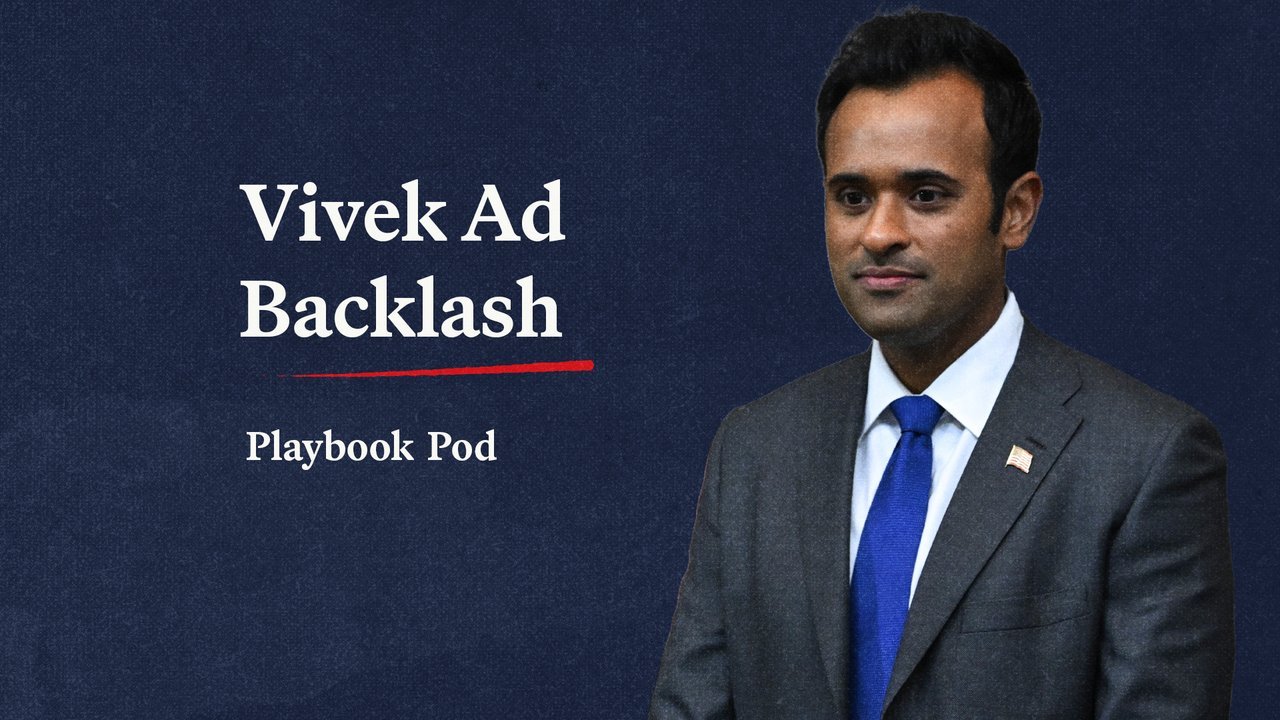
The GOP has a midterm messaging problem. Ramaswamy isn’t helping
lead image
Republicans are banking on a massive cash edge to help save their majority in Congress. But they are losing much of that advantage in an important arena: broadcast TV ads.
Republicans have spent $677 million on those ads across 10 key Senate battleground states, compared to $479 million by the Democrats. But the GOP’s money isn’t going nearly as far because they’re more dependent on outside groups that pay much higher rates than candidates.
The disparity has helped Democrats stay in the fight for Senate control amid an onslaught of GOP outside spending.
In Ohio’s Senate race, Republican groups make up 63% of the $218 million spent. But in spite of their nearly two-to-one spending advantage, they make up just over half of ads that are on the airwaves, according to data from the tracking service AdImpact. In Texas, Republicans have outspent Democrats by a three-to-one margin, but have aired just 58% of the ads. And in Michigan, the GOP accounts for 60% of the spending but just over half of the ads.
A large part of this discrepancy comes down to the mechanics of broadcast advertising. Candidates, and now political parties thanks to a recent Supreme Court ruling, are entitled to significantly lower rates. That has allowed Democratic candidates — who have posted bonkers fundraising hauls — to offset much of the GOP advantage in super PACs. Republican Senate candidates, on the other hand, struggled overall with their fundraising. And some GOP outside groups bought their ad time later, when it was even more expensive.
“There are limitations to the impact of ‘big money’ in politics,” said Sean Cooksey, a Republican former FEC commissioner. “It’s a good demonstration of the economics of campaign fundraising. Hard dollars really just go so much further.”
The disparity also shows “the Republican overreliance on outside groups,” said Ian Russell, a Democratic admaker.
“You get an eye-popping dollar amount, but it doesn’t actually translate into as many spots as you would think relative to a well-financed candidate,” Russell said. “[Republicans] were just hoping that they could spend their way out of everything that was going wrong for them. But the problem is, their issues run much deeper than a few ad buys can fix. Especially when you’ve got monster fundraising hauls from the Democratic side.”
Republicans in House and Senate races have long been more dependent on outside groups and megadonors, and for multiple cycles have seen their cash advantage undercut by fundraising strength from individual Democratic candidates. But that trend is particularly pronounced this year given the combination of Republican super PAC money and their candidates’ struggles.
In 2024, Republican outside groups spent only about 15% more than Democrats on TV ads across House and Senate general election contests, according to a Blue Light News analysis of AdImpact data. This cycle, GOP outside groups have spent 7% more.
In a few states, the discrepancy between dollars and airtime is less stark. Republicans account for 60% of the spending in Maine’s Senate race and an equal percentage of the ads, according to AdImpact. That’s in part because Sen. Susan Collins has outraised her Democratic opponent Troy Jackson over the whole cycle, although Jackson, who didn’t launch his campaign until July, raised far more in the third quarter.
The numbers show the shifting dynamics of campaign strategy after the Supreme Court opened the floodgates to more spending from parties by granting them the lower advertising rate.
Republicans have been faster to take advantage of the new rules: Major coordinated spending efforts from the NRSC and RNC have helped their side significantly this cycle.
Republicans have far outspent Democrats on Senate party-coordinated Senate advertising, $90 million to $34.6 million across TV, radio and digital ads, according to data from AdImpact.
“If I were the leader of either party, I would say you shouldn’t give a dollar, you shouldn’t give a single penny to these super PACs until you’ve maxed out to the party committee,” Cooksey said.
Some Republicans say that strategic errors have contributed to erasing their cash edge. A number of GOP strategists have also privately griped that MAGA Inc. — one of the major outside groups backing their candidates — bought TV airtime too late, forcing them to pay even higher rates and further draining resources and increasing the price of reaching voters. Republicans fretted for months about whether Trump’s well-financed super PAC, MAGA Inc., would get involved. The group has since spent heavily, but only launched its first general election ad buys in September.
“There is no question MAGA Inc. should have bought ads earlier in the cycle,” said one national GOP operative who was granted anonymity to discuss party strategy, noting that rates across the country increase as Election Day nears. Other top GOP outside groups, like the Senate Leadership Fund and the Congressional Leadership Fund, made their early advertising reservations much earlier in the cycle than MAGA Inc.
Trump allies waved away that criticism. A person familiar with the Trump operation’s midterm planning, granted anonymity to discuss strategy, said it’s “indisputable that the spending from the Trump political effort has kept us competitive in many Senate races.”
MAGA Inc. declined to comment.
Still, GOP outside groups are utilizing their cash advantage in some underappreciated ways.
Republican super PACs have massively outspent their Democratic counterparts on mail — roughly $157 million to $35 million for the general election — according to a Blue Light News analysis of independent expenditure filings submitted to the Federal Election Commission. That’s led by a whopping $44 million in spending on mail across 24 races from the Trump-aligned No Going Back PAC, along with $23.8 million across 20 races from Elon Musk’s America PAC.
GOP-aligned super PACs have also spent more than Democratic ones on phone calls and text messages, the data shows.
Georgia Republicans are counting on Rick Jackson to save them from a wipeout in November — if President Donald Trump doesn’t get in the way.
The billionaire health care executive and political newcomer has spent nearly $200 million since he entered the Georgia governor’s race earlier this year. That’s boosted GOP hopes as many in the party have all but given up on the state’s marquee Senate race, where Rep. Mike Collins is struggling to close the gap against a formidably well-funded Democratic Sen. Jon Ossoff. Republicans worry that their open contests for attorney general and lieutenant governor as well as control of the state general assembly could be in peril in a larger blue wave.
But Jackson’s deep pockets are being tested against a difficult political environment for Republicans, weighed down by unpopular Trump actions, including the war in Iran. And some in the GOP worry that the president’s repeated visits to Georgia could only make the situation worse.
“I don’t know that Trump coming helps Republicans more so than it excites Democrats, especially in a wave election year, and so becomes and becomes a catch-22 for Republican candidates,” said Jason Shepherd, a former Cobb County chair who is supporting Jackson.
One Georgia-based Republican strategist who is not involved in the gubernatorial race posited that Trump’s dual appearances in the state almost certainly did more harm than help. They, like others in this article, were granted anonymity to speak openly about the race to avoid reprisals.
“Every piece of data that I’ve seen, it is not MAGA Republicans that are unmotivated to vote in this election,” the person said. “All the data that I’ve seen is that the undecideds in our marquee races, and specifically in the governor’s race, have a very, very negative opinion of the president. So, I can’t really rationalize a case for how it would be helpful.”
Jackson, for his part, has carefully navigated his relationship with the president, and has not publicly broken with him on policy like other battleground Republicans. But he has not mentioned the president in any of the nearly 150 ads he’s run in the general election, according to an analysis of data from tracking firm AdImpact. Shortly after the RNC announced that Trump would return to the state this weekend, Jackson’s team said in a statement that the candidate will be campaigning in a different part of Georgia.
And during his only televised gubernatorial debate on Oct. 6 against Democrat Keisha Lance Bottoms, Jackson never name-dropped the president — despite his opponent invoking Trump’s name eight times. Instead, the Republican mentioned popular outgoing GOP Gov. Brian Kemp five times and focused on Bottoms’ tenure as mayor of Atlanta during the COVID pandemic.
“It’s been proven time and again that when the message is on Georgia, and the results under Brian Kemp and the conservative vision and roadmap that’s been laid out here, that we win in Georgia. When the focus is on D.C. and personal politics, we lose,” said Cole Muzio, president of the conservative Frontline Policy Action group.
The Jackson campaign declined to comment for this story.
“President Trump is the unequivocal leader, best messenger, and unmatched motivator for the Republican Party,” White House spokesperson Davis Ingle said in a statement.
Natalie Baldassarre, a spokesperson for the Republican National Committee, said in a statement that Republicans “are laser focused on winning, and our candidates will run the races necessary to best represent their districts and prevent Democrats from taking control.”
Jackson is one of several Republicans across the country who now must balance between keeping the president close enough to turn out Republican base voters, but not so closely as to alienate the center.
Though many Georgia Republicans see Jackson as their de-facto ticket-topper, they don’t see his win as a guarantee against Bottoms, the former Atlanta mayor, in a finicky battleground state like Georgia. Jackson has outspent Bottoms nearly five-to-one in the final stretch of the race, but still remains in a close race in public polling.
And yet, without him, Republicans fear the bottom would have already fallen out on races up and down the ballot, given how poorly Collins is performing in polls against Ossoff. Republicans’ top Senate super PAC, Senate Leadership Fund, was dark in Georgia last week, a sign the race may be slipping out of reach.
“If Rick Jackson weren’t running, we would all be in a lot of trouble,” said Stephen Lawson, a Georgia-based Republican strategist and Jackson ally. “He’s our best hope at keeping the state red.”
A second Georgia-based Republican strategist, who is working on other races in the state, underscored how Jackson’s money is keeping the party afloat. “There is no question in my mind that without the extra $150 million he spent in his general election, that the ticket would be lost,” this person said. “That is the only reason there’s still a fight to be had.”
But, this person cautioned, the race is still very much a toss-up, and Jackson’s victory will rely on a large share of Georgia voters choosing to split their ballots between Ossoff for Senate and Jackson for governor.
Jackson’s allies are optimistic that a significant number of voters will do just that. A private statewide poll reviewed by Blue Light News found that roughly 19% of Georgia voters say they are definitely or likely to cast a vote for at least one Democrat and one Republican — a potentially significant pool of crossover voters that could power two very different results in the marquee contests.
Whether the sheer force of Jackson’s spending will prove successful enough to overcome Trump is a microcosm of the larger issue his party is experiencing across the country: National Republicans, flush with cash, hold an enormous financial advantage over Democrats. But money alone may not be enough to insulate candidates in battlegrounds or even in traditionally red territory.
“I don’t know that Republicans across the country should feel as bullish about the cash influx that we’ve gotten because it didn’t work here,” said the first GOP operative. “In terms of actively moving races in our favor, it at least didn’t work here.”
In the last month, as Bottoms began to spend more heavily on the air amid Jackson’s spending advantage, her campaign has noted that polling has started to move marginally in her favor — even if the race remains largely within the margin of error. Her high name ID, as well as cash spent after the primary to define her early, are helping.
“Rick Jackson has spent $200 million in this campaign but all the money in the world can’t hide the fact that he would be a lackey for Donald Trump,” TaNisha Cameron, a spokesperson for Bottoms, said in a statement. “Despite being outspent, Keisha’s message is breaking through and she has the momentum in this race right when it matters.”
Jackson is making more of an effort to tie himself closely to Kemp, who won over moderates and independents in his 2022 reelection for governor and has an approval rating that sits 30 points higher than the president’s in Georgia, according to a recent poll by the Atlanta Journal-Constitution. Kemp, for his part, has continued to be a presence on the trail for Jackson, including joining him on a statewide tour earlier this month and appearing in at least three TV ads for the campaign.
But Jackson’s pathway to victory requires him to not only secure crossover voters that may support Ossoff in the Senate race or the type of voters who broke for Kemp, but also turn out the MAGA base who powered the president’s two presidential victories in the perennial battleground.
The president is intent on still showing up for him.
Shortly after Jackson dispatched Trump’s initially preferred candidate, Lt. Gov. Burt Jones, in June’s primary runoff, the president was quick to praise Jackson as standing “strong with ‘TRUMP.’” And in subsequent posts on Truth Social, Trump has called the health care executive a “good friend.”
Trump, onstage on Friday, called Jackson a “great businessman,” before adding: “I’ve been watching you, you are good, and he never did this before. Hedid it because he wants to straighten out things and he’s an amazing, an amazing story.”
Aaron Pellish contributed reporting.
- Trump releases heating oil to the northeast to reduce surging prices
- Sen. Whitehouse says wind attacks threaten permitting deal
- The other Michigan race corporate America is watching
- Scalise heads to Florida to boost several GOP candidates
- ‘Very limited choice’: Data centers confront new constraints
- The GOP has a midterm messaging problem. Ramaswamy isn’t helping
- This member is so frustrated with Congress he wants voters to sidestep it
- Capitol agenda: The unknowns of a Sherrod Brown return
- Rick Jackson is Georgia Republicans’ best hope. Donald Trump may get in the way.
- Why Republicans’ massive cash advantage is evaporating on the airwaves
-

 Politics2 years ago
Former ‘Squad’ members launching ‘Bowman and Bush’ YouTube show
-
Uncategorized2 years ago
Bob Good to step down as Freedom Caucus chair this week
-

 The Josh Fourrier Show2 years ago
DOOMSDAY: Trump won, now what?
-

 The Dictatorship2 years ago
Pete Hegseth’s tenure at the Pentagon goes from bad to worse
-

 Politics2 years ago
Former Kentucky AG Daniel Cameron launches Senate bid
-

 The Dictatorship2 years ago
Luigi Mangione acknowledges public support in first official statement since arrest
-

 Politics2 years ago
Blue Light News’s Editorial Director Ryan Hutchins speaks at Blue Light News’s 2025 Governors Summit
-
 Politics1 year ago
John Legend advises Trump to drop the ‘dictator s‑‑‑’ if he wants Nobel Peace Prize