
Politics
Czech Republic president on Trump’s anger with Europe over Iran war response: ‘We are not part of it’

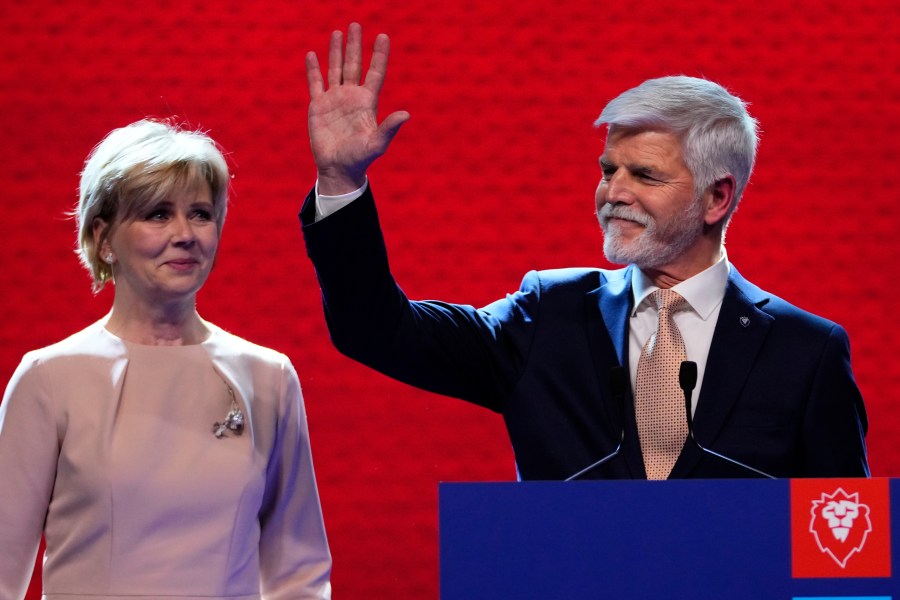
The leader of the Czech Republic pushed back this week against President Trump’s accusations that Europe has failed to do its part to support the U.S.’s ongoing military operations against Iran. “I believe that Europe could do much more, but we are not part of it,” Czech President Petr Pavel told BLN’s Christine Amanpour at…
Read More


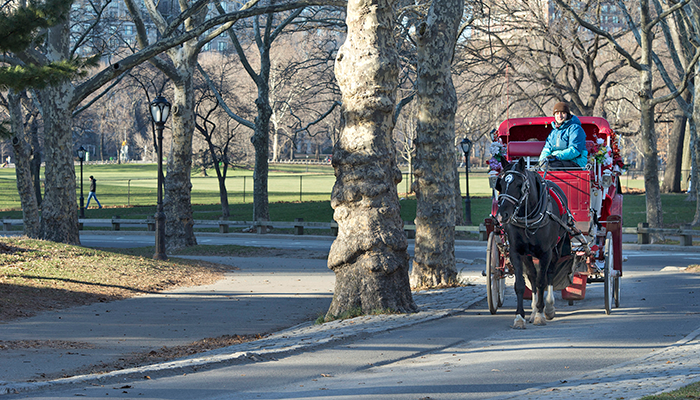
GOODBYE HORSES: New York City isn’t horsing around anymore.
The City Council voted overwhelmingly today to abolish the Big Apple’s horse carriage industry, handing a historic win to animal rights activists who’ve pushed to end the tourist attraction for decades.
The vote doesn’t mean the industry sunsets overnight, though. The bill enacting the ban — which passed the Council with 40 yays, 7 nays and 2 abstentions — allows the roughly 200 carriage drivers who shuttle tourists around Central Park to continue operating until June 2028, when the industry will be reined into a legal halt officially.
Council Speaker Julie Menin, who started making the legislation’s passage a priority over the summer, told reporters before the vote that the carriage horse-related June death of Romanch Mahajan, an 18-year-old Indian tourist, was the last straw. But she also cited a long record of horses dying in the streets as part of the reason for the bill finally crossing the finish line.
“This has been a long time coming,” she said.
Mayor Zohran Mamdani — who initially withheld support for the measure over labor protection concerns — got behind it earlier this month, sealing the deal for it to become law. He hasn’t yet set a date for signing the bill.
Mamdani came on board after the Council modified the bill to give drivers pathways into other lines of work, and the phase-out period is key in that pursuit.
Under the bill, the city must create a workforce transition program under which drivers would, between now and 2028, receive career counseling as well as referrals to employment opportunities in both public and private sectors, including with the Metropolitan Transportation Authority and hospitality and tourism outfits. The bill would also prohibit drivers from sending their horses to slaughter or using them for carriage duties in another city where it’s allowed.
Horse carriage drivers and their supporters remain furious.
The Transport Workers Union, which advocates for carriage drivers, announced yesterday that it will file a lawsuit to block the ban, arguing it violates federal and state laws. The union is especially incensed that the bill doesn’t require the city to pay out drivers for the value of their carriage licenses — an omission lawyers for the TWU say flies in the face of the Fifth Amendment’s prohibition on government usurping private property without compensation.
Just as the Council was getting ready to vote, carriage supporters received backing from a somewhat unexpected source: President Donald Trump.
“So sad to see the beloved Central Park Horse-drawn Carriage Industry ending after over a Century, based largely on one tragic accident,” Trump wrote in a Truth Social post, referring to Mahajan. “When there is a car accident in the area, of which there are many, they don’t stop cars from entering the Park. So why would they stop the Carriages? It was a Great Tradition.”
Also before today’s vote, dozens of TWU reps and carriage drivers gathered outside City Hall to blast the Council for moving forward with the legislation. One of them brought along a ziplock bag of equine feces with a handwritten label on it reading: “This is horse sh*t.”
Christina Hansen, who’s been driving carriages for more than a decade, said she feels “disrespected” by the fact that the bill doesn’t guarantee she and her colleagues will be compensated for their licenses, which are worth hundreds of thousands of dollars.
“There are people who are owed money on medallions, who have planned families, had children, bought houses, taken out loans,” Hansen said. “What’s going to happen to them?”
Fellow carriage driver Danielle Slot, who voted for Mamdani in last year’s mayoral election, told Playbook she feels betrayed by his decision to back the bill without a provision mandating medallion reimbursement.
“You say you’re going after billionaires, but you’re really going after the underdogs,” Slot said. “These guys are hardworking, every single medallion is its own independent business, and many are immigrant owned. I expected better from Mamdani than to be a puppet.”
When asked why the bill only requires the city to “consider” medallion compensation as opposed to requiring it, Menin pointed a finger at the mayor. “To be clear, that was language that, you know, was worked out with the administration,” she told reporters at City Hall.
Dora Pekec, a spokesperson for the mayor, did not dispute Menin’s account, but said the administration is “in discussions” about compensation for medallion owners.
Mayors and Council speakers have tried to outlaw the industry since at least 2007. Momentum has built for a ban following tragic incidents in which horses have died or been severely injured in and around Central Park.
But until now, those efforts have fizzled, in part because of political pressure from the Transport Workers Union.
Carriage industry supporters argue that it can be reformed to ensure better safety standards without outlawing it outright. Council member Jim Gennaro, who introduced a bill that would do just that, said he believes Menin is at least partially politically motivated, pointing to the influence of NYCLASS, one of the main animal rights groups behind the push for a ban.
“NYCLASS does have the ability to turn winners and losers in mayoral elections and in borough elections, and I don’t think that fact has been lost on the speaker,” he said before voting against the bill. NYCLASS notably tanked former Council Speaker Christine Quinn’s 2013 mayoral bid by spending heavily against her because of her reluctance to support a carriage ban at the time.
Before the bill passed this afternoon, Gennaro tried to force through an amendment that would’ve delayed the phase-out deadline for the carriage industry until 2030, but it was rejected.
On the other side of the bitter debate, supporters of the bill gathered for a rally in City Hall Park before the vote. Among them were members of Mahajan’s family, who have been fighting for the legislation since his death.
“True justice means recognizing that these gentle, majestic horses do not belong on the congested asphalt,” Gaurav Mahajan, Romanch’s uncle, said. “By granting them the peaceful, green pastures they so deeply deserve, we fulfill Romanch’s purpose.” — Molly Reinmann and Chris Sommerfeldt
From the Capitol
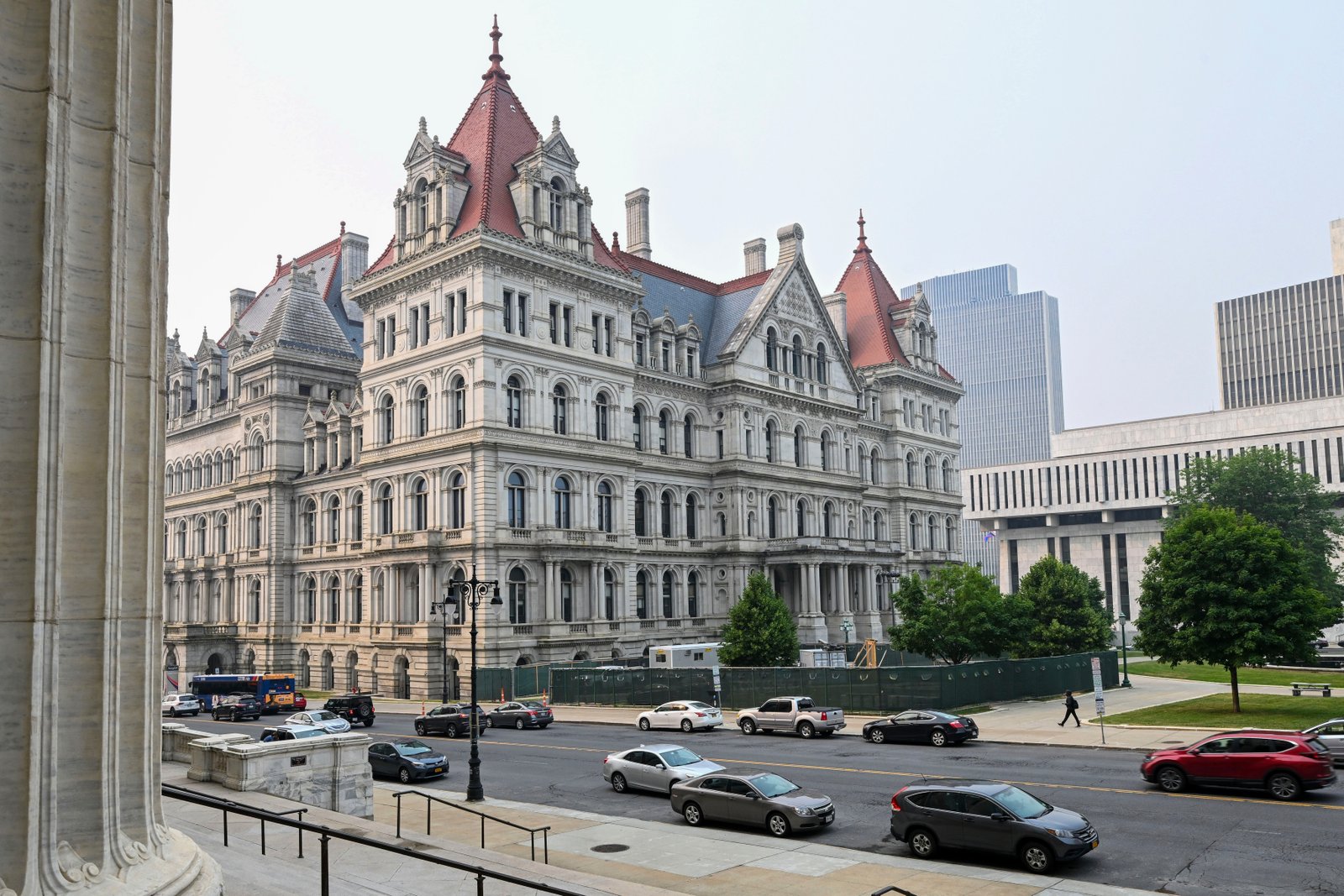
RAILING AGAINST ALBANY: As Planet Albany denizens may have noticed, the Office of General Services this week began installing hand railings down the middle of several staircases near the state Senate chamber.
More railings are planned for the Assembly chamber-side stairs too. The project costs some $700,000, per WNYC’s Jon Campbell — further evidence that the most expensive government building construction project of the 19th century is never really done.
Aside from the cost, it’s an aesthetic change to a building teeming with history and one that is rarely altered.
Historian and former state Assemblymember Jack McEneny is taking the latest addition to the New York state Capitol in stride.
“I always thought it was only a matter of time that somebody would decide to do something,” he said in an interview when asked about the railings.
McEneny is an expert on the building and has given guided tours. He noted the staircases were not built with safety in mind.
“It was inevitable,” he said of adding the railings. “There’s a number of things that we did back two or three generations before that we wouldn’t do today.”
The stone staircases in the Capitol are indeed steep and very hard. (Fifteen years ago, your Playbook writer landed on his face while sprinting from the second to the third floor, necessitating an emergency dental intervention.)
The building, of course, has been altered over the years to fit the needs of people who work in it. That includes the installation of a small, hideaway elevator, which was used by a wheelchair-bound Franklin Roosevelt when he was governor.
“We require more things than we did at the time of its opening,” McEneny said. “We also have more attorneys who will sue.” — Nick Reisman
FROM THE CAMPAIGN TRAIL
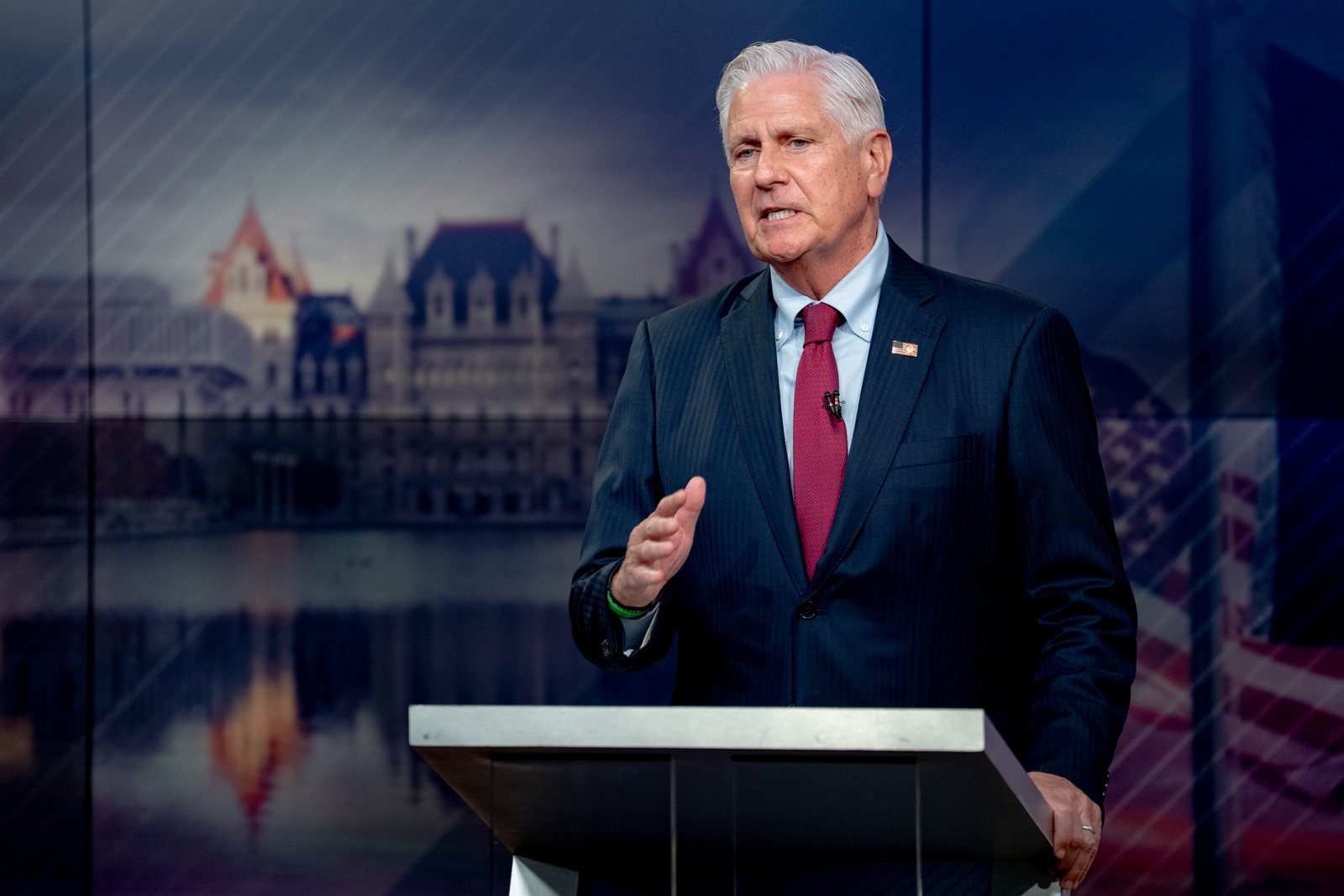
BLAKEMAN GROUP GETS $2M: The main super PAC supporting Republican gubernatorial candidate Bruce Blakeman has received $2 million from a dark money group created to back Donald Trump’s 2024 presidential bid.
Securing American Greatness made the donation Tuesday to Strong and Safe New York, according to a filing submitted to the state Board of Elections. That group was formed by longtime Trump ally Taylor Budowich.
The pro-Blakeman group has now raised $10.3 million since July. That makes it the largest single independent expenditure group so far this election cycle, though a longer roster of outside spenders boosting Gov. Kathy Hochul means she’s still the beneficiary of more super PAC money. — Bill Mahoney
BROOKLYN BATTLE: The New York State Court of Appeals declined to weigh in Thursday on the long-running legal battle between factions of Brooklyn Democrats looking to lead the county party.
State Assemblymember Rodneyse Bichotte Hermelyn, the former chair of the party, appealed a lower court’s decision that an August vote to change the makeup of the organization’s executive committee was invalid. The lower court’s ruling remains in effect after the appeals court decided not to take it up.
The issue of if state Assemblymember Nikki Lucas, Bichotte Hermelyn’s successor of choice, was properly elected is still playing out in the courts. — Madison Fernandez
GOV AND MAYOR: Hochul’s campaign today released a video co-starring Mamdani as they prepare to hit the trail together for her reelection.
The video highlighted their shared push for expanding child care, visiting a family that benefits from the service.
Blue Light News first reported this morning that the governor and mayor will make two appearances together in the coming days with events on Friday and Sunday in Brooklyn. — Nick Reisman
FROM CITY HALL
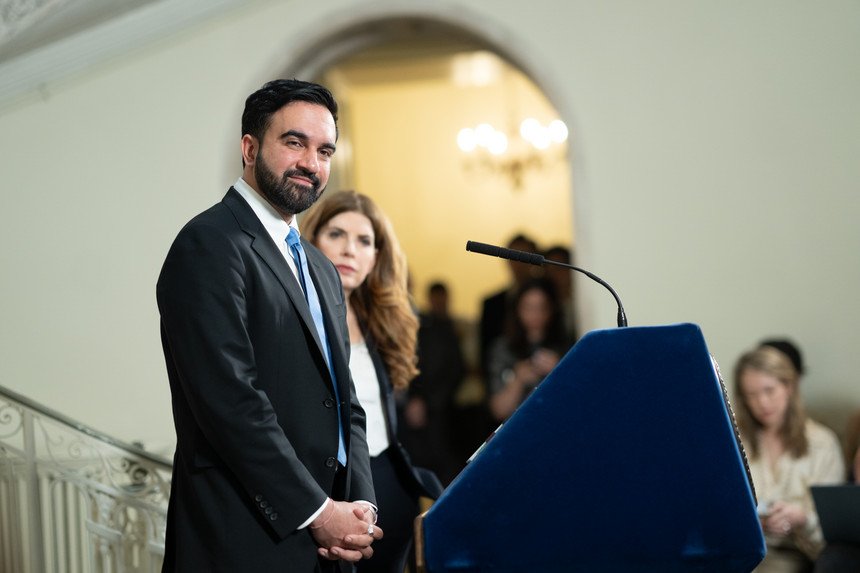
MAM LEANS ON MENIN: Mamdani put public pressure on Menin today by showing up to a rally calling for the passage of labor legislation that she hasn’t thrown her weight behind yet — in part because of legal concerns.
The Delivery Protection Act, which was introduced by democratic socialist Council member Tiffany Cabán, would require Amazon and other retail giants to hire their own delivery workers. Currently, retailers can subcontract delivery employees via third party entities — a system that supporters of Cabán’s bill argue hampers workers’ ability to unionize and allows companies like Amazon to skirt accountability for labor violations.
Thirty-four of the Council’s 51 members have signed on as co-sponsors of Cabán’s bill, giving it a veto-proof majority of support, and a hearing was held on it in April. But Menin hasn’t scheduled a vote on the measure or offered support for it, even though she was a co-sponsor of a version of the legislation last year before becoming speaker.
Against that backdrop, Mamdani appeared on the steps of City Hall this morning with Cabán and other backers of the bill. In prepared remarks, he didn’t call out Menin by name, but blasted Amazon for pumping millions of dollars into lobbying against the bill.
“Corporations like Amazon operate on a model of exploitation, and they are spending millions of dollars to convince New Yorkers otherwise,” he said. “But it will not work because we are here together today to make clear that we are going to pass the Delivery Protection Act.”
By contrast, International Brotherhood of Teamsters General President Sean O’Brien, whose union represents Amazon workers, took direct aim at Menin, saying she must call a vote on the bill immediately. “Now is the time to get off your ass,” said O’Brien, who met privately with Mamdani before the rally.
When asked later in the day why she isn’t immediately moving forward with the bill, Menin cited concerns she said need to be worked out regarding potential job losses that could come from barring Amazon from relying on third party contractors. But she also said Mamdani’s own Law Department had reached out to the Council with “legal concerns” with the bill that needed to be resolved before a vote.
Menin didn’t elaborate on the legal issues. But a person with knowledge of the conversations between the Council and the Law Department, who was granted anonymity to discuss the ongoing talks, told Playbook one of the concerns is centered around ensuring the bill satisfies the high legal standard required for the city to mandate direct hiring in the private sector.
A Mamdani spokesperson didn’t immediately return a request for comment on the legal concerns.
Amazon spokesperson Steve Kelly pushed back against the criticism from Mamdani and O’Brien, saying the reliance on third parties “works because local entrepreneurs — people rooted in their communities — deliver a better experience.”
“And this model isn’t unusual — it’s how businesses and governments operate every day,” Kelly said. “New York City routinely contracts with outside companies to build its infrastructure, run its school buses, and deliver social services. This legislation would single out one industry for restrictions the city doesn’t even apply to its own operations.”
It’s a bit unusual for Mamdani to put the speaker on public notice like this over Council legislation. So far in his mayoral term, he hasn’t leaned heavily into legislative battles in the chamber over bills that are still under consideration. — Chris Sommerfeldt
IN OTHER NEWS
— DOUBLE AGENT: A campaign website for Thomas Kenny, an upstate Assembly candidate running on the Working Families Party ballot line, was created by an aide for Kenny’s ostensible opponent, Republican Allen Caruso. (New York Focus)
— ICE: Hochul’s office is pushing back against the detention of a state employee by U.S. Immigration and Customs Enforcement. (Times Union)
— BUS FARE: The MTA is temporarily shutting down its bus fair enforcement teams following an altercation between a Brooklyn public school dean and fare inspectors. (Gothamist)
Missed this morning’s New York Playbook? We forgive you. Read it here.
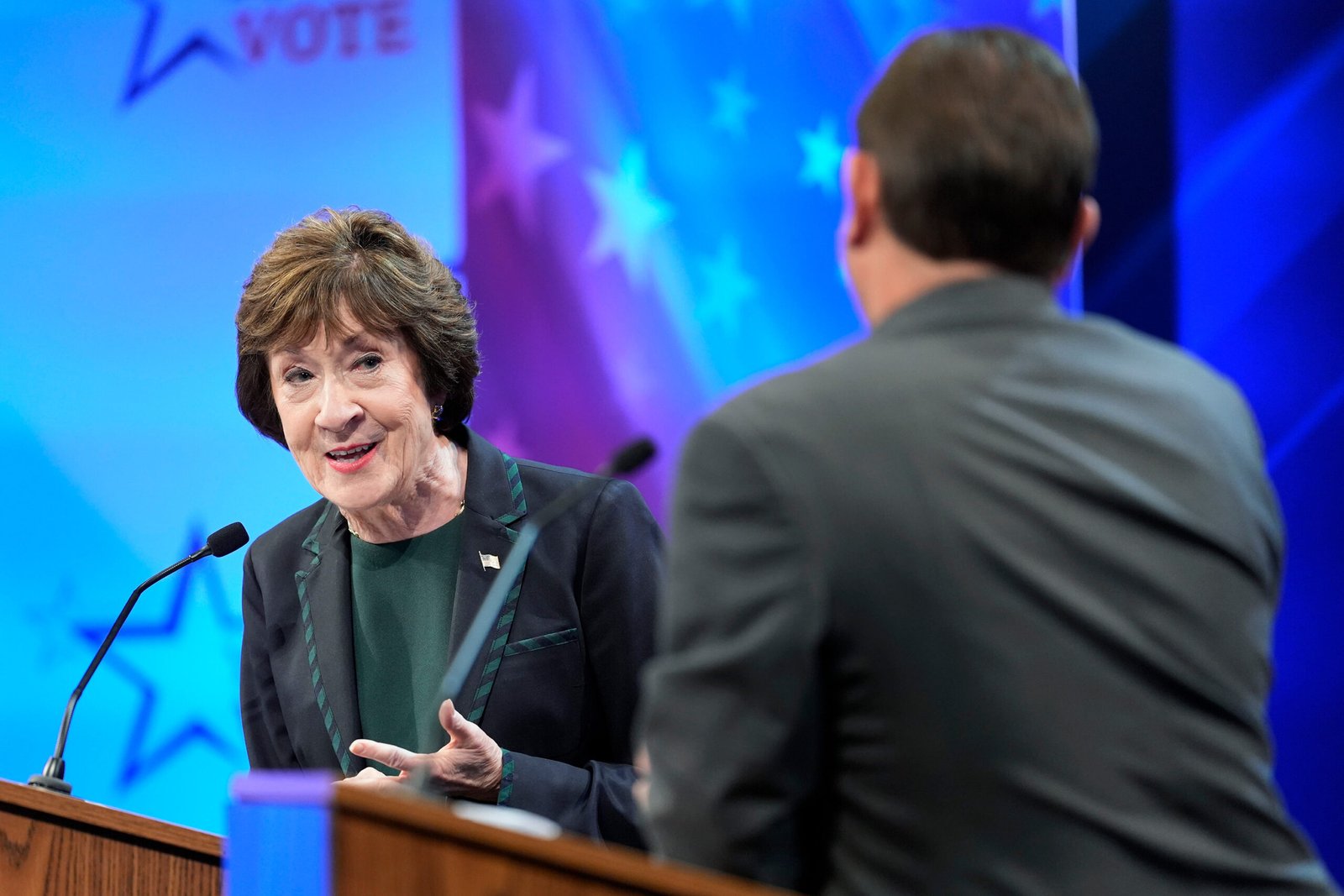
With less than two weeks until Election Day, most statewide debates have come and gone. Democrats tried to paint their Republican opponents into corners over loyalty to President Donald Trump, and Republicans tried to stake out nuanced positions on the Iran war and data centers.
Here’s what we learned from the more than two dozen statewide candidate debates that occurred — and from those that didn’t.
Republicans walk a fine line with an unpopular Trump
In debate after debate, Democrats tried to tie their opponents to the unpopular president. Republicans weren’t always willing to let them.
Several candidates — especially in blue states — were willing to break with the president. In New Hampshire, GOP former Sen. John Sununu said he’s “never met President Trump” and emphasized he’s “never hesitated to stand up to my party or the president when they’re wrong,” specifically criticizing Trump’s policies on trade, Iran and Ukraine. In Minnesota, Republican Senate nominee Michelle Tafoya said she disagreed with Trump’s tariff policy and immigration enforcement, and when asked if she would appear onstage with Trump, she demurred. “I am talking to Minnesotans. Theirs is the only endorsement that I care about,” she said.
In Maine, GOP Sen. Susan Collins emphasized that she has voted against the president more than 100 times this year, and criticized his approach on Iran. Bobby Charles, the GOP nominee for governor and a former official in President George W. Bush’s State Department during the Iraq and Afghanistan wars, said he disagreed with Trump’s “extended engagement” in Iran because “I know what it means to get stuck in a place.”
Some Republicans became frustrated by their opponents’ efforts to tie them to the president. “He wants to make this about Donald Trump,” said former Rep. Mike Rogers (R-Mich.) “The bingo game ought to be, how many times can he put the word ‘Trump’ in any answer that he has given in the last, whatever, 30 minutes? It’s ridiculous.”
But in some redder states, candidates were more willing to hug the president — recognizing support from his base will be critical to win.
“We need the Trump voters to come out,” Sen. Roger Marshall (R-Kansas) said in a debate Wednesday. “Just like with my wife, I can disagree with her. Now, my wife is always right, and President Trump is not always right. But I do think that it’s great that I have a relationship that I can pick up the phone and discuss with him the pros and cons of what he’s contemplating.”
It’s the economy, stupid
Democrats hammered Republicans on affordability issues, blaming Trump’s tariff policy and Iran for spiking prices. In response, a few conceded some Trump policies were hurting them — while others tried to blame the last president.
“That Bidenomics, that Green New Deal that my opponent voted for, that’s where all this inflation came from,” said Rep. Mike Collins (R-Ga.) in a Senate debate in early October.
The other Collins, Susan, went the opposite way in blue-leaning Maine. “The bottom line is Troy and I both would have voted against the Canadian tariffs,” she said in an October 13 debate, after saying the Iran war was “not well thought out.”
Rep. Ashley Hinson, the GOP nominee for Senate in Iowa, said she would pause the gasoline tax before acknowledging the effect of the war: “I trust in our U.S. military, the greatest fighting force in the world, to bring this to a close as quickly as possible, because I know people are being squeezed,” she said.
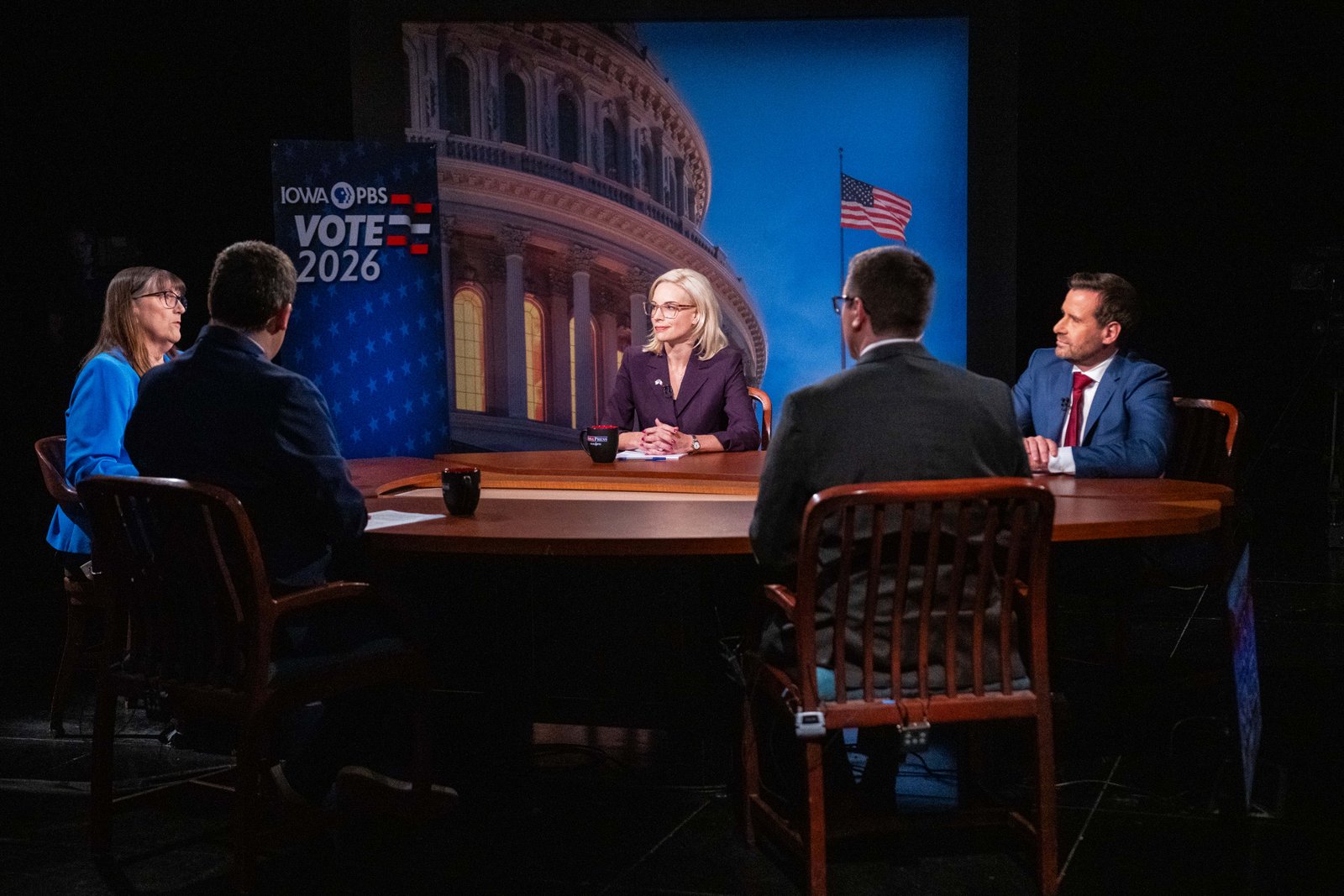
Democrats largely sang the same tune on Trump’s policies.
“These tariffs are crushing our state, and we’ll repeal those tariffs,” said Sen. John Ossoff (D-Ga.).
“The tariffs and the war in Iran has hurt Iowa more than any other state,” said state Rep. Josh Turek (D-Iowa).
“If you appreciate having record diesel fuel prices … then I’d say vote for Roger Marshall,” said Adam Hamilton, the Democratic nominee running for Senate in Kansas. “If you want change, then I’d like to ask you to vote for me.”
Everyone hates data centers
Republicans and Democrats showed a remarkable similarity in their distaste for data centers even as their specific policy prescriptions diverged — a sign of the issue’s rapid ascent as a bipartisan bogeyman, even as Trump reiterates his support for them.
Candidates from both parties called for local control. “Look, if you don’t want a data center, I will stand up and defend it and make sure you don’t get it,” said Rick Jackson, a Republican billionaire businessman running for Georgia governor. “Local communities know best,” said Hinson, the Iowa Republican.
In Maine, both Senate candidates said guardrails should be installed to prevent the data centers from raising utility rates for local residents. In Iowa, both gubernatorial candidates — Democrat Rob Sand and Republican Zach Lahn — supported ending tax breaks for data center developers. In New Hampshire, both Senate candidates agreed with GOP Gov. Kelly Ayotte’s push for a statewide moratorium.
“At the end of the day, it’s up to our governor, our local leaders, to make decisions about any big infrastructure, transmission, power plants, new factories, and data centers should be treated just the same,” Sununu said.
Gaffe gamechangers
Debates can do candidates more harm than good, and some candidates had some cringey moments.
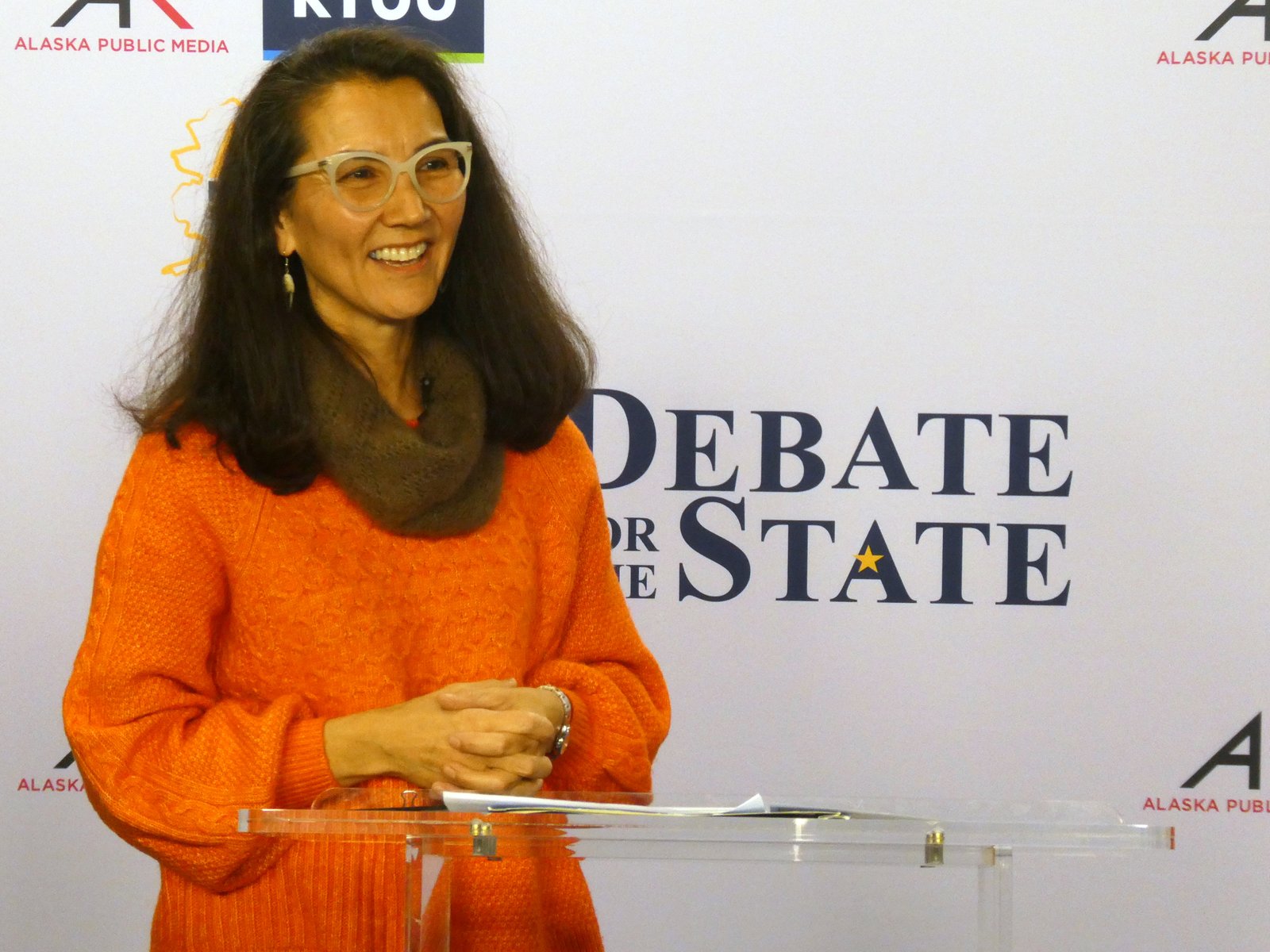
In Alaska, Democratic former Rep. Mary Peltola appeared to be reading from a notecard throughout a recent debate, giving her opponent, GOP Sen. Dan Sullivan, a chance to pounce. “We weren’t supposed to get these questions beforehand, were we?” he asked the moderator.
“You can’t cue-card your way through the Senate,” Sullivan later wrote on social media.
Sullivan had his own moment a few weeks earlier when he peeked at Peltola’s answer during a lightning-round question, prompting laughter from the audience. “Happy to help, Dan,” Peltola wrote on social media.
In Kansas, Marshall faced loud chats of “you don’t live here” during a debate at the state fair, while speaking about his residence in Kansas and his home in Florida.
In Maine, Jackson said Collins should “shut up” after a protester interrupted the debate and Collins claimed the demonstrator was “obviously one of Troy’s supporters.”
“Oh, shut up,” Jackson said. “I don’t even know that kid.” Collins has pounced on the moment to try to paint Jackson as a sexist hothead; Jackson later said he did not regret his outburst.
In Iowa, Hinson responded to a question about ensuring the solvency of Social Security by slamming young people’s saving habits. “We also need to be talking about millennials saving money,” she said. “Millennials are the worst group of savers in the country right now and have the least amount of savings.”
The debates that didn’t happen
Fear of gaffes may have cost voters a chance to see their candidates square off, as the longstanding political tradition of campaign debates took another hit this cycle.
In Senate battlegrounds across the country, nominees in both parties outright refused to join their opponents onstage or carefully ducked debates.
In Texas, Attorney General Ken Paxton rebuffed invitation after invitation (including one from Fox News), even after Trump urged him to get onstage. In Ohio, the Senate candidates still haven’t reached an agreement to debate. In North Carolina, there is no debate scheduled between the major-party Senate candidates for the first time in nearly 30 years.
There doesn’t seem to be a partisan division over who will and won’t debate. Democratic Arizona Gov. Katie Hobbs and Ohio Democratic nominee Amy Acton refused to debate their opponents. So did GOP Gov. Greg Abbott of Texas and Sen. Tommy Tuberville of Alabama, who have rebuffed invitations to debate.
“There’s so much difference between us, I mean, there’s no reason to get up there and argue about differences of opinion,” Tuberville, running for Alabama governor against Democratic former Sen. Doug Jones, told reporters in August.
Andrew Howard, Jason Beeferman, Lisa Kashinsky, Aaron Pellish, Alec Hernandez, Erin Doherty and Jessica Piper contributed reporting.
A new company whose polls had influenced campaign decisions and helped shape the midterms narrative admitted that it was faking its polling data on Tuesday night, setting off a firestorm in the electionsphere.
Wedgewood Polls, facing an imminent publication of an investigation from FiftyPlusOne showing it was fabricating its numbers, declared late Tuesday night that it had been an “experimental project” to show how an “entirely fabricated polling firm” could sway public opinion while painting themselves as the good guys.They’d left an impact and been included by multiple credible polling aggregators including The New York Times — and mentioned twice in Blue Light News’s Morning Score polling roundup.
Speculation is flying about what, exactly, Wedgewood was trying to achieve, and there’s still little public information about the defunct company that had crowdfunded thousands of dollars for its fake data. Was it an effort to boost progressives Democrats in primaries? If so, were progressives or Republicans really behind it? Was it being used to game betting markets? Were top operatives using the bogus data to make spending decisions? Were aggregation accounts too quick to jump on posting the data?
An email to the account listed on Wedgewood’s X account bounced back, and previous PDFs of polls that were tied to the account are no longer available online.
Regardless of what Wedgewood said it was trying to achieve (they remain adamant the project “was never intended to sway an election or permanently mislead the public”) — pollsters, operatives and candidates alike said there were real world implications for posting fake data online.
Mallory McMorrow, the unsuccessful Michigan Democratic Senate candidate who dropped out before her primary, said a fake Wedgewood poll that showed her crashing to single-digit support against Abdul El-Sayed and Rep. Haley Stevens “dried up” donations, “devastated” volunteers and led to numerous calls to exit the race.
“It killed us,” McMorrow wrote on X. “These were some of the absolute worst days on the campaign. Especially for my team. There are no words to explain the morale blow, and nothing I could do or say to my team to fix it.”
Jennifer Holdsworth, a Democratic operative who ran a super PAC supporting McMorrow, said the Wedgewood poll “was used by several donors to pull back funding at a time we were being outspent by $80 million.”
The account also posted a poll showing democratic socialist Francesca Hong leading in Wisconsin gubernatorial primary, when there was scant public polling, something that contributed to the narrative she was ahead before the election (which she lost).
They also posted a poll showing the Mississippi Senate race within reach, just before Democrats plowed money into the state. Scott Colom, the Democrat running for the seat, blasted the poll to his press list as proof there was “massive momentum” behind him.
That led election watchers to argue that Wedgewood’s data was being used to make spending decisions in top outside groups, which elicited a response from Democrats’ main Senate super PAC.
“Absolutely not. We don’t make spending or strategic decisions based on external polling,” Lauren French, a spokesperson for Senate Majority PAC, said on X.
In its investigation, FiftyPlusOne said it had included Wedgewood in its aggregator because the firm was founded by people who had worked in the polling industry previously.
There’s also been broad finger pointing at the aggregator X accounts that post polls frequently — and sometimes without verifying their accuracy.
“You posted our polls multiple times. If you suspected it was fake, why did you post our results?” Wedgewood’s account shot back after Polling USA wrote that “my suspicions about Wedgewood were correct.”
The whole ordeal illuminates just how big a problem polling could be in 2028, where both parties will have presidential primaries and polling can shift the narrative on a dime.
“What I’m concerned about is essentially information pollution, things that are either intended to skew prediction markets or just straight misinformation flying around,” Charlotte Swasey, a pollster for the Democratic group Searchlight, told POLITICO Magazine recently. “It would be really difficult, especially in a primary, to tell people that what they’re seeing about their preferred candidate isn’t real.”
A version of this article first appeared in Blue Light News Pro’s Morning Score. Want to receive the newsletter every weekday? Subscribe to Blue Light News Pro. You’ll also receive daily policy news and other intelligence you need to act on the day’s biggest stories.
- Biotech investment is the new front in the U.S.-China trade fight
- A final farewell to NYC’s horse carriage industry
- Kevin McCarthy predicts GOP will lose House majority
- Trump plans to fast-track arch despite legal challenge
- GOP senator questions Elon Musk’s influence over military assets
- The good, the bad and the unruly from over two dozen candidate debates
- How a fake pollster may have moved some 2026 elections
- Top Senate Finance Democrat maps out clean energy plan
- Australian treasurer says opponents want higher inflation for political gain
- Rising bond yields will add billions to budget pressure: Australian treasurer
-

 Politics2 years ago
Former ‘Squad’ members launching ‘Bowman and Bush’ YouTube show
-
Uncategorized2 years ago
Bob Good to step down as Freedom Caucus chair this week
-

 The Josh Fourrier Show2 years ago
DOOMSDAY: Trump won, now what?
-

 The Dictatorship2 years ago
Pete Hegseth’s tenure at the Pentagon goes from bad to worse
-

 Politics2 years ago
Former Kentucky AG Daniel Cameron launches Senate bid
-

 The Dictatorship2 years ago
Luigi Mangione acknowledges public support in first official statement since arrest
-

 Politics2 years ago
Blue Light News’s Editorial Director Ryan Hutchins speaks at Blue Light News’s 2025 Governors Summit
-
 Politics1 year ago
John Legend advises Trump to drop the ‘dictator s‑‑‑’ if he wants Nobel Peace Prize