
Politics
Why Trump showed up in court for his appeal of E. Jean Carroll’s trial win

On Thursday, Judge Asks Chutkan held a status conference in Washington, D.C., to discuss how Donald Trump’s federal election interference case — which carries four felony charges against the former president — should progress and how fast. Trump himself, however, was nowhere to be found.
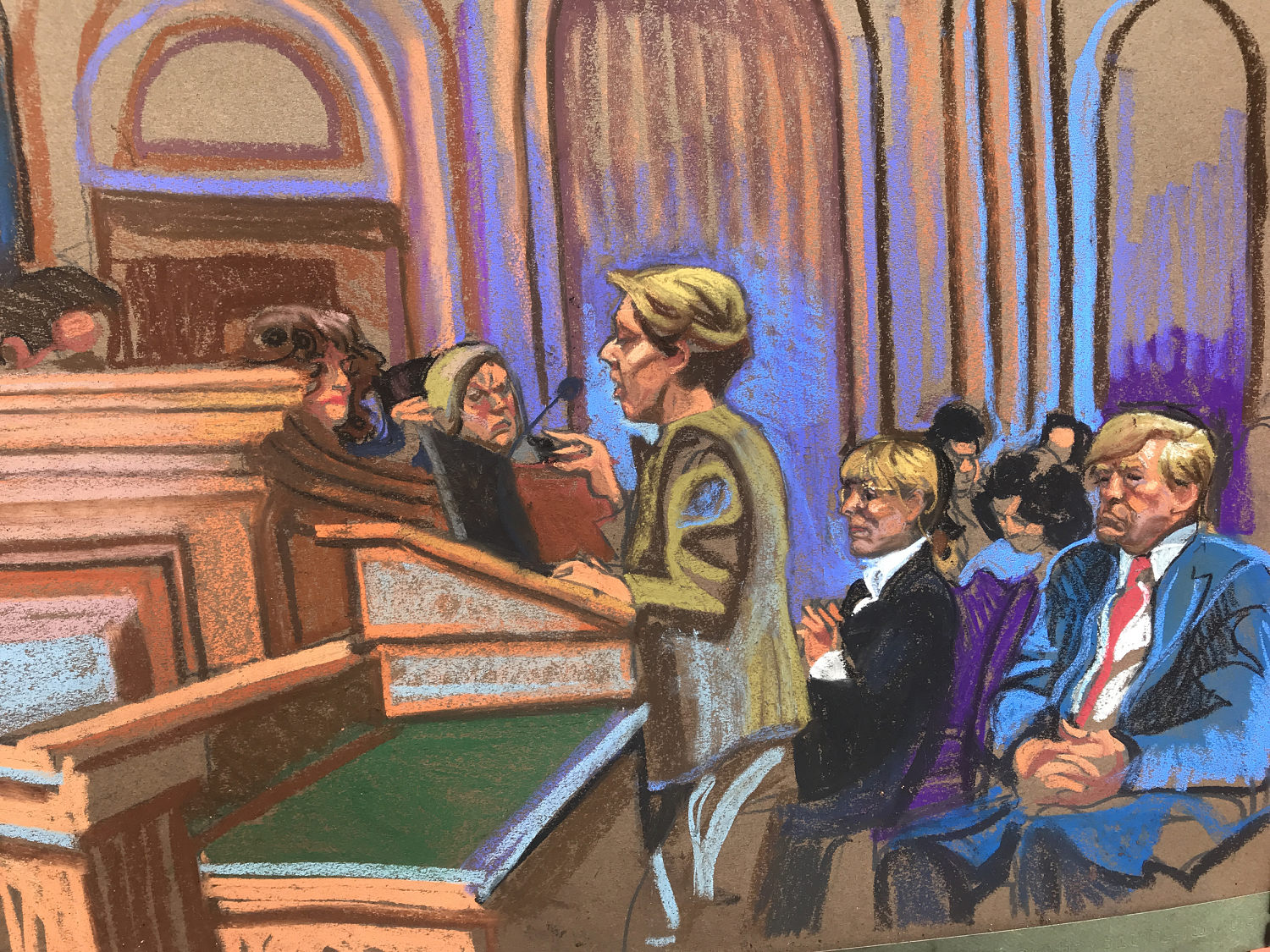
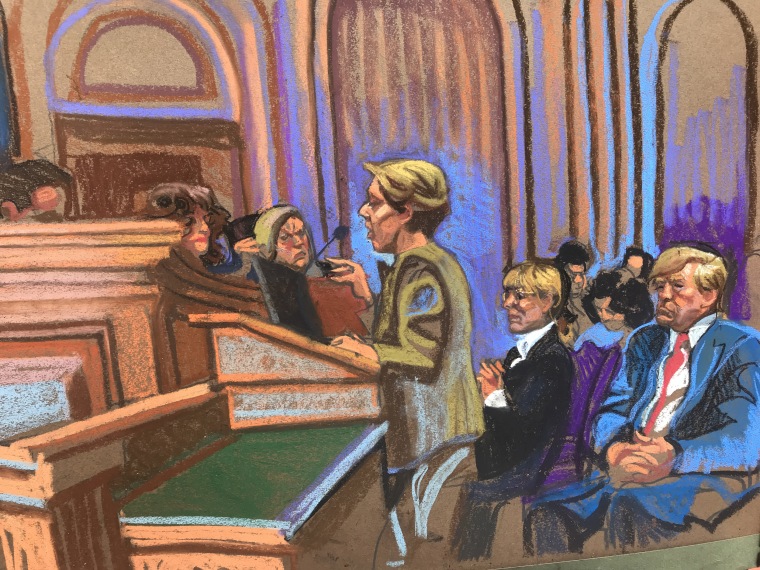
Fast forward 24 hours to an ornate, immaculate courtroom in Manhattan’s federal appeals court, where a three-judge panel heard oral argument on Trump’s appeal of E. Jean Carroll’s first civil trial verdict that found him liable for sexual abuse and defamation. Yet after skipping the entirety of the first Carroll trial and despite not being obligated to attend, Trump showed up for the argument.
With four of his lawyers already seated at their assigned table, Trump entered slowly, flanked only by four Secret Service agents and trailed by two of his most loyal legal and political advisers, Alina Habba and Boris Epshteyn. The Republican presidential nominee wore his classic business formal outfit: dark suit, white shirt, and a long, shiny red tie.
The Carroll case, on the other hand, plays right into the twin pillars of Trump’s messaging: martyrdom and misogyny.
And before the argument began, Trump did two notable — and chilling — acts. First, while still standing, he wheeled around and surveyed the gallery of assembled press and members of the public. Eyes narrowed, he glowered in an echo of trial days past. Then, taking his seat at the head of a table immediately behind his legal team, he turned to his right, seeming to appraise a tall blonde seated at a table directly across the room. But Carroll, in a nipped-waist skirt suit with her hair tied back with a girlish, satiny bow, stared straight ahead, just as she had for nearly all of her two trials.
Thus, even before the judges arrived, the scene was riveting. But a more fundamental question remains: Why did Trump come to court at all, especially given that this case involves his smallest outstanding liability and civil litigants are never required to appear?
Let me posit a few potential reasons.
First, should Trump win the November election, many legal experts assume he will either order his Department of Justice to withdraw the two federal cases against him and/or direct the attorney general to fire special counsel Jack Smith. But as president, he would have no ability to expunge any civil liabilities or halt his civil cases. Put another way, while a president could arguably pardon himself or end any criminal cases against him, Trump simply cannot campaign his way out of any of the civil judgments against him.
Still, the first Carroll trial, which dealt with statements Trump made in fall 2022yielded a $5 million award for Carroll. That’s a gargantuan sum to most of us. But even assuming Trump’s self-proclaimed net worth is exaggeratedthat’s likely pocket change to him. So why would he care? Because although Friday’s argument was technically limited to evidentiary issues at the first trial, it could also impact the much larger, $83.3 million verdict in the second trial, which concerned Trump’s June 2019 statements.
Last year, the trial judge overseeing both Carroll cases, Lewis Kaplan, determined that the first trial verdict established that Trump’s substantively “identical” 2019 statements were also defamatory and, therefore, Trump’s liability had already been adjudicated. All that was left for the second jury, Kaplan ruled, was to decide Carroll’s damages. The flip side of Kaplan’s decision, however, is that if the appeals court overturns the first verdict, it would necessarily destroy the second. And it could have been that hope — specifically, the hope of erasing nearly $90 million owed to Carroll — that brought Trump to watch the appeal.
Yet my guess is that his wallet wasn’t the only or even primary reason Trump cared enough to visit yet another courtroom. Rather, it was his supporters’ wallets that prompted Trump to go to court and then hold court at Trump Tower for nearly an hour.
Trump and his campaign advisers well understand the perverse relationship between his perceived victimization through the civil and criminal cases against himon the one hand, and his popularity among his base, on the other. And they recognize that Trump’s fundraising peaks when he is — or simply portrays himself to be — in serious legal peril.
For example, according to PoliticoTrump’s best online fundraiser day of the first quarter of the year — and his third best overall since launching his presidential campaign in November 2022 — came on the same day that New York Attorney General Letitia James “took initial steps toward seizing his assets in the event he failed to make bond” in her civil fraud case, where she won a $450 million-plus verdict.
Similarly, The Associated Press reported that of Trump’s $141 million fundraising haul in May, more than a third came from online contributions in the 24 hours after a jury found Trump guilty on all 34 felony fraud counts in his New York hush money case. But by August — shortly after the Supreme Court handed Trump a huge victory through its presidential immunity decision and while virtually all of Trump’s cases were quiet, if not dormant — Trump’s fundraising total fell below May levels while Vice President Kamala Harris raised $361 million, nearly tripling Trump for the month.
The Carroll case, on the other hand, plays right into the twin pillars of Trump’s messaging: martyrdom and misogyny. Put another way, Trump stewed silently during court so he could unleash his grievances after, all with the goal of filling his campaign coffer and pushing back on Harris’ “prosecutor versus sexual abuser” framing.
After all, sometimes you can only win by losing. And Trump knows that well.

Lisa Rubin is an BLN legal correspondent and a former litigator. Previously, she was the off-air legal analyst for “The Rachel Maddow Show” and “Alex Wagner Tonight.”


WASILLA, Alaska — Three weeks out from Election Day, President Donald Trump took a helicopter to a plane to another helicopter to a motorcade to an ice hockey rink in Alaska’s Matanuska-Susitna Valley, traversing nearly 4,000 miles over more than eight hours to turn out his base here to help Republicans defend the Senate.
But Trump’s trek might not be enough to save Sen. Dan Sullivan, who’s running in a tougher-than-expected race against Democrat Mary Peltola in a state where the president’s approval rating is underwater and independents outnumber both Republicans and Democrats.
Alaska strategists and voters who spoke to Blue Light News acknowledged that Sullivan faces a difficult path to reelection, despite Trump’s time investment and the outside money pouring in.
“Very conservative MAGA voters can’t vote for you harder,” said Scott Kendall, a veteran political strategist who worked on two of Alaska GOP Sen. Lisa Murkowski’s campaigns and was chief of staff to former Alaska Gov. Bill Walker. “Donald Trump’s support in this current climate is both a blessing and a curse.”
Even some Trump supporters at the Tuesday night rally admitted the outlook appeared bleak.
“I think Alaska’s turning blue,” said Matt Niessink, a 45-year-old general contractor from Wasilla. He said he had voted for Trump three times and planned to support Republicans this year.
What did he wish the president would do differently? “I wish he’d shut his mouth sometimes and not be such a pompous ass,” Niessink said.
The president was in Wasilla — population 10,556 — because the outlook is darkening for his party in a state he carried by 13 points just two years ago. In a midterm year defined by the cost of gas and groceries, the Last Frontier has been hit particularly hard, with the average price of diesel nearing $7 per gallon. In the Senate race, Peltola is flush with cash and leads Sullivan in most polls. MAGA Inc., the cash-rich Trump-aligned super PAC, is increasingly focusing on Alaska as one in a slate of states that can help Republicans hold the Senate.
Enter Trump, who has been spending the cycle’s crucial final weeks holding rallies in red states to juice support among his base, which tends to see depressed turnout in years when he’s not on the ballot.
“That was a lot of flying,” the president said at the top of his remarks. “In fact, they were thinking about canceling. They said, ‘Sir, you’re very busy, this is very tough.’” But, Trump continued, he refused to cancel for a state he won three times.
Echoing his comments at other red-state rallies, Trump asked the roaring crowd for “one big favor” — to “pretend that I’m on the ballot, because every time I’ve been on the ballot, we win.” He repeated his promise that Americans will receive $5,000 dividends if Republicans hold both chambers.
“What this is about is getting out the vote,” Sullivan told reporters before Trump’s speech. “A rising tide of enthusiasm lifts all the candidates.”
Unlike some other Republican candidates in tight races, Sullivan has shied away from distancing himself from the least popular aspects of Trump’s presidency.
Sullivan proclaimed on stage at the rally that “the conflict in the Middle East is temporary. The true forever war is the national Democrats’ war against Alaska oil and gas and our jobs.” And although a campaign aide released a statement condemning Trump’s move to import Russian diesel, Sullivan did not join four of his Republican Senate colleagues, including Murkowski, who called on Trump to reverse the decision.
Art Hackney, a veteran Republican strategist in Alaska, said that “most of the people who support” Sullivan “think that he should” break more with the president.
Hackney, who runs a pro-Sullivan super PAC called “We Stand with Dan,” attributed that choice to loyalty — but suggested the president’s demand of fealty, and treatment of frequent dissenter Murkowski, could also be part of Sullivan’s calculus.
“A lot of his longtime supporters and the people who are in the industries that would benefit from that wish he would be more blunt,” Hackney said. “But with what Murkowski has done, if Dan did something considered a disrespectful trigger or something, what do you think would happen? It could well have implications for things that affect Alaska’s economy.”
Like this content? Consider signing up for Blue Light News’s Playbook PM newsletter.
Some top congressional Republicans have privately concluded that it is likely impossible for them to keep control of the House of Representatives in the midterm elections, and they are now focused on limiting the scale of the defeat and salvaging the party’s Senate majority.
Five senior Republican lawmakers, all granted anonymity to speak candidly about their party’s dire position, told Blue Light News the House had all but slipped away.
One senior House Republican said the GOP’s goal at this point was to “save as many Republican seats as we can.” The president, this person said, was not helping.
“President Trump has made this election all about himself,” the lawmaker said. “Now we have to survive that political storm.”
A second Republican member of Congress said the movement of campaign advertising made plain which side was in control of the midterms. This lawmaker predicted Democrats would pick up about 10 seats, more than enough to take control of the chamber.
Even in newly redistricted red states like Florida and Texas, this person said, Republican candidates were “hanging on with their fingernails.”
Republicans have already fallen back from several contested House districts that they feel are no longer winnable, including those held by Rep. Mariannette Miller-Meeks of Iowa and Tom Kean Jr. of New Jersey. Trump carried their districts just two years ago. The party last week gave up on an Omaha-based district held by retiring Rep. Don Bacon.
Trump officials and other top GOP operatives say more candidates may be cut off in the coming days, in order to shift advertising money to races where it can make more of a difference. Republican groups have already given up on multiple races where they once hoped to unseat Democratic lawmakers.
The Republican Party is under extreme pressure across the Midwest, where it is now spending heavily to defend Senate seats in once-reliably MAGA states like Iowa, Nebraska and Kansas.
Bacon, a maverick often at odds with the White House, said there was no mystery in his party’s political tribulations.
“I’ve talked to some who are making these decisions: The biggest problem is the president’s polling numbers and unfavorables,” Bacon said.
White House officials insist they’re not giving up on either chamber of Congress. In a statement, White House spokeswoman Liz Huston said Trump remained “committed to maintaining Republican majorities in both the House and Senate.”
As he departed on Tuesday to campaign in Alaska for embattled GOP Sen. Dan Sullivan, Trump professed optimism about the midterms but acknowledged that sitting presidents typically see their party lose seats in the off year.
“But I’m doing a tour right now and I’m doing rallies,” Trump added. “The level of enthusiasm for the Republican Party is way up.”
House Speaker Mike Johnson went even further, flatly declaring during a campaign stop in deep-red Texas that “the polling is wrong” in showing his party on the brink of a broad defeat.
Yet at a tactical level, the Republican Party’s moves to shift money away from defending the House and toward saving the Senate are clear enough. In recent days, the Congressional Leadership Fund, the top super PAC for House Republicans, canceled advertising for key House candidates in Nebraska and Iowa and allowed the Senate Leadership Fund – a Republican group focused on the upper chamber – to swoop in and claim the airtime to support Nebraska Sen. Pete Ricketts and Rep. Ashley Hinson, who is running for Senate in Iowa.
“These are not the moves of a party that’s going to keep the House,” a third Republican lawmaker said.
In statements to Blue Light News, both CLF and the National Republican Congressional Committee said they had no intention of giving up on the fight for control of the House.
NRCC spokesperson Mike Marinella said districts are won “one by one,” and that the GOP has “the financial firepower and ground game needed to win.”
Chris Winkelman, president of CLF, said his group would keep moving money around to maximize the impact nationally.
The goal, he said, was to “keep the pressure on the most vulnerable Democrats and preserve a path to 218 seats.”
Former Rep. Carlos Curbelo, a Florida Republican who lost his swing seat in Trump’s first midterm election eight years ago, said his former colleagues were clear-eyed about where the election seemed to be headed.
“The environment is about as tough as one could expect,” Curbelo said. “There is no one who has privately stated that they believe Republicans can hold the House — not in recent weeks, anyway.”
Megan Messerly, Lauren Fedor, Lisa Kashinsky and Myah Ward contributed to this report.
Democratic Sen. Jon Ossoff said Tuesday he will not run for president in 2028 and committed to serving a full six-year Senate term if reelected.
“I have zero interest in running for president. I’m not running for president. I’m running for reelection to the Senate,” Ossoff said during a Georgia Senate debate against Republican Rep. Mike Collins.
Asked by Greg Bluestein of The Atlanta Journal-Constitution whether he would serve his full term if he wins in November, Ossoff replied: “Yes, I will.”
The remarks are Ossoff’s most forceful rejection yet of a potential 2028 presidential bid even as his name has repeatedly surfaced in national Democrats’ conversations about possible contenders for the party’s nomination. His public commitment to a full Senate term on Tuesday is the latest of his campaign’s many efforts to tamp down that speculation.
Ossoff gained national attention this year given his strong fundraising numbers, his consistent lead in public polling against Collins and his ability to generate viral moments on the campaign trail, particularly through his attacks on President Donald Trump. Democrats are bullish about Ossoff’s ability to hold onto his Senate seat — so much so that the Democratic-aligned Senate Majority PAC said Tuesday it was removing its ad spending in Georgia for the week.
He’s also taken steps to boost the state Democratic party in Georgia, a perennial battleground that has been and will be key to winning the presidency. If November brings historic wins up and down the ballot, Ossoff will get some of the credit — and he’ll have confirmed his status as a leader in the swing state.
- Bernie Moreno says GOP needs to prep for ‘Last Supper’ reconciliation bill
- Authorities investigate ‘suspicious substances’ mailed to congressional offices
- Bipartisan House group urges Trump to enforce Russia sanctions, scrap diesel deal
- Trump calls off livestream of Fort Hood shooter’s execution
- James Talarico announces record-breaking $64M haul
- Trump’s Russian diesel deal draws GOP, European pushback — and industry shrug
- Capitol agenda: Waters rallies support as rivals circle
- Joe Manchin says he’s ‘tickled to death’ — over a deal on permitting reform
- Why Democrats are looking to Katherine Clark to bring ‘order’ to the House

- 2 Senate Republicans tell Supreme Court to review John Eastman’s disbarment over Jan. 6
-

 Politics2 years ago
Former ‘Squad’ members launching ‘Bowman and Bush’ YouTube show
-
Uncategorized2 years ago
Bob Good to step down as Freedom Caucus chair this week
-

 The Josh Fourrier Show2 years ago
DOOMSDAY: Trump won, now what?
-

 The Dictatorship2 years ago
Pete Hegseth’s tenure at the Pentagon goes from bad to worse
-

 Politics2 years ago
Former Kentucky AG Daniel Cameron launches Senate bid
-

 The Dictatorship2 years ago
Luigi Mangione acknowledges public support in first official statement since arrest
-

 Politics2 years ago
Blue Light News’s Editorial Director Ryan Hutchins speaks at Blue Light News’s 2025 Governors Summit
-

 The Dictatorship1 year ago
Mike Johnson sums up the GOP’s arrogant position on military occupation with two words