
Politics
White House claps back at Jane Fonda’s reboot of First Amendment group: Trump a ‘strong supporter of free speech’

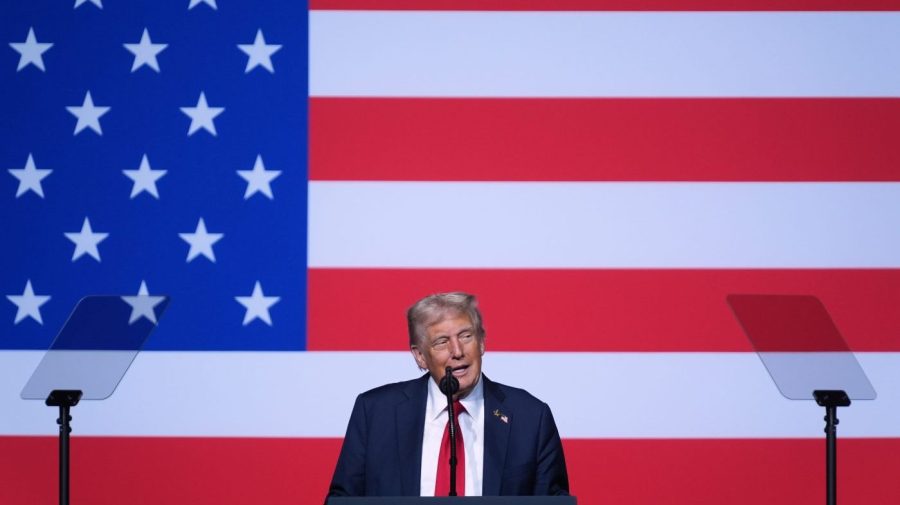
The White House says Jane Fonda is “free to share whatever bad opinions she wants” amid her relaunch of a McCarthy-era group but still defended President Trump as a “strong supporter of free speech.” The Academy Award-winning actor sounded the alarm on free speech in the United States and announced the formation of the Committee for the…
Read More


Republicans know President Donald Trump’s unpopularity poses a big problem for them in November. They also recognize he may be their only option to avoid a wipeout.
Five weeks before Election Day, many Republicans are facing a damned-if-they-do, damned-if-they-don’t dilemma. Some candidates in close races are wary of alienating undecided voters by campaigning alongside Trump and the baggage that comes with him: High gas prices, voters’ persistent economic concerns and the prolonged war in Iran.
But keeping the president at arm’s length could make it harder to turn out the low-propensity base voters they need — voters that only Trump has been able to bring to the polls.
“These guys are in a pickle,” said one national GOP operative granted anonymity to speak candidly about the landscape, like others in this article. “They may not want Trump to come to the district, but there are still things that Trump can do to help.”
Asked what would happen if Trump campaigned in a battleground state where their candidates were running, another GOP operative working on midterm races said: “I suspect my candidates would come down with COVID.”
But the candidates may not have much of a choice. Trump is increasingly inserting himself into the election in the closing stretch, ramping up his campaign travel with a slate of stops scheduled in red states, repeatedly imploring voters to “pretend” he’s on the ballot and, most recently, appearing in taxpayer-funded campaign-style ads that the White House has claimed are Public Service Announcements.
Some Republicans have encouraged Trump’s team not to send the president to a blue-leaning Omaha district and other key districts where his approval rating is underwater ahead of Election Day, according to two people with direct knowledge of the matter. Brinker Harding is running in the Omaha seat being vacated by retiring Rep. Don Bacon (R-Neb.); his campaign didn’t respond when asked if he’ll attend Trump’s upcoming rally in Grand Island, Nebraska, about a two-hour drive away.
Others have said similar things.
“They’ve called me four times now to see if we want him to come, and I’ve said no,” one senior Republican involved in a House GOP battleground race in a district Trump safely won in 2024 told Blue Light News.
Another Republican operative familiar with Republican midterm strategy said the party views its role — and Trump’s — primarily as driving GOP turnout, while the work of persuading moderates, independents and other swing voters falls more heavily on individual candidates.
“Where the president is going is being decided very strategically, to areas where we are trying to boost turnout among Republican voters,” the operative said. “We’re not going to be sending him into areas where it would necessarily be hurtful to our candidates.”
Others in red states that are increasingly competitive acknowledge that if they want to rally the MAGA base to the degree necessary to hold onto key seats, no one can deliver like Trump.
“He’s a turnout machine for the Republican Party, the president is,” said Ohio GOP Chair Alex Triantafilou, who will welcome Trump to his state on Saturday. “I certainly know what some of the national polling and some of the pundits have to say about this. But he is always welcome to Ohio because we know that he fires our people up.”
Not everyone thinks Trump is a net-positive even in places he comfortably won.
A national GOP operative, granted anonymity to speak candidly, said there are “no indications that there are enough turn out voters to overcome dropping some persuasion voters.”
Outgoing North Carolina Republican Sen. Thom Tillis said he doesn’t think it would be helpful for Trump to campaign in his state — which the president won in all three of his presidential runs, and where former RNC chair Michael Whatley is struggling to tighten the race against former Gov. Roy Cooper.
“Not in my opinion — just if you take a look at the votes — you take a look at the independents. I don’t think he’s the one who’s going to get them out,” he told Blue Light News.
“I think [Trump’s] job is to get the people out who traditionally vote for him and don’t show up in off-year elections,” he added. “Our job [as candidates] is to then … create some separation. It’s not like you’re breaking your loyalty to the president. … So there are states I think he should go to, there are states I don’t think he should go to.”
The Whatley campaign, however, feels differently. “Who drives R turnout right now in NC — Trump or Tillis? We would welcome Trump back to NC,” said Whatley’s senior adviser, Jonathan Felts. Both Trump and Vice President JD Vance have been to North Carolina to campaign with Whatley in recent weeks.
Trump’s upcoming stop in a red corner of Ohio outside Dayton is part of a broader campaign swing that reflects the political bind. Other stops scheduled include in deep-red states like Oklahoma and Alabama, as well as in red states with key Senate contests including Ohio, Nebraska and Alaska.
Ironically, the expanding battleground map could make Trump more useful to Republicans in some of the places they are most worried about. As the fight has spread into states and districts he won by double digits, simply turning out more of his base may be enough to make a difference.
The White House argued Trump is the “unequivocal leader, best messenger, and unmatched motivator for the Republican Party.”
“No one can dispute the fact that President Trump has created one of the most robust coalitions in political history with the MAGA movement, and the President understands how to communicate with them,” White House spokesperson Davis Ingle said.
The Republican National Committee and National Republican Congressional Committee also said Trump is still a valuable turnout tool, and their candidates are eager to have the president visit their districts and to appear with him on the campaign trail. The National Republican Senatorial Committee did not respond to a request for comment.
But some of the voters Republicans most need Trump to activate — especially blue-collar white voters in rural areas who came out to vote for him but often skip voting in the midterms — are themselves unhappy with his presidency.
Recent Blue Light News polling found that even some of Trump’s strongest supporters — those who identify as MAGA — are souring on his handling of key issues. A Blue Light News Poll in August found that a 44% plurality of MAGA Trump voters said the Iran war has made things more expensive for them, while 38% said the war has had no real impact on their costs.
“It’s really Trump’s voting base that’s feeling the pain of Trump the most,” said another Republican operative involved in several battleground races across the country, granted anonymity to speak candidly about the landscape.“They have to turn those people out. But those people are pissed at Trump, so it’s this weird dynamic of like: ‘Does he help? Does he hurt? Can he go and encourage the disenfranchised, the really pissed off Republican Trump voter?’” the operative said. “That’s really going to be what decides the outcome of this election.”
It’s noteworthy which GOP candidates are enthusiastically coming out to Trump’s rallies — and which are sitting out or staying mum on their plans.
A spokesperson confirmed that Sen. Jon Husted (R-Ohio), who is locked in a tough race in a state Trump won by double-digits, will attend Trump’s upcoming rally outside of Dayton; a spokesperson for Vivek Ramaswamy, the GOP gubernatorial candidate, did not respond to an inquiry about Ramaswamy’s attendance plans, nor did spokespeople for the trio of GOP House candidates running in Ohio’s competitive 1st, 7th and 9th Districts.
Republican Rep. Ashley Hinson, the GOP Senate candidate in Iowa, recently said the Iran war needs to be “brought to a successful and immediate end,” in a rare public break with Trump. Hinson also did not attend a campaign rally Vice President JD Vance held in western Iowa in mid-September. She did, however, appear in the Oval Office behind Trump earlier this week when he announced a plan to build a $15 billion steel plant in Iowa.
But with an ever-darkening environment, some Republicans see any efforts to reverse course as better than nothing.
“Everybody sees the polling,” said Daniel Garza, a Texas Republican strategist and president of the conservative LIBRE Initiative. “Is the polling accurate? I have no idea. All I know is that turnout is going to be key to this, and anything helps right now, at this point.”
Jordain Carney and Lisa Kashinsky contributed.
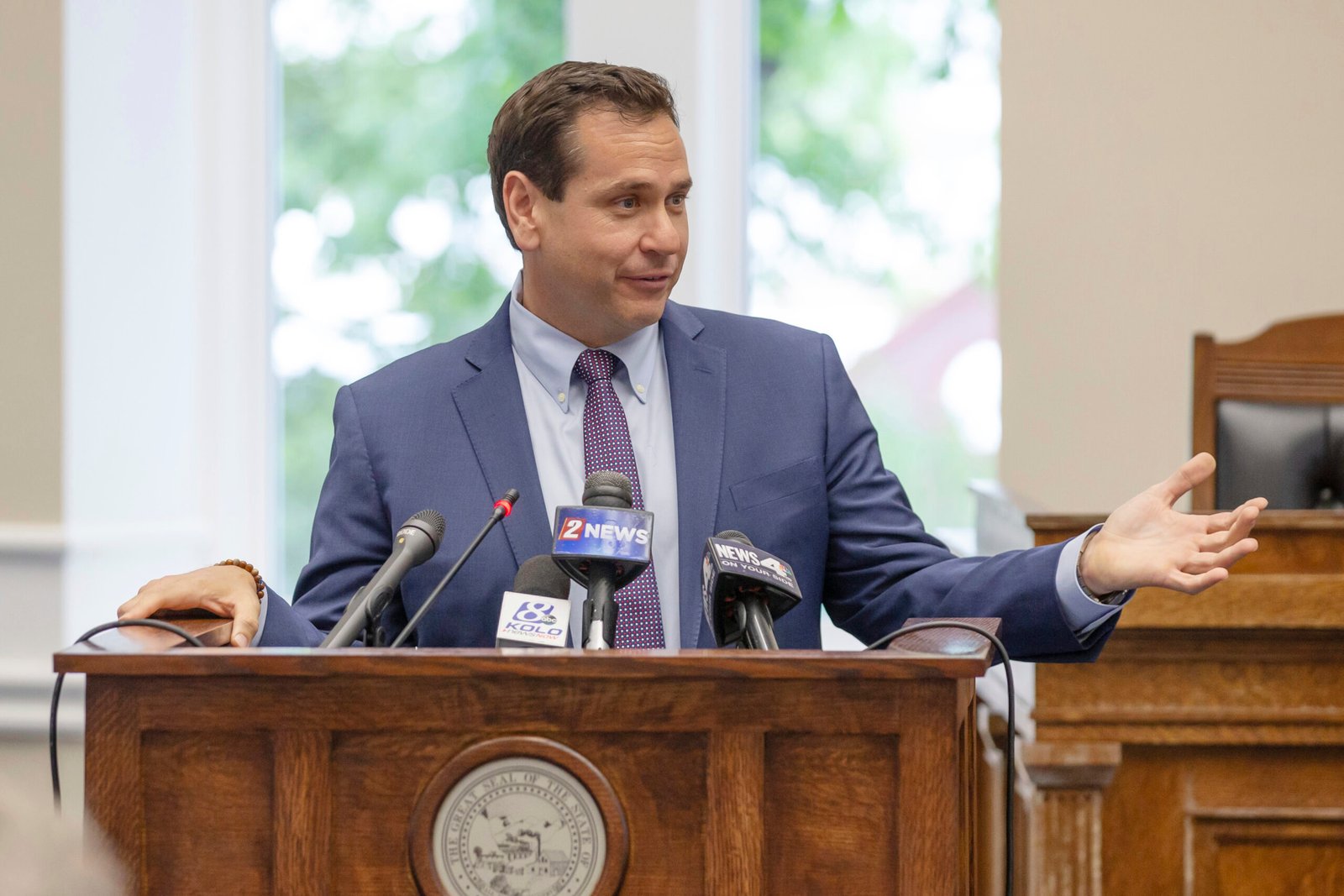
The Supreme Court blocked President Donald Trump’s effort to restrict mail voting. But for Democrats trying to turn out voters, the uncertainty seems harder to put to rest.
Fewer Democrats say they plan to vote by mail in November’s midterms than at the same point in 2024, according to a new NBC News poll, as a separate survey finds declining confidence that the Postal Service will deliver election mail on time. That represents an about-face for a party that has increasingly embraced mail voting since the 2020 pandemic election, forcing Democratic strategists to rethink how they get voters to the polls — and how to convince them their ballots will count.
Quentin James, founder and president of the Collective PAC, said his group is hearing concerns from Black voters about whether their mailed ballots will be secure and counted.
“I think there’s confusion,” James said. “We know that the president has spent six months talking about changing the rules regarding mail-in voting, and a lot of folks are concerned about their ballot being secure.”
That confusion comes as Democrats and voting groups weigh how to reassure voters after Trump’s latest effort to restrict mail voting. The president signed an executive order in March seeking to crack down on mail-in voting, citing unproven claims that the process is insecure and vulnerable to electoral fraud.
“The cheating on mail-in voting is legendary. It’s horrible what’s gone on,” Trump said during an Oval Office signing ceremony. “I think this will help a lot with elections.”
Still, the rules for mail ballots — at least nationally — will be effectively the same as 2024 after the Supreme Court rejected the Trump administration’s attempt to enforce the new mail-in ballot delivery regulations in a ruling earlier this month. The high court left in place a lower-court decision that blocked the U.S. Postal Service from implementing the new proposed requirements in the weeks before the midterm election.
Despite that, Democratic voters have signaled they are changing how they’ll vote.
In the NBC poll, 23% of registered Democrats said they plan to vote by mail, down from 34% in September 2024. Thirty-six percent said they plan to vote early in person, up from 30%, while another 36% expect to vote on Election Day.
A Marist poll found that 58% of registered voters were confident the Postal Service would deliver election-related mail to voters and election officials on time, down from 71% in October 2024. Marist also found that Democrats remain more likely than Republicans to plan to vote by mail or absentee ballot, 32% to 12%, respectively.
James said his organization has long encouraged early in-person voting through its Rides to Vote program, which provides transportation to voters without a vehicle. But despite the Supreme Court ruling, his organization is also encouraging people considering voting by mail to use a ride voucher to return their completed ballots directly to the required location.
“The bigger threat is confusion and fear,” he said. “That is the thing that a court case will not solve, and that’s what we’re really concerned about.”

In Maine, Secretary of State Shenna Bellows said municipal clerks have reported voters canceling absentee ballot requests, including requests to receive ballots automatically in future elections.
Bellows cautioned against a blanket message to vote in person. “We would discourage advocates from telling people not to vote by mail if, for those voters, that’s their only option,” said Bellows, a Democrat who ran this cycle for governor and in the rapid-fire Senate primary, pointing to older and disabled Mainers who rely on absentee voting.
Her office is instead urging voters to make a plan that works for them, return mailed ballots early and use Maine’s online absentee ballot tracking system to check whether a clerk has received and accepted them.
“Our public education efforts have been focused on encouraging voters to make a plan that’s right for them, and recognizing that they have the peace of mind of tracking their absentee ballot and the backup option of voting on Election Day if, for any reason, the ballot is delayed by the mail,” Bellows said.
Indivisible, one of the party’s largest grassroots groups, is mounting its own early-vote push and nudging people to cast their ballots early, regardless of how they vote. Co-founder Leah Greenberg said that the group is helping organize an Oct. 17 national day of action to encourage people to vote early under their states’ rules.
“So we were absolutely hearing concern,” Greenberg said. “But more importantly, what we’re hearing is people trying to figure out what they can do and how they can organize locally in order to protect elections.”
Greenberg said Indivisible is urging voters to get their ballots in early and emphasizing that a court rejected the administration’s attempt to restrict mail voting.
Still, the ruling hasn’t erased the uncertainty organizers say they are hearing from voters. Greenberg and James described a similar mix of relief and concern among voters.
“People are glad to hear it, but still wary,” Greenberg said.
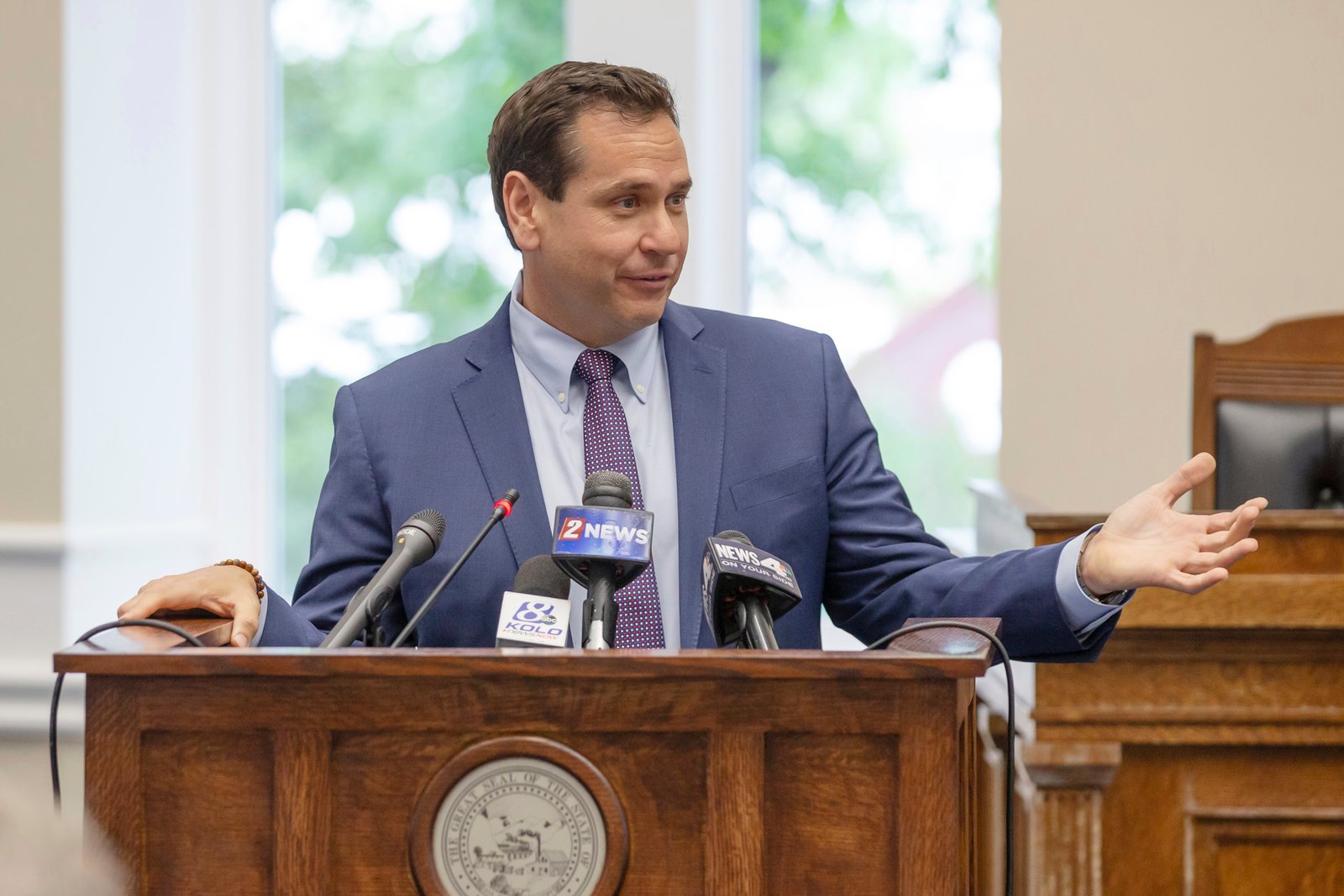
Democrats, including state election officials who oversee the process, are also looking for ways to boost confidence in the mail system. Nevada Secretary of State Francisco Aguilar has asked his state’s congressional delegation to arrange election observers at postal facilities handling Nevada’s ballots.
In letters to the state’s congressional delegation, Aguilar identified sites in Las Vegas and Reno, as well as facilities in West Sacramento, California, and Salt Lake City, Utah.
Aguilar said nearly 670,000 Nevadans voted by mail in 2024 and argued that having observers present could strengthen confidence in ballot handling. In an interview, he said observers would also signal to postal workers that they have support in the process.
“By having observers there, it gives them the support to say: ‘Hey, we got your back,’” Aguilar said. “We also want to be helpful if there are any concerns — we want to make sure that leadership knows we are not going to stay quiet. We’re going to be proactive. We’re going to be engaged and we’re going to hold them accountable when we need to hold them accountable.”
Aguilar said Rep. Susie Lee (D-Nev.) has requested observers following his letters. Lee’s office did not respond to a request for comment.
USPS said it had received correspondence regarding Aguilar’s request and was reviewing it. “The Postal Service has successfully delivered America’s election mail, and we are confident that we will do so again this year,” Nikolaj Hagen, a Postal Service spokesperson, said.
Hagen pointed to USPS figures showing it delivered 233.3 million pieces of election mail through Aug. 28 in fiscal year 2026, with 97.94% arriving on time. In the 2022 election, USPS handled 105.4 million ballots and delivered 99.93% of those sent by voters to election officials within seven days. In 2024, it handled 222.39 million pieces of ballot mail, with 99.88% delivered to officials within seven days.
Meanwhile, Bellows said Maine is taking a different approach. Local USPS representatives have proposed weekly meetings with her election staff, she said, and her office has relationships with workers at the state’s two distribution centers.
But she noted congressional observers could be useful in larger states where those relationships are less established.
“Maine is a small enough place where, if there were a problem, we would probably know very quickly through union representatives or simply word of mouth,” Bellows said, noting that congressional observers at postal locations could be particularly useful in places “where those relationships may not be as strong or well established.”
Sen. Jon Ossoff hosted a few hundred donors and supporters for a recent Washington fundraiser — but it wasn’t just for him.
Instead, the Sept. 16 gathering was geared toward raising money for the Democratic Party of Georgia and its coordinated campaign, according to an Ossoff aide and one attendee, who was granted anonymity to describe a private event.
It’s part of his broader effort to boost state Democrats as they look to flip the governor’s mansion for the first time in over 20 years and improve their margins in the legislature. And the timing, just weeks before November, signals confidence in Ossoff’s own reelection prospects and the sizable warchest he’s raised for himself.
This month’s event was the latest of several similar fundraisers Ossoff has held over the last two years. He plans to host more fundraisers for Georgia’s Democratic Party and the coordinated campaign ahead of Election Day, according to one person familiar with his planning, who was granted anonymity to speak candidly.
If his moves are successful and November ushers in historic wins for Georgia Democrats, Ossoff will have cemented his status as a serious leader in the critical swing state. He would hold on to a crucial seat in the Senate as the party looks toward the South to shore up its future. He’d be credited in part with helping elect former Atlanta Mayor Keisha Lance Bottoms as the country’s first Black woman governor. And though Ossoff has said he’s not interested in joining a 2028 presidential race, leading a November sweep would ultimately raise his national profile.
“It would be hard to call him anything but a leader of the [state] party at that point. He’s already inching his way towards that kind of designation,” said Andrew Heaton, a Georgia-based Democratic strategist who supports the ticket. “But if there is the kind of success that a lot of people are predicting for the cycle, he would receive a large portion of the credit for that.”
Ossoff’s campaign did not comment beyond confirming the fundraisers.
The events are just part of Ossoff’s endeavor to help build out the Georgia Democratic Party’s apparatus after a rough 2024 election cycle.
The senator has transferred $3.6 million of his own campaign funds to the party’s coordinated campaign to date, which the Atlanta Journal-Constitution first reported. Since the effort was announced in July, the party has opened 30 field offices across the sizable state, and employs more than 100 field staffers helping with grassroots organizing for races up and down the ballot.
The coordinated campaign is led by a former Ossoff political director, Kyle Tromley. Caroline Saudek, a longtime fundraiser for Ossoff’s political operation, also joined the state party in January in a fundraising-focused role.
Democrats across the state — from the densely populated Atlanta metro to Georgia’s small sliver of Atlantic coast — said they’ve seen a marked difference in the coordinated campaign’s involvement this cycle, from consistent communication to investment in smaller-profile races. That transformation, several noted, started when Chair Charlie Bailey took the helm.
Bailey, an attorney from rural Harris County and former statewide candidate for lieutenant governor, became the leader of the party in mid-2025 with Ossoff’s crucial support.
“It is definitely a stronger coordinated campaign than I’ve seen in years, and in previous cycles. And it feels like it is better staffed, they staffed up earlier,” Heaton, the Georgia-based Democratic strategist, said.
Republicans are also taking note of the newly improved Democratic machine in a state that, until 2020, was a safe-red hold for the most high-profile races. Already, GOP fears are growing about Rep. Mike Collins’ ability to beat Ossoff. And polls show GOP gubernatorial nominee Rick Jackson locked in a tight battle with Bottoms, despite having dropped tens of millions from his own bank account into the race.
Georgia Republican Party Chair Josh McKoon shrugged off Democrats’ fundraising efforts and said he feels “very good” about Republicans’ field resources.
“We’ve had a field program in place for months now. We have field staff on the ground all over the state,” he said in an interview, though he declined to provide details on the size of the Georgia GOP’s paid and volunteer operation.
Others aren’t as dismissive.
“The Democratic Party has deployed resources to hire staff that mobilizes and turns out voters. Republicans have not had this competitive of a race in a while, so they don’t have that type of muscle memory,” said Ryan Mahoney, a longtime Georgia-based Republican strategist.
“The Democrats are in such a great spot,” he added. “It’s because the apparatus has been tested and is working.”
- Senate bipartisan permitting deal faces a House buzz saw
- Centrist Dem’s Supreme Court plan boosts momentum for revamp
- Republicans need Trump to turn out the base. Some candidates still don’t want him.
- Democrats’ mail-voting plans shift as officials work to reassure voters
- Bipartisan Senate duo drops new data center bills
- Raskin leads calls for federal investigation into Trump PSA’s
- Capitol agenda: Dems skip DC with wind in their sails
- ‘I think we win’: Schumer sets the tone as Senate Democrats grow more confident about November
- Ron Johnson blocks vote to stop Trump’s funding cancellations
- Trump says diesel export ban is still on the table
-

 Politics2 years ago
Former ‘Squad’ members launching ‘Bowman and Bush’ YouTube show
-
Uncategorized2 years ago
Bob Good to step down as Freedom Caucus chair this week
-

 The Josh Fourrier Show2 years ago
DOOMSDAY: Trump won, now what?
-

 Politics2 years ago
Former Kentucky AG Daniel Cameron launches Senate bid
-

 The Dictatorship2 years ago
Pete Hegseth’s tenure at the Pentagon goes from bad to worse
-

 The Dictatorship2 years ago
Luigi Mangione acknowledges public support in first official statement since arrest
-

 Politics2 years ago
Blue Light News’s Editorial Director Ryan Hutchins speaks at Blue Light News’s 2025 Governors Summit
-

 The Dictatorship1 year ago
Mike Johnson sums up the GOP’s arrogant position on military occupation with two words