The Dictatorship
What the government did to Rümeysa Öztürk put student journalists like me on alert

When Immigration and Customs Enforcement arrested Tufts University graduate student Rümeysa Öztürk last year after she wrote an op-ed for that campus’ newspaper that criticized Tufts’ response to Israel’s war in Gaza, the government wasn’t just attacking one student on one campus in Massachusetts.
The unwarranted arrest and threatened deportation of Öztürka Fulbright scholar in the U.S. on a student visa, was the government’s warning to students across the country — especially student journalists — that it doesn’t care about our First Amendment rights. After all, Öztürk had done something unremarkable: expressed her political opinion in a student publication.
Ozturk had done something unremarkable: expressed her political opinion in a student publication.
Though Öztürk’s lawyers say her deportation proceedings were ended this week by a judge who’s allowing her to stay in the countrythe threat on students and student journalism remains. Sometimes that threat comes from the federal government directly, sometimes from university officials who say they’re following the federal government directly and sometimes from university officials whose reasoning is hard to follow.
Last week, Jerome Richardson, a 21-year-old Temple University journalism student, turned himself in to federal authorities after they accused him of participating in a “coordinated attack on Cities Church in St. Paul, Minnesota.” Richardson, who is from St. Paul, has acknowledged he assisted veteran journalist Don Lemon “by helping with logistics and connecting him with local contacts” as Lemon and other journalists covered a group of activists who interrupted a church service in that city last month and called out one of the church’s pastors as a local leader of ICE.
At the end of last year, the University of Alabama shut down two student-run magazines — one that focused on Black culture and the other on fashion — because it said the existence of those publications don’t comply with an anti-DEI memo from Attorney General Pam Bondi.
And I attend Indiana University, where last year, the university temporarily blocked the Indiana Daily Student from publishing. The details of each case may differ, but they have this in common: When student journalism becomes politically inconvenient, the government and universities respond by punishing students rather than protecting them.
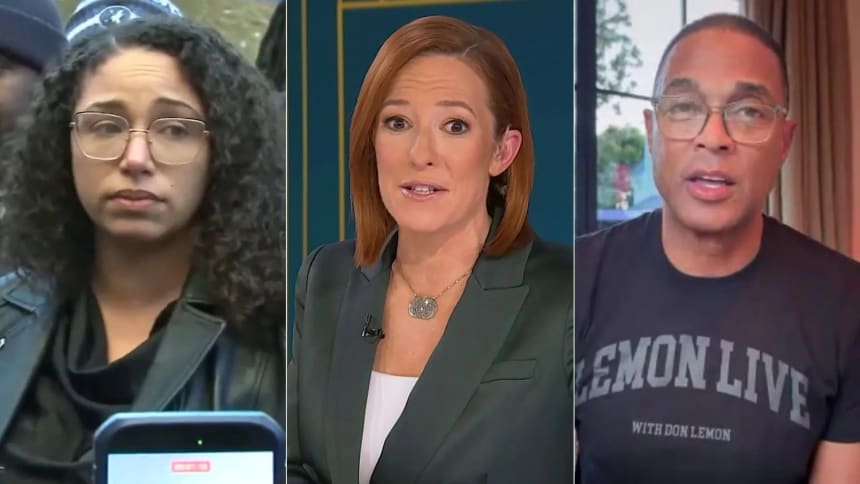

Of course, the arrests of the veteran professional journalists in Minnesota, the recent search of a Washington Post reporter’s home by the FBI and multiple news outlets settling with President Donald Trump in response to his lawsuits against them demonstrate that journalism as a whole is under threat. But student journalists, especially those who might express a left-leaning opinion, are feeling especially vulnerable as it appears that our government and our campus administrators are looking at us like a threat to be contained. Öztürk’s case isn’t an isolated one.
Nothing about this shift is abstract to me. As a new transfer student at IU, I worry about whether the school will be open to certain kinds of reporting and opinions, and whether the plan is for the school to halt the paper for good. That uncertainty is the point. When universities and the government show that student journalism can be shut down at any moment, they are putting pressure on young reporters to self-censor long before anyone has to silence them.
I hear these same concerns from friends who work on their student papers. Many of our conversations are about whether a story or an idea is worth covering. Friends talk about holding stories or avoiding certain topics because they’re unsure how their schools will react, even when their reporting is sound. Student journalism is supposed to be a training ground that teaches young reporters how to report the hard stories, not how to avoid them. When fear becomes part of the curriculum, something fundamental has gone wrong.
Our campus newspaper is where we are supposed to become comfortable questioning authority, publishing uncomfortable truths and navigating the responsibilities that come with a free press. But when those spaces are threatened, through arrests and shutdowns, students don’t learn how to report better. They learn how to stay quiet, how to avoid certain topics and to weigh institutional reaction before pursuing the truth.
But the consequences aren’t limited to the future journalists of America. What they learn now about power, risk and silence will affect not just the press, but the entire country, long after they leave campus.
Rümeysa Öztürk was allowed to stay in the country, and her deportation case was dismissed. But even though she ended up being okay, the lesson her arrest sent extends far beyond her. It showed student journalists how quickly protected speech can turn into a personal and legal crisis when their work becomes politically inconvenient. The message remains that First Amendment-protected work can still expose journalists to serious consequences. And that shouldn’t become normal on campus or anywhere else in the United States.
Eli Thompson is a Gen Z journalist who reports extensively on everything who has published in USA Today, Time, Rolling Stone and The Wall Street Journal. He is a contributor to NewsNation and has appeared on NBC News and WGN.