The Dictatorship
What four years of war shows about Ukraine — and faltering American leadership

Four years ago this weekRussian President Vladimir Putin launched a full-scale invasion of Ukraine. A war he expected to win in just days has become one of the longest and costliest conflicts Russia has fought since World War II. What began as a blitz intended to decapitate Ukraine’s government has hardened into a grinding war of attrition. The United States’ initial commitment to supporting Kyiv has given way to a policy of strategic ambiguity, with neither Ukrainian victory nor a lasting end to the conflict appearing now to be Washington’s objectives.
With no sweeping changes in territorial control since 2023, Russia has suffered staggering losses for marginal territorial gains. Ukraine’s cities have been batteredits infrastructure repeatedly targeted and its people tested by cold, darkness and relentless attack. Yet Ukraine’s survival as a sovereign state is no longer in immediate peril.
The United States’ initial commitment to supporting Kyiv has given way to a policy of strategic ambiguity, with neither Ukrainian victory nor a lasting end to the conflict appearing now to be Washington’s objectives.
This winter has been the harshest of the extreme conditions Ukrainians have endured. Unable to achieve decisive success on the battlefield, Russia has turned to a punitive strategy aimed squarely at civilians, striking energy systems to deprive Ukrainians of heatlight and water. Having failed militarily, the Putin regime is relying on coercion and cruelty.
Despite this, Ukraine perseveres. Through national mobilization, innovation and sacrifice, it has blunted Russia’s advantages in size, population and resources.
Ukraine’s fight has become one of the defining tests of the 21st century: whether democracies can defend themselves against revanchist autocracy. That is the question confronting Washington, as much as U.S. lawmakers avoid it.
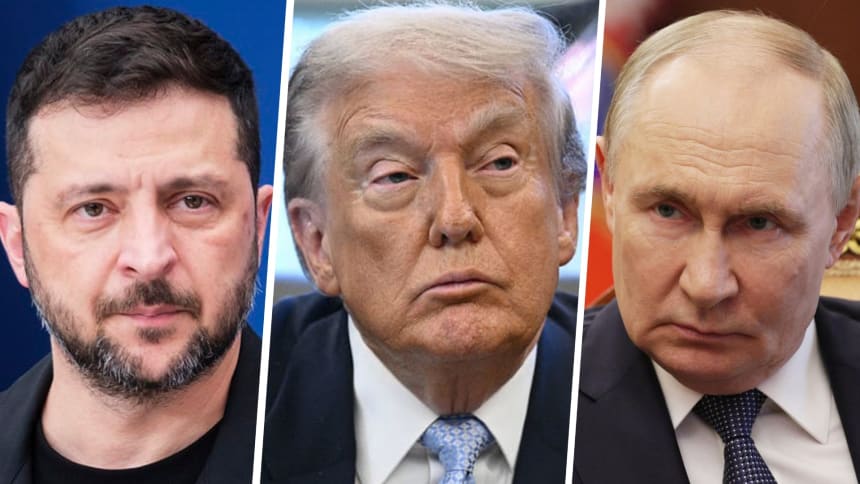

For decades, American foreign policy rested on a simple but powerful insight: Values are not a distraction from power but the source of it. Alliances endure because they are rooted in trust. Deterrence works because adversaries believe the United States will act consistently and predictably. When values guide strategy, American power multiplies. When they are abandoned, power erodes.
The pattern extends beyond Ukraine. Tariff disputes with European partnersflirtation with illiberal movements seeking to weaken the European Union and repeated attacks on alliance commitments have created confusion where clarity is needed. This is not a coherent “America First” strategy. It is strategic drift that shifts the global balance of power in Moscow’s favor.
Under the Trump administration, American policy toward the largest war in Europe since World War II has drifted away from that foundation. Rather than reinforcing deterrence, strengthening alliances and shaping a just peace, U.S. actions too often have pressured Ukraine while offering political and rhetorical relief to Russia. Foreign policy has been treated less as an instrument of American security than as a means for transactional leverage and private advantage. The mirage of deals directed at Trump, his family and friends has warped American policy toward the Russia-Ukraine war, distorting strategy and undermining trust.
Washington policymakers forget at our peril: Chaos abroad never stays abroad.
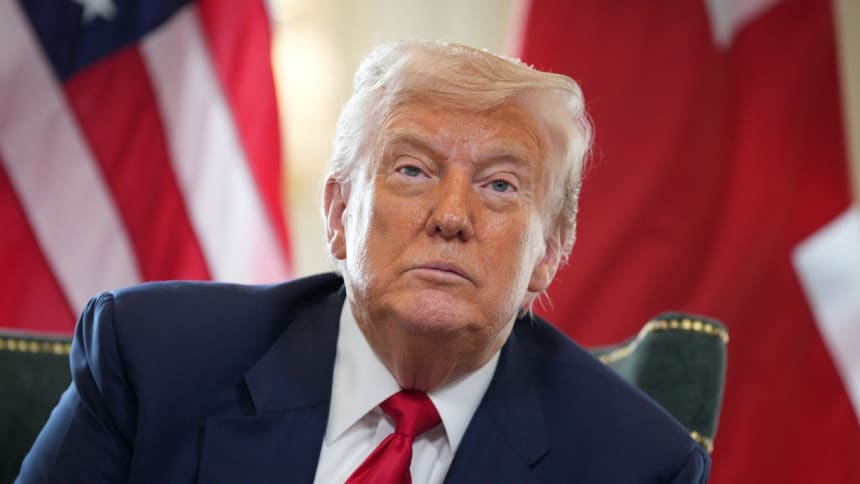
When American leadership falters, global energy markets destabilize, supply chains fracture and investor confidence weakens. Prices rise. Working families pay more for fuel, food, insurance and utilities. Strategic incoherence overseas creates higher prices and greater insecurity at home. The rising cost of living in my home state of Florida is a reflection of this reality. When wars last longer because deterrence fails, Americans pay financially and strategically.
Corruption compounds these failures. When personal interests shape policy, adversaries exploit it. When allies lose confidence in American integrity and reliability, U.S. influence evaporates. Corruption is both a moral failing and a strategic vulnerability. It weakens deterrence and raises the cost of resolving crises. Crushing corruption is a national security imperative.
When allies lose confidence in American integrity and reliability, U.S. influence evaporates.
Ukraine’s struggle against armed aggression mirrors a broader struggle within other democracies: whether free societies will allow power to be abused for personal gain, or whether they will insist on accountability and the rule of law. The scale is different, country by country, but the stakes are linked. A world where corruption guides policy is a world of longer wars, weaker alliances and higher costs for ordinary citizens.
As the war in Ukraine drags on, a years-old threat to elected democracies, will the United States rise to meet the moment — or will Washington continue its slide into chaos, corruption and strategic self-harm?
America does not need theatrics or dealmaking illusions. It needs leadership anchored in national interest, guided by values and accountable to the public. Serious strategy shortens wars. Integrity strengthens deterrence. Credible leadership cuts costs — both human and economic — and reduces the likelihood that the next war could be longer and more dangerous than this one.
Alexander Vindman is a retired Army lieutenant colonel and former director of European affairs for the National Security Council. He is a Democratic candidate for U.S. Senate in Florida.