
The Dictatorship
What Democrats should learn from the GOP’s own goal on redistricting

After the 2024 election, Republicans exulted over Donald Trump’s surprisingly strong performance among Latino voters. This was a “historic realignment” of the electoratethe National Republican Campaign Committee said, one that would produce GOP victories for years to come.
So when Trump ordered Texas Republicans last summer to redraw the state’s congressional districts in the hopes of putting as many as five more seats in GOP hands, they thought one way to do it was to increase the number of Latinos in key districts. But that strategy — in fact, the GOP’s entire mid-decade redistricting plan — may be unravelling.
The “realignment” Republicans were hoping for was almost certainly a phantom; meanwhile, their redistricting move isn’t going much better.
Texas’ primary elections on Tuesday drew a remarkable turnout, especially on the Democratic side. As Politico noted“In five different rural majority-Latino counties, more votes were cast in Tuesday’s Democratic primary than for Kamala Harris in the 2024 presidential election.” Turnout in majority-Latino counties was almost twice as high for Democrats as for Republicans, though both parties had hotly contested Senate primaries. State Rep. James Talaricowho won the Democratic nominationran up strong numbers among Latino votersovercoming Rep. Jasmine Crockett’s advantage among Black voters.
The “realignment” Republicans were hoping for was almost certainly a phantom; meanwhile, their redistricting move isn’t going much better. When Trump started this fight last July — first in Texas, then moving to other red states — he may have figured that Democrats, whether out of weakness or indecision, would simply fold. But Democrats fought back, first and most significantly in California, and then in Virginia.

While the redistricting battles are still playing out, it’s looking far from the Republican triumph Trump might have initially expected. The parties may fight to a draw; at most, Republicans might net a couple of seats. In a year that increasingly looks like we’re headed for a blue wave, that wouldn’t be nearly enough to save the House GOP majority.
Two things are notable in the face of this likely GOP own goal.
First, all this district rejiggering is possible because in recent years, the Supreme Court has given parties almost unlimited power to redraw lines for partisan advantage. While the court’s decisions over the past decade have left it up to states to be as fair or unfair as they want, Democrats have been more likely to promote independent commissions to draw district lines. These commissions are in use in 11 mostly Democratic stateswhile all but a few Republican states have stuck with partisan redistricting. But redistricting in the middle of the decade — not after a nationwide census delivers new data on the distribution of the population but just whenever a state legislature feels like it — is highly unusual, an assertion of raw political power upending an established norm.

Mid-decade redistricting has happened before, most notably in 2003, when Tom DeLay, then one of the most powerful Republicans in Congress, engineered a redrawing of the Texas map that swung multiple seats to the GOP. It has been rare ever since — but there’s no law against it. And that’s the kind of thing Trump loves: a tool of power that others hesitate to use, until he picks it up and starts smashing.
After Trump got Texas to begin its redrawing, he told other red states to follow suit. Missouri and North Carolina complied, adding one likely Republican seat each. Other states, including Florida and Georgia, are tryingthough court challenges leave those efforts in doubt. Trump did suffer a setback in Indianawhere the GOP-dominated legislature resisted his pleas and threatsultimately voting to keep their existing map.
But the real key moment happened within days of Trump’s first announcement. Gavin Newsomthe governor of California — which uses an independent commission — proposed a ballot measure to draw a Democrat-friendly map for the next three elections. The map would likely produce five more Democratic seats, nullifying what the Republicans had done in Texas. In November, California voters approved the measure by a nearly 30-point margin. The fact that it restores the independent commission after the 2030 Census allowed Democrats to say that they haven’t given up their opposition to gerrymandering but are responding to an emergency Trump created.

That set the tone for other blue states, putting pressure on them to squeeze out every possible seat. In Virginia, Gov. Abigail Spanberger signed a bill creating a district map that could give Democrats a 10-1 advantage in the state’s congressional delegation, a dramatic shift from today’s 6-5 split. A judge has temporarily halted that redistricting (the state is appealing), and Maryland Gov. Wes Moore’s plan for another seat was thwarted when the president of the Senate refused to hold a vote. But for the most part, Democrats around the country and across the ideological spectrum — including progressives and ostensible moderates like Spanberger — decided to fight back when Trump and fellow Republicans sought to play hardball.
Democrats should pay attention to what happened here. For a long time, Republicans have been the ones more likely to engage in procedural hardball. While Democrats worried about norms and propriety, Republicans took unorthodox steps such as refusing to hold hearings on a Supreme Court nomination for almost a year so the seat could be held open for Trump to fill, and destroying agencies such as the United States Agency for International Development whether or not they had the legal right to do so. Republicans understood that ruffling feathers doesn’t carry much of a political cost; what matters in the end is whether you seize power and what you do with it.
It’s a lesson Democrats should carry with them, especially if they win majorities in November and the White House in 2028. Trump’s evisceration of the federal government won’t just take years to repair; it will also take the same kind of creative aggressiveness his administration has shown. That doesn’t have to mean breaking the law, but it is likely to entail doing things that haven’t been done before. In Congress, that could mean expanding the Supreme Court and getting rid of the filibuster. In the executive branch, it may require reconfiguring systems and structures that have stood for decades.
When Trump sparked the redistricting push, Democrats decided they didn’t care if they’d be called hypocrites for doing today what yesterday they called problematic. Instead, they dug in and fought. It’s something they should keep doing.
Paul Waldman is a journalist and author focused on politics and culture.


Friday’s splashdown of the Artemis II crew, the first to travel to the moon since the Apollo program ended in 1972, is a moment of celebration for all of us on Earth.
But it’s also an important reminder that, despite this success, the current administration’s Office of Management and Budget is proposing budget cuts that will all but dismantle much of NASA. It’s surprising, illogical and very troubling.
The proposed cuts would terminate 53 NASA Science missions, throwing away more than $13 billion in taxpayer investment.
The proposed cuts would terminate 53 NASA Science missions, throwing away more than $13 billion in taxpayer investment and halting the development of nearly every future NASA Science mission.
These cuts would be an insult to our astronauts and entire NASA workforce. Astronauts and their colleagues are civil servants who work hard, accomplish nearly impossible things and represent our country to the world.
It’s an odd choice from an administration that has pledged to put America first, to be sure. But stranger still, and quite personal to me, is the OMB’s proposal to completely end NASA’s STEM (Science, Technology, Engineering, and Math) outreach program, which supports students and teachers nationwide. Programs like this have helped the United States be a world leader in science and technology.
We cannot allow this.
The U.S. has many great institutions, but NASA is a unique part of the American story. NASA is the best brand our nation has. When people around the world think of the U.S. at its best, they think of astronauts exploring the moon, telescopes opening new windows on the cosmos and spacecraft making profound discoveries on other worlds. NASA is who we are when we’re curious, bold and united.

There is also a growing consensus in Washington that we are in a new space race, this time, with the China National Space Administration, which, by the way, is planning to have taikonauts walk on the Moon in 2030. If the race is on, why abandon so much? Why cede the lead? The U.S. cannot be first in space if it is second in science and technology.
The administration proposed almost the same draconian cuts to NASA last year. When it did, we the people fought back. The Planetary Society, along with more than 300 advocates and 19 other partner organizations, went to Washington and organized the largest grassroots advocacy outreach for space science in history. Tens of thousands of citizens from every state and congressional district wrote, called and made their case to their elected officials. Together, we successfully saved NASA.
Now, this year, we have no choice but to fight back. On April 20, we will return to Washington, where people can join in person or join our Save NASA Science campaign online.
Science is not a luxury. It is a responsibility. Our founders knew it; you will find “Science” cited in Article 1, Section 8 of the Constitution. Only a public space agency can sustain decades-long investments in the kind of science that tells us whether life ever existed on Mars, that tracks the asteroids that could threaten every living thing on Earth and that reveals the story of our origin.
NASA’s science program is a bargain for Americans. It accounted for one-tenth of 1% of the nation’s expenditures last year, a tenth of a penny of every tax dollar.
Cutting science would not just delay discovery; it would destroy it. It would shatter our STEM talent pipeline. It would abandon our international partners. And, it would cede U.S. leadership in space science to China and other nations.
NASA’s science program is a bargain for Americans. It accounted for one-tenth of 1% of the nation’s expenditures last year, a tenth of a penny of every tax dollar. And for every dollar spent, three come back into the economy. Every year, NASA generates $75 billion of economic growth and supports over 300,000 jobs in all 50 states.
Members of Congress and the Senate agree: NASA is a remarkable investment. I’ve met with both Republicans and Democrats, all of whom support space science. And last year, an overwhelming bipartisan majority rejected these same cuts.
NASA is what makes America great. It represents our best values: curiosity, determination, tenacity, and global cooperation. It proves that we are capable of extraordinary things. When we invest in scientific exploration, we invest in ourselves — in our economy, security and future.
If we concede and retreat from the frontier of space after a half century of leadership, it would be an unworthy choice. If Artemis II has showed us anything, it’s that the public, across the political spectrum, strongly supports space exploration, scientific discovery and a deeper understanding of the universe and our place within it.
Bill Nye is the chief ambassador at The Planetary Society, the world’s largest space interest organization.

After making history as the farthest journey into space humans have ever made, NASA’s Artemis II mission returned to Earth on Friday, splashing down off the coast southwest of San Diego.
The Artemis II crew splashed down successfully at 5:07:47 p.m. PT. The Orion spacecraft launched last weekfrom the Kennedy Space Center in Florida, the first crewed flight to the moon in more than 50 years. The entire mission from liftoff took a total of nine days, one hour, 31 minutes and 35 seconds, which NASA rounds up, to call it a 10-day mission.
In the buildup to the mission, questions about the craft’s heat shield led to concerns among some experts about whether Orion would hold up on reentry to the Earth’s atmosphere, the most perilous part of any crewed mission. A NASA-commissioned panel ultimately deemed the ship safewith the astronauts themselves endorsing it ahead of time.
The four-member crew — NASA astronauts Reid Wiseman, Victor Glover and Christina Koch, along with Canadian Space Agency astronaut Jeremy Hansen — embarked on the 10-day mission to fly around the moon, setting the stage for future missions aimed at establishing a permanent lunar base.
After splashdown, NASA administrator Jared Isaacman praised the crew, calling them “wonderful communicators, almost poets,” during an interview Friday evening.
“These were the ambassadors from humanity to the starts that we sent out there,” Isaacman said.
He also emphasized that this mission set the stage for a future moon landing — and base.
“This is not a once in a lifetime … This is just the beginning,” he said during the interview. “We are going to get back into doing this with frequency, sending missions to the moon, until we land on it in 2028 and start building our base.”
On April 6, the spacecraft reached 252,756 miles from Earth, the farthest distance traveled by humans. Artemis II broke the Apollo 13crew’s record of 248,655 miles, set in 1970.
The crew conducted a seven-hour lunar flyby, coming within about 4,000 miles of the moon’s surface and seeing areas of the moon never before seen by the naked eye. In addition to testing the spacecraft, the astronauts studied the far side of the moon during a solar eclipse and observed lunar geological features and color variations.
Now back on Earth, the astronauts will undergo medical evaluations before heading to shore and traveling to NASA’s Johnson Space Center in Houston.
The next such mission, Artemis IIIis expected to launch next year.
Erum Salam is a breaking news reporter for MS NOW, with a focus on how global events and foreign policy shape U.S. politics. She previously was a breaking news reporter for The Guardian.
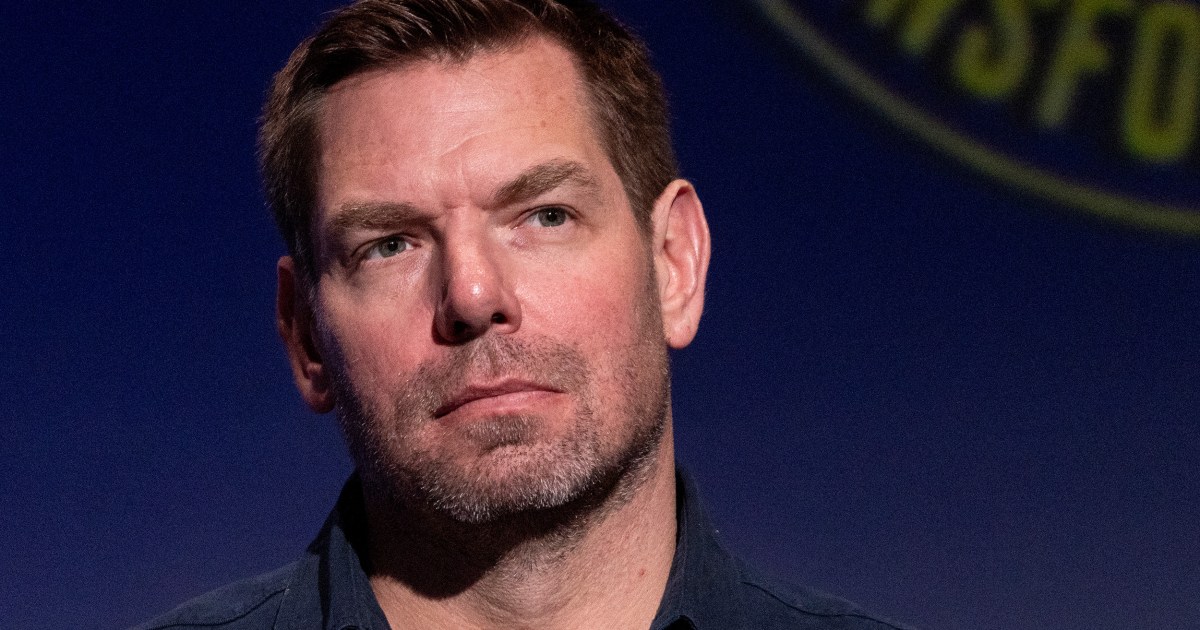
A former staffer has accused Democratic Rep. Eric Swalwell, a current candidate for California governor, of reportedly sexually assaulting her.
The allegations were first reported by the San Francisco Chronicle.
The woman, who has not been publicly identified and worked for Swalwell for nearly two years, alleged she had sexual encounters while he was her boss, and he sexually assaulted her on two occasions when she was too intoxicated to consent, the Chronicle reported. The woman told the paper Swalwell began pursuing her weeks after she was hired at age 21 to work in the Democrat’s district in 2019.
The woman claimed Swalwell invited her for drinks in 2019, and during that encounter, she became too intoxicated to remember what happened. She alleged she woke up naked in his hotel bed, and following the incident, he distanced himself and their relationship eventually dissolved.
Five years later, in 2024, the woman alleged she attended a charity gala where Swalwell was honored. After the event, she said they met for drinks and she became intoxicated, but remembers only fragments of the night, including pushing him away and saying “no” as he allegedly forced himself on her. She texted a friend three days later, according to the Chronicle, saying she had been sexually assaulted by Swalwell.
In text messages, independently review by the Chronicle, the woman told her friend she “blacked out” but “woke up once during it and even told him to stop at one point.”
The Chronicle spoke with the woman’s friend and the woman’s ex-boyfriend, who she said she told about the alleged 2024 assault the following day. Both corroborated her story and described her as appearing disoriented.
Medical records, according to the Chronicle, also show she sought pregnancy and sexually transmitted disease tests about a week after the incident.
The woman told the Chronicle she did not immediately tell authorities because she feared people wouldn’t believe she was telling the truth.
Swalwell, who has represented California’s 14th Congressional District since 2013 and launched his gubernatorial campaign earlier this year, strongly denied the claims in a statement Friday.
“These allegations are false and come on the eve of an election against the frontrunner for governor. For nearly 20 years, I have served the public — as a prosecutor and a congressman and have always protected women,” Swalwell said. “I will defend myself with the facts and where necessary bring legal action. My focus in the coming days is to be with my wife and children and defend our decades of service against these lies.”
An attorney for Swalwell sent the woman a cease-and-desist letter on Thursday, according to the Chronicle, accusing her of making false claims of sexual assault and nonconsensual encounters, and warning that legal action would follow if she did not retract the allegations.
In a separate report, three other women spoke with CNNabout alleged various kinds of sexual misconduct, including Swalwell sending them unsolicited inappropriate messages or photos. The messages, the women said, were often sent through Snapchat, which is a social media platform that allows messages to delete automatically and notifies users of screenshots.
“Some of the allegations I’ve seen, which is that we’ve had NDAs in the office — never. There’s never been an allegation, and there’s never been a settlement,” Swalwell told reporters Tuesday.
Political fallout
Swalwell’s campaign initially showed signs of strong momentum in the crowded California governor’s race to replace current Gov. Gavin Newsom, who has called the allegations “deeply troubling.”
“As we continue to learn more, these allegations from multiple sources are deeply troubling and must be taken seriously,” Newsom’s spokesperson said in a statement to MS NOW.
Swalwell’s campaign also benefited from backing from key Democratic allies, positioning him as a viable contender in a fragmented field with no clear front-runner.
But the reports of the allegations, along with separate unverified claimscirculating online, have sparked backlash and prompted some political fallout, including campaign disruptions and heightened attention from rivals. Multiple people resigned from Swalwell’s orbit ahead of Friday’s scathing report of sexual assault, including Courtni Pugh, who served as a strategic adviser.
Rep. Jimmy GomezD-Calif., resignedas co-chair of Swalwell’s campaign, saying in part “he cannot in good conscience remain” in the role and suggesting that Swalell “should leave the race now.” Rep. Adam Gray, D-Calif., also resigned as campaign co-chair and called for Swalwell to suspend the campaign.
Other prominent Democrats also quickly began distancing themselves.
House Democrats issued a joint statement calling for a “swift investigation” and for Swalwell to end his bid.
“All perpetrators of sexual assault and harassment must be held accountable,” House Minority Leader Hakeem Jeffries, D-NY wrote.
Former Speaker Nancy Pelosi declared this an “extremely sensitive matter” and said she discussed with Swalwell that the investigation would be “best done outside of a gubernatorial campaign.”
Sen. Adam Schiff, D-Calif., said he is “deeply distressed” about the allegations surrounding Swalwell and immediately withdrew his endorsement.
“This woman was brave to come forward, and we should take her story seriously,” Schiff said on X. “I am withdrawing my endorsement immediately, and believe that he should withdraw from the race.”
Sen. Ruben Gallego, D-Ariz., called the allegations “indefensible” and also immediately withdrew his endorsement of his longtime ally.
“Women who come forward with accounts like this deserve to be heard with respect, not questioned or dismissed. I regret having come to his defense on social media prior to knowing all the information. I am equally as shocked and upset about what has transpired,” Gallego wroteon X.
Two of Swalwell’s key labor allies, Service Employees International Union of California withdrew and California Teachers Association, retracted their support Friday, marking a significant blow to his campaign.
“The allegations are incredibly disturbing and unacceptable against Rep. Swalwell. We are immediately suspending our support. Our elected board will be meeting as soon as possible to follow our union’s democratic process to determine next steps,” the CTA said in a statement.
Democratic billionaire Tom Steyer said he commends“the brave former staffer who came forward with her story” about Swalwell.
“Speaking out is never easy, and her account must be taken seriously. At a moment like this, we must make sure that women are heard, and justice is pursued,” Steyer added.
Former Rep. Katie Porter called the allegation “horrifying,” adding she is thinking of the courageous women who have come forward to share their stories.”
The California Democratic Party labeled the allegations “deeply disturbing.”
“Any person engaged in misconduct must take responsibility and be held accountable for their actions — including a Member and candidate for Governor,” CADEM Chair Rusty Hicks said.
Swalwell’s Republican gubernatorial opponent, former Fox News host Steve Hilton, blasted Swalwell over the allegations in a statement to MS NOW.
“It’s incredible to me that Eric Swalwell thought he could run for Governor of California while all this was going on,” Hilton said in the statement. “It shows the complete contempt these career politicians have for the public.”
As of Friday evening, Swalwell’s fundraising page on ActBlue appeared to no longer be accepting donations.
Jillian Frankel and Syedah Asghar contributed to this report.
Ebony Davis is a breaking news reporter for MS NOW based in Washington, D.C. She previously worked at BLN as a campaign reporter covering elections and politics.
- RFK Jr. has turned corporate America’s name to mud, Blue Light News Poll finds
- 2028 Democrats say anyone can win. Voters aren’t so sure.
- Jeffries, Pelosi and other Democrats call on Eric Swalwell to end governor campaign

- Trump endorses ‘focused’ immigration enforcement funding bill

- These Republican-on-Republican disputes are keeping Congress frozen

- Trump’s proposed cuts to NASA are an insult to astronauts like the Artemis crew
- Artemis II mission splashes down, returning to Earth

- Former staffer accuses Rep. Eric Swalwell of sexual assault, reports say

- Markwayne Mullin isn’t interested in spectacle — and that’s dangerous
- Friday’s Mini-Report, 4.10.26

-

 Politics1 year ago
Former ‘Squad’ members launching ‘Bowman and Bush’ YouTube show
-

 The Dictatorship1 year ago
Luigi Mangione acknowledges public support in first official statement since arrest
-

 Politics1 year ago
Former Kentucky AG Daniel Cameron launches Senate bid
-

 The Dictatorship1 year ago
Pete Hegseth’s tenure at the Pentagon goes from bad to worse
-

 The Dictatorship7 months ago
Mike Johnson sums up the GOP’s arrogant position on military occupation with two words
-

 Politics1 year ago
Blue Light News’s Editorial Director Ryan Hutchins speaks at Blue Light News’s 2025 Governors Summit
-
Uncategorized1 year ago
Bob Good to step down as Freedom Caucus chair this week
-

 Politics12 months ago
Democrat challenging Joni Ernst: I want to ‘tear down’ party, ‘build it back up’