
Congress
Vulnerable New York Democrats sidestep Hochul’s anti-ICE measures

ALBANY, New York — Gov. Kathy Hochul’s proposals to rein in President Donald Trump’s aggressive immigration enforcement tactics are putting swing seat Democrats in a tight spot.
Republicans are eager to capitalize on state-level efforts to undermine deportations as a cudgel against vulnerable House Democrats — especially those representing the bellwether New York suburbs. Left-leaning Democrats — responding to eroding support for Trump’s immigration policies after the shooting of Renee Good in Minneapolis — are increasingly willing to take a confrontational approach with federal law enforcement.
The rapidly shifting events driving public opinion, Trump’s escalating deployment of Immigration and Customs Enforcement agents and Democrats’ desire to protect undocumented communities has created treacherous political crosscurrents for swing seat lawmakers. And the Empire State — home to large immigrant populations and several contested House districts that may determine control of the chamber — is a case in point.
“They’re going to have to be really careful how they talk about this,” Laura Curran, a Democrat and former Nassau County executive, said of her party’s swing seat candidates. “We don’t want to talk about defunding the police or all that stuff.”
Proposals by Hochul and the Democratic-dominated state Legislature to put guardrails around Trump’s immigration tactics have not been enthusiastically received by vulnerable House Democrats.
Reps. Tom Suozzi and Josh Riley would not comment on the governor’s policy pushback, which she outlined in her State of the State speech this week. And a third Democrat, Rep. Laura Gillen, provided a statement calling for federal immigration reform that avoided any mention of Hochul’s proposals.
Efforts in Albany to check ICE’s actions are quickly becoming an issue in the three Democrats’ races as Trump moves to deport more undocumented immigrants and potentially use the Insurrection Act to quell adversarial protests. Republicans plan to mount competitive campaigns against Suozzi, Riley and Gillen this year with the goal of making in-roads among voters in purplish areas of New York state. Attacks over the governor’s immigration measures are already starting: A spokesperson for the House Republicans’ campaign arm accused Hochul and her fellow Democrats of trying to “reopen the illegal immigration floodgates.”
“New Yorkers haven’t forgotten what Democrats’ reckless open borders did to their state, and they won’t stand for it again,” said National Republican Congressional Committee spokesperson Maureen O’Toole.
The stakes for New York Democrats to get the immigration policy right couldn’t be higher. Races in at least four seats in this deep blue state are expected to determine control of the House — and the course of Trump’s final two years in office.
Republicans in the past have pointed to state-level laws in Democratic-dominated Albany to blast Democrats running for federal office. GOP candidates hammered Democrats, regardless of what office they were running for, over a controversial law that restricted cash bail.
State-backed provisions that undermine federal law enforcement stand to serve as a replay of a fight that played out in several election cycles and led to electoral gains for Republicans.
Gillen’s office sidestepped questions about the Hochul-backed measures and instead called for action on the federal level.
“Our immigration system has been broken for decades and is in dire need of repair,” she said in a statement. “Comprehensive reform must be done at the federal level. Congress should pass my bipartisan Dignity Act to strengthen our border security, remove dangerous criminals, and provide a pathway for law-abiding immigrants to earn legal status.”
Curran, who led bellwether Nassau County for four years, believes Democrats in swing seats will have to remain cautious with calls to scale back ICE. But she acknowledged some voters want action following Good’s death and Trump’s threat of invoking the Insurrection Act amid ICE’s clashes with protesters. The fraught emotions have created a tricky balancing act for Democrats in tough races.
“The dramatic nature of all this ICE action is really starting to freak people out,” Curran said. “The popularity of Republicans is starting to go down if this escalates. This is going to become much more toxic, but I also understand why some of these Congressional Democrats are being vanilla. I understand these districts; they have to be.”
The lack of support for Hochul’s ICE-curbing plans among the trio of vulnerable New York Democrats underscores how Trump’s increasingly controversial deportation efforts continue to be a third rail for the party. Democrats have struggled to articulate an alternative plan and voters punished their candidates in 2024 as the president returned to the White House promising swift action.
But the expansive efforts to remove people from the country have changed how the party’s officials — especially at the state level — are approaching the issue.
Democrats in Albany this year want new boundaries around federal immigration officers — provisions that would apply to a state with a civically engaged immigrant population. Hochul wants to make it easier for New Yorkers to sue federal officials in state court and to require a judicial warrant before carrying out a civil deportation proceedings in locations like schools or houses of worship. Hochul will also implement restrictions on new state-funded public safety grants to require they not be used to support civil immigration enforcement by the federal government.
The moderate Democrat in interviews has hammered ICE’s recent actions around the country, accusing the agency of abusing its power.
“It hurts peoples’ confidence in all law enforcement,” she told Fox 5. “This undermines the NYPD, and our state police, who are just doing their jobs.”
State lawmakers have proposed bills to prohibit federal agents from wearing masks while carrying out their official duties. They are calling for new monitoring requirements for ICE. And there are discussions to guarantee that every person facing civil deportation proceedings has access to an attorney.
“There’s a massive shift — including my own shift,” said Democratic state Sen. Pat Fahy. “Public opinion has shifted dramatically.”
The Albany-area Democrat has worked with state lawmakers across the country in recent weeks to develop new legislation. Spurred by efforts in California — like requiring ICE agents be unmasked — Fahy and her fellow legislators have been on group chats trading ideas for new ways of bottling up federal enforcement efforts. She acknowledged, though, that some moderate Democrats are yet to come around amid uncertainty over how the rapidly changing events will shape the public’s view of the deportation crackdown.
“The marginal Democrats or the swing area Democrats are still nervous about it,” she said. “But now it’s more than an immigration issue. This is about who we are as Americans.”
Even among Democrats eager to put the brakes to ICE’s enforcement there are disagreements.
Hochul is typically cautious around controversial immigration issues — she is not embracing calls to expand sanctuary protections and said in a Fox 5 interview this week she does not want the agency abolished. But the governor received standing ovations from the audience when she laid out her immigration measures in her State of the State address — a speech given days after Good’s shooting in Minneapolis and an indication she is delicately threading a needle with her proposals.
“This doesn’t interfere with lawful enforcement or public safety,” Hochul said in the speech. “It simply affirms a core truth: Power does not justify abuse.”
There are signs voters across the country are becoming unnerved by immigration agents’ expansive tactics and deployments. A Quinnipiac University poll this week found 57 percent of voters disapproved of how ICE is enforcing immigration laws while 53 percent of those surveyed believe Good’s shooting was not justified.
Hochul has said she was “sickened” by Good’s death and called for “recourse” when a federal official acts inappropriately.
“Let’s start holding these people accountable,” she told MSNOW this month.
Her likely Republican opponent, Nassau County Executive Bruce Blakeman, has taken a starkly different posture.
Blakeman — who signed an executive order opposing sanctuary-related policies — told reporters this week he does not want to “put any shackles on ICE.” He said videos of Good appeared to show her turning her car toward an ICE agent and “trying to run down” the officer — a claim Hochul’s campaign rebuked. The Republican added that there should be more support for victims of crimes by undocumented immigrants.
“You want to talk about ICE? Let’s talk about the victims of crimes committed in New York state by the people who shouldn’t be here,” said Blakeman, who Republicans expect will have strong coattails in down-ballot Long Island races.
The differing views among Democrats over how to address Trump’s immigration actions highlights Hochul’s imperative to win over statewide voters, while swing seat incumbents must take a more careful approach, said independent political analyst J.C. Polanco.
“Hochul understands she’s never going to win a Blakeman voter,” he said. “Unfortunately for Gillen and Suozzi, they need Blakeman voters.”


President Donald Trump met privately on Tuesday with Coinbase CEO Brian Armstrong before publicly backing the company’s position in an ongoing lobbying clash with banks that has derailed a major cryptocurrency bill, according to two people with knowledge of the matter who were granted anonymity to discuss a closed-door matter.
It is unclear what was discussed during the meeting, but it came just before Trump wrote on social media that banks “need to make a good deal with the Crypto Industry” in order to advance digital asset legislation that has stalled on Capitol Hill. He wrote that a recently adopted crypto law is “being threatened and undermined by the Banks, and that is unacceptable” — echoing Coinbase’s position.
A spokesperson for Coinbase declined to comment. The White House did not immediately respond to a request for comment.
The policy clash centers around whether crypto exchanges like Coinbase should be able to offer rewards programs that pay an annual percentage yield to customers who hold digital tokens known as stablecoins that are designed to maintain a value of $1. Wall Street groups are warning that allowing yield-like payments on stablecoins could lead customers to pull deposits from bank accounts and threaten lending that is critical to the economy.
Banks are pushing to ban any type of stablecoin yield payments as part of a sweeping crypto regulatory bill that is currently pending in the Senate. But a wide array of digital asset firms have fought back, and the rift helped derail the so-called crypto market structure legislation bill earlier this year. The legislation would establish new rules governing how crypto tokens are overseen by market regulators — a longtime lobbying goal for digital asset firms, which say they need “regulatory clarity” from Washington.
Coinbase, the largest U.S.-based crypto exchange, has played a key role in the spat. On the eve of a scheduled Senate Banking Committee markup in January, Armstrong came out against the most recent publicly released draft of the crypto bill. He warned in part against “Draft amendments that would kill rewards on stablecoins, allowing banks to ban their competition.” The markup was later postponed, and the bill has remained stalled ever since.
Since then, White House officials have sought to mediate a compromise between the two sides. The White House hosted a series of meetings with representatives from the banking and crypto sectors, but significant differences remain between the two sides and no deal has emerged.
Coinbase has become a major player in Trump’s Washington, thanks in part to massive political spending that is already beginning to shake up the 2026 midterm elections. The exchange, which was co-founded by Armstrong, is a leading backer of a crypto super PAC group known as Fairshake that is armed with a war chest of more than $190 million. Coinbase also donated to Trump’s inaugural committee and to the president’s White House ballroom renovation effort.
In his post on Truth Social Tuesday, Trump included a line that Armstrong has uttered verbatim in interviews about the stablecoin yield fight: “Americans should earn more money on their money.” Separately, on Tuesday night, Trump also posted a picture of an X post from Armstrong praising him for delivering “on his campaign promise to make America the crypto capital of the world.”
The crypto “Industry cannot be taken from the People of America when it is so close to becoming truly successful,” Trump wrote in the initial post.
Declan Harty contributed to this report.
Lawmakers given classified briefings Tuesday evening on the U.S. military conflict in Iran expect President Donald Trump will ask Congress for emergency cash to finance the war.
During the closed-door meetings on Capitol Hill, top Trump administration officials said only that they are considering a supplemental military funding request, according to lawmakers who attended the briefings. But senior intelligence and defense officials described a vast military operation that many members anticipate will require extra funding on top of the nearly $1 trillion Congress has already given the military over the last year.
“I think there will be a supplemental coming,” Sen. Lindsey Graham (R-S.C.) told reporters upon leaving his classified Senate briefing. “We’ll have to approve that.”
Sen. Chris Murphy of Connecticut, the top Democrat on the Senate committee overseeing funding for the Department of Homeland Security, said after the briefing that the military operation “feels like a multitrillion-dollar, open-ended conflict with a very confusing and constantly shifting set of goals” because top Trump administration officials “are refusing to take off the table ground operations.”
Sen. Josh Hawley (R-Mo.) also described the U.S.-Iran conflict as “a massive operation” that’s “rapidly changing.”
“It sounded very open-ended to me,” he added.
Some lawmakers typically opposed to increased spending are open to the idea of providing extra money to fuel the U.S. military’s operation against Iran. “I think it would have support of Republicans,” Sen. Ron Johnson (R-Wis.) said about a supplemental funding request Tuesday night.
“Everybody always wants money, any excuse, whether they’ll need it or not. My guess: They’ll need it,” Johnson continued. “We’re shooting off a lot of ammo. Gotta restock.”
But Democratic votes will be needed to pass any emergency funding package in the Senate, and minority party leaders say they will need far more details from the Trump administration if they are going to consider support for new Pentagon cash.
“Before you can feel satisfied about a supplemental — and I haven’t seen it — you have to know what the real goals are and what the endgame is,” Senate Minority Leader Chuck Schumer told reporters Tuesday.
Delaware Sen. Chris Coons, a senior Democratic appropriator, said he expects the Pentagon will send Congress a supplemental funding request and vowed to “make sure we are making all the investments we can” to keep U.S. troops safe.
But Coons said Trump administration officials need to testify at an open hearing so “the American people can get questions answered about the failures in planning that led to some of the challenges, losses and mistakes in this war.”
Any supplemental spending package to support the Iran war effort would come on top of the more than $150 billion the Pentagon got from the party-line tax and spending package Republicans enacted last summer and nearly $839 billion in regular funding Congress cleared last month.
The House’s lead Democratic appropriator, Connecticut Rep. Rosa DeLauro, said lawmakers have yet to receive information about how much the Pentagon has spent already.
“They’re talking about a supplemental, but we haven’t got a clue,” DeLauro told reporters after Trump administration officials briefed House lawmakers later Tuesday. “There’s no cost estimate of what they have spent so far. Is there anybody writing down what the hell they’re spending? No.”
Senate Majority Leader John Thune said Tuesday that Republicans “forward-funded” military operations with the party-line package enacted last summer but that lawmakers will be “paying attention” to any need for extra money.
“Not only do we have the resources to conduct the operations right now, but a lot of our allies in the region also have capabilities that are coming to bear now,” Thune said.
Even before the strikes on Iran, Trump was eyeing a massive hike in military spending for the upcoming fiscal year. He pledged to pursue a $1.5 trillion Pentagon budget, a roughly 50 percent increase to military spending.
The president said Tuesday, however, that U.S. military resources are far from depleted.
“We have a virtually unlimited supply of these weapons,” Trump said on social media. “Wars can be fought ‘forever,’ and very successfully, using just these supplies.”
Jordain Carney, Meredith Lee Hill, Connor O’Brien, Joe Gould and Calen Razor contributed to this report.
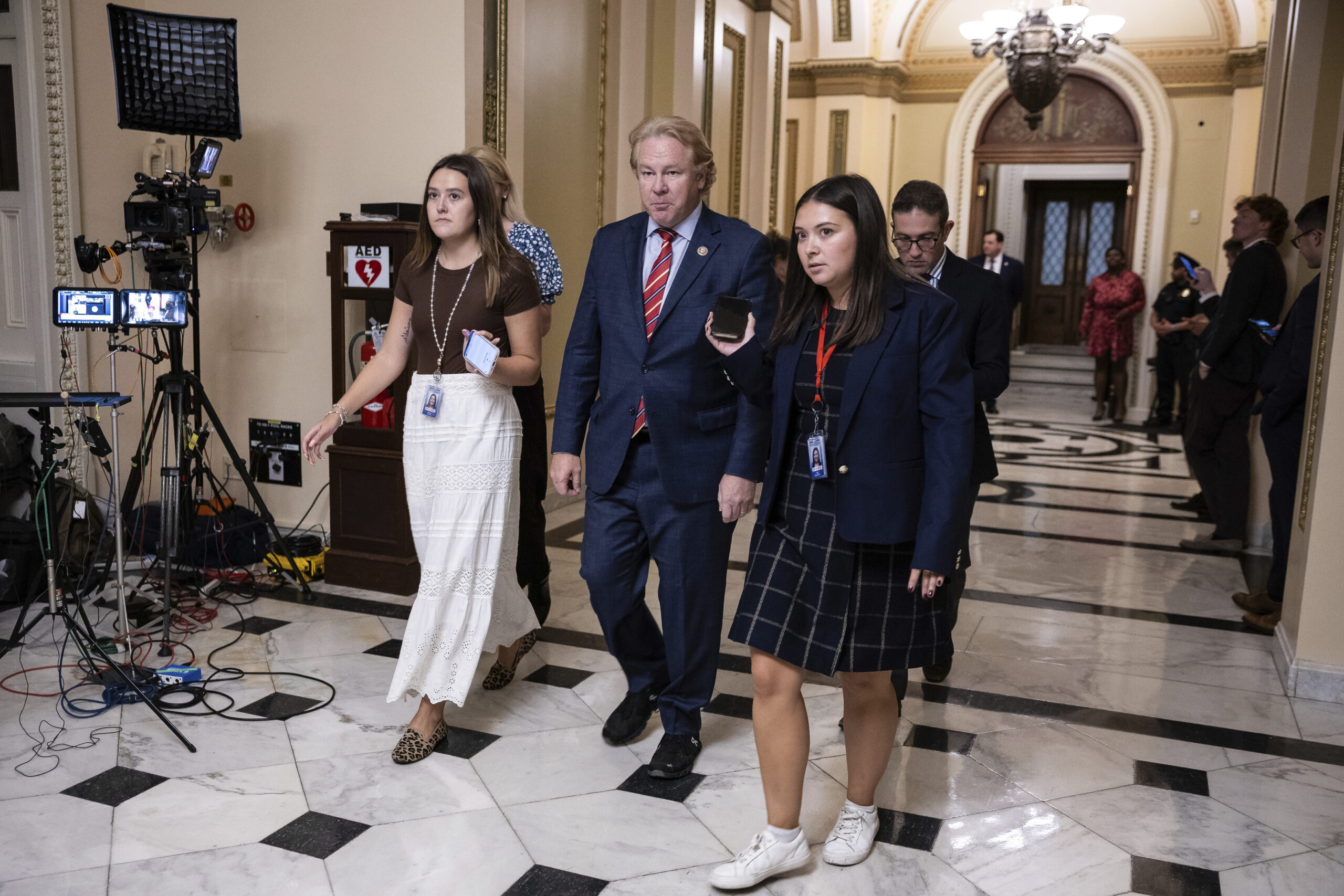
The vast majority of congressional Republicans are publicly supportive of President Donald Trump’s decision to launch a war on Iran. But many are harboring private misgivings about the risks to American troops and global stability — as well as their own political fortunes — should the military campaign drag on indefinitely.
Trump’s comments this week that the bombing could last “four to five weeks” or more, that he doesn’t care about public polling and that the U.S. will do “whatever” it takes to secure its objectives are among the factors that have put lawmakers on edge.
Some of the anxieties have started emerging publicly.
“The constitutional sequence is, you engage the public before you go to war unless an attack is imminent. And imminent means like, imminent — not like something that’s been over a 47-year period of time,” Rep. Warren Davidson (R-Ohio), a former Army ranger, said Tuesday.
Rep. Eli Crane (R-Ariz.), a combat veteran who served in the Iraq War and has cautioned in the past against regime change efforts, called it “a very dicey, a very dynamic situation right now” on the Charlie Kirk Show Monday while also making clear he would give Trump deference.
“I hope it works out,” he added. “Military operations like this can go sideways so fast, you know, it will make your head spin.”
But a wider group of House Republicans granted anonymity to speak candidly shared deeper concerns about the strikes. All said they would stand with Trump and Speaker Mike Johnson this week to oppose a largely Democratic effort to force votes on restraining the president. But they said their support was not guaranteed over the long term.
“Most Republicans want clear objectives, clearer than they are now,” said one House Republican, who added members have pressed GOP leaders and White House officials to be more consistent in articulating the administration’s military goals.
Another was troubled by Trump’s own shifting statements on when the bombing campaign might wrap up, whether he is seeking the fall of the Islamic regime and whether ground troops might ultimately be necessary.
“Sounds a little bit like President Lyndon Johnson going into Vietnam, doesn’t it?” the lawmaker said.
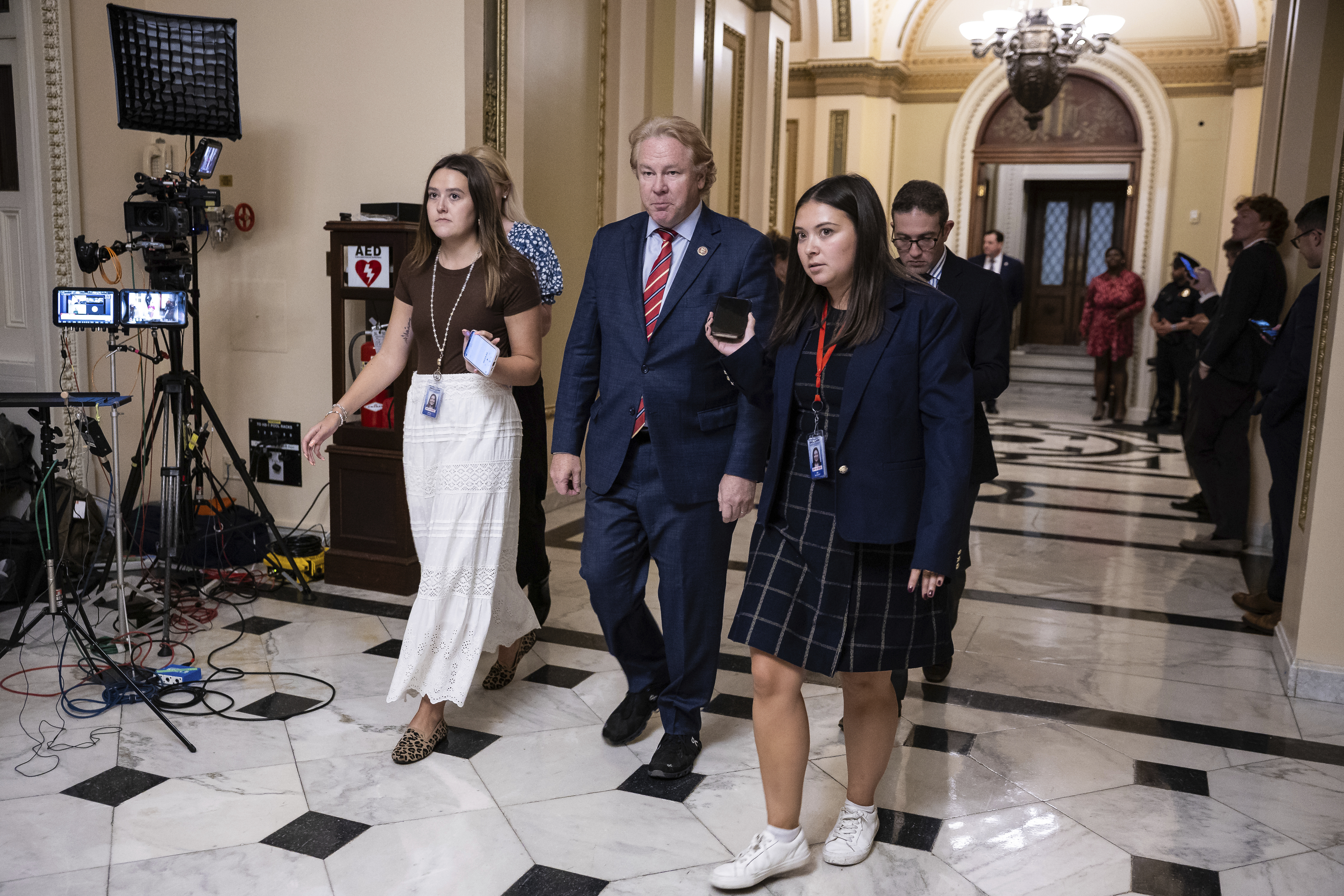
Trump officials and top House GOP leaders have already moved to ease potential member concerns. Johnson, for instance, said leaving a classified briefing Monday that “the operation will be wound up quickly, by God’s grace and will.”
“That is our prayer for everybody involved,” he added.
A White House memo sent to congressional Republicans Monday outlined several military objectives for the bombing campaign and said Trump should be “commended” for taking on a hostile state sponsor of terrorism.
But despite denying that Trump had acted in pursuit of regime change, the document also said the Iranian regime “would be defeated” and included other contradictory statements about the reasons for the strikes — while trying to sidestep the question of whether the strikes constituted a “war,” a word Trump himself has used.
Beyond the fears of a prolonged military engagement that could be costly in dollars and American lives, Republicans are also facing the prospect of a stock market tumble and rising gas prices that could fall hardest on vulnerable incumbents ahead of the midterms. Many of those members promised their constituents, much as Trump did, that they would not engage in endless war.
The planned Thursday vote on a bipartisan war powers resolution has surfaced some of the GOP discomfort, even as party leaders and White House officials whip members against it — including those most at risk of losing their seats.
Rep. Thomas Massie (R-Ky.), who is co-leading the war powers push with Rep. Ro Khanna (D-Calif.), pointed to the White House memo as further evidence of incoherence on the administration’s part.
“So they’re going to defeat a terrorist regime that rules a country of 90 million people, but that’s not war?” he said in an interview.
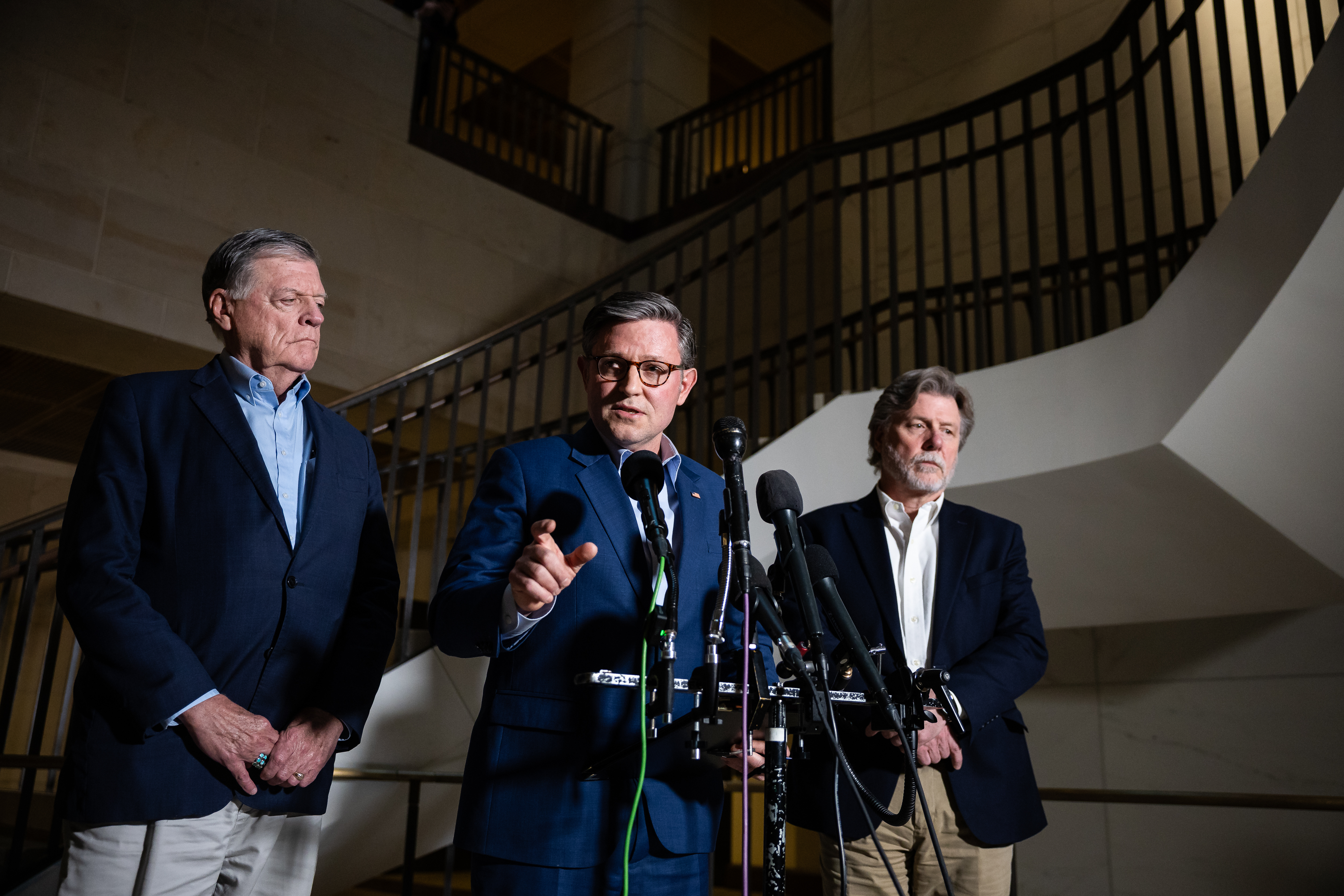
Also raising concerns in advance of the vote is Davidson, who has long railed against extended U.S. wars abroad. He said in a social media post Monday it was “troubling” that Secretary of State Marco Rubio said Monday that an imminent Israeli attack on Iran forced the U.S. to strike. He also raised concerns to reporters Tuesday about some of the administration’s claims.
House Intelligence Chair Rick Crawford (R-Ark.) said in an interview Tuesday he didn’t think the war powers vote was necessary and that Trump was operating within his legal authority.
The vote, he said, was “a way for individuals to sort of register their displeasure or make a political statement.”
Even if the war powers measure is defeated, some Republicans say an effort to restrain Trump could reemerge if the conflict drags on or Trump commits ground troops to the conflict. “If we’re talking months, not weeks, then you will see another vote,” said a third House Republican who added that Trump had some “leeway” for now.
Johnson, meanwhile, is channeling any intraparty concerns about Trump’s war into another vote this week on a stalled Homeland Security spending bill — an attempt to keep the focus on Democrats’ opposition to funding for TSA, FEMA and other agencies as a department shutdown approaches the three-week mark.
He is also arguing, as he told reporters after a classified briefing Monday, that the war powers vote is “dangerous” at a moment when U.S. troops were in harm’s way and that Republicans would act to “put it down.” The strikes, Johnson added, did not need advance congressional approval because they were “defensive in nature.”
Those arguments have resonated with most House Republicans, who say they’re willing to give the president time.
“I think so far, the Pentagon seems to have a good plan,” said Rep. Jeff Crank (R-Colo.), a member of the Armed Services Committee who said he would give Trump “six weeks or … eight weeks or whatever we need to accomplish the missions that we set out.”
“The worst thing we could do is go in and then … to pull back or cut short, whatever our objectives are,” he added. “We’re there. We need to get the objectives finished.”
- Trump met with Coinbase CEO before bashing banks over crypto bill
- Cornyn, Paxton head to runoff in Texas Senate GOP race
- Rep. Chip Roy headed to runoff in Texas AG race
- Democrats reject ‘ridiculous’ GOP demand to fund DHS after Iran attack
- Josh Hawley says he’ll oppose Iran war powers resolution
- House Ethics panel probing Nancy Mace over alleged improper reimbursements
- Iranian ‘regime will be defeated,’ White House tells Hill Republicans
- Lawmakers splinter on Trump administration’s case for war on Iran
- Lawmakers anticipate Trump will seek emergency funding for ‘open-ended’ Iran war
- House Republicans are publicly cheering Trump’s Iran war. Privately, many are worried.
-

 The Dictatorship1 year ago
Luigi Mangione acknowledges public support in first official statement since arrest
-

 Politics1 year ago
Former ‘Squad’ members launching ‘Bowman and Bush’ YouTube show
-

 Politics1 year ago
Blue Light News’s Editorial Director Ryan Hutchins speaks at Blue Light News’s 2025 Governors Summit
-

 The Dictatorship6 months ago
Mike Johnson sums up the GOP’s arrogant position on military occupation with two words
-

 Politics1 year ago
Former Kentucky AG Daniel Cameron launches Senate bid
-

 The Dictatorship1 year ago
Pete Hegseth’s tenure at the Pentagon goes from bad to worse
-
Uncategorized1 year ago
Bob Good to step down as Freedom Caucus chair this week
-

 Politics11 months ago
Democrat challenging Joni Ernst: I want to ‘tear down’ party, ‘build it back up’