
Congress
US to reach $41T debt ceiling as soon as late winter, forecasters predict

The U.S. government is on track to reach its $41.1 trillion debt limit next year — likely between late winter and mid-summer, a trusted independent forecaster predicted Thursday.
The new projection comes from the Bipartisan Policy Center, which used the latest data on U.S. cash flow to predict when the nation will again risk defaulting on its billions of dollars in loans, after Republicans acted last summer to raise the limit by $5 trillion through their One Big Beautiful Bill Act.
Now the next Congress and President Donald Trump will need to enact a new law to further raise or waive the borrowing cap, in order to stave off an unprecedented U.S. debt default many economists predict would depress the global economy.
Once the debt limit is reached, the Treasury Department begins what it calls “extraordinary measures” to tap cash reserves and use accounting maneuvers that keep the U.S. from breaching the ceiling. Those cash conservation tactics are likely to buy another six to nine months, the nonpartisan think tank predicts.
Voting to allow the federal government to rack up more red ink comes with growing political risk for U.S. elected officials as the country’s debt eclipses its gross domestic product and voters increasingly voice concern about the U.S. deficit.
Congress’ nonpartisan scorekeeper predicted earlier this year that federal debt held by the public will rise from more than 100 percent of GDP this year to 120 percent in a decade, far exceeding the previous high of 106 percent of GDP in 1946. At the same time, new polling shows that more U.S. adults now view the deficit as a bigger problem than they did a year ago, as the United States is on track to spend $2 trillion more than it takes in during the current fiscal year.


House Majority Leader Steve Scalise is heading to Florida to boost a raft of Republicans as the House GOP campaign arm launches new spending across the ruby-red state.
Republicans are working to ensure they prevail in a series of tight Florida races after they redrew several districts in their favor. Several GOP incumbents have warned the party needs to do more to help put out fires across these areas. Scalise is just the latest Republican leader who is looking to shore up candidates in once-thought-to-be-safe red territory.
Scalise will hold a GOTV rally Thursday with Republican Dan Green who is challenging Democratic Rep. Darren Soto in central Florida’s 9th District, according to an invite obtained by Blue Light News. Soto should be toast from the GOP redistricting effort, but he’s still hauling in significant fundraising and Democrats say their internal polling shows a tight race.
Over on the Gulf Coast, the National Republican Congressional Committee is also launching its first coordinated ad spending for Rep. Anna Paulina Luna on Wednesday. House Judiciary Chair Jim Jordan, GOP governor nominee Rep. Byron Donalds and Sen. Ashley Moody, who is also up for reelection, are appearing at a Saturday rally with Luna.
President Donald Trump won Luna’s district by 13 points and Democrats have tried and failed to target her before. But Republicans are warning the headwinds are stronger this year and forcing a tighter than expected race.
Republicans are also working to shore up key seats in South Florida. Scalise will be with GOP Rep. Maria Elvira Salazar in the Miami area Friday, according to two people with direct knowledge of the matter, granted anonymity to share not yet public details. Salazar has raised alarm about Republican erosion with Hispanic voters in his district and other states over the Trump administration’s mass deportations.
Scalise will boost Ryan Elijah, the Republican who beat scandal-ridden Rep. Cory Mills in the primary in Florida’s 7th District, according to another person with direct knowledge of the matter, granted anonymity to speak candidly. The party feels better about the seat in recent weeks, especially more than they would have if Mills had won the GOP nomination.
The House Majority Leader will also hold events with Foreign Affairs Committee Chair Brian Mast and Rep. Gus Bilirakis, according to the person.
Democrats may be rooting for Sherrod Brown’s comeback, but they are not exactly prepared for what’d happen next.
If Brown wins on Election Day, Democrats likely face an uncomfortable choice: break longstanding party rules to restore his seniority on powerful committees like Banking, Agriculture and Finance or potentially make him start over at the bottom.
Complicating the issue: Brown will immediately need to prepare for a grueling re-election fight in 2028 and his campaign could greatly benefit from two years with a high-profile gavel. That’s because this midterm is Ohio’s special election where voters are selecting a senator to serve out the remainder of Vice President JD Vance‘s term.
Brown’s post, therefore, may not only deeply impact Democrats’ policy agenda but could also play a key role in the party’s success in winning the battleground seat in 2028.
Some members are already suggesting the party should try to find a middle ground.
“Some accommodation that recognizes he would not be a rank freshman would make sense. But that’s distinct from handing him back a leadership role at Banking,” said Sen. Chris Coons.
The Ohio Democrat served as the top Democrat on the Banking panel for a decade. He was also a longtime member of Finance as well as Agriculture, where he would also be the most senior member if his previous service counted.
To give Brown a gavel on Agriculture or Banking could set up clashes with the Democrats now expected to lead their party on the panels: Sens. Michael Bennet and Elizabeth Warren, respectively.
It would also break Senate Democrats’ caucus rules, and precedent is not on Brown’s side when it comes to making exceptions.
Still, aides and lobbyists around the panels expect Democrats will be eager to give Brown some sort of perch.
Those close to him have been encouraging him to seek the Agriculture gavel. It’d allow him to deliver valuable policy wins for Ohio’s rural areas, influence the farm bill if it gets punted to next year and help guide the direction of cryptocurrency regulation.
Another possibility that avoids an intraparty clash: hand Brown a seat on Appropriations, which could potentially give him a subcommittee gavel and federal funding clout.
Minority Leader Chuck Schumer has avoided any firm commitments on Brown’s seniority, saying last month when asked: “Let’s win back the Senate first.”
What else we’re watching:
— OMAR RAID RAISES QUESTIONS FOR GOP: House Republicans — including Majority Whip Tom Emmer — have publicly cheered on the Trump administration’s investigation of GOP boogeyman Rep. Ilhan Omar. But the raid raises thorny questions for GOP leaders about how aggressively Congress wants to defend itself — regardless of party — from encroaching federal prosecutors. Lawmakers’ work communications are protected from prosecutors’ scrutiny, with few exceptions, under the Constitution’s “speech or debate” clause. That draws into question whether the emails, texts, and materials on Omar’s phone, which was seized in the raid, could legally be reviewed by Trump officials. So far, Speaker Mike Johnson has yet to weigh in on how the House’s legal team may defend Omar.
— TRUMP’S TRICKY FARM MONEY PROMISE: Trump’s move Monday to turn out GOP voters by promising to send farmers $8 billion in taxpayer money is already facing a reality check. The internal USDA taxpayer-funded account Trump is tapping doesn’t actually have enough money in it right now to make the payments, meaning Congress will have to approve new funds or the administration will have to take it from another program, according to three Trump officials granted anonymity to discuss private conversations. Plus, farmers wouldn’t receive the payments until late November or early December at the earliest — well past Election Day, according to three people close to the plans.
Jasper Goodman, Grace Yarrow, Kyle Cheney and Meredith Lee Hill contributed to this report.
At the end of one of the least productive Congresses in modern history, freshman Rep. Johnny Olszewski is so sick of the gridlock on Capitol Hill that he wants voters to bypass it entirely.
“It’s been a long two years,” the Maryland Democrat said in a Tuesday interview.
“One of the things that’s made it difficult as a new member is to see not only the dysfunction, but also the missed opportunities,” he added. “There are so many issues out there that Americans support that this Congress and frankly prior Congresses have failed to act on.”
Fed up with the lack of progress on popular policies like banning congressional stock trading, equipping police with body cameras or protecting in vitro fertilization, Olszewski is introducing a constitutional amendment Thursday, first shared with POLITICO, that would create a mechanism for voters to make federal law directly.
The measure would give voters 18 months to gather signatures from at least 5% of people who participated in the most recent presidential election in 25 states. Then any qualifying direct-democracy measure would be put on ballots for the next national election and need a 60% national majority to pass.
Votes to declare war or direct federal spending would not be eligible under the proposal.
“If we were acting, there’d be no need for this to come into play,” Olszewski said. “It would create a really important backstop for the American people to say, ‘You know what … irrespective of which party is in power, Congress is failing to meet not just our everyday needs but act on issues that we overwhelmingly support and want to see acted upon.’”
The amendment — which itself would require support from two-thirds of the House and Senate as well as three-quarters of states — is an incredible longshot and would create serious implementation headaches, but Olszewski — a former civics teacher — hopes his proposal will spark a discussion about congressional reform.
“I understand that any constitutional amendment is going to be difficult,” Olszewski said. “But I’m hopeful that at least for the lame duck session, this is an opportunity to create a conversation around the fact that we have been so gridlocked that we have failed to address the needs of the American people.”
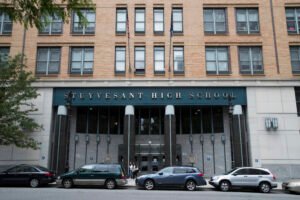
- NYC high school faces backlash over ‘intifada’ post
- Trump releases heating oil to the northeast to reduce surging prices
- Sen. Whitehouse says wind attacks threaten permitting deal
- The other Michigan race corporate America is watching
- Scalise heads to Florida to boost several GOP candidates
- ‘Very limited choice’: Data centers confront new constraints
- The GOP has a midterm messaging problem. Ramaswamy isn’t helping

- This member is so frustrated with Congress he wants voters to sidestep it
- Capitol agenda: The unknowns of a Sherrod Brown return
- Rick Jackson is Georgia Republicans’ best hope. Donald Trump may get in the way.
-

 Politics2 years ago
Former ‘Squad’ members launching ‘Bowman and Bush’ YouTube show
-
Uncategorized2 years ago
Bob Good to step down as Freedom Caucus chair this week
-

 The Josh Fourrier Show2 years ago
DOOMSDAY: Trump won, now what?
-

 The Dictatorship2 years ago
Pete Hegseth’s tenure at the Pentagon goes from bad to worse
-

 Politics2 years ago
Former Kentucky AG Daniel Cameron launches Senate bid
-

 The Dictatorship2 years ago
Luigi Mangione acknowledges public support in first official statement since arrest
-

 Politics2 years ago
Blue Light News’s Editorial Director Ryan Hutchins speaks at Blue Light News’s 2025 Governors Summit
-

 Politics1 year ago
John Legend advises Trump to drop the ‘dictator s‑‑‑’ if he wants Nobel Peace Prize