
The Dictatorship
US aid cuts are contributing to exploitation of Rohingya children

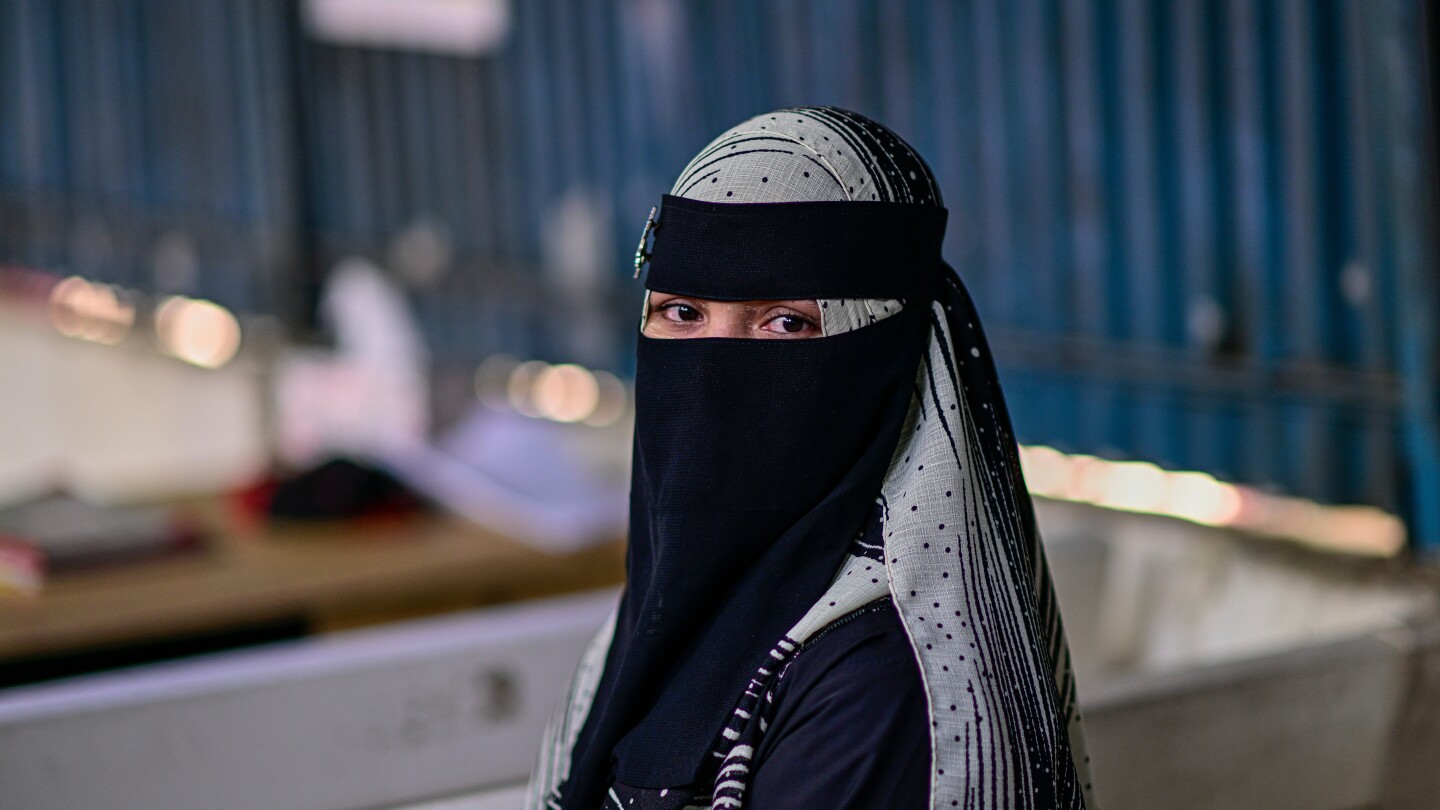
UKHIYA, Bangladesh (AP) — In moments when she is alone, when there is a break in the beatings from her husband, the girl cries for the school that was once her place of peace in a world that has otherwise offered her none.
Ever since the military in her homeland of Myanmar killed her father in 2017, forcing her to flee to neighboring Bangladesh with her mother and little sisters, the school had protected Hasina from the predators who prowl her refugee camp, home to 1.2 million members of Myanmar’s persecuted Rohingya minority.
An aerial view of a Rohingya refugee camp, home to over a million of Myanmar’s persecuted Rohingya minority, is pictured in Cox’s Bazar, Bangladesh, Tuesday, Nov. 25, 2025. (AP Photo/Mahmud Hossain Opu)
An aerial view of a Rohingya refugee camp, home to over a million of Myanmar’s persecuted Rohingya minority, is pictured in Cox’s Bazar, Bangladesh, Tuesday, Nov. 25, 2025. (AP Photo/Mahmud Hossain Opu)
It had also protected her from being forced into marriage. And then one day in June, when Hasina was 16 years old, her teacher announced that the school’s funding had been taken away. The school was closing. In a blink, Hasina’s education was over, and so, too, was her childhood.
With her learning opportunities gone, and her family worried that foreign aid cuts would make their fight for survival in the camps even more perilous, Hasina — along with hundreds of other girls under the age of 18 — was quickly married off. And, just like Hasina, many of the girls are now trapped in marriages with men who abuse them.
“I dreamed of being something, of working for the community,” Hasina, now 17, says softly. The Associated Press is withholding her full name to protect her from retaliation by her husband. “My life is destroyed.”
The sudden and severe foreign aid cuts imposed this year by U.S. President Donald Trump, along with funding reductions from other countries, shuttered thousands of the camps’ schools and youth training centers and crippled child protection programs. Beyond unwanted marriages, scores of children as young as 10 were forced into backbreaking manual labor, and girls as young as 12 forced into prostitution. With no safe space to play or learn, children were left to wander the labyrinthine camps, making them increasingly easy targets for kidnappers. And the young and desperate were picked off by traffickers who promised to restore what the children had lost: Hope.
In a sweltering building not far from the cramped shelter where her husband tortures her, Hasina plays nervously with the strap of her pink mobile phone case, emblazoned with the words “Forever Young.”
She is still young, she says. But the aid cuts forced her into womanhood and into a nightmare. Not long after marrying her husband, she says, he isolated her from her family and began to beat and sexually abuse her. She daydreams daily of school, where she was a whiz at English and hoped to become a teacher. Now, she is confined largely to her shelter, cooking and cleaning and waiting with dread for the next beating.
If she had any way to escape, she says, she would. But there is nowhere to go. She cannot return to Myanmar, where the military that killed thousands of Rohingya in 2017 during what the U.S. declared a genocide remains in charge of her homeland.
Now, her husband is in charge of her future, though she no longer sees one.
“If the school hadn’t closed,” she says, “I wouldn’t be trapped in this life.”
Kristen Gelineau has covered Myanmar’s persecuted Rohingya people since 2017. Her reporting has exposed atrocities committed by Myanmar’s ruling military, including systematic rape of Rohingya women and girls and widespread use of torture against civilian prisoners.
Children targeted
Life has always been dangerous for the 600,000 children languishing in these chaotic, overcrowded camps, where a squalid jumble of bamboo and tarpaulin shelters are jammed onto landslide-prone hills. But Trump’s decision in January to dismantle the U.S. Agency for International Development has made it even more so, the AP found in interviews with 37 children, family members, teachers, community leaders and aid workers.
Violations against children in the camps have risen sharply this year, according to UNICEF, the United Nations’ children’s agency. Between January and mid-November, reported cases of abduction and kidnapping more than quadrupled over the same time period last year, to 560 children. And there has been an eightfold increase in reports of armed groups’ recruitment and use of children for training and support roles in the camps, with 817 children affected. Many members of the armed groups are battling a powerful ethnic militia across the border in Myanmar. The actual number of cases is likely higher due to underreporting, according to UNICEF, which lost 27% of its funding due to the U.S. aid cuts and subsequently shuttered nearly 2,800 schools.
“The armed groups, with their roots in Myanmar, are operating in the camps, using the camps as a fertile ground for recruiting young people,” says Patrick Halton, a child protection manager for UNICEF. “Obviously, if children are not in learning centers and not in multipurpose centers, then they’re more vulnerable to this.”
Verified cases of child marriage, which the U.N. defines as the union of children under age 18, rose by 21% and verified child labor cases by 17% in the year to September, compared to the same time period last year. Those statistics are likely to be a significant undercount, says Halton.
“With the funding cuts, we had to downscale a lot in terms of the education,” Halton says. “It’s meant that children have not necessarily had things to do, and we’ve therefore seen this rise in children being married, children being in child labor.”
Though the U.S. spent just 1% of its budget on foreign aid, Trump dubbed USAID wasteful and shut it down, a move that has proven catastrophic for the world’s most vulnerable. In Myanmar, the AP found the aid cuts have caused children to starve to deathdespite U.S. Secretary of State Marco Rubio’s statement to Congress that “No one has died” because of the dissolution of USAID. A study published in The Lancet journal in June said the U.S. funding cuts could result in more than 14 million deaths, including more than 4.5 million children under age 5, by 2030.
In the Bangladesh camps, the U.S. — which has long been the biggest provider of aid to the predominantly Muslim Rohingya — slashed its funding by nearly half compared to last year. The overall Rohingya emergency response is only 50% funded for 2025, and aid agencies say next year is expected to be far worse.
In a statement to the AP, the State Department said the U.S. has provided more than $168 million to the Rohingya since the beginning of Trump’s term, although data from the U.N.’s financial tracking service show the U.S. contribution in 2025 is $156 million. Asked about the disparity, the State Department said the U.N.’s financial tracking service had not been recently updated and “generally does not show the latest information on all U.S. funding.”
The department said it had “advanced burden sharing and improved efficiency” in the Rohingya response, resulting in 11 countries increasing their funding by more than 10% year on year, collectively contributing $72 million.
“The Trump Administration continues to pursue the diplomatic efforts to encourage additional countries to help shoulder the burden,” the statement said.
The department didn’t respond to the AP’s request for evidence that the U.S. had influenced other countries’ funding decisions for the Rohingya response.
When the schools shut down, hundreds of underage girls — some as young as 14 — were married off, says Showkutara, executive director of the Rohingya Women Association for Education and Development. Her network of contacts across the camps have also reported an increase in kidnapping and trafficking, as well as a huge surge in the prostitution of girls as young as 12 since the aid cuts.
“After the school closures, they had no space to play. … That’s why they’re playing on the roads, far away from their blocks,” says Showkutara, who goes by one name. “There are some groups who are targeting the children.”
While UNICEF managed to repurpose some of its remaining funding, enabling the agency to recently reopen most of its learning centers, scores of schools run by other aid groups are still shut, and thousands of children remain out of class. And aid workers are anticipating even steeper funding cuts next year, leaving the schools’ futures uncertain. Save the Children has only secured a third of its funding target for life-saving services for 2026, meaning 20,000 children attending its schools are at risk of losing their education starting in January, says Golam Mostofa, the group’s area director for Cox’s Bazar, the closest city to the camps.
Meanwhile, Showkutara says, the children locked out of learning by the initial closures are forever lost: Both metaphorically, in the case of girls like Hasina who were married off to men who will never let them return to school even if they reopen, and literally, in the case of children who vanished into the trafficking network.
“It’s too late,” she says.
The death of dreams
The little boy sits slumped on a plastic stool under the punishing sun, his cheeks streaked with sweat, a cooler of freeze pops and other treats at his dirty feet. Ever since 10-year-old Mohammed Arfan’s school closed, this is where he spends 10 hours a day, seven days a week, selling snacks and daydreaming of the small schoolroom where he once felt safe and loved.
He had just finished his math lessons the day that his teacher told him the school’s funding was gone. As he walked home, he and his friends began to cry.
“I thought that I would not see my friends anymore, and that I was losing my future,” he says.
Ten-year-old Rohingya refugee Mohammed Arfan, left, sells snacks inside the Rohingya refugee camp in Cox’s Bazar, Bangladesh, Friday, Nov. 21, 2025. (AP Photo/Mahmud Hossain Opu)
Ten-year-old Rohingya refugee Mohammed Arfan, left, sells snacks inside the Rohingya refugee camp in Cox’s Bazar, Bangladesh, Friday, Nov. 21, 2025. (AP Photo/Mahmud Hossain Opu)
With no lessons to occupy his time, and his parents worried about their seven children’s survival, Arfan’s mother told him he would need to work to help keep the family fed.
He was terrified. If the camp’s kidnappers or thieves targeted him while he was working, he knew he was too small to fight back.
But he had no choice, and so his daily drudgery began. Each morning, he wakes at 7 and walks for half an hour to the factory to pick up the treats. Then, hoisting the 15-kilogram (30-pound) cooler upon his bony shoulder, he walks another 30 minutes to the corner of the dusty road where he sets up shop among the garbage, rotting banana peels and swarms of flies. For his efforts, he takes home around 200 to 300 taka ($1.60 to $2.50) a day.
There are boys like Arfan all over the camps, selling food they’re desperate to eat and collecting trash in exchange for cash, shoulders slumped with exhaustion, skin seared by the sun.
In a drainage ditch next to a row of stinking latrines, 13-year-old Rahamot Ullah wades up to his waist in water clouded with raw sewage, plucking from the muck discarded pieces of plastic. Five hours of rummaging through the waste will generally net him enough plastic to trade for around 50 taka (40 cents).
His eye blazes with blood from the bamboo that pierced it 10 days earlier while slogging through the sewage. He began coming here soon after his school shut down, in the hopes he could collect enough trash to pay the 500 taka ($4) a month fee for private lessons. Many months, that fee has remained out of reach.
He worries he will drown in the ditch. And he worries that his dreams of becoming a camp official or a teacher will never come true.
Thirteen-year-old Rohingya refugee Rahamot Ullah collects plastic waste from a drainage canal inside the Rohingya refugee camp in Cox’s Bazar, Bangladesh, Saturday, Nov. 22, 2025. (AP Photo/Mahmud Hossain Opu)
Thirteen-year-old Rohingya refugee Rahamot Ullah collects plastic waste from a drainage canal inside the Rohingya refugee camp in Cox’s Bazar, Bangladesh, Saturday, Nov. 22, 2025. (AP Photo/Mahmud Hossain Opu)
Back on the street corner, Arfan, too, feels his dreams dying. He shouldn’t be here, he says, voice barely audible above the incessant shrieking of horns from the rickshaws racing past, just inches from his cooler.
“I feel shame working,” he says. “This is the time I should be studying.”
Each night when the sun sets, Arfan packs up and heads back to his shelter. And it is here where he lies on a mat on the bamboo floor, crying himself to sleep and pining for the life he was forced to leave behind.
‘My heart is still crying’
The laughter that once filled Noor Zia’s classroom has been replaced by tears. Nearly every day, she says, her former students stop by to see if the school has reopened, only to break down when told it has not.
Zia often finds herself in tears, too. Before the aid cuts, she was the head teacher of 21 early learning centers that served 630 children aged 3-5. But the closures left her without a job, making it even harder for her to keep her family alive on the camp’s meager rations.
“My heart is still crying, because my family depends on this job,” she says, sitting in the empty classroom, where the wall behind her is adorned with a drawing of the Myanmar flag — a country most of her students, born in the camps, have never seen.
The funding cuts’ pain goes beyond the school closures. Skills development programs that kept thousands of children occupied were also halted. Healthcare, nutrition and sanitation services have been reduced. In camps crawling with scabies and other diseases, the results of the reductions are clear on the children’s scrawny bodies. Lesions line their slender limbs. The wet, rattling coughs of babies fill the fetid air. Atop a muddy hill, clusters of kids scratch ferociously at their heads, while a 4-year-old stoically plucks nits from her friend’s scalp.
Bangladesh has barred the Rohingya from leaving the camps to find work, so they are reliant upon humanitarian aid to survive. But the U.N.’s World Food Program, which had counted the U.S. as its largest donor, says it only has enough funds to continue providing food rations through March.
The prospect of a ration cut has terrified families. With no country offering the Rohingya large-scale resettlement, many have opted to make a run for it, with devastating results. Nearly a third of the 1,340 Rohingya who have fled Bangladesh by boat this year have died or gone missing en route, according to the U.N. High Commissioner for Refugees.
Noor Kaida, a 17-year-old whose dreams of becoming a doctor were dashed when she was married off after her school shut, says she has lost two young relatives to traffickers. Shattered by the school closures, the 13- and 16-year-old girls believed traffickers who promised them a better life in Malaysia, Kaida says. Other passengers on the girls’ boats later told Kaida’s family both girls were killed; one by drowning, and the other at the hands of a trafficker.
“If the school wasn’t closed, they wouldn’t have had to take these risks,” Kaida says. “Because of the funding cuts and the school closures, thousands of girls were scattered in different places and their lives have been ruined.”
’Pray for me’
The 13-year-old boy had been missing for nine days when the call came in from an unfamiliar number.
“Baba, I’m leaving,” Mohammed told his frantic father. “I’m on the big boat now. Pray for me.”
The call disconnected, and Mohib Ullah knew his worst nightmare had come true: Just like so many other children in recent months, his boy had been taken by traffickers. Ullah — who has no relation to Rahamot Ullah — called back again and again, but the phone was switched off.
Mohammed — whose full name the AP is withholding for safety reasons — had been miserable since his school closed. The kindhearted boy who loved to read and learn, especially English, had long dreamed of becoming a teacher. When his education ended, he told his father through tears that his life was over. Ullah promised to try and find money for private school, but as a widower caring for four children, it was impossible.
Brown sandals of 13-year-old Mohammed are propped against the wall, alongside sparkly pink sneakers belonging to his sister, inside their shelter in the Rohingya refugee camp in Cox’s Bazar, Bangladesh, Saturday, Nov. 22, 2025. (AP Photo/Mahmud Hossain Opu)
Brown sandals of 13-year-old Mohammed are propped against the wall, alongside sparkly pink sneakers belonging to his sister, inside their shelter in the Rohingya refugee camp in Cox’s Bazar, Bangladesh, Saturday, Nov. 22, 2025. (AP Photo/Mahmud Hossain Opu)
The teen hatched a plan, which he shared in secret with his big sister, Bibi: He would go with a trafficker to Malaysia, and find a future there. Bibi tried to talk him out of it; traffickers who take children on the long, dangerous journey generally detain the youngsters at the end until their parents pay a fee for their release. The children of parents who can’t pay are often tortured, and sometimes killed. Bibi warned her brother that their father would never be able to afford the trafficker’s payment.
But Mohammed didn’t care. “It’s better to withstand two years of torture than stay here in a hopeless camp,” he told his sister. “It’s better to die if I can’t continue learning.”
In a panic, Bibi shared her brother’s plan with their father, who was horrified; he knew how deadly the journey to Malaysia can be. He ordered his son to stay put, and to stay patient. The schools will reopen someday, he assured Mohammed. But the teen was convinced they would not.
And so, one morning in October, Mohammed left his family’s shelter and never returned. Ullah scoured the camps and called relatives, searching for any trace of his son. He couldn’t sleep, couldn’t eat. He has already lost another son, an 8-year-old who suddenly died on the anniversary of Ullah’s wife’s death, after crying all day about missing his mother and then saying he felt unwell. The prospect of losing one more child was unbearable.
Mohammed’s call came on Oct. 21. And then, for over six weeks, there was silence.
On Dec. 6, Ullah’s phone finally rang. It was Mohammed — still alive, but sick and sobbing. The traffickers were demanding 380,000 taka ($3,100) for his release — an astronomical sum that Ullah told Mohammed he did not have. But the terrified boy begged his father to try and find it.
Ullah knew if couldn’t, his son would likely be killed. And so he pleaded with anyone he could think of for any money they could spare. In the end, he collected just enough, and Mohammed was set free in Malaysia.
Ullah does not know what will become of his boy, who is still so young and wandering around a country that is alien to him.
“If he could have continued his studies, he could have been a teacher, he could have stayed near me,” Ullah says, blinking back tears. “Now he’s left me and I can’t see him. So I lost my dream, too.”
His voice cracks as he describes what was long one of his greatest joys: The sight of his son coming home from school, backpack slung across his shoulders.
Now, the stacks of workbooks Mohammed once pored over sit in his bedroom, untouched. His brown sandals are propped against the wall, alongside the sparkly pink sneakers belonging to the sister who tried in vain to stop him.
And, hanging from a piece of bamboo, gathering dust, is his backpack.
—-
Contact AP’s global investigative team at [email protected] or https://www.ap.org/tips/.


The Senate Judiciary Committee postponed a vote on acting Attorney General Todd Blanche’s nomination, a spokesperson said late Wednesday, as two retiring Republicans on the panel dug in over President Donald Trump’s personal “anti-weaponization” deal with the government he runs.
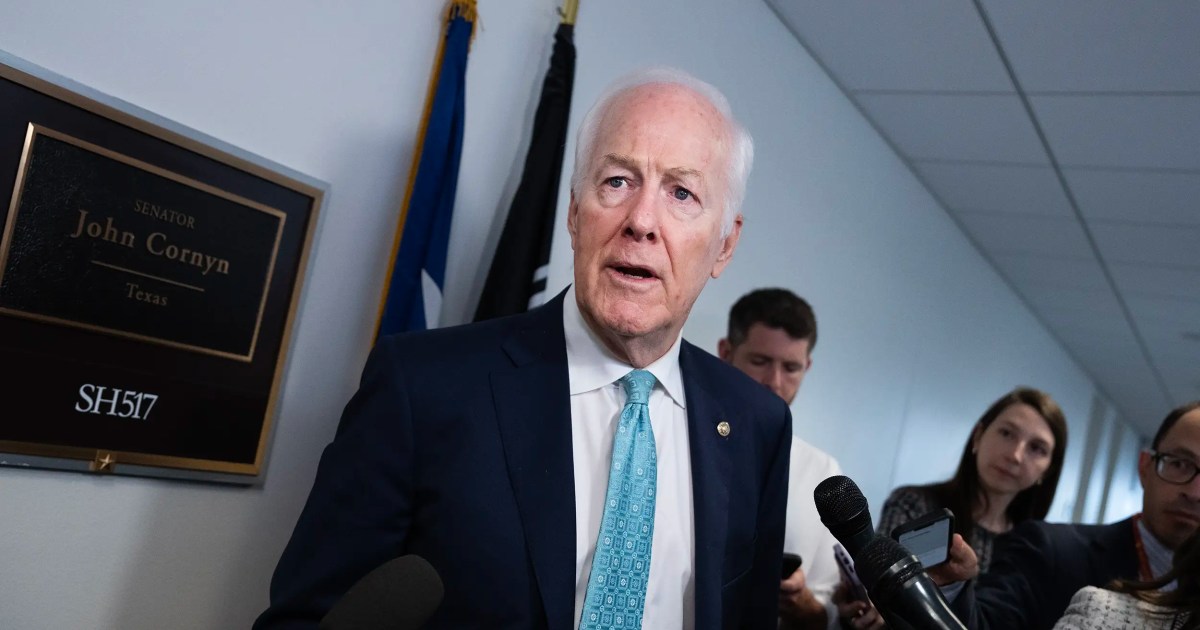
Sen. Chuck Grassley’s decision to delay the committee vote that had been set for Thursday marks a setback for one of Trump’s highest-profile Cabinet nominees, at the hands of Texas Sen. John Cornyn and Sen. Thom Tillis of North Carolina, a pair of Republicans set to leave the chamber next year.
“Chairman Grassley works to set President Trump’s nominees up for success in committee, not failure. Senators Cornyn and Tillis want written assurances from the Department of Justice regarding the Trump-IRS settlement,” the committee spokesperson said.
Blanche’s nomination to permanently head the Department of Justice needs the support of either Cornyn or Tillis to make it out of the committee to a vote by the full Senate, assuming all Democrats remain opposed.
“Why don’t you call over the Department of Justice and tell them they have one hour and 50 minutes to get me what I asked for,” Cornyn told reporters Wednesday afternoon amid the hardening standoff over his demand that Blanche and the DOJ put in writing a commitment never to pursue the president’s prized “anti-weaponization” fund, and to clarify the terms of Trump’s personal deal with the Internal Revenue Service.
Tillis told MS NOW that the conversations were complicated by the need for the Justice Department to get “several parties” to agree on the language of the statement Cornyn and Tillis are seeking.
“What I’ve advised the chair, and I would assume Senator Cornyn said something similar, is that we’re not prepared to vote yes yet,” he added.
“The Department has been in regular communication with Committee members for weeks, and we look forward to continuing to work productively with Senators to address any concerns,” a Justice Department spokesperson said in response to the decision to postpone the committee vote.
Cornyn was set to meet with Blanche on Wednesday morning, but the meeting was called off after Blanche failed to meet the senator’s demand for written proposals to modify the controversial settlement agreement he brokered between Trump and the IRS. The Republican senator is set to leave Congress when his term ends in January after a bruising May primary loss to Texas Attorney General Ken Paxton, Trump’s chosen candidate.
“Maybe John Cornyn’s upset with me because I didn’t endorse him,” Trump told reporters Wednesday afternoon in the Oval Office. “I don’t know what it is, but I haven’t heard that there’s a problem. I heard (Blanche) is going through quite nicely.”
Cornyn made clear to Blanche during his confirmation hearing that he will not get his support until he agrees to reopen and modify the settlement. Due to the committee’s narrow Republican majority, one GOP “no” vote is enough to sink Blanche’s nomination.
The senator has asked Blanche to provide proof that the proposed nearly $1.8 billion “anti-weaponization” fund established as part of the deal between Trump and the IRS is formally dead, and he has also demanded Blanche narrow the tax audit immunity provisions the settlement afforded to Trump and his family.
Blanche has publicly stated that his department has dropped the fund, but he and the DOJ have dodged requests from Cornyn and a federal judge to put that in writing.
After announcing his meeting with Blanche would not take place Wednesday morning, Cornyn told reporters that changes from Blanche “in a modified release form” would be acceptable, but that “for some reason … they simply refuse to do it,” referring to the DOJ.
Shortly after the meeting was called off, a Justice Department official told MS NOW that the department “provided a written proposal to Senator Cornyn’s staff yesterday following ongoing discussion with both the Committee and the Senator’s office.”
Cornyn said that proposal was “not responsive” to his demands because it did not address the tax audit immunity provisions in the settlement, one of his key demands.
In May, Blanche signed an addendum as part of the deal that granted Trump, his family and his businesses immunity from pending IRS tax audits. That agreement, which has been decried by former IRS officials and legal experts as unlawful self-dealing, is being contested in federal court.
Cornyn noted that Blanche testified under oath that he could meet the request during his confirmation hearing.
“Maybe they think I’m just going to give up or you know, go along, but they’re mistaken,” Cornyn said when asked why he thinks the DOJ could be slow-walking his request.
Kevin Frey contributed to this report.
Sydney Carruth is a breaking news reporter covering national politics and policy for MS NOW. You can send her tips from a non-work device on Signal at SydneyCarruth.46 or follow her work on X and Bluesky.
Mychael Schnell is a reporter for MS NOW.
Ebony Davis is a breaking news reporter for MS NOW based in Washington, D.C. She previously worked at BLN as a campaign reporter covering elections and politics.
When Israeli Prime Minister Benjamin Netanyahu arrived this week for his tour of Washington, he may have had a mission in mind.
Netanyahu needed to overcome his newly diminished stature and waning influence over his once close friend President Donald Trump as both leaders grapple with the unpopularity of a war they started together and is escaping their control.
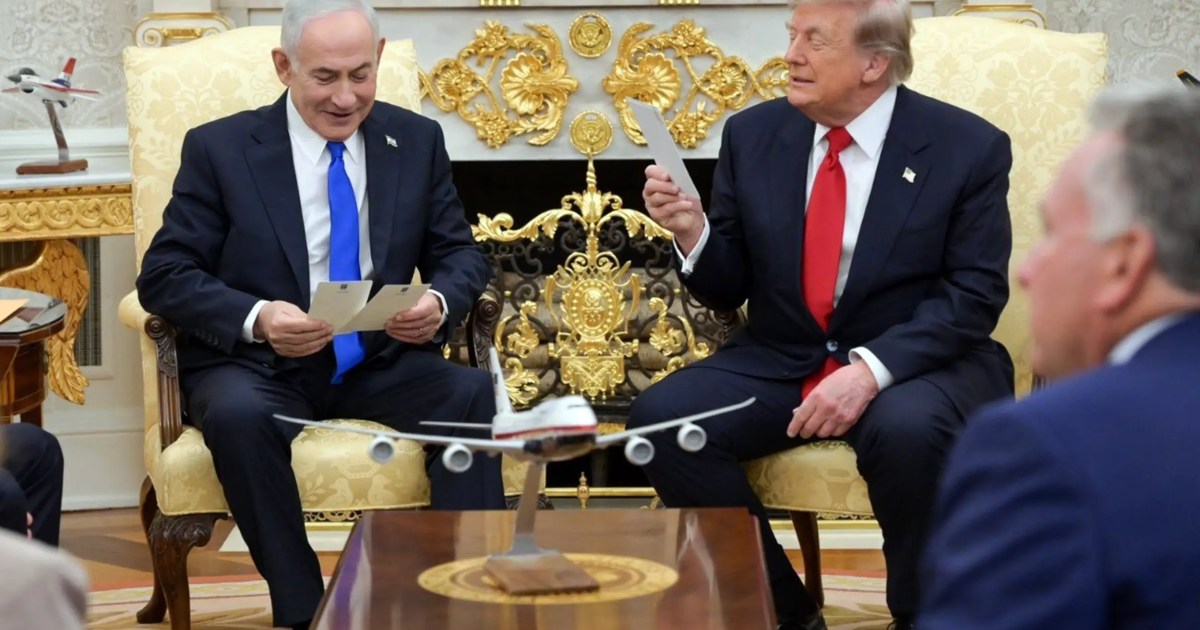
His meeting at the White House with Trump on Tuesday, which was closed to the press, was the first face-to-face encounter between the two allies since the U.S. and Israel launched a joint attack against Iran on Feb. 28.
Trump gave him a muted welcome and afterwards simply described the meeting as “very good.” “Obviously, many important subjects were discussed,” the president wrote on Truth Social.
Rather than an intimate one-on-one setting, the Oval Office was full of top U.S. officials — Vice President JD Vance, Secretary of State Marco Rubio, Treasury Secretary Scott Bessent, Secretary of Defense Pete Hegseth, Chairman of the Joint Chiefs of Staff Gen. Dan Caine, and special envoy Steve Witkoff.
But Netanyahu continued the full court press on the Trump administration.
Over the course of two days, in addition to seeing Trump and attending Sen. Lindsey Graham’s funeral at the Capitol, Netanyahu also met separately with Vance, Hegseth, and Rubio, White House and Israeli officials confirmed to MS NOW.
The Israeli prime minister’s slate of meetings with key U.S. national security officials comes at a pivotal moment in the Iran conflict as tensions escalate in the region and Americans increasingly sour on the war. A recent Quinnipiac poll shows 60% of American voters opposing U.S. military action against Iran and 74% against sending U.S. ground troops into Iran.
Not only does Trump face pressure as Republicans face an uphill battle to retain congressional control in this fall’s midterms, Netanyahu’s fate as prime minister is at stake in Israel’s upcoming September elections – and he can’t afford to lose Trump’s favor.
The talks largely focused on what to do next as Iran continues to menace shipping in the Strait of Hormuz and retaliate against American bases in the region and launch attacks on Gulf allies.
According to a senior Israeli official who was granted anonymity to describe the closed-door meeting, President Trump and Israeli Prime Minister Netanyahu did not come to a final decision after discussing three paths forward: get a “good deal” focused on Iran’s nuclear program and enriched material, have no deal and instead continue the blockade and economic pressure, or take escalated military action.
But Netanyahu did not tell Trump what he should do – nor did he express a preference.
The senior Israeli official noted Netanyahu has not ruled out diplomacy – as long as it is coupled with “very strong pressures,” calling the push to dismantle Iran’s nuclear program “a contest of will and a contest of force.”
“There are ways of squeezing them and squeezing them and squeezing them and negotiating at the same time,” the official said.
Netanyahu did not present President Trump with new intelligence regarding the underground Iranian nuclear facility Pickaxe Mountain, per the senior Israeli official, noting the U.S. and Israel already are constantly sharing intelligence – and know where Iran’s highly enriched material is. “We don’t think it’s moved, and I think we have a pretty good grasp on that,” the official said.
During their meeting on Tuesday, Trump and Netanyahu discussed ways Israel and the U.S. can work together to stop Iran’s nuclear program and get the Strait of Hormuz open to maritime trade, the senior Israeli official said.
The two leaders also discussed a third goal: to continue to undermine the Iranian regime and “possibly create future conditions for a change in that area.” U.S. officials have backed away from pursuing paths that would overthrow the current leadership, but Netanyahu still believes that could happen.
“The chasm that has been created between the people and the regime is not about to be closed,” the senior Israeli official said of Netanyahu’s thinking.
Netanyahu advised Trump in February that Israeli intelligence indicated launching strikes against Iran would lead to the toppling of the Islamic Republic’s regime – and five months later, the slain ayatollah’s son retains power with a close circle of hardliners, calling into question the accuracy of Israel’s intelligence apparatus.
But the senior Israeli official said at the time, Netanyahu did not promise the Iranian people would take fate into their own hands following a coordinated attack. Rather, he chose his words carefully and said that an attack could create conditions to “advance the probability or the possibility that that would happen.”
The conditions needed for the Iranian regime to fall, “did not materialize,” the official told MS NOW, adding, “not for lack of insight, but for either operational failure or decisions that were made.”
Despite Netanyahu insisting Israel and the U.S. are on the same page, differences still remain: the sale of F-35 fighter jets to Turkey and the Saudi nuclear arrangement did not come up during Wednesday’s White House meeting, according to a second Israeli official granted anonymity to describe sensitive discussions.
Meanwhile, the conflict continues to spread, with an Iranian drone attacking a U.S. gas storage tanker off the coast of Egypt on Wednesday.
Trump indicated he would not let Iran’s latest action slide, telling reporters on Wednesday that the U.S. would retaliate against Iran even as he leaves room for diplomatic talks to resume.
“It’s our turn, and we’ll see if we get there with an agreement at some point,” Trump said. “But we’re going to hit them very hard.”
As for what it would take for Israel to join the U.S. strikes, the senior Israeli official said that if Israel is attacked by Iran, “We will respond very, very forcefully and very quickly. And I think Iran would make a great mistake.”
Julia Jester covers politics for MS NOW and is based in Washington, D.C.
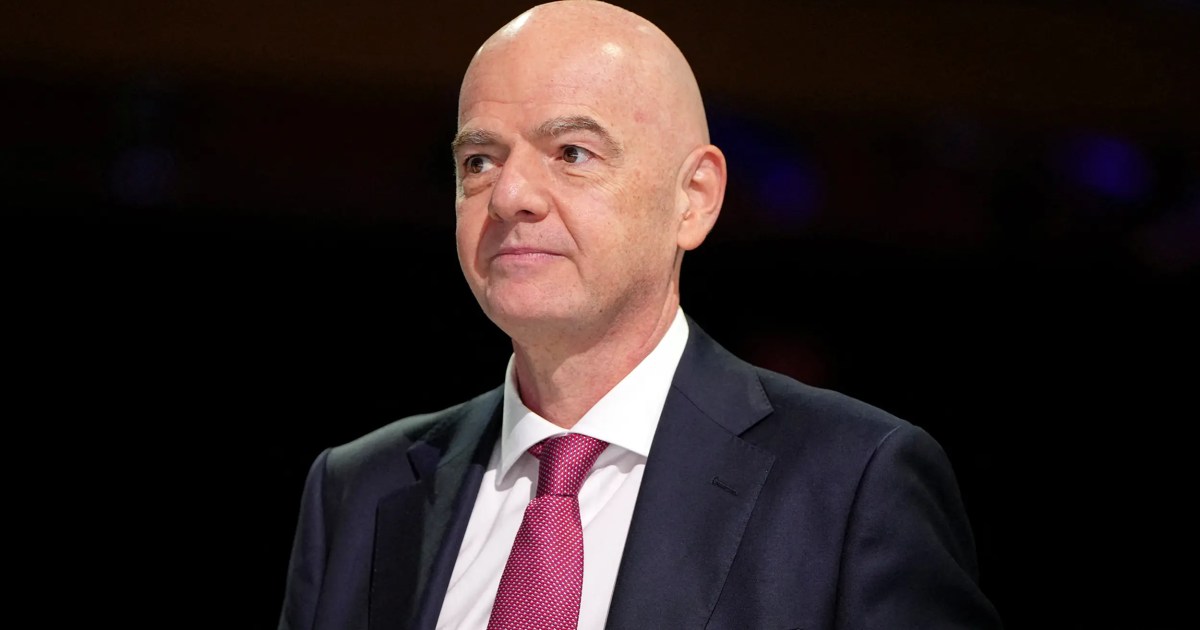
International rage over FIFA’s close ties to President Donald Trump has reached a fever pitch after soccer’s governing body announced a plan to sell a significant stake to an investor group led by Joshua Kushner, the brother of Trump’s son-in-law.
The president and his family have all but turned the White House into their personal piggy bank. And FIFA — which has its own sordid history of corruption — seems to have made itself a party to Trump’s self-enrichment under Gianni Infantino’s leadership, such as by paying for space inside Trump Tower in New York. (The organization has defended the office rental as a World Cup outpost.)
Soccer is seen by many as a unifying game. But Trump’s incorporation of FIFA into his political dynasty is threatening that idea.
FIFA has announced plans to sell a large minority stake in a new company that will run its main events, including the World Cup and Club World Cup, as part of a plan to triple the amount of development money it dishes out to its 211 member associations.
Under the proposals — which are subject to approval by a majority of those national associations and FIFA’s 37-member council — a new entity called FIFA Forward Enterprises (FFE) will take over all commercial operations, while FIFA remains the game’s global governing body and retains a majority stake in FFE.
A press release from FIFA confirmed the plans and said Thrive Eternal, which was launched by Joshua Kushner, is expected to lead the investment group that would control FIFA Forward Enterprise. FIFA did not clarify why Thrive Eternal was selected, and Kushner was already dabbling in sports.
But Trump basically has already given son-in-law Jared Kushner carte blanche to dictate U.S. foreign policy in the Middle East while simultaneously hatching business plans in the region. (Jared Kushner has denied any conflicts of interest.)
Joshua Kushner reportedly has been a major donor to Democrats. But, predictably, the idea of another Kushner becoming financially entwined with the World Cup — the world’s most popular sporting event — and basically being dropped into a position of global significance isn’t going over well. Several other soccer governing bodies have expressed concerns, including Europe’s UEFA.
“This crosses a line that football’s governing institutions should never cross,” UEFA said in a statement about The Athletic’s report, adding: “The soul and governance of football are not assets to trade — especially with zero transparency as to who gains financially. None of us are the owners of football. It is not FIFA’s to sell.”
Democrats on the House Judiciary Committee also rebuked the plan, writing on X: “Apparently the fake Peace Prize and giant lease with Trump Tower weren’t enough — now Infantino performs a kickback hat trick by pursuing a multibillion-dollar deal with Jared Kushner’s brother to sell ownership stakes in the World Cup to private investors.”
FIFA, Donald Trump’s favorite corrupt racketeering enterprise in world sports, is now going directly into business with the Trump family!
Apparently the fake Peace Prize and giant lease with Trump Tower weren’t enough—now Infantino performs a kickback hat trick by pursuing a… https://t.co/knSZibuMea
— House Judiciary Dems (@HouseJudiciary) July 28, 2026
Rep. Jamie Raskin, D-Md., has already launched an investigation into the FIFA leader’s relationship with the Trump administration, while dozens of European lawmakers — citing concerns about “potential breaches of political neutrality” — have called for the FIFA Ethics Committee to investigate Infantino. This new proposal seems unlikely to assuage those concerns.
But what it does seem likely to do is fuel global anger toward the U.S. — the kind that has been growing since Trump retook office.
And when you consider that, it’s truly remarkable how the same MAGA movement whose members whined for years about politics mixing with sports is now in lockstep with a president who seems dead-set on casting his shadow over every sports event he can.
This post on X basically sums up the foul stench around FIFA’s latest proposal.
Sepp Blatter was Infantino’s predecessor as FIFA president and oversaw the organization amid some of its many scandals. When heof all people, is warning about how Trump and Infantino’s relationship is “deeply damaging” soccer, it’s a sign of how far FIFA has descended into the gutter.
Ja’han Jones is an MS NOW opinion blogger. He previously wrote The ReidOut Blog.
- Democrats keep pressure on Hakeem Jeffries to punish rogue members
- House passes GOP-backed bill targeting data center power costs
- House passes Russia sanctions bill, handing Trump more leverage against Moscow
- Rand Paul kills Kennedy’s AI ‘kill switch’ bill
- Jay Jacobs gets his first-ever challenger for state Dem chair
- ‘The US can’t lose’: Pentagon plows ahead on AI despite warnings
- House votes to hold Leon Black in contempt of Congress
- GOP’s gas tax holiday push falters in House
- Bonamici ‘exploring’ bid for Scott’s education leadership
- Ted Cruz: ‘It’s still my hope’ to have an AI markup this month
-

 Politics2 years ago
Former ‘Squad’ members launching ‘Bowman and Bush’ YouTube show
-
Uncategorized2 years ago
Bob Good to step down as Freedom Caucus chair this week
-

 Politics2 years ago
Former Kentucky AG Daniel Cameron launches Senate bid
-

 The Josh Fourrier Show2 years ago
DOOMSDAY: Trump won, now what?
-

 The Dictatorship2 years ago
Luigi Mangione acknowledges public support in first official statement since arrest
-

 The Dictatorship2 years ago
Pete Hegseth’s tenure at the Pentagon goes from bad to worse
-

 Politics2 years ago
Blue Light News’s Editorial Director Ryan Hutchins speaks at Blue Light News’s 2025 Governors Summit
-

 The Dictatorship1 year ago
Mike Johnson sums up the GOP’s arrogant position on military occupation with two words