
The Dictatorship
Unlawful combatants in Caribbean…

WASHINGTON (AP) — President Donald Trump has declared drug cartels to be unlawful combatants and says the United States is now in an “armed conflict” with them, according to a Trump administration memo obtained by The Associated Press on Thursday, following recent U.S. strikes on boats in the Caribbean.
The memo appears to represent an extraordinary assertion of presidential war powerswith Trump effectively declaring that trafficking of drugs into the United States amounts to armed conflict requiring the use of military force — a new rationale for past and future actions.
“The President determined that the United States is in a non-international armed conflict with these designated terrorist organizations,” the memo says. Trump directed the Pentagon to “conduct operations against them pursuant to the law of armed conflict.”
“The United States has now reached a critical point where we must use force in self-defense and defense of others against the ongoing attacks by these designated terrorist organizations,” the memo says.
Besides signaling a potential new moment in Trump’s stated “America First” agenda that favors non-intervention overseas, the declaration raises stark questions about how far the White House intends to use its war powers and if Congress will exert its authority to approve — or ban — such military actions.
“The United States is taking a much more dramatic step — one that I think is a very, very far stretch of international law and a dangerous one,” said Matthew Waxman, who was a national security official in the George W. Bush administration. It “means the United States can target members of those cartels with lethal force. It means the United States can capture and detain them without trial.”
Declaration follows boat strikes in the Caribbean
The U.S. military last month carried out three deadly strikes against boats in the Caribbean that the administration accused of ferrying drugs. At least two of those operations were carried out on vessels that originated from Venezuela.
Those strikes followed up a buildup of U.S. maritime forces in the Caribbean unlike any seen in recent times. The Navy’s presence in the region — eight warships with over 5,000 sailors and Marines — has been pretty stable for weeks, according to two defense officials, who spoke on condition of anonymity to discuss ongoing operations.
The memo did not include a timestamp, but it references a Sept. 15 U.S. strike that “resulted in the destruction of the vessel, the illicit narcotics, and the death of approximately 3 unlawful combatants.”
“As we have said many times, the President acted in line with the law of armed conflict to protect our country from those trying to bring deadly poison to our shores, and he is delivering on his promise to take on the cartels and eliminate these national security threats from murdering more Americans,” the White House said.
Pentagon officials briefed senators on the strikes Wednesday, according to a person familiar with the matter, who was not authorized to comment publicly and spoke on the condition of anonymity. The Pentagon referred questions to the White House.
From AP’s Standards and Stylebook teams:
The AP is using anonymous sourcing to provide information for this story. Click here to hear Washington Bureau Chief Anna Johnson explain AP’s policy on the use of anonymous sources.
What the Trump administration laid out at the classified briefing at the Capitol was perceived by several senators as pursuing a new legal framework that raised questions particularly regarding the role of Congress in authorizing any such action, that person said.
Pentagon officials also briefed House staffers last week on the strikes, according to another person who was briefed on the meeting and similarly spoke on condition of anonymity.
The memo, which was reported earlier by The New York Times, lays out a rationale seen both as the administration’s justification for the military strikes it has already taken on the boats in the Caribbean — which have raised concerns from lawmakers as potentially unlawful — as well as any action to come.
A White House official who wasn’t authorized to comment publicly and spoke on condition of anonymity said the memo was sent to Congress on Sept. 18 and does not convey any new information. The person familiar with the Senate briefing said it was transmitted this week.
Details weren’t given on the cartels targeted
Trump has designated several Latin American drug cartels as foreign terrorist organizationsand the administration had previously justified the military action as a necessary escalation to stem the flow of drugs into the United States.
Pentagon officials could not provide a list of the designated terrorist organizations at the center of the conflict, a matter that was a major source of frustration for some of the lawmakers who were briefed this week, according to one of the people familiar with the briefings.
While “friendly foreign nations have made significant efforts to combat these organizations,” the memo said, the groups “are now transnational and conduct ongoing attacks throughout the Western Hemisphere as organized cartels.” The memo refers to cartel members as “unlawful combatants.”
The Trump administration is trying to justify the use of military force against drug cartels in the same way the Bush administration justified the war against al-Qaida following the Sept. 11 attacks, said Waxman, who served in the State and Defense Departments and on the National Security Council under Bush.
Bush, however, had authorization from Congress, unlike Trump. The Trump administration is arguing that it no longer has to consider the individual circumstances of using force, said Waxman, who now chairs Columbia Law School’s National Security Law Program.
“It’s basically saying, ‘We don’t have to engage in that kind of case-by-case decision-making,’” Waxman said. “All of these vessels that are carrying enemy personnel can be targeted, whether they’re headed towards the United States or not.”
Waxman said he expects more strikes and “we’ll see if the United States takes the next big step and engages in lethal force or armed force on the territory of another state.”
Lawmakers of both major political parties have pressed Trump to seek war powers authority from Congress for operations against alleged drug traffickers. Several senators and human rights groups have questioned the legality of the strikes, calling them potential overreach of executive authority in part because the military was used for law enforcement purposes.
Sen. Jack Reed of Rhode Island, the top Democrat on the Senate Armed Services Committee, said drug cartels are “despicable” but the Trump administration has offered “no credible legal justification, evidence or intelligence for these strikes.”
Reed, a former Army officer, said “every American should be alarmed that their President has decided he can wage secret wars against anyone he calls an enemy.”
___
Associated Press writers Konstantin Toropin, Ben Finley and Michelle L. Price contributed to this report.


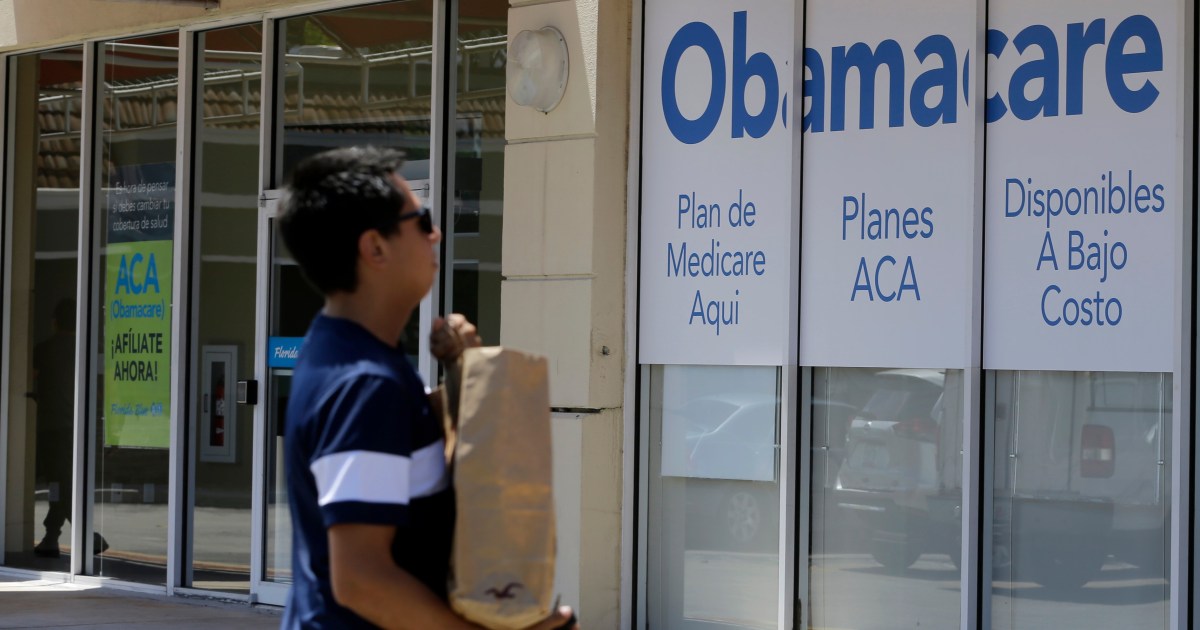
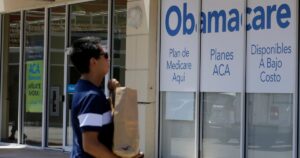
NEW YORK (AP) — About 3 million fewer people in the United States had Affordable Care Acthealth insurance plans in February compared with the same time last year, according to new federal data.
In the reportreleased Friday, the U.S. Department of Health and Human Services suggested the 13% drop in enrollment from 22.1 million people in 2025 to 19.2 million this year could be attributed to a federal crackdown on fraudulent or “phantom” enrollment. But health analysts said it was more likely related to the Jan. 1 expiration of federal subsidieswhich caused a surge in plan costs that resulted in many people being unable to pay their premiums.
“We know that real people lost their health insurance coverage,” said Cynthia Cox, a vice president and director of the ACA program at the healthcare research nonprofit KFF, citing survey findings on people who had left their plans. “This coverage loss happened at the same time millions of people faced double or even triple digit increases in their premium payments.”
The new data, compiled in April but showing coverage in February, represents the government’s first official look at how people’s inability to pay their first bills this year affected total enrollment. That is because the figures capture the marketplace after a nonpayment grace period expired.
A federal estimate in Januaryshowed that about 800,000 fewer people had signed up for ACA plans compared with the same time last year, marking the first time in the past four years that enrollment had been down from the previous year at that point in the shopping window.
Cox said KFF expects the total number of people in the government healthcare program to continue to declinethroughout the year, potentially to a low of about 17.5 million. That would be a significant drop for the government’s flagship subsidized health insurance program for working-age people who do not qualify for Medicaid. In recent years, ACA plans have become a popular choice for gig workers, farmers, ranchers, hairstylists and others without health coverage through an employer.
The ACA subsidies that expired this year were at the center of a bitter fight in Congress last fall, with Democrats and some Republicans calling for their renewal. Sharp increases in health costs across ACA and other health insurance programs come as voters in the approaching November elections say affordability is among their top concerns.
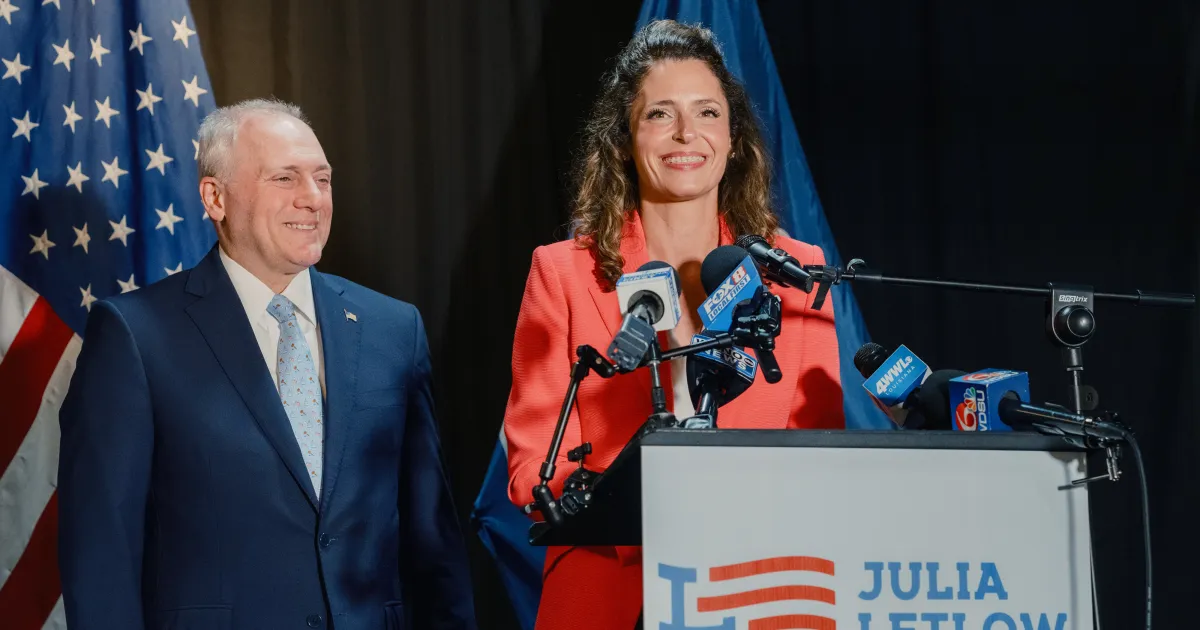
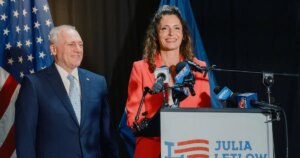
Rep. Julia Letlow won Louisiana’s Republican Senate primary runoff Saturday, defeating former Rep. John Fleming.
Her win comes as a victory for President Donald Trump, who has endorsed her repeatedly throughout the race — including before she was even officially running.
Letlow made history in 2021 when she became the first Republican woman to represent Louisiana in Congress. In that special election, she won the seat that her late husband, Luke Letlow, had won prior to dying of complications related to Covid-19 in December 2020.
Letlow had no political experience prior to running for her late husband’s seat. She holds a doctorate in communication from the University of South Florida and worked as an administrator for Tulane University and the University of Louisiana, according to her LinkedIn page. Nonetheless, she won the special election House race with nearly 65% of the vote.
In Congress, she has served on the appropriations and education committees, and has been a reliably MAGA Republican.
Letlow’s win also comes as a rebuke to Fleming, who loaned himself more than $11 million, according to the Federal Election Commission, and tried running for the same seat in 2016 only to finish in fifth place in the nonpartisan primary. (Letlow did not loan her campaign any money, and took in more than $5.35 million compared to Fleming’s more than $12.1 million, FEC filings show.)
Trump has played a key role in the race. In addition to backing Letlow early on, the president also helped tank Republican incumbent Sen. Bill Cassidy’s re-election campaign in last month’s primary, based on the senator’s record of bucking his party and voting in favor of Trump’s second impeachment. In the primaryLetlow earned nearly 45% of the vote, giving her a healthy lead over both Fleming, who received about 28% of the vote, and Cassidy, who earned nearly 25%.
Ahead of Saturday’s runoff, polling showed Letlow and Fleming in a close race, with Letlow retaining a small lead in several polls.
Letlow will now proceed to the November general election to face off against the Democratic nominee, farmer Jamie Davis, who came out on top in tonight’s Democratic primary runoff.
The state has not sent a Democrat to the Senate since 2008, when Mary Landrieu won her last term in office.
Julianne McShane is a breaking news reporter for MS NOW who also covers the politics of abortion and reproductive rights. You can send her tips from a non-work device on Signal at jmcshane.19 or follow her on X or Bluesky.
Bill Pulte, the acting director of national intelligencehas stirred fear by choosing as his chief of staff a GOP election lawyer who oversaw a poll watching program that included Jack Posobiec and other conservative conspiracy theorists. The lawyer, Christina Norton, also appears to have no experience working in the intelligence community.
“It is horrifying,” a former senior U.S. intelligence official told MS NOW Saturday. “Not only does Norton have absolutely no background, experience or expertise in national security or intelligence, but her principal qualifications appear to be loyalty to Pulte and an embrace of absurd election-interference conspiracies.”
Sen. Thom Tillis, R-N.C., who has been a vocal critic of Pulte, also raised concerns about election integrity on Sunday while taking shots at the director of national intelligence and the office itself.
“We should eliminate the DNI, and we should eliminate Pulte from the DNI until that happens,” he said on BLN, adding, “I am concerned that we’re gonna continue to cast doubt on elections in November and erode what has been a 250-year tradition of a peaceful transition of power.”
Pulte’s choice of Norton is also likely to increase concerns among Democrats that President Donald Trump intends to use the Office of the Director of National Intelligence to interfere in the midterm elections. Pulte, a loyalist with no intelligence experience, has used his current position as head of federal mortgage agencies to refer political rivals of the president for federal criminal prosecution.
Rep. Jamie Raskin, D-Md., told MS NOW on Sunday that the choice “just confirms” that the “only job qualification is absolute political loyalty and devotion to Donald Trump.” But he expressed faith in the judicial system during an appearance on “The Weekend,” noting that “right now we have federal courts across the land that are rejecting their various attempts to take over the election process. Nine different federal courts have rejected the claim that the president, by executive order, can compel the states in the union to turn over all of their voter lists to Donald Trump and to the White House.”
The New York Times first reported Norton’s appointment.
The former senior intelligence official, who requested anonymity due to concerns of retaliation, told MS NOW the choice also “signals as clearly as could be that Pulte has been put at ODNI to misuse the awesome power of the U.S. intelligence community to interfere in the upcoming midterm elections.”
Norton, reached by MS NOW by telephone, declined to comment and referred questions to an ODNI spokesperson. The spokesperson declined to comment on Norton but defended Pulte’s tenure.
“Acting Director Pulte and his team are focused on carrying out President Trump’s national security priorities while faithfully executing ODNI’s statutory mission,” the spokesperson told MS NOW. “We are leading the Intelligence Community to provide President Trump with elite, apolitical intelligence that keeps America safe.”
Sen. Bill Cassidy, R-La., appearing on CBS News’ “Face the Nation” Sunday, said his objection to Pulte is “that he used personal information to target a political enemy of the president,” a reference to New York Attorney General Letitia James.
“You should not be using the force of government to crash upon somebody just because the person in charge does not like them or finds them inconvenient. The fact that Bill did that is disqualifying for someone to be the director of national intelligence,” Cassidy said.
Rep. Jim Himes, D-Conn., the ranking Democrat on the House Intelligence Committee, said on Friday that Congress would ensure that the ODNI under Pulte will “report on legitimate foreign threats to elections, not Donald Trump’s imaginary ones.”
Himes warned that, “Trump was explicit when he appointed Bill Pulte to a job he had no qualifications for that he had elections in mind.”
Trump has said in interviews with the news media that he would like to see Pulte shrink the size of the ODNI and investigate election fraud. Pulte’s predecessor, Tulsi Gabbard, participated in investigations in Georgia and Puerto Rico to find proof of Trump’s false claims that the 2020 election was stolen.
Democrats and some former intelligence officials say they worry that Pulte may try to falsely claim that his office has found evidence that foreign governments are secretly funding Democratic candidates in the midterms.
Pulte could falsely claim foreign actors have hacked U.S. voting machines, they say, and altered vote totals in favor of Democrats during the midterms. Or Trump could instruct Pulte to be present if FBI agents seize ballots and election records in November as they did earlier this year in Fulton County, Georgia.
Sen. Mark Warner, D-Va., the ranking Democrat on the Senate Intelligence Committee, warned in a statement on Friday that Pulte should not use his position to spread Trump’s false election conspiracy theories.
“The mission of ODNI is to identify and counter foreign threats, not to import election denialism into the Intelligence Community,” Warner said. “Americans have every reason to fear that this administration is once again eroding the wall between our intelligence agencies and domestic elections.”
David Rohde is the senior national security reporter for MS NOW and a two-time winner of the Pulitzer Prize for International Reporting. Previously he was the senior executive editor for national security and law for NBC News.
- Republicans get antsy about confirmations as the Senate hangs in the balance
- Rick Scott says he’s just trying to help
- Millions drop Obamacare health coverage after subsidies expire and costs rise
- The Lincoln Memorial should be green with envy: This reflecting pool stayed clear

- Anna Paulina Luna has paralyzed the House, and fellow Republicans are mystified
- Capitol agenda: House GOP agenda gets tenuous Trump lifeline
- The Lincoln Memorial should be green with envy: This reflecting pool stayed clear
- Capitol agenda: House GOP agenda gets tenuous Trump lifeline
- Iranian diplomat blasts ‘pseudo-VAR’ interventions after World Cup exit
- Rep. Julia Letlow wins Louisiana GOP Senate primary runoff
-

 Politics1 year ago
Former ‘Squad’ members launching ‘Bowman and Bush’ YouTube show
-

 The Dictatorship1 year ago
Luigi Mangione acknowledges public support in first official statement since arrest
-

 Politics1 year ago
Former Kentucky AG Daniel Cameron launches Senate bid
-
Uncategorized2 years ago
Bob Good to step down as Freedom Caucus chair this week
-

 The Josh Fourrier Show2 years ago
DOOMSDAY: Trump won, now what?
-

 The Dictatorship1 year ago
Pete Hegseth’s tenure at the Pentagon goes from bad to worse
-

 Politics1 year ago
Blue Light News’s Editorial Director Ryan Hutchins speaks at Blue Light News’s 2025 Governors Summit
-

 The Dictatorship10 months ago
Mike Johnson sums up the GOP’s arrogant position on military occupation with two words