
The Dictatorship
Trump’s unprecedented Jan. 6 pardons send a clear message

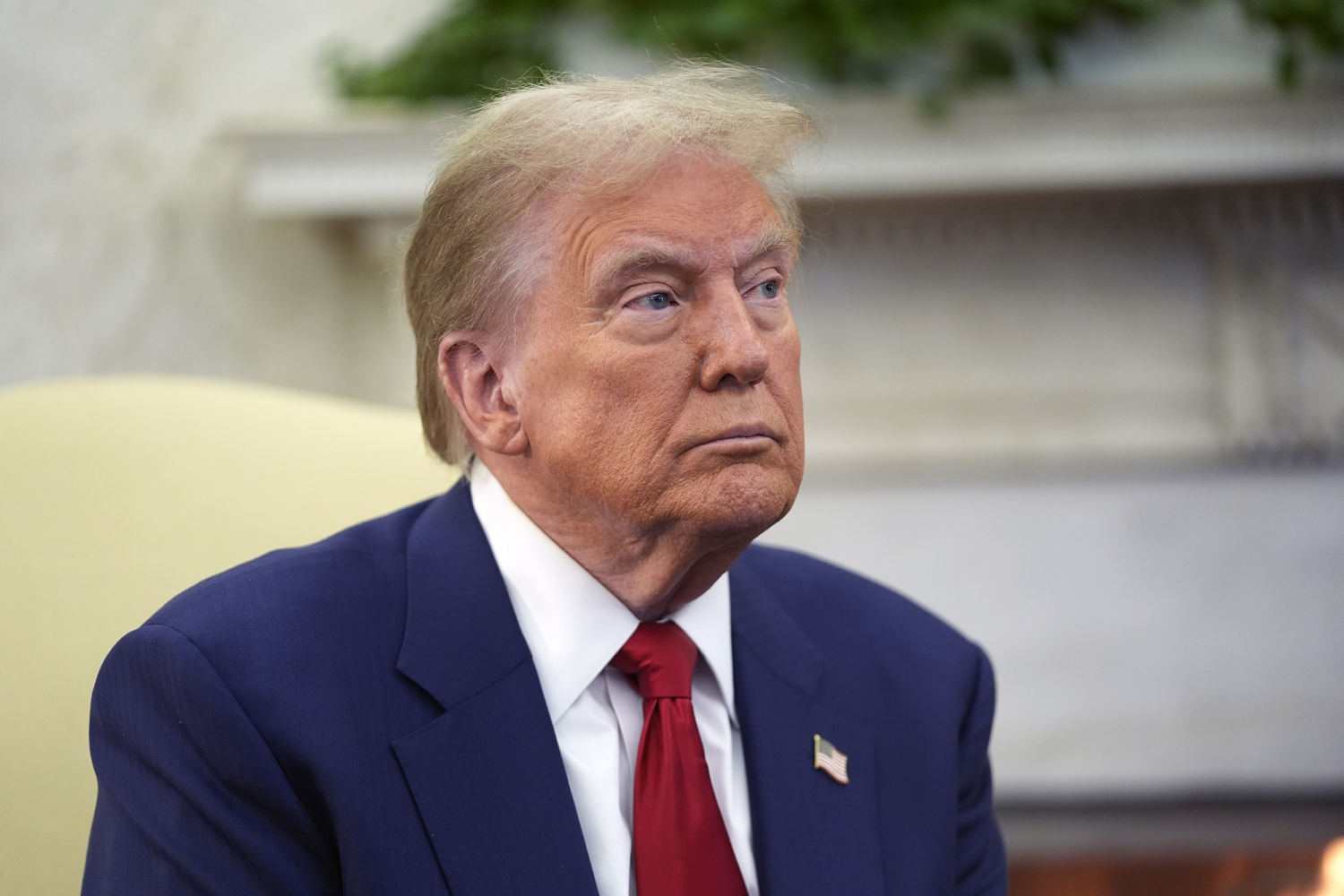
Less than 24 hours after taking the presidential oath of office for a second time, Donald Trump made good on his promise to grant clemency to the people who stormed the Capitol on Jan. 6, 2021. With a stroke of his pen, he tried to turn insurrectionists into patriots and people who tried to prevent the peaceful transfer of power into heroes.
On Monday, Trump pardoned about 1,500 Jan. 6 offenders and commuted the sentences of 14 people people convicted of crimes related to the insurrection. He did so over strenuous objections not only from Democrats, but also from people like U.S. Capitol Police Chief J. Thomas Manger, who noted that his opposition “is not about any particular president.”
“What message does that send to police officers across this nation,” Manger asked, “if someone doesn’t think that a conviction for an assault or worse against a police officer is something that should be upheld?”
Trump’s pardons are unprecedented — but not because he is granting mercy to rebels. He is not the first or only American president to do so. Indeed, at the birth of the Republic, Alexander Hamilton foresaw just such a use of the pardon power. As Hamilton put it in Federalist 74:
In seasons of insurrection or rebellion, there are often critical moments, when a well-timed offer of pardon to the insurgents or rebels may restore the tranquility of the commonwealth; and which, if suffered to pass unimproved, it may never be possible afterward to recall.
Federalist 74
Trump’s pardon of the Jan. 6 insurrectionists turns this vision on its head. As one of the first acts of his presidency, it certifies his view that we are two nations, not one. Instead of restoring “the tranquility of the commonwealth,” the pardons inflict a fresh wound even as they invite us all to relive a national trauma.
Contrast Trump’s pardons with those George Washington issued on Nov. 2, 1795. That day, he spared two men who were convicted of treason and sentenced to death for their part in the so-called Whiskey Rebellion.
One month later, in his seventh State of the Union address (a speech Hamilton helped to write), Washington explained why he had exercised the president’s clemency power. “It appears to me,” he said, “no less consistent with the public good than it is with my personal feelings to mingle in the operations of Government every degree of moderation and tenderness which the national justice, dignity, and safety may permit.”
The result, Washington claimed in an echo of Federalist 74, was that “the part of our country which was lately the scene of disorder and insurrection now enjoys the blessings of quiet and order.
On Dec. 25, 1868, another president showed mercy to rebels. Shortly before the end of his term, President Andrew Johnson pardoned all the Confederate soldiers who fought in the Civil War. He took this action, he wroteto “renew and fully restore confidence and fraternal feeling among the whole, and their respect for and attachment to the national [e.g., federal] government, designed by its patriotic founders for the general good.”
Neither Washington nor Johnson made clemency a campaign issue. Not so Donald Trump.
Neither Washington nor Johnson denied the truth about the rebellions that occasioned their acts of mercy or diminished the seriousness of what those they pardoned had done. Not so Donald Trump. Just to pick one example, in 2022 he labeled the story of what happened on Jan. 6 “the insurrection hoax,” a “grotesquely false, fabricated, and hysterical partisan narrative” and “a lot of crap.”
In offering those pardons, neither Washington nor Johnson attacked the justice system or their political opponents. Not so Donald Trump. The president has said repeatedly that the radical left is using the events of Jan. 6 as a “pretext for their all-out war on free speech.” And he called the rioters “Americans who were denied due process and unfairly prosecuted by the weaponized Department of Justice.”
And neither Washington nor Johnson made clemency a campaign issue. Not so Donald Trump, who was the first person ever to make the promise of pardons a central part of their presidential campaign. In doing so, the president asked voters to endorse his revisionist view of what happened on Jan. 6.
Trump’s effort to erase the truth of what the “J6 warriors” did from the legal record reflects a view of the pardon power that was much more common in the republic’s early days and in Andrew Johnson’s time than it is now. In an 1866 Supreme Court ruling, Justice Stephen J. Field wrote that a pardon “releases the punishment and blots out of existence the guilt, so that, in the eye of the law, the offender is as innocent as if he had never committed the offence. If granted … it makes him, as it were, a new man, and gives him a new credit and capacity.”
Field repeated that understanding six years later, this time writing for a unanimous court: A “pardon not merely releases the offender from the punishment prescribed for the offense … it obliterates in legal contemplation the offense itself.”
But unlike Trump, the 19th-century court still acknowledged that pardons cannot undo history. They do not and cannot “alter the actual fact” of what their recipients did to necessitate clemency.
As leaders of the advocacy group Public Citizen suggested earlier this month, “The incoming administration believes that their word trumps historical facts.” But much to his chagrin, even Trump cannot turn the pardon power into a tool to “alter the actual fact[s]” of Jan. 6.
There is one other way that Trump’s pardons depart from Hamilton’s view of the pardon power: the simple fact he did it on his first day. Pardoning the Jan. 6 insurrectionists on Jan. 20 offers a startling preview of the president’s second-term governing philosophy. He did it not despite the hard feelings that would accompany that act but because of those hard feelings. The pardons send what Jacob Ware, a research fellow at the Council on Foreign Relations, calls “‘a thundering message of permission’ for the use of violence for political gain and election denialism at home and overseas.”
With polls indicating sharp partisan divisions about the merits of clemency for the Jan. 6 insurrectionists, the president’s action will divide, not unify. It will inflame divisions, not heal them. That possibility does not bode well for a country already on edge and divided into warring camps. Worse still, as The Washington Post reportsthere may be more to come: “Trump’s attorney general could also drop charges against the roughly 300 defendants still awaiting trial, some of whom have sought to postpone those proceedings until after the presidential inauguration.” But even if that does not come to pass, what Trump did on his first day in office has Alexander Hamilton rolling over in his grave.
Austin Sarat is the William Nelson Cromwell Professor of Jurisprudence and Political Science at Amherst College. The views expressed here do not represent Amherst College.


President Donald Trump and top administration officials said Sunday that Immigration and Customs Enforcement agents will arrive at the nation’s airports on Monday to handle security at exceedingly long lines driven by a shortage of TSA workers.
“I look forward to moving ICE in on Monday, and have already told them to, ‘GET READY.’ NO MORE WAITING, NO MORE GAMES!” Trump said on Truth Social.
Tom Homan, the White House border czar who will lead the effort, provided few details but confirmed the plan on BLN’s “State of the Union,” saying, “It’s a work in progress, but we will be at airports tomorrow.” DHS spokesperson Lauren Bis said later that “hundreds of ICE officers” would be deployed to airports “adversely impacted,” but she did not specify which airports.
It was unclear whether ICE officers would be conducting pat-down procedures but Homan suggested their focus would be on security instead of screening. “A highly-trained ICE law enforcement officer can cover an exit, that relieves TSA to go to screening,” he said, adding that the priority will be on “those large airports where there’s a long wait, like three hours.”
DHS and ICE did not immediately respond to MS NOW’s request for comment on whether officers will be wearing masks at the airports to which they are deployed. But Transportation Secretary Sean Duffy suggested Sunday that Democrats are the reason why federal immigration and border officers wear masks.
“Democrats want ICE to take off their face masks. The problem with that is we know the Democrats are going to want to dox those ICE agents, go to their homes, harass their kids,” he said on ABC News.

The ongoing partial government shutdown, which began after funding for the Department of Homeland Security lapsedon Feb. 14, has forced Transportation and Security Administration workers to go unpaid —with hundreds of them quitting or not showing up for work, severely disrupting air travel.
Duffy said security lines will “get much worse” this week. He predicted more TSA agents will quit by Friday, when they’ll go without another paycheck unless lawmakers reach a deal.
Trump said on Saturday that ICE agents would “do Security like no one has ever seen before, including the immediate arrest of all Illegal Immigrants who have come into our Country, with heavy emphasis on those from Somalia.”
Minneapolis Mayor Jacob Frey, whose city has been ground zero for the Trump administration’s immigration crackdown, said Sunday on MS NOW’s “The Weekend” that Trump “doesn’t actually mean that he’s going to keep people secure.”
“We all know that’s not the goal. The goal is to terrorize people,” Frey said. When asked if he thought the president was racist for his targeting of Somalis, the mayor said, “I think the answer is yes.”
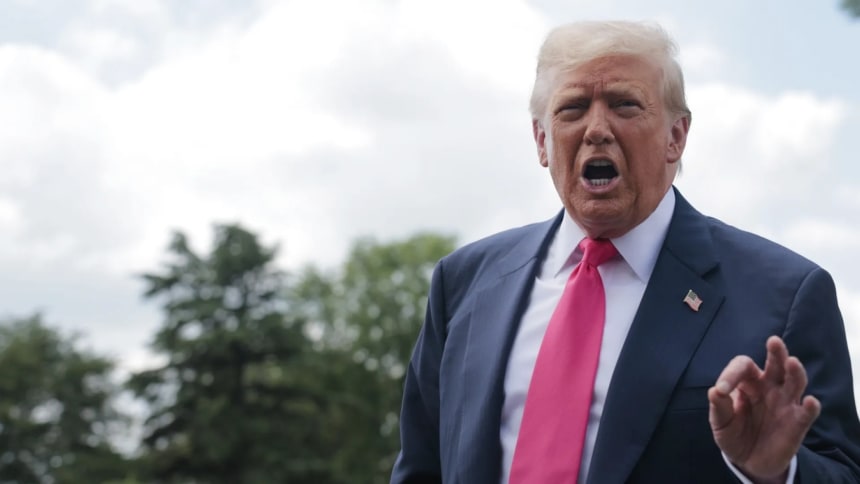
Speaking on the Senate floor during a rare weekend session on Sunday, Minority Leader Chuck Schumer, D-N.Y., lambasted Trump’s plan to send ICE agents to airports, calling it “really disturbing.”
“It’s a plan that has no planning. It’s another impulsive action from Donald Trump,” Schumer said. “When he acts impulsively there’s usually trouble. Whenever Donald Trump acts impulsively with no follow through, there’s trouble.”
Republican Sen. Lisa Murkowski of Alaska also criticized Trump’s plan, saying that “air dropping” agents to airports is “not a fix.”
The Association of Flight Attendants said ICE officers lack the kind of specialized training that the TSA’s transportation security officers get. “Furthermore, the introduction of ICE agents into airports creates contradictory missions, as attempts to question passengers about immigration status may distract them from ensuring airport security,” the union said.
And Everett Kelley, president of the American Federation of Government Employeesthe largest federal workers’ union, said, “More than 50,000 TSA employees have worked without pay for over five weeks. Hundreds have quit. And Washington’s answer isn’t to pay them. It’s to send ICE agents to do their jobs.”
Congress remains gridlocked over DHS funding, with Democrats demanding reforms to ICE operations after the fatal shooting of two U.S. citizens — Renee Good and Alex Pretti— in Minneapolis. Republicans have rejected proposalsto reopen much of Homeland Security, which includes TSA and ICE.
Airline executives from United Airlines, American Airlines, Southwest Airlines and others last week called on Congress to end the shutdownwriting in a joint letter that federal employees working without pay is “simply unacceptable.”
“This problem is solvable, and there are solutions on the table,” they wrote. “Now it’s up to you, Congress, to move forward on bipartisan proposals that will get federal aviation workers—including TSA officers, U.S. Customs clearance officers at airports and air
traffic controllers—paid during shutdowns.”
Mychael Schnell and Emily Hung contributed to this report.
Erum Salam is a breaking news reporter for MS NOW, with a focus on how global events and foreign policy shape U.S. politics. She previously was a breaking news reporter for The Guardian.
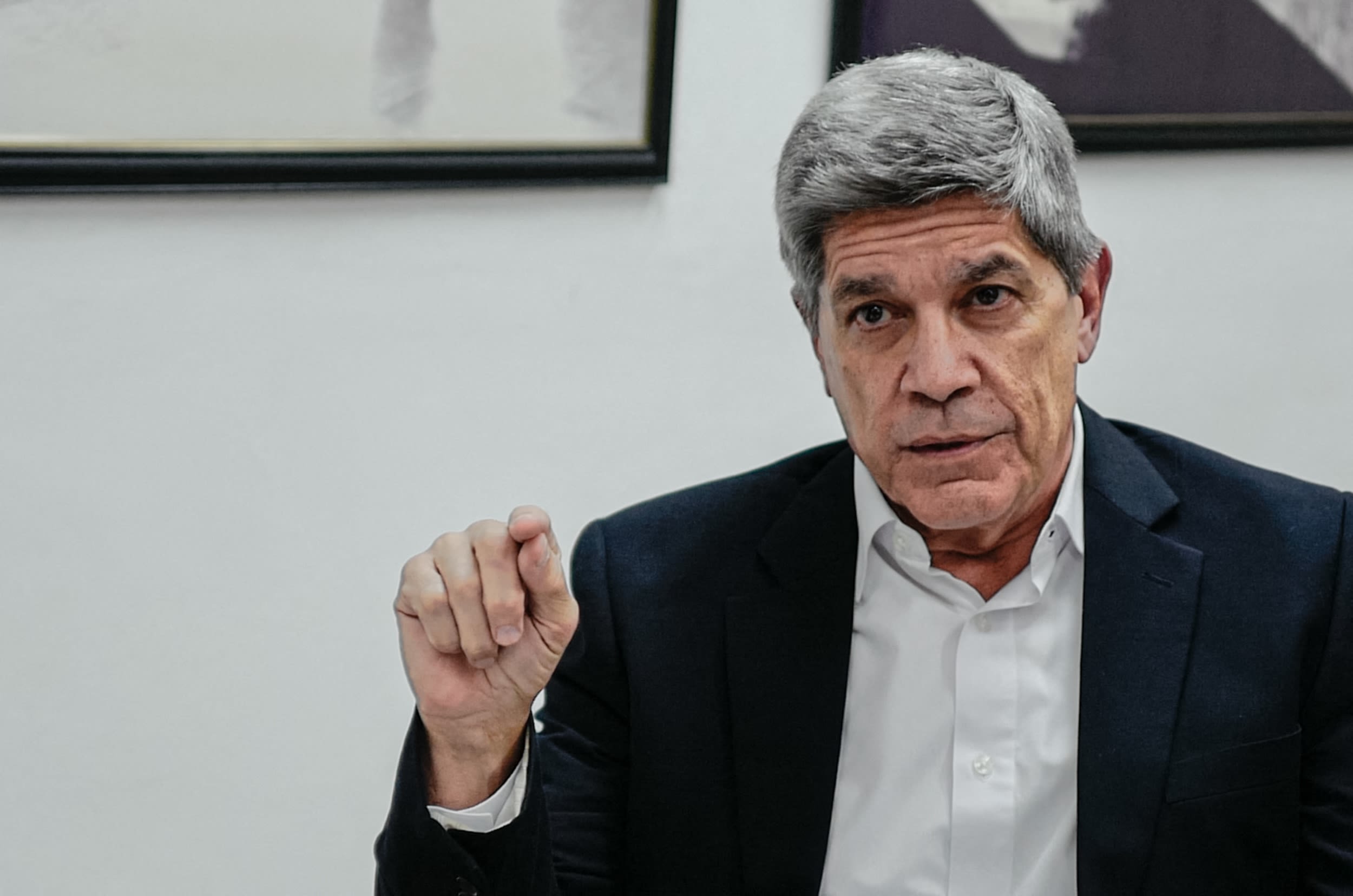
Cuba is “preparing” for the possibility of U.S. military aggression against the Caribbean island nation, a top Cuban official said Sunday.
“Our military is always prepared, and, in fact, it is preparing these days for the possibility of military aggression,” Cuba’s deputy foreign minister, Carlos Fernández de Cossío, told NBC News. “We would be naive, if looking at what’s happening around the world, we would not do that.”
Speaking on NBC’s “Meet the Press,” Fernández de Cossío added, “But we truly hope that it does not occur. We don’t see why it would have to occur. We find no justification whatsoever.”
He spoke as Cuba began restoring power after a nationwide electricity blackout, which Cuban officials have blamed on a U.S. energy blockade driven by President Donald Trump threats to impose tariffs on any country that provides oil to Cuba. Cuba’s president, Miguel Díaz-Canal, acknowledged last week that his government is in talks with the U.S. government.
Trump and Secretary of State Marco Rubio have repeatedly warned that Cuba could be next to see U.S. military intervention, adding to a growing number of countries, including Venezuela and Iran, where the U.S. military has interfered.
“I do believe I will be having the honor of taking Cuba,” Trump told reporters last week in the Oval Office. “Whether I free it, take it. Think I can do anything I want with it, you want to know the truth.”
Shortly after U.S. forces captured Venezuelan President Nicolás Maduro in January at Trump’s direction, Rubio said“I don’t think it’s any mystery that we are not big fans of the Cuban regime, who, by the way, are the ones that were propping up Maduro.”
Rubio called the Cuban government “a huge problem.”
Trump’s foreign policy has run counter to his campaign promise to end costly warsarguing that Americans will be safer and better off as a result of such interventions. The joint U.S.-Israel war with Iran, for which the objectives remain unclear, has sent the price of oil and gas skyrocketing and deepened instability across the Middle East.
Erum Salam is a breaking news reporter for MS NOW, with a focus on how global events and foreign policy shape U.S. politics. She previously was a breaking news reporter for The Guardian.
The Dictatorship
Trump threatens attacks on Iranian power plants if Tehran fails to open the Strait of Hormuz
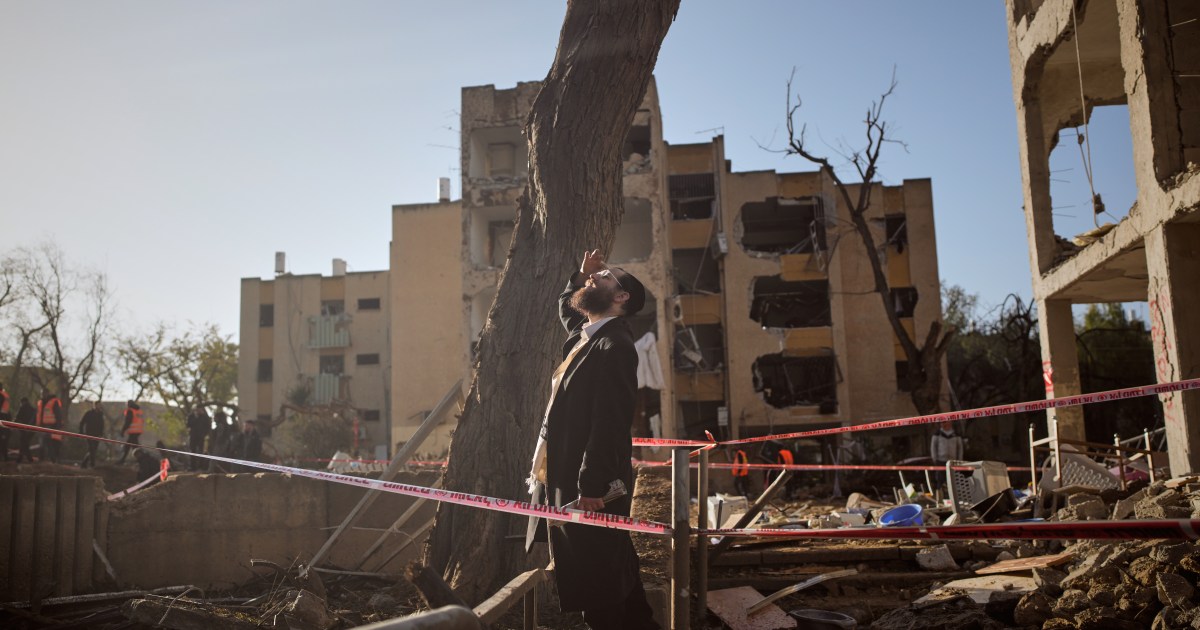
CAIRO (AP) — Iran responded Sunday with threats of its own, a day after President Donald Trumpwarned the United States will “obliterate” Iran’s power plants if Tehran fails to fully open the Strait of Hormuzin 48 hours and Iranian missiles struck two cities near Israel’s main nuclear research center, injuring dozens and shattering apartment buildings.
The developments signaled the war in the Middle East, now in its fourth weekwas moving in a dangerous new direction.
Sirens blared across Israel as Iran launched new barrages Sunday. In the country’s south, residents faced the devastation in the cities of Dimona and Arad. In northern Israel, a man was killed in a strike by the Lebanese militant Hezbollah group.
Israeli Prime Minister Benjamin Netanyahu toured Arad and said it was a “miracle” that no one was killed by the blast, which heavily damaged several buildings. But he said that if all residents had rushed to shelters, no one would have been hurt and urged all to heed the sirens.
Iran responds to Trump’s ultimatum
Trump said on Saturday that he would give Iran 48 hours to open the vital Strait of Hormuzor face a new round of attacks. He said the U.S. would destroy “various POWER PLANTS, STARTING WITH THE BIGGEST ONE FIRST!”
He may have meant the Bushehr nuclear power plant, Iran’s biggest, which was already hit last week, or Damavand, a natural gas plant near Tehran, Iran’s capital.
In turn, Iran warned early Sunday that any strike on its energy facilities would prompt attacks on U.S. and Israeli energy and infrastructure assets — specifically information technology and desalination facilities — in the region, according to a statement citing an Iranian military spokesperson carried by state media and semiofficial outlets.
The Strait of Hormuz connects the Persian Gulf to the Indian Ocean and is a critical pathway for the world’s flow of oil. Attacks on commercial shipsand threats of further strikes have stopped nearly all tankers from carrying oil, gas and other goodsthrough the passage, leading to cuts in output from some of the world’s largest oil producers, because their crude has nowhere to go.
Seyed Ali Mousavi, Iran’s envoy to the International Maritime Organization, said in remarks carried by two Iranian news agencies that navigating the strait is possible for “everyone except enemies” — indicating Tehran would determine which vessels are allowed passage. Iran has already approved the passage of ships through the waterway to China and elsewhere in Asia.
Iran strikes area near Israeli nuclear site
Israel’s military said it was not able to intercept missiles that hit Dimona and Arad on Saturday, the largest cities near the Negev Desert nuclear center. It was the first time Iranian missiles penetrated Israel’s air defense systems in the area.
“If the Israeli regime is unable to intercept missiles in the heavily protected Dimona area, it is, operationally, a sign of entering a new phase of the battle,” Iran’s Parliament Speaker Mohammad Bagher Ghalibaf said on X.
Rescue workers said at least 64 people were taken to hospitals after the direct hit in Arad. Dimona is about 20 kilometers (12 miles) west of the nuclear research center and Arad around 35 kilometers (22 miles) north.
Israel’s hard-line national security minister, Itamar Ben-Gvir, visited Arad on Sunday, saying that Israel is in a “historic battle” against Iran and that it must “continue until victory.”
Israel is believed to possess nuclear weapons, though it doesn’t confirm or denythis. The U.N. nuclear watchdog said on X it had not received reports of damage to the Israeli center or any abnormal radiation levels.
Israel denies responsibility for attack on Natanz
Tehran’s main nuclear enrichment site at Natanzwas hit earlier on Saturday. Israel denied responsibility for the attack and the Iranian judiciary’s official news agency, Mizan, said there was no leakage.
The Pentagon declined to comment on the strike on Natanz, which was also hit in the first week of the ongoing war and in the 12-day warlast June.
The U.N. watchdog — the International Atomic Energy Agency — has said the bulk of Iran’s estimated 972 pounds (441 kilograms) of enriched uranium is elsewhere, beneath the rubble at its Isfahan facility.
The U.S. and Israel have offered shifting rationalesfor the war, from hoping to foment an uprisingthat topples Iran’s leadership to eliminating its nuclear and missile programsand its support for armed proxies. There have been no signs of an uprising, while internet restrictions limit information from Iran.
The war’s effects are felt far beyond the Middle East, raising food and fuel prices.
So far in Iran, the death toll in the war has surpassed 1,500, the state broadcaster reported Saturday, citing the health ministry. In Israel, 15 people have been killed by Iranian missiles. Four others have died in the occupied West Bank. At least 13 U.S. military members have been killed, along with well over a dozen civilians in Gulf nations.
Hezbollah claims deadly strike on northern Israel
Hezbollah said it was behind a strike on Sunday that killed a man in the northern Israeli town of Misgav Am in what the Israeli military said “seemed to be” a rocket attack. Israeli medics said they found the man dead in his car and released a video showing two vehicles ablaze.
Hezbollah, an ally of Iran, launched strikes on Israel soon after the U.S.-Israeli attack on Iran started on Feb. 28, saying it was in retaliation for the killing of Iran’s Supreme Leader Ayatollah Ali Khamenei. Israel struck back, bombarding Lebanon and targeting Hezbollah in deadly airstrikes, expanding its presence in southern Lebanon and amassing more troops near the border.
Lebanese authorities say Israel’s strikes have killed more than 1,000 people and displaced more than 1 million.
Crash in Qatar
Qatar said Sunday that all seven people aboard a Qatari helicopter that crashed the previous day in the Gulf Arab nation’s territorial waters are dead — including three Turkish nationals, a military officer and two civilians.
The confirmation came after the body of the missing Qatari pilot was found on Sunday. The crash was blamed on a “technical malfunction.”
- Trump administration, energy developer announce end of U.S. offshore wind projects
- No DHS meeting today
- US-Iran war damaged global oil markets more than Russia-Ukraine war, Chevron CEO says
- Wright urges oil and gas industry to up production amid Iran war
- Capitol agenda: Trump muddies DHS talks
- Why Texas isn’t cheering oil price spike
- Capitol agenda: Markwayne Mullin’s rockier-than-expected road
- Democrats say Bondi won’t commit to testifying in House Epstein investigation
- ‘Warrants or bust’: House hard-liners deliver ultimatum ahead of spy powers vote
- Capitol agenda: Markwayne Mullin’s rockier-than-expected road
-

 The Dictatorship1 year ago
Luigi Mangione acknowledges public support in first official statement since arrest
-

 Politics1 year ago
Former ‘Squad’ members launching ‘Bowman and Bush’ YouTube show
-

 Politics1 year ago
Blue Light News’s Editorial Director Ryan Hutchins speaks at Blue Light News’s 2025 Governors Summit
-

 Politics1 year ago
Former Kentucky AG Daniel Cameron launches Senate bid
-

 The Dictatorship6 months ago
Mike Johnson sums up the GOP’s arrogant position on military occupation with two words
-

 The Dictatorship1 year ago
Pete Hegseth’s tenure at the Pentagon goes from bad to worse
-
Uncategorized1 year ago
Bob Good to step down as Freedom Caucus chair this week
-

 Politics11 months ago
Democrat challenging Joni Ernst: I want to ‘tear down’ party, ‘build it back up’